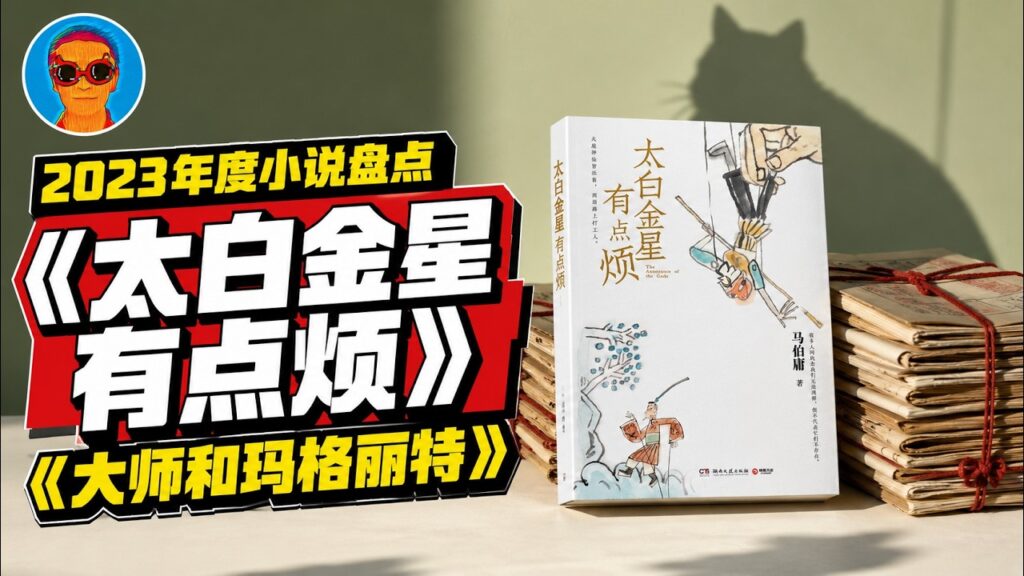
This episode is also on Bilibili too.
It’s time for the roundup everyone loves to hate—or loves to love. Today I’m taking a look at the good books I finished in 2023. This roundup includes only fiction: novels and stories. For nonfiction, I either already covered it on Fanshu, or I’m planning a separate program about it later, so it won’t appear here. Let’s begin:
Yasuhiko Takahashi, The Fraction Split Incident
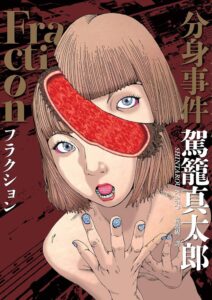
The first book I want to recommend is The Fraction Split Incident, a mystery manga by the renowned Japanese manga artist Yasuhiko Takahashi. It has also been translated as The Fatal Split. This is the biggest brain-hole I’ve stumbled into this year. The story is a rather over-the-top series of linked waist-slashing murders in Tokyo. Serial-killing cases are common in mystery novels, but restricting them to waist-slashing is pretty special. As the protagonist tracks the case, the story opens up into all kinds of wildly implausible territory—things no normal person could possibly think up. The most jaw-dropping part is a sequence that can only work in manga: the mystery and suspense are built entirely on the unique expressive tools of the medium. I was literally watching my eyeballs fall out. It’s a feast for the eyes.
K. J. Parker, Under the Purple
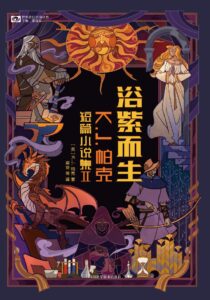
The second book I recommend is Under the Purple: A Collection of Short Stories by K. J. Parker. In my mind, Parker’s writing is the best in the fantasy genre. Even a single story might beat a whole stack of books by R. R. Martin, who gets called the “modern Tolkien.” Once I finished Under the Purple, I couldn’t recall any especially astonishing plot twists—but Parker’s narrative ability is genuinely startling. Open to any page, read a few lines, and you’re sucked in before you can escape.
Parker’s strange fantasy stories all exist under one shared view of the world, and they connect with one another. The setting resembles the world of A Song of Ice and Fire: medieval in flavor, low-magic, and divided into many states with complicated political and social structures. Although the background is entirely fictional, the characters have a strong realist flavor. They usually aren’t the great heroes and villains of traditional fantasy, but ordinary people with complicated motives and moral views. If you like A Song of Ice and Fire, Under the Purple will probably suit your taste too.
Mikhail Bulgakov, The Master and Margarita
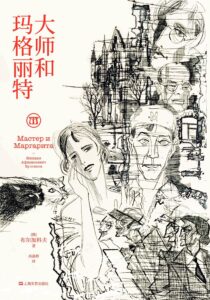
But the best fantasy work I read this year wasn’t Under the Purple. It was The Master and Margarita by the former Soviet writer and magical-realist master Mikhail Bulgakov.
The novel consists of two interwoven storylines. One takes place in 1930s Moscow, where Satan appears in human form with his retinue, triggering a series of supernatural events and throwing the whole city into chaos, exposing the hypocrisy and corruption of Soviet officials and cultural elites.
The other storyline is an unfinished novel written by an author called “the Master”—a play within a play. It tells the story of Yeshua and Pontius Pilate, the Roman official responsible for judging him. This strand is much heavier than Satan’s, exploring fate, free will, and suffering.
In the end, the two storylines unite in the Master’s spiritual transcendence.
The Master and Margarita is a monumental literary work. On the surface it is absurd; underneath, every word is blood. It has a powerful autobiographical quality: the “Master” in the book is essentially Bulgakov himself, writing during Stalin’s great purges. Persecuted in reality, the author eventually survived in a theater and died not long after finishing The Master and Margarita. The Master’s spiritual transcendence at the end is really a prophecy of the author’s own death. It made me think of Guillermo del Toro’s Pan’s Labyrinth, which has a fairy-tale perspective and a realist perspective. Accept the fairy-tale perspective and the story ends as a comic happy ending; accept reality and it is a thoroughly tragic tale. The Master and Margarita works similarly: behind the absurd fantasy, reality is hiding in plain sight, bleak enough to make you despair. Yet after finishing it, I still felt a kind of relief—the author must have found spiritual freedom inside the dream he wove.
Yōkō Yamaguchi, Miracle
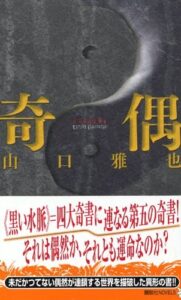
My fourth recommendation is Yōkō Yamaguchi’s Miracle, my “book of the year miracle.” I gave it both one star and five stars, because it is simultaneously a zero-point mystery and a full-mark science-fiction novel. Its theme is “coincidence.” The protagonist keeps encountering extremely improbable coincidences: one eye suddenly goes blind just after he happens to read a passage about blindness in a book that falls from a shelf; a monkey at an animal research institute randomly types a passage from his diary; someone he once met far away dies in front of him, killed by a giant bone that falls from a building, whose final arrangement of dots matches the number that victim repeatedly rolled at a casino. He eventually discovers that everything seems connected to a religious group called “Miracle,” whose feverish obsession with the world’s coincidences is almost pathological. What on earth is going on?
If you read it expecting a traditional mystery, the final solution is maddeningly bad—an insult to readers’ intelligence. But the novel also has a science-fiction perspective. Read it as science fiction and truly understand the author’s final speculative premise, and the whole experience flips in a wonderfully strange way, turning into a science-fiction masterpiece with one of the most distinctive premises imaginable. The Japanese media named Miracle one of the New Five Great Mysteries. After finishing it, I can see why: it’s astonishing. There is no official Chinese edition yet, but there is a fan translation, so interested readers should be able to find it.
Besides this hard-to-classify miracle of a book, I also read some especially pure examples of classic mystery fiction this year. Here are the best of them.
Akira Shiga, Murder Mystery Game 2.0
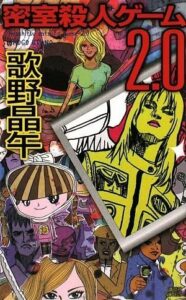
First is Akira Shiga’s Murder Mystery Game 2.0. Five mystery fans gather in an online chat room and take turns presenting impossible crimes they committed in the real world, challenging the other four to see whether anyone can crack their methods. Turning murder into a game is hardly a deep premise, but it strips away the skin of the mystery novel and shows its true face: crime and deduction are, at bottom, pure intellectual games. Once the crimes are gamified, the novel’s creativity is freed. The crimes here are brilliantly devised—simply breathtaking. This is the middle volume of Shiga’s Murder Mystery Game series. The first is decent and the third is a mess, so I recommend starting directly with this one.
Seiichi Ōyama, 500 Witnesses: Absolutely No Alibi
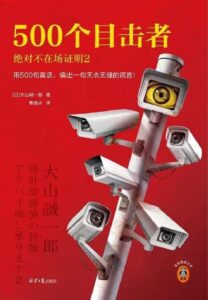
The next outstanding classic mystery is Seiichi Ōyama’s 500 Witnesses: Absolutely No Alibi. It consists of five cases centered on proving that there was no alibi, and the quality varies wildly. The standout is The False Image of a Double Betrayal, a five-star mystery. The criminal uses a remarkably ingenious method to scramble the elements of two connected cases into one another, shielding each with the other and creating an almost perfect no-alibi proof.
If Murder Mystery Game 2.0 and 500 Witnesses turn impossible crimes into possible ones, the next story turns impossible deduction into possible deduction.
Bai Jingzhiyi, Detective Overdose
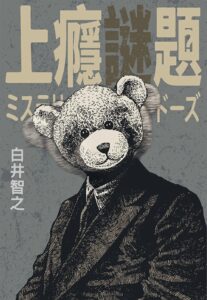
That would be Bai Jingzhiyi’s Detective Overdose. The traditional-Chinese edition has just been released. Its first half is a standard locked-room mystery: a group is trapped in a remote mountain villa cut off from the world, several murders occur, and the killer must be one of the survivors. But then the story takes a very unusual turn. That night, all the survivors accidentally take psychedelic drugs and, in a state where fantasy and reality blur and wild delusions run rampant, each writes down a deduction about who the killer is. Their manuscripts are supposedly analyses of the incident, but they read more like several headless, delirious fantasy novellas. When the detective arrives, all that remains in their hands are these manuscripts. Yet, against all expectation, the detective uses magic—or rather, “creates something from nothing”—to extract an unassailable chain of logic from the nonsense and identify the murderer. This takes the “logic flow” of mystery fiction to its absolute limit.
That wraps up the mystery roundup. Next are the two best science-fiction novels I read this year.
Robert L. Forward, Dragon’s Egg
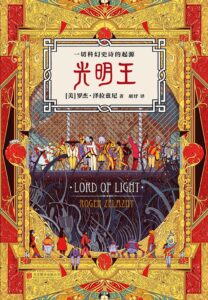
First is Robert L. Forward’s Dragon’s Egg. It’s an early science-fiction classic, and I only finally finished it this year. Many early so-called classics feel rather dated today, but Dragon’s Egg is a definite exception—the book I read this year with the strongest sense of “retro charm.” The story is set in the distant future, when humanity has settled on an extrasolar planet. Technology is highly advanced, especially in bioengineering. But a group known as the First Family monopolizes these technologies, using them to turn themselves into gods from Indian mythology and rule the other humans on the planet. Ordinary people have no idea what is really happening behind the scenes; to them, the “sky people” above are genuinely gods who possess supernatural powers. The protagonist is a man named Sam. He was once a member of the First Family, but he became dissatisfied with their system of rule. So Sam adopts a Buddhist identity and teachings and begins to resist this society ruled by “gods.”
The best thing about this novel is that, at first glance, it looks almost exactly like a mythological fantasy. Gods and immortals are constantly unleashing world-shaking powers and battling one another. But as the story’s world gradually unfolds before the reader, you may first be stunned by the technology hidden behind the mythology, and then discover, one moment later, that the “front end” of the mythology and the “back end” of the technology fit together with astonishing seamlessness. It’s simply marvelous. The afterword to the Chinese edition was written by Cixin Liu. He said: “The novel Bright King truly captures the feeling modern readers ought to have when confronted with the technology of a distant future.” Think about it: if we sent someone from the Tang or Song dynasty through time to today, would their first reaction be, “Wow, you people are so advanced”? No. They would feel that modern society was nothing less than a place where magic and divine powers ran rampant. They would feel they had stumbled into a world ruled by gods. Isn’t that exactly the atmosphere, that exact feeling, Bright King presents?
Ren Banmei, The Smooth World and Its Enemies
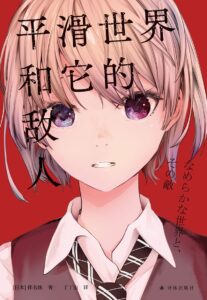
Besides Bright King, the other perfect-score science-fiction work I read this year was The Smooth World and Its Enemies, a collection of short stories by the Japanese writer Ren Banmei. The story I recommend most is “The Age of the Singularity.” It’s a science-fiction story in the “alternative history” genre. It imagines that AI technology developed during the Cold War between the United States and the Soviet Union, leading the two countries into an arms race in AI. By the end, both sides are acting extremely tough toward the other while panicking even more intensely inside, because the AIs each country has developed have already “ascended”—they’re long past the control of either government. The main plot follows an American spy who infiltrates the Soviet Union to steal intelligence, only to be discovered by a Soviet agent. Just as the two sides are at daggers drawn, the tension so high that both feel one wrong move could make everything spiral out of control, the AI suddenly stages a “grand performance” right in front of them—something far beyond anything they expected. Only then do they understand that all of humanity’s so-called “outsmarting and scheming” is nothing more than an optional footnote in a game run by AI. Once AI evolves into a god, it can do whatever it wants in ways that completely surpass human imagination. 2023 was the first year of AI, so reading this story at that particular moment was especially fascinating. Ren Banmei has both an extraordinary imagination and beautiful prose. He has what it takes to become a major writer.
Ma Boyong, The Bored Tai Bai Jin Xing
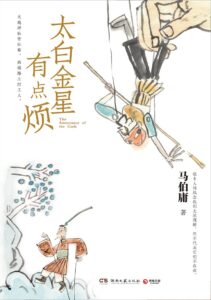
The final grand entry is my 2023 Book of the Year: Ma Boyong’s The Bored Tai Bai Jin Xing. The story is about Heaven and the Western Paradise jointly launching the major project of “Journey to the West.” Tai Bai Jin Xing is assigned to plan the eighty-one tribulations, making sure Tang Sanzang gets safely through the process, hits his KPIs, and smoothly obtains the scriptures and becomes a Buddha. Tai Bai Jin Xing thinks his seasoned office-politician skills will keep everything under control. Instead, trouble never stops: immortals from every direction send in all kinds of notes and requests; personnel arrangements have to accommodate everyone’s interests; demons everywhere are nursing ulterior motives and itching to make a move; and Heaven and the Western Paradise are secretly competing with each other throughout it all… Most breathtaking of all, the truth behind the havoc Sun Wukong once wreaked in Heaven gradually comes to light, revealing secrets at the highest levels of Heaven that cannot be spoken of to outsiders. If Tai Bai Jin Xing makes even the slightest misstep, he too may be dragged into it and doomed forever.
The Bored Tai Bai Jin Xing reconstructs Journey to the West according to the logic of officialdom and political maneuvering. It reinterprets many of the novel’s familiar episodes—eating the ginseng fruit, for example, and the three fights with the White Bone Demon—through this new logic, and somehow explains away, perfectly coherently, some of Journey to the West’s less-than-logical plot points: Why is Sun Wukong powerful at first and weak later? Why was Sha Wujing banished to the mortal world over such a minor offense? Even though I know it’s a playful reimagining, Ma Boyong’s wild imagination, I can’t help thinking while reading: This is just too reasonable. Could this really have been the hidden truth behind Journey to the West all along?
I think this is practically a hell-level creative challenge, yet Ma Boyong writes it as if it were effortless. He’s incredible. After all these years, Ma Boyong has written so many good books, and his talent is still spraying everywhere.
The Bored Tai Bai Jin Xing pushes satire, humor, and wild imagination to the limit, but at its core it is also deeply tragic. What’s more, Ma Boyong makes some strikingly obvious allusions to certain things that happened recently. Every satirical point in the book lets readers understand immediately what it’s talking about: you either share a knowing laugh or feel a sudden sadness. Yet not a single sentence names anyone or anything outright. I think that even just for Ma Boyong’s mastery of what can and cannot be said, this deserves to be called a divine book.
All right, those are the works of fiction I finished in 2023 that I think are worth recommending. I’m Zhichao Wei. On this channel, I mainly talk about my three great loves—psychology, books, and film. If you enjoy my programs, please follow, like, save, and leave a comment. It really matters to me. Thanks for your support, and I’ll see you in the next episode.
Leave a Reply