Riding on the buzz around the 2016 Oscars, I’m entertaining myself by handing out awards to the films and TV series I watched from early 2015 to early 2016.
The great Ennio Morricone finally won his first Oscar for Best Original Score at the ripe old age of 87. Congratulations!

In many people’s minds, the old master should have had that little golden man practically wearing out his hands by now. But amazingly, he hadn’t!

Leo finally won, looking like he would die of injustice if he didn’t. But there are countless brilliant people in the film business who deserved awards and never got them. Leo could have toughed it out for another ten years and still wouldn’t have had much to complain about.
For a heartless, sentiment-free person like me, Leo winning only means that his wonderfully entertaining Oscar memes can never be used again. I’m a little sad about that.

As a frequently off-the-rails and unqualified film critic (my main daily jobs are housework and playing with my one-and-a-half-year-old daughter; cooking time, late nights, and the small hours are when I watch films, read, and write), I watched only fifty-something films last year. I’d seen almost none of this year’s Oscar nominees, so I can’t really talk about the Oscars themselves.
Still, it would be impossible not to join the final bit of commotion in this Oscar season.
Following the tail end of awards season, I’ll entertain myself by handing out awards to the films and series I watched from early 2015 to early this year.
Well, this is probably the latest year-end roundup anyone will see. Awards season used to end with the Oscars; from now on, I hope it ends with my own “Freakars.”
“Freakars” Year-End Leftovers 2015-2016
“Leftovers” are the films I didn’t review last year, now gathered together for a group review (actually, I didn’t review a single film last year %>_<%).
Foreign films first, then domestic ones. Here we go—
1. Annual “The Medication Can’t Stop” Award
Winner: Danny Boyle, director of Steve Jobs

Danny Boyle is one of my favorite directors. He made Trainspotting, Leo’s The Beach, and James Franco’s 127 Hours.
His special talent is making any subject feel psychedelic. Whether it’s a sci-fi story about heaven and earth (like 28 Days Later) or an Indian song-and-dance film that suddenly breaks into a routine for no reason (like Slumdog Millionaire), once it passes through his hands, it feels as if someone has taken drugs—there’s always an air of neurological abnormality.
But in last year’s new film Steve Jobs, apart from a few shots with a little of his trademark psychedelic flavor, the whole thing is so “normal” that it feels as though Danny Boyle walked straight onto the set before taking his drugs.

That drugged-out psychedelic energy is Danny Boyle’s killer move. How did he pull it back before it had even finished shining this time?
Hey, the drugs can’t stop.
Of course, the film’s biggest problem probably lies in the script by star screenwriter Aaron Sorkin. It’s too clever by half. Some scripts make you say, “Wow, this screenwriter is clever.” This one makes you say, “Wow, this screenwriter really wants us to know he’s clever.”

By the way, none of the films mentioned above is my favorite Danny Boyle film. His masterpiece, in my eyes, is the “terrible movie” Sunshine, which has only a 6.9 on Douban. I’ll discuss it in another piece.

2. The “Very Well-Rounded Characters” Award
Winner: Star Wars: Episode VII – The Force Awakens

Leading lady Rey:

My parents abandoned me, but I’m going to be brave, I’m going to be good, and I’m going to be a hero.
Leading man Finn:

I grew up among bad people, but I’m going to be brave, I’m going to be good, and I’m going to be a hero.
Ace pilot Poe:

I was brave to begin with. I was a good person to begin with. I was a hero to begin with.
Well, those are very full-bodied personalities.
3. The “Guwlong Possession” Award
Winner: Mad Max: Fury Road

If you genuinely don’t want any “character arcs,” and you want your characters to be one way at the beginning and exactly the same at the end, take a look at what Mad Max: Fury Road does.
Stories involving fighting and killing broadly come in two types.
One is the Jin Yong type: the protagonist enters as a weakling, gets tougher and tougher, and ends up an impossibly powerful badass.
The other is the Guwlong type: the protagonist is already formidable on arrival, formidable later, and still formidable at the end.

Guwlong-style stories may sound boring, but if you can wrap such a very “flat” setup in an atmosphere with enough tension, the characters can still burst with enough charm to move audiences and readers.
Mad Max: Fury Road, possessed by this Guwlong mode, is a fine example.
In Mad Max 4, the few scenes describing changes in character—Max going from “looking out only for himself” to “Fine, I’ll help,” and Nux turning from darkness to the light—are deliberately played down by the director, almost dismissively.

The director seems to be saying: “I couldn’t care less about character development. Does anyone really care about that?”
The male and female leads’ personalities, added together, amount to one sentence:
“Fuck this world! Fuck this world! Fuck this world!”
It’s brutally simple to an almost absurd degree, but you can clearly see the anger capable of spitting fire in their eyes.
And that anger is incredibly infectious. This kind of “flatness” is many times more stirring than all that so-called “twist and turn” stuff.
Congratulations, incidentally, to Mad Max: Fury Road for taking six Oscars. This was the biggest winner of the whole ceremony.

4. The “Most Scene-Stealing Extra” Award
Winner: The extra at the end of Season 7 of Mad Men

My all-time favorite prestige drama, Mad Men, ended last year.
I was delighted that it didn’t crash into a terrible ending like most American series. Even more incredible, the entire final sequence was given to a “random passerby” who had never appeared in all seven seasons.

A screenwriter bold enough to do that isn’t merely good; they’re practically glowing with magic.
This masterpiece also ends with Coca-Cola’s classic advertising jingle—a stroke of genius. Eras always end; only coke lives forever.
5. The “Dog’s Tail, Repeatedly Re-tied” Award
Winner: Terminator Genisys

The Terminator franchise has had no qualified sequel since the second film, including this one.
The film does have quite a few strengths, such as—
1. It completely abandons the rotten third and fourth films, picks up the classics of Parts One and Two, and does that well;
2. Reversing the order of events from the first two films is a good bit of lateral thinking;
3. It jokes about and pays homage to all kinds of gags from Parts One and Two, which old fans enjoy;
4. Its handling of John Connor is actually clever (the casting is just wrong—you can tell at first glance that he isn’t a good guy).
But the weaknesses are even more obvious, for example—
1. The action scenes are not only desperately unimaginative (they’re all sequences viewers could picture themselves after closing their eyes at the end of the script), they’re also shot carelessly (the heroine’s gun-drawing and shooting are soft, slow, sticky, and extremely amateurish);
2. The plot lurches forward carelessly everywhere, wasting details that should have sparkled (the script actually gives every character plausible emotional scenes, but everyone seems determined to rush through their lines and get off the stage).

As Gao Xiaosong aptly said, Hollywood blockbuster production has become rigid. You can glimpse that rigidity here: good ideas shrink and stumble through production, then are finally ruined by a mediocre execution.
6. The “Even Dragon Ball Isn’t Something You Can Learn Just Because You Want To” Award
Winner: Spectre

From Casino Royale to Spectre, it really is one continuous series. The all-powerful villains in each earlier film turn out to be little minions under the supervillain in Spectre.

So, watched back to back, these Bond films fall into the bizarre Dragon Ball pattern of fighting monsters and leveling up. The earlier boss, Frieza, can casually destroy a planet; the later boss, Majin Buu, can casually destroy the entire universe.
But once this supervillain appears in Spectre, he shows no ability whatsoever to casually destroy the universe. He is clearly only in the same weight class as the earlier bosses—if not below them.
And so this series, which began so spectacularly, finally ends in a shambles without a satisfying conclusion. What a shame.
7. The “IQ Nosedive” Award
Winner: Season 3 of House of Cards

A perfectly matched pair of icy, dark, twisted people somehow became a normal couple in Season 3.
Frank’s intelligence drops in a straight line; the brilliant political maneuvers from Seasons 1 and 2 suddenly seem to have vanished from his toolbox. And Claire turns into a saint! Come on—weren’t you also involved in the dirty things Frank did in the first two seasons?
Only later did I learn that the original writers had deliberately left, new writers had joined for Season 3, and Season 4 was handed entirely to them. This show’s future looks grim.
8. The “Shining on the Screen” Award
Winner: The women heroes
2015 was the year female screen heroes rose in batches.
This award goes to the brightest female heroes on screen in 2015. They are—
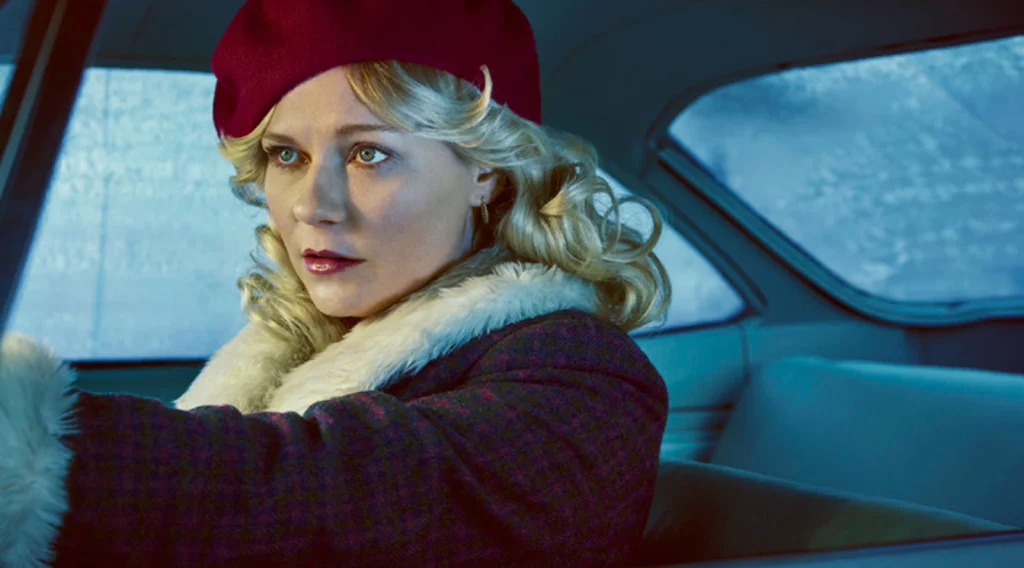
Peggy, the short-circuited woman in Season 2 of Fargo:

The hateful bride in Sherlock:

The ridiculous sister duo in Spy:

Agent Foster in Mission: Impossible – Rogue Nation:

Mitsuko in Tag:

Furiosa in Mad Max: Fury Road:

9. The “Long Live Hou Hsiao-hsien” Award
Winner: The Assassin

Hou Hsiao-hsien is the “politically correct” choice in China’s film-critic circles: you can only say he’s good, and only say how good he is. There is a “golden line,” in Feng Tang’s phrase, for measuring taste. Above it, you “know how to watch films”; below it, “you don’t know shit.”
I’m ashamed to say I’m below that golden line.
The setting, objects, sound effects, and even the supporting characters’ lines and expressions all strain to show the “everyday lived-in feel” of Tang-dynasty life. Many people say Hou Hsiao-hsien lets us hear the sound of the Tang dynasty. That part is true.
But on the other hand, the leads’ classical-Chinese dialogue and blank expressions strain just as hard to pose, pose, pose—the exact opposite of lived-in warmth.

These two sides are completely torn apart. If you want lived-in warmth or theatrical posing, either choice is fine. But forcing them together is like interrupting a government work report with one in an erotic action movie. Doesn’t that feel awkward to you?
10. The “Striking Contrast” Award
Winner: The Three-Body fan short The Droplet

This fan short, which went viral online last year, cleverly uses two layers of contrast to visualize the most spectacular passage in The Dark Forest, the second Three-Body novel: the encounter between the Trisolaran droplet and Earth’s fleet.
First contrast:
Trisolaran technology can make the droplet’s surface an absolutely smooth curve, so in theory it is a super-mirror capable of reflecting infinite detail. Against that, the rough metal components of the Earth ships mapped onto it create a powerful contrast.
The result of the coming encounter is already perfectly clear from this contrast.
The Droplet doesn’t depict the battle itself. Instead, it moves the viewpoint to before the encounter. Brilliant! It’s like two martial-arts masters standing face to face before a duel: without making a move, the atmosphere alone tells you who will win.
Second contrast:
What makes the contrast even sharper is this: on one side, from the UN secretary-general’s address to the various self-important broadcasts from ordinary folks here on Earth, there’s a deafening din; on the other, the Droplet’s absolute silence as it dismisses every bit of that noise.
This contrast is what truly brings out the chilling premise in the original: in the eyes of a higher civilization, a lower civilization is nothing more than a maggot.
“I kill you. What’s it to you?”
This short film is beautifully made. The pity is that, judging from the current level of understanding of science fiction among China’s mainstream film circles, filmmakers like Wang Ren, the director of The Drop, who can capture certain essentials of science-fiction literature, will surely find it very hard to get the chance to take the controls of a feature-length sci-fi film. The film version of The Three-Body Problem could only end up in the hands of people like Kong Ergou, where it would be thoroughly wrecked. That’s an even more speechless contrast.

While I’m at it, let me wish Kong Ergou’s version of The Three-Body Problem a box-office performance that eats shit.
11. Annual “Most Tolerant and Kind Audience” Award
Winner: the wildly praised Monster Hunt and The Pancake Man & the universally trashed Surprise: Journey to the West
Midyear brought The Pancake Man, which ignored the most basic techniques of filmmaking and film pacing and could barely be called a movie. We said: It has heart, it’s so moving, we have to support it.

Midyear also brought Monster Hunt, whose story was weaker than even Boonie Bears. We said: Great special effects, high industrial standards, we have to support it.

At year’s end came Surprise: Journey to the West. We said: The gags are a little stale, aren’t they? Professor, have you gone crazy trying to cash in? You’re trash. Go die.

Yeah, we really are a tolerant and kind audience. Adorably so.
12. Annual “My Face Is Really Swollen” Award
Winner: Mr. Six

There’s absolutely nothing wrong with a movie refusing to follow real-world logic, but it still needs an internal logic that holds together, doesn’t it? You can’t say one thing up front and then have your own actions slap you in the face later.
On the one hand, you keep insisting that a person should be loyal to his buddies; on the other, you live off a woman while using her money to help those buddies—is loyalty only unnecessary when it comes to women (even when that woman is dead set on throwing herself at you)?
You go to an old friend’s place to borrow money. He doesn’t owe you anything, yet he still treats you with impeccable courtesy. And you put on an act, talking only about feelings and not money—is that what you call valuing brotherhood above all else?
On the one hand, you keep insisting that there have to be “rules”: handle a street fight yourself, don’t call the police. On the other, you go and mail out a denunciation letter. That’s “rules”?
Was Sixth Master’s weathered, puffy face really swollen because he’s old—or because his own actions slapped him in the face?
13. Annual “Where Did the Generation Gap Go?” Award
Winner: Detective Chinatown

Most of the people behind the movies I used to watch were much older than me. Over the past few years, more and more films have been made by people my own age. Take Chen Sicheng, the screenwriter and director of Detective Chinatown: he’s only three years older than me, so he counts as part of my generation.

People of my generation (the tail end of the 70s and the beginning of the 80s), compared with the slightly older, standard-issue post-70s generation, probably have one very obvious difference:
People born in the 70s were a generation with plenty of grand ideals, whereas my generation has fewer grand ideals and more little interests. When it comes to the small things we love, my generation may be able to dig just a little deeper than our predecessors.
Those interests we “studied” day and night while growing up gradually blossomed after years of accumulation. For instance, when we were kids, people of my generation loved watching Stephen Chow. Now, on the big screen, Stephen Chow’s disciples and grand-disciples—roughly my age—are gradually taking up his mantle.
Take, for another example, the scenes in Detective Chinatown that borrow classic tricks from detective fiction, along with several comic sequences handled with remarkable precision. When I watched them, I secretly delighted in recognizing each one’s source in my own reading and movie-watching experience from childhood to adulthood.
The generation gap between me and the big screen has gradually disappeared.
When it comes to the compassionate, world-saving idealism of this generation of filmmakers, they may be a little weaker than their predecessors. But compared with the older generation, they increasingly know how to make movies fun.
Because my generation was, to begin with, a slightly more interesting generation.
Yeah, that’s how smugly adorable I am. My generation is stronger than the post-70s generation, and so much stronger than those born in the 50s and 60s that I don’t even know where to begin.
But actually, I’m very modest too: I know people born in the 90s will definitely be stronger than my generation, and those born in the 00s will be stronger than the 90s generation.
They’re stronger, likewise, not because they have more ideals than we do, but because they’re more interesting. They grew up in a more interesting world, so they’re even less able to tolerate a boring one.
Those forces still forever trying to drag us back to the age of boredom may still work on people born in the 70s and 80s, but they’ll gradually lose their power in the face of generations that are becoming more and more interesting—and that is precisely where China’s hope lies.
In this situation that grows more and more despairing, I find it strangely comforting whenever I think of that.
Leave a Reply