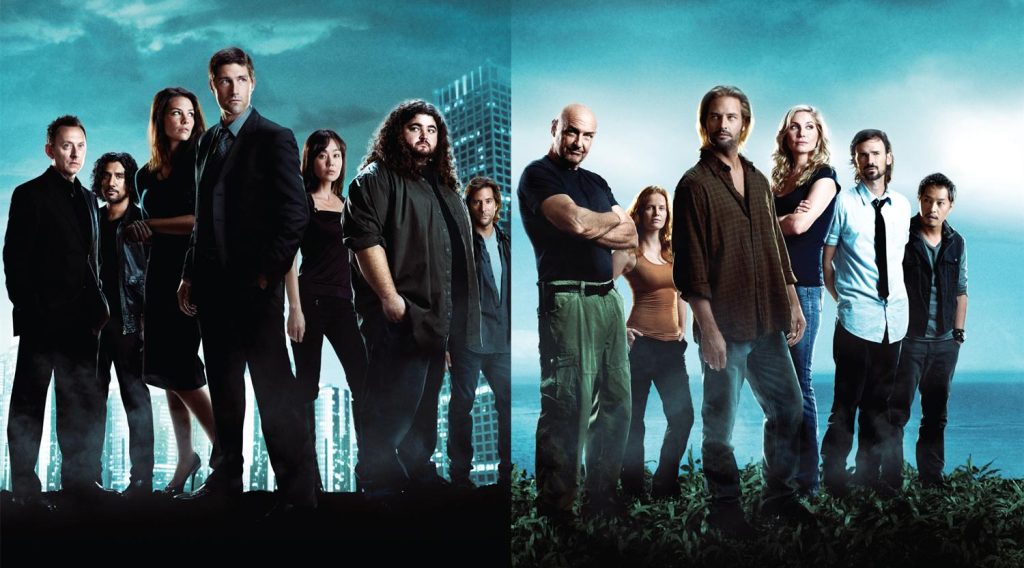
[This article was written many years ago, after the end of Season 4 of LOST. It is an analysis and set of theories based on the first four seasons, with heavy spoilers, so proceed with caution if you haven't finished them!]
Before reading this article, please read:
LOST: The Book of Secrets, Part One | My Most Brilliant Theory (Just Kidding)
LOST: The Book of Secrets, Part Two | The Island's True Origins
LOST: The Book of Secrets, Part Three | The Supreme Treasure at the Top of the World
A Load of Nonsense
I called this installment A Brief History of Loss because I originally wanted to follow the ideas I put forward in the previous pieces and retell the plot of LOST in chronological order. The first two installments were more about guessing where the writers got their inspiration, but where the inspiration came from isn’t really important. This third one is meant to sum up how those inspirations were transformed into the story of LOST. I was only planning to write that summary, which is why it nearly got written together with the previous installment. Then I kept putting it off until the new season was almost about to air. The past few months were a mess of chores: first the whole ordeal of moving back to China, then family and school matters. I simply wasn’t in the mood to fill in this hole I’d dug so long ago. My apologies. Still, looking back over the past year, I spent a lot of time having fun and not much time getting things done. For a doctoral student to be this spectacularly unacademic already takes some talent, so I hope you’ll cut me some slack.
After dragging it out for so long, if I only wrote a summary, I’d surely be trampled to death. So I’m challenging myself a little. Besides sorting out this Brief History of Loss (and, along the way, guessing who the former leader of the Others—Ben’s predecessor—was; we’ll soon find out whether I guessed right when the new season airs), I also want to take a crack at the most maddening mystery in LOST so far: why exactly did Flight 815 crash?
The Prehistoric War
As I argued in the first two installments, the story of LOST is set against a conflict that has continued from prehistory to the present day.
The earliest battlefield was the prehistoric continent of Atlantis. This continent, originally somewhere in the Mediterranean, possessed a strange supernatural force, perhaps originating in a special crystal (or magnetite). The Atlanteans worshiped these in pyramids, using them to cure illness, extend life, and even manipulate fate. How strongly this force affected a person depended on that person’s sensitivity to it. And it seems that not everyone could use it directly: a high priest capable of controlling the force had to serve as the intermediary.
The two sides of the conflict were the inhabitants of prehistoric Atlantis, ancestors of the people later called the good people and the bad people. What they fought over was how to treat this supernatural force: the former favored harmonious use, while the latter favored brute-force exploitation. Their struggle eventually caused the force to run out of control. Atlantis was destroyed, the bad people were expelled, and the good people took the surviving sacred crystals and used their power to move the last remaining piece of Atlantean land to somewhere in the Atlantic. They then used the resulting strange magnetic field to hide it in another dimension, putting an end once and for all to the bad people’s harassment. This last surviving piece of Atlantis was the later Island.
The surviving bad people wandered into exile with their civilization and knowledge. Some colonized North Africa and created Egyptian civilization. They may have carried out a few sacred crystals, too, but their power seems to have diminished sharply—and eventually failed altogether—once they left Atlantis. However faint the hope, they still dreamed of returning to Atlantis one day and enjoying the blessing of its supernatural force again. So they modeled pyramids on the temples that had once housed the crystals, mummified themselves, and placed the mummies inside, hoping that one day the supernatural force would favor their resurrection. Another branch of the bad people crossed the ocean to the Americas and established American civilization. There, too, they tried to rebuild their connection with their homeland by similar means. That is where the pyramids of the Americas came from.
As for the good people on the Island, the only high priest left who could directly use the sacred crystals’ power may have been gravely wounded in the Great Destruction. He used the crystals’ power to maintain a barely sustainable half-human, half-ghost existence, leaving him unable to communicate directly with ordinary people. This half-human, half-ghost thing became Jacob.
The War Continues
The good people on the Island discovered that only a few exceptionally intuitive people could communicate with Jacob. Such people gradually became leaders of the good people. They were extremely rare, so to ensure that the line of leadership never died out, someone among the good people had to risk entering the outside world to find suitable successors. Whenever the existing leader met with trouble, a new one could take over. We might as well call the person responsible for this job the Great Protector. The Great Protector obviously had to be someone highly intuitive and reliable. Although he couldn’t communicate directly with Jacob, his connection to the Island must have been unusually strong. We don’t know how many Great Protectors there have been, but the current one is Richard.

There was another reason to leave the Island: recruiting suitable candidates to enlarge the ranks of the good people. Perhaps because the power of the sacred crystals had been damaged or distorted to some extent during the Great Destruction, pregnant women on the Island could not survive. Although the Island’s inhabitants presumably all lived somewhat longer than normal, the good people still had to replenish their ranks with newcomers from the outside world.
For thousands of years, the good people guarded the Island’s secret this way, while the bad people outside never gave up trying to return home. From the moment they were driven into exile in antiquity, the bad people remained at the top of society, using the advanced civilization they had brought from Atlantis as their capital. No matter how history changed, certain branches of the bad people’s descendants always seemed to control enough resources to help them search for their lost homeland. Perhaps as time passed and their history became ancient legend, the descendants of the bad people understood less and less what the land they had sought for generations truly meant. But they never abandoned the effort.
When the Age of Exploration began, advances in shipbuilding allowed one prominent branch of the bad people’s descendants—the Hanso family—to establish an ocean-going company under the cover of maritime trade. The real purpose of building ships and sending them out to sea was to search for a needle in a haystack, hoping that one of the vessels might accidentally discover the location of their homeland. In fact, if you accept my analysis of fate in the previous installment, this apparently gamble-like method wasn’t quite as hopeless as it sounds. The faint connection between the Island and the bad people, left over from ancient times, was like an invisible thread of fate, constantly tugging weakly at both sides. Under the right conditions, it might greatly increase the odds of the bad people “accidentally” finding the Island.
We don’t know how many times the bad people rediscovered the Island’s location throughout history. But the one we can document, and that still affects everything today, happened in the mid-19th century, when Captain Hanso’s Black Rock “accidentally” entered the Island—which was still somewhere in the Atlantic—while sailing from Portsmouth toward ancient Thailand. As for what exactly happened between the good people and the bad people afterward, we can only speculate. One likely outcome is that the good people tried to shake off the bad people by moving the Island, just as they had during the Great Destruction, but clearly failed to solve the problem (perhaps some bad people were still on the Island when it moved, and later escaped and told their comrades outside where it had gone). The Island seems to have jumped from the Atlantic to the Pacific in this leap. In the battles that followed, the bad people gradually gained the upper hand and began taking control of the Island. But the good people were not completely defeated. They still held their most important trump card: the ability to speak directly with the Island, which meant control over Jacob. The bad people’s research and exploitation of the Island gradually expanded, but the good people’s resistance never stopped (after all, the Island still had their back). As for why the Island’s power is so miraculous yet it doesn’t simply kill the invaders itself, I discussed that in the previous installment, so please take a look.
The struggle on the Island was raging, but the good people’s activities outside it had not stopped either. Richard, for example, was still searching beyond the Island for people who might have a powerful sensitivity to it and the potential to become leaders capable of communicating directly with Jacob. We don’t know how Richard identified such candidates, but we can guess that they must have displayed extraordinary traits from an early age, bringing them to his attention. So John Locke, who had been performing miracles of life since birth, entered Richard’s field of vision.
Richard continued screening the preliminary candidates for anyone who might truly be able to speak with Jacob. His method was remarkably similar to the way Tibetan Buddhism identifies a reincarnated tulku. Locke was screened by Richard as a child, but he didn’t pass (I don’t believe Locke’s drawing of the Smoke as a boy was because he had visited the Island in a past life; it merely showed that he had a powerful sensitivity to the Island). From then on, Locke’s standing in Richard’s eyes plummeted. Locke still received an invitation from Richard’s front company when he was in middle school, but he had clearly fallen off Richard’s priority list. Of course, Locke ultimately proved that he was the true successor. That shows his childhood sensitivity to the Island was real; it’s just that his personality has always been so tortured that the talent he displayed as a child stayed buried for a very long time.
Back to the bad people. They studied all the Island’s powers, but there are signs that their central interest may have been its ability to extend life. After all, manipulating fate is too ethereal and mysterious, while the other powers offered little direct benefit. Life extension was the most “practical” payoff for them. Alvar Hanso, the later ruler of the bad people and grandson of the Black Rock’s captain, lived into the 21st century with the help of the Hanso Foundation’s Life Extension Project.
The Dharma Era
After World War II, human technology advanced at an unprecedented pace.
After the 1960s began, the world was swept up in turmoil, and rumors that the end of the world was near grew deafening.
Whether Alvar Hanso genuinely cared about the possibility of the world’s destruction or merely used it as a cover, he felt that the moment had arrived to develop the Island on a large scale with modern technology. In the 1970s, Alvar Hanso founded the Dharma Initiative. Under the slogan “preventing the destruction of the world,” it secretly recruited people to enter the Island. On the surface, its stated research goal was to alter the parameters “4,8,15,16,23,42” in the Valenzetti Equation, which was said to predict the destruction of the world. Its real purpose was presumably to study and develop the Island’s various powers. The Dharma Initiative was a complete system: in addition to research, it included an armed force capable of holding its own against the good people, logistics, and a communications-blocking system designed to keep the Island’s secret from getting out.
At this point, the good people’s counterattack was continuing as well. Since the bad people, now operating under the guise of the Dharma Initiative, had begun to become closely associated with the Numbers, the Island or Jacob placed a curse on the Numbers (see the previous installment).
In 1976, Ben came to the Island with his father, who had been recruited by the Dharma Initiative. Ben saw an apparition of his mother on the Island, and happened to be spotted by Richard, who was there at the time. Richard became convinced that Ben, too, had a powerful sensitivity to the Island, and began keeping an eye on him. Ben later became Dharma’s mole—and Richard’s inside man.
In 1988, the Island briefly lost its communications blackout for reasons still unknown. Two soldiers on a mission somewhere in the Pacific picked up that cursed sequence of numbers, allowing the curse’s power to leak out and eventually land on Hurley. The numbers leaking out also brought Rousseau to the Island.
In 1992, Ben and Richard launched the Purge from within and without. This was the good people’s counterattack, wiping out all the Dharma members except those at the Swan Station in one stroke. From then on, the good people reclaimed control of the Island.
A Little-Known Move
Here’s the problem: at this point, the bad people’s power outside the Island had not been destroyed. Alvar Hanso was still alive, not to mention the even tougher branch of the bad people that would appear later—the Widmore family. If that’s the case, why didn’t the bad people immediately organize a counterattack after the Purge?
The answer is this: to settle the bad people problem once and for all, the good people moved the Island immediately after the Purge! So the bad people simply had nowhere to direct their strength. When the numbers leaked out in ’88 and when Flight 815 crashed later, the Island was in the Pacific both times—but the Island at those two moments was actually nowhere near the same place! It had merely moved from one spot in the Pacific to another.
The reason the good people wiped out every Dharma member but left the Swan Station alone was precisely that the Swan Station was deeply connected to the Island’s magnetic field, and that magnetic field was the key to keeping the Island hidden. The good people were wary of the consequences: if they seized the Swan Station and failed, the magnetic field might run out of control, with results impossible to predict. Rather than risk forcibly taking the Swan Station, they were better off leaving a few Swan Station staffers—none of them core members of the bad people—to keep pushing the button and maintaining the field’s stability. In any case, the good people could monitor the Swan Station through the Pearl Station.
A brief aside: after 815 crashed and Locke and the others entered the Swan Station, Ben, determined to kill Locke, the usurper-in-the-making, decided to take a dangerous gamble. He actually planned to kill Locke by triggering a magnetic storm, tricking Locke into not pushing the button and ultimately causing the Swan’s implosion. Locke survived by a miracle, but the magnetic storm temporarily stripped the Island of its ability to stay hidden, inviting the wolves in. This destroyed all the effort the good people had put into carefully maintaining order at the Swan Station since the Purge.
In short, after the Purge, the bad people were effectively expelled once again. They had to start searching for the Island’s location all over again. For various reasons, Hanso’s influence began to weaken, and another, tougher force within the bad people emerged: the Widmore family, led by Charles Widmore. Following the old Hanso family playbook, the Widmores used all kinds of pretexts to send hot-air balloons and sailing ships across the world’s oceans, hoping that one of them would ‘accidentally’ discover the Island’s location.
The Mysterious Predecessor
So what happened on the good people’s side of the Island after the Purge?
First, someone had to move the Island, as Ben would later do, and then be exiled to Tunisia. Who was this person?
Ben must have gone from ‘undercover agent’ to leader not long afterward. So who was Ben’s predecessor?
In Season 4, Ben said that he hadn’t been the leader of the good people from the very beginning. Given LOST’s habit of leaving almost no detail unused, this is clearly foreshadowing. In the story ahead, Ben’s predecessor is bound to make a proper appearance. Will he be a new character? Or someone who has already appeared?
My guess is that Ben took over from his predecessor much the way Locke later took over from Ben. After the Purge, Ben met Jacob and was judged to have what it took to become a leader. From there, knowing Ben’s personality, he must have pulled some spectacular trick that left the leader of the time trapped between internal pressure (Ben’s attempted coup, and so on) and external pressure (the bad people outside the Island soon organizing a counterattack). With no good options left, that poor soul chose self-sacrifice: turning the wheel to move the Island and getting exiled from it. The old leader was thus exiled to Tunisia while the Island successfully changed location. At that point, Ben was the only person on the Island who could communicate with Jacob. Even if Richard and the others weren’t happy about it, they had no choice but to let Ben become leader—especially since Ben later seemed to find some way to keep Jacob in check, to the point of ignoring Jacob altogether.
If this guess is correct, Ben’s predecessor would have to meet the following conditions:
1. He is outside the Island. And according to Ben, he may never be able to return, so even if he wants to make trouble for Ben, he has to do it indirectly.
2. He knows the Island’s power extremely well. He has access to a great deal of the good people’s information—the way they select successor candidates, for instance, perhaps even the candidate list itself. He also understands Ben’s methods very well.
3. He hates Ben to the bone. Following the principle that the enemy of my enemy is my friend, he would work with Ben’s opponents. Who are Ben’s opponents? Charles Widmore and John Locke. Still, because he remains on the good people’s side, he ought to sincerely help Locke, while with Widmore he would use him to attack Ben but continue quietly pursuing his own agenda from the Island’s point of view.
If this predecessor is someone who has already appeared, who fits all these conditions? One person fits them perfectly! Matthew Abaddon.

Matthew Abaddon is outside the Island, and he makes trouble for Ben indirectly. Ben’s enemy is his friend, so he encouraged Locke (he knew about Locke because Locke was already on the candidate list back when Abaddon held power). He told Locke that miracles had happened to him before, too—because he was Locke’s predecessor’s predecessor, after all, so he had probably experienced a miracle like Locke’s legs suddenly healing the moment he arrived on the Island. He helped Widmore choose the list of people to send to the Island, but he was very clearly pursuing his own agenda; nearly everyone he chose ended up working against Widmore. And Widmore must have hired him precisely because he knew the Island’s secrets and Ben’s methods inside out—such as how to destroy the Tempest station!
Whether this guess is right may be confirmed in Season 5, which is about to premiere.
In any case, whoever the predecessor was, Ben took over after the Purge. Outside the Island, Widmore tried every possible way to find its new location. He had little hope. Even when a hot-air balloon and a ship he financed (Desmond) really did enter the Island’s vicinity, they didn’t carry news of the Island back out the way the Black Rock had. But everything changed with an ‘accident’ in the Swan hatch and the arrival of Flight 815, which crashed onto the Island. So at last, we can touch on the biggest mystery in LOST so far—the one that has tormented us most: why did 815 crash?
The Mystery of the Crash
On the surface, the explanation for 815’s crash is simple: Desmond was following Kelvin and missed the button push, causing a brief magnetic storm. At that exact moment, 815 just ‘happened‘ to be flying over the waters above the Island, and the storm disabled the plane’s equipment, bringing it down on the Island. Isn’t that a little too convenient?
The crash would be one thing, but a lot of people somehow survived. Why?
Even stranger, among the survivors there just ‘happened‘ to be Locke, who had once been a candidate to succeed the Island’s leader! There just ‘happened‘ to be Hurley, tormented by the curse that had leaked off the Island! And there just ‘happened‘ to be the brother of one poor sap who had crashed on the Island years before (Eko). Having even one of these people on that plane would be a one-in-a-million coincidence. With this many coincidences arriving together, it is absolutely no longer a coincidence.
If the writers of LOST ever dare explain this event with coincidence, we’ll charter a plane to the United States and kick them to death.
What’s more, before 815 crashed, certain forces with the same nature as the Island’s had foreseen that it was bound to happen. Eko was told he would see his brother again soon; Claire’s psychic foresaw that the baby would be born on the Island; Rose’s healer foresaw that the Island would cure Rose’s terminal illness. This also shows that 815’s crash was not an accident, but had long been pushed along by some kind of force.
So my conclusion is this: 815 did not fall because of coincidence. From the very beginning, its crash was driven by a conspiracy.
So what was the force driving it?
Herley says it was because he was cursed, and everyone else got dragged into it.
Ben says it was because God hadn’t abandoned him yet, so He sent him a spinal surgeon.
Eko would probably think God gave him one more chance to see his brother.
They’re all wrong.
815 crashed solely to get one particular passenger from that plane onto the Island. Some of the other passengers were expendable cannon fodder, while the rest had important uses; it was because of those uses that they were ‘arranged’ onto 815. In a sense, apart from that special passenger, everyone else was an innocent victim caught up in the plan.
The person who ‘arranged’ all this was Jacob.
And the special passenger was John Locke.

Why did Jacob want Locke on the Island? And why did he have to use such an awkward method? What were the other people on the plane for?
Let’s answer the first question first: why did Jacob want Locke on the Island? Simple—he had been fed up with Ben for a long time. As I said earlier, after becoming leader, Ben seemed to have found a way to counter Jacob (the volcanic ash around the cabin appears to have been used to keep Jacob in check). Ben thus changed from a messenger into the true ruler, imposing his will on the Island without restraint (for example, researching the deaths of pregnant women). Jacob could have flexed his power and killed Ben, just as he later gave Ben a tumor. But his concern was that Ben was the only person on the Island who could speak to him directly. If Jacob removed Ben by force without a new messenger ready to take his place, the good people would be left leaderless, and things could go disastrously wrong. So Jacob had to play the long game: he needed to bring a new leader to the Island through his own power. Only after confirming that the new leader could reach the Island could he move against Ben.
The new leader Jacob wanted to bring to the Island was John Locke. Don’t forget that long before Ben came to power, Locke was already on the good people’s list of successor candidates, so Jacob did not first learn of Locke when Locke arrived on the Island. Richard was disappointed in Locke for a while, but Jacob may not have been. He surely knew best what kind of person had the greatest potential. But after Ben put him under control, even if Jacob now thought of bringing Locke to the Island, he had no way to communicate that will directly to Richard and the others (his will had to be transmitted through a messenger in the first place, otherwise there would have been no need for a character like Ben).
Why did Jacob have to use such an awkward method as a plane crash? Couldn’t he just wave his hand and ‘move’ Locke straight to the Island?
No.
Because the many clues in the series suggest that Jacob’s power is both formidable and extremely awkward. His ability to control things on a broad scale is remarkable (for example, keeping people on the Island from getting sick, or manipulating fate as I analyzed in the middle installment), but he cannot control the details (for example, he could not simply make the people Widmore sent die). So Jacob’s power is not a force of precise control, but a broad-brush kind of power. Most of the time, it operates according to certain rules rather than acting directly on particular individuals (though there are plenty of exceptions). Add Ben’s countermeasures, and Jacob’s power seems to have been heavily restricted. That is why Jacob could not directly transport Locke to the Island, or even directly let Richard know his will. He had to use the power that was still available to him and bring Locke to the Island himself. That power was the Island’s deepest power: manipulating fate.
Manipulating fate does not mean reaching the goal directly in one flash, like a magic trick. It means drawing things along.
As I analyzed in the middle installment, Jacob—or the Island’s power—should be able to leave the Island to some extent through the good people who regularly travel off-Island for work. The ‘instruction’ Jacob used to tug at Locke’s fate may have been carried into the outside world through them, then set in motion there. An even bolder guess is that Jacob’s secret instruction—or imperial edict, or fate-manipulating command—was perceived by Matthew Abaddon. Don’t forget: Matthew Abaddon gave Locke a hard push from behind when it came to getting on that plane.

But even that isn’t enough. The Island is invisible under most circumstances. Even if the pull of fate brings Locke close to the Island on a plane, he still can’t enter the Island’s space. So Jacob has to act inside the Island too, briefly lifting its invisibility just as Locke flies past.
The key is the Swan Station! Desmond and Kelvin inside the Swan Station!
And so the tentacles of the pull of fate reached out to Desmond and Kelvin at the same time. This shouldn’t have been too hard, because Desmond is someone with a powerful sensitivity to the Island (his connection with the bad people, his chance encounters with the Island, and so on). Who knows? Maybe it was the Black Smoke that tore the hole in Kelvin’s protective suit.
But even this isn’t enough. Jacob’s power is always a broad, big-picture manipulation of fate, so precise control is very difficult. It could use the pull of fate to bring Locke close to the Island by plane. It might even use the Black Smoke to secretly cut Kelvin’s suit, triggering the event in which Desmond delays pressing the button, so the Island briefly becomes visible. But it has no way to control the exact timing. It can’t arrange for the moment when the plane is flying close to the Island to be exactly the moment when Desmond delays pressing the button. After all, both events are concrete events determined by countless detailed factors. If Jacob could exercise that kind of precise control, would it still be afraid of the bad people coming after it? One enemy arrives, one enemy gets taken out. So my guess is that, through the pull of fate, the Island could bring Locke close by plane and make Desmond delay pressing the button at the same time. But the timing couldn’t be matched. In other words, when Desmond delayed pressing the button, Flight 815 really was flying over the waters near the Island—but it wasn’t directly above the Island!
Which means that during that brief interval when Desmond delayed pressing the button and the electromagnetic storm occurred, Jacob couldn’t simply pull 815 down from the sky. It had to search the nearby airspace for Locke. Jacob’s problem was how to find Locke as quickly as possible in a very short window.
Suppose I arranged to meet a woman I met online. She’s a student at another school, and we’re meeting in a huge plaza with no distinctive buildings nearby to help us recognize each other. What’s the easiest way for me to find her? Or, put differently, in what form could she appear that would let me lock onto her in the shortest possible time?
The answer is: if she showed up in her school uniform together with a bunch of her girlfriends in the same uniform, the target would instantly become much bigger. Finding a single grain of sand in the sea is hard; finding a whole bucketful of sand is a little easier, right?
Like a hound tracking its prey, if Jacob wanted to pick up Locke’s smell as quickly as possible, the best method was to amplify that smell: put a group of people with the same smell as Locke on the plane!
What was Locke’s smell? His gift for strongly sensing the Island. So in the earlier ‘secret imperial edict’ it sent out, Jacob not only arranged for Locke to board 815; it also arranged for many other people with a sensitivity and connection to the Island to be near the Island together with Locke. Their role was to form, with Locke, a group sharing the same trait, greatly increasing Jacob’s chances of sensing Locke’s location in a short period of time.
That’s why the passengers on 815 were connected by so many tangled threads. They were chosen by Jacob because of those connections (not direct connections with Locke, actually, but connections with the Island).
Hurley: selected because the curse of the numbers created a sensitivity and connection to the Island! (And Hurley’s own sensitivity was hardly weak—for instance, he could see Jacob’s cabin.)
Eko: selected because his brother entered the Island years earlier, creating a connection with the Island!
Sawyer: selected because of his connection to Locke’s father! Sawyer was a little different: he had a direct connection with Locke.
Jin and Sun: selected because of their relationship with the bad people (Sun’s father was connected to Widmore, and very likely represented another branch of the bad people)!
Walt and Michael, father and son: selected because of Walt’s special abilities. Let me explain this part. Judging from quite a few hints in LOST, things like special abilities, miracles, miraculous healing, and fortune-telling all connect to the Island’s power. So people with special abilities, miracle-workers, fortune-tellers, and practitioners of supernatural healing are all people with strong connections to the Island.
Jack: same as above. Jack was a miracle-worker, so he was selected! We may all have forgotten that Jack once performed the miracle of curing Sarah. Jack was a bit like the young Locke: his conflicted personality concealed his gift.
Rose: selected because of her strong sensitivity to the Island! Don’t forget that, apart from Locke, Rose was the only person whose terminal illness was cured in an instant. Clearly, her sensitivity was strong too.
I won’t analyze everyone else one by one. All these people were drawn onto 815 by Jacob’s hand of fate because they shared a similar smell with Locke. Jacob may have meddled with the fates of more than just these people; the net it cast may have been much larger, and those who boarded 815 were only a portion of the people caught in the pull of fate. But as long as some of them appeared near the Island together with Locke, Jacob’s chances of finding Locke in that instant of electromagnetic disturbance increased dramatically. Once it locked onto Locke’s location, Jacob could use a power similar to the Black Smoke to drag 815 into the Island’s range. So 815 may not have been destroyed by the force of the electromagnetic storm at all. Jacob also used that same power to ensure that people with this smell survived the crash. That’s why so many people survived the crash of 815.
As for the other passengers on 815, either their connections with Locke or the Island had not yet been revealed, or they were simply innocent cannon fodder. The more I think about it, the more our heroine Kate seems like just a ‘random bystander.’ If she had any prior connection with the Island or Locke, her connection to Sawyer’s girlfriend might count—but only barely. Apparently, she wandered into the chess game by mistake and survived by basking in the reflected light of the people with the stronger smell.
So the crash of 815 was not accidental in the slightest. It was actually a scheme Jacob had been painstakingly laying out long in advance, with the goal of avoiding Ben’s eyes and getting Locke onto the Island. Everyone else with tangled connections to Locke or the Island was merely sacrificial material used to amplify the smell.
As the date of 815’s crash approached, Jacob dared to give Ben a tumor precisely because it sensed that the net it had cast was destined to close without surprises. But Jack—the person originally placed on 815 to amplify the smell—could actually help Ben treat the tumor. That was the true, and possibly the only, coincidence. Human calculation never quite beats heaven’s calculation.
That’s why, when Ben got the passenger list for 815, his feelings must have been incredibly complicated. On the one hand, he must have figured out the causes and consequences of the crash. He knew that if Jacob dared to bring Locke over, it meant Jacob was officially breaking with him and casting him aside. But when he discovered Jack’s name on the list, he genuinely felt that, above Jacob, some unseen power had not abandoned him.
So Ben refused to sit around and wait. On the one hand, he used every means available to make Jack treat him. On the other, since Jacob had dared to play with fire, Ben—pushed to the brink—played with fire too, recklessly triggering the Swan Station implosion. He had meant to kill Locke, but instead exposed the Island’s location to the bad people outside the Island. After that, Ben did everything he could to obstruct Locke’s bid for power. Jack’s unexpected role and Ben’s tenacity were probably both outside Jacob’s calculations.
By this point, you should be able to connect all this with the show’s main plot. I’ll stop here.
The Legend of the ‘Random Bystander’
If my speculation is right, we suddenly discover that the male and female leads of LOST—Jack, Kate, Sawyer, and Sayid—are almost all the sort of people who would normally be random bystanders. Even Ben was originally just an abandoned chess piece. From the conspiracy planner’s original point of view, they were almost completely insignificant.
The protagonists of the story were really just supporting actors on the stage.
But whether it was Jack’s obsession or Ben’s tenacious resistance to fate, those things move me far more than a perfect, grand conspiracy. A vast conspiracy is certainly fascinating, but what truly thrills me is when the little people end up steering the grand conspiracy. After the series ends, when we look back, we may find that the legends of these ‘random bystanders’ are the most precious part of the story.
Conspiracy, fate, supporting actors. This is LOST’s brief history of loss.
See you in Season 5!
Leave a Reply