
My top 10 books of the year, in no particular order:
1. How WEIRD Culture Created a Prosperous World
Author: Joseph Henrich
Genre: Psychology, sociology, anthropology, history
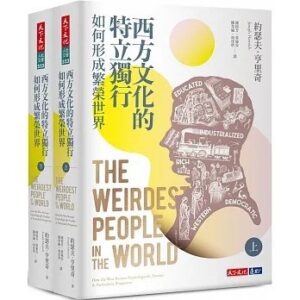
The Traditional Chinese edition of The WEIRDest People in the World. I hear the rights to the Simplified Chinese edition have been snapped up by some domestic publisher that is supposedly Number One in the universe, but it still hasn’t been published (it’s not hard to imagine what kind of resistance it ran into).
Perhaps one of the most important works of ideas of the past decade. It uses psychology to explain why modern civilization began in the West, and why Westerners—not other peoples who were equally excellent, or perhaps even more excellent—were the ones who built today’s modern world.
This book completes the argument begun by Guns, Germs, and Steel. In Guns, Germs, and Steel, Jared Diamond’s geographic-determinist model convincingly explains why, up to around 1000–1200 AD, civilizations across Eurasia were so far ahead of those in Africa, the Americas, and Oceania. But Diamond’s theory has very little explanatory power when it comes to the trajectories of civilizations after around 1000 AD.
In fact, after around 1000 AD, the economies that gradually began to flex their muscles and gain the upper hand were precisely those relatively underdeveloped regions in Guns, Germs, and Steel‘s geographic-determinist model: England, Scotland, the Netherlands…
Joseph Henrich’s How WEIRD Culture Created a Prosperous World picks up where Guns, Germs, and Steel leaves off. In Henrich’s view, the rise of the West in modern times can be traced back to an unintended consequence of the Christian Church: its aggressive “Marriage and Family Program”—a system of marriage and family organization involving monogamy, primogeniture, small households, and so on—broke apart the “kinship-intensive institutions” that dominated everywhere else in the world, forcibly reshaping the Christian world into a social form built around small households.
This hard-line program of social engineering, imposed by the Church for a thousand years, accidentally produced the “WEIRD people” of Christian civilization—a bunch of oddballs with extraordinarily unusual psychological traits. These oddballs had an exceptionally rare, globally speaking, tendency toward impersonal prosociality, a strict sense of time, non-zero-sum thinking, individualistic ways of thinking, and so on… It was precisely these highly unusual psychological mechanisms that created the “mental soil” for the social and technological innovations of modern Europe.
In one sentence: a series of psychological traits inadvertently cultivated by particular cultural opportunities gave birth to the modern world.
The book’s flaws:
The core argument of How WEIRD Culture Created a Prosperous World is astonishing, but the book is absolutely terrible to read. Joseph Henrich may be the deepest-thinking psychologist alive, but he has never been much of a writer. This book runs to millions upon millions of words, with a huge amount of repetition and no clear sense of what’s important, spending far too much time on minor details. These problems were already present in Henrich’s previous book, The Secret of Our Success; this time they’ve been taken to an extreme, making it possible that very few readers will manage to finish the whole thing.
The intellectual value of How WEIRD Culture Created a Prosperous World may be on the same level as Guns, Germs, and Steel, but in readability it gets left ten blocks behind. I suspect that will seriously diminish the book’s influence.
2. The Logic of the Brain
Author: Eliezer Sternberg
Genre: Neuroscience, psychology
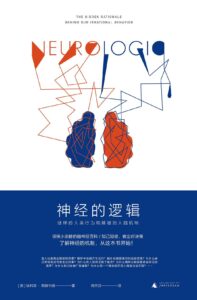
Possibly one of the best popular-science books currently available on the “consciousness–unconsciousness” framework. The cases are extraordinarily compelling, the thinking profound and tightly reasoned, and the book is intensely readable.
Kahneman’s Thinking, Fast and Slow popularized the idea that the human mind contains an unconscious-dominated “System 1” and a conscious-dominated “System 2.” The Logic of the Brain takes this a step further, showing us how these two systems interact in a three-dimensional, dynamic, deeply entangled way.
Thinking, Fast and Slow splits the mind in two; The Logic of the Brain puts the two halves back together, turning System 1 and System 2 into a single interactive whole at a higher level.
3. Hyperion & The Fall of Hyperion
Author: Dan Simmons
Genre: Science fiction, literary fiction
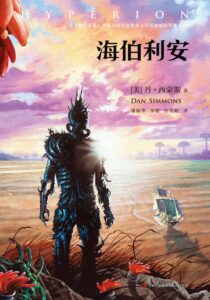
Hyperion is like an epic poem, both grand and dazzling; it is also like a philosophical meditation, touching on all kinds of ultimate questions facing humanity, from fate to time, from the meaning of suffering to the value of faith, and then to the relationship between humans and gods. Its six stories belong to six different genres and use six different styles; the sheer display of technique is breathtaking too.
After finishing the second book, The Fall of Hyperion, I suddenly realized that what the author was really writing through the Hyperion series was the psychological chain of “suffering–empathy–love.” So this may also be the grandest psychological novel in the world.
Only by experiencing human suffering firsthand can one qualify to ascend into a god of humanity. If the central character, Keats, had not gone through the boundless suffering of his final moments, he would not have been worthy of godhood. It’s almost as if the book is spelling out that line from Journey to the West: Conquering the Demons: “Only after suffering can you know the true suffering of all living beings.” The conception and prose of the first two Hyperion books are truly breathtaking.
I made two videos interpreting the Hyperion series. If you’re interested, please go take a look:
Introduction to Hyperion: A Grand, Profound Science-Fiction Epic and the Ultimate Literary Mash-Up
Introduction to The Fall of Hyperion: When Artificial Intelligence Becomes God
4. Self-Referential Engine
Author: Toh EnJoe
Genre: Science fiction
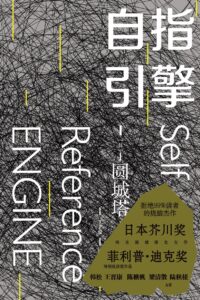
I understood almost none of the chapters, but the few I (apparently) did understand absolutely blew me away.
This book may be a science-fiction genre all its own. You could probably call it “logical science fiction”: a novel sketched out with a maze of logic.
Also, the atmosphere is uncannily like the final episode of Season 3 of Twin Peaks: a reality that isn’t real, a timelessness that has time, a nonlinearity that is linear, existence that doesn’t exist…
In short, I don’t understand it, but it blew me away.
5. The Author Is Unknown
Author: Shinzo Mitsuda
Genre: Mystery

A collection of short folk-horror mysteries by Shinzo Mitsuda, the master of “folk mystery.” Several short stories are linked into one long novel. There is no Chinese edition yet, but a very high-quality fan translation can be found online.
The story “The Suzaku’s Bane” in this book is probably the finest locked-room mystery in the “And Then There Were None” mode that I’ve read to date. At the end, as in every story of this type, every character is dead—so who exactly is the murderer? The author hides the culprit behind a breathtaking sleight of hand. Truly astonishing.
I’ve already made a video introducing it, so I won’t go into it here. If you’re interested, please take a look:
The Author Is Unknown: A Masterpiece of “And Then There Were None” Mystery
6. The Castle of Human Wolves, Parts 1–4
Author: Reito Nikaido
Genre: Mystery
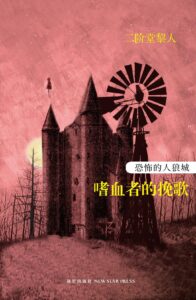
This year I finished The Castle of Human Wolves, the longest mystery novel ever written.
The book has two main components: locked-room tricks and architectural tricks. The locked-room tricks are merely barely plausible, but the architectural tricks are absolutely mind-blowing! The best architectural trick in my reading life. I finished reading the solution on my knees.
The motives are spectacularly chuuni. Which is actually great: it lets the novel completely “fall” into a showpiece for gorgeous tricks. Very New Mystery indeed.
7. Boy’s Life
Author: Robert McCammon
Genre: Coming-of-age, fantasy, mystery
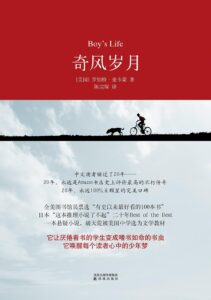
A mystery novel’s skin, a coming-of-age novel’s flesh, and Gothic bones.
Look at the skin, flesh, and bones separately, and each is enjoyable in its own right. Put them together, and the book’s character is even more one-of-a-kind.
The best coming-of-age novel I read in 2022. Before reading it, I expected it to feel like To Kill a Mockingbird; afterward, I discovered that Boy’s Life goes a hundred times wilder than To Kill a Mockingbird.
8. The Night Is Short, Walk on Girl!
Author: Tomihiko Morimi
Genre: Light novel, fantasy

This year I finally caught up on Tomihiko Morimi. My favorite is The Night Is Short, Walk on Girl!—its imagination is wild and dazzling, yet lovely and warm.
Tomihiko Morimi really is a wonderful oddball.
9. Gone with the Wind
Author: Margaret Mitchell
Genre: War, women’s fiction, literary fiction
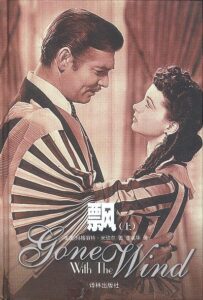
Embarrassingly, I only got around to reading this world-famous classic this year.
I wish we’d met sooner. It combines the delicacy of women’s fiction with the weight of a novel of its era; nearly a million words and hardly a wasted stroke. Every character is vividly alive, and its richness is impossible to summarize. Magnificent!
10. Cutting Down Shang: The Yin–Zhou Transition and the Rebirth of Huaxia
Author: Li Shuo
Genre: Archaeology, anthropology, history
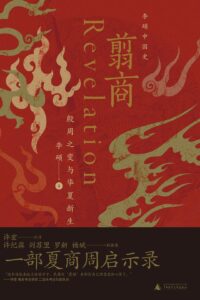
Lots of big names have already recommended Cutting Down Shang. Its interpretation of the Book of Changes is absolutely explosive! Although quite a few details are speculative, its overall framework for explaining “how the historical memory of human sacrifice in the Shang dynasty was erased” is profoundly revolutionary. (And you can’t blame the author for the speculation in the details—the historical materials from antiquity are simply too scarce.)
This book also explains why China never developed a powerful religious outlook, and why Chinese politics matured so early. So far, it is the explanation that has convinced me most.
Time passed especially slowly this year. When I sat down to write this year-end review, I was shocked to discover that many of these books were actually read this year; in my memory, I’d finished them ages ago.
I read more than 70 books in 2022—a slow reading year by my recent standards, but also a big creative year for me. At the beginning of the year I joined the “Bilibili Classroom” and launched the “Introduction to Psychology: Essential Knowledge and New Insights” course. In the second half of the year I joined “Fanshu (Fan Deng Reading)” to interpret classic psychology books. As the year drew to a close, I published two new books in quick succession: 24 Frames of Psychological CodesWhy Won’t the Elephant Listen?.
Let’s encourage each other. O(∩_∩)O~
By: Zhichao Wei
Leave a Reply