 ▶
▶
The full talk is in the Feifan series on Fanshu, a Chinese audiobook app; this page is only a summary.
What This Episode Covers
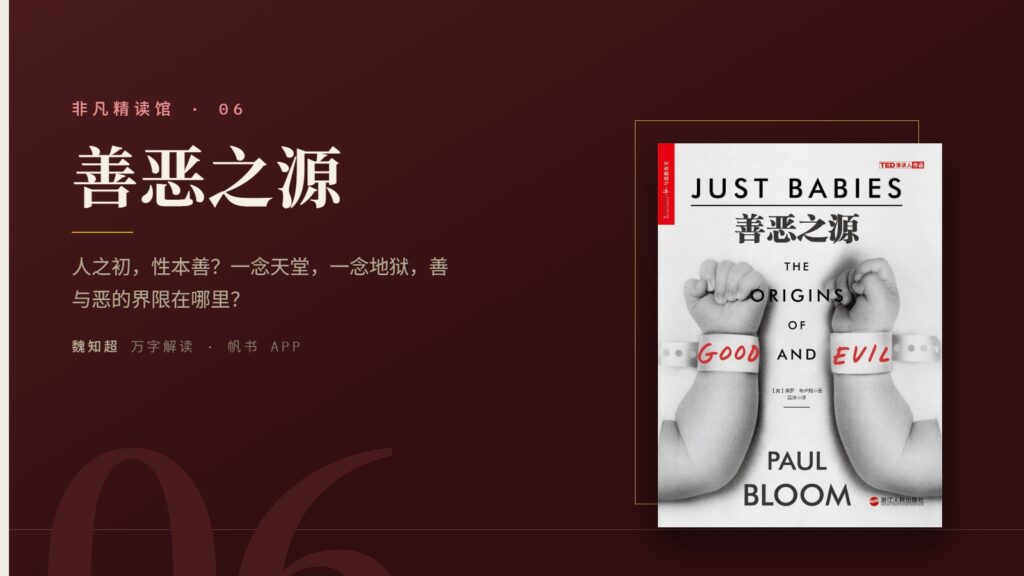
A moral guidebook for the new era—from babies’ moral lives to adults’ moral choices. The “moral classic” is actually pretty easy to understand! Someone who talks about cats and dogs every day might still shrug and say, “Not my problem”? Someone who feels other people’s joys and sorrows as if they were their own might still stand aside and watch with cold eyes? Are these complicated moral emotions inborn instincts, or choices we make later? Good and evil often come down to a single thought. This episode gives you a pair of all-seeing eyes to help you spot humanity when it wavers!
You’ll Hear
- Observe babies’ moral behavior and learn the psychological evidence for the idea that human nature is inherently good
- Understand the connection between human evolution and moral behavior, and learn about three important moral instincts
- Take a deep look at human nature, analyze the limits of moral instincts, and master two strategies for making choices that go beyond instinct
Quote of the Episode
Helping behavior directly triggered by empathy often has a “can’t see the forest for the trees” effect: it directs our attention to one particular case, but often fails to take fairness into account.
We can’t become better people by relying on kindness and willpower alone, just as we generally can’t lose weight or quit smoking through hope and effort alone.
The social environments we create can turn a baby with only a partial moral awareness into an adult with a powerful moral sense.
About the Author
Paul Bloom, the most popular instructor on Yale University’s Open Courses, a renowned cognitive psychologist, and a TED speaker. He is the author of How Pleasure Works and Against Empathy, among other books.
Leave a Reply