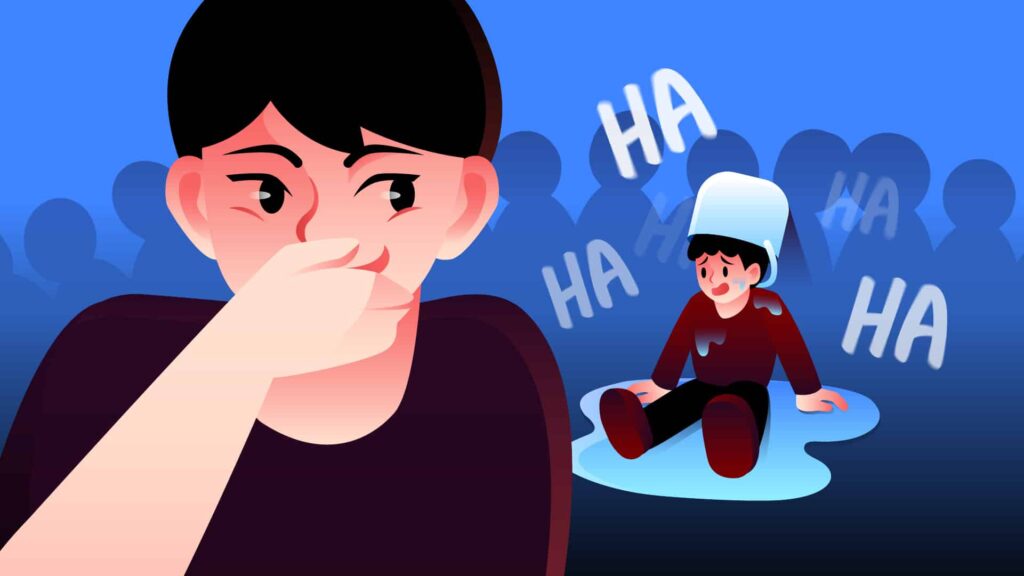
The recent Richard Liu incident has sparked a nationwide bout of schadenfreude.
Why are the onlookers so happy when Richard Liu gets into trouble?
If something happened to some other celebrity, would the onlookers be just as happy?
What exactly are we taking pleasure in when we feel schadenfreude?
According to a new theoretical model recently published in the journal New Ideas in Psychology (see References), there are three kinds of schadenfreude.
Type One: Aggression-related schadenfreude
Its psychological origin lies in protecting one’s own social group. The target of the schadenfreude is a hostile group. For example, a fan feeling happy when an important player on a team they don’t support gets injured would fall into this category.
Type Two: Rivalry schadenfreude
Its psychological origin lies in competition between individuals. The target of the schadenfreude is someone with whom we are competing (especially a peer who is a direct competitor). Feeling secretly delighted when a colleague makes a mistake is an example.
Type Three: Justice-based schadenfreude
Its psychological origin lies in the desire for fairness. Feeling schadenfreude when a seemingly squeaky-clean business success story is exposed in a commercial fraud scandal would fall into this category.
The three kinds of schadenfreude correspond, respectively, to our psychological drives for group belonging, social status, and fairness. The first takes pleasure in the enemy party’s misfortune, the second in a rival’s downfall, and the third in seeing karma catch up with someone.
So which kind do you think the onlookers’ schadenfreude toward Richard Liu belongs to?
References:
Wang, S., Lilienfeld, S. O., & Rochat, P. (2019). Schadenfreude deconstructed and reconstructed: A tripartite motivational model. New Ideas in Psychology, 52, 1-11.
ps:
The onlookers have been awfully busy this year.
Note
- This series, called “New Insights in Psychology”, consisted of short popular-psychology essays and miscellany written at the time to accompany content for Zhichao Wei: New Insights in Psychology Course. They were published on the now-closed platform Fangtuán, and the original link no longer exists.
Leave a Reply