This episode is also on Bilibili too.
In this piece, let’s shift our angle a little and turn our attention to history. Let’s look at what our ancestors did, and what they invented, in their efforts to escape death—and how those inventions profoundly changed human history.
Beyond embracing a cultural worldview and embracing self-esteem, these two psychological mechanisms, our ancestors’ struggle with the Grim Reaper broadly followed two paths.
The first was to invent a belief in the immortality of the soul—in other words, to imagine that after the body died, the soul could continue to exist.
The second was to pursue physical immortality.
The first path was highly imaginative; the second was hardcore. Both profoundly changed human history, especially the first one. You could even say that the way humans look today may well be a by-product of our ancestors fighting the Grim Reaper for three hundred rounds.
Let’s start with the first path. I mentioned in the last episode that, when it comes to fighting the fear of death, the most primitive and direct method is to imagine that the soul is immortal. Austrian psychologist Otto Rank said that the soul was one of humanity’s earliest—and wisest—inventions. It allowed people to see themselves as more than merely physical beings: through the soul’s immortality, they could dodge the body’s death. Some people believe that the soul ascends to heaven after death; others believe it is reincarnated. But whatever the specific form, the core is the same: as long as you believe the soul is immortal, the death of the body doesn’t seem quite so terrifying.
So when did people start believing that the soul survives death?
Archaeological evidence shows that around 40,000 years ago, humanity went through an explosion of creativity. Archaeology has a technical term for it: the “Upper Paleolithic Revolution.” Many complex stone tools and exquisite cave paintings appeared in a burst during this period. Another thing appeared around the same time: elaborate burials. Our ancestors 40,000 years ago already knew to place lots of ornaments in graves. This hints that they may already have believed the soul survived death.
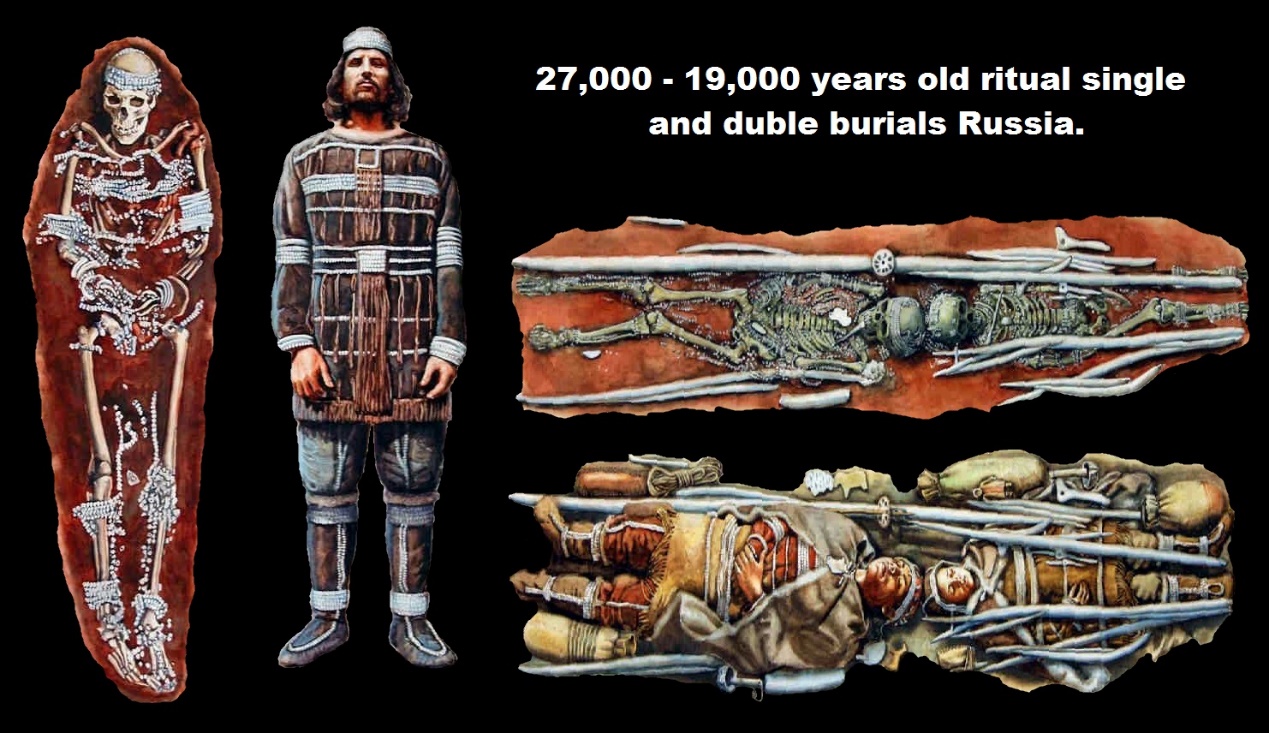
In a 28,000-year-old human burial at the Sungir archaeological site in Russia, archaeologists found the bodies of two young people and a 60-year-old man. Each body was covered with a large number of exquisite ornaments. Their clothes were decorated with 4,000 ivory beads, and each bead is estimated to have taken an artisan at least an hour to make. The two young bodies lay with their heads touching, with two ivory spears along their sides. The meaning of this grave is even clearer. The ancestors of 28,000 years ago spent so much time and effort building such an elaborate tomb. That should tell us they believed death did not mean total annihilation. Only if they believed the dead had souls living in another world would the dead need to be buried with such ceremony.
The belief in the immortality of the soul comforted people, caged their fear of death, and made death seem less terrifying. That function was of course extremely important. But what’s more interesting is that this belief produced many by-products, and those by-products had far-reaching consequences for humanity. Some were predictable, such as religion. Others were rather unexpected—for example, the invention of agriculture may also have been connected to the belief in the immortality of the soul.
Let’s start with religion. The first by-product of the belief in the immortality of the soul was religion. Religion is an advanced form that emerged as this belief developed and became more elaborate. Modern psychological experiments have also shown that religious belief is highly effective at easing death anxiety. For example, one experiment found that after thinking about their inevitable death, even atheists were more willing to associate the word “real” with religious terms such as “God, heaven, angels, and miracles.” Beyond its original function of easing death anxiety, religion kept evolving throughout human history and developed many other functions, such as providing powerful cohesion. We’re not relatives, we don’t even look alike, and we may not share a language—but if we worship the same god, we can be friends. At one point in history, religion was one of humanity’s most important forms of organization. I don’t need to say much about how much religion has influenced human civilization.
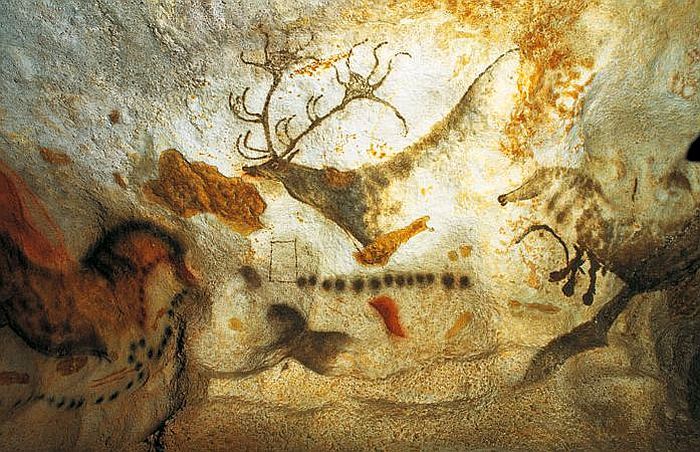
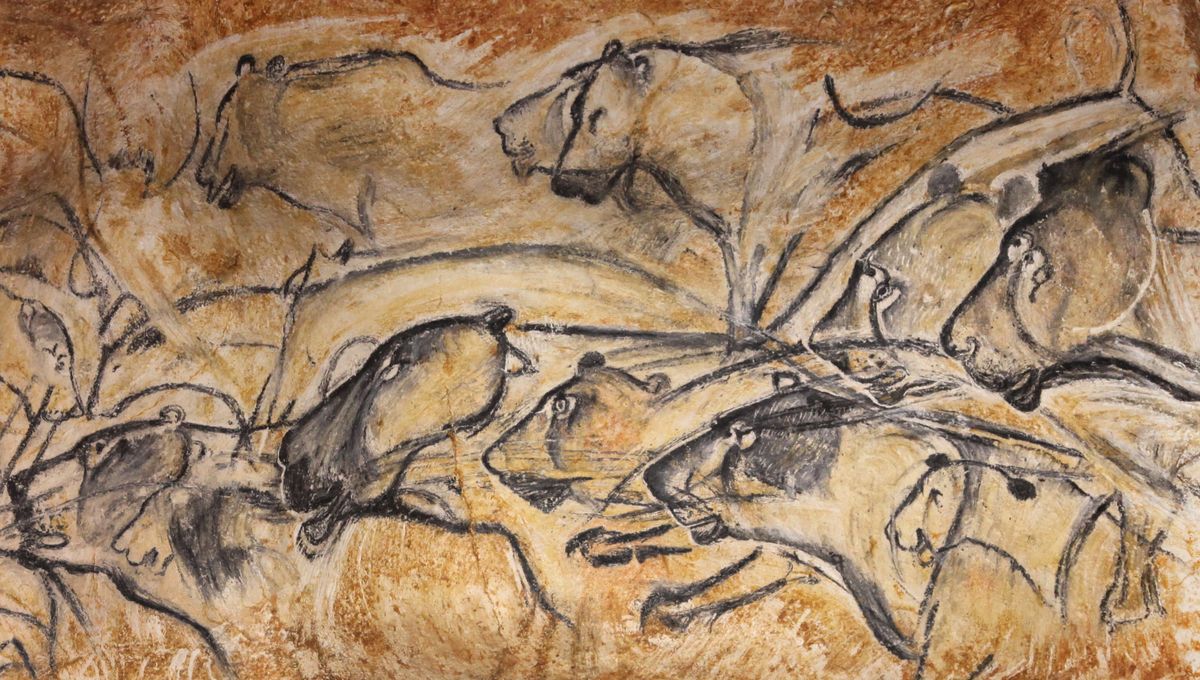
The second by-product of the belief in the immortality of the soul was art. Chauvet Cave, in what is now France, contains around 300 painted and engraved images, created roughly 30,000 to 32,000 years ago. Some depict real-life scenes, while others describe supernatural landscapes—for example, various monsters flying through the sky or floating in midair. Art made that supernatural world concrete, making the less believable more believable. That may have been art’s most primitive function.
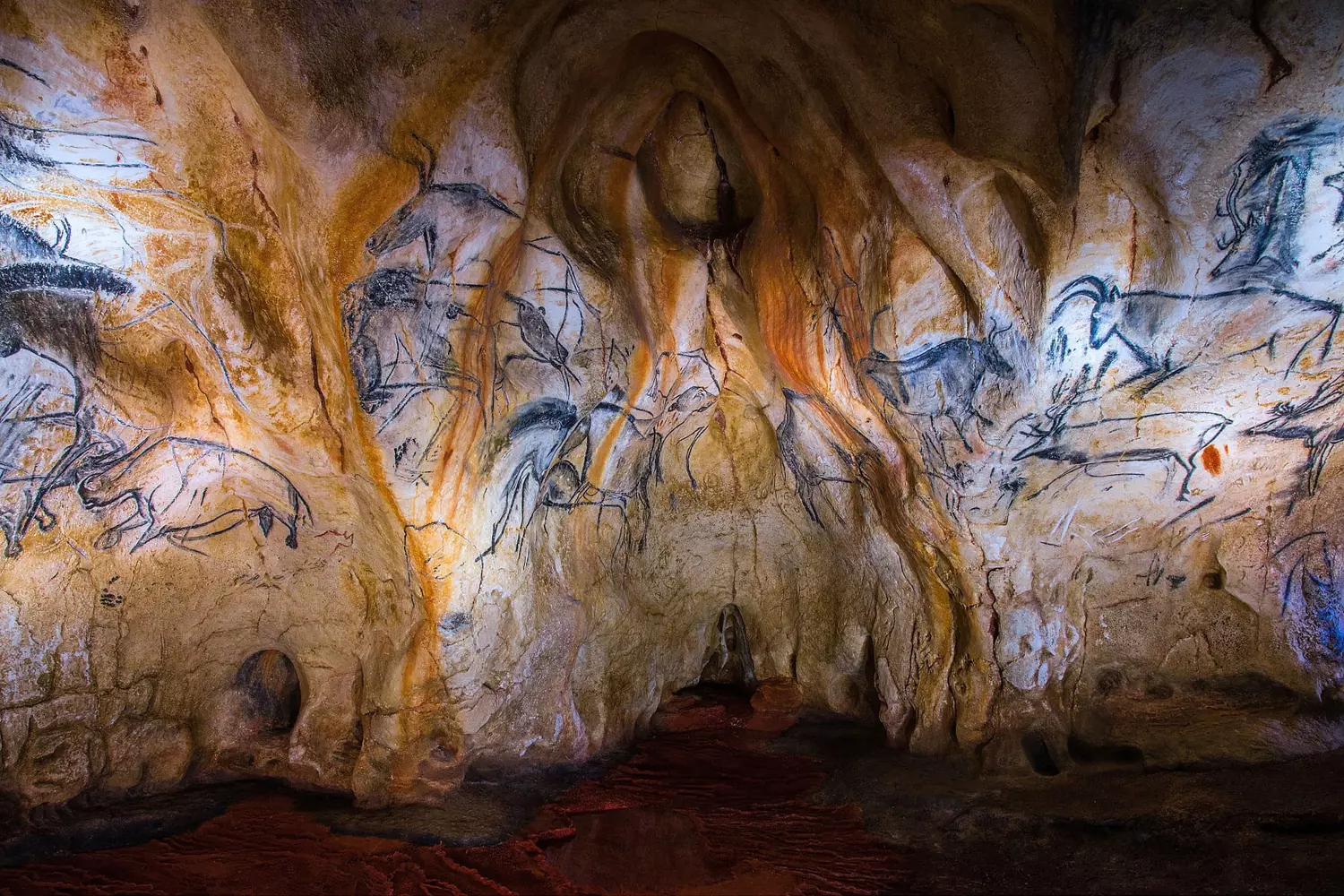
Interestingly, recent psychological research has confirmed that this vivid imagining of a supernatural world can also ease death anxiety. In experiments, when people’s fear of death was activated, they were more likely to imagine themselves flying. This is basically “Believe in Superman, gain eternal life.” I wonder whether the subtle psychology behind it is also part of why all those superheroes flying up to heaven and diving down to earth remain so popular.
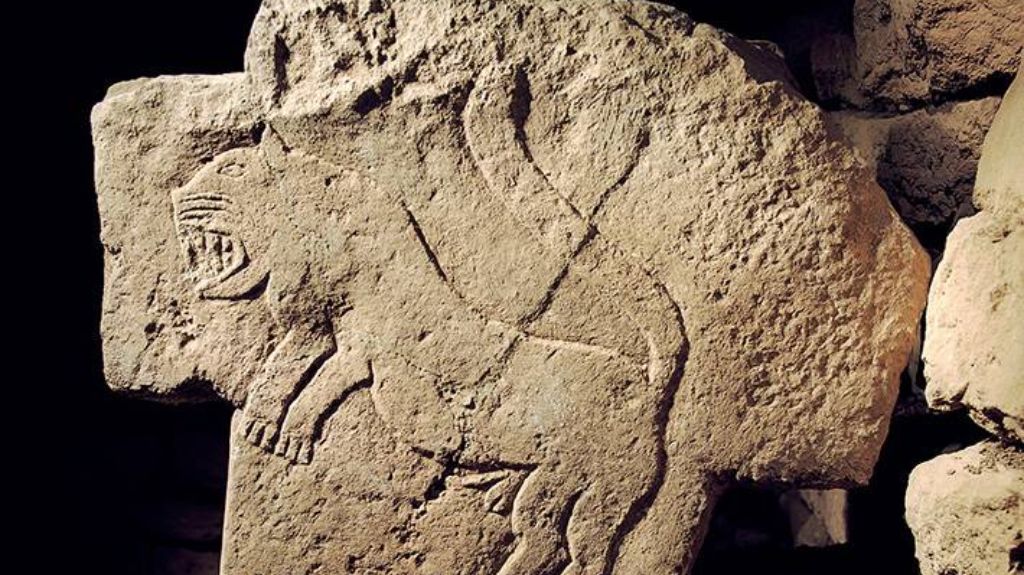
The third by-product of the belief in the immortality of the soul is the most counterintuitive: it may have given rise to agricultural civilization. In what is now Turkey stands a structure built around 12,000 years ago called **Göbekli Tepe.** It consists of dozens of T-shaped limestone pillars arranged in concentric circles, many weighing more than 10 tons. The pillars are carved with all kinds of exquisite patterns. Judging from those patterns, this was a temple where people of the time worshipped their ancestors.
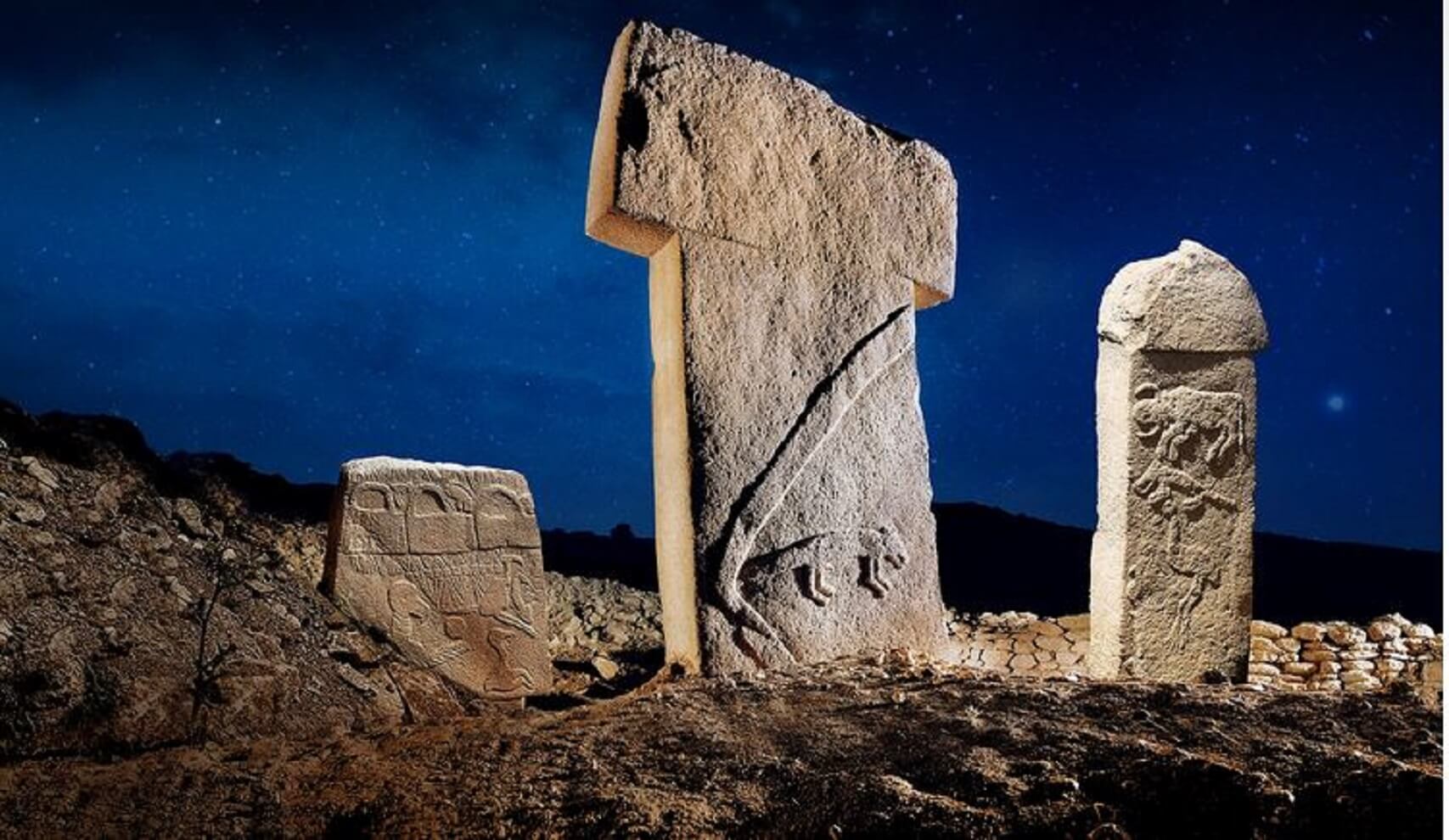
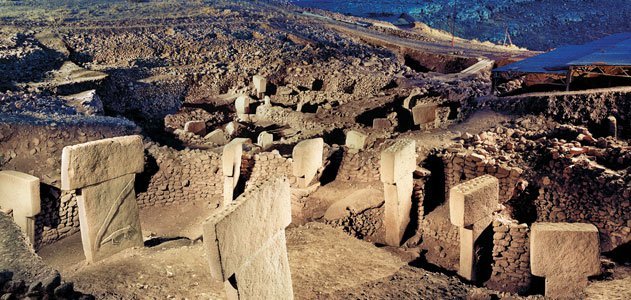
This temple was built before the invention of the wheel and agriculture. Agriculture did not emerge until roughly one or two thousand years after Stonehenge was built, while people were basically still living as hunter-gatherers when Göbekli Tepe went up. That’s very strange. The mainstream view among anthropologists and historians is that structures like this could only have appeared after agricultural civilization was born. Once agriculture emerged, people settled down to farm. Gradually, more and more farmers gathered together, forming villages and towns. Then they built a temple near the town for worship and spiritual needs.
But the discovery of Göbekli Tepe suggests that the process may have happened in reverse. The real story may be that people had a powerful desire to “communicate with their dead ancestors,” so they mobilized every available resource to build a temple like this. During its construction, and in the rituals that followed, some people had to settle near the temple for long periods. Once you settled down, hunting all over the place became inconvenient, so farming became the more practical option. That encouraged and stimulated the emergence of agriculture. As agriculture supported more and more people, the farming way of life gradually spread and became the mainstream.
We know that the emergence of agriculture was a milestone in human civilization. And according to what we just discussed, it may also have been closely connected to our ancestors’ fantasies about the afterlife. Of course, this is only a hypothesis for now. How reasonable it is, everyone can discuss.
Now let’s talk about the second path our ancestors took in their epic battle with the Grim Reaper.
The world’s earliest stories written in a script were carved on clay tablets. One was an epic poem by the ancient Sumerians called the Epic of Gilgamesh. It is a story about the fear of death.
There was a young king named Gilgamesh who, during a battle, felt a profound mutual admiration with his opponent—the warrior Enkidu. The passion caught fire, got completely out of hand, and they became best bros. Later, the best bro offended the gods, and the gods killed him. While grieving inconsolably, Gilgamesh was also scared stiff by death. So he went everywhere, above and below the earth, searching for a way to gain immortality. In the end, he repeatedly missed out on various elixirs of life, and everything came to nothing.
I wonder whether this story reminds you of anything. When I read material about the Epic of Gilgamesh back in the day, I suddenly thought of how our own Journey to the West also begins with the pursuit of immortality. Sun Wukong leaves Flower Fruit Mountain to seek a teacher because he realizes that he will eventually die. What he wants to learn at first is precisely the art of eternal life.
See? This is another example of the fear of death stimulating artistic creation. Of course, Gilgamesh and Wukong also show us the second path ancient people took to fight the Grim Reaper: pursuing physical immortality.
For some people, believing that the soul survives death is a little too much like a consolation prize. A true badass wants actual immortality—this very body, in this very life, living forever. The great director Woody Allen said, “I don’t want to live on in people’s hearts. I want to live in my apartment.”
This hardcore determination to go toe-to-toe with the Grim Reaper has also persisted throughout history.
The First Emperor of Qin, Qin Shi Huang, believed on the one hand that a world existed after death—that’s why we have the Terracotta Army—and on the other hand pursued physical immortality. He ate no shortage of elixirs of life, and for all we know, he may have died from taking the wrong medicine. Qin Shi Huang also believed that Mount Penglai, the abode of immortals, existed in the eastern sea, and sent Xu Fu to seek the elixir of immortality. In fact, people in many parts of the world have held a similar idea: they believed there was some place where immortality could be found, and that reaching it would reveal the secret of eternal life. Alexander the Great of ancient Greece kept searching for the so-called “Fountain of Life”; people at the time believed that drinking its water would grant immortality.
The worldview of the pharaohs of ancient Egypt was much the same as Qin Shi Huang’s. Egyptian mythology contained many imaginings of the underworld, while at the same time the pharaohs had themselves turned into mummies. The reason they used mummies and pyramids to preserve their bodies was that they believed they would “die and rise again.”
On the road to pursuing physical immortality, the hardest-core players were probably the Western alchemists and the Daoist practitioners here in China who made elixirs. They weren’t praying to immortals or gods; they were making the elixir of life themselves. Very punk.
And interestingly, Western alchemists and Eastern Daoists independently arrived at the idea that an elixir of life should contain gold. This psychology is actually pretty easy to understand. Gold is a metal with extremely stable chemical properties; it almost never changes. So people naturally found it easy to connect gold with “eternity.”
That left Eastern and Western sorcerers facing the same challenge: there simply wasn’t enough gold to go around. So, quite independently of one another, they dreamed of transmuting cheaper metals into gold. The Western sorcerers, of course, took this a step further—and became alchemists. They never did manage to make gold, but they accumulated some experience with chemical experiments, unexpectedly laying part of the groundwork for the later emergence of modern chemistry.
In the next piece, let’s shift our angle once again and talk about symbolic immortality.
Written by Zhichao Wei
Leave a Reply