
This fan fiction explains exactly what special ability Eurus Holmes had to pull off those unbelievable things in Sherlock Season 4.
Part One: If Your IQ Rose to 500, What Superpower Would You Have?
Hi, I’m Eurus Holmes, the sister of that Sherlock Holmes you all know and love. Hello, my Chinese fanboys and fangirls!
Eurus is a Greek name that translates into Chinese as ‘East Wind Goddess.’ Pretty cheesy, right? You can just call me Eurus.

Today, I want to share how my brain works.
Unbeatable
By their reckoning, I’m the most intelligent person in the world. My big brother Mycroft once said that even his ‘finest specimen of humanity’ IQ could only be called ‘exceptional.’ Me? I’m an era-defining genius—a superhuman talent capable of changing the age.
Sherlock, Mycroft, Moriarty, Magnussen—whenever any member of this ‘High-IQ Club’ appears, ordinary people feel they’ve ‘lowered the IQ of the entire street.’
But when I make an entrance, even these self-important ‘finest specimens of humanity’ get to experience what it feels like to ‘lower the IQ of the entire street.’
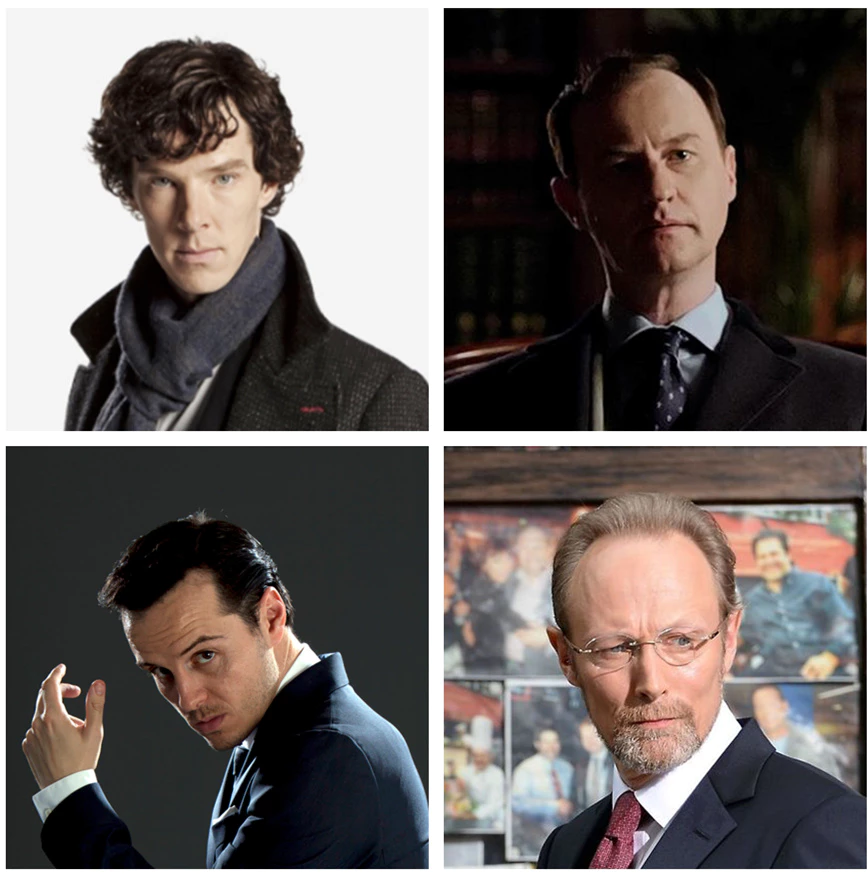
Yes, that’s right. If I wanted to, I could easily wipe out anyone in the High-IQ Club.
Because super-intelligence gives me several secret weapons. With them, I’m unbeatable.
Those secret weapons in my brain are what I want to talk to you about this time.
The Difference Between the Best Brain and an Ordinary Brain: CPU? Hard-Disk Space?
Before introducing them, let me ask you something: where do you think the fundamental difference lies between my brain and an ordinary person’s?
If you compare the human brain to a computer, you might say the CPU’s processing power is different.
An ordinary person might need 10 seconds to do mental subtraction with three-digit numbers. I only need a few dozen milliseconds.
Or perhaps you’d say the hard disk storage capacity is different.
Ordinary people have tiny hard disks and remember very little—some may have already forgotten what they ate for lunch yesterday.
Me? I remember every bite of food I’ve eaten over the past 30 years.
For me, that’s all child’s play.
That’s right: my CPU processing power far exceeds an ordinary person’s, giving me extraordinary powers of observation.
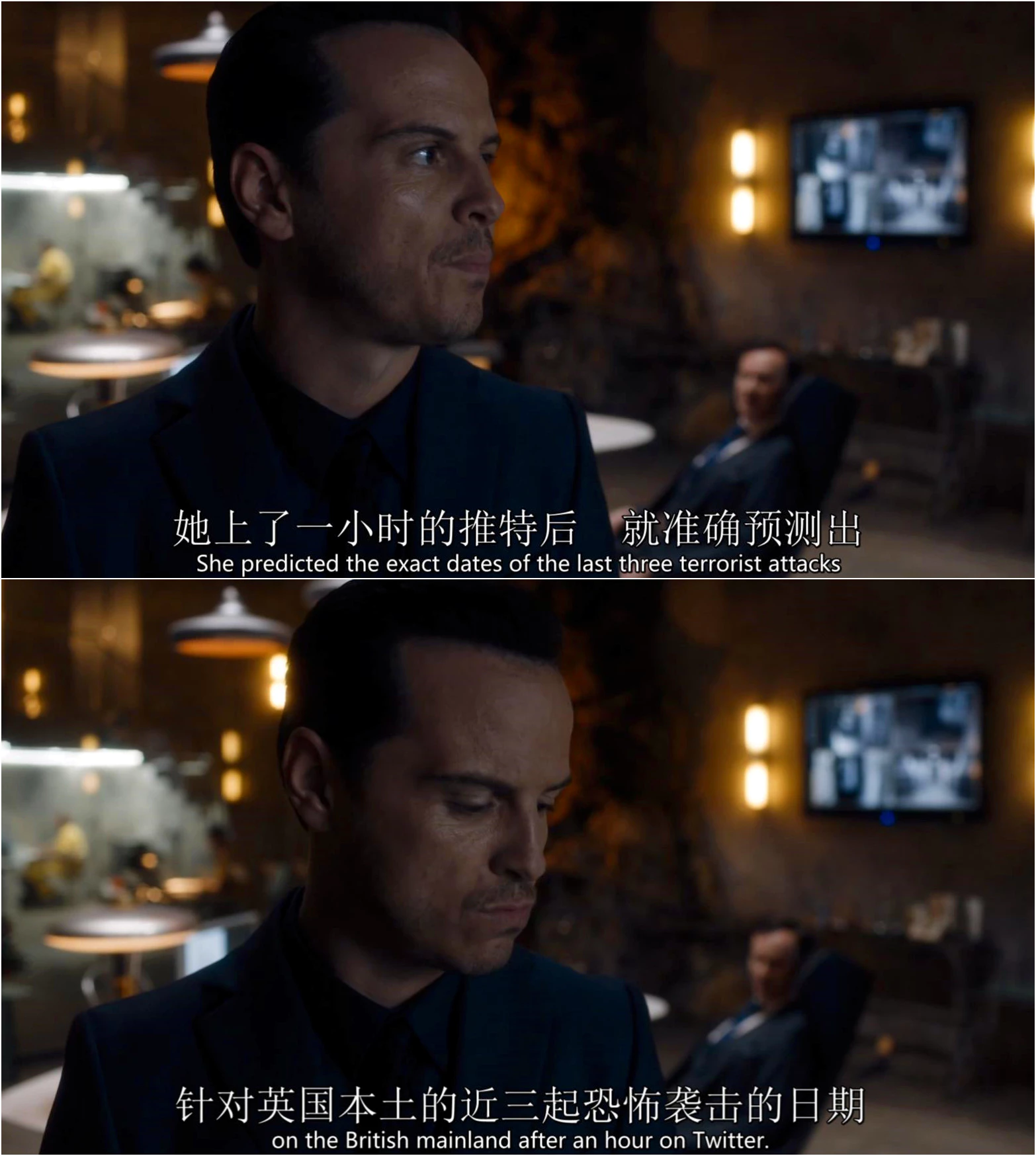
Mycroft once mentioned a case I handled for him: I spent an hour on Twitter and accurately predicted the dates of three terrorist attacks targeting the United Kingdom.
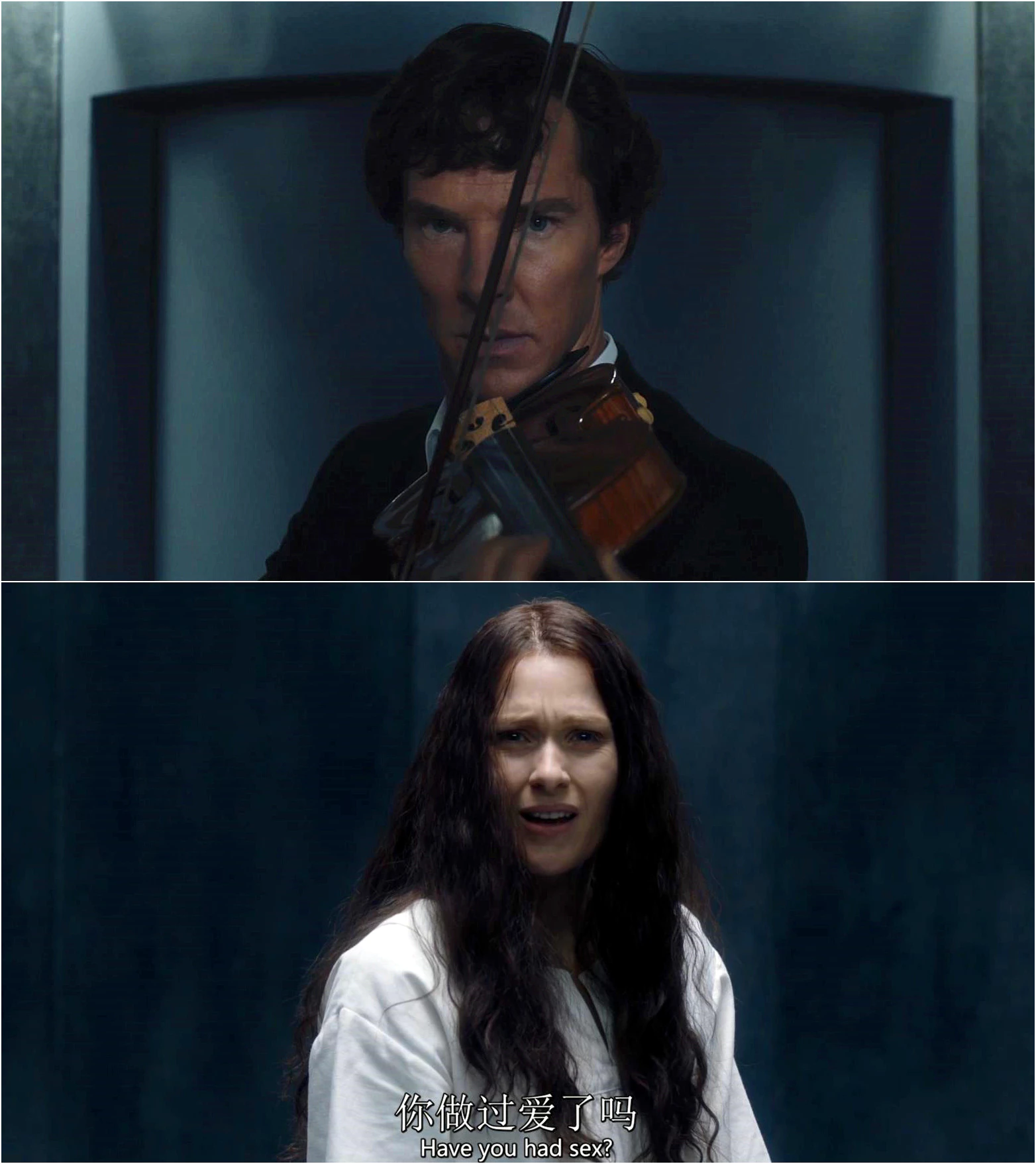
Using the same powers of observation, I heard a little violin piece Sherlock had composed and deduced that he had slept with Irene Adler. Of course, if you ask him, he won’t admit it. Hmph. Too proud to save face.
That’s right: my brain’s hard-disk storage also far exceeds an ordinary person’s. Like Sherlock and Magnussen, I naturally have a ‘mind palace’—and mine is much bigger than the one in Sherlock’s head.
To make room on his brain’s hard disk, Sherlock deleted knowledge useless to his cases, such as ‘the Earth revolves around the Sun.’
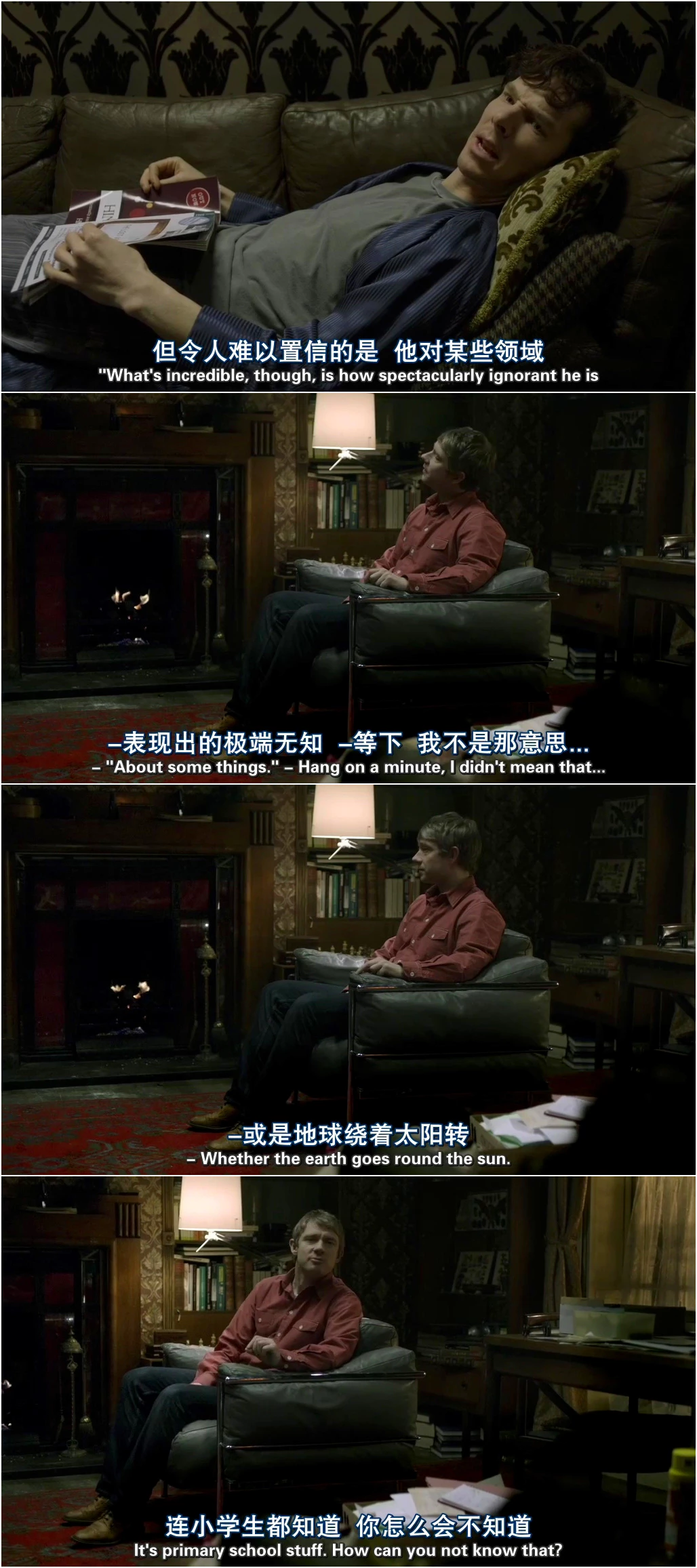
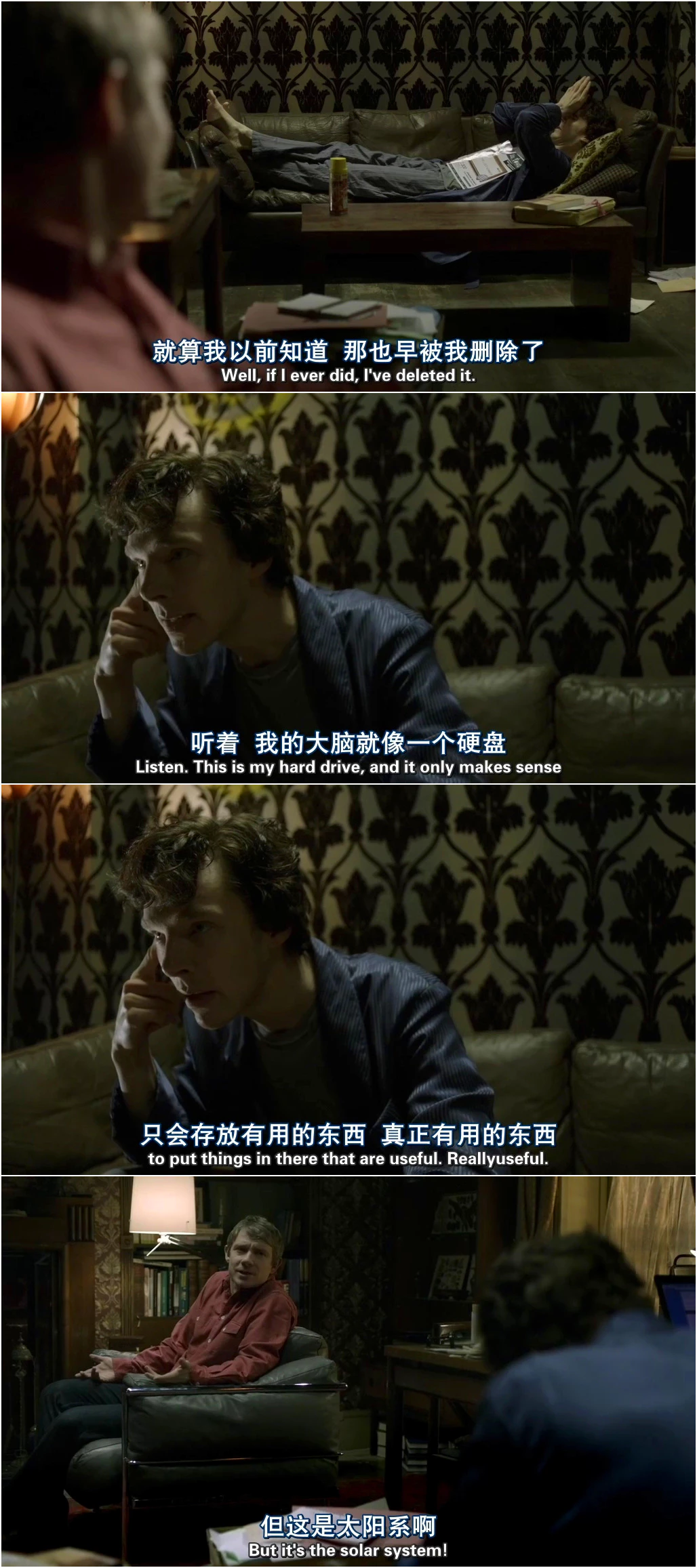
I don’t have that problem. I remember practically every image I’ve ever experienced.
Don’t forget: Sherlock is merely a low-spec version of me.
But none of that is actually the key difference between me and ordinary people.
The Real Difference Between the Best Brain and an Ordinary Brain: Memory
The fundamental difference between you and me is that our memory capacity is different.
Memory capacity, put simply, is the amount of attentional resources you have.
Your ordinary brains have a pitifully small memory capacity. The clearest sign is that you find it very hard to do two things at once.
At any given moment, your attentional resources are enough to focus on only one thing. Everything else has to be handed over to the so-called subconscious: for example, talking on the phone while using your subconscious to drive.

But that doesn’t really count as ‘consciousness.’ Driving is, at most, the inertia formed by muscles after extensive training.
Me? My brain’s memory capacity is practically infinite.
That supreme martial-arts technique in your wuxia novels—divided attention and ambidextrous coordination—is simply a low-level skill for me. All I need to do is allocate a tiny corner from my ocean of attentional resources.

My attention can concentrate simultaneously on every detail sensed by my brain: vision, hearing, every tiny stimulus entering through my skin, and every tiny thought bubbling up in my mind—all within my awareness.
More importantly, after capturing this information, I can call on several times as many cognitive resources to analyze, process, and monitor it.
My consciousness is everywhere!
That means I’m ‘all-knowing.’
Remember that. The weapons I’m about to introduce are all connected to it, more or less.
Ted Chiang’s Understand
Right now, while chatting with you, I’m also pulling the full text of a novel into my mind.
The novel is called Understand, a science-fiction story about ‘high intelligence.’ Its author is Ted Chiang. His signature work, Story of Your Life, was recently adapted into the film Arrival—I’m guessing you’ve all seen it.

His Understand is pretty much the finest human fantasy about super-intelligence. I think it will be fun to quote a few lines from it and compare them with these secret weapons in my brain. So that’s what I’ll do.
First Weapon: Muscle Control
My first secret weapon is something you may not have noticed even if you’ve followed everything I’ve done: extremely precise ‘muscle control.’
Why did Watson and Sherlock fail to recognize me when I casually changed my disguise?

Why was Sherlock, a fairly skilled fighter, so easily knocked down by a single move from me?

How can I turn my own voice into that of a little girl? The little girl who spoke to Sherlock on the plane wasn’t using a pre-recorded voice. It was my real voice.

The answer to all these questions lies in ‘muscle control.’
Powerless as a Chicken
In many people’s common sense, brainpower and physical strength seem to be opposites. In China, you describe a scholar as having ‘the strength to bind no chicken.’
But that only holds when intelligence hasn’t reached a sufficiently high level.
In Understand, after the protagonist’s intelligence leaps forward, he quickly discovers the exact opposite of this common sense. He says:
Controlling the body is really a kind of neural activity. Although my physical strength hasn’t increased, my coordination has surpassed that of ordinary people; even my left and right hands have become equally agile. … Skills that usually require thousands of repetitions can be learned by me after two or three. I found a videotape of a concert pianist’s fingers moving as he played. Before long, I could imitate the pianist’s finger movements without needing a keyboard in front of me.
Exactly!
I just said that my brain has nearly unlimited attentional resources. So what happens if I apply them to controlling my body?
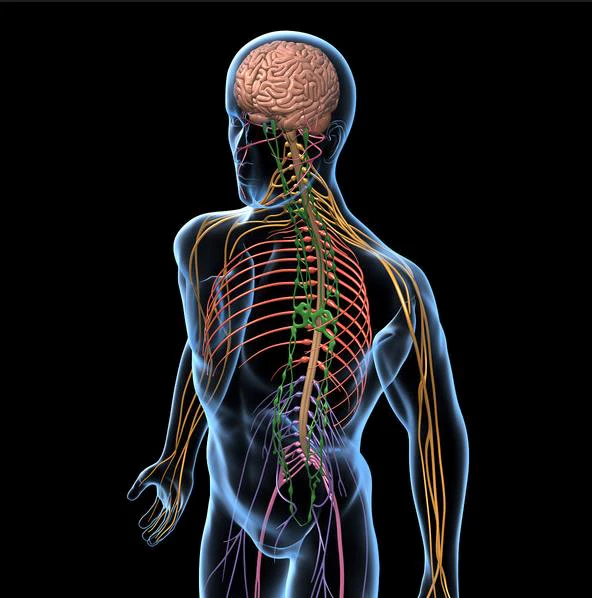
An ordinary person’s attention is only enough to focus broadly on a muscle’s large movements—for example, ‘tell the biceps to contract.’
I, on the other hand, can attend to every tiny contraction and relaxation in every muscle fiber. On that basis, I can exert extremely precise and efficient control over my body.
Voice Transformation
Now you’re beginning to get it, right? I can easily control the muscles in my throat and produce hundreds of completely different voices, including that of a panicked little girl.
Expert Fighter
I subdued Sherlock instantly with a single move from your tai chi—‘Double Winds Fill the Ears’—because with just a little practice, I can recruit the relevant muscle groups to deliver lethal fighting techniques with maximum efficiency.
You see, contrary to common sense, a genius with super-intelligence would never be a scholar unable to bind a chicken. He would necessarily be a top-tier fighter.

Face-Changing
So how was I able to appear directly in front of Watson twice, at different times, and make him see me as two entirely different people?
Was it merely because I changed my identity, the color of my pupils, my hairstyle, and the makeup on my face? Or simply because men are too narcissistic to look carefully at a woman’s face?

None of that matters as much as one other thing: whenever I appeared under a different identity, I completely changed my facial expression and body posture.
Different body postures can obviously help conceal an identity. What you might question is whether changing facial expression can really alter the impression made by the same face so much. No matter how it changes, isn’t it still the same face?
You’re seriously underestimating the arrangements and combinations of muscle groups in the human face.
Face Reflects Mind
There is an old Chinese saying: ‘face reflects mind.’ It sounds pretty pseudoscientific, but it isn’t entirely wrong.
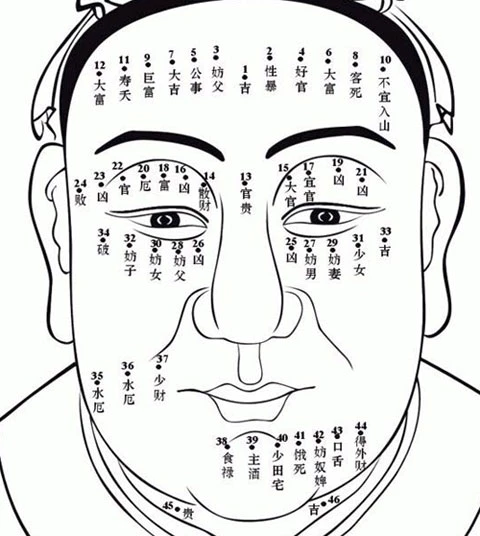
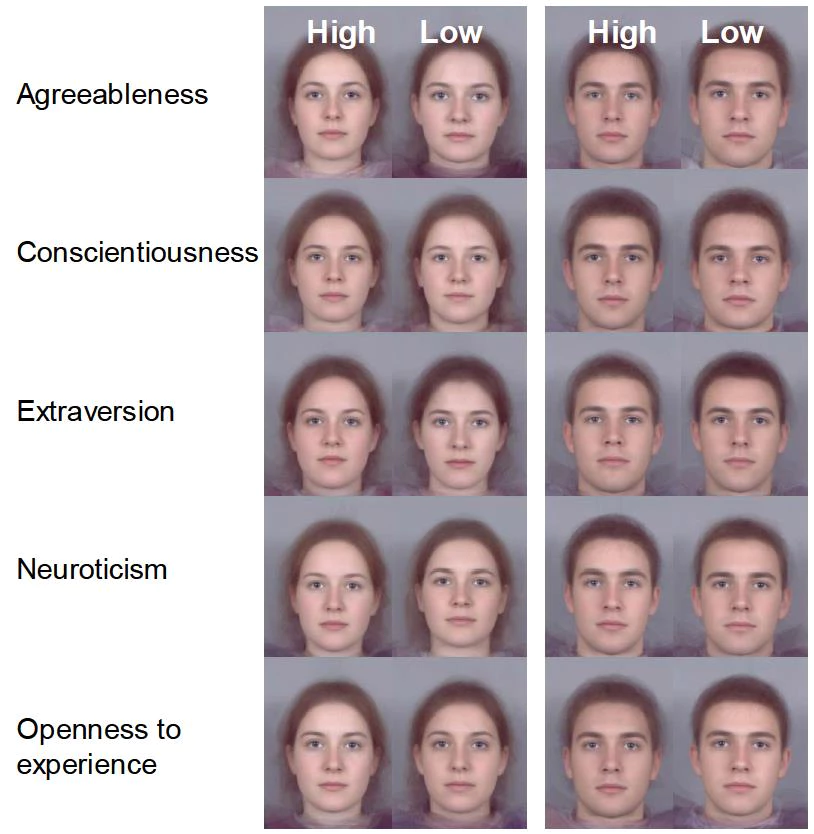
Two fellow Britons of mine once conducted a psychology experiment.
They asked participants to judge the personalities of people in a stack of headshots—extroverted or introverted, for instance—using only their faces, with no other information. In other words, guessing the mind from the face.
The results showed a fairly high accuracy rate. The personalities guessed from the faces matched quite closely with the results of psychological tests administered to the people in the photos beforehand.
This shows that personality really is reflected in our faces, and that people can pick up on it with remarkable sensitivity.
That’s easy enough to explain, because mental states actually become set in the muscles of our faces. Optimists smile often; pessimists always look miserable.
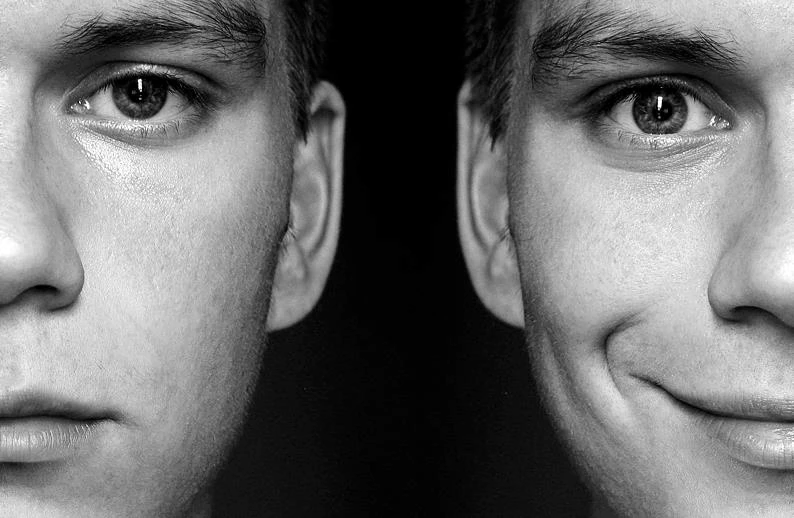
Over time, even when your face is expressionless, your muscle patterns unconsciously reveal the state you most often occupy. So other people can look at your face and guess something about what you’re usually like.
Me? I applied the principle of ‘face reflects mind’ in reverse.
If you deliberately change the state your facial muscles settle into, you’ll look completely new to other people and can easily be taken for someone else.
When I seduced Watson, I arranged my facial muscles into the face of an adoring fangirl.

And as his therapist, I arranged those muscles into a sexually indifferent face.

And that’s how Watson obediently became face-blind.
Quite a few top actors in the world can do this to some extent. I’m simply several times better than they are. If I wanted to, I could monopolize every Best Actress Oscar for the next few decades.

A scholar who can fight, a goddess who loves to perform—that’s my first weapon.
Second Weapon: Controlling the Circulatory and Endocrine Systems
If you think my first weapon is merely ‘superb martial arts’ plus ‘outstanding acting,’ nothing too extraordinary, then my second weapon may go a little beyond the reach of ordinary people.
That second weapon is this: I can use my consciousness to completely control the circulatory system and endocrine system.
If you possess a vast supply of attentional resources, how could you bear to use them only on motor nerves?
In fact, I can extend my consciousness deep into the entire nervous system and take over physiological functions that normally lie outside conscious control.
Controlling Heart Rate, Blood Pressure, and Body Temperature
For example, some of the body’s activities are governed by a system called the autonomic nervous system. Things like your heartbeat, blood pressure, and body temperature generally can’t be controlled through conscious effort.
Try making your heart stop for five seconds. Can’t do it, can you?
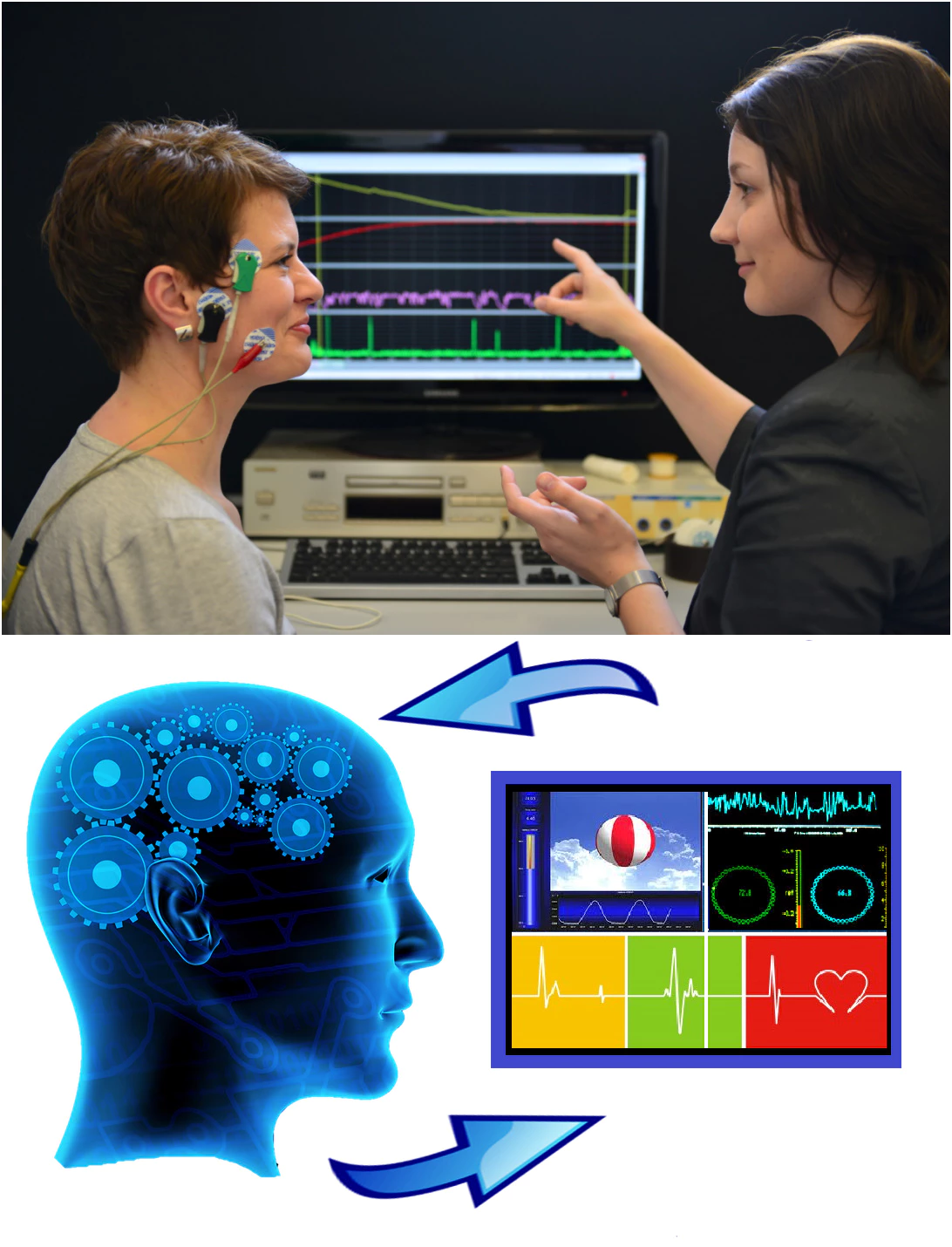
But in fact, through training called ‘biofeedback,’ ordinary people can consciously regulate their heart rate and blood pressure to some extent. It’s a very common technique in psychotherapy.
Naturally, that’s child’s play for me. I can even shut down my breathing and heartbeat for a short time, lower my body temperature, and enter a state of suspended animation.
Adjusting my emotions at will
What’s even more wonderful is that, besides the circulatory system, the human body also has what’s called the endocrine system. The regulation of various hormone levels in the body is also subject to commands sent out by the nervous system.
That means I can adjust my own emotions at will.
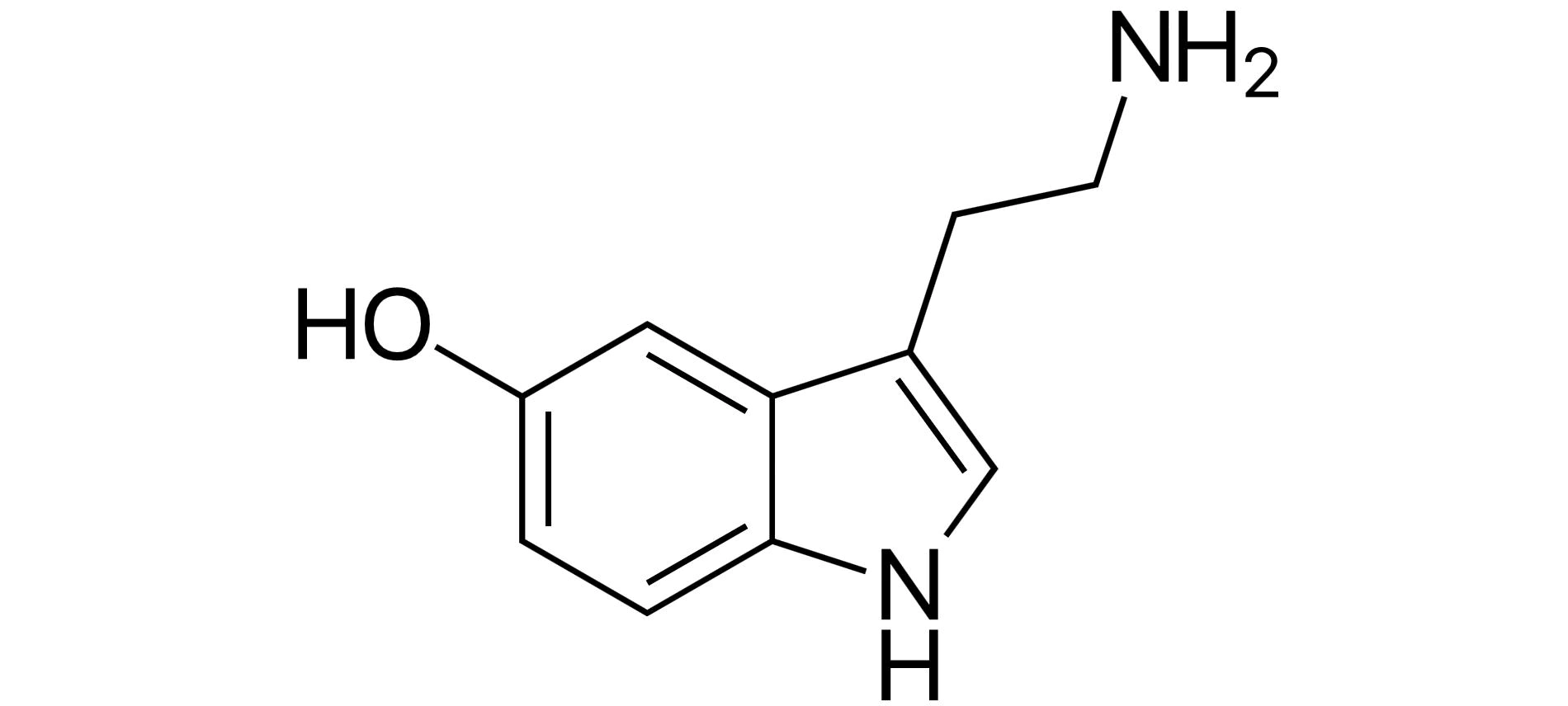
For instance, when I realize I’m feeling a little ‘depressed,’ I could immediately use at least a hundred psychological methods to cheer myself up. But I still prefer the simple, brutal approach: directly instructing the nervous system to reduce the activity of serotonin receptors and raise the serotonin level in my brain.
The protagonist of Understand says:
I don’t pity or hurt myself, nor do I think too highly of myself; from beginning to end, I can evaluate my own state of mind with complete objectivity. I know clearly which emotional resources I have, which I lack, which emotion I value, and which I despise.
That was only half right:
In fact, if I become aware of which emotion I ought to have but lack, I can obtain it by regulating a series of biochemical indicators in my body.
Mycroft says I have to stay in prison for the rest of my life. If I’m ever released, I won’t be able to stop myself from going on a killing spree. In his eyes, I’m just a psycho who can’t control her emotions.
What a spectacularly wrong assessment!
Does he still not understand that the little trouble I occasionally caused him in the past was merely a game I played with the two brothers?
The Game is On!
Part Three: How Is Ultimate Mind Control Forged?
You may be wondering: what does this ability have to do with a ‘secret weapon’ so far?
‘Whether I’m happy is up to me’—that sounds like something you can only use to entertain yourself. Can it really be used as a weapon?
Of course it can.
You must be wondering how I seduced Watson. Wasn’t Watson known for his loyalty?
Actually, to lure Watson obediently onto the hook, I used one special form of this ‘secret weapon’ in front of him. And it also became one part of my ultimate technique: ‘mind control.’
Ultimate Technique: Mind Control
Mind control is, you could say, the most powerful weapon in my brain—kill a Buddha when I meet one, slay an immortal when I encounter one.
This is my ultimate technique.
You know how wary Mycroft is of my brainwashing abilities.
He repeatedly ordered every member of the prison staff not to come into close contact with me, because almost everyone who had gotten close to me was brainwashed by me and turned into my slave.
Pay attention: almost everyone!
Have you thought of anything yet?
Five years ago, I had five minutes of close contact with Moriarty.
Do you still think Moriarty’s suicide was truly his own choice?
Heh heh.
(See: The Truth Behind Moriarty’s Suicide in Sherlock Revealed )
So how is such powerful mind control achieved?
Mind control has only two levels, shallow and deep. The shallow level is controlling emotions; the deep level is controlling thoughts.
Controlling Emotions
Controlling emotions is actually easy.
There are plenty of weapons at the psychological level. You can set all kinds of traps in your words and manner, luring the other person step by step into an emotional state.
But I still prefer weapons at the physiological level—simple and brutal, yet incredibly effective.
Pheromones
This physiological weapon is called pheromones.
Last time, I left you with a little mystery—how did I seduce Watson?
Apart from a few little psychological tricks, the answer lies in pheromones.
Pheromones are a special class of hormones. Once produced in the body, they are dispersed into the air and picked up by receptors in the nasal cavities of people nearby. In some little ads for sex products, they’re often called ‘pheromones.’

For ordinary people, pheromones are still wrapped in an aura of sexiness.
That may be because the pheromones scientists have studied most—androstenone in men and estratetraenol in women—are both associated with ‘influencing the opposite sex’s emotions’ and ‘regulating the opposite sex’s sexual behavior.’
For example, in 2010, an Italian research team found that pheromones in male sweat could alter serotonin levels in women’s brains, thereby improving their mood. In other words, after smelling men’s sweat, women felt happier.

Another study found that pheromone signals in the body odor of women in ovulation could affect men’s testosterone levels, possibly prompting men to engage in romantic courtship without realizing it.
In other words, when women are ovulating, men become unconsciously more attentive under the influence of pheromones.

Literature’s imaginings of pheromones are likewise steeped in a sexy, seductive atmosphere. In Patrick Süskind’s novel Perfume: The Story of a Murderer, the protagonist preserves the scent of a girl he is obsessed with in perfume. The girl’s scent then enchants everyone who smells it, triggering an astonishing, grotesque orgy.

Seducing Watson
You should have guessed by now: if I can freely control the secretion of those hormones in my body, naturally I can also freely control the dispersal of pheromones.
When I was with Watson, the pheromones released by my body, combined with just a little sexy suggestion in my words, expression, and movements, easily triggered a precise sexual response in him.
So don’t blame Watson. As long as Watson remains a normal man capable of receiving pheromone stimulation, there is no way he could withstand this kind of ‘biochemical attack’ aimed directly at the nervous system.

Whether you love me is up to me.
Self-Reinforcing Response
What’s even more wonderful is that pheromones related to the sexual response are actually only a tiny fraction of all the pheromones the human body produces.
After a few experiments, I confirmed the different functions of dozens of types of pheromones in my body.
So by controlling which kinds of pheromones I release, I can make people near me produce all kinds of emotional responses: anger, fear, sympathy, and so on.
In Ted Chiang’s novella Understand, the protagonist says:
After triggering someone else’s response, I can also make him automatically reinforce that response. By combining a particular response with a feeling of satisfaction, I can create a self-reinforcing effect, causing the other person’s body to reinforce its own response.
Naturally, I can do that too.
For example, after triggering the other person’s fear, I immediately trigger a feeling of pleasure and satisfaction in him.
It’s like ringing a bell with one hand while feeding a dog meat with the other. After experiencing the combined stimulus of bell-ringing followed by meat a few times, the dog begins to desperately anticipate the sound of the bell.
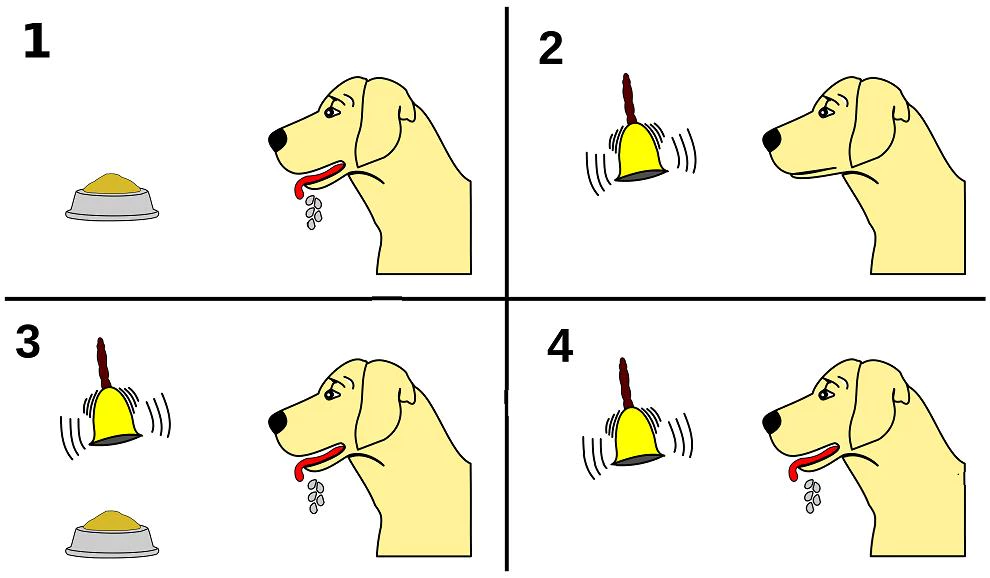
What makes humans more wonderful than dogs is that the human brain is good at imagining things, so they can’t help ringing the bell in their own heads.
In other words, as long as I establish a connection in the other person’s brain from ‘fear’ to ‘satisfaction,’ it can easily form a self-reinforcing loop.
The other person will spontaneously and repeatedly evoke fear in their mind, obtaining pathological satisfaction from it.
Just like being possessed, they simply can’t stop until they blow their own brain apart!
With this one trick alone, I can kill people without leaving a trace.
Controlling Thoughts
Now let’s talk about controlling thoughts.
This is slightly harder than controlling emotions. Controlling thoughts is essentially reprogramming someone else’s brain. The problem is that people are stubborn: when they’re conscious and alert, they fiercely resist outside instructions modifying their brains.
You saw in Inception how difficult it is to plant an idea in someone’s mind.

Shutting Down Consciousness
So, to program a brain smoothly, the most efficient method is to forcibly shut down the firewall in their mind—consciousness.
How do you shut down a person’s consciousness?
You must have guessed it. The simplest method is—
Hypnosis.
Thanks to its ubiquity in TV dramas and variety shows, hypnosis is now common knowledge—practically everywhere.
You may have seen the classic hypnosis scene in a TV drama:
The hypnotist waves a pocket watch back and forth in front of you.
You focus your attention on the watch. As you keep watching, your consciousness gradually becomes blurry.
After a few minutes, you fall into a dazed state in which most of your consciousness is shut down.
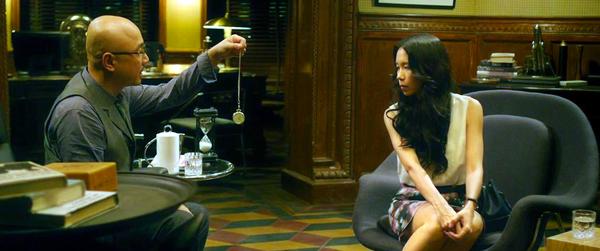
At that point, you, thoroughly dazed, become extremely receptive to all kinds of instructions from outside. You turn into the hypnotist’s good little baby and do whatever the hypnotist tells you.
The hypnotist can even implant an instruction in your mind that you’ll carry out after the dazed state has ended. For example:
‘Hum the theme song from Pleasant Goat while brushing your teeth tonight.’
Before you know it, you’ll do exactly that.
The Weakness of Hypnosis
But most hypnotic techniques have one fatal weakness: they all depend heavily on the subject’s cooperation.
As long as you don’t want to cooperate, the hypnotist is completely helpless. For example, if a hypnotist waved a pocket watch in front of me, I’d replay the erotic movie I watched last night in my head. The more he waved it, the more alert I might become.

So if I want to use mind control as a weapon, I need a more efficient, direct, and coercive hypnotic technique. Even if you refuse to cooperate, I can still hypnotize you!
And it has to take effect instantly. By the time you realize something is wrong, it’ll already be too late.
Startle Hypnosis
A relatively unconventional form of hypnosis basically meets these requirements: startle hypnosis.
The method is simple enough: use an unexpected, strange action to sever the neural pathways in the other person’s brain, leaving them instantly dazed.
Let’s use a handshake as an example. When two people meet for the first time, if the other person reaches out a hand, you’ll naturally reach out yours too. At that point, a strong expectation forms automatically in your brain: your hands will draw closer and closer, then clasp and shake up and down.

This, of course, is the result of countless repetitions. You’ve seen and experienced this whole sequence of handshake movements in far too many situations. It’s deeply imprinted in your brain. In one area of the brain, this sequence has already formed a neural pathway.
When the handshake ends normally, the nerve cells in that neural pathway are smoothly activated once. The brain then receives a message:
‘The small talk is over. We can discuss business now.’

But this time, the person shaking your hand is a hypnotist with bad intentions, and he deliberately intends to block that neural pathway.
He reaches out his hand, signaling that he wants to shake hands with you. At that moment, this neural pathway in your brain is activated, and you naturally reach out your hand too.

But then, suddenly, the hypnotist swiftly switches to his other hand, grabs your wrist, and lifts it to chest level. The move is completely unexpected, and you have absolutely no idea what it means.
And just like that, you are completely thrown.

Because the neural pathway that was only halfway activated has been forcibly blocked, and you have no way to call on another neural pathway to make sense of it.
Your brain has no idea what to do. It crashes. The brain’s firewall fails in an instant.
At that point, all the hypnotist has to do is seize the moment when you are thrown and give you a little nudge—for example, say in a firm voice, ‘You can’t move this hand anymore.’—and you will very likely obediently slip into a hypnotic state in which your consciousness grows increasingly blurry.
The Brain Shuts Down Completely
The human brain contains millions upon millions of these preprogrammed neural pathways. Once you stop playing by the usual rules and stop delivering the lines in the script, you can briefly disrupt some of those pathways and make the brain short-circuit instantly.
That is the principle behind my mind-control technique.
But the surprise-hypnosis methods ordinary hypnotists use don’t necessarily work every time. A trick like doing something strange while shaking hands may not be enough to make the entire brain crash.
What I want is to shut down a large part of the neural network in the brain.

And that means that merely making an unconventional gesture is nowhere near enough. What I need to do is make the other person see the strangest image they have ever seen in their entire life!
What would that image be?
The Gun That Silences People
My inspiration came from a bizarre invention that won an Ig Nobel Prize in 2012. The invention was called ‘the gun that silences people.’ Anyone hit by it would instantly lose the ability to speak. Supposedly, it could effectively stop people from shouting in libraries.
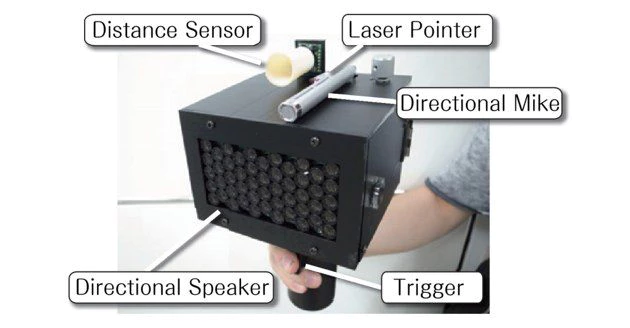
Of course, it is not a real gun. Its principle is this:
First, a directional microphone picks up the target’s speech. Then, 0.2 seconds later, a directional speaker bounces the speaker’s own voice back into TA’s ears.
As a result, you hear a mixture of a voice coming from yourself and an echo delayed by 0.2 seconds.

This makes people temporarily lose the ability to organize language. When we normally speak, the sound our ears hear is perfectly synchronized with the sound we produce. The auditory and language neural pathways in the brain can only activate normally in that state.
But once what you hear is that strange mixture of sounds, the brain falls into confusion. And you can no longer speak.
The Visual Version of the Gun
If something as simple as a ‘delayed echo’ can produce such astonishing effects, just imagine this: if visual signals, which carry far more information than sound, also became scrambled, how destructive would the result be?
I decided to turn myself into a gun like that—the visual version.
Don’t forget: I have an extremely powerful ability to observe, remember, and perform. Whenever the person in front of me makes any facial expression or movement, I can simulate it at the pixel level on my own body.
One second ago, he gave a faint smile. One second later, an identical smiling expression appeared on my face.

Although people cannot see the expressions and looks on their own faces, this information is actually present in their subconscious at all times.
So when I do this, the person standing opposite me is practically standing in front of a mirror with a one-second delay.
Believe me, continuously watching the expression that was on your own face one second ago is already an extraordinarily strange experience.
But that still isn’t enough.
The Strangest Image of Your Life
Please don’t forget my ability to predict things.
Not only can I infer the timing of a terrorist attack from the ocean of information on Twitter; I can also take one look at Mycroft’s little chubby face and know what he will look like decades from now.

So of course I can observe your demeanor, sense your emotional state, and scrutinize what you say. By combining all that information, I can predict with extremely high accuracy what expression and demeanor you will display in the next second!
And so, when I do this, you see the strangest image you have ever seen in your entire life.
At every moment in front of me, all you see is yourself one second into the future!!
I guarantee that no human brain could withstand this kind of attack.
Now you understand how I brainwashed Moriarty, don’t you?
You remember that scene where the two of us kissed through the glass, right? Do you still think I was flirting with him?

One Last Little Secret
That is all I have to say about my secret weapon. Before I go, let me reveal one last little secret to you.
Do you know what price you have to pay to become smarter?
The brain is an extraordinarily energy-hungry organ. An ordinary person’s brain accounts for only 2% of their total body weight, yet it consumes 25% of the body’s energy.
As for me, although regulating the various biochemical reactions in my body has greatly increased the efficiency of my metabolism, my brain has to process far more computations than an ordinary person’s, so I still have to eat and drink more.
So the price of becoming smarter is:
You inevitably have to become a human food bin first.
Enough talk. I have to go eat my sixth big meal of the day.
Until next time.
References, Research, and Gossip Mentioned in the Article
1. First Person
I originally planned to write a proper analytical article examining whether there was any psychological plausibility to Eurus Holmes’s various superhuman behaviors.
But no matter how I revised it, it always felt bloated and fussy. So I simply turned it into a fan-fiction novella in which Eurus Holmes introduces her own abilities in her own voice.
Well, if it counts as a novella, then this is the first novella I have ever published publicly—and it is science fiction.
A little exciting, honestly.
2. The Psychology Experiment Behind ‘Beauty Comes from the Heart’
Little, A. C., & Perrett, D. I. (2007). Using composite images to assess accuracy in personality attribution to faces. British Journal of Psychology, 98(1), 111-126.
The experiment was actually more complicated than described in the article. The researchers used faces synthesized by software.
3. Biofeedback
You may have seen biofeedback instruments in a university psychology lab. They can convert some physiological indicators into visual signals you can directly observe.
For example, a sensor on your finger monitors your heart rate while converting the detected heart rate into the moving height of the sun on a screen. As your heart beats faster, the sun rises; as it slows down, the sun sets.
Then you can use it to train yourself to control the speed of your heartbeat. You watch the screen and silently repeat to yourself:
The sun is setting, the sun is setting, the sun is setting…
After a period of training, some people can control the sun’s rising and setting at will—in other words, regulate their heart rate through intention.
4. Serotonin
Serotonin, scientifically known as 5-hydroxytryptamine, is a neurotransmitter. The concentration of 5-hydroxytryptamine in the brain is closely related to mood.
Drugs that alter the concentration of serotonin in the blood can be used to treat depression, generalized anxiety disorder, and social anxiety disorder.
Some antidepressants are 5-hydroxytryptamine receptor inhibitors; in other words, they increase its concentration in the brain by blocking the metabolism of 5-hydroxytryptamine.

The method Eurus uses in the article to regulate her own emotions borrows from this principle.
5. Pheromones
We do not know exactly how many kinds of pheromones human beings can produce, and research on pheromones is still relatively limited. There is even considerable controversy over whether some of the few types already discovered qualify as pheromones in the strict sense.
The various pheromones said in the article to influence emotions are simply my imagination.
6. Self-Exciting Response
A self-exciting response is the science-fiction-enhanced version of the ‘Pavlovian conditioned reflex.’
7. Hypnosis
As for hypnosis, if you just want to learn a little about it, this book is pretty good:

If you want to get started, though, you should probably obediently go find yourself a teacher.
8. The Gun That Silences People
Source material: http://t.cn/Rio170M
9. Eurus’s Mind-Control Technique
The method of making someone crash by predicting their expression one second into the future is something I made up. I feel that without it, it would be difficult to explain the astonishing power of Eurus’s mind-control technique—‘kill the Buddha when you see the Buddha; slay the immortal when you meet one.’
If your imagination comes up with a better explanation, please do tell me.
10. The Study of Smelling Sweat
Marazziti, D., Masala, I., Baroni, S., Polini, M., Massimetti, G., Giannaccini, G., … & Moschini, C. (2010). Male axillary extracts modify the affinity of the platelet serotonin transporter and impulsiveness in women. Physiology & behavior, 100(4), 364-368.
11. That Study on the Relationship Between Ovulation-Period Pheromones and Male Behavior
Miller, S. L., & Maner, J. K. (2009). Scent of a woman men’s testosterone responses to olfactory ovulation cues. Psychological Science.
Leave a Reply