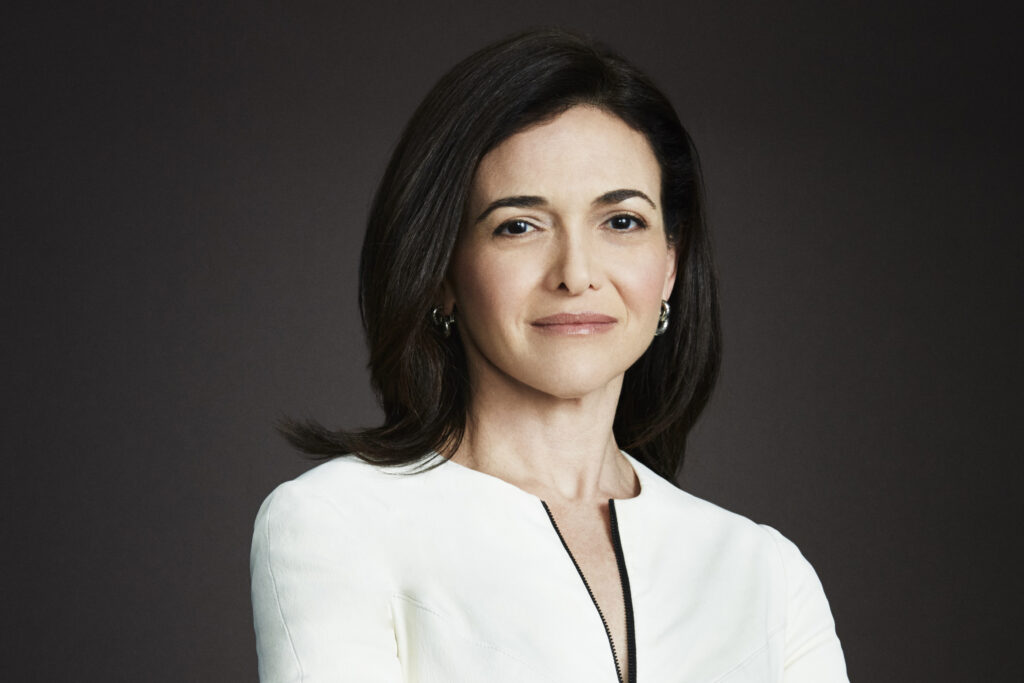
As I mentioned in an earlier article, some people who go through trauma do not remain trapped in emotional and psychological problems for the long term. Instead, they experience post-traumatic growth: they show astonishing resilience, and may even become stronger than they were before the trauma. In Option B, Facebook COO Sheryl Sandberg sums up five forms of post-traumatic growth (five pathways):
1. Discovering personal strength
Nietzsche had a famous line: “What does not kill me makes me stronger.” The two psychologists Tedeschi and Calhoun at the University of North Carolina at Charlotte made a subtle adjustment to it: “I am more vulnerable than I thought, yet stronger than I imagined.”
The point is that people generally possess powerful resilience.
Positive psychology, led by Martin Seligman, began promoting resilience training for the general public heavily a few years ago. But it has also drawn criticism from some experts. Their basic objection is this: in fact, most people who experience trauma eventually recover, whether or not they receive any “scientific” intervention or treatment.
2. Learning gratitude
Gratitude means maintaining a sense of appreciation for the good things in life (even the good things that seem almost too small to count). Positive psychologists place particular emphasis on gratitude. They often suggest that people express it intentionally—for example, by recalling three things they are grateful for before bed each day, or calling three people every week to tell them they are grateful. Going through a tragedy and then feeling grateful for it sounds a little ironic. But evidence also suggests that some people recover from suffering more quickly through gratitude.
(Of course, the academic community has its doubts about the effects of gratitude too.)
3. Building deeper relationships
Sandberg writes in her book: “Tragedy can also inspire us to build entirely new, deeper relationships with other people. This is the third aspect of post-traumatic growth. Research has found that soldiers who witnessed their comrades die horribly in war were more likely to gain the friendship of fellow service members 40 years later. Having gone through a brutal war, they understood the meaning of life better and were more willing to spend time with people who had felt the same way. Many breast cancer survivors also felt that their relationships with family and friends had become closer than before.”
4. Finding more meaning in life
In Man’s Search for Meaning, Viktor Frankl said: “To some extent, suffering ceases to be suffering once we find meaning in it.”
Family and religion are sources of meaning in life for many people. But in reality, work can be one too. Research by psychologist Adam Grant, co-author of Option B, found that the more people believe their work can help others, the less exhausted they feel at work, and the less depression they show. People who find meaning in their work are, naturally, also more likely to step out of trauma’s shadow.
5. Discovering new possibilities for life
Tedeschi and Calhoun found that after experiencing trauma, some people choose completely different career directions they had never considered before. Some Americans, affected by the 9/11 terrorist attacks, made hugely important changes in their careers—some joined the fire department, some enlisted in the military, and some entered the medical field.
Reflecting on tragedy can sometimes make a sense of mission rise up inside us. Driven by that sense of mission, we change the course of our lives and discover new possibilities.
References:
Sandberg, Sheryl; Grant, Adam. Option B. 2017. CITIC Press.
Gary Stix. The Psychiatrist in the Brain. Scientific American, 2011 monthly issue.
Note
- This series of short popular-psychology pieces was written to accompany the related content of Zhichao Wei: New Knowledge in Psychology. They were published on the now-closed platform Fantu, and the original link no longer exists.
Leave a Reply