
How should we understand the maudlin ending of Artificial Intelligence, in which robot David's mother comes back to life and then dies again?
In 1999, the great Kubrick suddenly passed away, leaving behind an unfinished film project. The project had first taken shape in the 1970s, but after one twist and turn after another, it still couldn’t be filmed by the time he died. After Kubrick’s death, Spielberg, who had stayed in touch with him about the project, decided to help his friend fulfill this unrealized wish. He wrote the screenplay himself and took on the directing as well. That film was Artificial Intelligence. After its release, critics and audiences were sharply divided, because at first glance the work seemed to split into two completely different halves. Almost all the praise went to the first 3/4 of the film; the controversy was left to the final 1/4—that is, the ending.
The first 3/4 of the film tells roughly this story: In the future, vast numbers of intelligent robots serve humanity, but giving robots emotions has always been off-limits. David is the first robot boy implanted with emotions. He is sent as an experimental subject to Monica, the wife of an employee at the robot company, to ease the pain of losing her child. David’s emotional programming makes him develop an intense attachment to and love for Monica that is no different from a human boy’s. But Monica’s biological son unexpectedly wakes up, and David is abandoned. David firmly believes that, like the puppet boy in a fairy tale, he can find the Blue Fairy and have her turn him into a real boy so he can return to his mother’s side. Yet this belief is actually just a command hidden inside him by the robot company. The command eventually leads him back to the place where he was created, where he realizes that he is nothing more than the prototype of a mass-produced model. Utterly devastated, David decides to end his life, but he unexpectedly sees a statue of the Blue Fairy in a park submerged below sea level. At last, before the Blue Fairy, he prays desperately for her to turn him into a real boy…
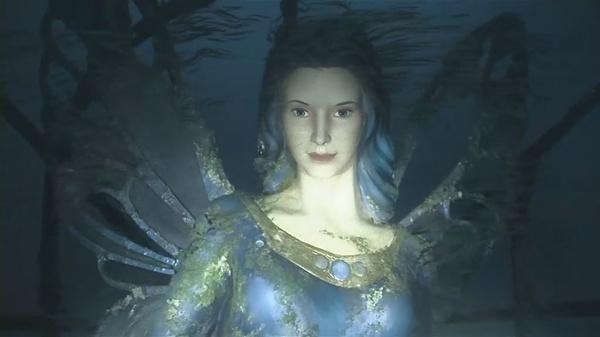
Up to this point, most people would think Spielberg had reproduced, almost perfectly, the style a Kubrick film ought to have. But the film doesn’t end there. In the final 1/4, the story takes a rather bizarre turn: After the passage of countless ages, human civilization has ended, and robot David is reawakened by intelligent beings who rule the Earth in the future (apparently highly evolved robots). David asks these intelligent beings to help him bring his mother back. They say that as long as they have some part of the person’s body, they can bring that person back to life—but the resurrected life can exist for only one day. Once it falls asleep that night, it will die again. So David’s mother can live again for only one day. David happens to have saved a lock of Monica’s hair. Monica is resurrected, and David spends the happiest day of his life with this Monica, cloned from her hair, until she falls asleep once more.
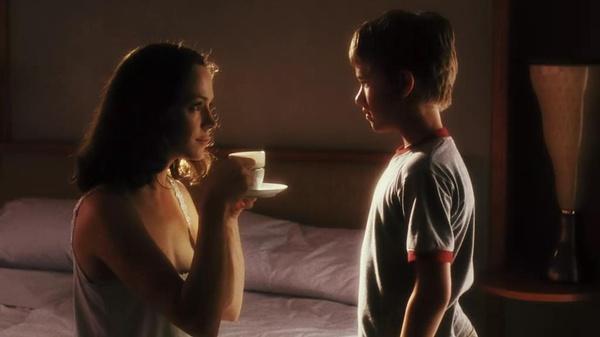
According to the most common reading of this ending, the plot device of “one day of resurrection” is considered the film’s biggest failure. On the one hand, the cheesy idea of cloning the mother must be the result of Spielberg’s overflowing sentimentality: He apparently couldn’t bear to let David die with his wish unfulfilled. But if this cloned mother simply lived happily with David from then on, that would be unbearably cheesy. So, on the other hand, Spielberg wanted to make the ending even more emotionally manipulative. How do you do that? Let people have something first, then take it away again. But viewers may well think that these future intelligent beings seem to possess extremely advanced technology. If they can clone someone, the clone should be able to survive for a long time. So “one day of resurrection” looks like it was created purely to wring tears from us—far too contrived. A Kubrick masterpiece that should have been perfect was ruined by Spielberg’s sentimentality.
But in my alternative reading, most viewers have actually missed what Kubrick and Spielberg were trying to do. What those intelligent beings do has nothing to do with cloning. What they are doing is summoning a soul. They aren’t using that lock of hair to make a new copy; they are using it to call back a soul that died long ago. Creating a new life with technology isn’t difficult. But how can technology recover the one and only “self-awareness” that once existed? In The Prestige, Nolan imagined a machine that could instantly make a copy of a person. Although every molecule in the copied person’s body would be identical to the original, when the original self looked at that copy, what it saw would be nothing but another stranger. Technology can rebuild a body, but does the soul that grows inside this new body have anything to do with the original soul? Not the slightest thing! This is actually the most breathtaking piece of design in Artificial Intelligence. Kubrick and Spielberg understood that the end of life is the highest curse God has laid upon humanity, and the extinction of the soul is an eternal destiny. Even intelligence as advanced as theirs can hardly break through this final barrier. Technology at its peak can do no more than let a soul that has already vanished return to the light of day for one day. This brief day is the absolute limit of life’s intelligence in its struggle against that eternal curse.
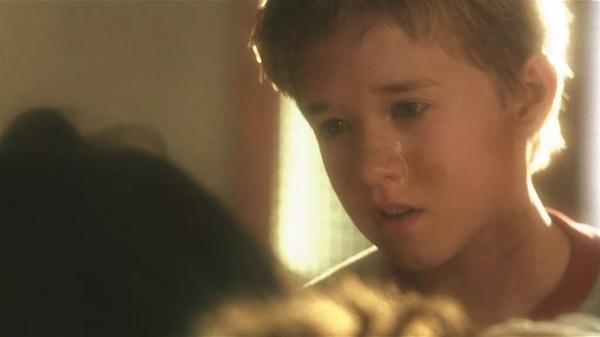
And so, on this final day of the soul’s return, the gulf between robots and humans in Artificial Intelligence is elevated into a gulf between eternal love and a brief life fated to wither. The first gulf is terrifyingly dangerous, but there is still hope of crossing it. The second, however, keeps splitting wider and wider, forever impossible to transcend. So, on that final night, just before his mother’s self-awareness is about to vanish forever, David—who has endured so much pain and so many setbacks—finally sheds tears for the first time. In that moment, he becomes a real little boy. Because only then does he realize that this parting truly means they can never be reunited again.
Version history
Popular Cinema edition:
Included
- After revision, this article was included in The Alluring Illusion: Secrets of Psychology in Film and Light.

Leave a Reply