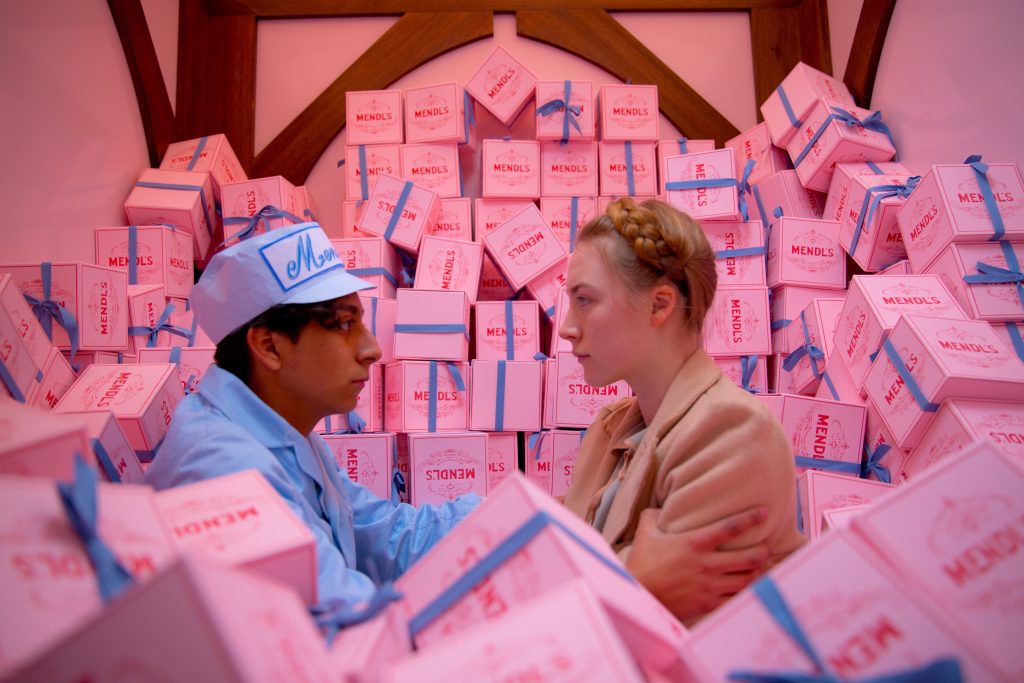
In 2014, I had a daughter; published a book; watched 43 films (excluding shorts), 27 TV series and television or online programs (including talk shows and web series); and read 63 books (excluding comics, picture books, and short stories).
1. My Daughter
My daughter is smart and adorable. At just over four months old, she could already make sounds like “mama,” “嗯嘛” (the Wuyi-dialect version of mama), “dada,” “dada-mama” (run together), “grandma” (in the first tone), “big sister” (the Henan-dialect version), “big big,” and “home home.” Apparently, that’s considered pretty miraculous. Daughter, you’re so clever that I have a feeling you’ll be the one solving the Theory of Everything, the Goldbach Conjecture, and whatever else in the future~~~
My wife went through a very difficult pregnancy and breastfeeding period! Being a mother is really not easy. My parents and my parents-in-law also worked hard helping take care of the little one.
2. Creative Work
My first book, The Alluring Illusion: Psychological Secrets in Light and Shadow, has already gone into another printing. For a nobody like me, that’s a pretty good result for a first book. Thanks to all my friends and relatives for supporting and promoting it. I also have to thank the book’s editor, Lin Feixiang. If he hadn’t kept hounding me to finish the manuscript, this book might still be nothing more than a fantasy in my head.

My second book (I’ll keep the content secret for now) is in preparation. Hopefully I can officially get to work on it soon.
In 14, I worked on two large lecture slide decks, each more than 200 pages of PPT. One was called Fascinating Light and Shadow, introducing the films and series I like, mainly for an elective course. The other was called Addictive Substances, Culture, and Abnormal Consciousness, a somewhat suspiciously seductive encyclopedia of drugs, which I presented in my cognitive psychology class. Since cognitive psychology can be a little dry for undergraduates, I simply added this after the serious material was over.
Presenting the two slide decks took a full 9 hours in total. I was even a little moved by myself when I finished ^_^.
After all these years of teaching and writing film reviews, I’ve accumulated enough fun material to start a stand-up comedy elective at school. I guarantee a whole semester of nonstop high-energy content.
I wrote very few film reviews in 14. Early in the year, I wrote some recommendations of classic films for Popular Cinema, and a horror-film recommendation for Cosmo. The only other serious film reviews were probably these two:
The Psychological Inspiration and Plot Analysis of Memento
Becoming a God with a Single Thought: Soft and Hard Science Fiction Through Interstellar
With Mtime clearly in decline, I decided to move my main publishing platform to Zhihu (I’m also checking out other platforms). I recently started reposting my old articles on Zhihu, and unexpectedly, by the end of the year all my answers had been viewed more than 5.5 million times. I’ll keep pushing in the new year.
3. Films
Because I was busy being a dad, my movie intake plunged in 14. I watched only 43 films all year, a new low for several years. I went to the cinema only twice—once for X-Men: Days of Future Past and once for Interstellar. I still haven’t seen Gone with the Bullets or Sacrificed, both of which were still playing in cinemas. I’ve become unable to understand the internet memes spawned by many of 14’s hit films. On the one hand, I feel disqualified from calling myself a film critic; on the other, I feel like I’ve been abandoned by the times. Then, at the end of the year, I saw a post on Guokr saying that most people’s IQ starts declining after age 35—which means that in 15, there’s a pretty good chance my IQ will start declining too. All of this made me a little sad. Is this what they call a midlife crisis? Yamete~~~
Still, I’d better sum things up—
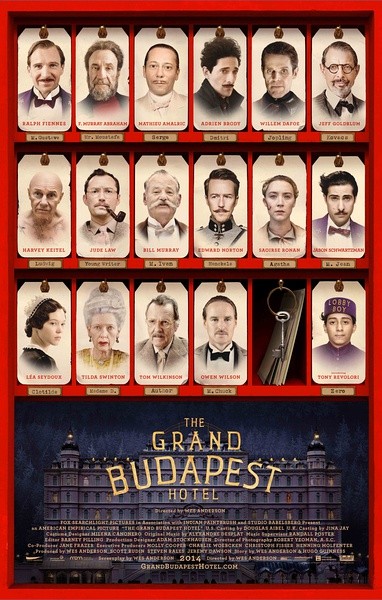
Favorite Films of the Year: The Grand Budapest Hotel & Interstellar
Among the limited number of films I watched, only two got five stars from me on Douban: Interstellar and The Grand Budapest Hotel. My ratings are always melodramatic—I get excited and give out a perfect score. The small number of perfect scores in 14 was partly because the sample was small, but also because the overall quality of what I watched was mediocre. Even the good ones were mostly just as good as expected, with very few surprises.
The Grand Budapest Hotel definitely counts as my favorite of the year. I love the vibe of every character being twitchy and hyperactive (and, actually, the ending is quite touching). “His world had already vanished before he entered it, but he used his extraordinary charm to maintain the illusion that it was still there.” Some people may find lines about a “vanished era” pretentious, but they always hit me. This is probably my universal tearjerker.
As for the other five-star film, Interstellar actually has plenty of flaws and isn’t really worth five stars. I gave it full marks partly because, whether or not the developments after the protagonist falls into the black hole make sense, they did give me a small, unexpected thrill (a rare feeling among the films I watched in 14). The other reason is that the film’s celebration of the spirit of exploration hit my other universal tearjerker. Blade Runner had an especially moving passage: the replicant leader’s dying words—“I’ve seen things you people wouldn’t believe. Attack ships on fire off the shoulder of Orion. I watched C-beams glitter in the dark near the Tannhäuser Gate. All those moments will be lost in time, like tears in rain.” The artsy crowd is moved by the second half—“like tears in rain,” so poetic. But my tearjerker is the first half, because I see that humanity has abandoned its most precious spirit of exploration. It is the replicants who inherit humanity’s most radiant side and explore the vast universe in our place—humanity has enslaved a group of beings far nobler than themselves, truly “human.”
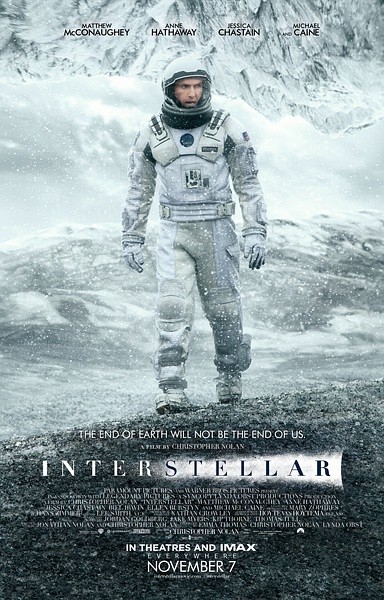
But the final reason I gave Interstellar full marks was that I watched it around the same time as Guardians of the Galaxy, another film set in space, and saw that this childish mess of a kids’ movie somehow also got mostly five-star ratings on Douban. By comparison, even six stars wouldn’t be too much for Interstellar.
Disappointment of the Year: Gone Girl
A film named the “disappointment of the year” isn’t necessarily a bad film. Mr. Fincher’s Gone Girl is absolutely a good movie. But for some reason, I always feel that Fincher’s films in recent years fall just a little short—as if one more tiny push would make them perfect. Reports constantly praise how high his standards are and how demanding he is, but I always feel he’s holding something back, not giving it everything.
Trash of the Year: The Continent
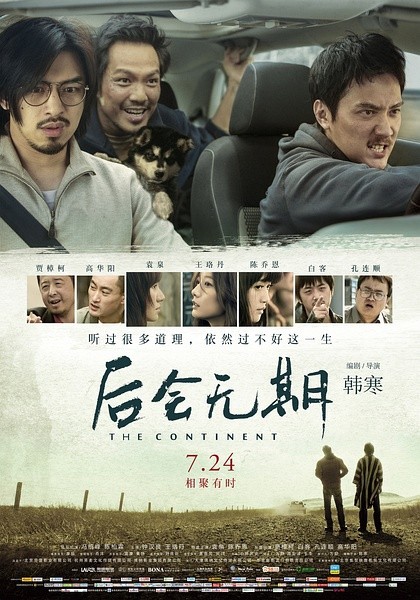
Tiny Times is terrible, right? It really is. But its awfulness lies in the childishness of Guo Jingming’s film language and the bizarre, girlhood-romantic values overflowing from it. Childish as it is, at least it’s still a movie—Tiny Times at least has a complete story, and Guo Jingming at least knows how to vary the pace. By comparison, The Continent, its sworn enemy, isn’t a movie at all: no plot, no rhythm, and no recognizable emotion. You might say, “Come on, it’s an art film—you don’t need plot or rhythm.” But isn’t this just a bunch of people awkwardly reciting inspirational one-liners with a few hit songs inserted between them? How can you call that an art film?
4. Series
My most wonderful viewing experiences in 14 still came from series.
Favorite Series of the Year: American Horror Story: Asylum & True Detective, Season 1
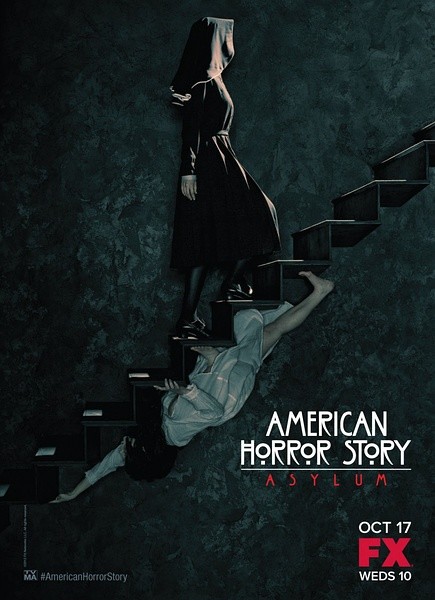
Early in the year, when writing my book had nearly driven me to collapse, I gave myself two days off and watched American Horror Story: Asylum in one sitting. The show includes mental illness, a twisted killer, a Nazi doctor, The Diary of Anne Frank, human modification, the Devil, fallen angels, and aliens. It may be the ultimate mash-up of everything I’ve ever seen on screen. And somehow, all those elements fit together without the slightest feeling of awkwardness. Incredible.
But the best series I watched in 14 was probably still Season 1 of True Detective. In the first few episodes, I wanted to know who the killer was. As I kept watching, I stopped caring. I was satisfied just seeing Matthew McConaughey standing there.
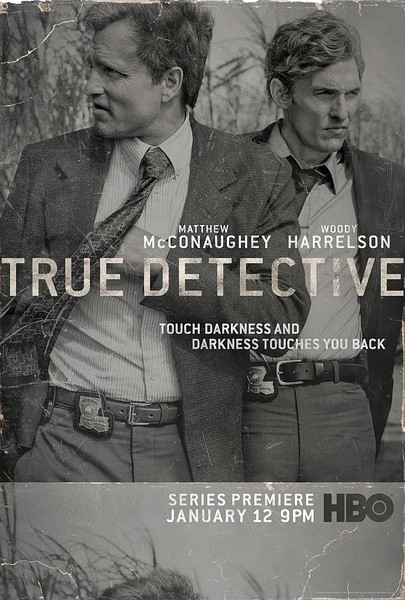
Matthew McConaughey has been my male idol ever since.
Disappointment of the Year: The Strain, Season 1
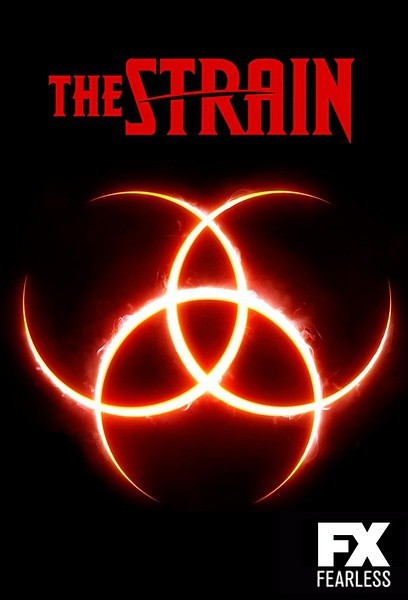
New shows are risky, so be cautious about committing to them. The first episode directed by Guillermo del Toro was dazzling; after that, the IQ of every character in the show collectively went off a cliff. Among the American series I follow, it’s rare to find one where every character is so uniformly stupid. Dropped.
Trash of the Year: Dance in China
I’ll count variety shows as series while I’m at it.
I watched the finale of Dance in China with my mom. Then I also checked out the original version: the American dance show So You Think You Can Dance.
Those champion dancers from China would probably all be eliminated in the first round in the United States.

5. Talk Shows
Starting in 13, I gradually began watching some independent talk shows from the internet and radio. I kept up with five programs. There were two others I watched for an episode or two before I couldn’t take it anymore and dropped them. One was Cheng Qingsong’s Qingsong Talks Movies—the moment Mr. Qingsong appeared, I started laughing, so I quit after two episodes. The other was Ma Weidu’s Dudu. I watched one random episode; what shameless saccharine nonsense. It made me want to beat him up. Here is the ranking of the five talk shows I followed consistently—
Top 1: Xiaoshuo & Gao Xiaosong’s Strange Tales
The shows I agree with most in terms of values are Gao Xiaosong’s Xiaoshuo and Gao Xiaosong’s Strange Tales. They’re also entertaining and educational. I have enormous respect for a legendary chatterbox who can dish out so much solid content without even preparing a script.
The only slight weakness is that Mr. Dajin occasionally comes out with a few amateurish opinions about the natural sciences. Still, compared with all the self-proclaimed intellectuals who regularly show their faces in China, Mr. Dajin’s scientific literacy is already pretty decent.

Top 2: Tu Mota’s World Talk Show
When I watched the first episode, I thought the production was honestly way too shabby. Other programs had long since deployed all kinds of flashy Flash animations and dazzling special effects, while in this show, when Mr. Tu Mota mentioned a travel destination, he actually had to point it out to viewers on a globe he was holding himself.
The show’s distribution channel was bizarre too. Other programs tried to use mainstream open platforms so viewers could find them easily. This one, however, could only be found by subscribing to “Tu Mota’s World Talk Show” in the mobile Sohu News app (not even the iPad version worked). Everywhere else, it was either unavailable or incomplete.
Tu Mota’s delivery isn’t especially lively either, with no changes in emotion or intonation from beginning to end. After I recommended it to my students, they told me its hypnotic effect was excellent; only true love could get anyone through it. In that case, I must truly love Mr. Tu Mota. The program patiently unfolds stories of culture, history, and science from around the world, and the more you listen, the more addictive it becomes. Mr. Tu Mota’s scientific literacy also beats that of almost every public intellectual on the market, so this science-and-human-geography program stands out amid the crowd of history-and-culture talk shows.
Mr. Tu Mota seems to have gone traveling again, and the show is currently on hiatus.

Top 3: Wu and Liang’s Relativity
A veteran radio talk show. Wu Bofan and Liang Dong in conversation. Early on, there was far too much pseudo-science about traditional Chinese medicine from Liang Dong; he reined it in considerably later. The two liberal-arts graduates’ weakness in basic natural science is genuinely exasperating, but they’re brilliant on other subjects. Liang Dong is something of a character himself, but you can feel that he’s still growing. Mr. Wu Bofan, meanwhile, has been badass from beginning to end.
I don’t know whether this is somehow connected to the 21st Century Media Group incident, but the program is currently off the air.

Top 4: Luogic Show
This program really ought to have ranked in the top two. It’s just that, with the second season having gotten this far, both the content and all those activities on WeChat have increasingly started to resemble a cult devoted to the twin deities of “internet thinking” and “free-market liberalism.” The former in particular has already begun to wear me out.
Besides, this program has a powerful planning team behind it, so it’s only natural that it turns out well. By comparison, I still admire the previous three programs more—they rely almost entirely on the presenters themselves.
6. Reading
I basically didn’t fall behind on my reading in 2014.
Favorite of the Year: The Third Chimpanzee, SuperCooperators & Malice
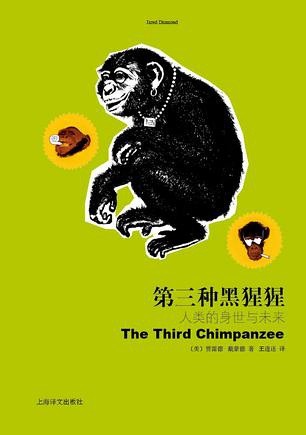
The main ideas in Professor Diamond’s later bestselling books were actually already contained in this early work, The Third Chimpanzee. It throws out a whole pile of radical ideas in concise, punchy fashion; by comparison, the later books actually seem a little long-winded.
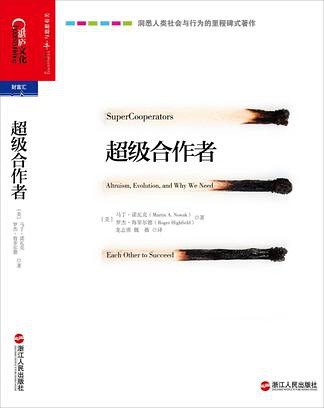
If the main theme of evolution is “the survival of the fittest” (competition), then how did human cooperation evolve? The god-tier scholar Martin A. Nowak’s SuperCooperators fills in the final link in evolutionary theory (though honestly, I’m not even sure this is the “final” link ^_^).
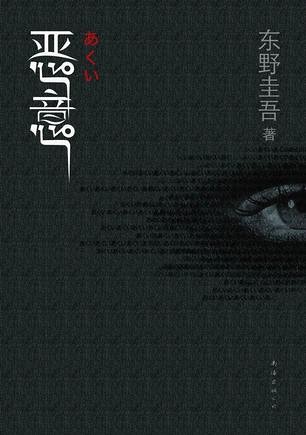
I’d read several of the supposedly great works by Keigo Higashino before, and none of them struck me as anything special. Malice turned me into a fan. A murder motive can actually be this vicious? Even now, thinking about it gives me chills down my spine.
That’s it.
Leave a Reply