 ▶
▶
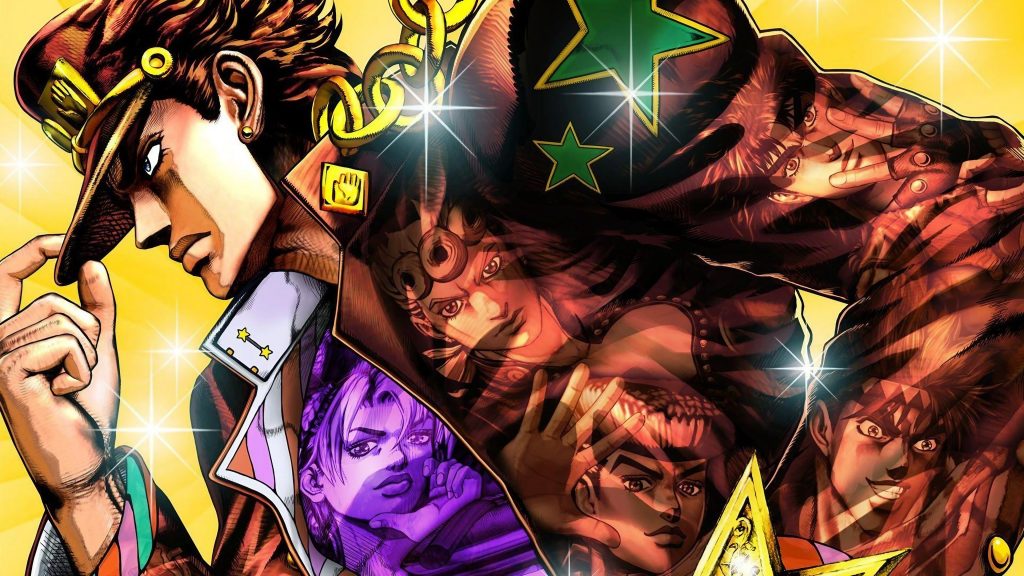
Zhihu question: Compared with superpower designs in American comics, where does JoJo's Bizarre Adventure excel?
I think the smartest thing about JoJo is this: when it comes to superpowers (I’m only talking about Stands, and leaving out the Ripple from the early part), Hirohiko Araki is remarkably restrained. Almost every superpower that appears in the story is limited. By contrast, many American comics design their superpowers with excessive fantasy and indulgence—whatever feels exciting goes. The difference between the two is restraint and self-discipline versus unchecked indulgence.
I think balance between different superpowers is crucial in stories involving superpowers. In fact, excellent creators in this genre often spend a great deal of thought balancing all the powers in the story. Even the final boss cannot have an excessively powerful, bug-level ability. The reason is simple: if the powers are unbalanced, there is no fight to be had, and the story cannot unfold convincingly. That is why stories that balance their powers well often become classics; those that do not balance them very well have to drag themselves along, desperately trying to make everything seem self-consistent. And some balance things so disastrously that they end up as laughingstocks.
1. Balance
For a superpower story to work, its foundation must be that every superpower in the story is “limited.” Balancing superpowers means placing limits on them. We can imagine that when a creator has a superpower story in hand, it is hard not to let the imagination run wild and invent fantastical powers to indulge in a personal fantasy of “greatness.” On the first day, the creator thinks up a character who can kick Earth apart; on the second, he may be unable to resist imagining a god who can smash the Milky Way with one punch. After that, world-destroying gods and creator gods who can blink a universe into existence are no challenge at all. As I recall, American comics have quite a few such deities, who can casually destroy a universe or something.
But when the design of powers is indulged to that extent, the story has no foundation at all. So when facing this kind of genre, indulgence may be easy, but restraint is mandatory. Even when a character in your hands can do countless things, you still have to put all kinds of shackles on him.
If I were a creator, I would certainly find that frustrating too. But pursuing your own thrills at all costs comes with a price. Take the American TV series Heroes, which eventually became a laughingstock: the biggest reason its plot collapsed was its indulgent approach to superpower design. Heroes is not an American comic, but I think its approach to superpowers is essentially the same as that of American comics. We might as well use it as a cautionary example. What mistakes did Heroes make in designing its superpowers?
Leaving aside the mythic, world-destroying abilities in American comics that can do it all with a flick of the finger, ordinary superpower stories have three kinds of bug-level powers that must be used with extreme caution. Once they appear, the balance of powers is very likely to suffer serious damage.
The first bug-level superpower: time manipulation
The first bug-level ability is the ability to manipulate time.
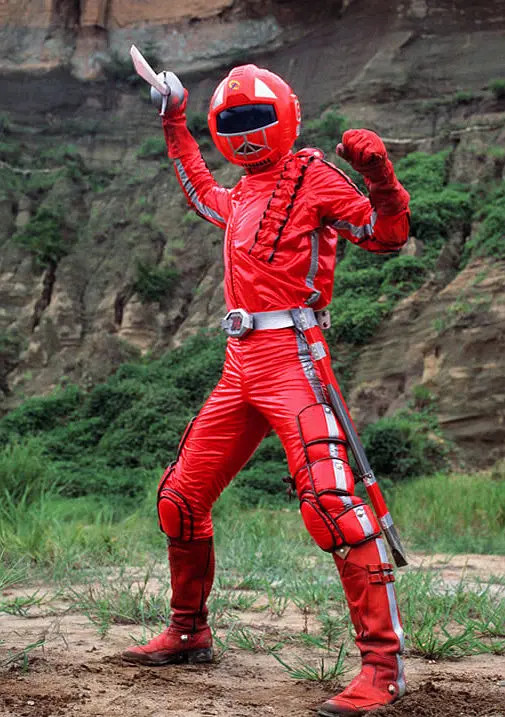
For example, stopping time. During stopped time, all sorts of varied and seemingly powerful superpowers instantly lose all defensive ability without distinction, leaving their owners at the mercy of the time manipulator. People born around the 1980s probably all watched Spaceship Dinosaur Koseidon as children. Late in the story, there was a particularly boring device: at the end of every episode, Kose would unleash the ultimate move “Time Stop!” and then chop to pieces the monsters he normally could not defeat, but which were frozen in place. As children, we always wondered why he waited until the very end to use his ultimate move. Later we figured it out: although the device was pretty stupid, Japanese writers and directors had already realized that stopping time was an invincible move and could not be used casually.
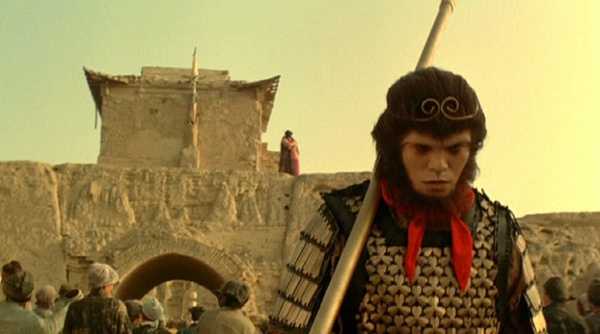
Another invincible form of time manipulation is traveling through time, especially changing the past. This ability may not offer many direct advantages in a fight, but its damage to a story’s dramatic power is often fatal. Much of the time (though there are countless exceptions), the emotional force of a story comes from the audience realizing that what has been lost can never be recovered, just as in real life. But under the intervention of the invincible ability to “change the past,” past mistakes can be undone again and again, and people who have died can be brought back to life repeatedly. All loss becomes meaningless. A creator who understands this will make the ability fail at the right moment. In A Chinese Odyssey, for instance, even though Joker possesses the Moonlight Treasure Box, he still has to lose Zixia Fairy—and lose her forever.
In well-balanced superpower stories, time manipulation must necessarily be used with extreme caution. JoJo’s Bizarre Adventure does this quite well: the ability to manipulate time is possessed only by the final boss of each part. Araki also adds various limitations to the range of time manipulation. For example, DIO, the boss of Part 3, can stop time for only a few seconds, while the boss of Part 5 can erase time, but his Stand’s physical attack range is a mere few meters. Even so, this remains an overwhelming power. In JoJo, a series exceptionally skilled at balancing superpowers, every time the balance breaks down, it happens precisely in the handling of these bosses who can control time.
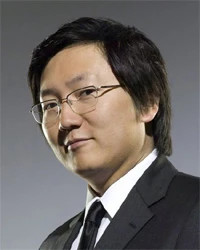
But in Heroes, the goofy demigod Hiro possesses both god-tier abilities—stopping time and changing the past—and has almost no restrictions. (The writers must have been having an incredible amount of fun when they realized how ridiculously powerful they had made him, right?) The ability to stop time directly made the climactic battle at the end of Season 1 absurd, because Hiro was completely capable of instantly killing any opponent. The foundation that made the entire story work also collapsed: according to the rules of his abilities, the villain was simply no match for Hiro. The writers themselves actually recognized the problem. Their solution was to portray Hiro as a buffoon—blessed with divine power but clueless about how to use it—rather like Duan Yu’s Six Meridian Divine Sword, which worked only intermittently. The contradiction was that the series kept depicting Hiro’s growth almost continuously. Yet after two seasons of growth, he was still a buffoon. How could the audience not get tired of it? His other god-tier ability, “changing the past,” inflicted a different kind of damage on the plot. As I said above, if everything can be restarted over and over, what meaning does anything have?
The second bug-level superpower: mind control
The second bug-level ability is mind control.
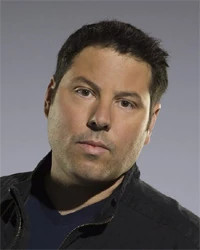
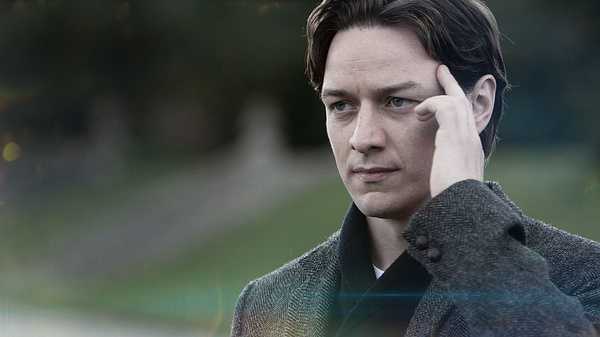
Like stopping time, this ability strips all other superpowers of their defenses without distinction. Take Professor X in X-Men: he could actually instantly kill the vast majority of mutants, including Magneto. In Heroes, the chubby police officer Matt was originally a telepath who could hear other people’s thoughts, but by the end of Season 2 he had developed into a mind controller. By that point, he essentially had an almost invincible ability, but the writers had no idea how to use it.
To go a step further, in a work containing mystery elements, simply inserting a telepath who can hear other people’s thoughts into the plot is already highly inappropriate. In Season 2 of Heroes, the telepath Matt spends a long time right alongside the mastermind behind the conspiracy, yet somehow never “reads” the other person’s scheme. The writers’ brains must have been functioning like a pig’s at that point: they probably knew they could no longer make the story self-consistent, but had to keep writing anyway.
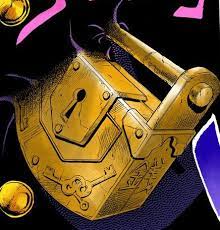
By contrast, JoJo has almost no superpowers that can directly impose mind control. Araki is even more cautious in designing mind-control powers than time-manipulation powers. JoJo actually has quite a few psychic Stands, but either they must be triggered by specific conditions or they affect only one particular aspect of the mind. In short, all of them have their range of operation restricted by various conditions. For example, one Stand in Part 4, “The Lock,” can use a person’s guilt to make a heavy lock appear on the other person’s heart. Its user can set traps that push an opponent into a moral dilemma, thereby activating the power, but he cannot simply hang a lock on an opponent’s heart whenever and wherever he pleases.
So, if a mind controller appears in the plot, how should a creator solve the problem of balance?
To keep the balance from running out of control, the creators of X-Men, a far stronger work than Heroes, came up with two ways to respond.
The first response in X-Men is “cancellation.” If the heroes have a mind controller, the villains need one too. The two bug-level abilities cancel each other out, leaving room for everyone else to do something. This is a common way of preserving balance when confronted with god-tier abilities, even if it is often a helpless one. From the White Queen in X-Men: First Class and General Stryker’s son in X2, to Phoenix in X-Men: The Last Stand, the opposing side always has mind-control abilities capable of canceling out Professor X.

In JoJo’s Bizarre Adventure, characters’ superpowers remain almost completely fixed through 90% of the story. But several times, when facing a boss’s time-control ability, Araki has had no choice but to let the protagonist evolve a power capable of canceling it out. The most typical example is the climax of Part 3, when Jotaro Kujo evolves the ability to stop time and cancels out DIO’s power. Although that is one of the classic battles in all of JoJo, I don’t think the evolution of the superpower is particularly clever. (By comparison, the way Part 4’s final battle breaks Kira Yoshikage’s time-manipulation ability is much smarter.)
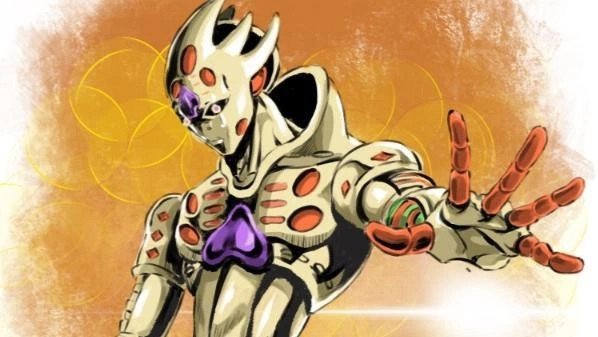
If “cancellation” is not enough, you can always invent an even more shameless superpower to suppress the already shameless one. For example, the Boss of Part 5 has the shameless ability to erase time. Perhaps because the author simply could not think of any way to fight him (after all, “cancellation” had already been used), he let the protagonist evolve an even more shameless ability to turn the tables. You think the Boss’s ability to warp time is impressive enough? The protagonist’s final evolution in Part 5, Gold Experience Requiem, can actually warp logic! It can reduce every action or intention to “zero”! This is the most outrageous possible setup: it nullifies every form of attack at the level of logic itself. Even JoJo, the superpower series with the most masterful balance, loses control to this extent when faced with a bug-level superpower.
The second response in X-Men is to use high technology against superpowers. The creators of X-Men have the story’s big boss, Magneto, find a helmet that blocks mind control as if he were cheating. At least this way the boss cannot be instantly killed by Professor X. But the creators also seem too lazy to explain why they do not make a few more of these amazingly powerful devices. (There should be an explanation in the comics. I await an expert’s supplement~~)
Using high technology to fight superpowers is another approach that can easily get out of control. Take Marvel comics: Iron Man and the X-Men also inhabit the same universe and can make guest appearances in one another’s stories. You might think that if Iron Man ran into Magneto, he’d be killed instantly, right? One controls metal, while the other is made of metal—an obvious natural counter. But the creators refuse to set it up that way. Their answer is that Iron Man uses technological inventions to make his armor immune to Magneto’s control.
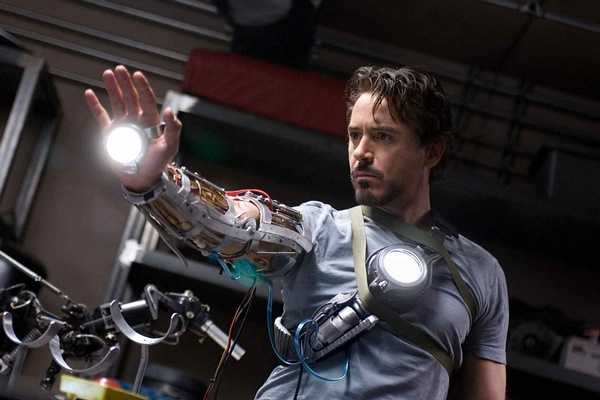
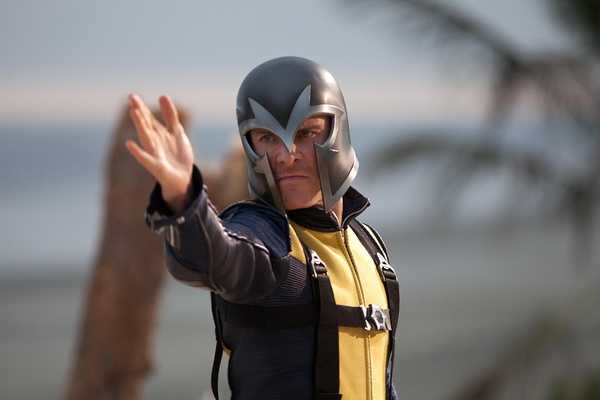
But I think that’s a setting with no principles at all. Technology has infinite possibilities. Once you bring it into a superpower story, technology itself becomes the ultimate superpower: it can counter other powers, and it can keep upgrading and evolving without limit. Once technology enters the picture, the creator can make up whatever they want. That’s incredibly convenient for the creator, but it robs viewers and readers of much of the fun that comes from powers directly clashing or naturally countering one another. It’s like playing Chinese chess: the game is fun precisely because every piece has a fixed, limited function. If you added a shape-shifting piece that could act as a chariot, a horse, or a cannon, what would there be left to play?
The Third Bug-Level Superpower: Unlimited Upgrades
So high technology becomes the third bug-level ability in superpower stories. Or, put another way, the third bug-level ability is any superpower that can change or upgrade at will.
In JoJo, whose balance is controlled with remarkable precision, the characters’ superpowers remain completely fixed through more than 90% of the story (especially Parts 3, 4, and 5 at their peak). The characters can only figure out how to make the most of their one fixed ability and defeat their enemies. Araki occasionally pulls off strokes of genius, showing ingenious uses for limited abilities. You find yourself admiring both his discipline in imposing layer upon layer of restrictions on the superpower world he created and his ability to produce such brilliant developments under those strict constraints. In Hirohiko Araki’s world, the chariot, horse, and cannon in Chinese chess are not inherently stronger or weaker; everything depends on how you use them.
In the cautionary example Heroes, there are at least two characters who somehow possess every kind of superpower. By the later stages, of course, these two had become godlike characters whom the creators could mass-produce without a second thought. Again, to keep the plot moving, the creators eventually had to paper over the problem with twisted personalities—and that’s about the worst possible patch job.
2. Achilles’ Heels
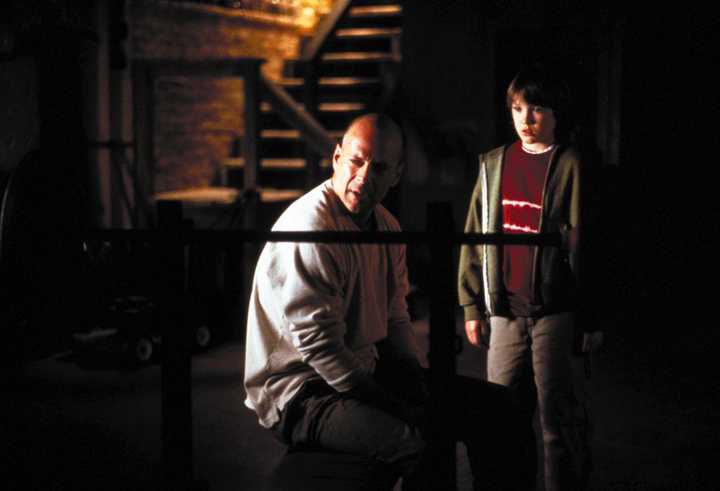
Another common way to balance a bug-level superpower is to give it an Achilles’ heel (a weakness). In M. Night Shyamalan’s Unbreakable, the protagonist awakens to his powers after his son points them out to him—and this happens because his son is a comic-book fan who knows superpower lore inside out. (There are actually lots of wonderfully playful ideas in M. Night Shyamalan’s films.) I remember the son telling his father: every superpowered person has an Achilles’ heel, and so do you. And in the film, the father really does nearly die because of his.
Iron-shirt kung fu may make you impervious to blades and bullets, but squeeze a man’s testicles and the power is broken; Superman is practically invincible under normal circumstances, but expose him to kryptonite and he’s liable to drop dead—these are all Achilles’ heels. One particularly meaningful idea in Superman stories is that although Superman is a godlike being, his destined enemy, the bald Lex Luthor, is an ordinary Earthling with no superpowers whatsoever. Apart from matching Superman wits for wits, Luthor can always somehow get hold of a kryptonite necklace or something and put it on him, instantly leveling the gap in power. To fight Superman to a draw despite such an absurd difference in strength, Superman is heaven’s glory—but Luthor is practically Earth’s light.
More commonly, these works include a very special superpowered person whose ability is to cancel out the abilities of every other superpowered person. When he’s around, everyone else’s powers stop working. It’s an interesting idea: he has no offensive power himself, but effectively serves as a collective Achilles’ heel, reducing every superpower to zero.
In JoJo, almost every superpowered person shares one Achilles’ heel: the superpowered person’s own body. In most American comics and other superpower stories, powers are activated by the superpowered person himself. In JoJo, however, the entity that truly possesses the superpower is the Stand. Most superpowered people are otherwise made of ordinary flesh and blood, so no matter how powerful the Stand is, an attack on the user’s body can still kill them. JoJo has quite a few classic battles turned around by locating the user’s body. In those battles, the search for the user and the tactical attempts to attack him are more dramatic than the superpower duels themselves.
3. The Awkwardness of Being Too Powerful
Superman in American comics is a character who is a little awkward from a superpower-design standpoint. On the one hand, he’s so powerful that balancing him against other characters is difficult; on the other, he’s so important that the creators simply can’t bring themselves to let him go. At that point, the plot can become pretty awkward because of the imbalance.
I’ve always thought that one major reason the DC film version of Justice League couldn’t get off the ground as smoothly as Marvel’s The Avengers is the enormous gap in power between its two central characters, Superman and Batman. The Avengers also puts gods and humans together and has the same problem of balancing abilities, but it can easily use the aforementioned method of technology fighting superpowers, because its technology is extremely science-fictional. In The Avengers, high technology is exactly the third bug-level superpower mentioned above: say it’s as powerful as you want, and it is; give it whatever function you want, and it has it. So Iron Man’s suit of metal junk can fight a god like Thor to a draw. Justice League isn’t that simple. Judging from the setup of its ‘prequel,’ Man of Steel, the technological level of Earth’s setting when Batman appears is bound to be many times more realistic than in The Avengers. It’s hard to imagine Batman developing some high-tech equipment like Iron Man’s to go toe-to-toe with Superman in next year’s second prequel, Batman v Superman: Dawn of Justice (though of course, you never know).
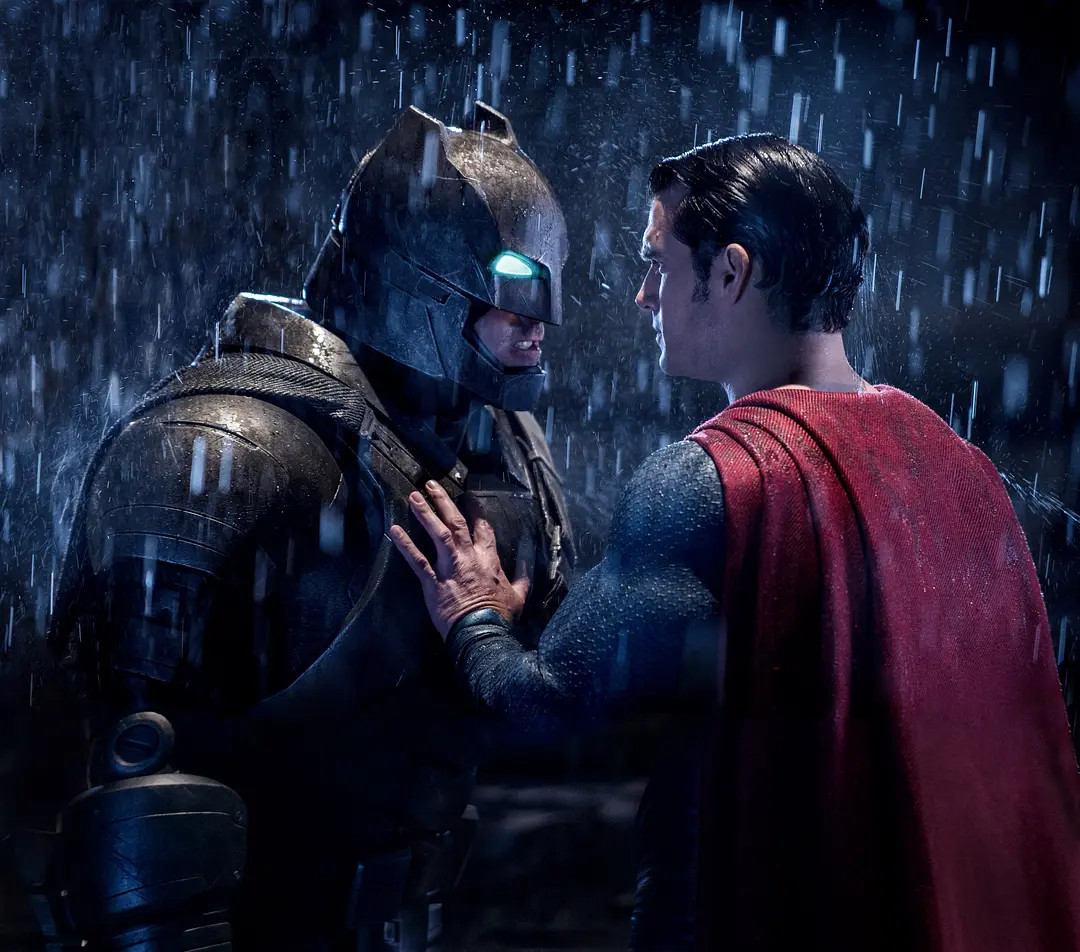
You can probably imagine the plot of Batman v Superman: Dawn of Justice going something like this: in the first half, Superman and Batman square off over various misunderstandings, but only in indirect clashes, with Batman mainly relying on his wits from the shadows; in the second half, the misunderstanding is cleared up and the two fight side by side, leaving even less opportunity for conflict. Basically, we won’t see a scene in Batman v Superman: Dawn of Justice like Thor, Iron Man, and Captain America blasting away at one another in The Avengers. Even if Superman and Batman really are made to fall out and fight, it will probably be like in the comic The Dark Knight Returns: Batman first uses kryptonite to turn Superman into an ordinary man, and only then do they trade punches—which would be such a boring fight. In my imagination, the plot of Batman v Superman: Dawn of Justice will, nine times out of ten, get a little twisted up because Superman is simply too powerful.
Besides characters like Superman, who are too popular to be abandoned, there are also characters creators fall in love with and don’t want to abandon. Jotaro Kujo, created by Hirohiko Araki in Part 3 of JoJo, is one of them. Araki very obviously fell in love with this character, to the point that in later stories he could never quite bring himself to leave him behind. But by the end of Part 3, Jotaro had evolved the godlike ability to stop time. So things got very awkward from there: the author wanted this godlike, overwhelmingly powerful character to remain in the story, but couldn’t let him steal the protagonist’s spotlight or disrupt the balance of powers in the new story. And so, in the stories after Part 3, Jotaro became a deeply awkward character.
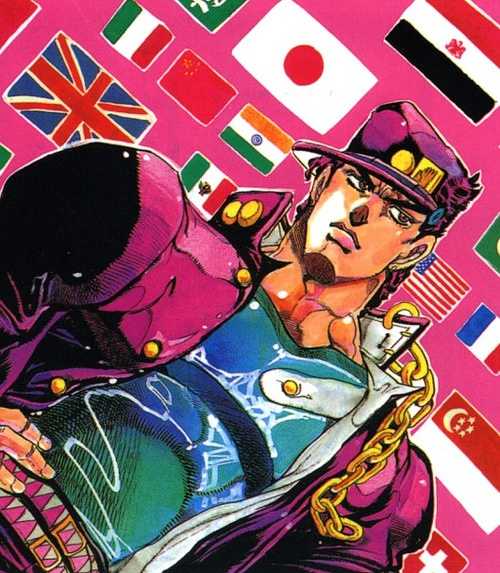
First, to keep him from disrupting the balance of powers in the new story, Jotaro’s abilities were clearly weakened. In Part 4, he actually couldn’t beat a rat’s Stand, and even lost a test of speed to Red Hot Chili Pepper. What does that leave the strongest boss, DIO, whom Jotaro defeated back then? Later, in Part 6, he was attacked by three Stands and was beaten again. Under the rules established in Part 3, that defeat would have been impossible. Finally, after returning at full strength near the end of Part 6, he had an overwhelming advantage but still couldn’t do anything about the boss, who had not yet mastered the ability to control time.
Second, so he wouldn’t steal the new protagonist’s spotlight, Jotaro’s judgment also became noticeably worse. In the Part 4 finale, when the protagonist is in danger, Jotaro passes by the scene of the battle. He clearly senses that something is wrong, yet simply gives up investigating. In Part 5, he has already begun investigating the protagonist’s background, but then mysteriously disappears from the later story, apparently abandoning obvious clues just as easily. Trading such a severe decline in ability and judgment for the sake of keeping a character in the story—isn’t that a bit of a bad bargain?
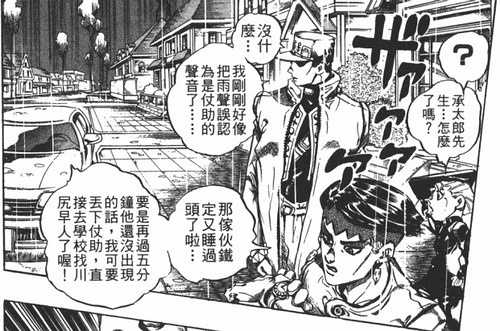
Jotaro’s severe fading into the background in the latter part of the story is probably the single thing I regret most about watching JoJo.
4. Dancing in Shackles
Stories about superpowers may be absurd, lowbrow material that rarely gets invited to the banquet of high art, but like most other art forms, they follow the same rule. That rule is that the essence of art often lies in ‘dancing in shackles.’ The strict formal requirements of regulated Tang poetry and Song lyrics didn’t limit their expressive power; they made them what they are. Superpower stories work the same way. I think ‘balance between superpowers’ is their poetic meter. Unrestrained flights of fancy may look wonderful, but they often violate the laws of art—even in art this absurd. In this respect, despite its many shortcomings, JoJo remains the work that comes closest to perfection.
Version History
The first version of this article was published on Mtime, under the title Jotaro's Power and Awkwardness. The original was deleted after Mtime redesigned its site.
- Douban review version: Jotaro’s Power and Awkwardness | The Problem of Power Balance in Superpower Stories
Related Video
This article was part of a collaborative project for highly upvoted answers initiated by Zhihu users. Zhihu user @萬重 created a video based on this article:
Leave a Reply