
Zhihu question: Do Men Care More About a Woman's Figure, Face, or Mind?
Let me talk about this from the perspective of evolutionary psychology.
My conclusion is: men definitely care about a woman’s figure and face. As for whether they care about her mind, that depends on whether he is pursuing a short-term strategy or a long-term strategy.
Let me explain~~
Mate selection can involve a short-term strategy or a long-term strategy. Put simply, a short-term strategy means a One Night Stand (make love and then bye-bye), while a long-term strategy means building a marital relationship. Both men and women use short-term and long-term strategies in mate selection, but the proportion and importance of the two strategies differ greatly between the sexes. Generally speaking, women use the long-term strategy more often, while men are relatively more drawn to the short-term strategy. The reason for this difference is that men’s reproductive costs are extremely low: a single ejaculation produces sperm by the hundreds of millions, and in theory a man’s lifetime supply would be enough to get every woman in the world pregnant. This low biological cost of reproduction is reflected psychologically in men’s tendency to have sex with as many women as possible – n other words, “ine out of ten men are horny, and the tenth one likes men.”?(By contrast, women’s reproductive costs are extremely high. Pregnancy for ten months, raising children until they can live independently, and so on are naturally borne by women, so they tend to choose mates more cautiously and think more about the long-term strategy. I won’t go into that here.)
So what exactly does the word “lust” in “being lustful” refer to?
Under a man’s long-term strategy, he is looking for a mate with whom he can live for a long time and jointly raise children. In that situation, whether his partner is good at cooperating and getting along with him becomes a very important quality. So being good at communication, understanding others, having a compatible personality, and being well-mannered – all qualities a good cooperative partner should have – also become criteria for a good partner. You could say that when choosing a long-term partner, besides looking for someone with good genes, to a large extent we are looking for a good cooperative partner. The same applies to mate selection by both men and women.
Under a man’s short-term strategy, however, he is not considering long-term life with the other person, so the standards for a good cooperative partner are less important. In their place come much more naked biological standards: whether the woman has good genes and strong reproductive potential – in other words, whether she can produce more, healthier offspring. The “lust” in “being lustful” refers to the cues a woman displays that can reflect good genes or strong reproductive potential. The figure and face in the question are classic examples of such cues.
The mind mentioned in the question often implies, on the one hand, relatively high innate intelligence and, on the other, good upbringing. Although this includes genetic factors, unlike cues such as the figure and face, it does not point as directly to healthy offspring. Instead, it implies a stronger ability to solve problems and handle relationships in complex social settings. So having a mind basically counts as a cue that someone will be a good cooperative partner.
Therefore, under the long-term strategy (finding a wife), men value both cues to women’s genes and reproductive potential (fair skin, a pretty face, and a great figure) and their potential as cooperative partners (a gentle, capable, good-natured personality). If she has no mind, a man will still mind. Under the short-term strategy (a one-night stand), cues to genes and reproductive potential become almost the only standard. At that point, whether a woman has a mind matters much less to a man – ndeed, you could say he does not care at all.
Since men are more inclined toward the short-term strategy, saying that men always look only at a woman’s face and figure and do not care about her mind isn’t exactly doing men a grave injustice.
I summarize men’s mate-selection standards with a four-character maxim: fair, young, beautiful, and chaste. “Fair, young, beautiful” sums up the short-term strategy, while “chaste” overlaps with “mind” but also has other implications, and sums up the long-term strategy.
Fair
One of the most direct cues to a woman’s good genes comes from her skin. Skin diseases caused by fungal infections, parasites, and so on leave marks on the skin. Lighter skin therefore makes it easier for a man, while courting, to see the woman’s skin health clearly and even infer her overall health[1]. Thus, light and smooth skin is quite possibly an important cue that she has good genes and is less vulnerable to pathogens and parasites.
Another explanation is that women need large amounts of calcium and vitamins during pregnancy and breastfeeding (which babies need very much as well). Vitamin D synthesis requires exposure to sunlight, while people with darker skin cannot synthesize enough vitamin D. Therefore, lighter skin in women is beneficial for nursing healthy babies. This is why, among all human populations, including Africans, women and babies have lighter skin than adult men – clearly evolved advantageous trait. For the same reason, “air skin”?gradually became internalized through evolution as one of the standards men use for women’s reproductive capacity (the genes producing an advantageous trait and the genes favoring that trait can coevolve).
Young
People generally say that what men choose in women is “air, rich, and beautiful.”?In reality, within men’s mate-selection standards, the “ich”?part is largely beside the point. When men choose women, caring about a woman’s financial background is usually an economic choice, not a mating impulse. The word “ich”?should be replaced by “oung.”?“oung”?means a youthful girl.
Good genes in women are good in two respects. First, of course, is their own health: healthy women are naturally more likely to give birth to a healthy next generation. Second is reproductive capacity: the greater a woman’s reproductive capacity, the more children she can produce, and the better their physical condition. Since a woman’s reproductive capacity declines significantly with age after puberty (men’s reproductive capacity declines relatively slowly as they age), youth is almost synonymous with reproductive capacity[2].
Li Ao once sought out a 17-year-old lover as the model for a character in a book called The Virtual Seventeen-Year-Old (Xuni de Shiqi Sui). He even quite generously took this young lover with him on a variety show, where he shamelessly announced that, at heart, he simply liked girls who were barely pubescent. This psychology of being attracted to very young girls is actually quite representative among men.
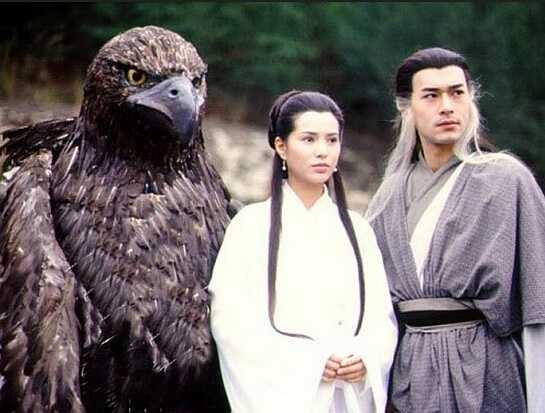
Men’s attraction to very young women, combined with women’s preference in mate selection for somewhat older “esource providers”?(women’s mate preference is unrelated to this question, so I won’t explain it here), has contributed countless “lder man, younger woman”?pairings to movies and television. For example, in almost every period drama, the manor lord is usually covered in wrinkles, while his supposedly first wife at least looks fifteen years younger than he does. This is obviously not very reasonable, but it caters beautifully to the audience’s psychology. Most of the time, neither male nor female viewers feel anything discordant when watching an “lder man, younger woman”?pairing. If it is a “ounger man, older woman”?pairing, however, it is basically a story of taboo love. In The Return of the Condor Heroes, Yang Guo and Xiaolongnu were originally a typical “ounger man, older woman”?pairing. But when Yang Guo and Xiaolongnu finally reunited, Jin Yong wrote:
Sixteen years after their wedding, Yang Guo had wandered through wind and dust, roaming the jianghu, his heart heavy with worry, silver showing at his temples; Xiaolongnu, meanwhile, had lived alone in a deep valley. Though she could not entirely escape the pain of longing, “?gradually she thought and desired less, occupied herself with fewer things, and lived alone at the bottom of the valley without feeling unable to bear the solitude. Thus, when the two met again after so long apart, Yang Guo seemed older than she was.
And that rare “ounger man, older woman”?pairing was reversed in this very literal way.
Beautiful
The beauty of women in men’s eyes broadly includes beauty of face and beauty of figure – n other words, the face and figure mentioned in the question.
Let’s start with facial beauty. Standards of facial beauty vary wildly – ome men like youthful, doll-like women, others prefer mature, commanding women – ut one standard is more or less universal: left-right facial symmetry. Generally speaking, women with symmetrical faces are considered more beautiful. Below is Lin Qingxia in her youth, shortly after celebrating her 60th birthday; once Taiwan’s national beauty, her face was also relatively symmetrical.
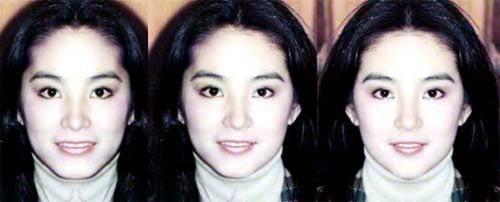
When a symmetrical face and a hideously lopsided face are placed side by side, men instinctively feel that the symmetrical face is more beautiful. This is actually a preference for good genes, because an even, symmetrical bone structure usually means that the woman suffered less damage from parasites, pathogens, and toxins while growing up – n indicator that her genes have relatively strong disease resistance[3].
Besides facial beauty, beauty of figure is also highly valued by men. Many theories hold that aesthetic preferences for people, like aesthetic preferences for works of art, are culturally oriented – or example, the Tang dynasty prized plumpness while the present favors thinness, and standards change because culture changes. Yet many cross-cultural studies show that at some of the most basic levels, people’s aesthetic preferences for the opposite sex display astonishing cross-cultural consistency.
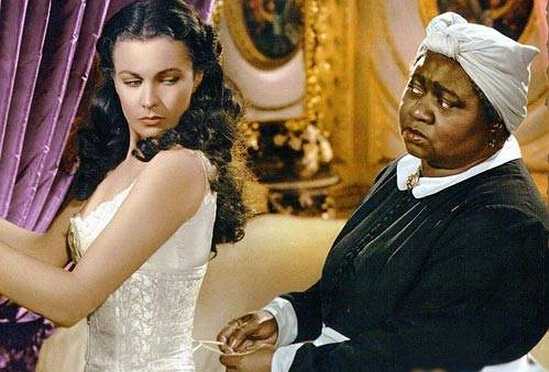
Psychologist Singh once conducted a series of studies[4] in which men from cultures and civilizations around the world viewed a series of female body silhouettes or line drawings. The only thing that varied among the images was the “aist-to-hip ratio.”?The participating men had to choose the figure they considered best. The result was that men in almost every culture considered a woman with a waist-to-hip ratio of 0.7 to have the best figure. Even more remarkably, research shows that women with a waist-to-hip ratio of 0.7 happen to have the healthiest physical condition and the strongest fertility. They are not only more likely to become pregnant, but also less likely to develop diabetes, high blood pressure, stroke, and other diseases. Clearly, this is another cue that evolved in men and is used to identify women’s good genes. Gone with the Wind contains a scene like this: before Ashley, whom she adored, came to visit, Scarlett had her maid lace her waist. The maid said that a woman who had borne children could not possibly make her waist that thin, but Scarlett stubbornly insisted on being laced so she could leave a good impression on the man she loved. Scarlett clearly understood the connection between a narrow waist and sexual attractiveness. In women’s clothing, the main function of most belts is precisely to emphasize the waist-to-hip ratio visually and enhance women’s sexual attractiveness.
So I have always suspected that the Tang dynasty’s ideal of plumpness was really an ideal of fullness; surely the waist-to-hip ratio was not something they could have done without. I don’t believe Yang Guifei had a waist like a barrel. Her figure should have been full and voluptuous, not obese.
Those are the factors men value relatively more under the short-term strategy. In other words, “ソ€?means liking women who have fair skin, are young, facially beautiful, and have a good figure.
Chaste
But having only women who are fair-skinned, young, and beautiful still isn’t enough. After all, in real life, most men can’t have sex at will with a huge number of women (even though they’d all like to). So a long-term strategy is essential for most men. When the number of mates is limited, the conflict men worry about changes (of course, fair-skinned, young, and beautiful women are still valued—what man wouldn’t want to marry a young, beautiful woman?). In addition to the concern mentioned above—whether a mate is a good cooperator (dutiful and gentle)—they also face a major new anxiety: “Are these few children I have with her really mine?”
To defend against the possibility of being abandoned by a man and left to raise children alone, women evolved a strategy: making their ovulation completely concealed. This forced men to stay close to women at all times, not just during the period when they were sexually receptive. For women, this blocked the impulse men might have to finish having sex and walk away without a second thought. For men, it created a corresponding major anxiety: because they couldn’t determine when a woman was ovulating, they couldn’t determine whether her children were really theirs. This is men’s “fear of non-paternity” [5]. A woman can be 100 percent certain that the child in her womb is hers, but a man can never be 100 percent certain. The fear of being cuckolded is a man’s eternal anxiety.
Men accordingly evolved a whole series of strategies to help confirm that their children were biologically theirs, so that after being cuckolded they wouldn’t go on playing the fool. One such strategy is this: when men have the chance to choose a short-term sex partner, they tend to favor fair-skinned, young, and beautiful women; but when choosing a long-term mate, women who display qualities such as virtue and good character and fidelity gain an advantage. In men’s eyes, a restrained, virtuous woman is naturally less likely to have an affair than a promiscuous, uninhibited woman. This is another mate-selection standard men have besides being fair-skinned, young, and beautiful—chastity.
So men are pretty shameless: they all want other men’s wives to be sluts (so they can pursue a short-term strategy effectively), while wanting their own wives to be chaste, uncompromising women (so they can pursue a long-term strategy effectively).
And even that wasn’t enough. Men also invented many cultural practices and institutions to constrain women and ease their own “fear of non-paternity.” For example, the chastity arches and foot binding of ordinary people in ancient China restricted women’s contact with other men, both psychologically and physically, while the imperial eunuch system physically separated the emperor’s harem from every man except the emperor himself.

To overcome their “fear of non-paternity,” men also evolved a preference for children who resemble them. The more a child looks like the father, the more likely the father is to love the child, and therefore the more likely the child is to receive survival resources from him. This is clearly because the more a child resembles the father, the less likely it is not to be his. There is another very strange phenomenon related to this: regardless of whether they grow up to resemble their father or mother, newborn babies usually look more like their fathers. One possible reason behind this is that, in ancient times, many newborns who did not look like their fathers were simply abandoned or killed by them. Those children died out, and we are all descendants of the children who looked more like their fathers at birth and therefore escaped being killed. [6]
To sum up, “fair-skinned, young, beautiful, and chaste” are the four most prominent features of men’s mate-selection strategy (though they still don’t capture everything about how men choose mates). Because reproduction is relatively cheap for men, men care more single-mindedly than women do about a woman’s physical health and reproductive capacity, which shows up as male lust. All three qualities in “fair-skinned, young, and beautiful” are expressions of men’s lust. Only in relatively long-term marital relationships do men choose “chastity” because they fear being cuckolded.
References
[1] David M. Buss. (2007). Evolutionary Psychology: The New Science of the Mind (2nd ed.) (pp.165). East China Normal University Press.
[2] David M. Buss. (2007). Evolutionary Psychology: The New Science of the Mind (2nd ed.) (pp. 160-164). East China Normal University Press.
[3] David M. Buss. (2007). Evolutionary Psychology: The New Science of the Mind (2nd ed.) (pp. 141-142). East China Normal University Press.
[4] Singh, Devendra; Young, Robert K. Body Weight, Waist-to-Hip Ratio, Breasts, and Hips: Role in Judgments of Female Attractiveness and Desirability for Relationships. Ethology and Sociobiology. 2001-06-27, 16: 483–507.
[5] David M. Buss. (2011). The Evolution of Desire (pp. 66-70). Renmin University of China Press.
[6] Alan S. Miller, Satoshi Kanazawa. (2010). Raw Evolutionary Psychology (Shengmeng de Jinhua Xinlixue) (pp.84-87). Wanjuan Publishing Company.
Version history
This article is excerpted and adapted from Chapter 2 of my book The Alluring Illusion: Belle, “The Tall, Rich, and Handsome” and “The Fair, Rich, and Beautiful.”

Leave a Reply