
This episode is also on Bilibili too.
I’ve spent the past while giving you some pretty serious book talks. But we can’t be serious all the time, so today let’s loosen up a bit. In this episode, I’m going to run through the good books I read in the first half of 2021. Psychology is, of course, the main melody of this program, but every now and then we chat about other things too—like the good, low-stakes reading I’ve picked up, as we are today.
Before we get to the main topic, a quick preview. If the schedule doesn’t throw us a curveball, next episode I’ll be discussing a major new psychology book coming out soon: Nobel laureate and one of the two pillars of psychology—Daniel Kahneman—and his new book, Noise: A Flaw in Human Judgment. The simplified-Chinese edition will be released in September, and I’ll bring you an analysis and review as soon as it hits the shelves. After that episode, I’ll also have an in-depth conversation with Wang Zuojun, the translator of the simplified-Chinese edition of Noise and a professor in the psychology department at Ningbo University. Stay tuned.
All right, let’s get to it. Here are the good books I read in the first half of the year. I made a simple classification: first detective fiction, then science fiction, and finally a few works of nonfiction.
The Chop: A Freakish Tale Competition
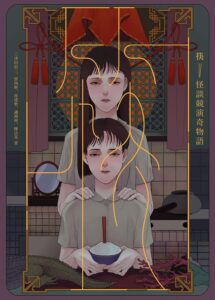
The first book I want to recommend is a god-tier detective novel, The Chop: A Freakish Tale Competition. It has five authors: Shinzo Mitsuda, Xerxes, Yeto Zi, Xiaoxiang Shen, and Chen Hao-chi. Out of everything I’ve read this year, this was the one I had the most fun with—my number-one masterpiece of the first half.
The format is wonderfully bizarre: five mystery writers from Japan, Hong Kong, and Taiwan took turns writing the novel. Japanese mystery grandmaster Shinzo Mitsuda wrote the opening, then several writers from Taiwan and Hong Kong passed the baton, and the final author finished the story. So this isn’t a collection of stories; it’s a full-length novel written by five authors together.
When I first planned to read it, I was mainly going for Chen Hao-chi. You surely know that, in Chinese science fiction, Cixin Liu single-handedly raised the ceiling of Chinese SF to world-class heights. Well, the Chinese mystery scene has its own superhero: Hong Kong writer Chen Hao-chi. To me, Chen Hao-chi is the Cixin Liu of detective fiction—he too has raised the ceiling of Chinese mystery novels to the world-class level by sheer force of will.
I think Chen Hao-chi’s masterpiece 13,67 is the The Three-Body Problem of Chinese detective fiction. Put it next to any masterpiece by the great Japanese, European, or American mystery writers, and it doesn’t flinch.
I read 13,67 quite a while ago, so this year I thought I’d catch up on Chen Hao-chi’s other work. Thus, although The Chop: A Freakish Tale Competition opens with Shinzo Mitsuda—the master who once wrote Where the Dark Things Are—I picked it up for Chen Hao-chi, who wrote the final story.
What I absolutely did not expect was that the book’s biggest jaw-dropper came from neither Mitsuda nor Chen Hao-chi, but from the fourth story, written by Taiwanese folkloric-mystery writer Xiaoxiang Shen.
Xiaoxiang Shen contributes a hall-of-fame narrative trick in that story. It is the greatest narrative trick I’ve encountered in my reading life.
A narrative trick is a particularly offbeat kind of trick in detective fiction. It misleads readers through sleights of hand in language and narration. For example, a novel may be told entirely in the first person, with an “I” telling the story, only for readers to discover at the end that the “I” appearing in different chapters isn’t the same person at all—there have actually been two people telling the story all along. Or a novel may keep making readers think a certain character is human, only to reveal that the “person” everyone was talking about was actually a dog. That’s a narrative trick: a verbal sleight of hand creates a psychological blind spot, uses it to mislead the reader, and then, when the mystery is revealed, delivers the delicious masochistic thrill of being fooled. I love this kind of fiction. After my episode on Zhang Wuji’s Shameful Fetishes, lots of people said I was a masochist. Honestly, when I read detective fiction, I really am.
That said, narrative tricks often have one weakness: they lack emotional impact. They’re basically an intellectual game the author plays with the reader. When the answer is revealed, readers may feel their intelligence has been flattened by a steamroller, but that shock often has little to do with the story’s theme or emotional core.
Put more harshly, most narrative tricks are soulless. But in The Chop: A Freakish Tale Competition, the narrative tricks Xiaoxiang Shen devised are amazingly integrated with the story’s central purpose. The psychological blind spot he creates is exactly the theme the story wants to express. That’s incredible. At the moment the answer was revealed, I felt that not only had my intelligence been steamrolled—the entire story had been elevated. It was as if he had given a soul to the narrative trick.
Maybe I simply haven’t read enough detective fiction. Either way, in my reading experience, a narrative trick of this caliber is one of a kind.
Of course, Chen Hao-chi’s concluding section is also fantastic. It follows Xiaoxiang Shen’s section, which had already reached hall-of-fame status and delivered a perfect ending. Yet Chen Hao-chi somehow built a spectacular new idea on top of it, let the story keep expanding, connected all the clues planted by the earlier writers, and wrapped things up on a completely different level. That’s no small achievement.
The Chop: A Freakish Tale Competition currently has only a Traditional-Chinese edition. I hope the simplified-Chinese edition comes out soon.
Besides The Chop: A Freakish Tale Competition, I also read several other Chen Hao-chi books in the first half of the year. The following ones are well worth recommending too.
The Balloon Man
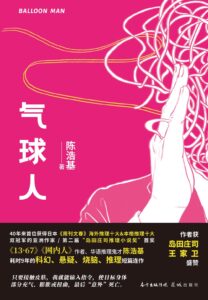
First up is the science-fiction-premise detective novel The Balloon Man. The protagonist accidentally discovers that he has a special ability: whenever he touches something alive, he can enter a command that makes it inflate and swell like a balloon at a specified time. So he uses the ability to become a killer. On the street, people call him the Balloon Man.
This novel is structured like an episodic drama. The opening stories were written early in Chen Hao-chi’s career, and he gradually completed the later chapters. The farther you go, the more mature—and the more explosive—the writing becomes. The final chapter is especially thrilling. Chen somehow grows a breathtakingly large-scale story out of what began as a modest series of short pieces. His control over a story is truly frightening.
The simplified-Chinese edition of The Balloon Man has just come out and is now available.
Web of the Dead
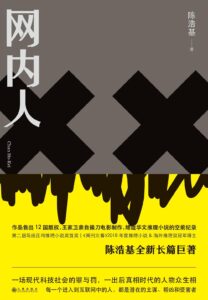
The third Chen Hao-chi work worth recommending is Web of the Dead, which many consider his best work besides 13,67. Its protagonist, Anie, is a detective who solves cases using hacking techniques—possibly one of Chen’s most likable detectives, second only to the brilliant detective Kuan Chen-tuo in 13,67. The mystery plotting is rigorous and classic, and the emotional side lands too. The only flaw is that the villain feels a little weak, so the final clash between good and evil loses some bite. I hope Chen gives Anie an opponent who can really match him next time. After all, Holmes isn’t complete without Moriarty. The simplified-Chinese edition of Web of the Dead has been out for a while and is available now.
Besides Chen Hao-chi’s books, two other mystery novels I read in the first half are well worth recommending.
Long, Long Ago, in a Place Somewhere…
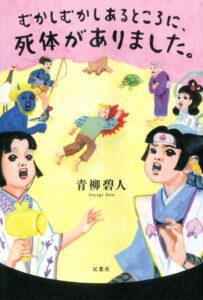
First is Japanese mystery novelist Aoto Aoyagi’s Long, Long Ago, in a Place Somewhere…, whose simplified-Chinese edition is about to be released. The title’s literal meaning is actually “Long, Long Ago, There Was a Corpse.” The premise is delightful: Aoyagi rewrites five of Japan’s best-known legends as five detective stories, including Momotaro, The Grateful Crane, and Urashima Taro’s visit to the Dragon Palace—all familiar stories to us Chinese, now transformed into murder cases.
The best is the Urashima Taro and the Dragon Palace story. After Urashima Taro rescues a sea turtle, he is invited to the Dragon Palace as a guest, where a locked-room murder takes place. The final solution meshes beautifully with the setup of the original legend. It uses a detail that was already present in the folktale to create the murder mechanism, and the construction is wonderfully clever.
Alice: The Man Who Ended the Unbelievable
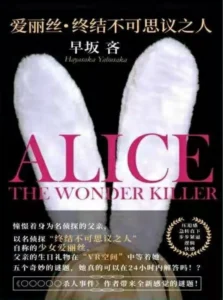
The next novel is by one of Japan’s most acclaimed mystery writers in recent years, Ryo Hayasaka: Alice: The Man Who Ended the Unbelievable. Like the previous book, it adapts a fairy tale into a mystery. This one turns Alice’s Adventures in Wonderland into a detective novel: famous scenes from the original, such as the house where Alice grows and shrinks and the Mad Hatter’s tea party, are rewritten as cases. It also brings in a range of different puzzle setups and deduction methods, and, like Hayasaka’s other works, delivers a wildly unexpected twist at the end. Very exciting. Alice: The Man Who Ended the Unbelievable has not yet been published in Chinese. I hope the publisher gets moving.
I’ve read quite a lot of detective fiction in the first half of this year, so I’ll stop here for now. Next up: science fiction.
The Cyberiad
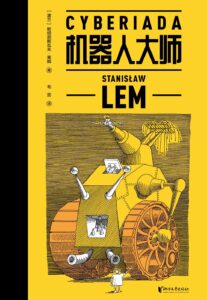
The first science-fiction novel I want to recommend is The Cyberiad by Poland’s national-treasure SF writer Stanisław Lem. Apart from The Chop: A Freakish Tale Competition, this is the second masterpiece-level work I’ve read in the first half of the year. That’s it—just these two. The best-known of Lem’s novels is probably Solaris, since it has been adapted into films several times. But I don’t think it’s his best. I haven’t read all of Lem’s work yet; among what I have read, one masterpiece is A Perfect Vacuum, and the other is The Cyberiad. In this book, Lem “plays” with science fiction in the hands of a great literary stylist, delivering a devastating dimensionality reduction against the genre. You’ll see the shadows of many literary masters in his fiction.
The Cyberiad follows two inventors from a certain planet, Trurl and Klapaucius. They can invent and build all sorts of baffling machines, earning them the nickname “the cyberneticists.” The book is about the two masters’ various adventures across the universe. A lot of the stories are extremely funny, with a strong streak of parody. But don’t think this is just a bunch of silly space-adventure stories. In this book, Lem uses a lot of sophisticated literary techniques you normally only find in serious literature. Some stories, for instance, have several layers of nesting: one story contains another story, which contains yet another. In some, the protagonists are actually the words themselves, rather than characters—the author is using stories to play some seriously high-level language games. And in still others, the characters ponder the meaning of existence. There’s some real philosophical altitude here.
At this point, have you started to vaguely think of something? Doesn’t it feel a little like Rick and Morty?
There’s a blurb on the belly band of The Cyberiad calling it “the spiritual forerunner of The Hitchhiker’s Guide to the Galaxy, Rick and Morty, and Futurama.” After reading it, I realized this wasn’t just hype. A lot of the elements in Rick and Morty can actually be found in The Cyberiad. For example, Trurl and Klapaucius, the two cyberneticists, are plainly hot-tempered and sly versions of Rick. And the reflections on existence—and that nihilism—that show up so often in Rick and Morty can also be found in The Cyberiad.
In short, Lem’s The Cyberiad is a masterpiece, but it has a fairly high barrier to entry, so it may not be everyone’s cup of tea. Still, figuring out whether it’s for you is pretty simple: just ask yourself whether you like Rick and Morty, and whether you can get what makes its high points so high. If you can, I strongly recommend The Cyberiad. But if Rick and Morty does nothing for you, you might want to skip this one for now.
Ring
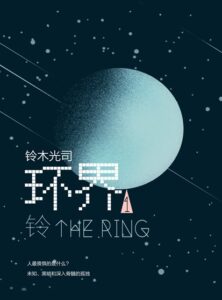
The second science-fiction novel I want to recommend is actually a series: Ring, the original novel behind Ringu, written by the Japanese author Koji Suzuki.
You might think I’ve got it wrong. Isn’t Ringu about Sadako? Isn’t it a haunted horror movie? Why am I recommending it as science fiction?
I haven’t got it wrong. The original novel behind Ringu, Ring, is actually science fiction. But don’t misunderstand: Ringu didn’t radically rewrite the original. The movie is adapted from the first book in the Ring series, and the plot is basically the same. In other words, the first novel really is about the ghost story of Sadako attaching herself to a videotape and killing people.
It’s only in the second book that the worldview of the whole story begins to unfold, and it isn’t fully laid out until the fourth. The worldview revealed in these three books is an absolutely jaw-dropping idea. Only after reading the later books do you realize that the haunting in the movies actually has a scientific explanation. And some characters in the first book who seemed thoroughly, irrevocably dead turn out not to be quite so dead after all—they still have stories to tell later. So, if you know Ringu well as a film, the novels are unquestionably a spectacular expansion of it. Of course, whether or not you like the movie, this series is worth reading.
I didn’t read much science fiction this year, so I’ll just recommend these two for now. In the first half of the year I also read several literary works that left me with pretty complicated feelings, but I’ll save those for my year-end review.
Now for a few nonfiction books.
The Last Three Minutes
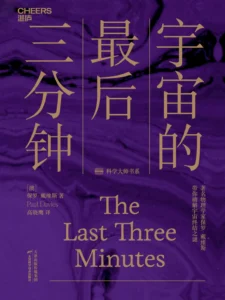
First up is a popular science book about physics, The Last Three Minutes, by the renowned physicist Paul Davies. It was published quite a while ago, but it’s still thoroughly engrossing to read today. The book explores physicists’ various speculations and hypotheses about the ultimate fate of the universe.
In theory, this is a pretty despair-inducing subject, because under every hypothesis, the universe ultimately cannot avoid destruction. The only difference is how it gets destroyed.
What really caught my attention, though, was that in the final chapters, physicists proposed several ways intelligent civilizations might achieve a kind of immortality within the universe’s finite lifespan. It sounds like a paradox, but in theory it’s possible. For example, one possible fate of the universe is that after a long period of expansion, it begins to contract, eventually collapsing into an extremely small space and returning to something like the conditions of the Big Bang, before being destroyed in that final big crunch.
In that situation, the more the universe contracts, the denser its energy becomes. And as that happens, the speed at which advanced intelligent beings process information would also increase, because information-processing speed is related to how efficiently energy is used. The faster they process information, the slower the passage of time feels subjectively. By then, even if their bodies experienced only a very short span of time, their mental worlds would seem to pass through immensely long ages. Physicists have even calculated that under certain physical conditions, intelligent beings might be able to generate infinite thoughts and experiences within a finite amount of time—in other words, achieve immortality in their subjective mental worlds.
No matter how small the possibility, at least it gives us a little hope amid the despair of a universe destined to be destroyed. I find these speculations fascinating.
The Mediterranean Trilogy
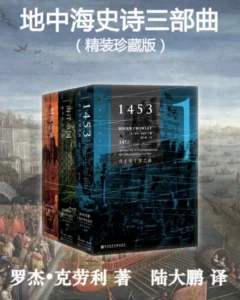
The final set of books I want to introduce today is British historian Roger Crowley’s Mediterranean Trilogy.
The series chronicles a number of major events in the Mediterranean world during the Middle Ages. 1453: The Holy War for Constantinople is about the siege in which Constantinople, the capital of the Eastern Roman Empire, was conquered by the Ottoman Empire in 1453. City of Fortune: How Venice Won and Lost a Naval Empire traces the rise and eventual decline of the Republic of Venice during the Middle Ages. Empires of the Sea: The Final Battle for the Mediterranean is about the struggle for maritime supremacy between the Christian and Islamic worlds. I haven’t read the last one yet—I’ll catch up in the second half of the year.
Roger Crowley writes with extraordinary fluency. The Mediterranean Trilogy can be read almost like a novel, and it gives you an incredibly strong sense of immersion. When I was reading 1453: The Holy War for Constantinople, there were several moments when I felt I was Constantine XI myself. At the height of the battle, my palms were literally sweating.
Being gripping is one thing; what’s also moving is the sense of historical tragedy you’re left with after finishing the series. Both 1453 and City of Fortune touch on the same theme: in the face of the tide and grand currents of history, an individual’s power is truly negligible. An individual may be able to rewrite their “small era” and affect the fortunes of one city or one patch of territory, but you can’t stop the larger trend of history. You can’t stop the arrival of the “Great Era.” In 1453, the walls of Constantinople, which had stood for a thousand years, came up against the force of the times: the invention of siege cannons. In the age of cold weapons, the advantage in a siege usually belonged to the defenders; with sturdy walls, the defending side had roughly seven or eight points out of ten in its favor. But in 1453, Mehmed II of the Ottoman Empire brought in a whole pile of newly invented siege cannons to attack Constantinople, and the balance of advantage in siege warfare was instantly reversed. From then on, the shape of warfare around the world changed completely.
The fate of the Venetian Empire was also closely tied to the larger currents of history. In City of Fortune, generations of Venetian heroes worked tirelessly for centuries, building a huge maritime empire on a population of only a few tens of thousands. But when a man named Columbus accidentally stumbled upon the New World, the Mediterranean fell overnight from the center of global trade to the periphery. And just like that, an extraordinarily powerful empire collapsed.
In the final chapter of City of Fortune, there’s a passage that really moved me. Let me read it to you:
“Maritime empires are always elusive, much like Venice itself, doomed to perpetual change. Ports are gained and lost, and its overseas territories never take deep root. On the island of Crete, a Latin motto is carved above the lintel of more than one ruined house: ‘All earthly things are smoke.’ It is as though, in the depths of their hearts, they had already understood that the clamor of bugles, ships, and cannon would ultimately prove to be nothing more than a mirage.”
I didn’t read it very well, but when I finished that passage myself, I felt quite a few things shifting inside me. “All earthly things are smoke”—and that applies to far more than maritime empires.
All right, that’s all for the good books I read in the first half of the year. If you enjoy my show, please follow, like, save, and leave a comment. I’ll keep sharing psychology insights on this channel, with the occasional detour like today’s episode, when I chat with you about something else. Next time, we’ll discuss Kahneman’s new book Noise. Don’t miss it.
That’s all for today. See you next time.
Leave a Reply