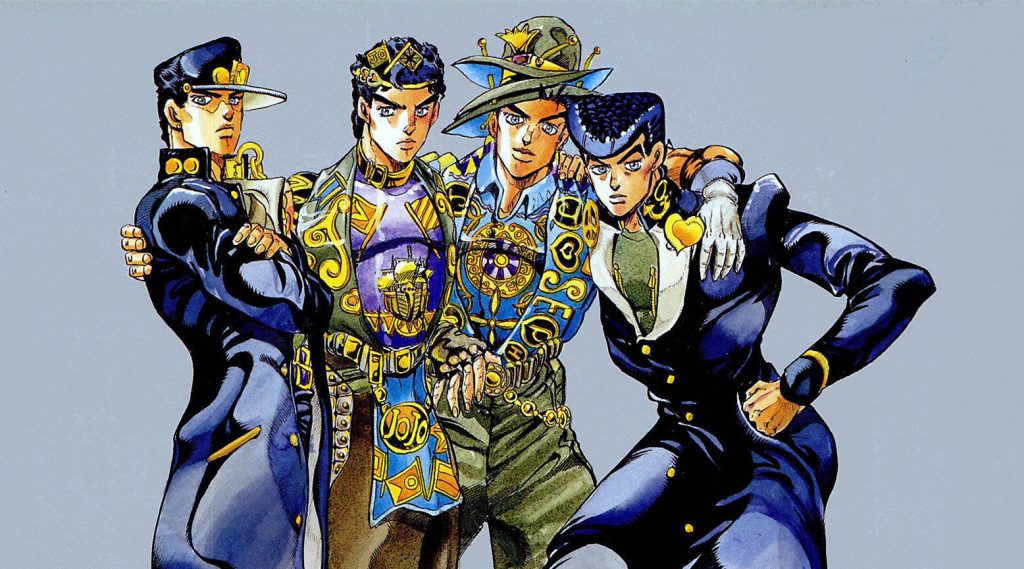
For me, the greatest appeal of JoJo's Bizarre Adventure comes from two things: incredibly entertaining characters and a battle system that is utterly one of a kind.
1. A Bizarre Epic
When Hirohiko Araki’s JoJo’s Bizarre Adventure began serialization in 1987, I was 6 years old. I’m 34 now, and this manga is somehow still running. The story has reached Part 8, while the collected volumes for just the first 6 parts already run to 80 books!
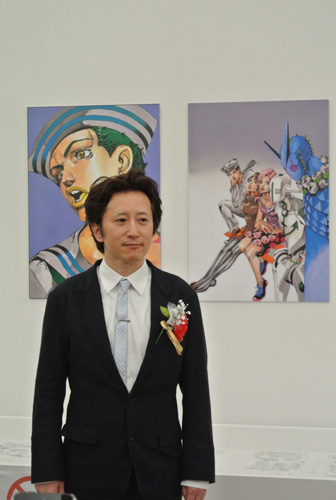
Before Part 7 rebooted the story, the first six parts told the legend of six generations of one family, beginning in the Industrial Revolution of the late 19th century and carrying on into the future. If it were a TV series, it would have started as a period drama and somehow turned into science fiction halfway through production. The sheer temporal and spatial breadth of JoJo is clear from this alone. Even among long-running Japanese manga—already famous for their length—few surpass JoJo.
When I was a child, adults regarded manga as vulgar, silly junk. Manga seemed to contain only “the bizarre,” with nothing to do with any lofty vocabulary. But a bizarre epic can be born from the bizarre. In my eyes, JoJo is an epic through and through.
2. From the Uninspired Ripple to the God-Tier Stand
For me, the greatest appeal of JoJo’s Bizarre Adventure comes from two things: incredibly entertaining characters and a battle system that is utterly one of a kind.
The great Araki created far too many unforgettable characters across the eight JoJo parts, so I’ll skip them for now. Let’s look instead at how JoJo’s most distinctive battle system gradually evolved from its initially immature setup.
“Battle system” is a term I made up myself. It means the rules by which a manga’s fights decide who wins and who loses. Some manga rely on purely quantifiable power levels (Dragon Ball), some on willpower and passion (Saint Seiya), and some on martial-arts techniques and the relative strength of one’s training (Fist of the North Star).
JoJo’s serialization lasted nearly thirty years. As it went on, the author’s art, storytelling, character-building, and plotting grew from awkward to mature, with several winding experiments along the way. The battle system in the story evolved just as windingly.
Part 1: The Uninspired Ripple
In Part 1, at the beginning of the serialization, Hirohiko Araki had not yet found his style, and JoJo was fairly standard in almost every respect—a conventional hot-blooded shōnen manga.
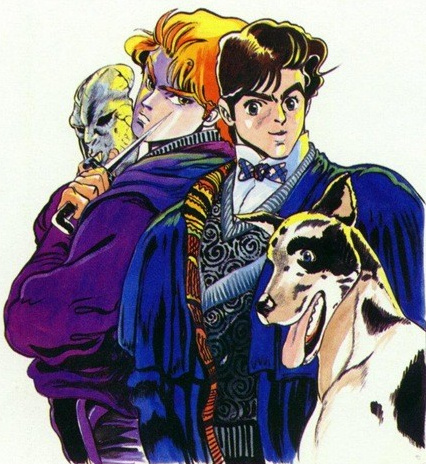
JoJo began with a fairly traditional vampire story: Dio, taken in by the Joestar family, was an ambitious man of exceptional intelligence and ability. He devoted himself to destroying the protagonist and seizing the inheritance, but when his scheme was exposed, he accidentally became a vampire. The protagonist was therefore forced to become a vampire hunter and start beating up monsters.
The martial art used to fight vampires is called the “Ripple.” Vampires fear sunlight, and the Ripple can imitate solar energy, so it can be used against them.
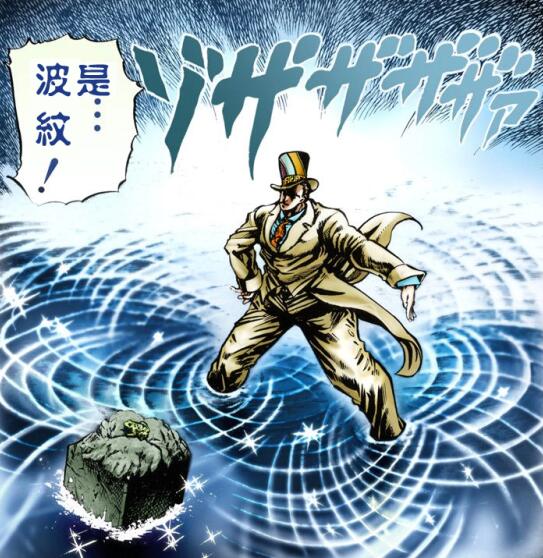
—And really, this is not exactly the most creative premise.
In designing the fight scenes, Araki deliberately imitated the then-popular manga Fist of the North Star. Even Part 1’s protagonist inevitably looked a little like Kenshiro, the muscle-bound hunk from Fist of the North Star:
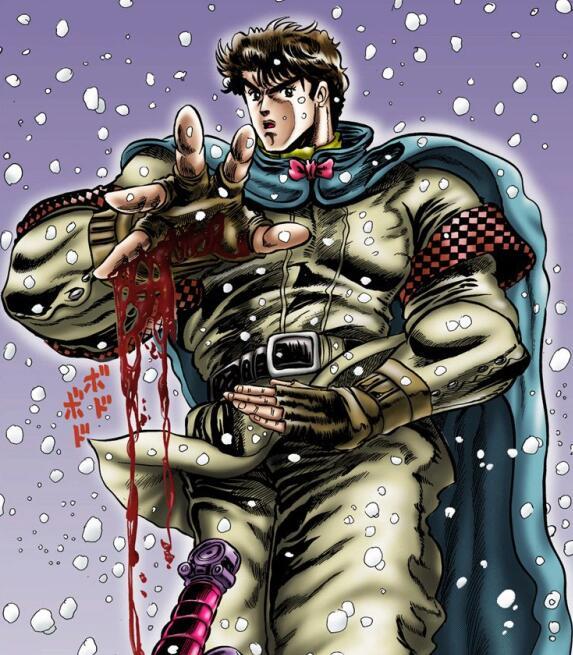
So we can basically understand the Ripple as a bootleg version of Fist of the North Star’s signature power. JoJo’s battle system really had nothing particularly outstanding at the start; it had not escaped the traditional shōnen-manga model of deciding victory through moves and physical force.
Part 2: From Brute Force to Intelligence
By Part 2, JoJo quickly grew into a work with an extremely personal character, and its progress was obvious across the board.
The battle system was still based on the Ripple, but it had begun shifting from brute force to intelligence. The protagonists often won by using tactics, traps, and even psychological warfare.
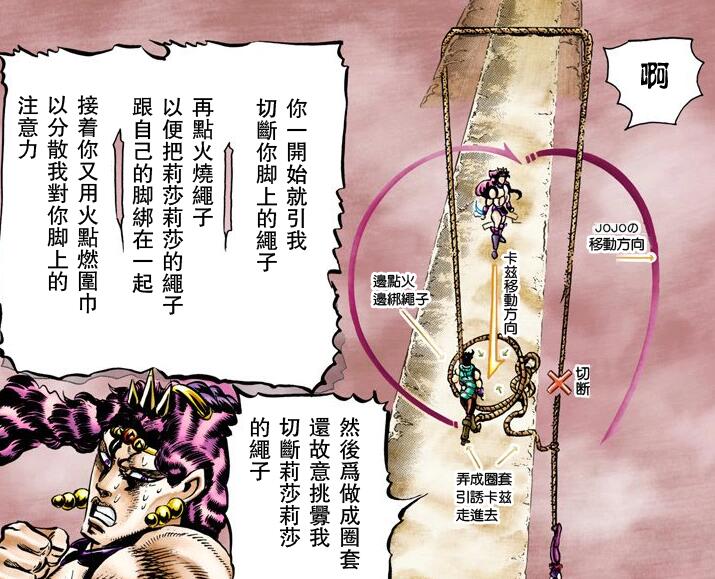
That already made Part 2’s battle system highly engaging.
Part 3: The Stand That Elevated JoJo to the Pantheon
But Araki chose to keep changing things. The most popular Part 3 was actually a process of struggle and exploration.
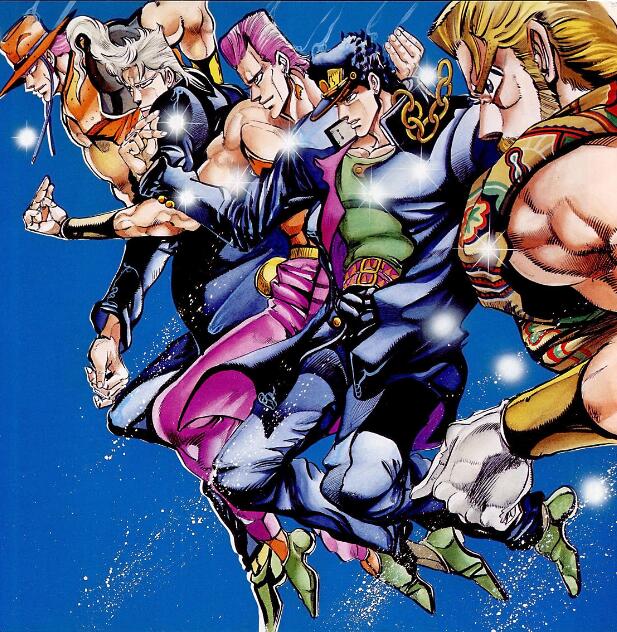
He decisively abandoned the already excellent battle system of Part 2 and replaced the Ripple with the “Stand.”
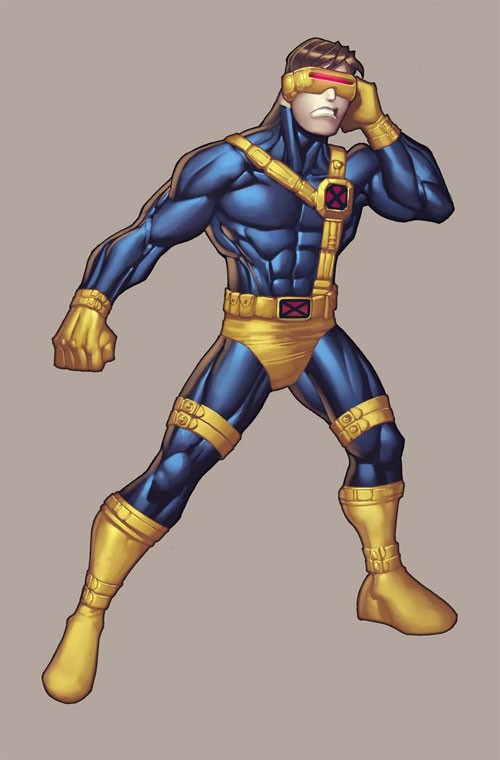
In most works about superpowers, the power is attached to the character’s own body. In X-Men, for example, mutant abilities—from mind control to firing lasers from one’s eyes—are all activated directly by the body:
A Stand, however, is a remarkably strange kind of superpower. Most Stand users are ordinary flesh-and-blood people, but they can manifest an embodied figure beside themselves to exercise a superpower. That manifested object is called a “Stand.”
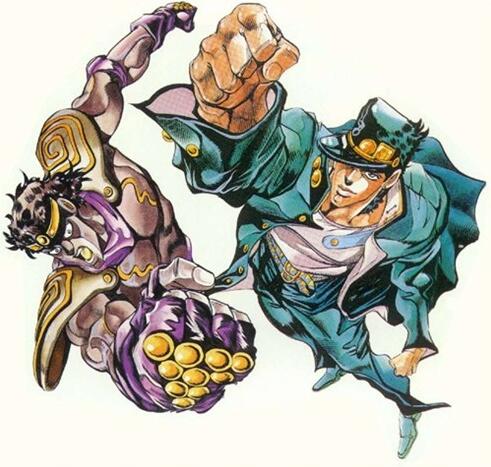
Stand Rules
1. A Stand is controlled by its user’s will (though some operate automatically according to certain rules) and possesses a special ability.
2. Each person has only one Stand, so each Stand user (a person who possesses a Stand) has only one supernatural ability.
3. When a Stand is injured, its user suffers the same injury.
4. Ordinary people cannot see Stands. Only Stand users can see Stands, and only Stands can defeat Stands!
(Based on Golden Heart)
Araki’s supercharged imagination later exploded precisely thanks to the Stand concept. The Stands he designed were bizarre in every possible way, far surpassing the simple physical powers and simple mind control that appeared so often in American superhero comics.
Before that, though, the transition in the first half of Part 3, just after Stands were invented, was genuinely painful. Since the Stand was an entirely new creation, Araki had not perfected the concept when Part 3 began; he was not yet prepared for this new kind of battle system.
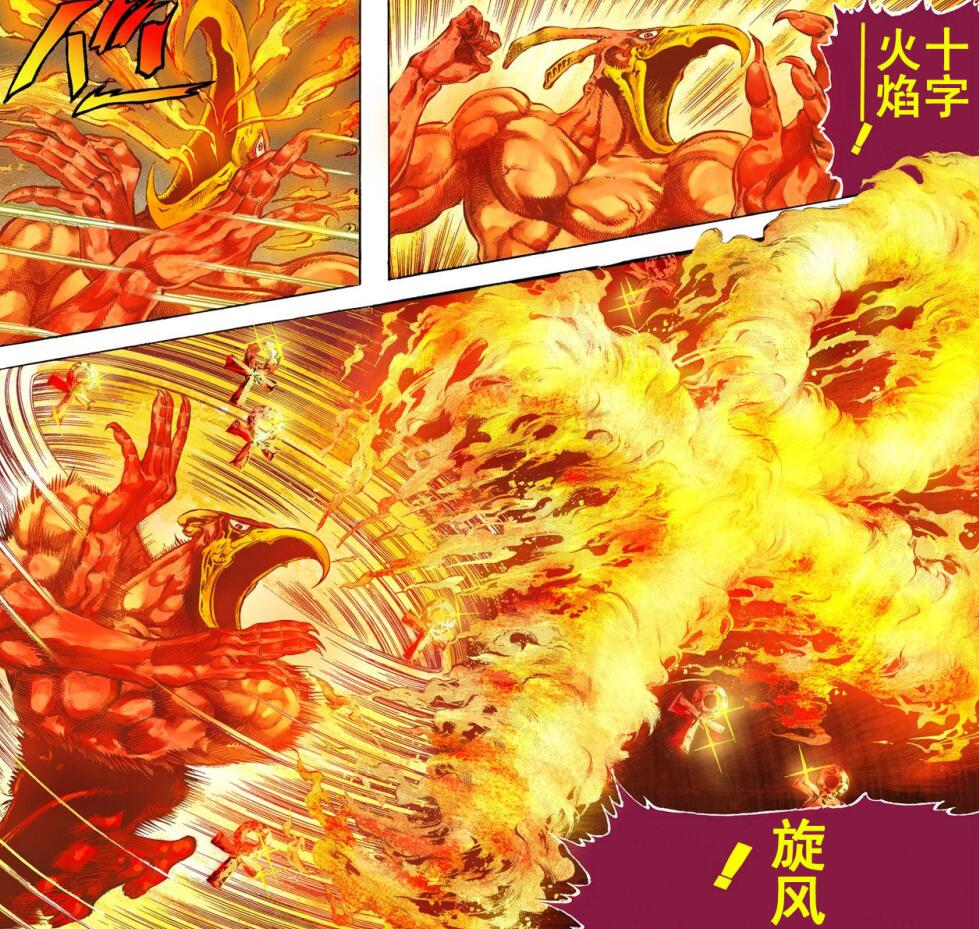
So in the first half of Part 3, JoJo’s battle system suddenly fell to the level of Saint Seiya. For instance, Abdul, who had a flame Stand, actually won with a finishing move resembling the Pegasus Meteor Fist:
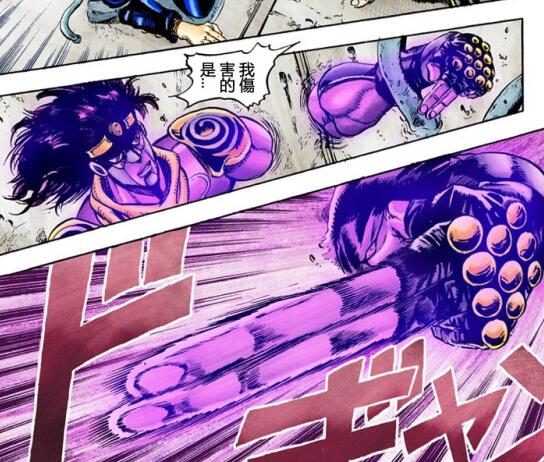
Jotaro’s Stand, Star Platinum, also often won with bizarre tricks such as stretching its fingers:
Fortunately, in the second half of Part 3, Araki emerged from this phase of taking one step forward and three steps back. His handling of Stands gradually reached its stride, finally producing the first great peak of the JoJo series in the climactic battle against the Part 3 boss.
The Part 3 boss battle—Jotaro’s Stand, Star Platinum, versus DIO’s Stand, The World—is the fight JoJo fans love to talk about most.
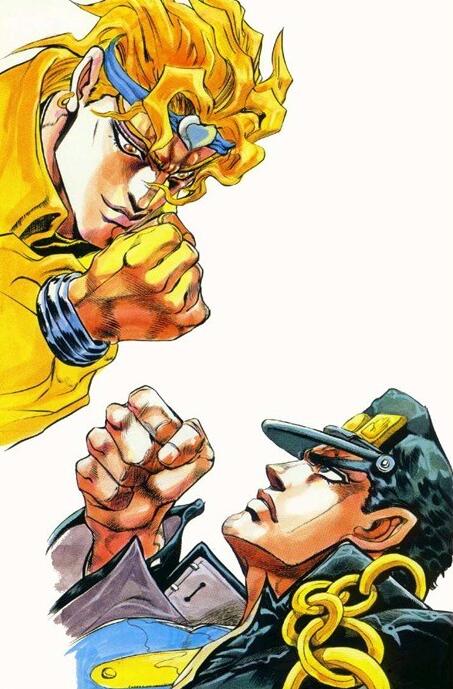
(△ Jotaro v.s. DIO)
It was in this battle that Jotaro, the most popular protagonist in the entire JoJo series, displayed one ingenious plan after another, relying on an exceptionally sharp mind rather than brute force alone. From here, JoJo’s battle system completed its transformation from a contest of strength into a contest of intelligence.
From then on, Stand users had to make full use of their Stand abilities to design strategies and tactics and suppress their opponents’ powers. Victories based on sheer force virtually disappeared. For JoJo, the Part 3 boss battle was the fight that settled everything.
Parts 4 & 5: The Golden Age of Stands
By Part 4, the JoJo series officially entered its mature period, and the Stand battles became dazzling. Araki’s peak continued through Part 5, with ideas pouring out without end. In creating these two parts, he brought his battle-system design to near perfection and contributed a string of classic battles to the JoJo series.
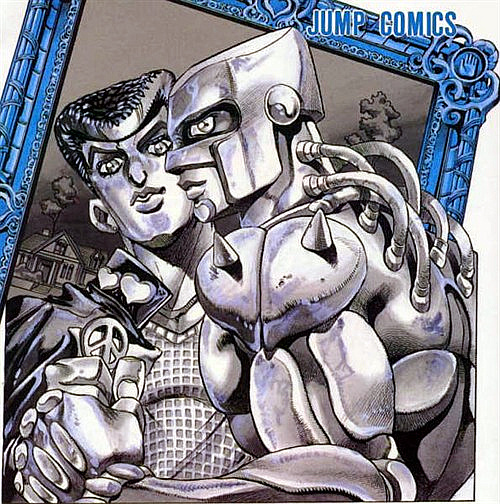
The peak of Parts 4 and 5 fully reveals the brilliance of Araki’s Stand-design principles.
- First Stand-Design Principle: Balance
Araki’s first principle for designing Stands (and his overarching principle) is “balance.” Generally speaking, he does not want JoJo to contain a Stand that is absurdly overpowered or underpowered.
Stand abilities differ from one another, so absolute stronger and weaker abilities do not really exist. In a Stand battle, what matters above all is how well a character uses the ability.
- Second Stand-Design Principle: Activation Conditions
Again for the sake of balance, the second design principle is that certain Stand abilities, once activated, are extraordinarily powerful—but they must have activation conditions before they can work.
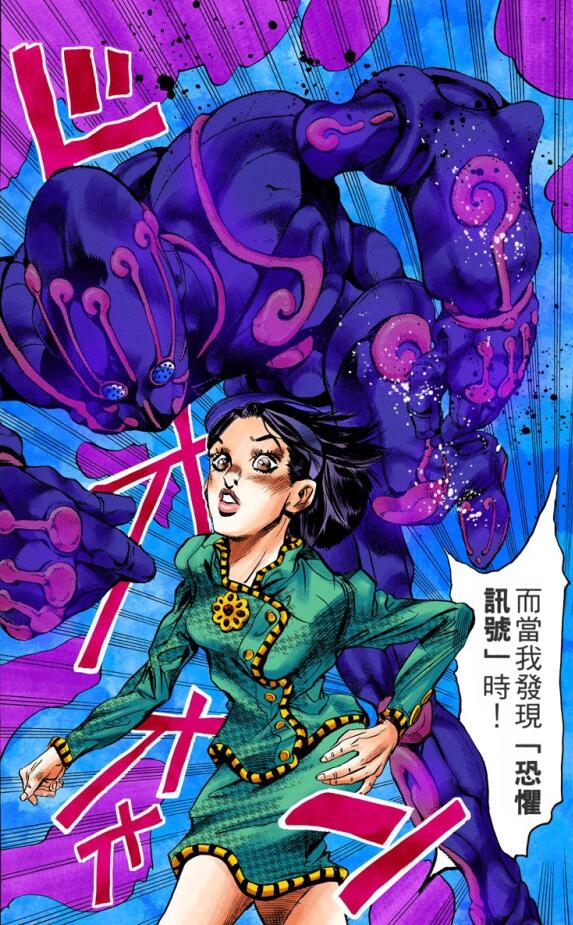
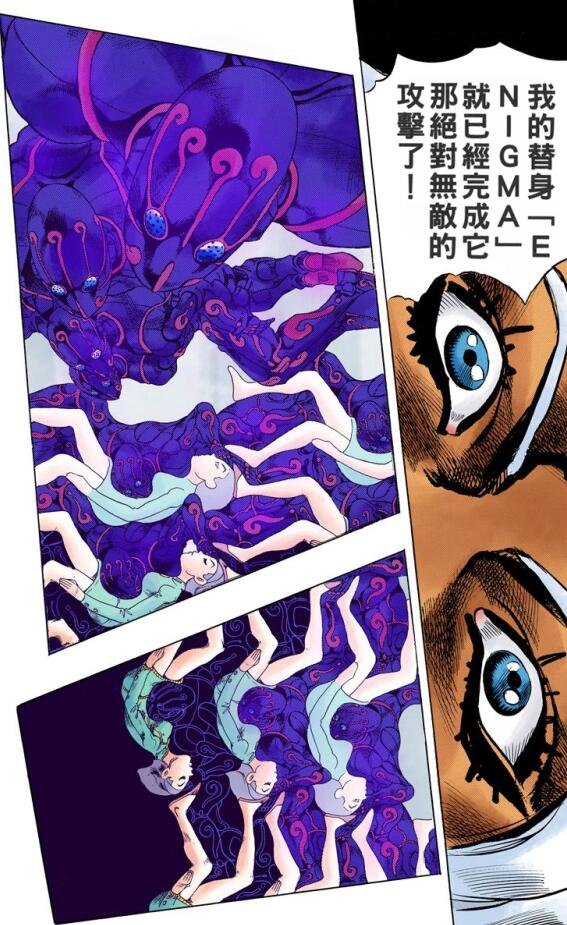
For example, Enigma, the “origami artist” who appears in Part 4, has a Stand that can fold anything—even something as insubstantial as an electric current—into paper.
Pretty powerful, right? But if he wants to fold a human being into paper, certain conditions must be met. Specifically, the target must make an involuntary gesture of fear before the folding ability can be activated.
So the “origami artist” has to use tactics and traps to observe and confirm what involuntary gesture his opponent makes when afraid, then activate the folding ability during the next attack. He is invincible only when the conditions are met.
- Third Stand-Design Principle: Use Mind Control Sparingly
Still for the sake of “balance,” the third major principle of Stand design is that JoJo has no simple mind-control abilities. This is one of Araki’s most brilliant choices.
Mind control without added conditions is an overwhelmingly powerful ability that can easily destroy balance. Say I have a really cool Stand, and then you control my mind and make me kill myself. I’m finished. How are we supposed to fight like that?
3. The Strongest Stand
So, in a world of Stands without simple mind control, what is the strongest Stand ability?
Araki’s answer is a Stand that can control time. In the face of time-based abilities, many Stands that look unimaginably powerful become completely useless. Thus, in JoJo, time-based abilities became the bosses’ exclusive privilege. Every boss in Parts 3, 4, 5, and 6 possesses some ability related to time.
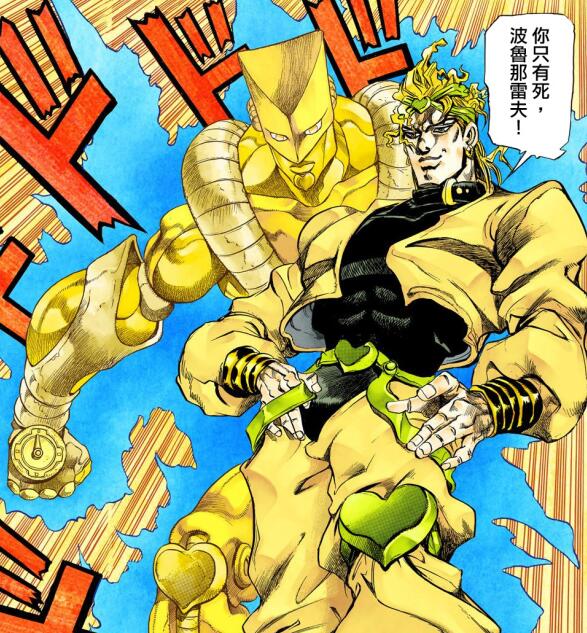
DIO’s Stand, The World, the boss of Part 3, can stop time for 5 seconds (9 seconds at its peak). The stoppage was set so short because Araki carefully controlled Stand abilities: even when giving the boss the strongest Stand, he still remembered to add limitations, so they would not become impossible to defeat.
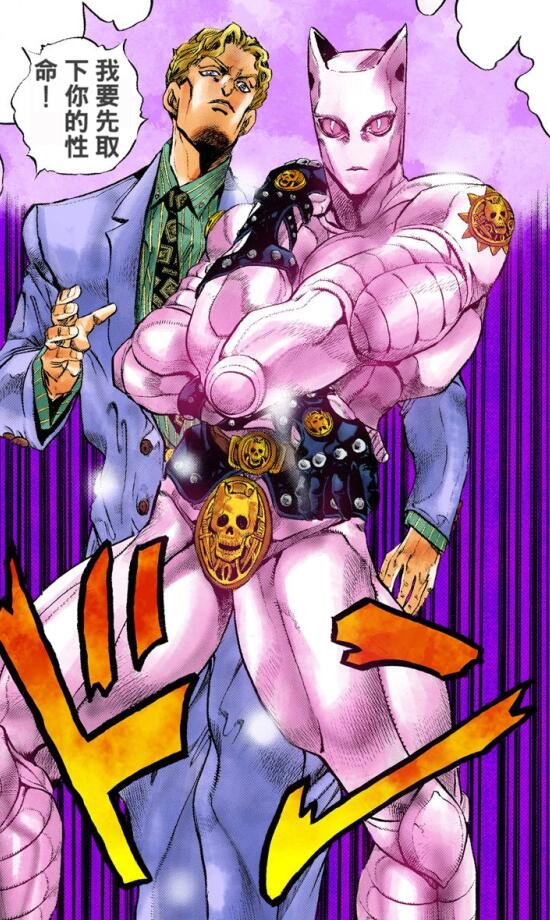
The Stand that Part 4 boss Yoshikage Kira ultimately evolves into has a limited ability to rewind time, which it uses to automatically protect his true identity from being exposed.
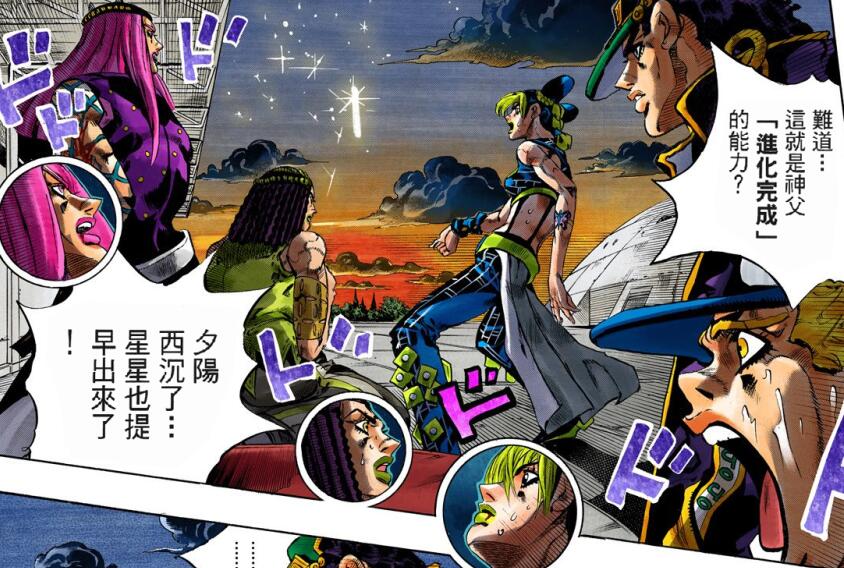
The Stand that Part 6 boss Father Pucci ultimately evolves into can accelerate the passage of time for everything in the world except biological clocks:
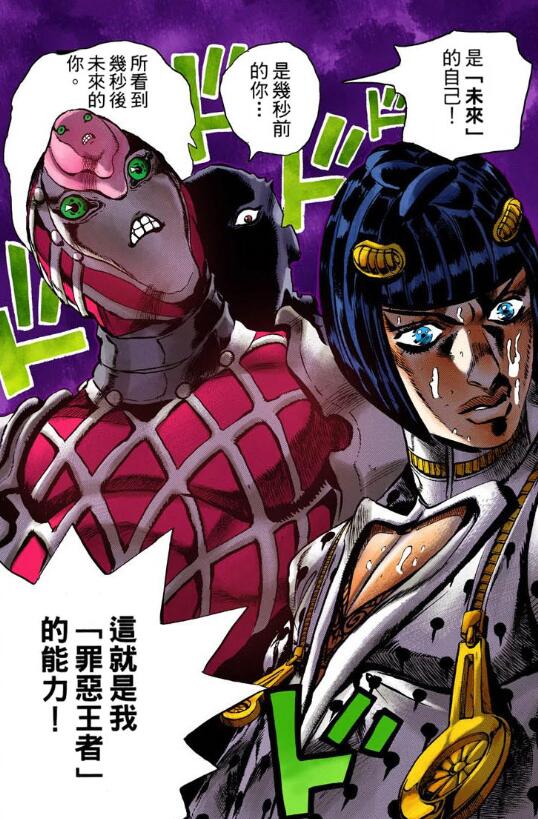
And Diavolo’s Stand, King Crimson—the Part 5 boss and the villain who closes JoJo’s golden age—possesses the ability to “erase time”:
The only flaw in Part 5 is precisely its final battle against the boss. Because this boss’s ability was designed to be excessively powerful, Araki actually violated the balance principle that there are no absolutely stronger or weaker Stands. In desperation, he had to create an even more shamelessly invincible Stand.
And so Part 5 wrapped up hurriedly in a one-sided final battle against the boss. In my view, this was the point where JoJo began sliding down from its peak.
So what exactly was the Part 5 boss’s ability? Come back tomorrow for “An Analysis of the Part 5 JoJo’s Bizarre Adventure Boss’s Ability: King Crimson.”
Version History
This series of articles was originally called “JoJo's Bizarre Adventure: A Bizarre Epic” and has been extensively revised. The original was published on Mtime and MSN Blogs; the original links no longer exist.
Leave a Reply