
The Most Schizophrenic Brainwave in Batman v Superman: Reading the ‘Zeitgeist’ from Wonder Woman’s Changing Bust! Here comes Part Two~~
Picking up from the previous article: Big and Small | PART 1 Ancient Greece
Let’s continue talking about Wonder Woman’s mysterious bust. The previous article covered the Ancient Greek era, when the Amazon warriors—Wonder Woman’s prototypes—were said to have lived. This time, let’s turn our gaze to ancient Rome.
Wonder Woman ‘Diana’ and the Roman Moon Goddess
Wonder Woman’s name is Diana Prince. That’s right, the same Diana as Princess Diana. In many people’s eyes, Princess Diana made this name feel especially beautiful.
Actually, the name was beautiful right from the source: it was the name of the moon goddess in Roman mythology.
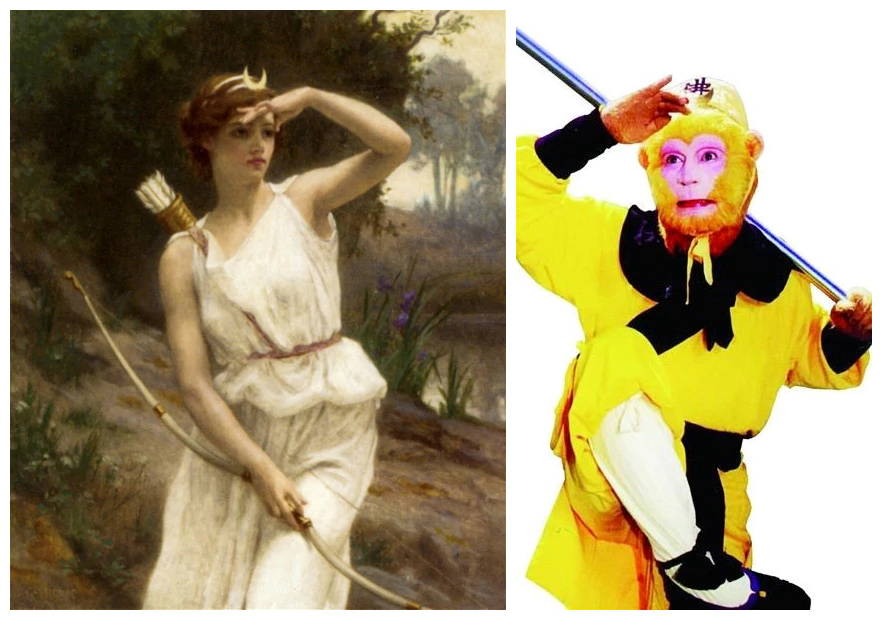
In the oil painting Diana, The Huntress by the French Neoclassical painter Guillaume Seignac, shown above on the left, the woman holding a bow, carrying a quiver, wearing the Grand Disciple’s golden headband, and even striking the Grand Disciple’s pose in cosplay, is the moon goddess Diana.
You may find it odd: why doesn’t the moon goddess live on the moon? That’s because in Roman mythology, the moon goddess was also the goddess of the hunt. So in the overwhelming majority of sculptures and paintings, she appears as a huntress (the moon itself barely gets a mention).
A Little Gossip: Wonder Woman’s Weapons
In all sorts of sculptures and paintings, the hunting tool of Diana, the moon-and-hunt goddess, is almost invariably the bow and arrow.
So whether we start from her origins—the Amazon warrior who fought with a bow and arrows—or from the source of her name—the moon goddess who hunted with a bow and arrows—the most obvious weapon for Wonder Woman should be the bow and arrow.
But as everyone knows, Wonder Woman’s main weapon is the Lasso of Truth—a rope that makes anyone caught in it tell the truth. In Batman v Superman, Wonder Woman also used it to lasso Doomsday (even though he can’t talk).
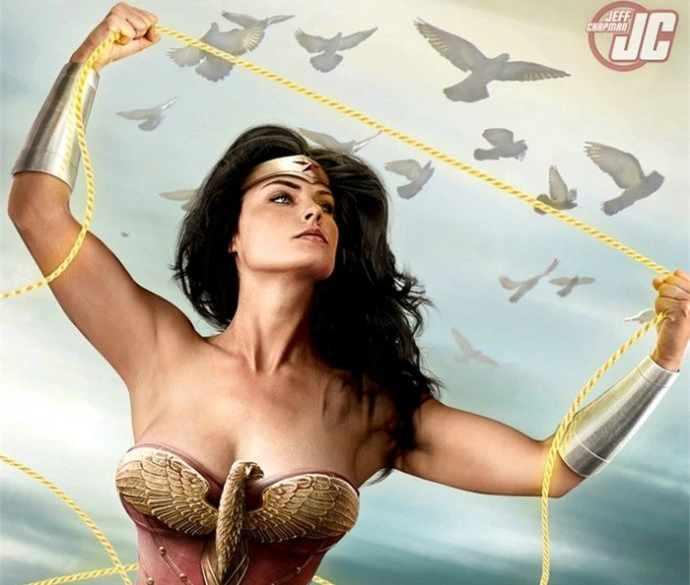
As for why Wonder Woman doesn’t use a bow and arrow, the juiciest theory is that she and another arrow-wielding superhero, Green Arrow (both now DC characters), were created almost simultaneously, sometime between November and December 1941. If Wonder Woman used arrows too, there’d be a collision.

But the truth is:
One of Wonder Woman’s creators was a psychologist, and he slipped a little private agenda into the design of her weapons. I’ll tell this bit of gossip in a separate article in the upcoming column on this account, ‘Oddballs in the History of Psychology’ (a little ad: the column is meant to focus on the ‘oddballs’ who rarely show their faces in the official history of psychology, along with the odd gossip about some of psychology’s biggest names).
The Moon Goddess’s Breasts
All right, back to the point: let’s talk about the moon goddess Diana’s… breasts.
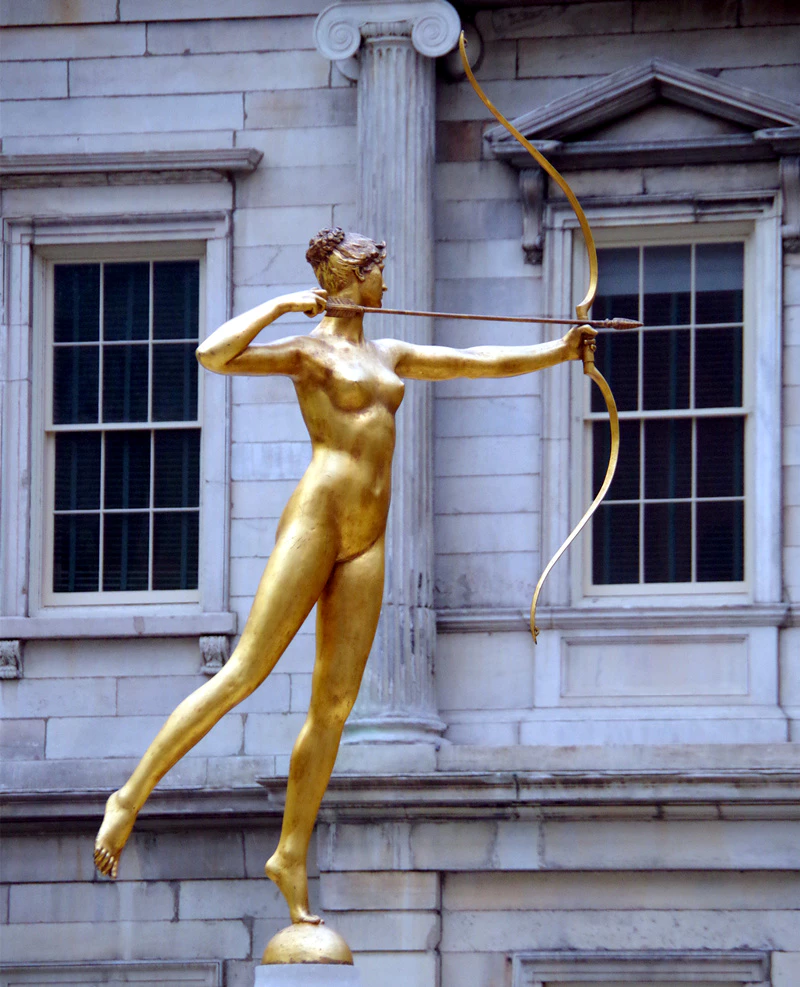
The statue above is a bronze statue of the moon goddess Diana, now held by the Metropolitan Museum of Art in New York, made by the 19th-century American sculptor Augustus Saint-Gaudens. It once stood for a long time atop the Madison Square Garden building, which was then a New York City landmark.
The Wonder Woman in the sculpture not only has breasts, but firm, full ones. I like it!
But this was only a 19th-century sculptor’s imagination. In the ancient Roman era, when Diana was created, things were not like this:
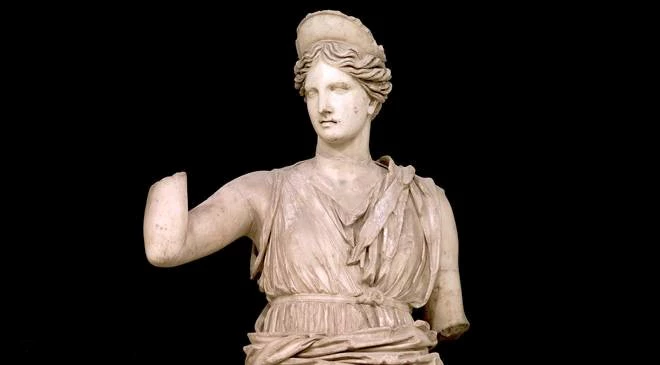
The statue above is Diana from Itálica, held by the Archaeological Museum of Seville in Spain. It was sculpted in ancient Rome in the 2nd century AD.
Small breasts.
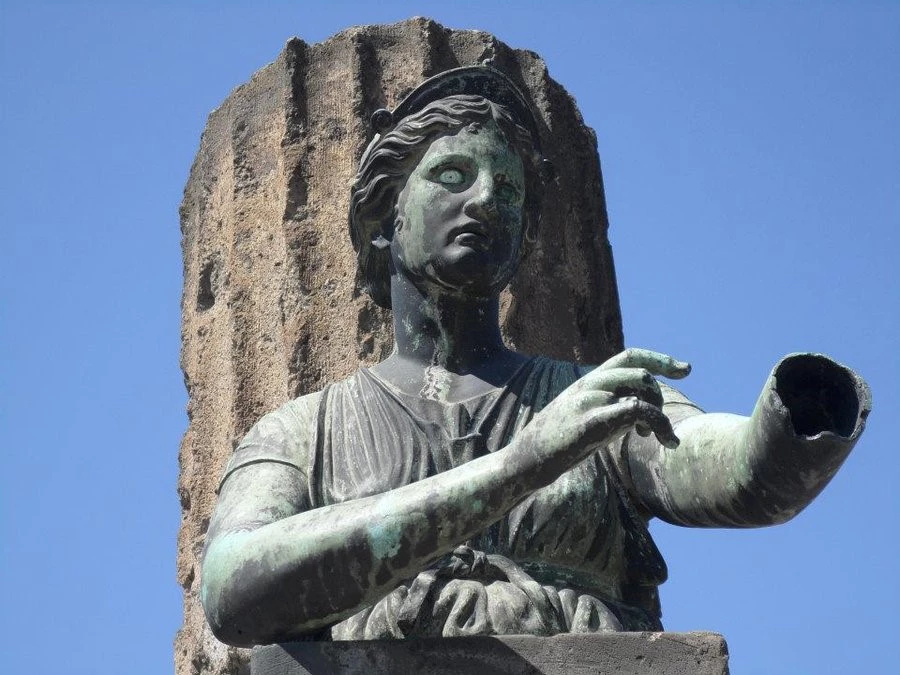
The image above shows a bronze statue of Diana in Pompeii.
Small breasts.
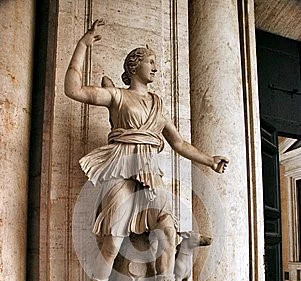
The image above shows a Diana statue from the Roman period, held by the Capitoline Museum in Rome.
Small breasts.
The most famous surviving Diana statue from the Roman period may be this one, Diana of Versailles, now in the Louvre (sculpted around the 1st or 2nd century AD):
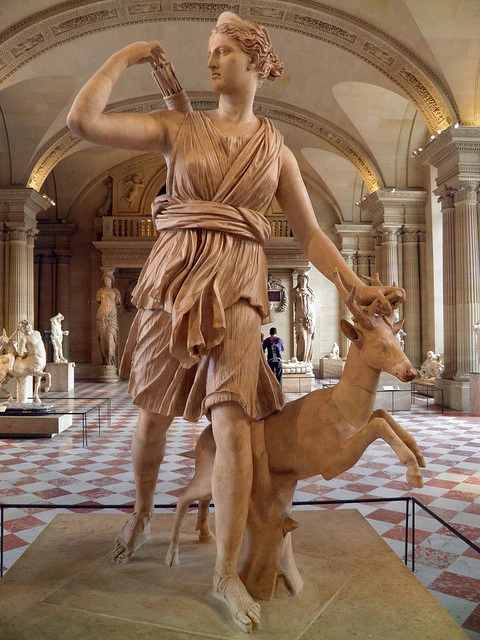
Still small-breasted!
So, was ancient Rome perhaps an age of small breasts?
Let’s examine the figures of ancient Roman women.
The ancient Roman era lasted a very long time, and I’m terrible at history, so let’s just look at one small example from the Roman period. (Yes, this is absolutely a case of generalizing from a single example.)
Ancient Rome’s Vomitorium
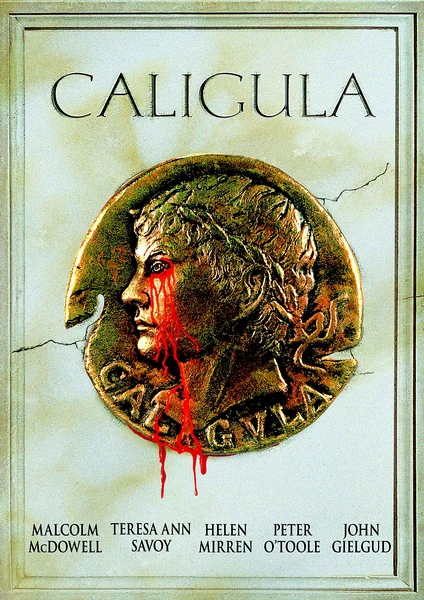
People may associate ancient Rome with a rather extravagant lifestyle, with excess in the two great matters of life: sex and food. For instance, you may often see a film called Caligula on lists of the world’s ten most notorious movies or something like that. Anyone who has seen it knows how excessive the Romans were about sex, right?
What about the food side of things?
A story circulating online claims that ancient Roman palaces had a room called a ‘vomitorium’. What was it for?
Supposedly, there was so much delicious food at palace banquets that if you were full but still wanted to keep eating, you could go to this vomitorium, sit in a chair, close your eyes, and open your mouth. Then a pretty slave girl beside you would take a goose feather, stick it into your mouth, and rummage around furiously until you vomited up everything you’d just eaten. Then you could go back and carry on eating.
A few years ago I even saw a piece of domestic news saying that several rich guys hired a chef to recreate the Qing-dynasty Manchu-Han Banquet, and then used this ancient Roman method to eat and vomit, vomit and eat, their way through hundreds of dishes—all of them.
Supposedly, in ancient Rome this habit spread from the palace and the aristocracy all the way to ordinary people, until the entire Roman population was eating and vomiting, vomiting and eating.
So does that mean the girls of ancient Rome ate along with everyone else and all became fat girls?
The truth may be exactly the opposite. The vomitorium may never have existed at all.
The English word for vomitorium (vomitorium or vomitoria) actually means ‘a passageway in an ancient Roman arena’. In 1961, an American social philosopher named Lewis Mumford mistakenly thought the word came from some thing called a ‘vomitorium’, and wrote this idea into his famous book The City in History, where it spread widely. People then forced the pieces together and invented this bizarre ancient Roman custom.

At this point, I suddenly feel a little sorry for those rich guys in the news.
Ancient Roman Girls Desperately Dieting
In reality, at least around the 2nd century BC, ancient Roman girls may not only have avoided eating themselves fat; they may instead have been desperately dieting, just like girls today.
Rome had a great playwright named Terence at the time. He wrote that the men of that era all loved slim girls. If a girl was too fat, people would say:
Look, that girl is as fat as a gladiator.
Ancient Roman men had pretty sharp tongues too.
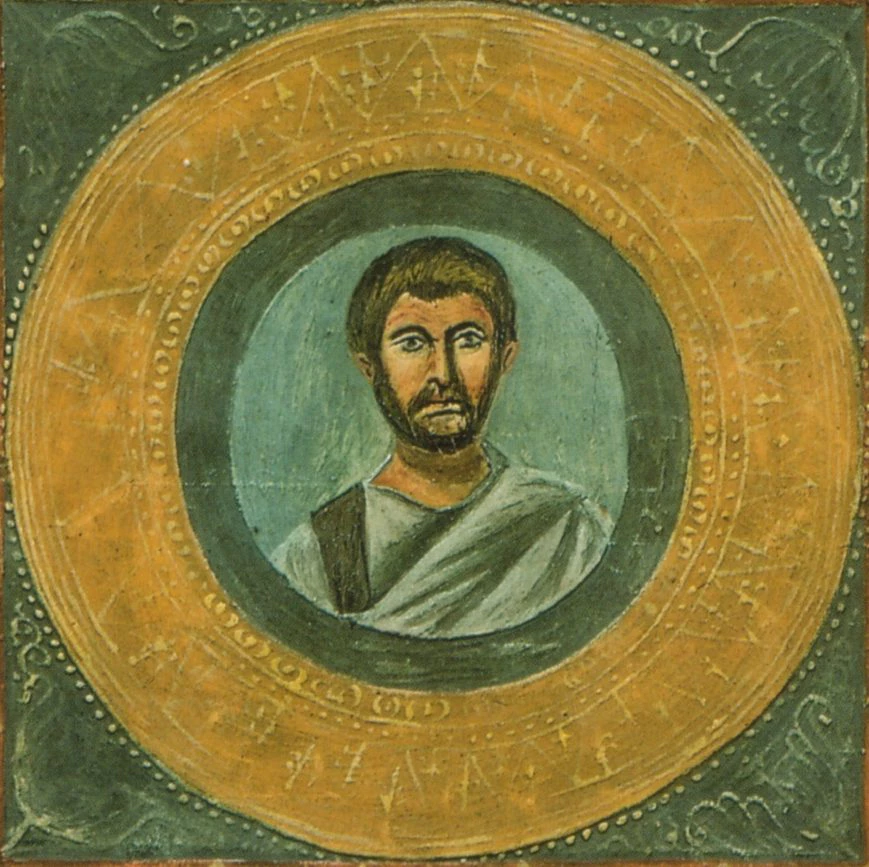
So Roman mothers of the time laid down all sorts of strict rules, forcing their daughters to diet until they had ‘sloping shoulders and flat chests’.
Terence said: ‘Under these strict dieting rules, girls often turned into walking sticks!’
So you see, in Rome around the 2nd century BC, the fashionable figure was a model’s figure. It really was an age of flat chests.
Why Are So Many Men Big-Breast Fans?
At this point, I wonder whether you’re as puzzled as I am. Don’t today’s men secretly like big breasts? So what was going on with flat chests being fashionable in ancient Rome?
Men liking somewhat larger breasts is actually easy to explain. As I said in the previous article, breast shape may be used to transmit an age signal:
So obviously, the larger the breasts, the clearer the age signal they convey. In other words, compared with a flat-chested girl, men can more easily judge the age of a big-breasted girl.
Seen this way, big breasts aren’t merely a signal—they’re practically a blatant boast!
The subtext of big breasts is:
‘Look, I’m carrying around this huge lump of fat, and it still hasn’t sagged—doesn’t that show how young I am!’
What are flat-chested girls supposed to make of that?

Being Big Has Its Problems
But somehow, something doesn’t seem right.
If you know a little about how evolution works, you’ll notice something suspicious in the logic above: if big breasts were infinitely wonderful in this way, evolution should have eliminated flat chests long ago. So why was there an era and region like ancient Rome in which most men became flat-chest fans?
Flat-chested girls clearly weren’t eliminated by evolution; men liked them plenty too. So why was that?
Because being big is certainly wonderful, but big-breasted girls are actually taking a very risky path: sure, they have a glorious time when young, but once they get a little older, sagging is bound to attract even more attention, exposing their age all the more clearly!
The Revenge of the Flat Chest
And that, precisely, is where flat-chested girls launch their counterattack: ‘If I have no hope of competing with you on size right now, I’ll simply send the opposite signal.’
What signal? ‘You big-breasted girls will be finished in a few years, but look at me—my chest is still in its pre-development flat-chested state. I’m still a little girl. I’m not yet at the age best suited for reproduction.’
To put it another way:
Big-breasted girls are publicly traded companies. The signal they send is—I’m at the height of my powers; I’m infinitely wonderful right now.
Flat-chested girls, meanwhile, are companies preparing for an IPO. What they tell you is—my future is infinitely wonderful.

One Is the Present, the Other the Future
Big breasts and flat chests: one is the present, the other the future.
In fact, there is plenty of evidence that a flat chest makes a woman look younger. For example, an especially bizarre Australian government ban is related to this very principle: the ‘anti-A-cup pornography’ ban, which requires actresses in pornographic films to be at least a C cup. The reason is that flat-chested girls can easily look underage, giving people who like sexually assaulting children a loophole to exploit.

So, whether you like big or small breasts is, to some extent, about whether you value the present or the future.
The aesthetic preference of ancient Roman men for one bust size or the other may reflect how they viewed life in the present and the future.
This is what I said at the beginning of this series: sometimes we can see the ‘zeitgeist’ of an era in the fashion for ‘breast aesthetics’. In eras when patriarchy held power for a long time, men’s aesthetic preferences regarding women’s bodies may reflect certain psychological states among the men of that era.
Ancient Roman Men Betting on the Future
The Roman playwright Terence lived in the 2nd century BC, a particularly prosperous period of the Roman Republic. Although the first clouds of slave revolts were beginning to gather, this was also a wonderful era of economic and commercial growth, territorial expansion, and military glory for ancient Rome.
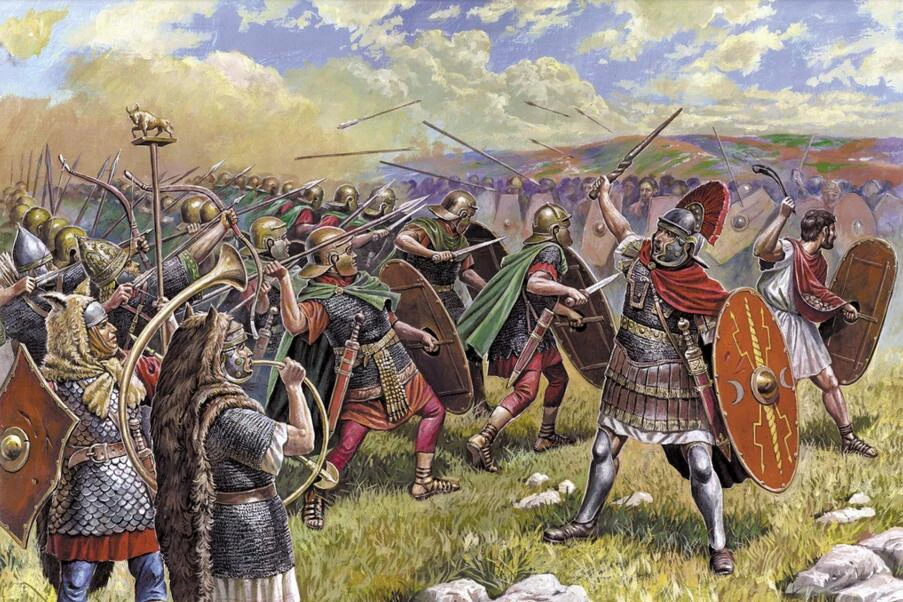
The better the present, the more optimistic people are about the future.
So perhaps one reason flat chests were fashionable in Rome at the time was that Roman men were full of confidence in their future.
The Roman men who liked flat chests were really saying:
‘We’re not looking to live in the present—we’ve got plenty of good days ahead of us.’
PART 2: Diana of Ancient Rome — The End
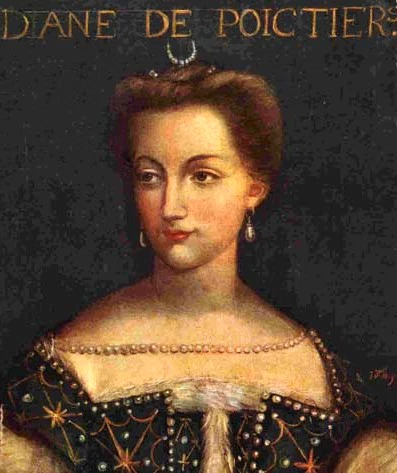
All right, we’ve finished talking about Diana of Ancient Rome. Next time, we’ll keep chasing the name ‘Diana’ into the Middle Ages, where we’ll take a look at the legendary story of the most famous ‘Diana’ of the medieval era: Diane de Poitiers, mistress of King Henry II of France.
(Well, as you can see, by this point this series seems to have little to do with Wonder Woman anymore. But with my formidable talent for bullshitting, I can always somehow steer it back there later. Heh heh heh~~)
Leave a Reply