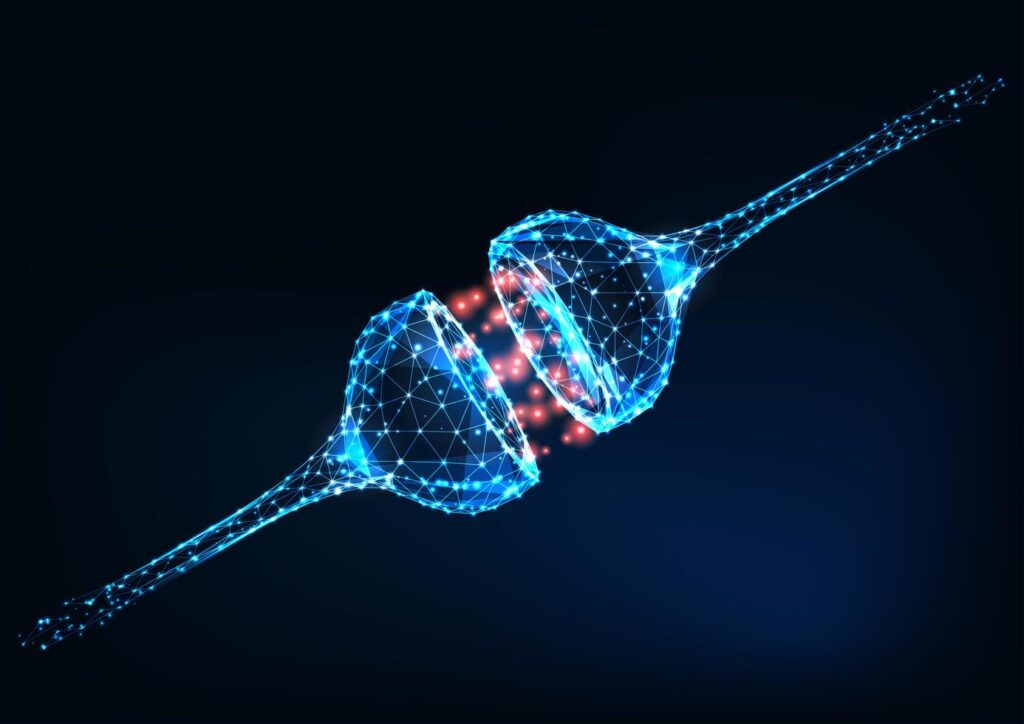
Last week, I had general anesthesia for the first time in my life, because I needed to undergo a medical checkup.
I closed my eyes, opened them again, and half an hour had passed. I had absolutely no sense of time passing. Kind of fun, actually.
Anesthesia raises a question that is genuinely puzzling:
There are dozens of anesthetics in clinical use today—nitrous oxide, ether, sevoflurane, xenon, and so on and so on—and their molecular structures and chemical activities are wildly different.
And yet we know that anesthetics work because they block the transmission of neural signals.
And we also know that, according to the textbooks, neural signals are electrical signals.
And we further know that the firing of neurons is driven by a chemical reaction involving a certain class of proteins in the cell: the opening and closing of sodium and potassium ion channels in the cell membrane.
—And that is strange. It is hard to believe that all these anesthetics, despite their radically different molecular structures, produce their anesthetic effects by binding to the same class of proteins in cells.
Of course, I did not discover this paradox myself. In fact, some neuroscientists noticed this strange fact long ago. And the physicist Thomas Heimburg proposed a highly controversial hypothesis to explain it:
Neural signals are not electrical signals at all, but mechanical waves!
If this hypothesis were confirmed, every textbook of physiology, neuroscience, and medicine would have to be rewritten!
The cover story “Are Neural Signals Mechanical Waves?” in the May 2018 issue of Scientific American reported in detail on Thomas Heimburg’s research. It was one of the most mind-opening articles I read in Scientific American last year.
In Heimburg’s view, neurons communicate with one another through mechanical pulses resembling sound waves, while the electrical pulse is merely a byproduct of the process.
In plain English, a mechanical wave means that neurons “squeeze one another,” transmitting a signal by passing along tiny changes in physical pressure. In other words, neurons are not like semiconductor switches in a CPU; they are more like springs!
Sounds pretty absurd at first, right?
But take a look at the following excerpts and paraphrases of some key points from the article. They actually sound fairly convincing—
Here is the model currently found in textbooks for how neural signals are generated:
“Nerve fibers are like tubes thinner than a strand of hair. Their walls are made of oily cell membranes. The inside and outside of the cell membrane are filled with charged sodium and potassium ions. Around the 1950s, researchers mastered the technique of inserting electrodes into nerve cells, allowing them to measure the difference in electrical potential across the cell membrane. They discovered that when a signal traveling along a nerve passed the electrode, the membrane potential changed sharply within a few milliseconds. In 1952, two British scientists, Alan Hodgkin and Andrew Huxley, discovered that when a pulse appeared, sodium ions rushed from outside the cell membrane to the inside; then potassium ions flowed from inside to outside, restoring the membrane potential to normal. Their Hodgkin–Huxley model became a cornerstone of modern neuroscience.”
“Some scientists, however, continued looking for experimental observations that did not fit the model. One of them was Ichiji Tasaki, a neurobiologist at the U.S. National Institutes of Health. In 1979, he conducted an experiment that challenged tradition: he dissected a crab’s leg, exposed a bundle of nerves, and carefully placed a small reflective piece of platinum on it under a microscope, then shone a laser at the platinum. By measuring the angle of reflection, he could detect whether the width of the nerve bundle changed minutely when electrical stimulation passed through it. He and Kunihiko Iwasa, then his postdoctoral researcher, took more than a hundred measurements. A week later, the data clearly showed that when an electrical pulse passed through a nerve, the nerve bundle became slightly wider and then narrower again. The entire process took only a few milliseconds.”
“Although the deformation was tiny—the surface of the cell membrane rose by only about 7 nanometers—the phenomenon matched the neural signal passing through it perfectly. It confirmed Tasaki’s suspicion of many years: Hodgkin and Huxley were wrong.
As early as the 1940s, researchers had noticed that when an electrical signal passed through a nerve fiber, the translucent cell suddenly became less transparent. In 1968, evidence discovered by Tasaki and another research group showed that the molecules in the cell membrane at the pulse site changed their arrangement, then returned to their original configuration after the pulse had passed.”
“Another point of doubt concerns heat. Researchers usually assume that an electrical pulse generates heat, like every electrical current does. But several research groups found something strange. When a pulse passed through a nerve, the temperature of the nerve fiber rose by a few millionths of 1℃, yet it quickly dropped again after the pulse passed. It seemed that the heat had not dissipated, but had mostly been reabsorbed by the nerve. This process also lasted a few milliseconds.”
“Tasaki believed that the transient deformation, the rearrangement of molecules, and the rapid movement of heat all pointed to an astonishing conclusion: a neural signal is far more than an electrical signal. It is also a mechanical signal.”
“Beginning in the late 1990s, Heimburg conducted his own experiments, compressing artificial cell membranes to study their response to mechanical shock waves. His research yielded several important findings: the oily lipid molecules that make up cell membranes can normally flow and have random orientations, but they readily undergo a phase transition (the process by which a substance changes from one phase to another). A gentle squeeze is all it takes for the lipid molecules to condense immediately into a highly ordered liquid-crystal state.”
“Based on these experiments, Heimburg inferred that a neural pulse is a mechanical shock wave traveling along the neuron’s cell membrane. As the shock wave travels, it compresses the liquid cell-membrane molecules into a liquid crystal, releasing a little heat during the phase transition, much as water releases heat when it freezes into ice. Then, after the shock wave passes, the cell membrane turns liquid again and absorbs the heat. The entire process takes a few milliseconds. This brief phase transition makes the cell membrane slightly wider, just as Tasaki and Iwasa observed when they shone a laser at the platinum.”
*****
So how does the mechanical-wave hypothesis explain the anesthesia paradox?
Heimburg believes that “anesthetics seep into the lipid cell membrane on the outside of nerve fibers and alter its mechanical properties, making it too soft to conduct mechanical waves. That is how they produce their anesthetic effect. It is like a guitar string that is too loose to play.”
“Experiments on artificial cell membranes support this idea. Heimburg found that when a cell membrane was immersed in an anesthetic, it could no longer enter the liquid-crystal state. The reason is that anesthetics lower the critical temperature for the cell membrane to undergo a phase transition (while raising the critical pressure), following the same principle by which salt or sugar lowers the freezing point of water.”
“Heimburg believes that when a cell membrane cannot undergo a phase transition, mechanical waves cannot travel along the nerve fiber. This, he argues, is the real reason anesthetics deactivate nerves.”
“He also predicted that certain methods could overcome this effect. Doctors applied electrical stimulation to volunteers’ arms, which increased the pressure in the cell membrane and made it solidify. The experiment showed that electrical stimulation could indeed counteract the anesthetic effect.”
“If using an electric current to put pressure on a cell membrane can counteract anesthesia, then applying mechanical pressure directly should have the same effect. Biologists had already demonstrated this as early as 1942. They used two different anesthetics, ethanol and urethane, to anesthetize tadpoles until they could no longer swim. The scientists then placed the tadpoles in a high-pressure chamber and increased the pressure to 136 times atmospheric pressure. The anesthetic effect astonishingly vanished: the tadpoles started swimming again. When the pressure was lowered, the tadpoles once again lost the ability to move.”
*****
Of course, as an extremely non-mainstream hypothesis, Heimburg’s mechanical-wave theory is currently facing plenty of skepticism. For example: “Scientists have identified hundreds of ion-channel proteins. They also know that drugs can selectively regulate ion flow, and that they can modify the genes for these proteins to control neuronal firing. ‘They are simply ignoring all this biological evidence,’ says Morris, who has studied ion-channel proteins for 30 years.”
Whatever the final result, I think the idea that neural signals might be mechanical waves is fascinating. Even if we treat it as nothing more than a wild thought experiment, it is still a pretty great one.
References:
“Are Neural Signals Mechanical Waves?” Scientific American, May 2018 issue
Note
- This article in the “New Psychological Knowledge Mini-Lessons” series was a short popular-science essay/ramble written at the time to accompany the related content Zhichao Wei: New Psychological Knowledge Course. It was published on the now-closed platform “Fatuan,” and the original link no longer exists.
Leave a Reply