
For you who love movies.
And if you’re also a little interested in psychology, even better~
Dear readers,
Although you’re probably opening this book expecting a collection of film reviews or a popular psychology book, you might as well read it as a “detective novel.” The strange cases waiting to be solved here aren’t bizarre murders, but all kinds of “psychological mysteries” inside and outside the film industry—
Some mysteries are about filmmakers: What lingering regrets lie deep in the hearts of directors like Wong Kar-wai, Ang Lee, Hayao Miyazaki, Quentin Tarantino, and David Lynch? And how did those lingering regrets create the distinctive atmosphere of their work?
Some mysteries are about film plots: What do the good and bad men Zhang Wuji in The Heaven Sword and Dragon Sabre and James Bond in the 007 films believe about desire? What hidden, little-known themes are tucked inside La La Land?
Some mysteries belong to genre films: What psychological codes hide behind the supreme martial arts skills of wuxia films, Cthulhu in horror films, and artificial intelligence in science fiction?
And some mysteries lie between the world on the screen and the world in real life: How does psychology in the real world inspire movies, and how do movies, in turn, illuminate the inner world of reality…
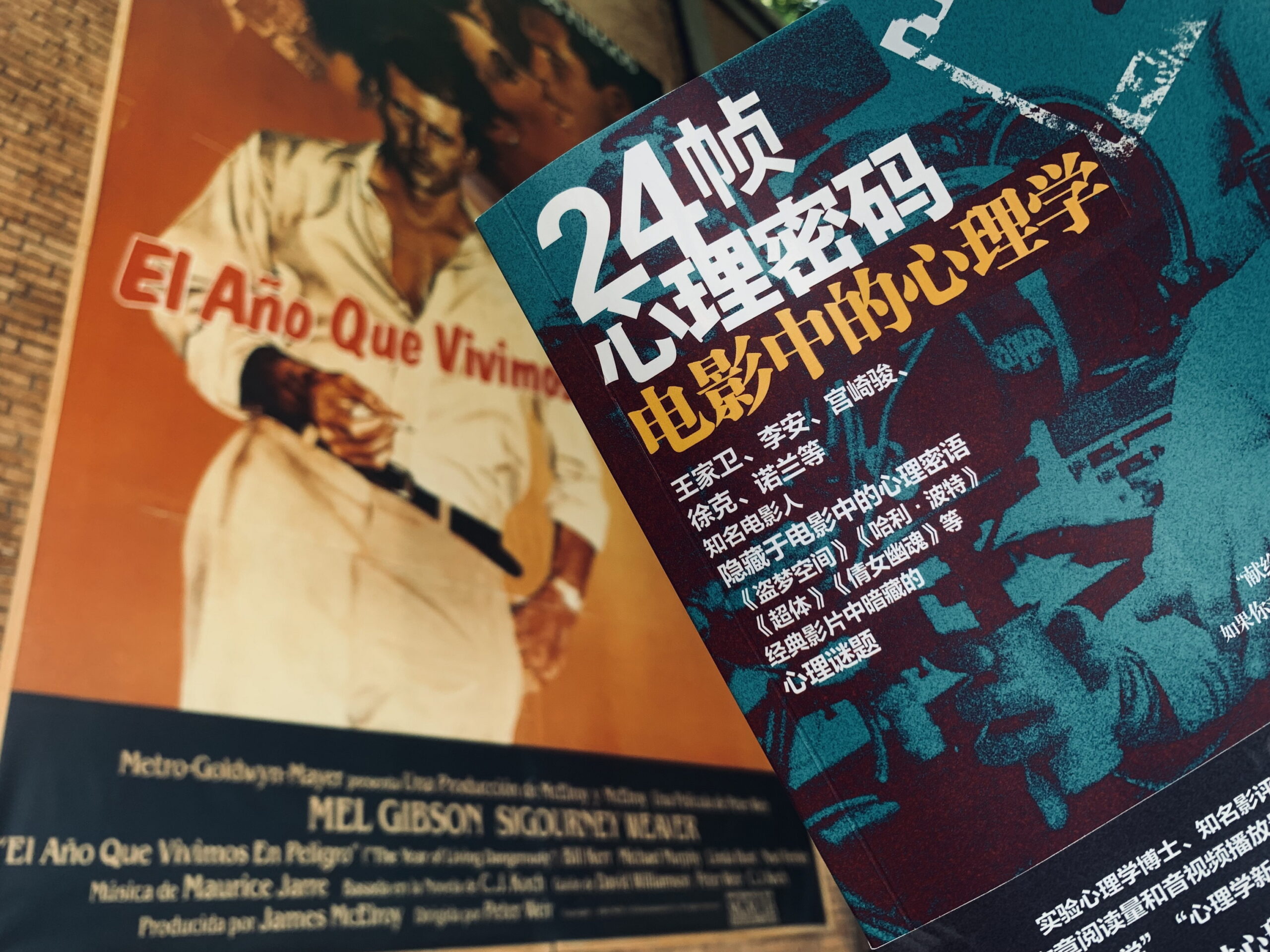
Actually, movies and psychology are long-lost brothers. The plot setups and classic lines in great films and television shows often make me sigh that good screenwriters and good directors are all psychologists who got sidetracked. Filmmakers’ insights into human nature are often dead-on, going straight to the heart of the matter.
More interestingly, outside the “fourth wall,” beyond the realities of “making movies” and “watching movies,” there are plenty of psychological elements worth savoring: a director’s creative motives, a screenwriter’s writing techniques, an audience’s viewing experience, and even the development of film technology… All of them are closely tied to the laws governing how the human mind works.
Movies are made by people, and they’re made for people to watch. How could psychology possibly be missing from the picture?
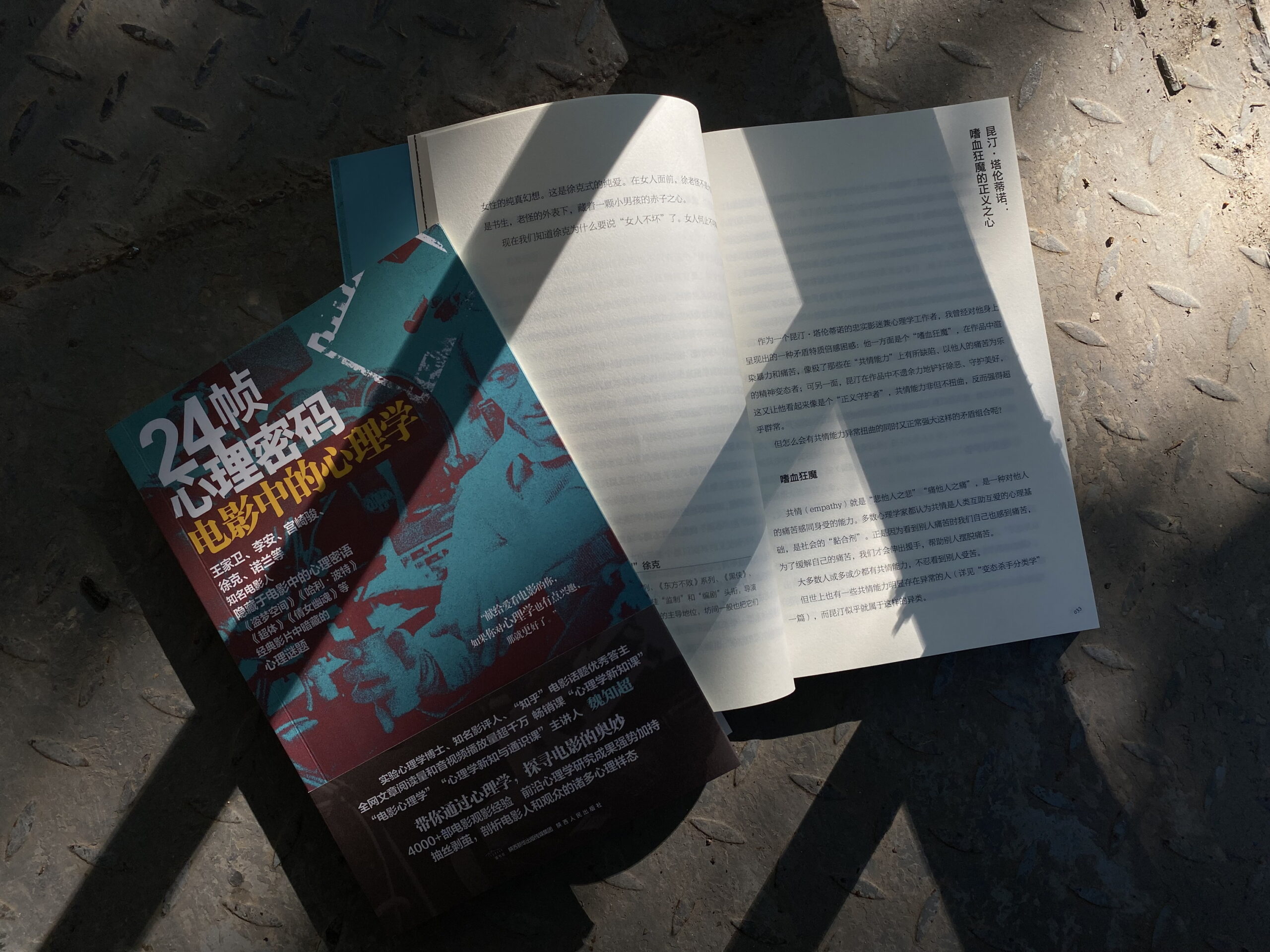
Still, this is not a serious “research report on the psychology of film.” Everything in it was something I “snatched up whenever inspiration suddenly struck” during my everyday movie watching. You’ll find some pretty cool psychology in these pages, but what I really want is to share with you the joy that belongs only to film buffs: that silly, blissful happiness of temporarily stepping away from ordinary life and throwing yourself, heart and soul, into movies.
I was born in the 1980s, and as a teenager I was lucky enough to catch the golden age of Hong Kong cinema and Hollywood. Masters filled the film world, masterpieces kept appearing, and I grew up hanging around the video parlors that lined the streets back then. On the tiny color-TV screens, I met Wong Kar-wai, Tsui Hark, John Woo, Steven Spielberg, and James Cameron—dizzy and half-blinded by the secondhand smoke produced by small-town youths, while also dazzled and intoxicated by the brilliance of cinema’s golden age.
I grew up nourished by the movies of that golden age, and I feel profoundly lucky for it. Through this book, I want to express that gratitude. This is my love letter to movies (a love letter with some psychological thinking mixed in still counts as a love letter, right…).
This book’s publication owes thanks to many people: my friends Qu Fei and Ma Xujun for making the introductions; editors Guan Ning and Yan Li for all their hard work; and my wife Wang Xiaowei for watching and talking about movies with me. Most of the inspiration in this book burst forth while we were sitting side by side watching films.
Last, I have to thank the big shots I pretend to know.
Thank you, Wong Kar-wai, Ang Lee, Hayao Miyazaki, Tsui Hark, Quentin Tarantino, David Lynch, Christopher Nolan, James Cameron, Luc Besson, Stanley Kubrick, Charlie Kaufman, Ridley Scott, Satoshi Kon, Mamoru Oshii, and Hideaki Anno…
Thank you for creating such a dazzling world of light and shadow, making cramped reality infinitely vast.
It is my great honor to have the chance to write a tiny footnote to the world you created.
Zhichao Wei
Book link

Leave a Reply