
This episode is also on Bilibili too.
[Zhihu question] How much does wearing a mask affect your looks?
There are data to answer that.
- For faces with low facial attractiveness, wearing a mask raises average attractiveness by about 42% for both men and women.
- For faces with average facial attractiveness, wearing a mask raises women’s average attractiveness by 18.8%, and men’s by 24%.
- For faces with high facial attractiveness, wearing a mask raises women’s average attractiveness by 5.76%, and men’s by 8.49%.
For example, the image below shows a “low-attractiveness” face. In the study, after a mask was added, the face’s attractiveness score rose by 71%.
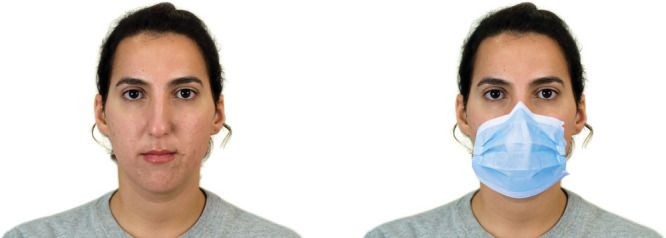
The image below shows an “average-attractiveness” face. In the study, after a mask was added, the face’s attractiveness score rose by 29%.

The image below shows a “high-attractiveness” face. In the study, after a mask was added, the face’s attractiveness score rose by 11%.
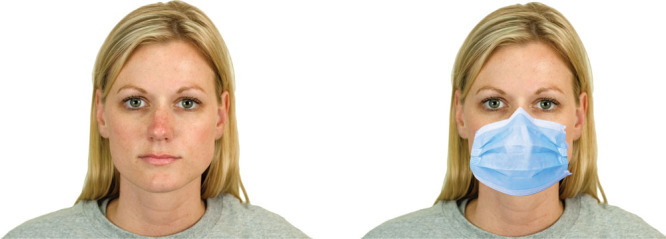
These data and illustrations come from a study published in 2021:
Patel, V., Mazzaferro, D. M., Sarwer, D. B., & Bartlett, S. P. (2020). Beauty and the mask.Plastic and Reconstructive Surgery Global Open,8(8).
The researchers selected 60 face photographs from the Chicago Face Database—30 men and 30 women—covering low, average, and high levels of facial attractiveness. They used Photoshop to create a masked version of each image. The masked and unmasked versions together made a database of 120 face images.
These images were presented at random to 496 participants. The participants rated the facial attractiveness of the faces they saw on a scale of 1 to 10, from “lowest” to “highest.” The researchers compared the ratings before and after the masks were added and, after crunching the numbers, arrived at the results above.
Here are the more detailed conclusions:
1. First, in the data at the beginning, the improvement for every face group was statistically significant. Regardless of gender and regardless of whether a face fell into the low, average, or high-attractiveness group, wearing a mask raised its average attractiveness rating; in the participants’ subjective impressions, everyone looked better.
2. The most obvious improvement occurred in the “low-attractiveness” group. The difference between the average- and high-attractiveness groups, by contrast, was not statistically significant. So, the people who benefit most from wearing a mask in terms of facial attractiveness are those who were not especially good-looking to begin with. Put another way, masks narrow the attractiveness gap between the low, average, and high groups.
3. Looking at the proportions: after masks were added, every face in the low-attractiveness group received a higher attractiveness rating—a 100% improvement rate. In the average-attractiveness group, about 70% of the photos received higher ratings, while the remaining 30% showed no change. In the high-attractiveness group, there was even one male and one female face whose ratings fell after a mask was added. This makes the point even more clearly: the people who benefit most from masks in terms of facial attractiveness are those who were not especially good-looking to begin with; a small number of highly attractive people, on the other hand, may actually risk looking less attractive in a mask.
To sum up, on average, everyone’s facial attractiveness increases when they wear a mask, with people in the low-attractiveness group benefiting the most.
So why do masks have this apparent beauty-boosting effect?
The introduction to the paper says:
In the 1980s, Dr. Leslie Farkas, widely recognized as the father of anthropometry of the head and face, tried to define the facial dimensions and proportions associated with a beautiful face. When comparing beautiful and mediocre faces, Dr. Farkas found that the greatest differences in facial dimensions and proportions were concentrated around the mouth, including, but not limited to, a narrower philtrum, a wider distance between the corners of the mouth, and a more prominent upper lip.
In other words, although we tend to think that “beauty is all in the eyes and brows,” our judgment of whether a face is beautiful actually depends to a great extent on whether the mouth and the area around it look distinctive enough. So the reason masks can improve facial attractiveness is that they—cover exactly the right place.
A mask covers the area around the mouth, taking away the most important cue for judging facial attractiveness. People then let their imaginations take over, filling in one attractive face after another.
That’s all.
Leave a Reply