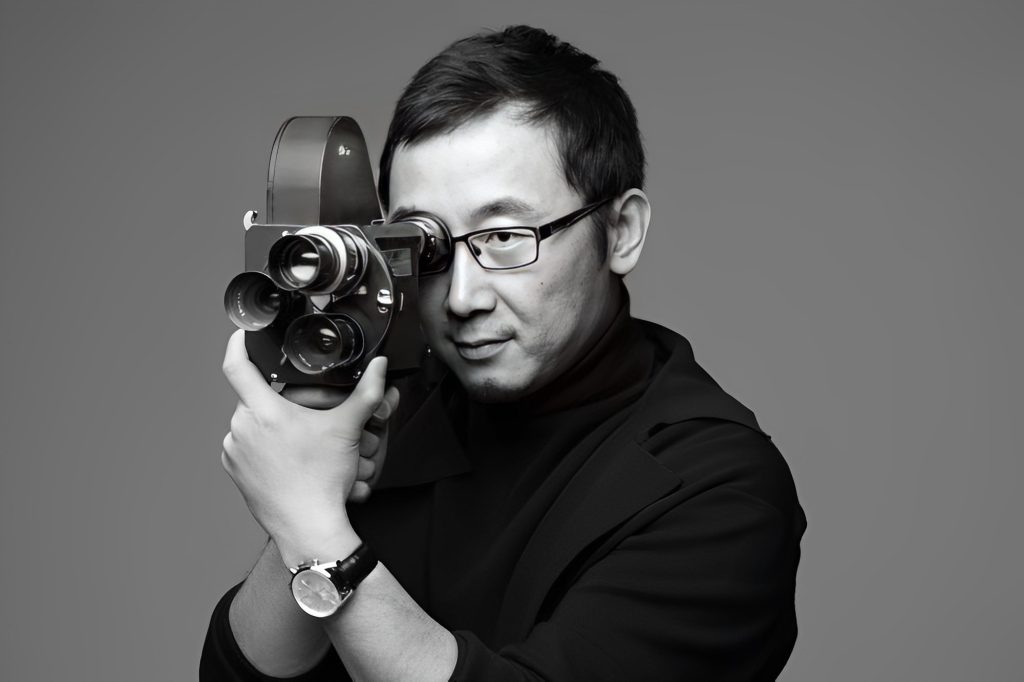
Zhihu question: What do you think of director Lu Chuan?
I think all of director Lu Chuan’s films are “pseudo-art films,” and Lu Chuan is a director who is very good at creating artistic illusions.
Can art be faked? Of course it can. Someone once conducted an experiment: they hung a painting they had badly Photoshopped themselves in a museum and asked passing visitors to evaluate it. Quite a few people thought it was a masterpiece, and could even produce a whole string of plausible-sounding reasons. Put a perfectly ordinary painting in the “atmosphere of a famous painting,” and it really does look astonishingly like one. Films work the same way. When a film is wrapped in an atmosphere sufficiently artistic, its artistic level can seem to rise to that of genuine masterpieces. So even directors with little real artistic accomplishment can shoot films that look highly artistic if they master a few useful tricks.
A few well-used “art-film elements” can produce this effect. For instance, add a meaningless ten-minute long take to a mediocre film; or shoot it with a static shot every 20 minutes (equally meaningless—don’t make it too short or too long: if it’s too short nobody notices, and if it’s too long you’ve overdone the pretentiousness and just annoy people); or have the actors spend the entire film wearing expressions like they desperately need to take a dump but can’t, while speaking as little as possible. These pretentious shots and expressions are neither pleasing to look at nor meaningful, but plenty of people will still say, “Wow, what amazing visual language,” and, “Wow, the actors’ performances have such depth.”
I think truly excellent art films can be profound, but shouldn’t be dull; they can be plain, but shouldn’t be boring. Yet a dull and boring piece of mediocrity, once dressed up with “art-film elements” like the ones above, can become sufficiently deceptive to lead viewers to mistake dullness for artistic profundity and boredom for artistic simplicity.
This could probably be called an “artistic illusion”; and Lu Chuan is precisely a master of artistic illusion.
How much of the art in Lu Chuan’s films is art, and how much is artistic illusion?
Probably more illusion than anything else. Take Lu Chuan’s fondness for documentary techniques. It strikes me as having a hint of deliberate choice for the sake of an artistic feel. At the end of City of Life and Death, Lu Chuan gave a group of fictional characters dates of birth and death. If the characters had been based on real people, that would of course be perfectly reasonable and even necessary. But they are plainly fictional, so it feels awfully deliberate. This isn’t The Lord of the Rings; do we really need a chronology too? At the end of Kekexili: Mountain Patrol, Lu Chuan used the same trick: the end credits said that the surviving reporter eventually returned to Beijing and wrote a world-shaking piece of reportage, and so on. For a while I thought this was true (because Lu Chuan had repeatedly claimed that the characters in Kekexili: Mountain Patrol had real-life prototypes). Looking back, it seems highly suspect. Lu Chuan left hints everywhere, presenting Kekexili: Mountain Patrol as based on a true story and, intentionally or otherwise, misleading viewers into believing the story really happened, thereby drawing them deeply into it emotionally. That’s pretty sly. The artistic impact of documentary technique comes precisely from its being about real people and real events. But since most of the story in Kekexili: Mountain Patrol is fictional, this “documentary packaging” feels a little too clever by half, a little low-rent—arguably even deceptive.
Lu Chuan also makes excellent use of “art-film elements” in his cinematography. In City of Life and Death, the cinematographer either grabs a handheld camera and shakes the audience dizzy, or launches into a long take lasting several uninterrupted minutes. Every second, the camera reminds viewers: “Look how artistic this visual language is!” As for whether these techniques serve the needs of the scene, I couldn’t tell; my impression is that Lu Chuan doesn’t much care either. Lu Chuan’s talent isn’t making camera shake meaningful. It’s making viewers, after being shaken sick, wipe the vomit from the corners of their mouths and praise him: “This cinematography is so damn artistic.”
Lu Chuan is also good at choosing subjects. When he made Kekexili: Mountain Patrol, he chose to make a film about protecting Tibetan antelopes. Who would dare say a single word against that? Once the theme is so “correct,” it becomes difficult for viewers to criticize the film’s quality without hesitating. If a defender pulls a bait-and-switch and pins the label “opposing the protection of Tibetan antelopes” on you, that’s no fun at all.
The legitimacy of City of Life and Death’s subject is even harder to dispute than that of Kekexili: Mountain Patrol. In fact, discussion of the film itself was drowned out by a war of words over its theme: “You say City of Life and Death is bad? Are you questioning the Nanjing Massacre? Are you even Chinese?” After the film came out, patriotic online jingoists flooded the internet with claims such as “Opposing City of Life and Death means opposing the Nanjing Massacre.” It’s hard to imagine how huge the shouting match would have been if it had coincided with the earlier anti-Japanese wave. More amusingly, on the one hand, anyone criticizing City of Life and Death risked being spat on as a “traitor” by those jingoists; on the other hand, given the film’s alleged “whitewashing” of the Japanese army, supporting City of Life and Death seemed suspiciously traitorous too. From this angle, whether you praise or pan City of Life and Death, you seem liable to become a traitor. Everyone ended up a traitor. That is, admittedly, a bit inconvenient.
In reality, most praise for Kekexili: Mountain Patrol at the time was moral acclaim, with relatively little praise for its film art in the purer sense. “A film with a conscience”—that was probably the compliment we heard most often about Kekexili: Mountain Patrol. But unless Lu Chuan had made Kekexili: Mountain Patrol into a comedy, would you really dare say it had no conscience? Director Peng Hui, who likewise called Kekexili: Mountain Patrol “a film with a conscience,” once said: “The film is ‘relatively true.’ The truth of life is plain and complicated, while films need a climax.” Could that be a tactful criticism of Kekexili: Mountain Patrol once its “beyond criticism” theme is stripped away?
Besides being “very artistic,” Lu Chuan is always very “sincere.” Whether in his choice of subjects or in the way he talks and carries himself during interviews, he has never been stingy about displaying his sincerity.
The opposite of sincerity, presumably, is “chasing a gimmick.” A gimmick seems insincere, while only keeping your feet on the ground counts as sincere. But I suspect quite a few clever people can seamlessly combine sincerity and gimmicks without making a show of it. Turning sincerity into a gimmick—that is the highest realm of gimmickry. Sincerity is merely a tool for some people. Just as certain carefully planned advertisements can move people to streaming tears and snot, while their only “sincere” wish is for you to spend money on their products.
Yes, I always suspect that Lu Chuan is actually “selling sincerity.” I’m reading signs into shadows; I have no hard evidence. Thinking back, the reason I was so neurotic about it is that I once saw a Lu Chuan commercial:
This was the trailer ad bundled with the official Region 6 Kekexili: Mountain Patrol DVD. It ran seamlessly into the feature, and when I watched it back then, I immediately found something awkward about it.
If you don’t think there was anything wrong with the ad, then when it comes to “selling sincerity,” I suppose I was judging a gentleman with a petty man’s heart.
Lu Chuan is smart, but I think his intelligence shows itself more in things outside the films. Films like Kekexili: Mountain Patrol and City of Life and Death choose a “beyond-criticism” subject, wrap it in art-film elements, and add a sincere posture; that makes it very easy to become bulletproof. There may not be much malice in this. I just think these are technical jobs, not artistic ones. They are things used to package everything around a film’s core, not the core itself.
These technically packaged “artistic” works won Lu Chuan countless rounds of applause, but they were really only artistic illusions.
The clever Lu Chuan is really a master of artistic illusion.
That is my assessment of Lu Chuan.
As an aside, let me gripe about the film I dislike most, City of Life and Death—
City of Life and Death is a very strange film.
Thematically, whatever else one says, it is a film about the Nanjing Massacre. The strange thing is that the only genuinely direct depiction of the massacre lasts a pitiful ten-odd minutes, from 28 to 46 minutes. Most of the runtime devoted to Japanese atrocities is spent on the Japanese army raping women and looking for comfort women.
In the details, on the one hand, some aspects undeniably show care. The battle scenes imitate Saving Private Ryan to about 70 or 80 percent, and technically they are quite decent. But strangely, on the other hand, some details are frighteningly crude. For example, the actor playing John Rabe apparently couldn’t speak German. His English was his own voice, but in the scene where he speaks German with Mr. Tang, even the lip movements don’t match!
In its character construction, Lu Chuan said that he had to film Japanese people as “human beings” in order to communicate with the world, so he devoted a great deal of screen time to “restoring” Kadokawa, the Japanese soldier, as a human being. Yet strangely, he also had Kadokawa repeatedly announce that he had graduated from a mission school. The film thus clearly conveys that this carefully drawn character is merely an exception among Japanese soldiers. Lu Chuan himself has said that he created Kadokawa as an exception, but I can’t see what spending so much effort on one exception does for the project of “filming Japanese people as human beings.” If he really wanted to film Japanese people as human beings, then beyond constructing a “good” exception like Kadokawa, he should have devoted some space to exploring why the other Japanese soldiers were “evil.” In City of Life and Death, however, apart from Kadokawa, the exception who is a “human being,” the other Japanese soldiers remain indistinct beasts—as if only “goodness” needed to be explained as humanity in wartime, while evil in war simply has no reason: beasts are beasts, no explanation required. In interviews, Lu Chuan emphasized his depiction of Japanese humanity as though he were rather pleased with this breakthrough. But I think that on this point, the image of the “majority” of Japanese people in City of Life and Death is no different from Japanese characters in similar films we have seen before. The supposed breakthrough is just another artistic illusion.
I can’t help thinking, rather inappropriately, of a line from Batman Begins: “What defines you is not what you say, but what you do.” I think the same goes for directors. Outside the work, no matter how much they say, we don’t have to take it too seriously. What ultimately defines them is still the work itself.
Version history
The published title of this article was “Clever Lu Chuan, the Great Master of Artistic Illusion,” and it appeared on Mtime; the original has since been deleted by Mtime. This article was revised from the Zhihu version:
- Zhihu answer: https://www.zhihu.com/question/30410520/answer/50106049
Leave a Reply