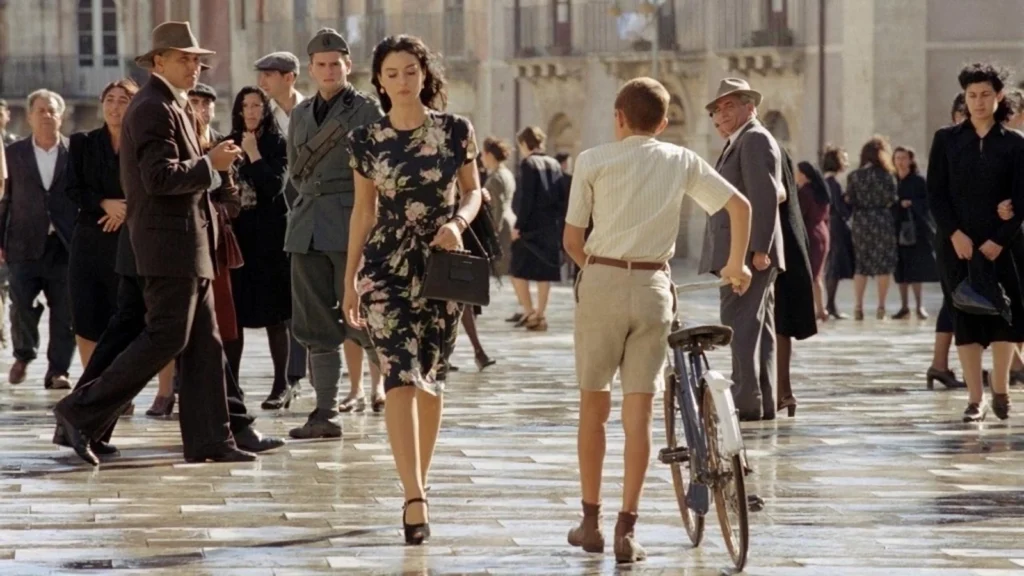
In my previous article, I used construal level theory to explain why people experience the siege effect.
The more I think about it these days, the richer the siege effect seems. You could practically spin an entire book out of it.
Today, let’s set aside construal level theory and take another look at the siege effect from the perspective of the glimpse effect.
In a study led by neuroscientist David Eagleman and his colleagues, participants were asked to watch photographs of men and women flash rapidly on a screen and then rate the attractiveness of the people in them. After rating all the photographs, the participants rated the same photographs a second time. This time, however, the photographs did not flash by: they could look for as long as they wanted, with plenty of time to take a close look at the handsome men and beautiful women in the pictures.
The researchers found that the ratings participants gave in the first round were significantly higher than those in the second. When people catch only a brief glimpse, they find the person in the photograph more attractive—that is the glimpse effect. (The glimpse effect was more pronounced in men than in women, possibly because men rely more on vision when judging attractiveness.)
Eagleman says: “If you catch a brief glimpse of someone turning a street corner, or drive past someone quickly, your perceptual system will make that person seem more beautiful than they would if you looked carefully. … The glimpse effect fits with everyday experience: a man catches sight of a woman and thinks he has missed out on a stunning beauty, only to discover, after chasing her around the corner, that he got the wrong impression.”
Why does the glimpse effect happen?
Eagleman explains: “The answer is the need to reproduce. If you mistake an unattractive person you glimpsed for an attractive one, you can correct the error simply by looking twice more, at very little cost. But if you mistakenly judge an attractive person unattractive, you say goodbye to potentially wonderful genetic prospects. So the perceptual system is better off telling a little lie and saying that the person you glimpsed is attractive.”
And the whole process is completely unconscious: “Your conscious brain knows only that you just missed a rare beauty; you don’t have access to the neural mechanisms and evolutionary pressures that manufactured this belief for you.”
The glimpse effect seems to offer a partial explanation for the original meaning of the siege effect—anxious ambivalence in relationships between men and women.
Since Fang Hongjian has entered the siege with Miss Sun, his assessment of Miss Sun is like the experiment’s second round, “taking a closer look,” while his impression of Miss Su outside the siege remains stuck at the level of a “glimpse.” But if Fang Hongjian really had the chance to be with Miss Su, then as he shifted from a “glimpse” to “taking a closer look,” the halo around Miss Su would inevitably fade. By then, Miss Sun would once again shine brilliantly by comparison. That, right there, is the siege effect.
“After marrying the red rose, over time the red one becomes a smear of mosquito blood on the wall, while the white one remains the moonlight before the window; after marrying the white rose, the white one becomes a grain of sticky rice on one’s clothes, while the red one becomes a cinnabar mole over one’s heart.”
The white rose is moonlight before the bed, and the red rose is a cinnabar mole, simply because you haven’t looked closely enough.
References:
Eagleman. Incognito: The Secret Lives of the Brain. 2013.
Vaughn, D. A., & Eagleman, D. M. (2011). Faces briefly glimpsed are more attractive. de inminente aparición.
Note
- This article in the “Psychology in Small Doses” series was written at the time to accompany related content from Zhichao Wei: Psychology in Small Doses. It is a short popular-psychology essay/ramble originally published on the now-defunct platform Fantuan; the original link no longer exists.
Leave a Reply