A freak downpour or a sudden shift in the direction of a strong wind can rewrite the fate of an entire nation.
A little violin worth $10 million
In 2007, Hungarian violinist Edvin Marton released an album called Stradivarius. Translated into Chinese, the album title would be the Stradivari violin.
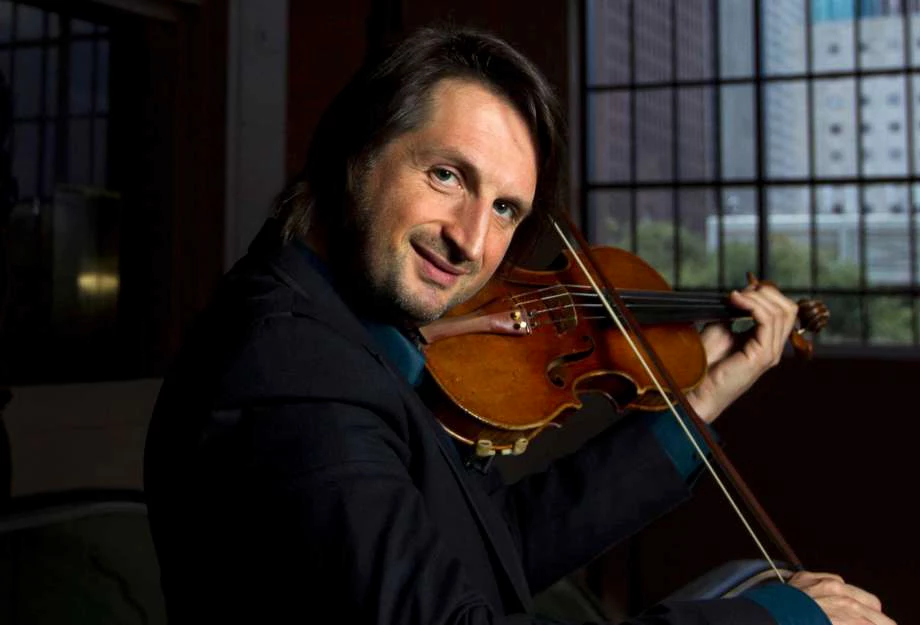
Naming an album after the violin used to perform its tracks tells you that this instrument has quite a backstory.
First, just how expensive is it? The violin Edvin Marton used to record the album was worth about $400,000 at the time.
With ears as tone-deaf as mine, I honestly cannot tell the difference between a $10 million violin and a $3,000 violin. But supposedly, Stradivari violins have the finest tone in the world, so many top performers consider owning one a status symbol.
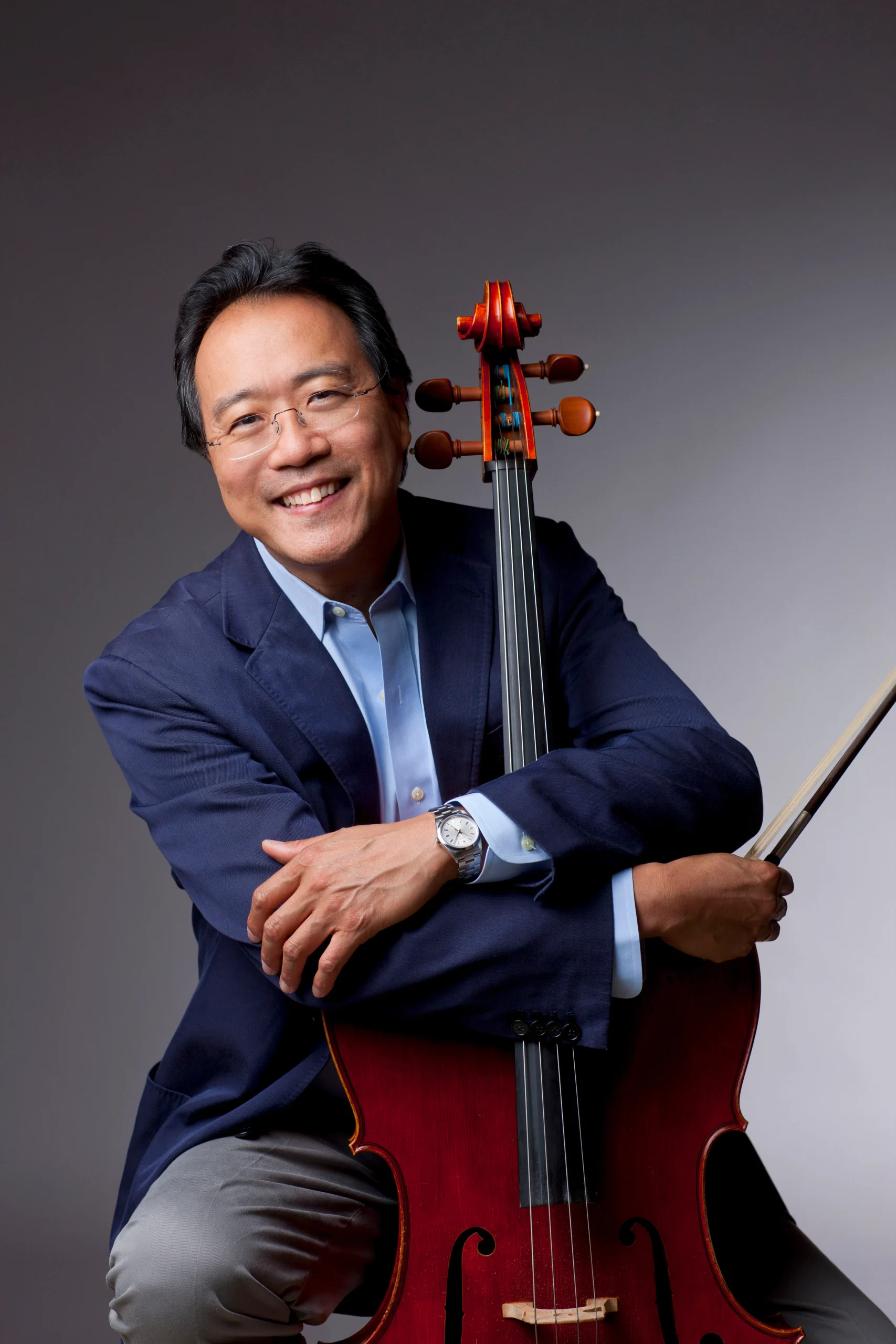
For example, the world-famous Chinese-American violinist Yo-Yo Ma once bought a Stradivari violin.
The master violin maker
Stradivari, of course, is a person’s name. His full name was Antonio Stradivari, an Italian master violin maker who lived from the mid-17th century to the first half of the 18th century—roughly from the reign of the Qing emperor Shunzhi to that of Yongzheng.
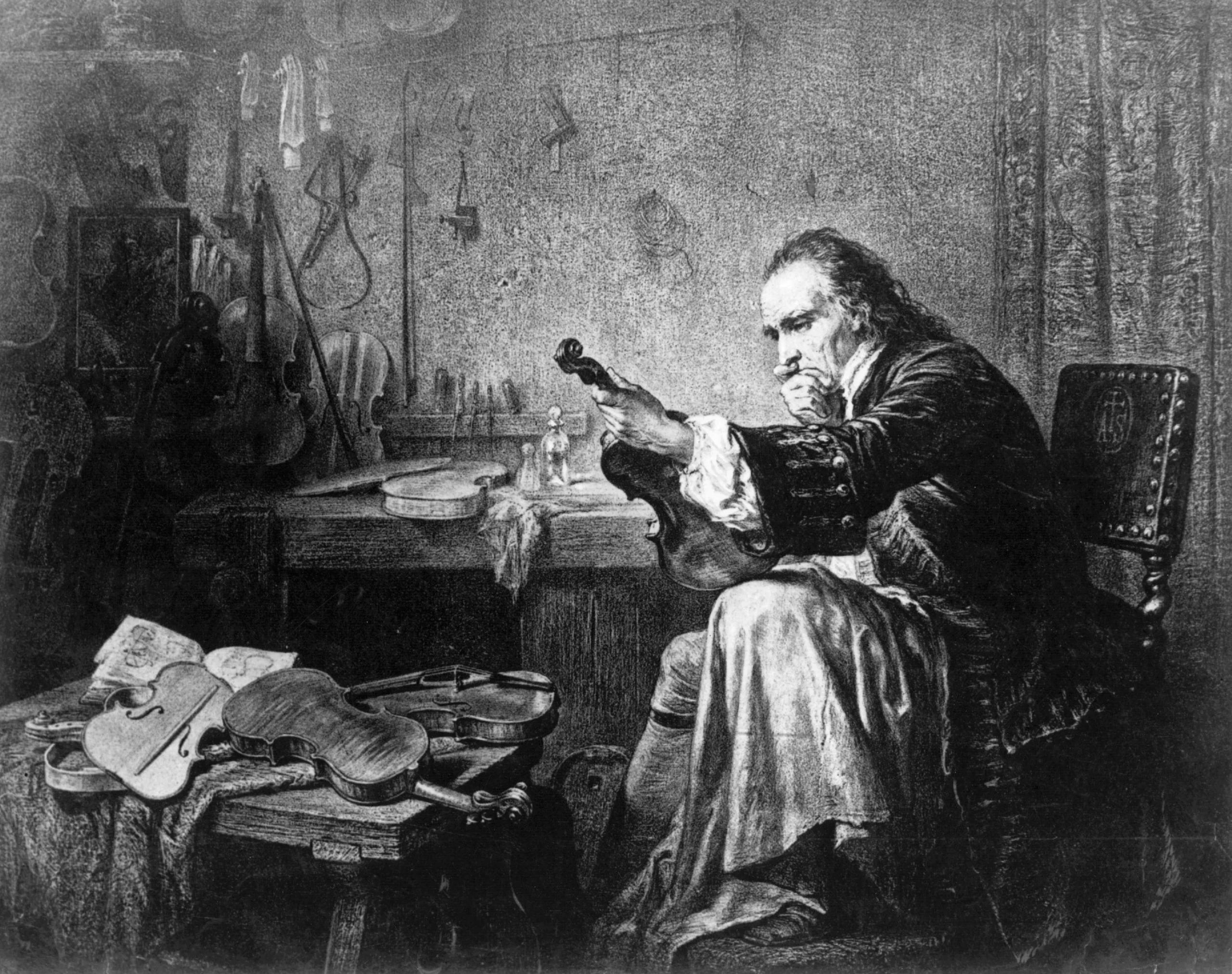
Over his lifetime, he made more than a thousand instruments, around 600 of which survive today. Naturally, every single one is insanely valuable.
The master got lucky
Why do the violins made by this master sound so good? Many people have tried to solve the mystery by studying the craft of violin making: either the design was excellent, or the master’s workmanship was simply extraordinary.

At this point, two climatologists also joined the party with a somewhat wild theory. They argued that the most important reason a violin sounds good is that the wood used to make it was of excellent quality.
Change the wood’s grain, elasticity, or density, and the vibrations of the strings inside the sound box resonate differently. The tone changes completely too.
So perhaps the master simply got lucky: he happened to find wood that was especially suitable for making violins.
The Little Ice Age
The two climatologists discovered that, starting in Stradivari’s second year of life, Earth entered a brief cold period called the Little Ice Age, which lasted for 70 years.
As the weather grew colder, trees grew more slowly. In fact, during this period, tree growth was the slowest it had been in the previous 2,000 years.
The trees that grew under those conditions had especially high density and strength, making them ideal material for top-quality instruments. Stradivari began using local spruce to make his violins just over 20 years after the Little Ice Age began.

So although the master’s craftsmanship was probably genuinely excellent, what really made his name immortal was a freak cold spell that happened to arrive at just the right time.
The power of weather
The story above comes from the book The Power of Weather, which tells dozens of stories about weather from ancient times to the present. Its author is Lauren Li, an American writer whose work covers an exceptionally broad range.

In The Power of Weather, aside from fun anecdotes like the one above, the main focus is how weather has influenced and changed human history.
We all know that history unfolds through a chain of accidents. Sometimes heaven brings down a leader, and one unusually capable emperor can completely change the course of history.
And sometimes it goes even further: a freak downpour or a sudden shift in the direction of a strong wind can rewrite the fate of an entire nation.
What’s more, compared with history-changing political strongmen, the way weather changes history is sometimes even harder for us to notice.
For example, weather may affect the outcome of an election.
The president elected by rain
The results of the latest US presidential election left many people stunned. Most of America’s elites and mainstream media—even on election day—thought Hillary Clinton was certain to win. No one expected Donald Trump to be elected in the end.

Something like this had happened once before in American history: the first election after World War II, in 1948.
The Democratic candidate was Harry Truman. During World War II, he had been Franklin D. Roosevelt’s vice president, and after Roosevelt died in office, Truman took over as president for several years. Since he had not come to power through a popular election, Truman’s popular support and reputation were not exactly impressive.

The Republican candidate, meanwhile, was New York governor Thomas E. Dewey, whose popular support was extremely strong. Before the election, almost everyone thought Dewey would win—much like everyone looking back on this election thought Hillary was going to win.

As everyone now knows, Truman unexpectedly defeated Dewey and became president for another term.
So how did Truman win? There are all kinds of post-election analyses. For instance, some people say Truman’s surprise victory was because he took a grassroots approach and worked exceptionally hard, riding trains from one stop to the next to campaign. Without people even realizing it, he won over the hearts of many voters.
The Power of Weather says that, besides Truman’s own efforts, another highly unexpected factor may have helped him enormously: the weather.
What happened? As it turned out, it rained in many parts of the United States on election day.
Who did the rain help? It helped the Democratic candidate, Truman.
That is because Democratic voters were concentrated in cities, where public transportation and roads are less easily disrupted by weather. Even when it rains, urban voters can still get out to vote without too much trouble, so rain does not easily shake up the Democratic vote.
Republican voters, however, were more dispersed across rural areas. Once it rained, many rural roads turned muddy. Some less-than-determined voters opened the door, saw nothing but mud outside, and decided they could not be bothered to go vote.

On that election day in 1948, not only did it rain in many parts of the United States, but the rainfall was also distributed in a way that particularly favored the Democrats.
For example, in Illinois, a swing state, the day’s storms were concentrated mainly in rural areas, while conveniently missing major cities such as Chicago and the industrial north of Illinois.
It also rained heavily in California that day, but the rainfall mostly hit the northern part of the state, where Republicans had the advantage, while the southern part, where Democrats dominated, enjoyed much better weather.
At the time, in the three swing states of Illinois, California, and Ohio, a change in the voting behavior of just 0.28% of all voters could have altered the election result. So the heavy rain in Illinois and California that day may well have played a decisive role.

See? The result of this US presidential election may very well have been changed by a single heavy rainstorm.
Thinking back to that US election, many people say Trump’s victory came from rural areas surrounding the cities—that lower-income white voters scattered across small towns cast their ballots for him. Put that together with the story above, and you cannot help wondering: was the rain in the United States simply unusually light that day?
Russia’s magical winter
When weather changes the fate of a country, the most eye-catching examples are undoubtedly the wars in which weather has stuck its foot into the events that decided the course of history.
The most famous example—and probably the one everyone has the most fun talking about—is Russia’s winter. Throughout history, Russia has repeatedly used its brutal winter to reduce European invaders to wrecks.

Russia’s winter is so powerful that it feels almost magical—so magical that people seem unwilling to believe it can really be that lethal. And so, one after another, invaders have marched into the trap.
First, at the height of its power, the Swedish Empire picked a fight with Russia and died at the hands of the Russian winter.
Later, when Napoleon was at his most confident, he assembled Europe’s largest army yet—600,000 troops—to invade Russia. In the end, only 30,000 made it back to France.

After Napoleon left, the British came. The Crimean War killed roughly 500,000 soldiers and civilians, most of them from the freezing weather and the diseases that followed it.
The last example was Hitler. During World War II, the German army’s invasion of the Soviet Union looked like a replay of Napoleon’s disastrous French campaign, almost reproducing the same fate.
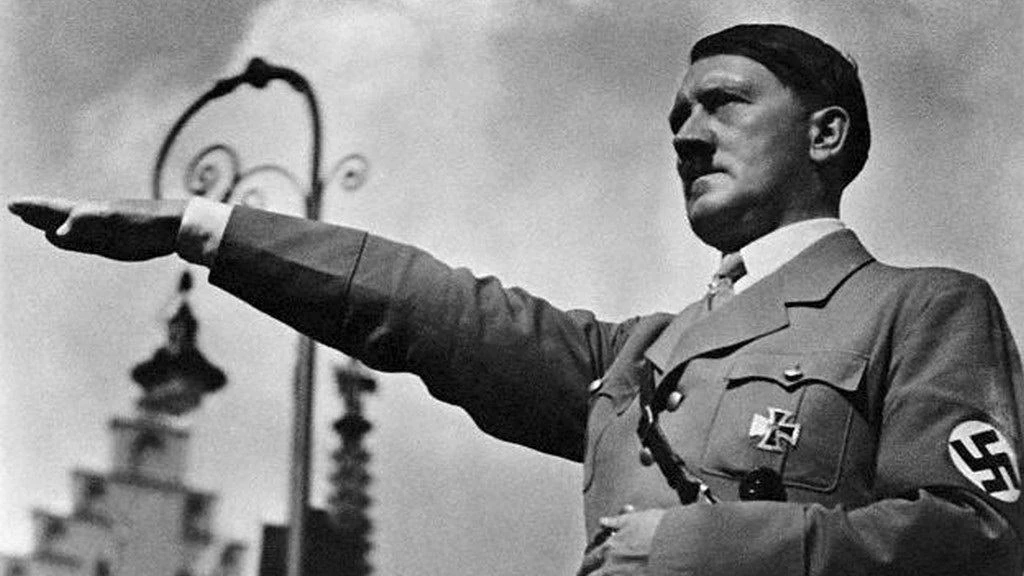
That is how Russia’s magical winter changed the course of Europe’s entire history.
The volcanic eruption that nearly destroyed humanity
Are there examples on an even larger scale—say, cases where an entire species’ fate changed because of a weather event?
Of course there are.
The classic example is the climate change triggered by a supervolcanic eruption. It could not only change the course of an entire civilization; it could even affect the course of species evolution.
Scientists inferred this through a DNA technique:
At some point around 70,000 years ago, the number of human females may have fallen to only about 500, while the total human population may have shrunk to roughly 1,000.
In other words, if things had been just a little worse—if humanity had taken one more small step toward the edge—we would already have gone extinct. There would be no us at all.
What caused this? One theory is a supervolcanic eruption.
According to this theory, roughly 70,000 years ago, Mount Toba, located on what is now Indonesia’s island of Sumatra, erupted on a massive scale.
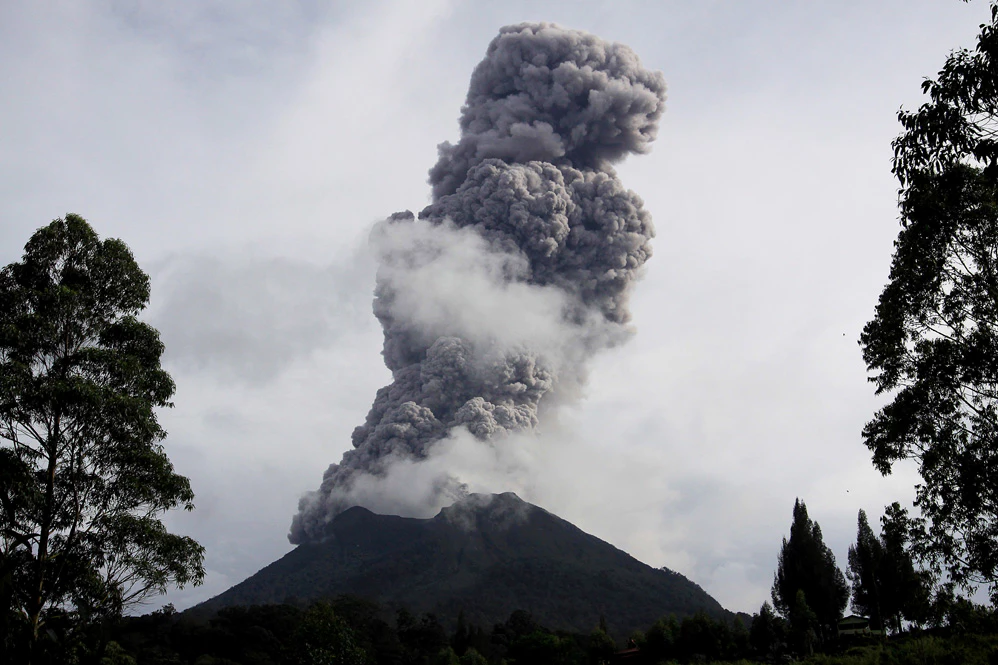
Scientists estimate that the scale of this eruption, 70,000 years ago, was unprecedented on Earth in the previous 4.5 billion years. The volcanic ash it produced lowered global temperatures by 12°C. Earth then entered a cold period lasting as long as 1,000 years. Countless plants and animals went extinct.
Humanity’s ancestors still had about 1,000 people survive. That may have been pure luck.
The next supervolcanic eruption?
So could another volcanic eruption on that scale happen?
The author of The Power of Weather says it will not only happen—it is almost inevitable.
The place on Earth most likely to produce the next super-eruption is the United States’ Yellowstone volcano.

Scientists estimate that if Yellowstone erupts, the ecological catastrophe caused by the volcanic ash it releases could be no less severe than the eruption 70,000 years ago.
So when will Yellowstone erupt?
It could be 200,000 years from now—or it could be next week.
People, books, and films mentioned in this article:
1. Extremely Unexpected
The line at the beginning of the program’s audio—“When there’s thunder, there’s no rain; when there’s rain, there’s no thunder”—comes from the Galaxy Image production Extremely Unexpected.
A documentary.

2. The Red Violin
Among the famous violins associated with Stradivari is one called the 1721 Red Mendelssohn.
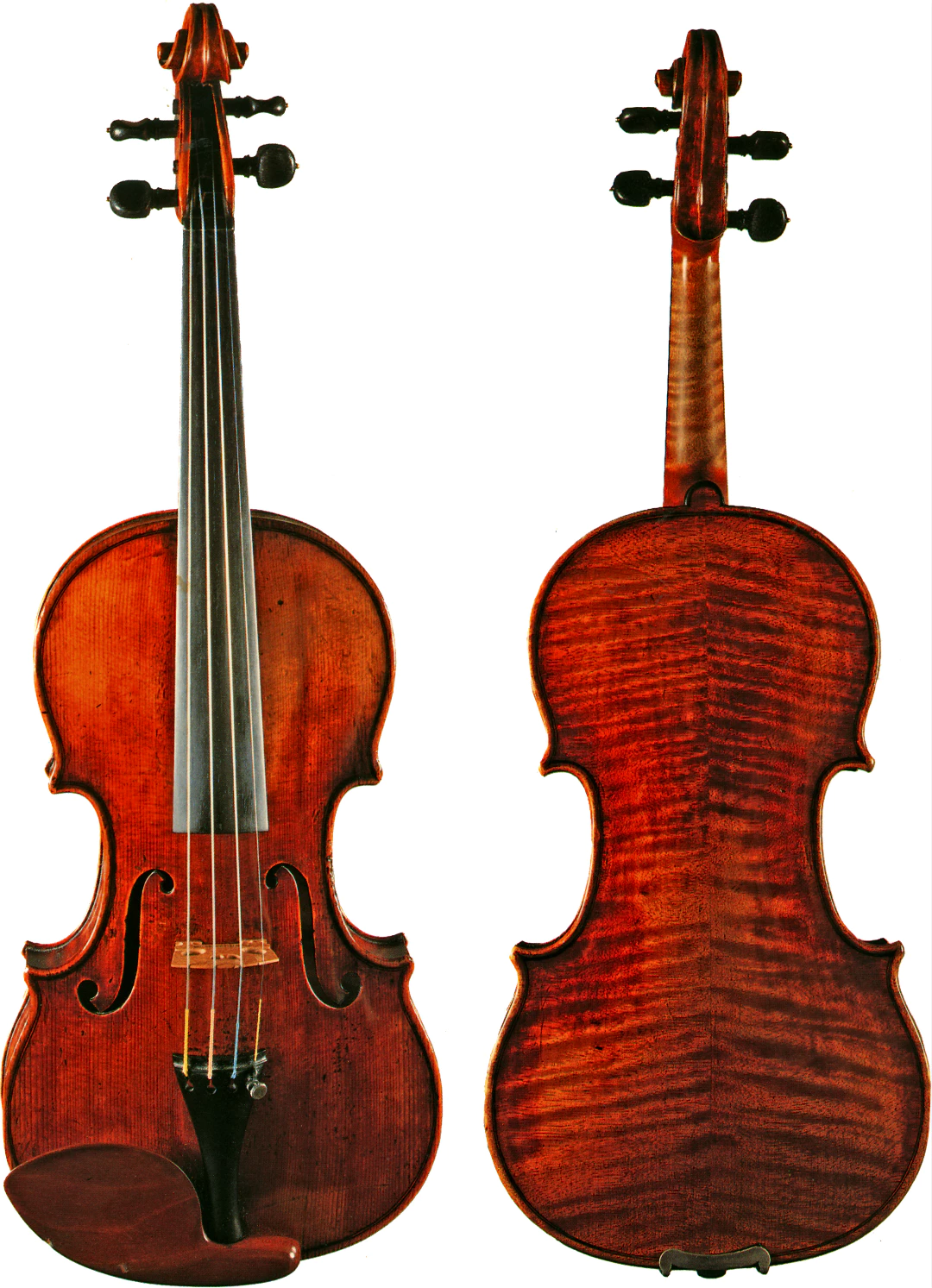
Its most distinctive feature is a dark-red stripe on the upper-right side of the front of the sound box.
It is currently owned by Elizabeth Pitcairn, an American violinist and fourth-generation member of the Pitcairn family. In 1990, at an auction, Elizabeth’s grandfather bought the violin for $1.7 million as a gift for his granddaughter.
Inspired by the auction, Canadian director François Girard made the film The Red Violin (The Red Violin). The film later won the Academy Award for Best Original Score at the 72nd Academy Awards.
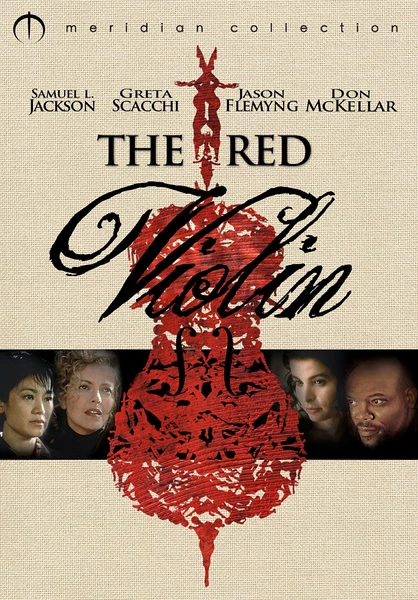
In the film, the dark-red stripe on the violin is the blood of the violin maker’s wife.
3. The Power of Weather
I don’t recommend reading the Chinese edition of The Power of Weather. The translation quality is so painfully moving. They can even get some basic data wrong. I’m crying.
Leave a Reply