
A few years ago, for a while, I was hooked on the once wildly popular Machinarium. I had been almost entirely estranged from video games for years, so naturally I had no patience to play it through properly. I was simply absorbed in “looking at” it—looking at a world-building premise called “steampunk.” The images in Machinarium felt strangely familiar. It was as if some emotion hidden in my heart had suddenly been awakened, yet I couldn’t quite say what it was. Why did I like this so-called “steampunk” so much—and why did it seem I had liked it for so long? I was baffled.
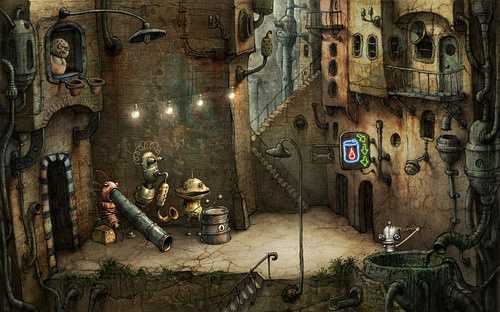
I tried to solve the mystery.
Wikipedia puts it this way: “Steampunk uses the Steam Age as its backdrop to construct a surreal technological world, infinitely magnifying the power of steam and imagining an era in which steam reigns supreme.” Apparently, it is a branch of fantasy. Although I loved science fiction, I was terribly ignorant back then and don’t seem to have known clearly that such a branch existed. I guessed: could it be a special aesthetic style made of gears and steam that attracted me? So I frantically collected steampunk websites, videos, and pictures. A lot of what I found looked like this:
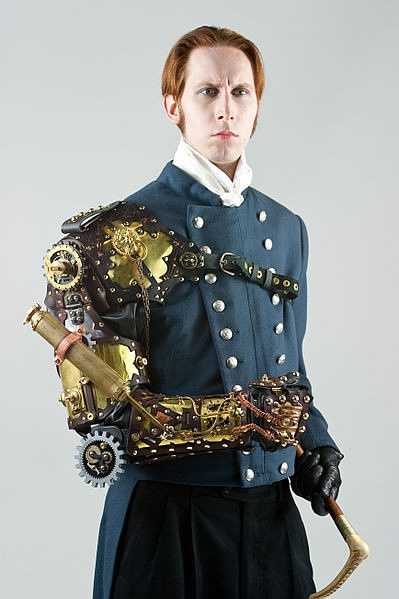
Ugly!
I went looking for movies too, only to discover that everyone considered Will Smith’s lousy movie Wild Wild West the most typical example of steampunk:
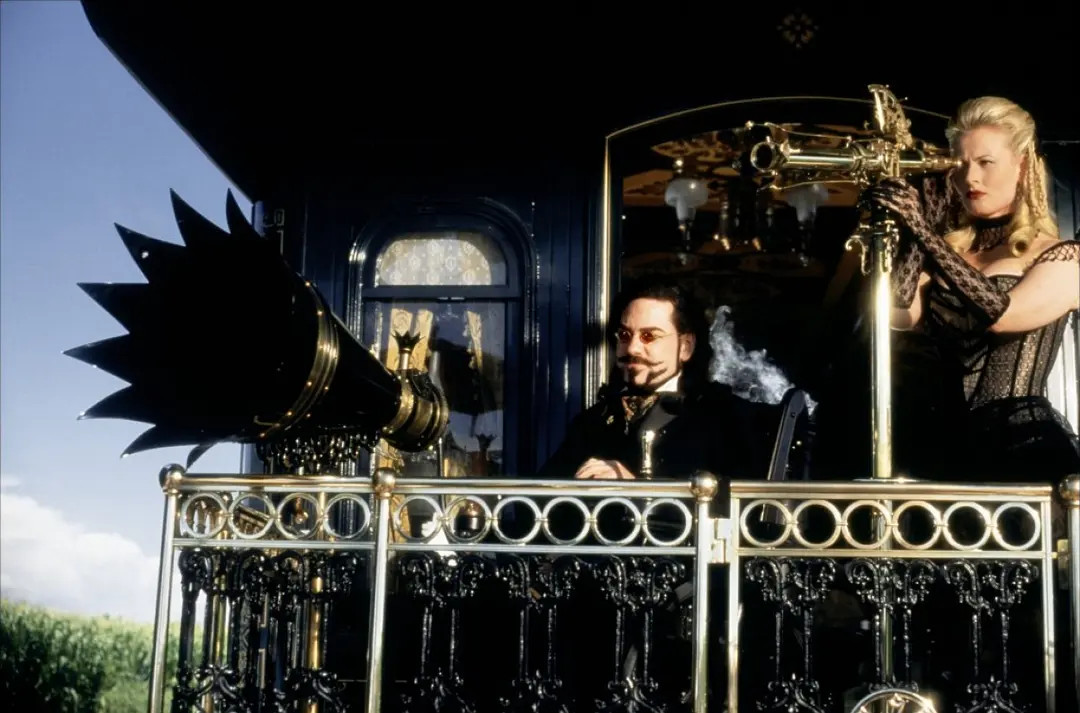
Still ugly!
After searching through every kind of steampunk visual material, my conclusion was this: simply looking at gears and steam engines didn’t seem to give me much pleasure. So what exactly attracted me to Machinarium? Was it the hand-drawn style?—Hand-drawn art makes anything look good, but it still couldn’t explain the particular beauty of Machinarium.
The mystery remained unsolved. It wasn’t until I finished watching Inception that year that, quite unexpectedly, I suddenly understood.

Viewed from the perspective of hard science fiction, Inception is riddled with bugs. Most glaring of all is that shabby dream machine. How could a battered contraption that looked as if it didn’t even contain a chip—a relic of 1980s or 1990s technology—possibly achieve such precise control over dreams, on a level comparable to the Matrix in The Matrix?
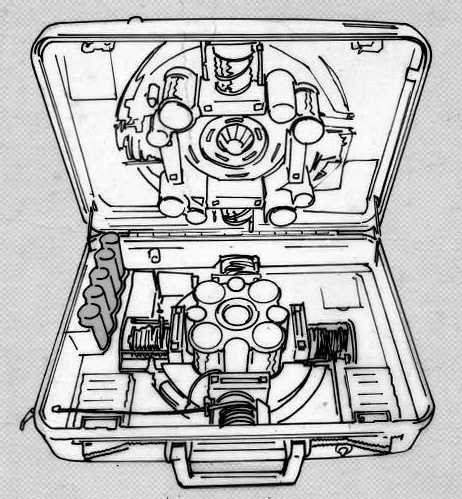
In a kind of answering echo, the film’s setting also seems to be the present-day world, no different from our own. Apart from the dream machine, a miracle device with astonishing capabilities, there is no other cutting-edge technology in the film that makes you rub your eyes in disbelief. At first glance, then, the technological setting and the functions technology can actually achieve are completely out of sync.
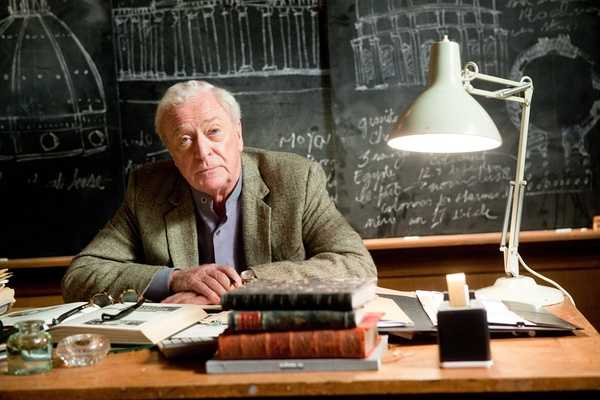
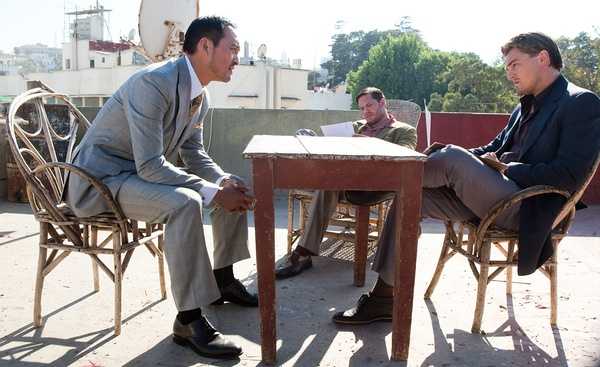
Exactly: “out of sync.” The setup looks absurd and illogical, but to me that is precisely the mischievous pleasure director Christopher Nolan deliberately built into it. This mischievousness has two contradictory sides. On one hand, Nolan loves the posture of retreating into the past. In The Dark Knight, he later used the Joker to express a kind of reaction against contemporary technology: “I have somewhat old-fashioned tastes. I like dynamite, gunpowder, and gasoline.” Isn’t that Nolan describing himself?
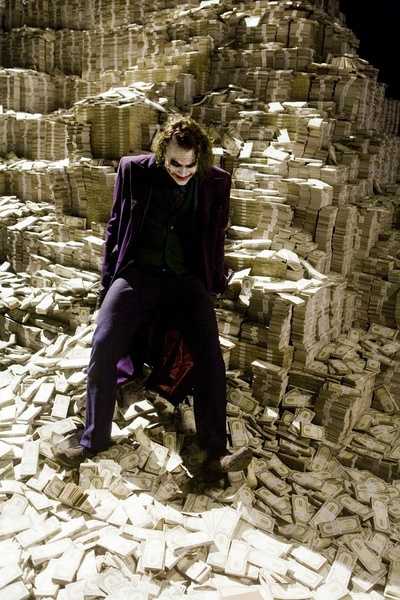
All those fashionable new things feel too insubstantial; Nolan likes things that are old-fashioned and solid. While Spider-Man and Iron Man rush into the skies and under the earth, Nolan pulls Batman back down to the ground. When 3D became the trend in the film industry, Nolan held firm to 2D. When other directors splashed special effects across the screen, Nolan hid them behind the story. It is a little like Moriarty’s jab at Sherlock Holmes in the British series Sherlock: “This is your weakness—you always make things more complicated than they need to be.” If the simplest method can settle everything, why waste effort on all that flashy ornament? As movies gradually turned into technology showcases, Nolan’s sturdy yet ingenious scripts took a swipe at all of Hollywood.
But the other side of the contradiction is that Nolan is also dissatisfied with this retreat. Going back to the past alone is not enough; more importantly, he looks toward the future while going back. In Inception, he makes the dream machine surpass the Matrix; in The Prestige, he lets Tesla’s alternating-current magic surpass every wizard in Harry Potter. From the Batman films and The Prestige to Inception, Nolan consistently tells postmodern “new-school” stories inside modern or premodern “old-school” settings.
This contradiction suddenly made me think: isn’t Nolan’s divided mischievousness the true spiritual core of steampunk? Inception has no gears and no steam, yet it is a work that fits steampunk’s spiritual core. What truly attracts me to steampunk is this core:
It is a reaction against contemporary technology, a posture of looking toward the future by retreating into the past.
—That feeling of familiarity was exactly it. So what I had always liked was this out-of-sync mood, even though I had never known what to call it. But why would a little group of people like me have such a strange impulse to move against the current of contemporary technology? I think it must be because, for people like us, contemporary technology gives us far too much to complain about.
Technological Anxiety
Technology now fills our lives with unprecedented density; this is the era in which technology has come closest to ordinary people’s lives. Yet just as the applications of contemporary technology draw ever nearer to us, its underlying principles grow ever more remote.
Almost everyone carries a smartphone, but how many people truly understand even one ten-thousandth of the technology inside that little device? Contemporary technology is so profound that non-specialists can scarcely grasp the technical details behind the applications they use. The technology serving us every day is actually controlled by fewer and fewer people, while the vast majority are losing their understanding of and control over the technological products they see around them every day. Faced with contemporary technology, we have no control.
The more contemporary electronic technology displays its magic, the more its inaccessible, abstruse principles make us feel cast aside. The legends of scientists who could make astonishing discoveries by tinkering with bottles and jars in their yards, or found whole schools of thought after meditating in a study, have practically become myths in an age when technological development has grown so sophisticated. The technological principles tightly woven around us are black boxes that the overwhelming majority of ordinary people cannot peer into. Faced with contemporary technology, we are ignorant.
Loss of control brings anxiety; ignorance brings fear. So we try to escape anxiety and fear.
So how wonderful it would be to return to the past—to several decades ago, or even a century ago, when technology was still in its infancy, like a child in our arms, still innocent and easy to approach. Like the gear-driven robot in Hugo who knew how to draw Méliès’s film stills, technology powered by gears and steam could display a captivating magic while letting us clearly see how it worked. Back then, the principles of technology were obvious to most people. And precisely because they were within our grasp, they were infinitely beautiful.
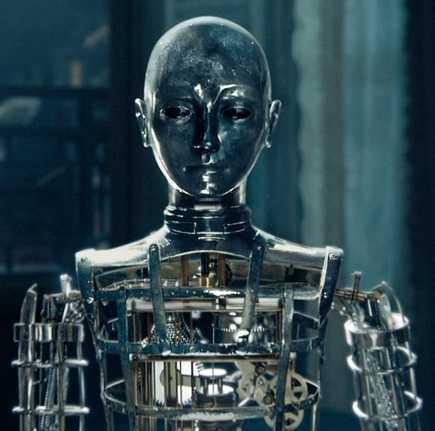
But reality is that technology matured too quickly. For most ordinary people, technology has long since grown up and left home, never to return. And we cannot bear to lose technology’s childlike innocence; we long to return to technology’s childhood.
Technological Discontent
Yet, like all parents everywhere, while we cannot bear to see the baby in our arms grow into an adult, we cannot help imagining his future. The question is: does this now-grown child live up to what we once expected of him?
Whether in the works of science-fiction masters from decades ago or in the daydreams of little boys who, like me back then, were filled with wonder at science, the future world of fantasy was probably supposed to look utterly transformative. In our early fantasies, the word “future” was synonymous with gigantic celestial bodies, gigantic spaceships, gigantic space cities… Even if we took one step back—even if cosmic creation remained too far away—the world beneath our feet should surely have been conquered by huge machines and huge buildings, right? The future should have looked like the one shown in The Fifth Element, with the entire Earth surrounded by an endless, bottomless forest of reinforced concrete and steel. The future technology of childhood imagination was massive, possessing an all-consuming grandeur; the power of technology should have changed the face of the world long ago.
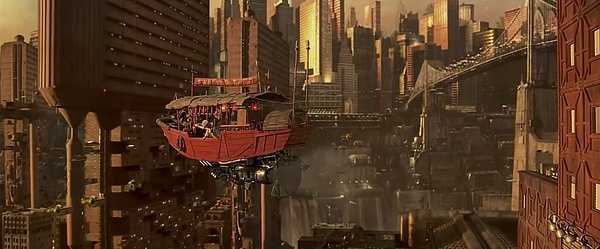
Sadly, the direction of contemporary technological development seems to have strayed far from our original fantasies. Contemporary technology is becoming ever more refined, but also ever more stingy. The imagined future was massive; the real future is slender. Technology’s achievements do not seem to have changed the world’s appearance on a large scale, but instead keep developing toward smaller and smaller scales. In our old fantasies, the technological heroes of the future were supposed to be the scientists and engineers who built magnificent space cities. In the real world, the technological hero is Steve Jobs, who made phones. But I wonder: did any little boy back then fantasize, “I hope that in the future everyone will have an iPhone”?—What a stingy fantasy that would be!
Whenever Apple launches a new product that reaches the summit of industrial design and user experience, I cannot help marveling at the greatness of technological progress and Jobs’s relentless pursuit of perfection. But I also cannot help thinking this: if all the intelligence on Earth devoted to racking its brains to make an APP launch 0.01 seconds faster were concentrated on the “great undertakings” we once imagined, perhaps the human world would have taken on the face of the “future world” long ago. Has humanity poured too much intelligence into technologies that contribute little to our development, thereby creating an enormous waste of intelligence? Is it really so important to make a phone icon look just a tiny bit prettier?
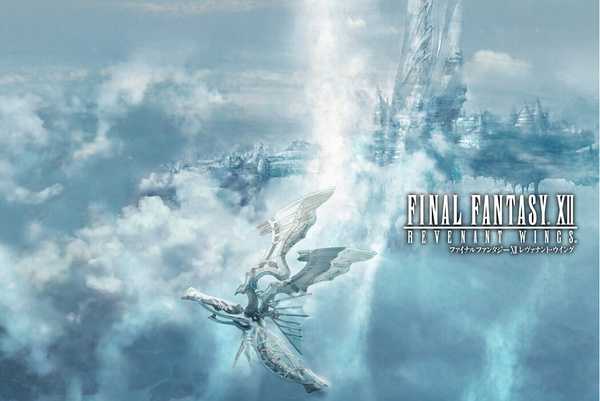
To someone as childish as me, technology need not be exquisite, but it must be grand. We keep imagining technology retreating to an age that was less polished, then setting off again toward the future along a sufficiently “grand” trajectory. That is why we love the castles flying through the sky and rolling across the ground in Hayao Miyazaki’s works, the enormous airships blotting out the sun in Final Fantasy, and the steel city in Machinarium—yes, they are all steampunk. By the standards of hard science fiction, these settings have zero scientific validity, but they satisfy our fantasy of “grand” technology.

Only amid steam and gears does technology recover a little of its all-consuming grandeur.
Technology Is Boring
Modern technology is not only stingy; it is also terribly boring. People all say that the contemporary scientific world can no longer produce great masters. But in fact, the opposite may well be true: it contains plenty of people whose intelligence can stand alongside that of the great masters of earlier ages. And there may be more of them than ever before. The reason they fail to become masters in the eyes of ordinary people is that modern science has grown so specialized and profound that even a tiny question at the frontier of research can easily consume a truly brilliant person’s entire lifetime of wisdom.
The paradox is that the masters in ordinary people’s minds have to be learned in everything. To most people, a top scientist seems obliged to know astronomy above and geography below. In reality, modern scientists are rarely genuine polymaths anymore. At least, most of the PhDs I have met were really just specialists. When the practitioners of technology are like this, technology itself becomes hard to find very interesting.
And yet we just happen to love scientists who cross boundaries.
In the American TV series Fringe, one of the protagonists, Dr. Bishop, spends 20 years in a psychiatric hospital, cut off from the world. After he gets out, he uses his superhuman intelligence and a pile of old scientific knowledge from the pre-electronic age, grafted onto modern technology, to crack one bizarre case after another. Physics, chemistry, biology, brain science—none of it is beyond him. It is the most entertaining premise in the show. As in Inception, the writers and directors make use of “disconnection” to turn a scientist back into an all-powerful cross-disciplinary genius—and that is what scientists are supposed to look like in our fantasies.

Science seems more likable when it is still a little primitive. Back then, the geniuses of science looked capable of summoning wind and rain, flying to heaven and diving into the earth—in short, capable of anything. Now that is technology with some fun in it.
Technology Without Blood
Modern technology is not only getting more boring; it is also getting farther and farther from human instinct. Research in evolutionary psychology shows that the stimuli most likely to make us sensitive are usually the things that would have posed a threat to survival in the environments of our human ancestors. Cold weapons, for instance, can stir up a stronger emotional response than firearms. A gun does far more damage than a knife, but a knife is more frightening, because guns appeared too late for our fear of them to be written into our genes.
So in the age of cold weapons, one slash of the knife, blood everywhere: the experience of killing was inseparable from the terror of gore. Then bullets began flying, someone fell in the distance, and the result of the killing remained the same while the experience of gore was greatly reduced. Later still, someone pressed a button to launch a missile, and tens of thousands of lives vanished on the other side of the planet. The result was even more terrible, but the experience of gore had become zero. Modern technology has completely severed the experience of killing from its consequences. With modern technology, an act capable of producing a horrifying result can easily be separated from the perpetrator’s experience altogether. This is the most bloodless side of modern technology.
But if we pull the camera back to the world of fantasy, people become extremely bloodthirsty. In reality, the lower-tech a weapon is, the more fear it arouses. In a virtual world, once we know that gore carries no real danger, an experience directly connected to flesh and blood brings nothing but an adrenaline rush.
That is why, in games and movies, if killing leaves no blood behind, what is the point? The more high-tech the killing weapon on screen, and the more it is separated from the experience of flesh and blood, the less pleasure it brings. This is why the works of truly skillful science-fiction filmmakers, even when their technological settings are extremely advanced, deliberately turn back the clock whenever weapons are involved. In Luc Besson’s The Fifth Element, almost every detail is perfectly and consistently set against a futuristic, high-tech backdrop. Yet when it comes to weapons, the weapons used in the film are scarcely different from today’s firearms. Was that Luc Besson’s oversight, or was it deliberate?
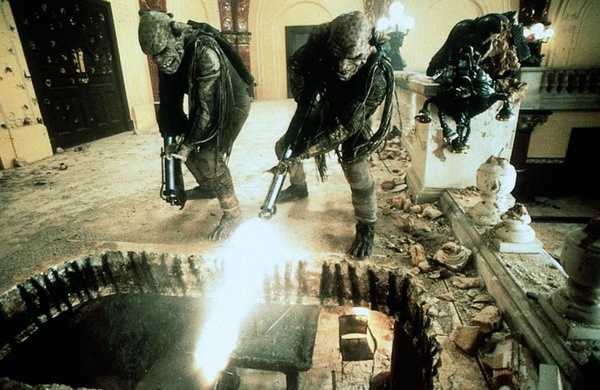
In The Terminator, director James Cameron has two robots from the future, each packed with high technology, fight it out—one wielding a rifle, the other turning his “flesh” into a cold weapon. If T800 and T1000 had fired futuristic beam weapons at each other, how much fun would this science-fiction classic have lost?

In The Matrix, if you replaced that blood-pumping line, “I want guns. Lots of guns,” with “I want laser guns. Lots of laser guns,” wouldn’t it suddenly lose a huge chunk of its punch?
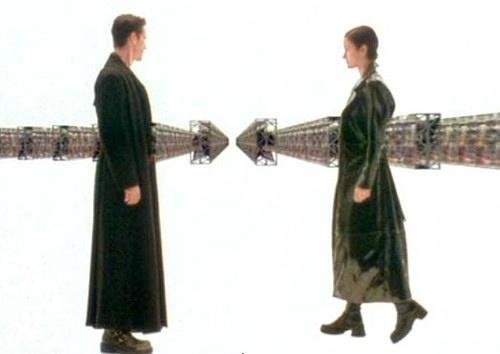
In a world of fantasy, we do not want those cold, impersonal high technologies. We long to return to an age when technology was bloodthirsty. We like the stimulation and pleasure of knives drawing blood with every slash. We like technology that is simple, grand, learned, and bloodthirsty.
So let steam-driven gears and machinery rule this world again. It would be a much more interesting world.
Looking Back at the Future
Actually, this posture of retreating into the past is not unique to fantasy. Almost all the best works of literature and film unfold as forms of remembrance, whether explicit or hidden. Truly good stories are all “stories of the past.”
The obvious examples are ancient poetry and modern prose about bygone days. From Li Yu, who wrote lyrics in the past, to Dong Qiao, who writes prose today, the tune has remained the same for thousands of years: all beautiful things exist only in the past, and no longer exist now.
The hidden examples include the ancient Dream of the Red Chamber, the modern Zhang Ailing, and the contemporary Wang Xiaobo. The desolate feeling that fascinates us in these works is really a sense of fatalism: everything inevitably moves toward a known ending, and everything beautiful is ultimately destined to wither. What lies beneath these works is the author’s perspective, looking back at the past from within a tragic ending that was already determined.
The best works of fantasy, too, almost always unfold as acts of remembrance. The difference is that in these works, the author wants not only to look back at the past, but also to “look back” at the future.
In Terry Gilliam’s 12 Monkeys, Bruce Willis, who has traveled back from the future, has witnessed his own destruction. Yet he watches helplessly as he slides toward that predestined ending. No matter how he struggles, he cannot escape the grip of fatalism.
In Ted Chiang’s Story of Your Life, the female protagonist gains a God’s-eye view through the insights of linguistics. Everything from the present into the future lies before her, yet she spontaneously gives up trying to change her predetermined fate.
Liu Cixin’s epic Remembrance of Earth’s Past trilogy plainly writes about the future, yet is named Remembrance of Earth’s Past. It is as though the fate of Earth’s civilization had long been decided: impossible to look forward to, and only possible to record.
Fantasy, in the end, is all remembrance. In the world of fantasy, we retreat into the past; in fantasy, we experience fatalism and desolation.
We are the remnants of a fantasy world, lost in old dreams and gazing toward the future.
Version History
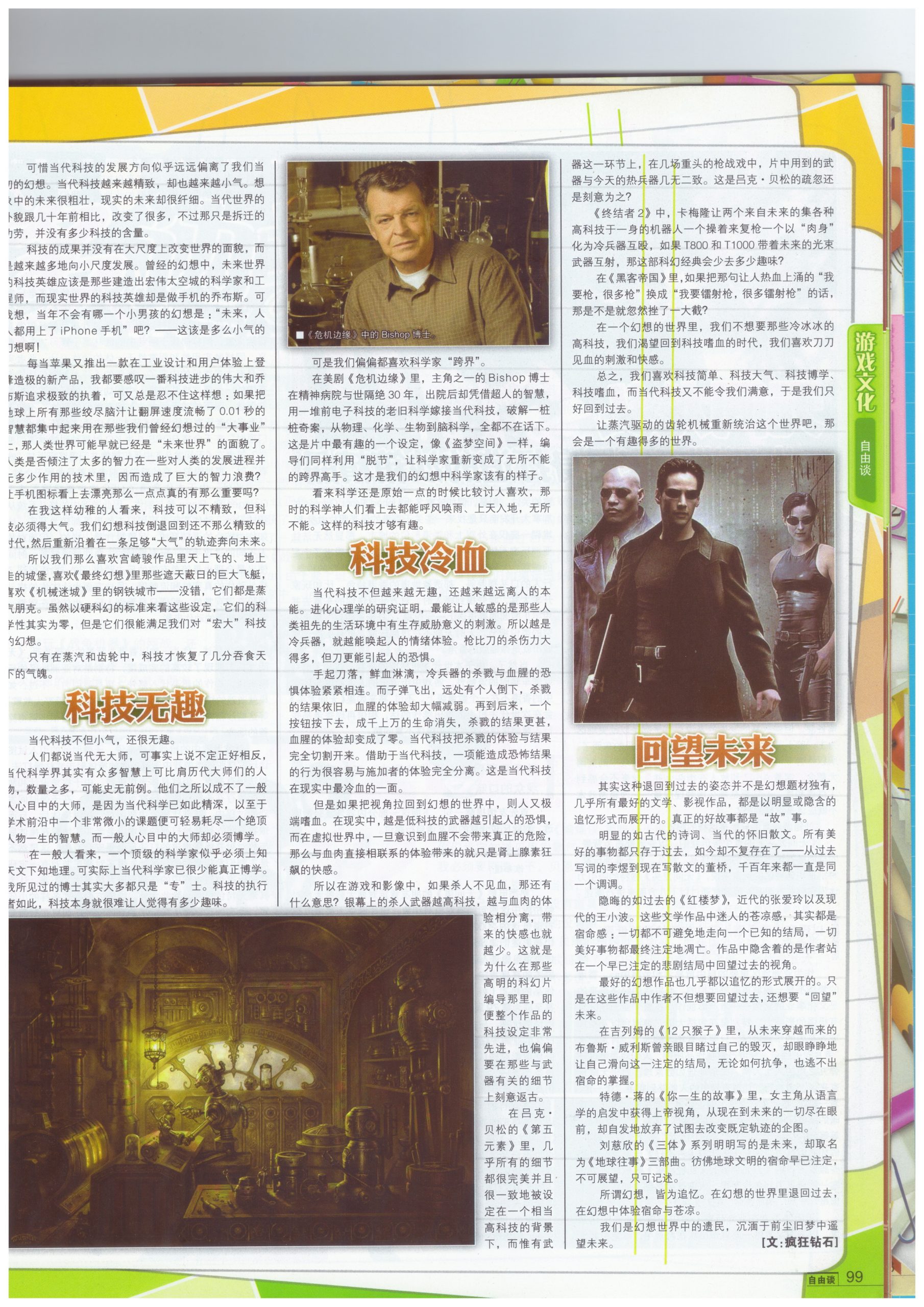
本文曾发表于《游戏机实用技术》:


Collected
After revision, the central argument of this article was included in The Alluring Illusion: Psychological Secrets in Light and Shadow.

Leave a Reply