
Among psychology professionals, I may be one of the rarer specimens who has actually worked through special relativity, flunked a course because I didn’t learn quantum mechanics properly, and even checked the electron clouds of halogen molecules by hand. That’s because I majored in rock-solid engineering as an undergraduate, then threw myself, without a backward glance, into the arms of psychology, this new (pseudo-)science—and I’ve been stuck on this pirate ship ever since. Given that background, do you really think I could watch a Nolan film without sighing and waxing lyrical? Nolan is clearly traveling a road exactly opposite to mine.
Nolan made his name with the psychology film Memento, and after that he kept clinging to psychology’s coattails (Insomnia, The Prestige, Inception). Later, he began making shy, tentative contact with high technology (the Batman series), and now Nolan has apparently thrown caution to the wind and started playing with hard science fiction packed with the serious stuff: relativity, quantum mechanics, black holes, and the like. I look at Nolan, then look at the road I’ve taken, and how could I not wonder whether I’ve taken a wrong turn—or, more accurately, whether I’ve taken a wrong turn? So if I occasionally get some physics wrong below, don’t hold back—go ahead and roast me alive. What can I say? I’m a humanities student now.
Seriously, people keep saying that Interstellar is a hard science fiction film that fought its way out of a surrounding mob of all kinds of dodgy “soft science fiction” movies, represented by Marvel’s The Avengers and the like. Quite a rare achievement. So here comes the question: where exactly is the difference between soft and hard science fiction?
1. Hard Science Fiction and Soft Science Fiction
According to the English Wikipedia entry “ Hard science fiction”, soft and hard were originally just slangy ways of saying “leaning toward the social sciences” and “leaning toward the natural sciences.” They simply indicate a difference in emphasis, and have nothing to do with whether a work is scientifically rigorous. These days, though, when we use the words soft and hard, we usually mean whether a work has a scientific focus, or whether it follows established scientific facts. The latter half of that idea effectively places science fiction on a spectrum—from “relatively soft” to “relatively hard”—based on its real-world plausibility.
Much of the criticism over whether Interstellar is truly hard science fiction is based on this idea of “real-world plausibility.” For example, plants around the globe successively succumb to blight, while corn somehow becomes the most disease-resistant crop. Scientifically speaking, that has absolutely no real-world plausibility. So the premise is soft. Or take the habitable planet near a black hole: also highly implausible in the real world. It looks hard, but is actually soft. By this standard, the film is practically wall-to-wall examples of things that look hard but are soft underneath.
Still, I don’t much like this way of judging things. In the afterword to The Ball Lightning, Liu Cixin wrote:
“Before I saw them—Arthur C. Clarke’s 2001: A Space Odyssey and Rendezvous with Rama—I felt from Jules Verne’s novels that the purpose of science fiction was to predict some giant machine that might be built in the future. But Clarke changed my mind. He showed me that the true appeal of science fiction lies in creating an imagined object—such as the monolith in 2001: A Space Odyssey—or an imagined world—such as the spaceship in Rendezvous with Rama. These creations of the imagination did not exist in the past or present, and probably would not exist in the future either. From another angle, once a science fiction writer imagines them, they exist; they need no further proof or promise. Conversely, if these imagined creations happen to become real, their appeal actually diminishes. For Clarke, the creations that most attracted science fiction readers were the monolith and Rama, while the space elevator, which might become reality, left a less powerful impression, and communications satellites, which have already become reality, were even less compelling.”
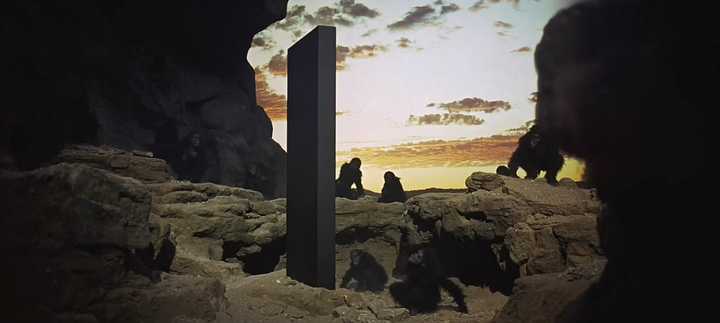
I couldn’t agree more. I’ve found that the science fiction stories that attract me most are not based on reality at all, but on an invented premise from which the imagination unfolds. Real-world plausibility isn’t important in the slightest. What matters is scientific plausibility within the premise.
2. The “Then” That Is Unexpected Yet Reasonable
The core of many science fiction novels can actually be summed up in one “if/then” sentence: “If” there is an invented premise, “then” what would the world under that premise be like?
For example, the core idea of Lucy can be summed up as follows: “If a brain that has used only 10% of its potential were to unlock the remaining 90%, what would happen to a person with superintelligence?”
The interesting thing is that whether a science fiction work is hard or soft has nothing whatsoever to do with the premise that follows the “if.” Soft or hard, the premise can be a pseudoscientific one with no possibility of becoming real.
Take the familiar science fiction theme of “enhanced intelligence.” The assumption “if a brain that has used only 10% of its potential were to unlock the remaining 90%” is pseudoscience. The potential of the human brain that has been unlocked so far is nowhere near 10%; quite the opposite, our use of the brain may already be approaching some kind of limit. The reason is that the brain’s evolution to its current state came at a huge cost: the more powerful the intelligence, the more energy it consumes. Our brain accounts for only 2% of our body weight, but even at rest it consumes 20% of the body’s total energy. You could call the brain the body’s biggest energy hog. Its energy consumption may already be approaching the limit. Neuroscientific research has found that if brain volume continued to increase, intelligence might rise as well, but the brain would consume even more energy, making an already strained energy supply even harder to maintain. A shortage of energy would in turn slow the brain down and reduce intelligence. And if we increased the number and fineness of neural connections without increasing brain volume, we would run into a physical thermodynamic limit, leaving the brain unable to dissipate heat. That too would ultimately limit any increase in intelligence. In other words, given an unchanged human physiology, the brain’s potential has already been almost fully used up. The claim that only 10% of the brain’s potential has been unlocked is textbook pseudoscience.
So does that mean science fiction works about enhanced intelligence are all soft science fiction? Obviously not. Whether a work is hard or soft depends only on the “then.”
With the same theme of “enhanced intelligence,” Lucy says that once the brain is fully switched on, increased intelligence lets you move objects with your mind, control electromagnetic waves, and evolve into a non-material life-form. That’s soft science fiction—because, under ordinary assumptions, none of what comes after the “then” has any logical connection to having one’s brain fully switched on, let alone any scientific plausibility. (Of course, I have another delightfully twisted interpretation of Lucy’s premise. Under that interpretation, its fantasy is actually quite hard. More on that another time.) In Limitless, on the other hand, the adorably dumb male lead suddenly becomes brilliant. He couldn’t write a novel, and then words flow from his pen like magic; he couldn’t solve a problem, and then solves them all; he couldn’t remember things clearly, and then recalls them in vivid detail; he had no athletic ability, but once his control over his body improves dramatically, he turns into a kung fu master. His emotional intelligence and political savvy shoot up too: after being toyed with by the mob, he ends up manipulating the mob himself. This seems considerably more scientifically plausible. After all, if we follow the logic of ordinary people, a smart person ought to be an all-purpose, all-conquering academic whiz like this.
But I’m clearly a hard science fiction fan, so why do I find the harder Limitless less interesting than the softer Lucy? I think the reason is probably this:
The fantasy in soft science fiction like Lucy can be described as unexpected, but also unreasonable. The audience’s reaction is likely to be: “Has this imagination gone completely off the rails?” The hard science fiction fantasy in Limitless, by contrast, is reasonable, but also expected. It doesn’t stray from the average viewer’s intuition, and so it is a little dull.
Last year I attended a workshop on psychological research methods. Professor Chih-Yueh Chao of Nanyang Technological University in Singapore, a major scholar of cultural and social psychology who taught our class, told us that many interesting psychological studies arrive at conclusions that give people a “minimal surprise.” Put in plain English, “minimal surprise” means “unexpected yet reasonable.” Psychological research can of course produce conclusions that are “expected and reasonable”—for example, “if you’re very sad, you’ll cry.” Such a conclusion is reasonable, but not interesting in the slightest. A good research finding should initially violate people’s first intuition, yet on closer thought turn out to fit human nature perfectly. (For example, after a prophecy preached by a cult fails, some cult members become even more committed to their beliefs.) Readers’ reaction to such a research report is often first, “Huh? How can that be?” Then, after finishing it, they slap their thighs and exclaim: “Damn! Of course it has to be that way!”
I think good science fiction and good scientific research connect at this point: they must not only be reasonable, but interesting. They should be unexpected yet reasonable.
Take “enhanced intelligence” again. In Ted Chiang’s short story “Understand,” the first thing the protagonist does after his intelligence takes flight is, astonishingly, invent a new language to match his superintelligence. When I read that years ago, it gave me goosebumps. One of the central findings of psycholinguistics is that language and thought may be two sides of the same coin. You could say that advanced thought creates language to express complex ideas. But you could also say that without a sufficiently sophisticated language, we could not form sufficiently profound thoughts. Language and thought simply cannot do without each other. So superintelligence must first form a brand-new superlanguage before it can form superthought.
Invent a language first after enhancing intelligence? At first glance, that’s completely unexpected. Think about it, though, and it is entirely reasonable. Not merely reasonable—damn, it has to be that way! To me, this is what genuinely interesting science fiction looks like.
Perhaps the “then” after every “if” can unfold on these three levels.
For instance, a macro-universe fantasy: “If, above our universe, there were another macro-universe larger than ours by n orders of magnitude, what would happen when these two universes of different scales met?”
Fantasy One:
Our universe is merely a glass marble in the hands of a “macro-universe person” from the macro-universe. (This is basically the point of the ending of Men in Black.) This is soft science fiction that is both unexpected and unreasonable.
Fantasy Two:
Harder science fiction might imagine that an extremely tiny disturbance in the macro-universe could trigger a catastrophe in our micro-universe. That is a development both reasonable and predictable—no great achievement, no great offense.
Fantasy Three:
But this is how Cixin Liu imagines it in Ball Lightning: if a macro-universe exists, then the moment we come into contact with one of its microscopic particles in our universe, we would be able to see, on a macroscopic scale, quantum phenomena that could normally be observed only at the microscopic scale. You would see a particle the size of a basketball behaving in ways that only an electron ought to! I believe every reader with even a passing understanding of quantum mechanics would get goosebumps of excitement at a development like this. Now that is the kind of fantasy that makes sense.
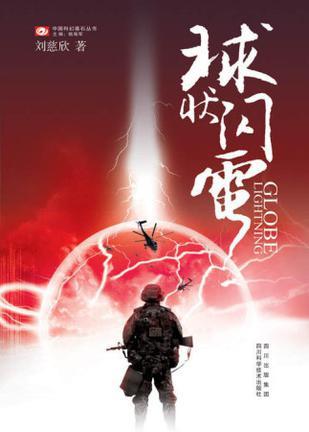
How much scientific basis do you think there is for a premise like a “macro-universe”? Almost none. You could even call it a pseudoscientific concept. But starting from a pseudoscientific concept like that, it is still entirely possible to create an unfolding that is both impeccably hard and utterly breathtaking.
Actually, this kind of setup in science fiction is equivalent to an axiom in geometry: you just accept it, no proof required. Your job is simply to derive theorems from that axiom. But theorems can vary endlessly, and whether the theorems you derive are soft or hard depends on your own skill.
3. The “If” That Makes You a God
What I said earlier was that whether a science fiction work is hard or not actually has little to do with its “if.” But the “setup” contained in that half-sentence—“If…” —is tremendously important. It is the foundation of a science fiction work.
The “fiction” in science fiction is often not found in the dazzling unfolding that comes later, but in the “setup.” I think every science fiction work should have a setup that creates some distance from the real world. A film like Gravity, for example, simply uses an almost obsessive level of scientific rigor to depict a space disaster against a realistic backdrop. To me, that makes it a “science” film, not a science fiction film. A science fiction film needs a background setup that departs from reality to some degree.
An axiom in geometry may consist of only a few sentences and look like nothing special, yet the endlessly varied theorems derived from it can measure the entire world. The background setup in science fiction works the same way. Sometimes an apparently insignificant setup can serve as the foundation for imagining an entire world!
Some people criticize science fiction for being merely “idea literature.” One concept or idea makes up a whole science fiction novel—no characters, no emotions—so it is supposedly just a lowbrow literary genre. But I think meticulously polishing every word in serious literature is one kind of greatness, while creating a science fiction work from a simple setup is another. And sometimes, the “simpler” it is, the more overwhelming the shock it delivers.
For example, Arthur C. Clarke’s Rendezvous with Rama is idea literature of exactly this kind. In the novel, Clarke imagines: what would it look like if there were an alien spacecraft shaped like a hollow cylinder, with an inner diameter of sixteen kilometers, and all its facilities arranged along the inside of the cylinder?
An inner diameter of sixteen kilometers—try to imagine that. It is basically the distance from one end of the city I live in to the other. Standing on the inside of a cylinder on that scale, you look up at the “sky,” and at a distance as far away as a city, there is the ground on the other side! Look ahead, and the distant mountains, rivers, and oceans gradually curve upward, continuing all the way into the sky, then descending on the far side until they connect with the ground behind you! What a magnificent sight.
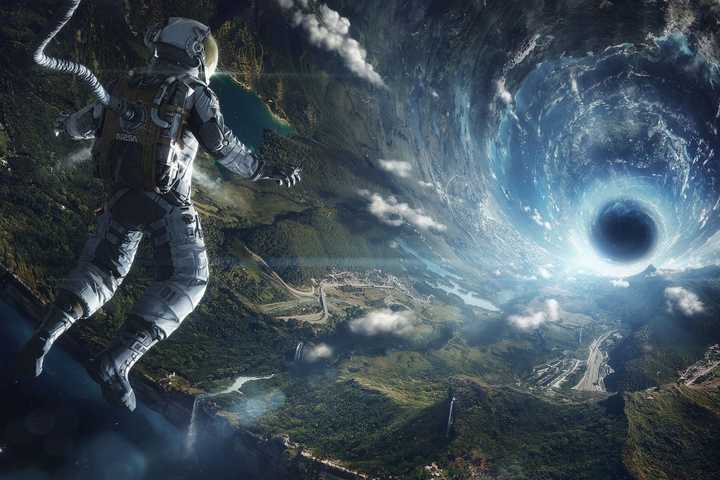
The entire novel Rendezvous with Rama is devoted to depicting this cylindrical world. It can practically do without a plot, disregard character development, and violate every rule of mainstream literature—and yet it became the bible of hard science fiction. A classic science fiction novel was built on nothing more than this seemingly simple setup.
(That’s right: the cylindrical space station that appears at the end of Interstellar is a tribute to Rendezvous with Rama. For reasons I can’t quite fathom—probably a budget issue—Nolan shrank the cylinder’s inner diameter by more than a few dozen times, so compared with the novel’s description, the impact of the film’s version can only be called embarrassingly weak.)
Some people criticize Cixin Liu’s novels by saying that his scientific fantasies are good, but he cannot write characters. But I think: so what? I do not care in the slightest. The sophons and “the history of civilizations as a game” in the first volume of The Three-Body Problem, the “dark forest” and “Wallfacers” in the second, the low-light-speed black hole and “dimensional strikes” in the third—just those few setups already gave me an experience of supreme ecstasy. Great science fiction does not need to, or rather does not deign to, cover every base.
So, Nolan, why on earth did you have to cram so many clumsy emotional scenes into Interstellar? People criticized your work for lacking emotion, so you just had to add some in to prove you could do it? If you’re going to be aloof, then be aloof all the way. So what if science fiction is “idea literature”? So what if it lacks emotion? If it were me, I would not feel guilty at all. I would frame “idea literature” and hang it on the wall.
Our great science fiction is idea literature! Our great science fiction is “the one thought that makes you a god”!
Cixin Liu says again in the afterword to Ball Lightning:
“Just as mainstream literature has left humanity a gallery of vividly distinctive characters, Western science fiction has also left us a vast collection of imagined worlds: besides Clarke’s Rama spacecraft, there are Asimov’s expansive Galactic Empire and his precise robot world constructed with the Three Laws, Herbert’s intricate Dune Empire, Aldiss’s greenhouse rain forest, Clement’s worlds built from the laws of physics, and the Tower of Babylon, which could not exist from the perspectives of either natural science or history. These imagined worlds are constructed so precisely and vividly that readers often ask themselves whether they truly exist in another spacetime. … Creating an imagined world that is vivid in every detail is extraordinarily difficult. It requires profound thought, an imagination powerful and nimble on both the macro and micro levels, and the kind of spirit possessed by a creator who brings a genesis out of nothingness…”
Well, we’ll just focus on creating worlds. We don’t have time to talk about emotions.

4. The Setup of Interstellar
To sum up, the elements of a science fiction work need to be viewed on two levels: “setup” and “unfolding.” And the best science fiction is nothing more than a “god-tier setup and/or god-tier unfolding.” By that standard, how does Interstellar perform? (And, while we’re at it, just how hard is it?)
Let’s start with the “setup.”
The setup of Interstellar is this: sometime in the future, Earth’s plants are struck by blight, and humanity is on the verge of starving to death on Earth. Then a wormhole placed by a godlike civilization appears near Saturn. At the other end of the wormhole are more than a dozen planets not far from a black hole, and some of them may be habitable for humans. Clearly, this godlike civilization wants to help the people of Earth through the crisis. So NASA gets to work.
Well, in the eyes of a “generous” science fiction fan like me, all of the above are setups (axioms) that require no explanation. That lets us skip a whole pile of plot holes in one stroke. For example, many people question why the film’s biotech and space tech are so obviously out of sync: they can enter wormholes, use a black hole’s gravity for a slingshot, and land crewed craft on all kinds of hostile alien planets, yet they can’t cure a plant disease? Never mind future technology—our existing biotech should be enough. But to me, these are merely the backdrop for the main plot’s unfolding, so I choose to accept them.
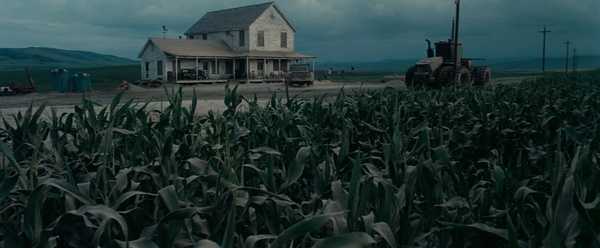
But that does not mean Interstellar’s setup is good. In fact, it is not good enough. After plant disease, a godlike civilization, a wormhole, and a black hole (not to mention the higher-dimensional space and time travel that come later), there simply seem to be too many things in the setup. One thought can make you a god—but how many thoughts have we got here?
I think good science fiction should push one simple setup toward infinity. It should be an aesthetic that moves from the minimalist to the extreme. Truly breathtaking science fiction works often seize on a single setup and express it in the most vivid, sensational, or poetic form possible. A lot of the time, one setup is enough: less is more, and simplicity is elegance. The macro-universe in Ball Lightning and the gigantic cylindrical spacecraft in Rendezvous with Rama are both setups that can be summed up in a sentence—or even a single word.
You may say: weren’t there a lot of setups in The Three-Body Problem 3: Death’s End? Higher-dimensional fragments, dimensional strikes, low-light-speed black holes, curvature spacecraft, and so on and so on. But that is a very long novel. Those setups are distributed across many, many different stages of the plot. The runtime of a film probably makes it difficult to develop so many setups to the fullest, doesn’t it? Think back to the supposedly greatest science fiction films in movie history. No matter how complicated they are in the details, can’t their core setups all be summed up in one or two sentences? From The Terminator to The Matrix, the answer is yes. Even something as complex in its details as Inception is no exception.
5. The Unfolding of Interstellar
Now let’s look at the “unfolding.”
The first 1/3 of the film is setup; the middle 1/3 is basically an interstellar journey. Many of the journey’s technical details—gravitational slingshots, the force of air pressure, the absence of sound in space, the accretion disk around a black hole—probably made the blood of many physics enthusiasts start to boil.
This section is, relatively speaking, the “hardest” part of the film. Even if you dig into it and find that some details do not fully match the results of scientific calculations, they are not glaringly off. But according to the three levels of unfolding I described earlier, this section at best qualifies as a second-tier fantasy that is “both reasonable and predictable”—neither a triumph nor a failure. It is merely plausible, and not interesting enough at all. These kinds of technical details were actually presented even more perfectly in Gravity.
Even the most important unfolding in this section—the relativistic effect around a black hole (the closer you get to a black hole, the more slowly time passes)—is not interesting enough. Although this unfolding makes the later plot considerably more dramatic, it is one of the most familiar plot devices in hard science fiction about space travel. Within the limits of my reading, the most astonishing unfolding of “the relativistic effect around a black hole” appears in Yasumi Kobayashi’s novella The Man Who Watched the Sea. The god-tier setup of The Man Who Watched the Sea is to shrink “the relativistic effect around a black hole” down to a very small area: a mountain and the sea at its foot. As a result, people in the story can experience a striking relativistic effect within the range their own legs can carry them.

Here is an excerpt from The Man Who Watched the Sea:
“…The distortions of time and space are also much greater than here. Even the first and second floors of a house would be different.”
Kamoluomi’s words pulled me back from my daze. I steadied myself and picked up her thread. “That sounds terribly inconvenient.”
“Actually, not really. Although they are different, the effect is only about one-twentieth as great in practice… Hmm, looking down from the second-floor window, the pedestrians below look a little shorter and a little fatter than they really are. Thinking that you look the same way yourself can be pretty creepy. But if you stand below and look up at the people on the second floor, you find that everything is reversed: they look tall and thin. Also, when two places look the same size from the first and second floors, you find, once you actually walk inside and take a look, that the second floor is roughly ten percent larger than the first. And strictly speaking, even the floors and ceilings aren’t the same size. So to people in Mountain Village (the mountaintop), the houses in Riverside Village (the foot of the mountain) always look a little distorted,” Kamoluomi said in her bell-like voice. “Time works the same way. Compared with the first floor, time passes more slowly on the second. If you have something urgent to do, you can work more efficiently upstairs. Whenever I haven’t had enough sleep, I go up to the second floor to sleep. And when I haven’t finished my homework or have an exam the next day, I go upstairs to study. At times like that, I always envy people whose houses have three floors.”
“That’s amazing. Then wouldn’t it be better to live on the second floor all the time?”
“That wouldn’t do. If you live on the second floor for too long, you age very quickly. There’s a classmate of mine who gets excellent grades. Apparently, he used to hide on the fourth floor whenever he studied, but he’s already aged into a complete wreck.”
I couldn’t help letting out a soft cry. “Riverside Village sounds truly incredible. But as the altitude keeps increasing, wouldn’t it gradually turn into Mountain Village? From your perspective in Riverside Village, we people in Mountain Village have practically become decrepit in the blink of an eye.”
—Isn’t this much more interesting than the idea in Interstellar that a few hours spent near a black hole means more than twenty years have passed on Earth?
The truly “unexpected” masterstroke in Interstellar comes in the final third, after the protagonist falls through the black hole’s “event horizon.” In the eyes of three-dimensional creatures like us, not even light can escape the event horizon of a black hole, much less a physical body. But to godlike higher-dimensional beings, that’s no big deal at all. They casually unfold a tesseract and put the protagonist in higher-dimensional space, letting him avoid the black hole’s shredding forces.
And then we reach the film’s pièce de résistance—the dimension of “time,” which three-dimensional creatures cannot cross, turns out to be no big deal to higher-dimensional beings either. What the tesseract presents is actually the protagonist’s own study unfolded along the time axis. The protagonist can actually tra—vel—through—time.
Now that’s a sharp turn. From a plot perspective, it finally connects with all the setup from the film’s first third, and from here the story moves into a perfect loop. But by the standards of hard science fiction, time travel is a muddle logically, and very difficult to make internally consistent. The past is the cause; the future is the effect. So here is the problem: can time travel change that causal relationship? When a character travels from the future to the past and turns history upside down, is the future full of possibilities, or is everything secretly predetermined by fate?
If going back to change the future is possible, you inevitably run into the “grandfather paradox” (even changing the tiniest detail in the past could mean that you are never born in the future—so how could someone have gone back to change history in the first place?).
If you go back and desperately try to change the future but cannot change it at all, then the time traveler’s free will collides with fate. Free will says the future can change; fate says everything in the future is predetermined. That is a paradox too. Many time-travel stories enjoy depicting this theme of a “predetermined future” or “unchangeable history”: the time traveler racks their brains trying to alter history, only to bring about precisely the history that already existed.
But if you really get picky about it, you realize that a strict “predetermined future” or “unchangeable history” is impossible when the time traveler knows the details of the future. Suppose, for example, that I had the ability to predict the future ten seconds ahead. I predict that ten seconds from now, someone beside me will trip over a stone and fall. All I have to do is walk over and punch him right away, and he will have no chance to trip over the stone. A “predetermined future” or “unchangeable history” only works when the time traveler knows almost nothing about the future’s details. In The Myth, Xiang Shaolong travels back to the Qin dynasty, always worried that he will change history, only to discover that everything he does is creating the history he knows. But let’s imagine that Xiang Shaolong knew every detail of Qin history. Would the same thing still happen? If he knew that King Ying Zheng of Qin had no scar on his face, and deliberately slashed one across it, then even if the grand sweep of history still rolled forward according to some script, its details would have changed.

And the protagonist of Interstellar is precisely someone who knows the details of history. In the tesseract, he is trying to send signals to his past self. You could say that as long as the signal he sends differs even slightly from what he remembers seeing, history has been rewritten. When I watched him use gravitational waves to send NASA’s coordinates to his past self, my obsessive-compulsive side kicked in, and my brain kept shouting: “Come on, just let your hand shake once! Just once!” If his hand shook, just a single digit in the coordinates would be wrong, and the protagonist’s search for NASA would unfold differently. Even if he still found it eventually, history would have changed in the details.
So what force guarantees that the protagonist’s hand will never shake? What force guarantees that he somehow never even thinks of the possibility that he could change history? It can only be the abstruse and mysterious force of fate. And what a “soft” setup fate is.
6. Gazing at the Stars
All right, judged by the setups and plot developments of a science-fiction work, Interstellar does not seem entirely flawless.
Even so, I still have to sing Nolan’s praises. Although I seem to have brought out my science-student side to dissect Interstellar, I actually finished watching it in the guise of a sentimental humanities student. In this “anything-goes era” when Thor-like gods can cross the universe just by muttering a spell, I was deeply moved by the fact that someone still cared what the real universe might look like.
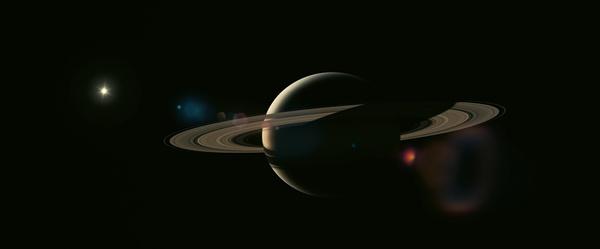
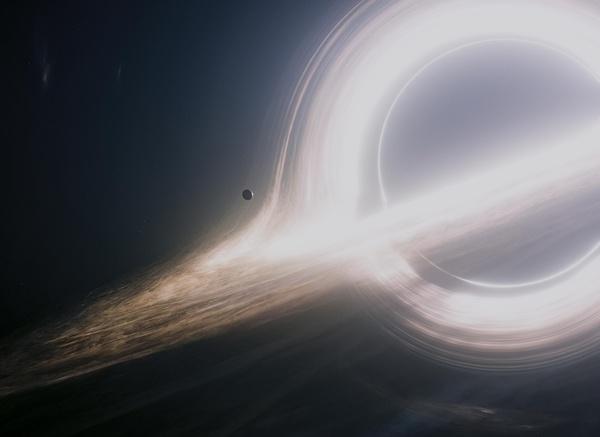
When the spaceship on the screen glided past Saturn’s tranquil rings, and the black hole’s accretion disk shone with a captivating yet deathly light, I remembered gazing up at the stars from my family’s rooftop as a child, the whole sky’s stars twinkling at me. I remembered one midnight lying on the school sports field and watching the Leonid meteor shower rush straight toward me. The shock, emotion, and awe the stars once gave me seem like things from a previous life. For a few moments, Interstellar seemed to call those memories from that former life back to me.
I used to be a science-obsessed boy who gazed at the stars. Now I’ve become a sleazy middle-aged man who only wants to look down at the adult actresses on his hard drive. Every so often I look up again, and smog has dulled the light of the stars. Even so, my heart still fills with the feeling: “The vastness is beyond knowing, and it makes me sigh.” So I sincerely envy and admire those brave people who continue tirelessly exploring the unknowable mysteries of the vast universe. Perhaps the final truth of this world is hidden there.
So, all of you who are still gazing at the stars—please accept my most sincere respect. What you are reaching out to touch is humanity’s ultimate glory and dream!
p.s.
- I don’t believe that Cixin Liu is incapable of writing people and emotions.
- “Gravity is love” was said by the Japanese manga artist Hirohiko Araki. The idea that love is connected to gravity is precisely the central theme of Part 6 of his JoJo’s Bizarre Adventure. Is Interstellar really inspired only by the few American science-fiction films Nolan claimed? This isn’t the first time a creative idea in a Nolan work has collided with one from a Japanese artist.
- I highly recommend Ted Chiang’s Story of Your Life and Taizo Kobayashi’s The Drunkard’s Walk. Within the limits of my reading, I think these are the only two works that have fully resolved the conflict between free will and unchangeable fate in time travel.
- I originally thought the final third of Interstellar counted as a masterstroke, but it turned out that the last ten minutes of Lucy, which I had just watched, were the real masterstroke. We’ve misunderstood Lucy. It is actually harder hard science fiction than Interstellar. Of course, you have to fill in some gaps with your imagination. I’ll explain in another piece.
- Psychology is actually a science.
Related content
The analysis of Lucy mentioned at the end of the article never got a chance to be published online. In the end, I included it directly in my book The 24-Frame Psychology Code.

Leave a Reply