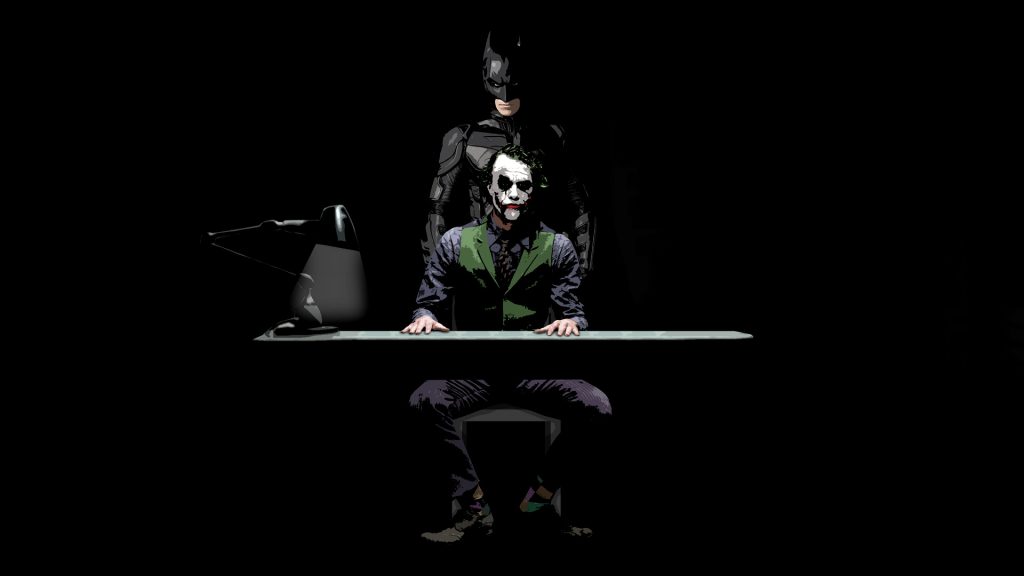
1. The Original Sin of Superheroes
Once Nolan pulled Batman out of the comic-book setting and placed him in a realistic world, we got a chance to examine what superheroes really are. Nolan never states the answer outright, but he gives us enough clues through the plot:
At their core, superheroes are people who transcend the constraints of the law in order to exercise justice.
So here’s the first question: if both operate outside the constraints of the law, which is more frightening—super-evil or super-justice?
Maybe a lot of people would answer without a second thought: obviously evil. Justice, of course, is better the stronger it gets. If something is good, why not make it a little stronger?
I’m afraid it’s not necessarily that simple.
Because even when evil reaches its peak, it is still naturally constrained and counterbalanced by the government’s legal system, society’s moral force, and people’s fear. If bad people want to hurt us, the evil in them naturally puts us on alert—we learn to recognize it and guard against it. From law to morality to our instinct for self-preservation, we’ve already installed several safety locks on evil, keeping it from running out of control.
Super-justice, on the other hand, may not have any such safety locks. When evil attacks us, if someone steps forward and uses his immense power to protect us, are we really supposed to be so ungrateful as to guard against him and suspect him too? That seems hard to justify. Psychologically, then, our vigilance toward justice slipping out of control is naturally lower than our vigilance toward evil.
Once justice drifts beyond legal oversight, it has more opportunities to run out of control. And when someone holding justice in its most extreme form loses his self-restraint, the destructive force he unleashes may be even more frightening than evil at its most extreme.
The Dark Knight reflects on exactly this:
In the film, Batman develops a device that can display a holographic image of all of Gotham City and listen in on mobile-phone calls. He eventually uses it to find the Joker. But Batman’s good friend Fox remains opposed to using it.
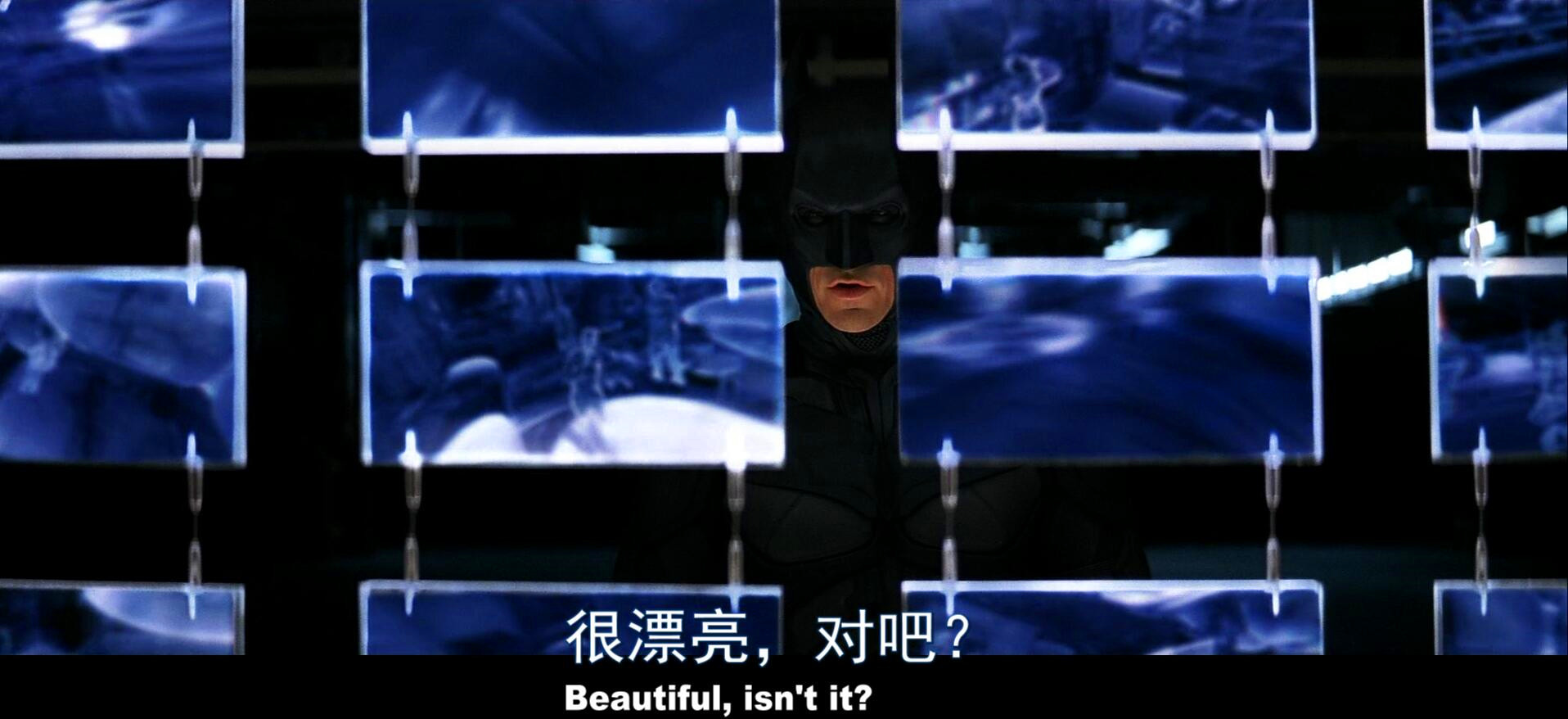
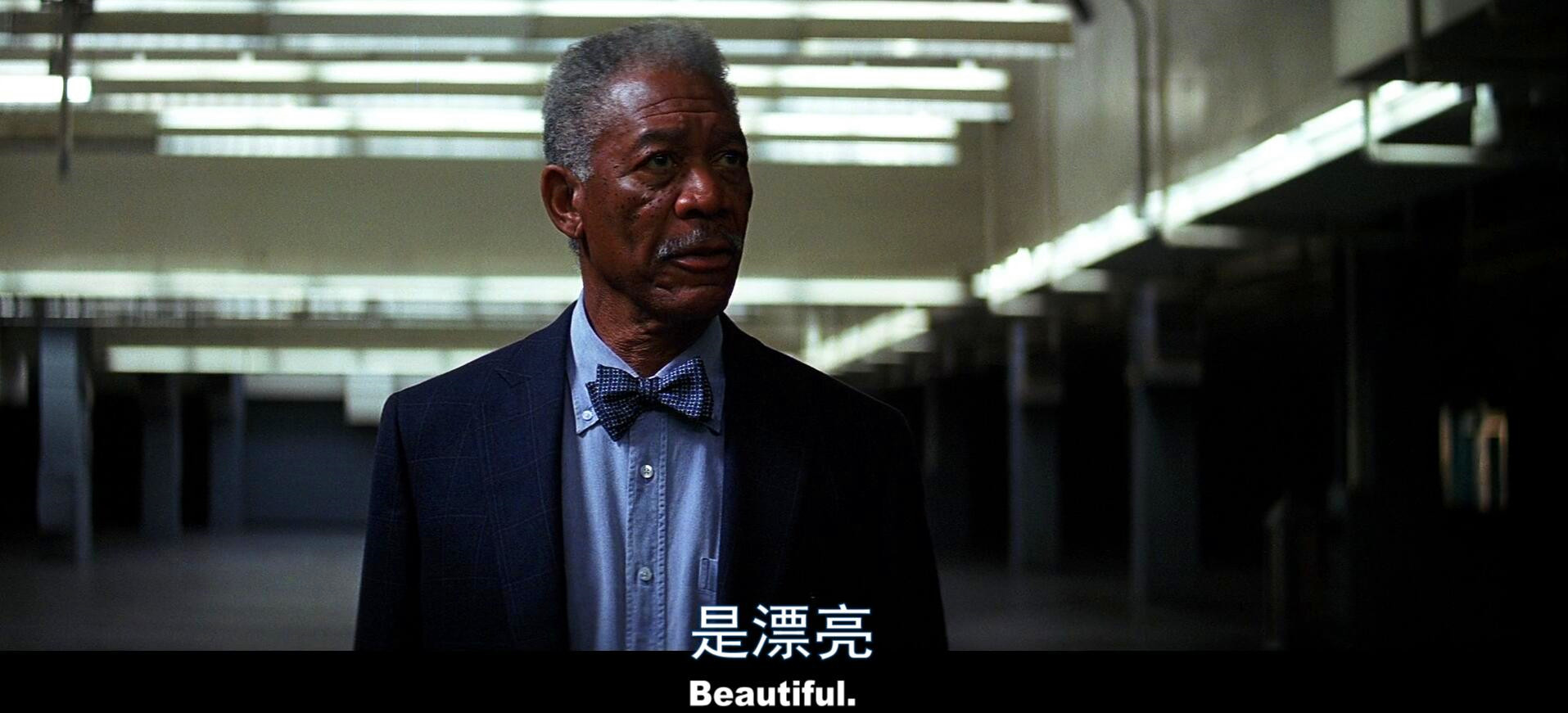
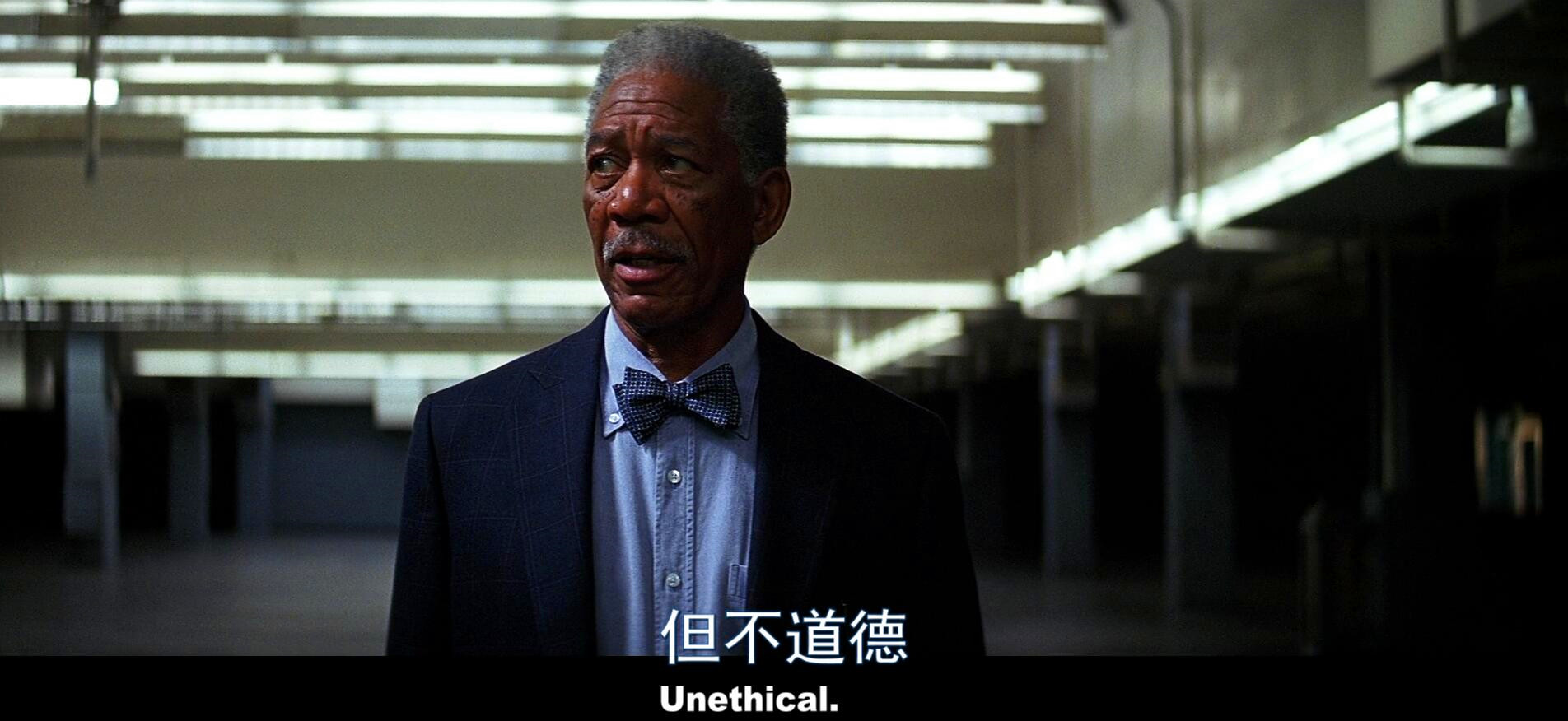
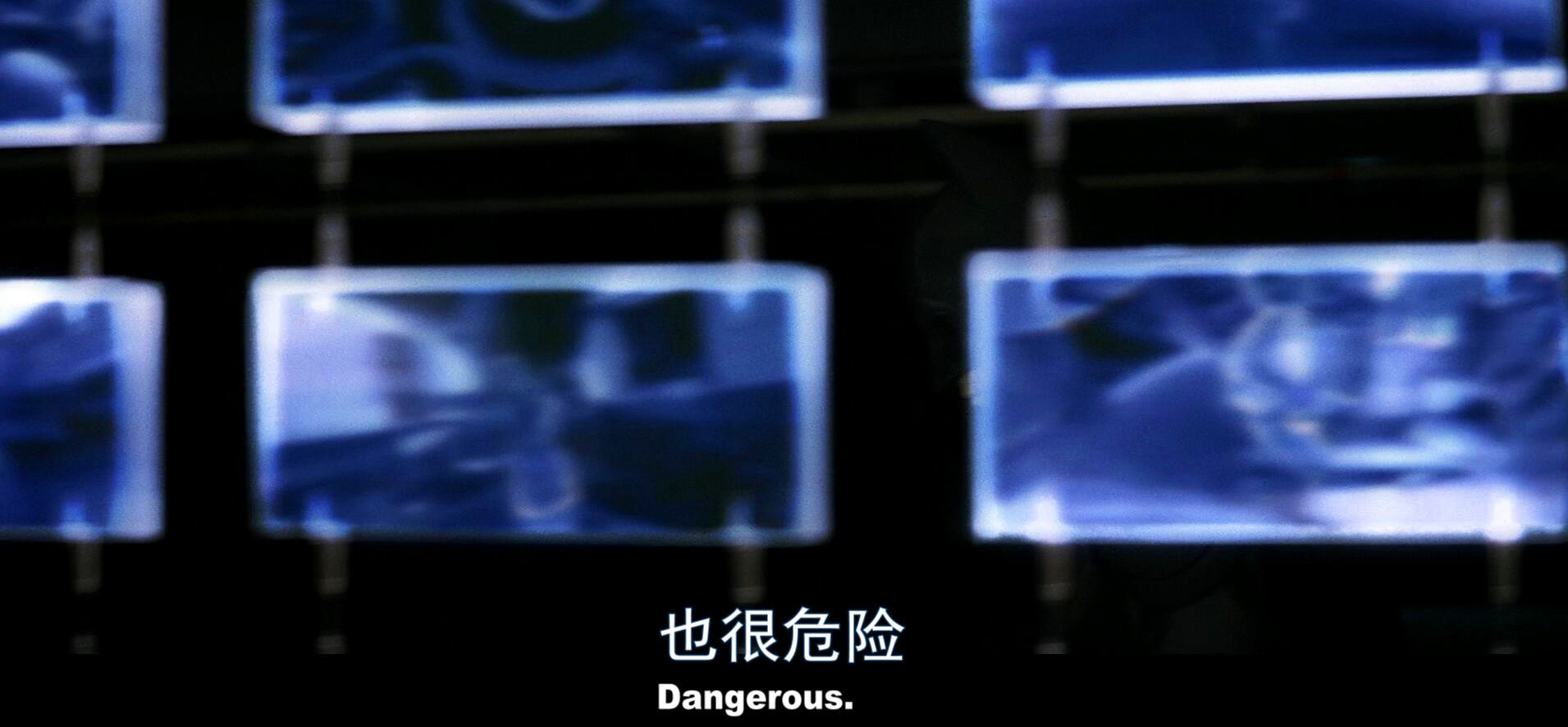
Under Batman’s strict moral self-discipline, the device ultimately causes no harm. Even so, Fox is still deeply troubled at the end, because this is a dangerous sign of justice in its most extreme form, unchecked, sliding toward the edge of losing control—this time you can keep yourself in check with morality, but what about next time?
This detail, of course, has a direct real-world counterpart: a few months after the 9/11 attacks, U.S. President Bush secretly authorized the National Security Agency to launch a surveillance program, allowing investigators to monitor international phone calls within the United States and read emails without court authorization, looking for traces of terrorist activity.
In the film, Batman doesn’t abuse this power because of his moral self-restraint. But what about a government that increasingly resembles a superhero in real life? Could maintaining security eventually become an excuse for violating people’s privacy and freedom of information?
That is the predicament of superheroes. They possess immense power so they can carry out justice in its most extreme form. But whether that power is abused is usually constrained only by the superhero’s own moral force. Once that restraint disappears, they are no different from the super-evil they set out to fight.
So unchecked justice in its most extreme form is the original sin of superheroes.
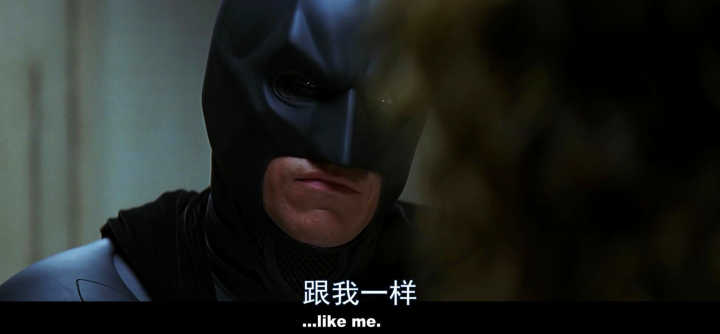
This is the original sin Batman carries, and it is the source of his tragedy. It means he is never on equal footing with the Joker: the Joker’s ultimate evil can act without restraint—acting without restraint is, after all, part of what evil means—while Batman has to use morality to restrain his ultimate justice. The Joker can give it everything he’s got; Batman can’t. He knows his morality is the only safety lock on his own power. Once he crosses that line, he may well become indistinguishable from the Joker, or even more dangerous. So throughout Batman’s exercise of justice, he is constantly constrained by the line he has drawn for himself. For example, although investigating and pursuing criminals inevitably puts him above the law, he never punishes criminals himself. He gives the power to punish back to the law.
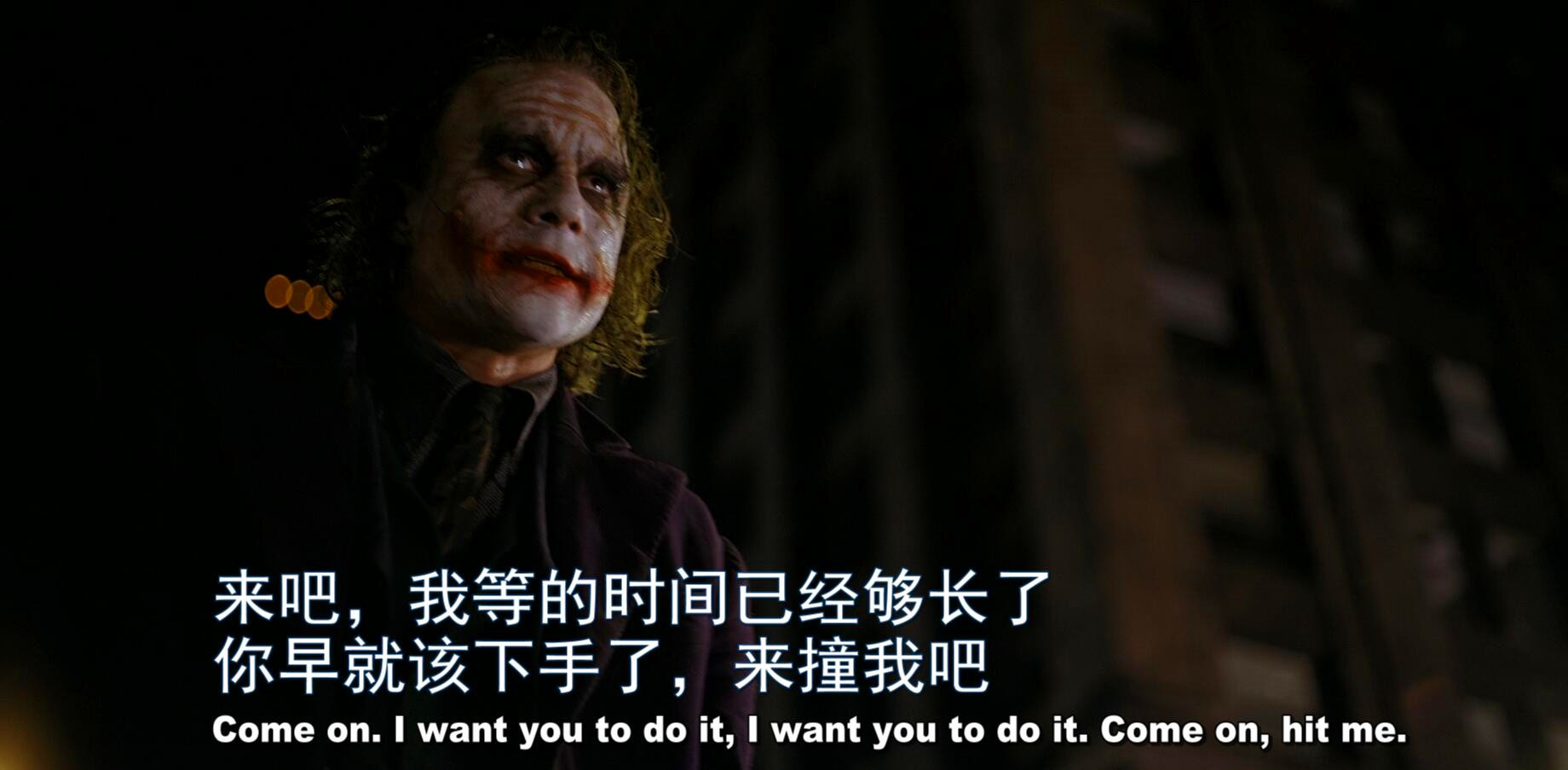
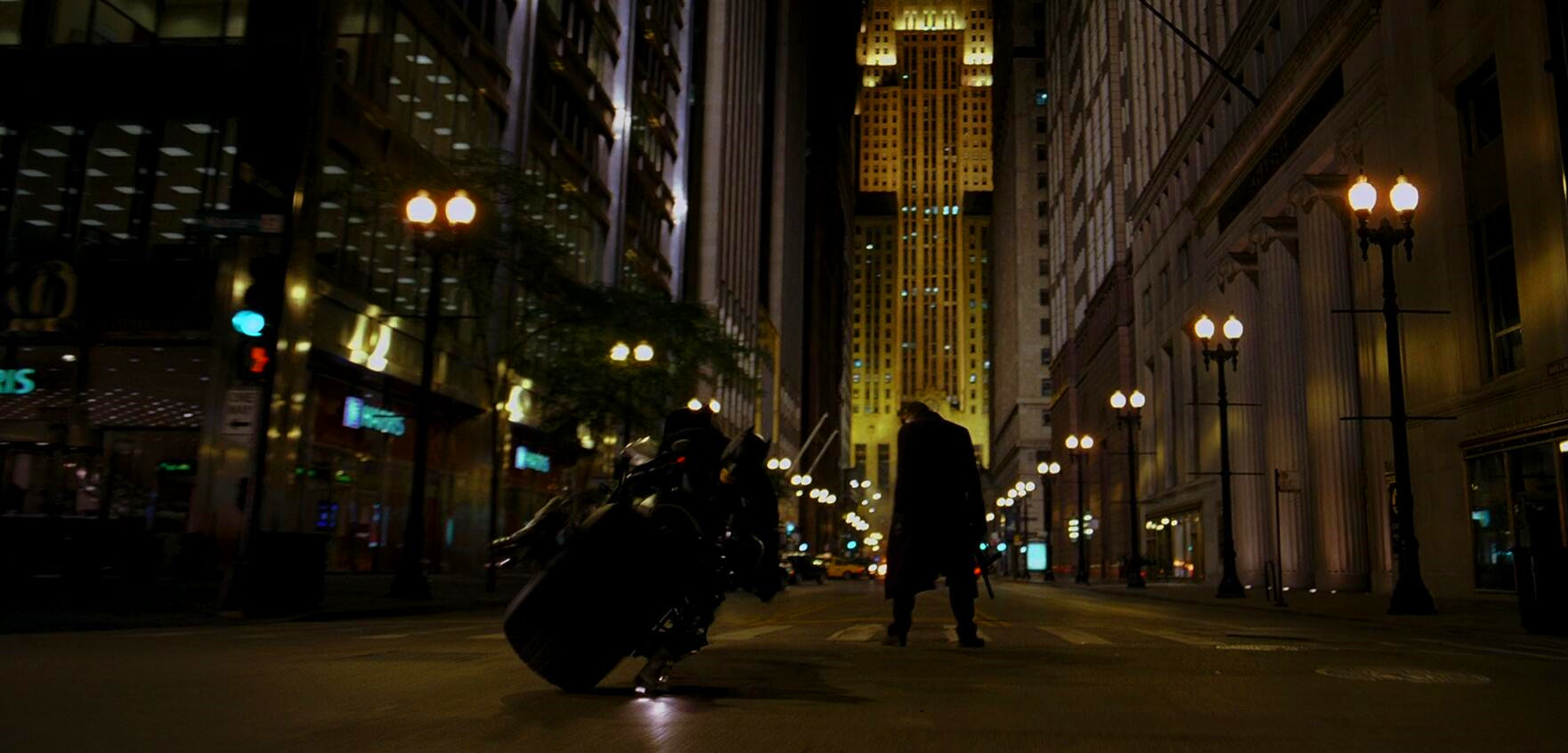
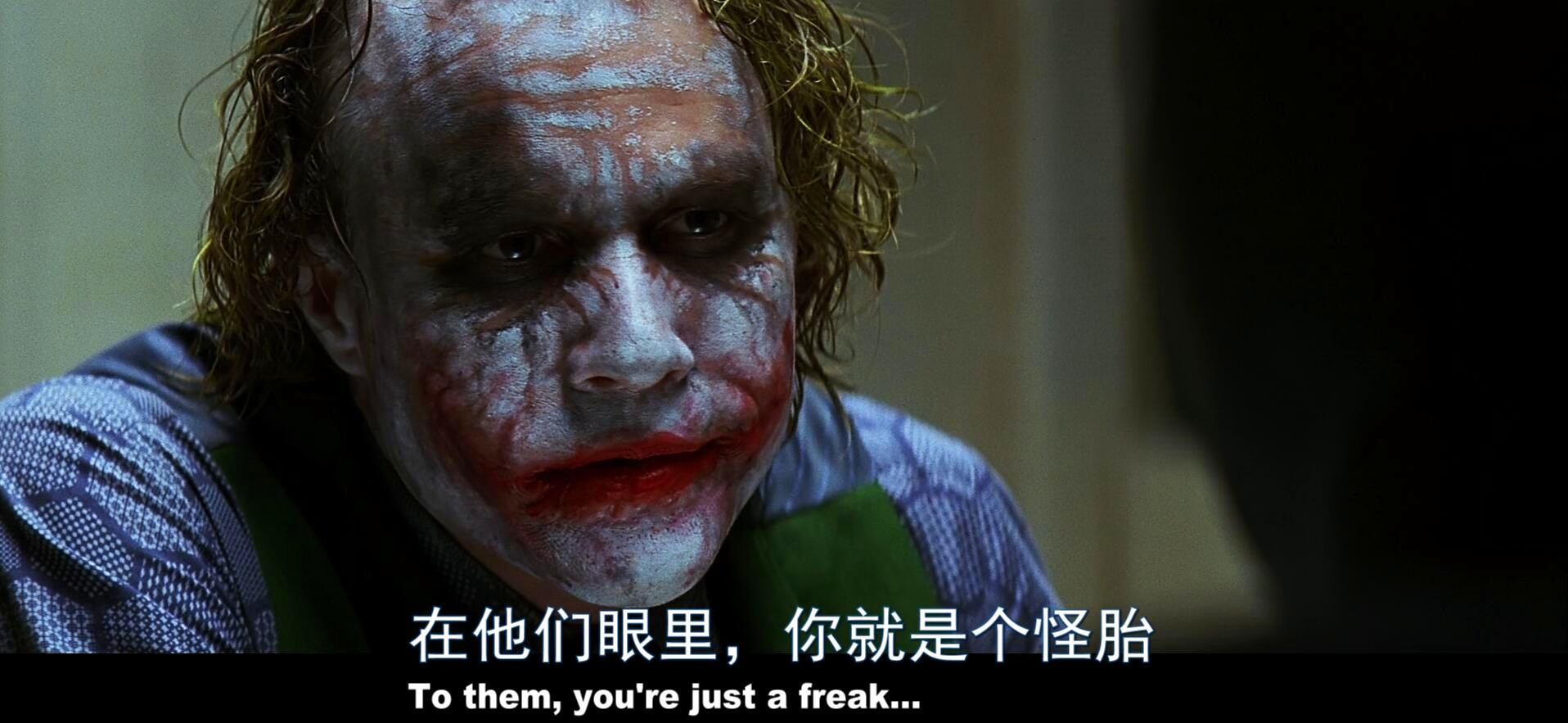
The Joker tells Batman: “To them, you’re just a freak like me.” I think Batman hears those words in his ears and feels them in his heart.
2. The Helpless Knight
More tragic than this original sin is that the very legitimacy of superheroes is granted by supervillains. When evil is not all that powerful, justice protected by the law is already enough to suppress it. So the existence of ultimate justice depends on the appearance of a super-evil that forces within the legal framework cannot withstand.
The Joker once told Batman: “You complete me!”
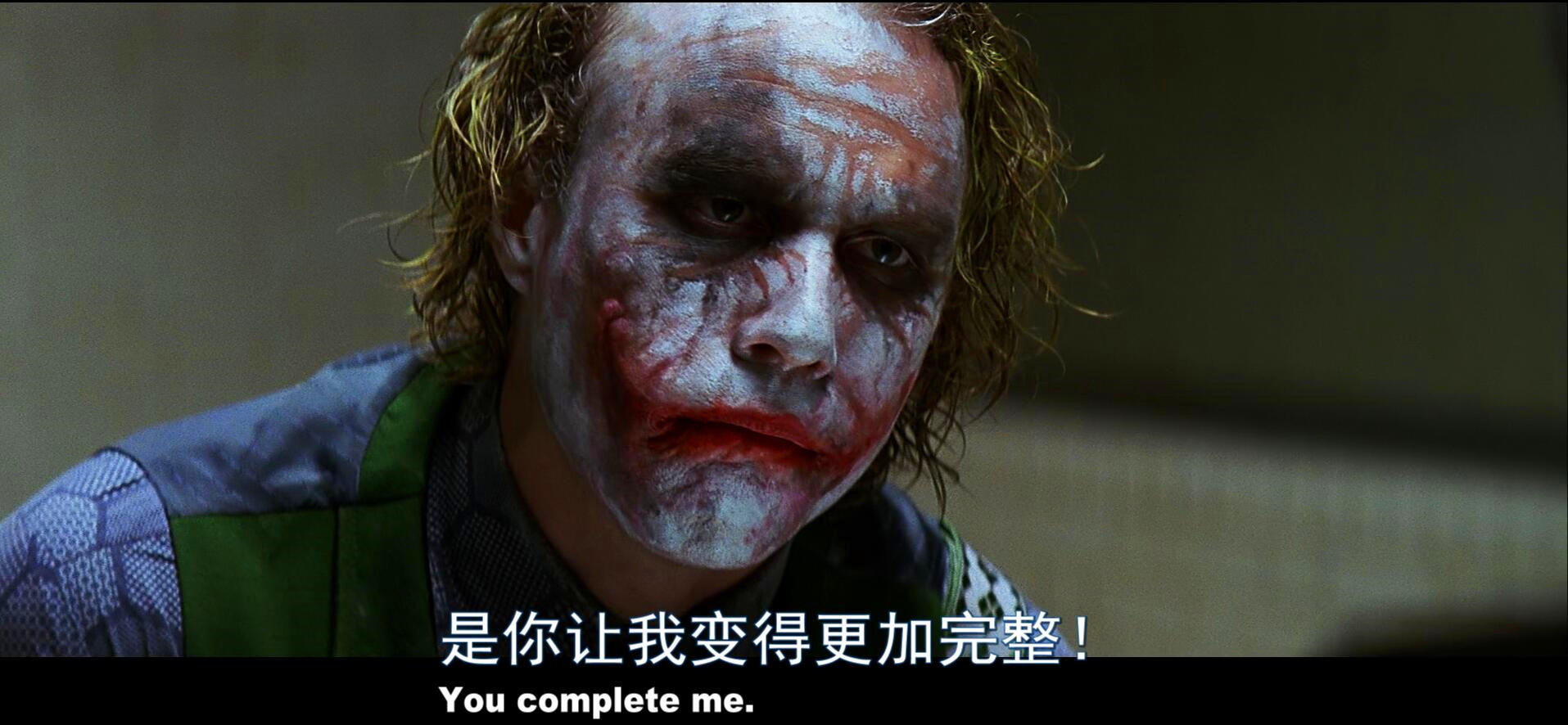
The sad part is that the facts are exactly the opposite. It is the Joker’s existence that completes Batman’s existence. Justice has never given evil a reason to exist; evil, however, fulfills justice. “You complete me” is really something Batman should have said to the Joker.
In the film, Harvey, who punishes evil within the legal framework, is hailed as a hero. Batman, whose power rises above the law but who restrains himself through morality, can only be a “dark” knight. Batman is destined never to become a hero of a bright world. Only when darkness arrives can he appear, cautiously and with restraint, to fight the darkness—helplessly born from it.
3. Evil at Its Peak
Batman’s justice is restrained, while the Joker’s evil can reach its peak.
What does evil at its peak look like? In evil at its peak, evil is not a means but an end. It is pure: not for money, sex, or any other purpose. Creating evil and carrying out evil are themselves the only goals. The Joker’s evil is this kind of pure evil. He wants nothing else; he simply wants to create “a higher-taste evil” for this city. Compared with the Joker, even the crimes of John Doe in Se7en don’t count as “high-taste evil,” because too many things are attached to the evil there.
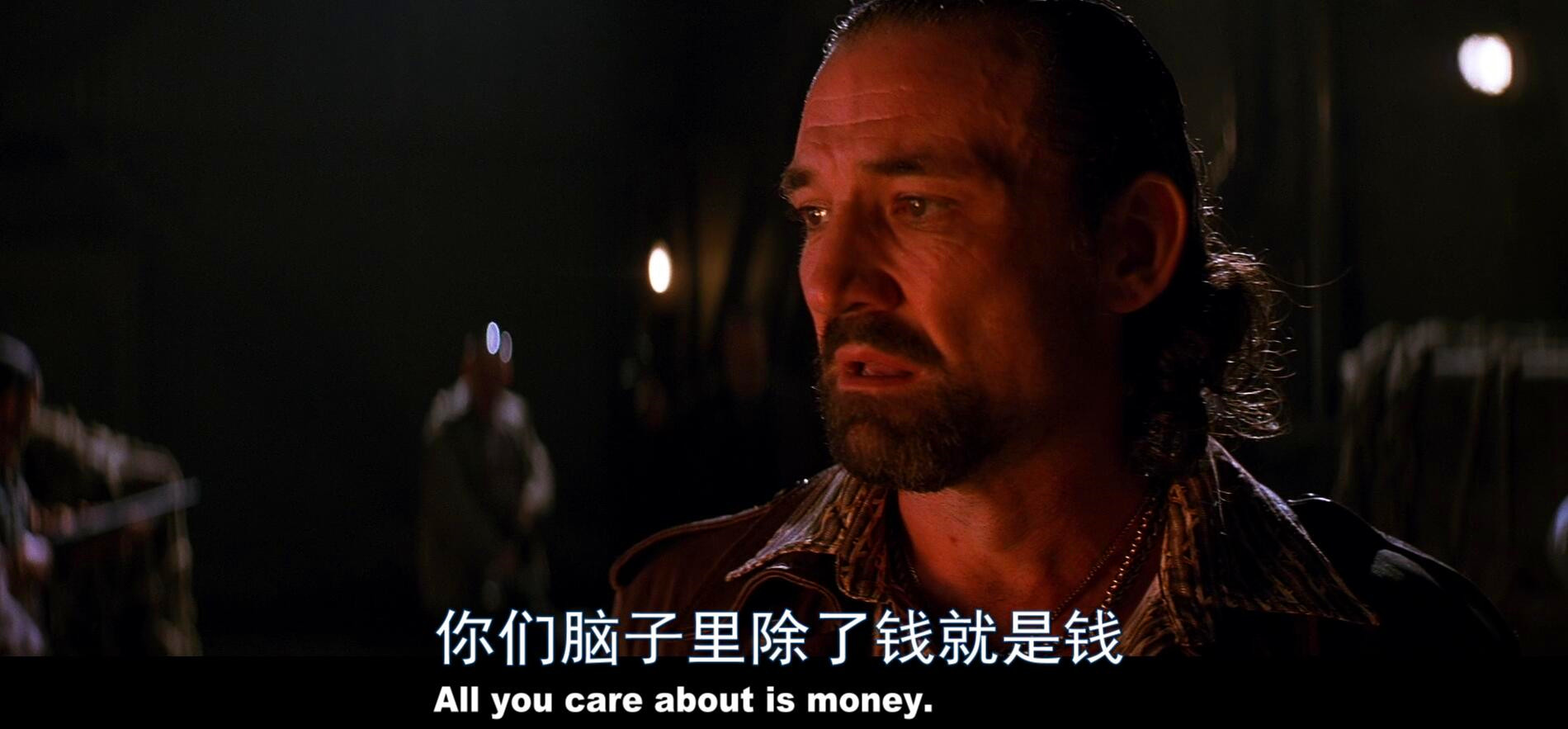
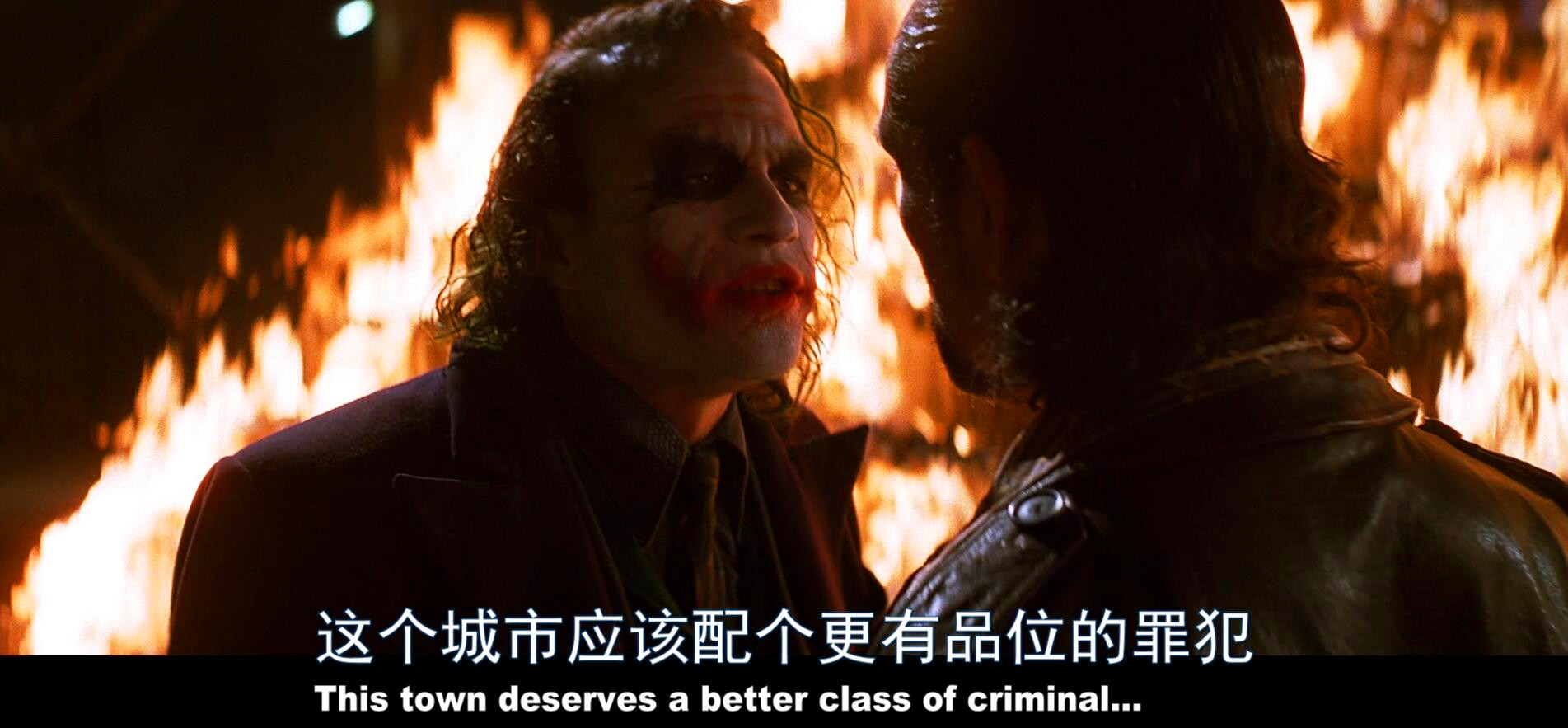
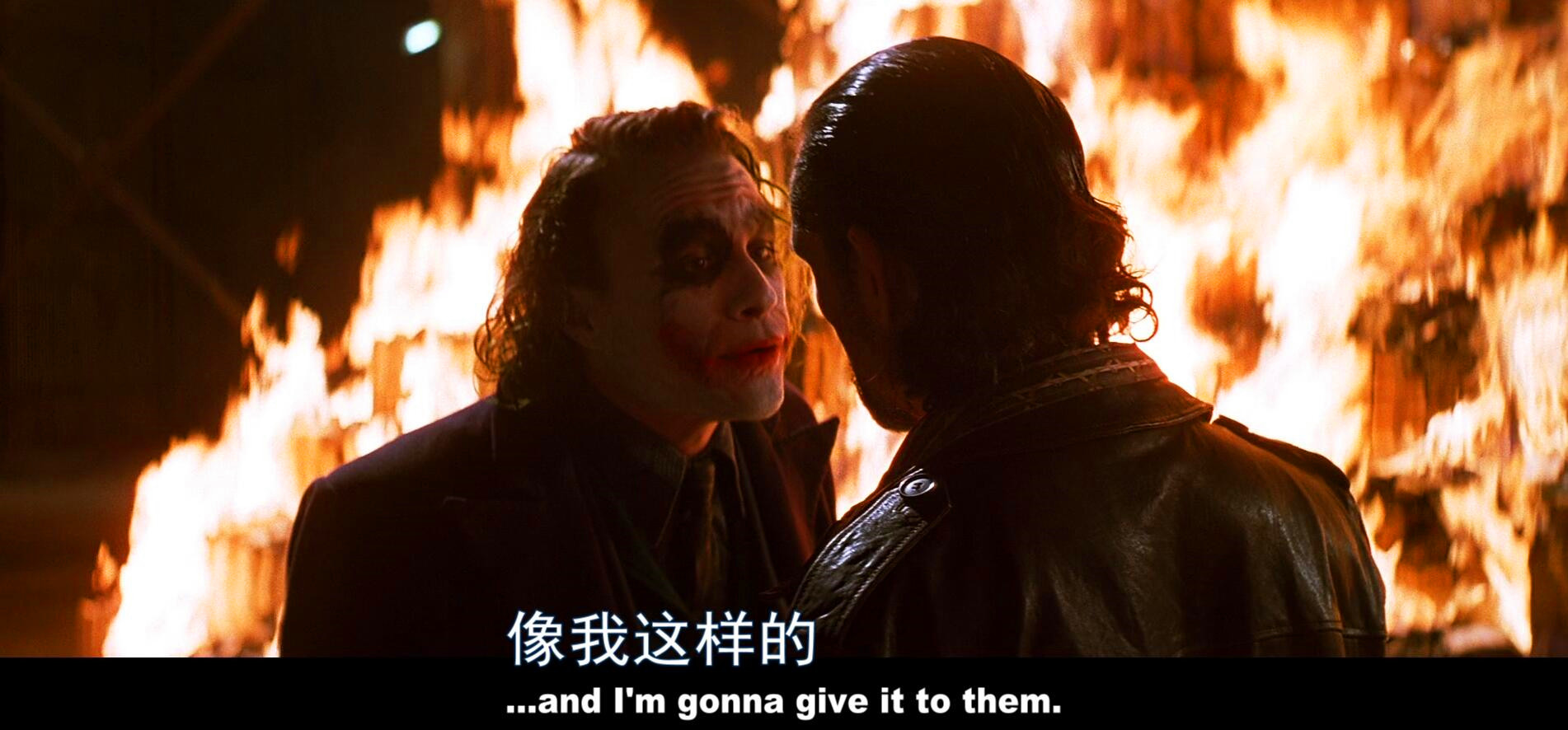
If Batman is a knight who strictly upholds the morality of justice, then the Joker is an angel who protects evil. In his eyes, crimes committed for money, power, sex, or any other purpose are actually a desecration of “evil.” Evil is pure only in his hands.
In the Joker’s hands, evil becomes a work of art. He splashes it around the way a painter paints or a composer writes music. So from beginning to end, whatever his circumstances, he maintains the arrogant, self-satisfied poise of a demon. That is really the dignity of an artist.
Just as Batman is worthy of his justice, the Joker is worthy of his evil.
Here’s to Batman, the dark knight who bears original sin.
And here’s to the Joker, the angel of evil who mocks the human world.
Version History
This article was revised from an old essay written in 208, “The Dark Knight: Justice Bearing Original Sin · Evil at Its Peak”; first published:
- The Dark Knight: Justice Bearing Original Sin · Evil at Its Peak: http://content.mtime.com/review/1336431
Leave a Reply