
声音入梦:最简单易行的控梦术。
Long time no see!
In the next few episodes, we’re going to talk about a technique in psychology with a bit of a “black magic” feel to it—controlling dreams.
That’s right: the kind of technique in Inception where you not only know you’re dreaming, but can also fold an entire city in half inside the dream.

Does such a fun technique really exist in real life?
Not only does it really exist—anyone can train in it.
And in the martial-arts world, the training methods are divided into orthodox and unorthodox schools. In this episode and the next, we’ll start with the orthodox school: learning scientific dream control from scientists and proper research findings. After that, we’ll introduce the unorthodox school and see what powerful dream-control tricks ordinary practitioners have distilled from experience.
All right, let’s talk about scientific dream control. This episode starts with the more basic indirect dream control; next time we’ll discuss direct dream control.
Indirect Dream Control
“Indirect” means that, unlike Inception, we’re not changing the dream directly from inside it. Instead, we change the dream by manipulating its raw material—a roundabout way to reach the goal.
The specific method is actually very simple:
1. An audio player/app with a timer
Find a device or app that can play audio on a timer. If your usual audio app doesn’t have this feature, try searching your app store for the keyword “lucid dream”—that is, a dream in which you’re aware you’re dreaming.
2. Set the timer
Once you’ve found an app like this, here’s what you do:
Say you plan to get up at 8 a.m. the next morning. Set it to start playing your prepared audio half an hour early, say at 7:30.
Of course, if you don’t sleep alone, you’ll need a pair of headphones comfortable enough to wear.
3. Audio duration
The audio should preferably be on the long side. This method can’t tell whether you’re actually dreaming when the audio plays, so we have to improve our odds by making the window longer.
4. Volume
You’ll need to experiment with the volume a few times. If it’s too quiet, it’s hard for it to enter your dream; if it’s too loud, it may wake you up. So some repeated fine-tuning is required.
5. Audio content
So what should the audio contain?
Whatever you want to dream about, play that—
Want to dream of the sea? Play the sound of waves;
Want to dream of flying? Play wind, birdsong, or the roar of an airplane taking off.

That’s indirect dream control. It’s simple and blunt: if audio is playing beside your ears while you’re dreaming, there’s a pretty good chance its content will enter the dream. This is the easiest practical dream-control technique I know.
The principle behind indirect dream control
There are several scientific principles behind this method. I’ve boiled them down into three questions.
Question 1: Where does dream material come from?
The first source is, of course, “what occupies your thoughts by day appears in your dreams by night.”
If you spend all day thinking about something, you’re more likely to dream about it at night. Anxious feelings in particular easily become dream material. For example, as a lifelong sports loser, I regularly dream that I failed my physical-education requirements and can’t graduate.
The second source of dream material is the sensory stimulation we receive while asleep—
Whatever your body senses while you’re dreaming, you’re more likely to dream about. If your tooth hurts, you may dream you’re at the dentist; if your blanket is too heavy, you may dream you’ve turned into the Monkey King, pinned beneath the Five-Element Mountain.

The “what occupies your thoughts by day” source is too uncontrollable, so the dream control we described uses the second source: applying sound stimulation through your ears and letting the sound enter your dream.
Control the source of the dream’s material, and you’ve controlled the dream.
Question 2: Why use sound instead of another stimulus?
Let’s look at an experiment.
As far back as the 1960s, Stanford sleep scientist William Dement had already conducted experiments on sensory stimulation entering dreams.
Dement invited subjects to sleep in his lab. Once he observed that they had begun rapid eye movement—their eyeballs were constantly moving, a sign that a person had started dreaming—he applied various stimuli to them:
He either played clanging sounds beside their ears, shone a bright light on their faces, or splashed water onto their faces.
After putting them through this for 10 minutes, he woke them and asked what they had dreamed about.
The dreams of roughly half the subjects were affected by the stimuli. Those who were splashed with water tended to dream of heavy rain; those who heard the clanging sounds dreamed of explosions; those exposed to bright light dreamed of big fires.
The scientist also compiled a ranking of how well sensory stimuli affected dreams. Among them:
- Light affected 9% of dreams;
- sound affected 23%;
- and water had the greatest effect, at 42%.
Light stimulation isn’t ideal
So light isn’t the ideal choice. In this experiment, it affected fewer than 10% of dreams.
That reminds me of several dream-control sleep masks that appeared on American crowdfunding sites over the past few years (I even bought one myself).
Their principle is very simple: add a set of tiny LED bulbs to the inside of an ordinary sleep mask. You can set how often they flash, and some even let you edit the flashing pattern—for example, having the LEDs blink from left to right.
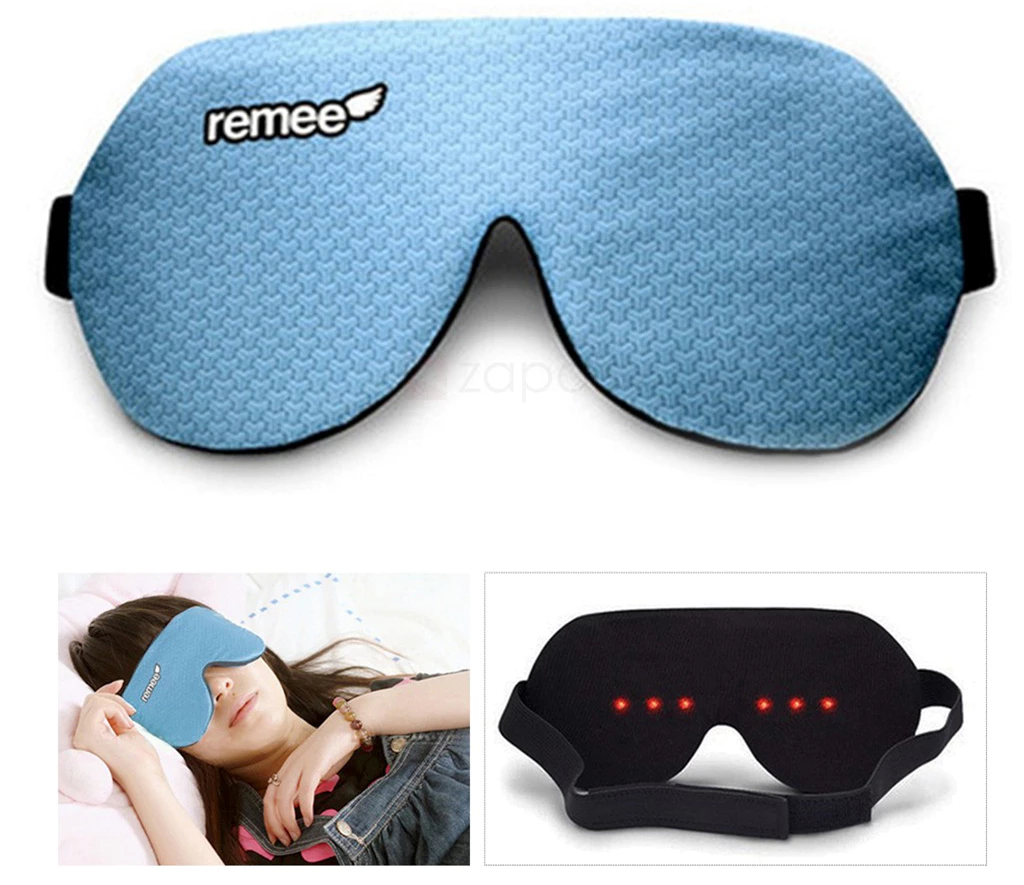
Once you’ve set it up, wear it to sleep. If you’re lucky and the bulbs start flashing right when you’re dreaming, you might see something glowing in the dream.
You might then suddenly realize inside the dream, “Oh, I’m dreaming,” and start trying to control it. (Of course, that already involves direct dream control—that is, lucid dreaming—which we’ll discuss in detail next time.)
In short, according to this experiment, light signals aren’t very good at affecting dreams, so controlling dreams with light is probably hard to pull off.
And that’s what happened: products like dream-control masks were briefly popular around the time Inception came out, then vanished without a trace. They simply didn’t have much real effect.
Water isn’t practical either
What about the other stimulus—water? Not very practical either. It’s hard to rig up a device, or have someone stand guard beside you, ready to splash you when you start dreaming. The logistics are just too absurd.
Besides, unless you have some very particular tastes, what’s the fun of dreaming about heavy rain all day?
The best choice—sound
So naturally, the best choice is sound. According to the experiment we just discussed, sound is reasonably good at influencing dreams.
And sound can carry plenty of information: music, speeches, radio dramas, even the voice of your goddess. You can use the information contained in sound to influence a dream with considerable precision.
The scientist who conducted that experiment later ran another one. He played Martin Luther King Jr.’s speech to people who were dreaming. One subject dreamed that, while eating, someone beside him suddenly stood up and launched into a grand lecture about racial conflict.
See? Using sound to enter dreams opens up all kinds of possibilities.
Want to have dinner with Sora Aoi? Just play Ms. Aoi’s voice.
Want to indulge your superhero fantasies? Play a clip from Batman v Superman: Dawn of Justice. You might find yourself becoming Batman and fighting alongside Wonder Woman in the dream.

Question 3: Why not start playing audio as soon as you fall asleep?
Because we dream several times every night, but afterward we can generally remember only the last dream before waking.
The dream-control enthusiasts who like experimenting in the real world all have the same piece of experience: it’s especially easy to succeed when you go back to sleep after waking up. The reason is simple—the second sleep is short, so you’ll remember any dream control achieved during it.
So if you don’t get the chance to go back to sleep, set the audio to start before you wake up and hope you’re dreaming during that window.
Those are the three scientific principles behind indirect dream control through sound.
Does indirect dream control count as dream control?
Some people might say this isn’t really controlling a dream. After all, you’re not actively controlling the content from inside the dream.
Maybe you really do dream of having dinner with Ms. Aoi, but because you don’t realize you’re dreaming, you can’t force the two of you to decide what to eat or talk about.
But I actually think that’s better. The best part of a dream is—believing it’s reality.
“Wow, I’m actually having dinner with Ms. Aoi!” versus “Huh? I’m dreaming? Then I’ll summon Ms. Aoi for dinner!” Which experience sounds better to you?
That’s all for this episode. Tell us about your own secret dream-control tricks in the comments.
Written by|Zhichao Wei
Edited by|Wang Xiaowei
Sources and gossip mentioned in this article:
1. Night School
The experiment by William Dement mentioned here comes from Richard Wiseman’s book Night School. Why on earth did the Chinese publisher have to drag Richard Wiseman into the whole “positive energy” thing?!

2. My experience with a dream-control sleep mask
Back when I was seized by a fit of irrational enthusiasm, I bought a dream-control mask called Remee. I wrote about using it in my book The Charming Illusion; here’s an excerpt:
In one of my own experiments, I set the light signals to illuminate from left to right, then from right to left, and finally have all the bulbs flash together. The signal entered my dream in an utterly hilarious way:
I dreamed I was playing the arcade version of Street Fighter in a game parlor. The boss I controlled, Vega, attacked the enemy with an electric-charged punch, first from left to right and then from right to left. Then the character I controlled suddenly turned into one of the Calabash Brothers, unleashed a super move that made the entire screen flash, and KO’d the opponent.
Leave a Reply