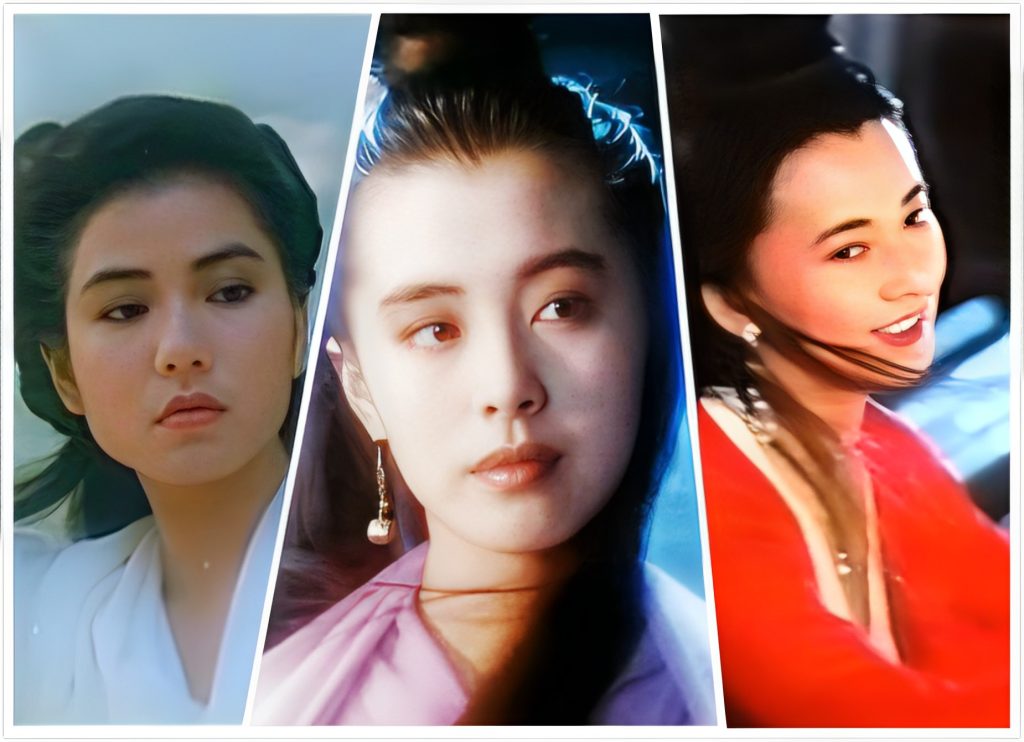
Dong Shi imitating Xi Shi is the kind of madness that belongs only to a golden age. I really miss that sort of golden-age madness.
I grew up hanging around video parlors in the lanes of a small town. It was the late 80s to early 90s, when Hong Kong cinema was enjoying its last golden age. After every Hong Kong movie, I would think, ‘Wow! This is freaking cool.’ My childhood was made rather happy by being surrounded by movies that were freaking cool.
Only after growing up a little did I learn to tell the good from the bad. Gradually I realized that the movies that still made me think ‘Wow! This is freaking cool’ when revisited years later were the true classics. But what kind of discernment did I have as a kid? Back then, anything made by Hong Kong people was a good movie!
A golden age comes with golden-age madness.
Behind every classic Hong Kong movie are copycats following one after another. Once gambling movies became popular, filmmakers had to keep making them until audiences felt sick at the sight of a deck of cards; once school dramas caught on, they kept copying them until school uniforms made audiences dizzy.
Here is an amusing case of Dong Shi imitating Xi Shi. Let’s use it to appreciate the golden-age madness of Hong Kong cinema.
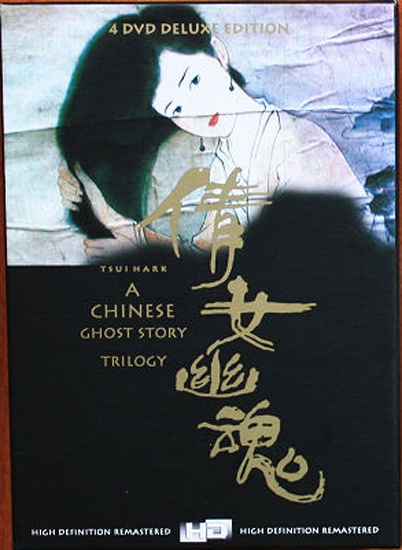
Xi Shi: A Chinese Ghost Story (1987, directed by Ching Siu-tung, produced by Tsui Hark)
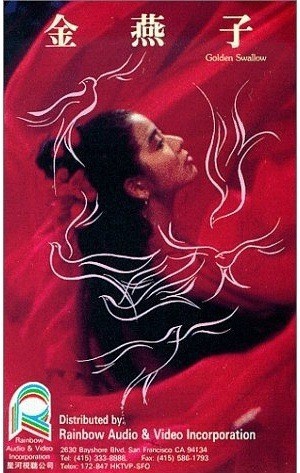
Dong Shi No. 1: Golden Swallow (1988, directed by Ko Xing-pui)
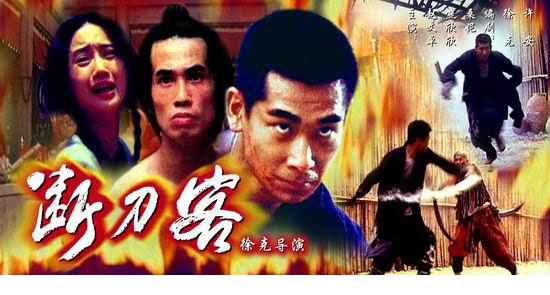
Dong Shi No. 2: The Fox Fairy (1992, directed by Lu Xiao-long)

Xi Shi vs. Dong Shi—the show is about to begin—
Scene 1: Opening
At the beginning of A Chinese Ghost Story, an unnamed scholar serves as cannon fodder. First he is lured by Nie Xiaoqian, then he becomes Grandma’s dinner. The picture is wonderfully sexy:
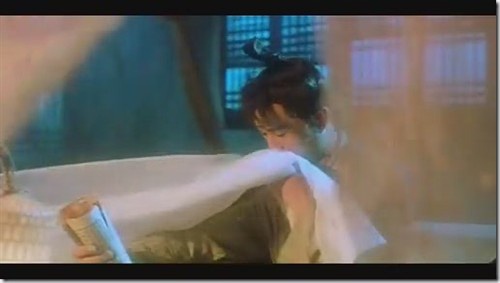
In The Fox Fairy, this sequence was changed to a super-creepy piece of cannon fodder being lured in:
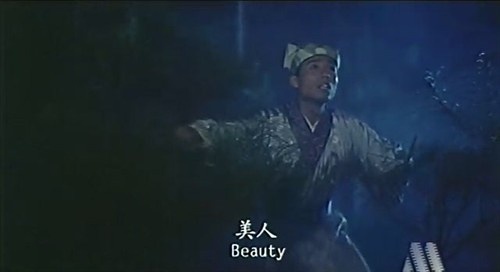
Since the female ghost was replaced by a fox fairy, this poor guy is… smoked to death by fox farts Σ( ° △ °|||)︴!
First, with his back to the creepy guy:
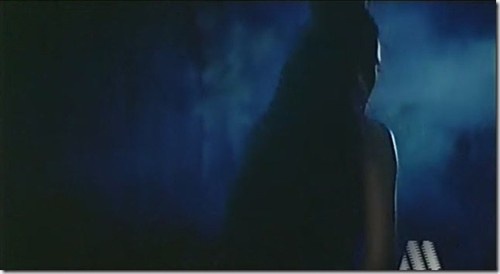
Then one mighty fart blows the creepy guy into a skeleton (fox stink really is terrifying):
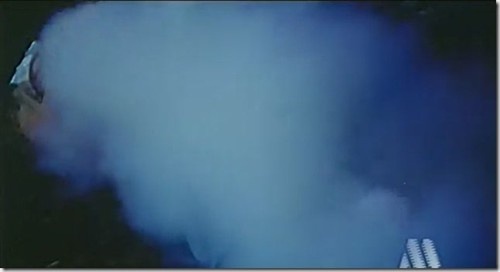
Scene 2: Ning Caichen Enters
Ning Caichen enters in A Chinese Ghost Story:
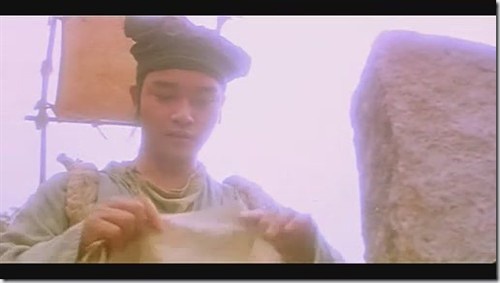
The Golden Swallow version of Ning Caichen:
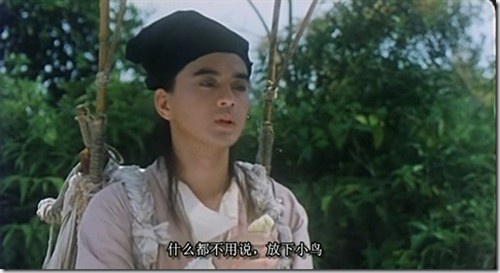
The resemblance between the two looks is 99%. Did Eric Wong’s outfit come straight off Leslie Cheung’s back? Nothing to be done: both films’ costume designer was Chen Ku-fang—the same person.
Luckily, Eric Wong and Leslie Cheung were both prime examples of Hong Kong showbiz eye candy at the time, so copying one wasn’t excessive.
And here is the creepy version of Ning Caichen in The Fox Fairy:
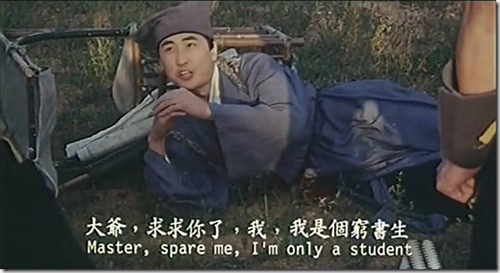
Scene 3: The Pursuit
In A Chinese Ghost Story, a gang of bandits is pursued because they apparently owed money to one tough customer:
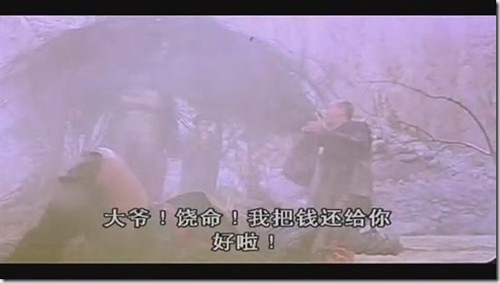
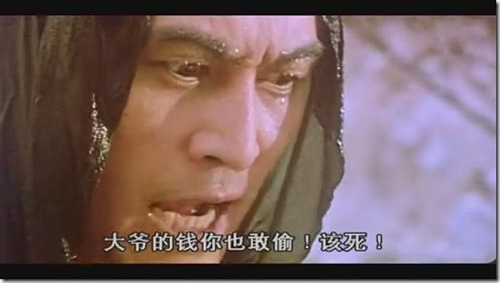
The Fox Fairy splits this into two scenes, and the person being pursued becomes the creepy version of Ning Caichen:
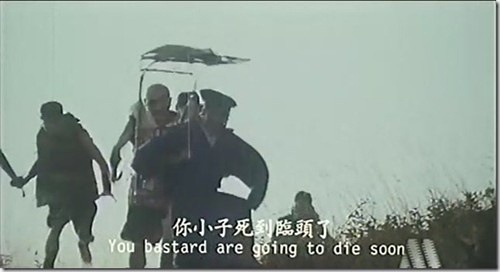
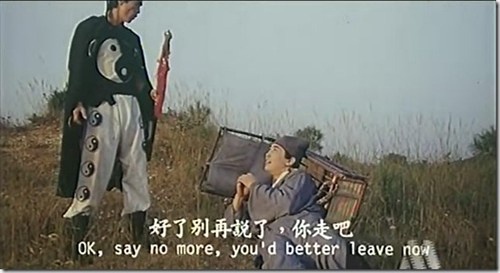
Then the creepy version of Yan Chixia rescues him (please admire that intoxicating outfit); everyone beats him for ages, yet Ning Caichen maintains the same pose, lying on the ground:
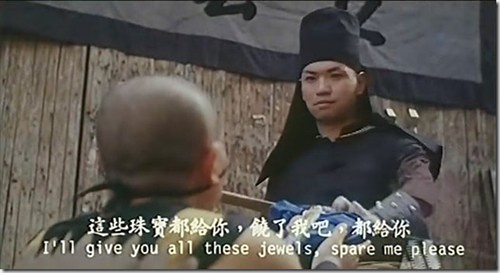
The bandit leader is a bald, one-eyed dragon just like in the real A Chinese Ghost Story (is that big brother opposite Black Impermanence?):
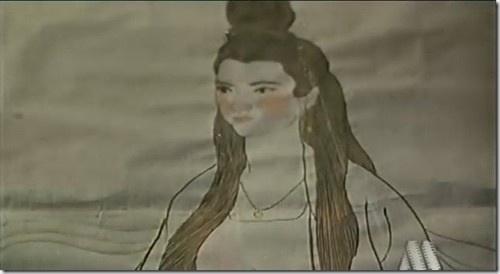
Scene 4: Looking at the Painting
In A Chinese Ghost Story, Ning Caichen sees Xiaoqian’s portrait at a painting stall:
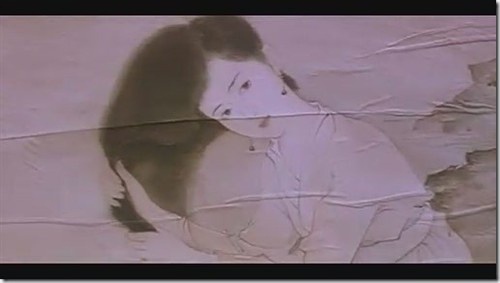
The ‘fox’s bottom’ version in The Fox Fairy, that intoxicating smear of crimson…:
Scene 5: The Coffin-Shop Owner
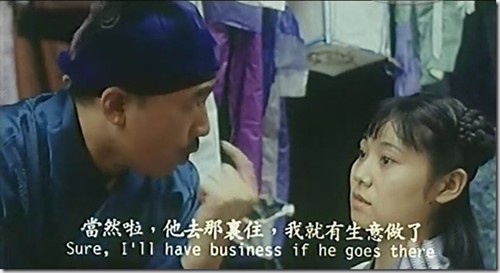
In A Chinese Ghost Story, the coffin-shop owner measures Ning Caichen’s height:
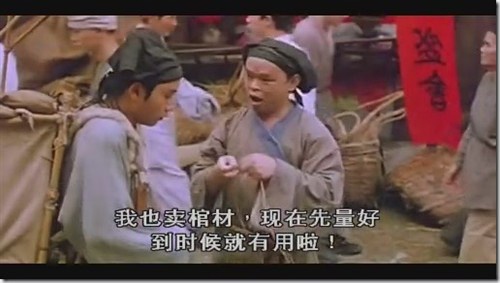
The creepy coffin-shop owner in The Fox Fairy:
Scene 6: Lanterns
The lantern goes out in A Chinese Ghost Story:
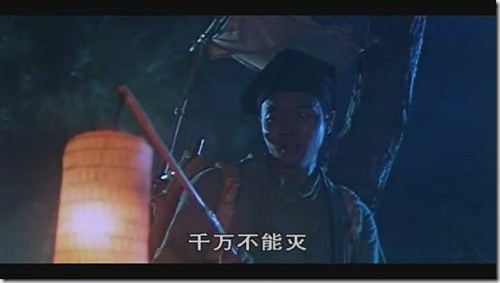
The lantern also goes out in Golden Swallow:

In The Fox Fairy, we get the creepy lantern-extinguishing sequence accompanied by bootleg Ning Caichen eating dirt:
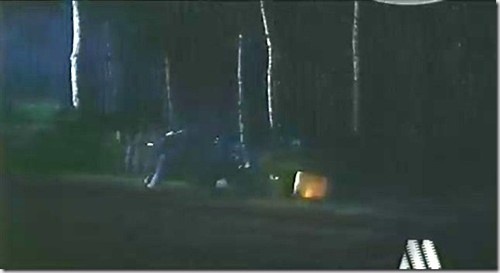
Scene 7: The Temple Stele
The stele at Lanruo Temple in A Chinese Ghost Story:
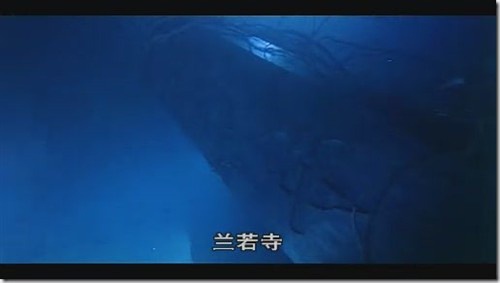
The bootleg Lanruo Temple stele in The Fox Fairy:
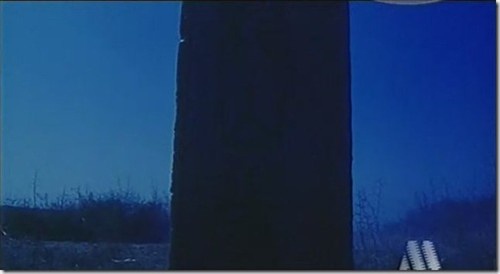
Scene 8: Taoist Brawl
After entering the temple in A Chinese Ghost Story, Ning Caichen encounters two Taoists brawling:
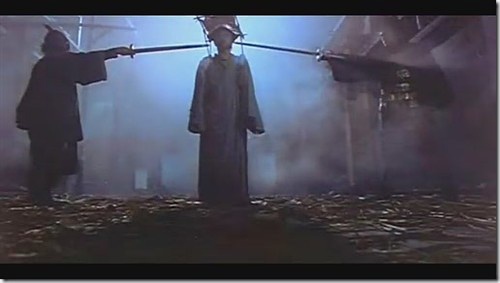
The Golden Swallow version:
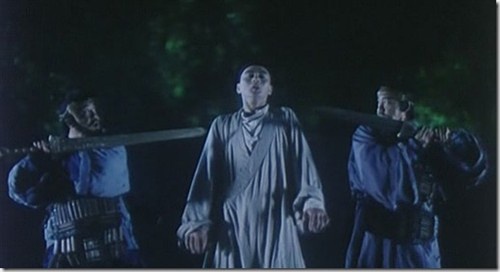
The resemblance in their moves is 99%. Nothing to be done: Golden Swallow’s action director, Kuo Chui, was also one of the action directors of A Chinese Ghost Story. The backstage crews of the two films overlap heavily.
The creepy Taoist brawl in The Fox Fairy:
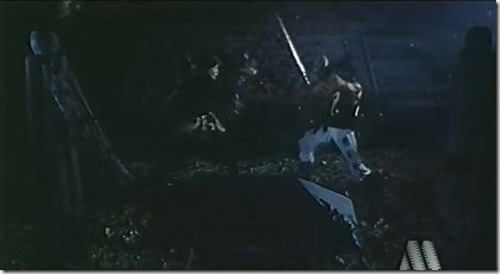
Scene 9: Yan Chixia Enters
Yan Chixia makes a grand entrance in A Chinese Ghost Story:
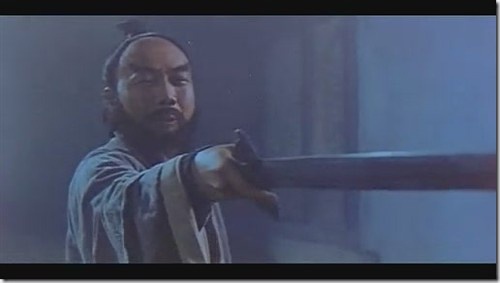
In Golden Swallow, Yan Chixia is split into three. His righteous hatred of evil and formidable martial arts become the stern Feng Qingtian, while his comic side becomes the bickering couple Zuo Dao and You Dao. It’s an interesting split. Seen through Liu Qingyun’s magic eyes in Johnnie To’s Mad Detective, perhaps Yan Chixia really was these three ghosts all along:
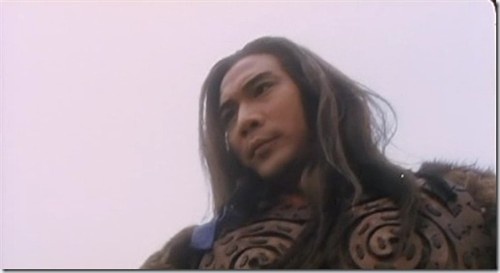
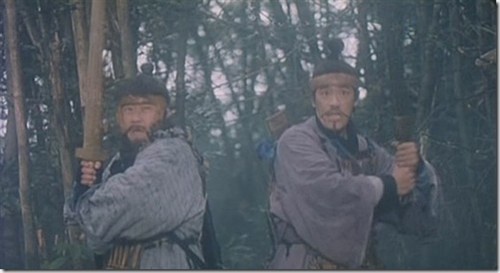
Now look at the creepy Yan Chixia in The Fox Fairy. A real masterpiece—
As a child, he wore a dudou outside his clothes:
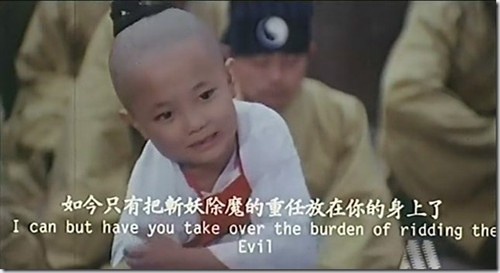
When he practiced his kung fu as a child, the Taoist beside him beat a wooden fish:
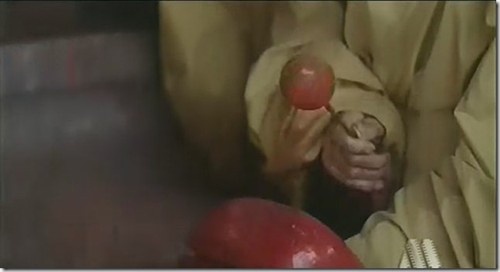
And played drums, too… (Listen closely and you’ll find the rhythm is exactly the same as the drums in the background music—which means that wasn’t background music!?):
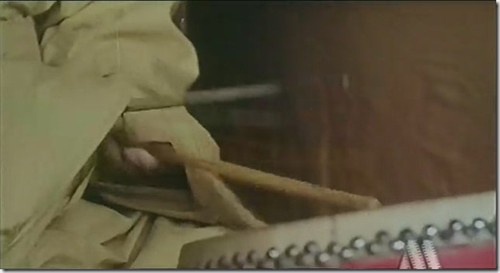
As an adult, he liked wearing a ‘Tai Chi’ dudou and ‘Tai Chi’ pants (I bow before this film’s costume designer…):
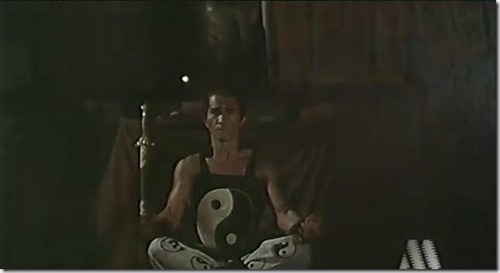
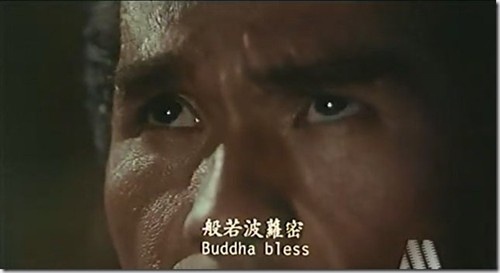
Behold that fierce gaze…:
Scene 10: Xiaoqian Enters
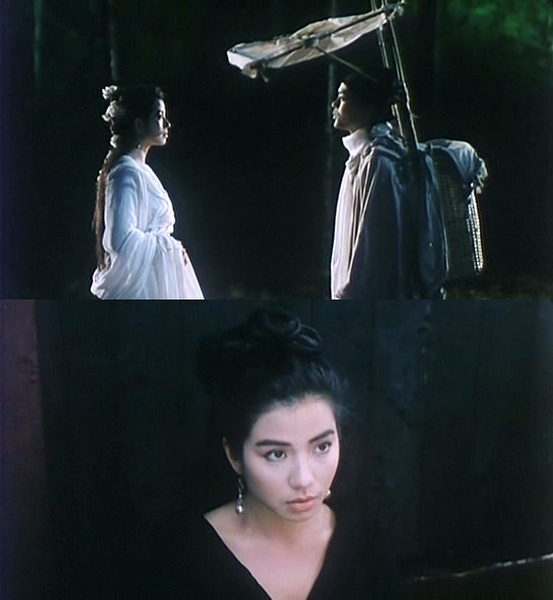
The real Xiaoqian (goddess Joey Wong) makes a grand entrance:
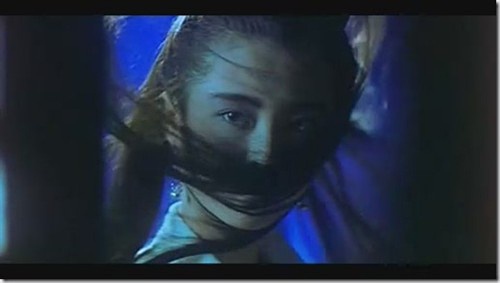
Xiaoxue (goddess Maggie Cheung) in Golden Swallow:
I suppose the boys of my generation who grew up in video parlors were all influenced, to some degree, by these sexy female ghosts on screen. This was a country-toppling romance in which an entire generation of Chinese men took part.
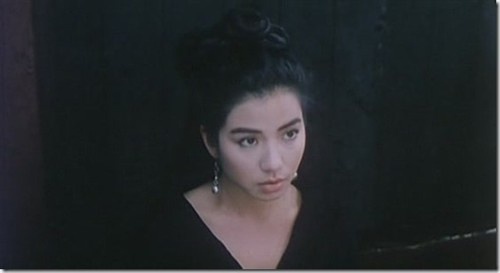
Now look at the fox-fairy Xiaoqian in The Fox Fairy. Since earlier scenes imply that she has terrible body odor when in fox form, the response is… cover your nose and keep your distance (though Hsia Hui-chung was also one of the goddesses of the video-parlor era):
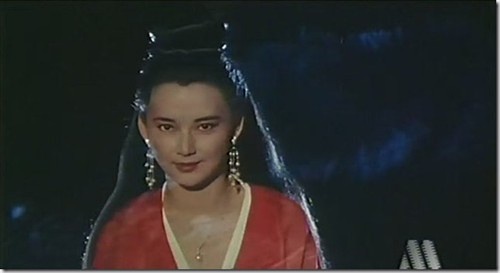
Scene 11: Seduction
In A Chinese Ghost Story, the tough guy Xiahou, defeated in a martial-arts bout, is seduced by Xiaoqian and then sucked dry by Grandma:
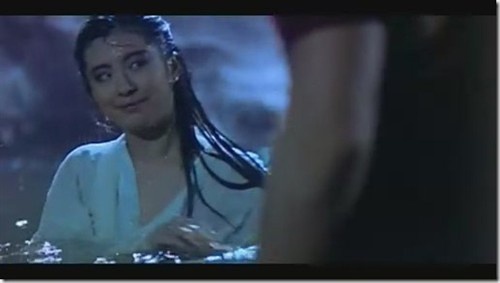
In The Fox Fairy, a Taoist is seduced by a group of fox demons in swimsuits (Orz), then electrocuted:
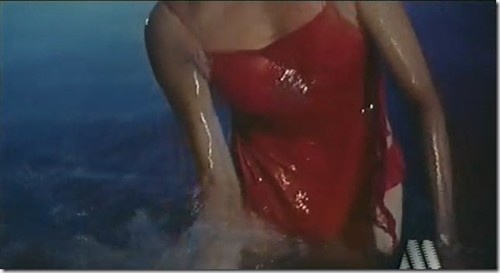
Scene 12: Waterside Pavilion
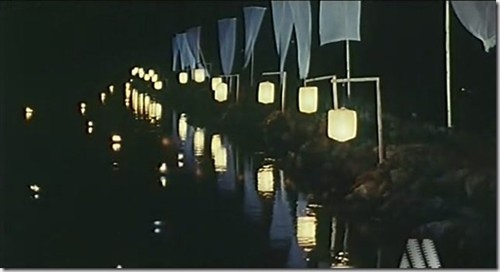
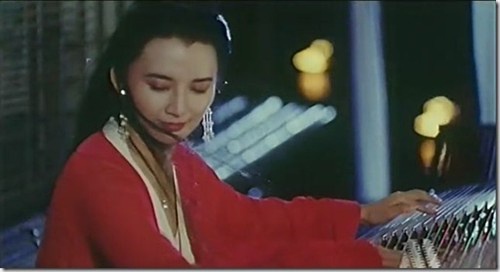
In A Chinese Ghost Story, Ning Caichen follows the sound of a qin, discovers a waterside pavilion, and sees Xiaoqian playing:
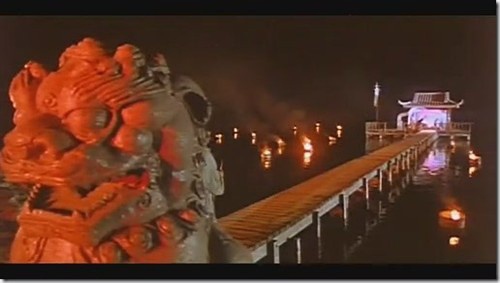
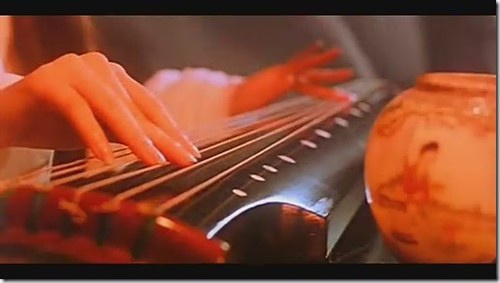
The The Fox Fairy version also has a waterside pavilion, but the road to it is made of piled earth (the filming budget was probably limited):
Scene 13: Hallucination
In A Chinese Ghost Story, Ning Caichen sees Xiaoqian in a funeral procession:
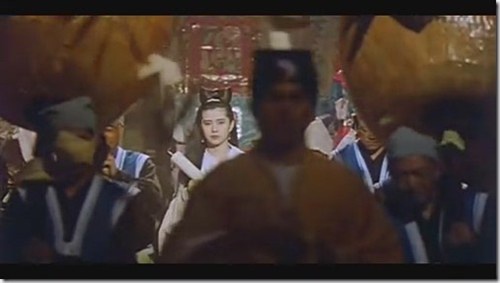
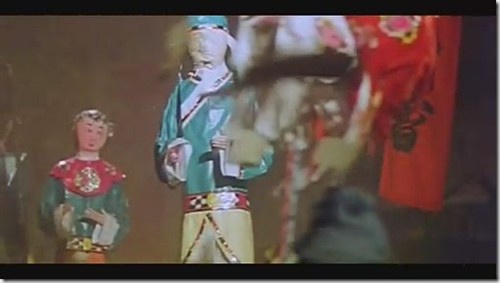
In The Fox Fairy, a group of Taoists inexplicably appears, carrying a paper fox. The design is incredibly cartoonish…:
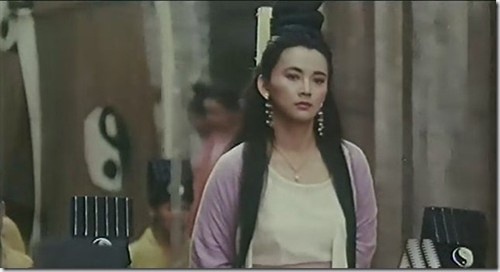
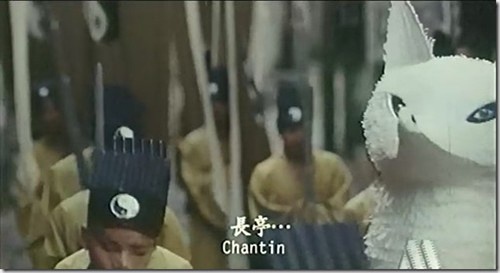
Bootleg Ning Caichen even shouts ‘Changting’ at the procession. He never asked her name the night before, yet suddenly calls it out today. So who exactly is the monster? Drag the editor out and have him bounce JJ until death.
Scene 14: Boudoir
Xiaoqian’s boudoir in A Chinese Ghost Story:
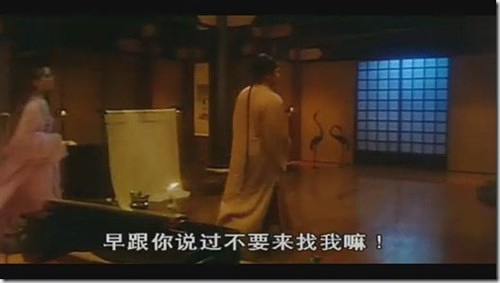
The Golden Swallow version:
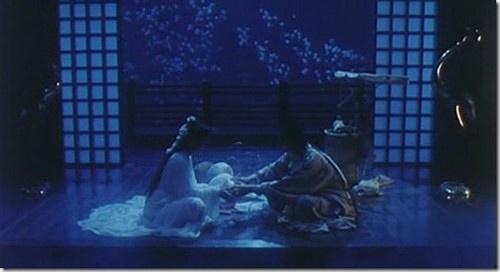
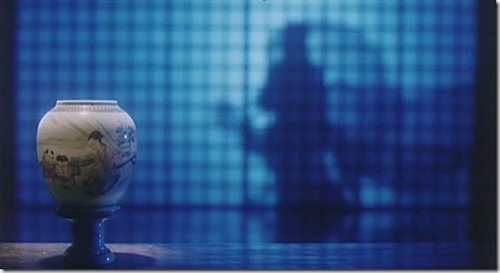
90% similar to the original. Both films’ art director was Hsi Chung-wen. (That piece of pottery looks familiar, right? Scroll up to Scene 12.)
Scene 15: Sisters
There’s always an annoying little sister somewhere.
Xiaoqing in A Chinese Ghost Story:
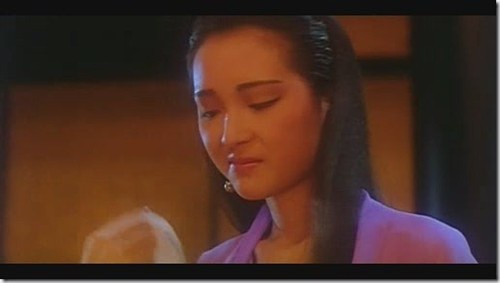
Xiaoshuang in Golden Swallow:
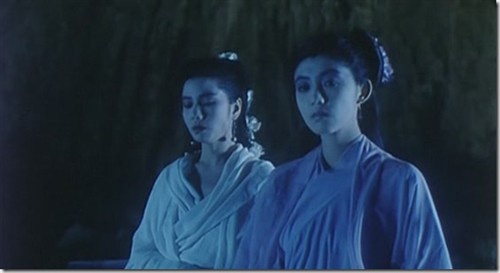
Here’s a picture of Xiaoxue and Xiaoshuang doing their ‘double flight’ (hee hee):
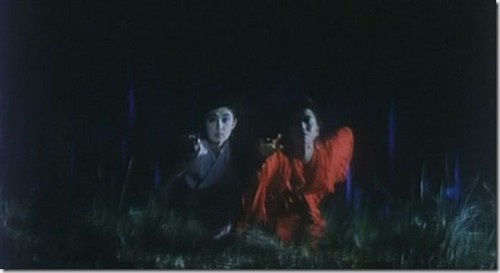
Now look at the buck-toothed fox-demon little sister who farts someone to death at the beginning of The Fox Fairy:
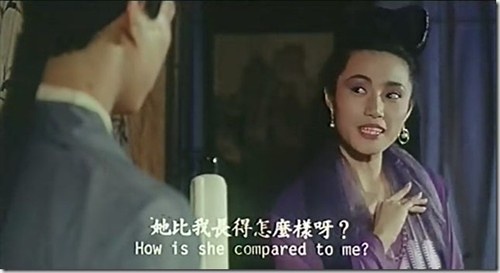
Scene 16: Grandma Enters
Grandma makes a grand entrance in A Chinese Ghost Story. One body, yin and yang; unbeatable tongue skills; the most classic monster image in Hong Kong film history:
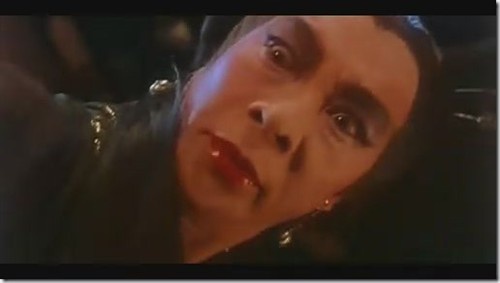
The Grandma in Golden Swallow was copied from the Empress Dowager, right?:
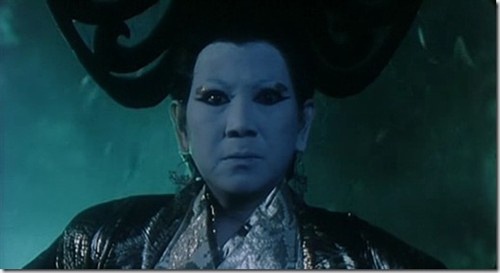
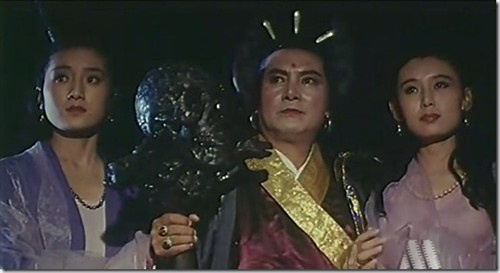
In The Fox Fairy, Grandma was changed into ‘Daddy,’ and somehow even has a beauty mark (Orz):
Scene 17: Hiding
Grandma has a keen nose in A Chinese Ghost Story, so Ning Caichen hides from her in Xiaoqian’s bathtub:
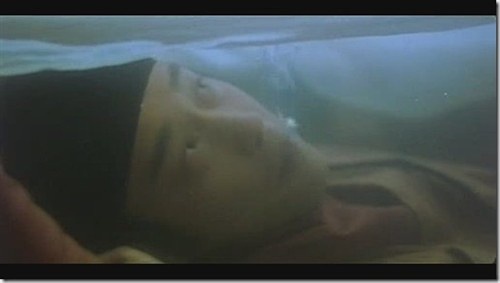
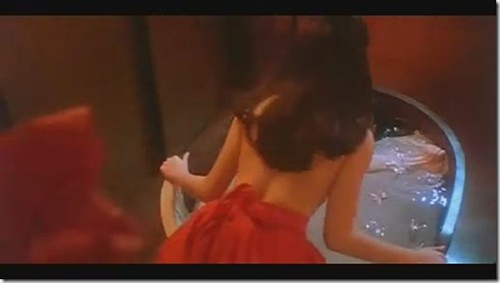
How many innocent young men did this scene send into an adrenaline-and-other-fluids frenzy back then~~
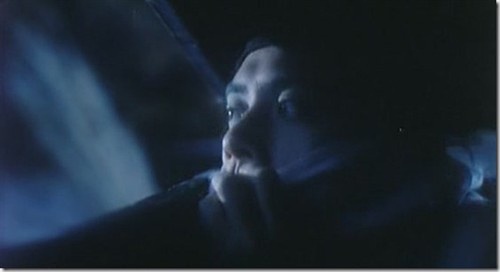
In Golden Swallow, the bathtub was changed into a coffin:
Scene 18: Dawn, Please Don’t Come
The original theme song, ‘Dawn, Please Don’t Come,’ is sexy:
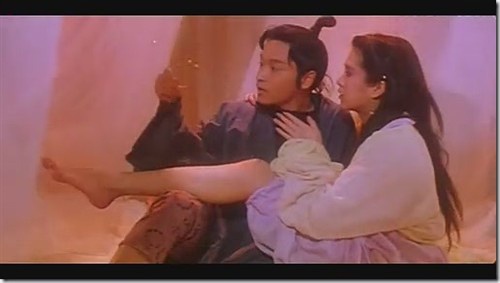
And the two of them get it on.
The pool version of ‘Dawn, Please Don’t Come’ in Golden Swallow is icy-sexy:
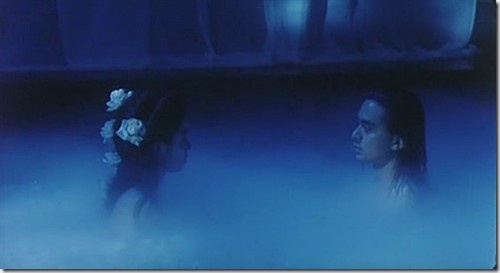
These two don’t get it on.
The The Fox Fairy version of ‘Dawn, Please Don’t Come’ somehow seems to smell of fox musk:
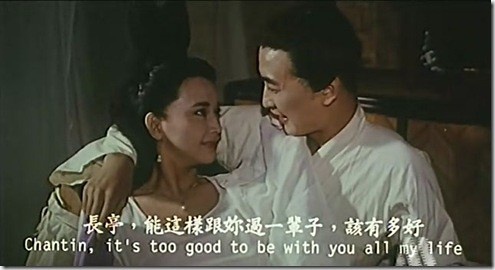
This pair of awful man-and-woman gets it on—and in a spectacularly creepy way!
Scene 19: Anklet Bell
Ning Caichen gets into trouble playing with an anklet bell in A Chinese Ghost Story:
Bootleg Ning Caichen also gets into trouble because the anklet bell breaks in Golden Swallow:
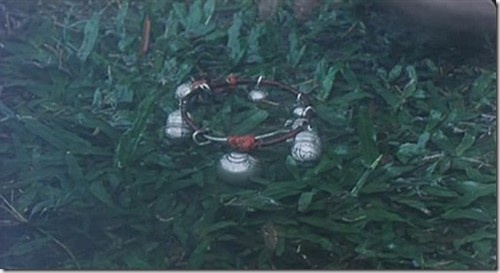
Scene 20: Spellcraft
The real Yan Chixia’s spell—‘Heaven and earth have no limit; lend me the power of the universe.’ I used to fantasize about this move all the time as a kid:
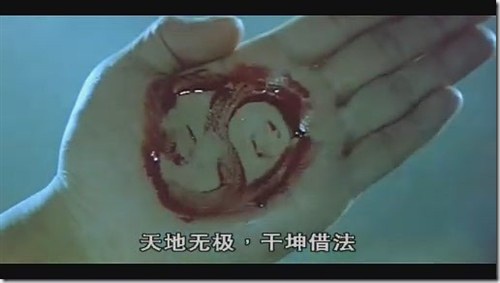
Behold the jaw-droppingly awful, earth-shaking, heaven-and-hell-screaming, super-invincible terrifying spell in The Fox Fairy (I didn’t Photoshop the subtitles; they really are like this):
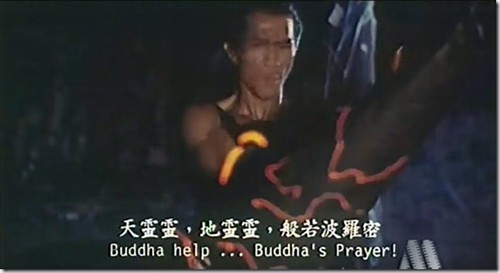
Orz。
Scene 21: The Truth
The true face of Xiaoqian’s boudoir in A Chinese Ghost Story turns out to be a mass grave:
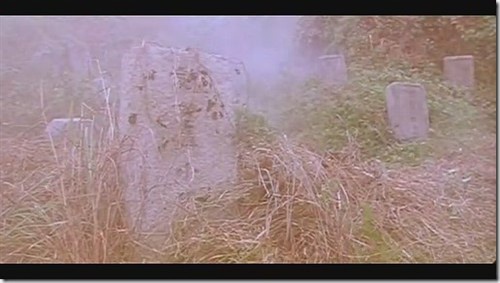
In Golden Swallow, it was changed into a pond:
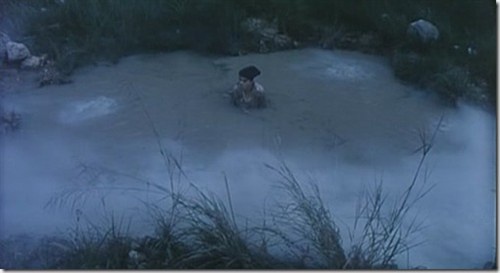
The The Fox Fairy version:
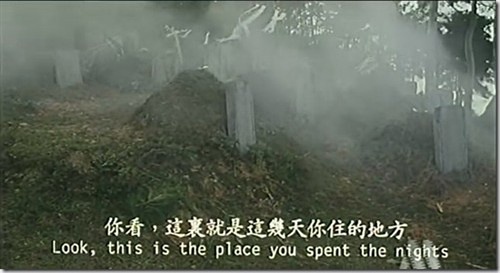
Scene 22: Transformation
The real Xiaoqian unleashes her power, changing from purple robes into white:
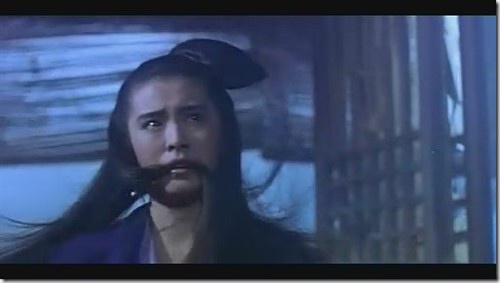
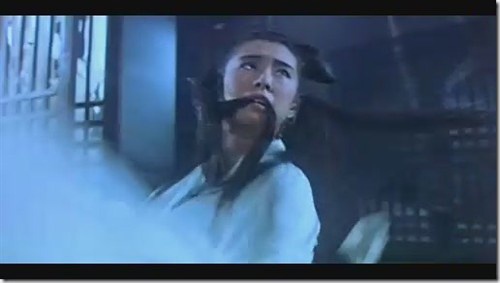
The bootleg Xiaoqian in Golden Swallow reveals her true face, also changing from purple to white (is white the sacred armor of the Saints of the monster world?):

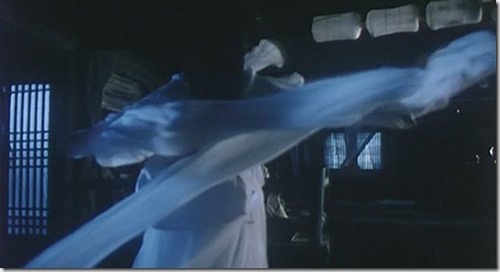
Scene 23: Taoist Talisman
The real Yan Chixia uses a talisman to summon his sword:
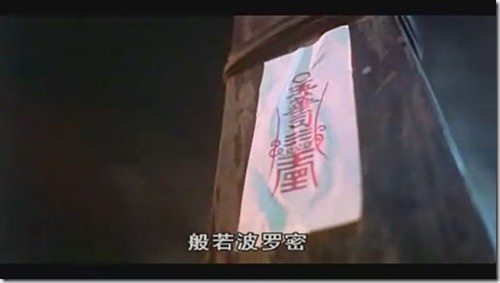
In Taoism, divine weapons have to be ‘summoned,’ so the sword isn’t drawn—it is called forth with a talisman. It’s a very carefully considered detail.
Golden Swallow does something similar: the bootleg Yan Chixia’s sword has a talisman on it, and he controls it with blood:
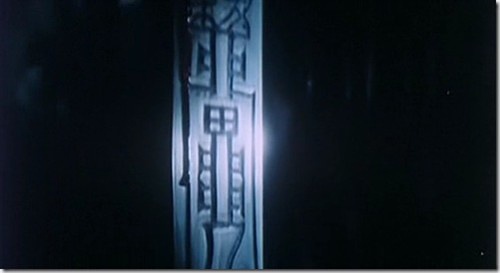
And the talisman in The Fox Fairy:
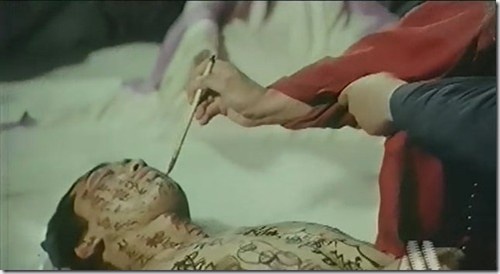
First we have a Taoist beating a wooden fish; here we have monks drawing talismans, then a group of monks chanting sutras around a Tai Chi diagram. I can only bow before this film’s writers, director, and art department. Orz
Scene 24: Demon Realm
The real Yan Chixia takes Ning Caichen into the demon realm:
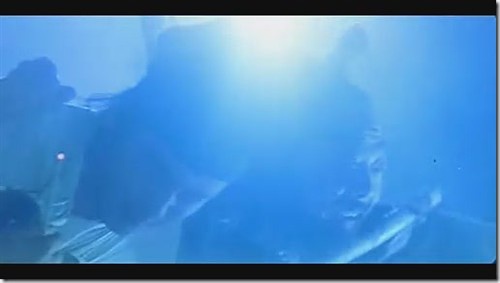
The Golden Swallow version:
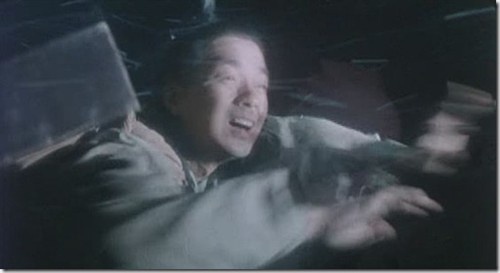
The scene is 99% similar.
The demon realm in The Fox Fairy… is basically a bandit king’s mountain stronghold:
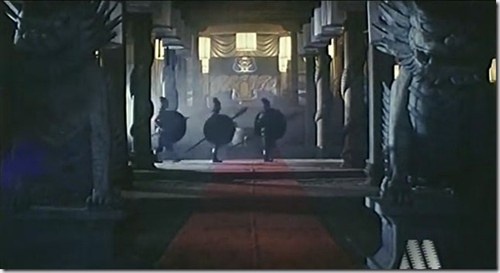
Scene 25: Black Mountain Demon
The real BOSS, the Black Mountain Demon, makes a grand entrance, radiating demonic energy:
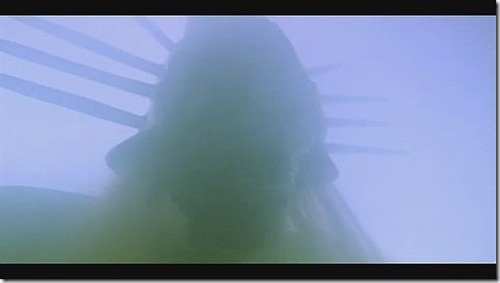
Golden Swallow splits up Yan Chixia and merges Grandma with the Black Mountain Demon. So the full name of that beauty-marked Grandma is ‘Black Mountain Grandma’ (Orz). I won’t post another picture here.
Now look at the creepy Black Mountain Demon in The Fox Fairy. He really is a bandit king (look at the attendant on the far left, with a logo stuck to his chest—is he a superhero from another movie?):
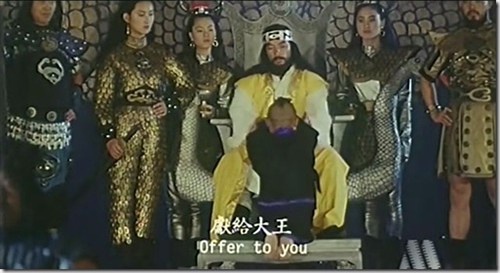
Scene 26: Final Battle
The duel between Yan Chixia and the Black Mountain Demon’s champion in A Chinese Ghost Story is wonderfully exciting:
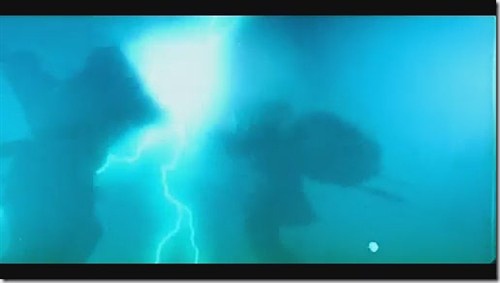
Behold the grand battle in The Fox Fairy, enough to move ghosts and gods—
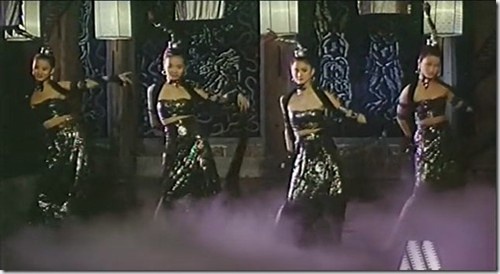
Before the final battle comes a celebration hosted by the Black Mountain Demon, complete with dancers (that headdress is seriously flashy):
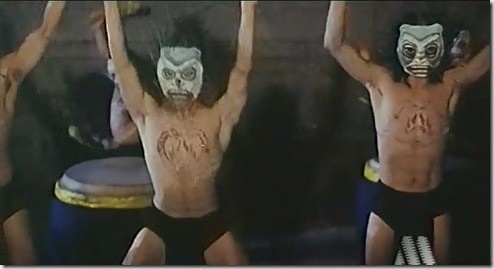
Male dancers (the female fox fairies wore swimsuits earlier; here the male demons go straight to swim trunks. Orz):
The duel begins (humans and demons all fight bare-chested; for a moment I thought I was watching American professional wrestling):
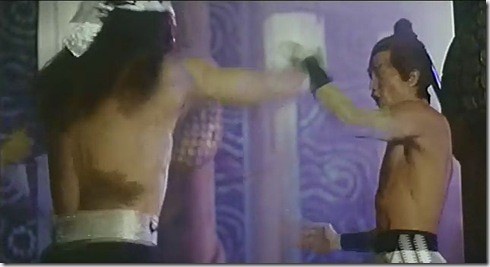
The Black Mountain Demon’s thousand years of cultivation have forged him a pair of rock-hard pecs:
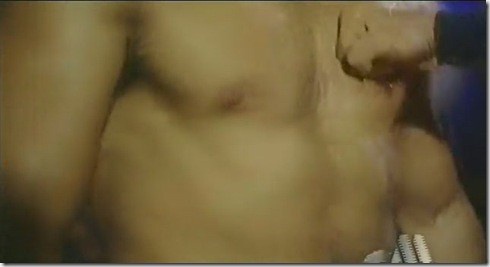
But righteous cosmic energy makes bootleg Yan Chixia’s chest harder than the Black Mountain Demon’s, so bootleg Black Mountain Demon loses this pec-to-pec contest:
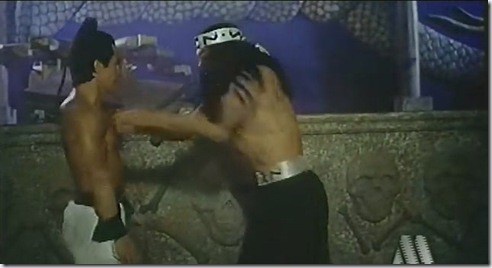
All right, that’s where the Xi Shi vs. Dong Shi showdown comes to an end.
I originally wanted to post pictures of the unbeatable disaster movie The Swordsman imitating Invincible, but screenshots made my hand cramp, so I gave up.
Finally, a few words about watching these three movies as a kid.
A Few Things About A Chinese Ghost Story, Golden Swallow, and The Fox Fairy
Back in the video-parlor era, A Chinese Ghost Story wasn’t called A Chinese Ghost Story. The first installment was called The Divine Sword Slays Demons, while the second and third were called Demons in a Chaotic World and Bloodshed at the Golden Buddha—all names bristling with murderous intent.
I suppose A Chinese Ghost Story sounded too literary and didn’t fit the average taste of video-rental audiences back then, so after import it was renamed with these macho titles. That meant it took me years to figure out the films’ real names. The practice continued for quite a while. For example, Tsui Hark’s later The Blade was renamed The Blade of the Nameless, because the original title was too subtle and not appealing enough to videotape renters.
The first time I saw a clip from The Divine Sword Slays Demons was in a video-rental shop (I remember it was still a state-run storefront). The clip I happened to catch was Yan Chixia facing the Black Mountain Demon’s champion. What I felt at the time—I later learned—was called an adrenaline rush.
Besides video parlors, small cinemas were popular for a while when I was a kid. Looking back, their films were probably on LD and projected with a projector. Calling them cinemas made them feel more upscale. At video parlors you could only sneak around on your own, but at these little cinemas the whole family could go together during holidays.
The most memorable time was when the whole family, young and old, went to see Golden Swallow. I remember even Grandma came along. Naturally, I filed the movie under ‘Wow! This is freaking cool.’ I was fairly carefree as a child, and somehow it took me several years to notice how much it resembled A Chinese Ghost Story.
As it turns out, A Chinese Ghost Story premiered in the summer of 87, and by the end of that same year we already had Golden Swallow. The efficiency of people who never tire of ruining movies is truly terrifying. The production of this film was actually quite polished. Back then, A Chinese Ghost Story had some of the very best talent in Hong Kong cinema, both in front of and behind the camera, and this film’s crew was a pretty formidable lineup too. Quite a few of the behind-the-scenes people overlapped with A Chinese Ghost Story, so among Dong Shi imitations, this one was one of the better-looking ones.
A few years later, drawn by Hu Huizhong, one of the big names from the old video-parlor days, I went to the cinema to see Fox Fairy. The influence of A Chinese Ghost Story was so enormous that, years later, we still got a work of imitation this thorough, from start to finish. It copied the original with an almost comically straight face, but the result was so clumsy that even years later, watching it again still had me laughing until I nearly fell over.
A Chinese Ghost Story remains the pinnacle of its genre to this day. Years later, Golden Swallow has come to seem a little mediocre, while Fox Fairy, after settling into the sediment of time, has turned into a camp cult classic. That is the peculiar charm produced when movies and time cross paths.
Dong Shi imitating Xi Shi is the kind of madness that belongs only to a golden age. I really miss that sort of golden-age madness.
Version history
This article was first published on Mtime, under the title One Case of Dong Shi Imitating Xi Shi: Hong Kong Cinema's Golden-Age Madness. It was deleted after Mtime redesigned its site. Other versions:
- Zhihu column version: https://zhuanlan.zhihu.com/p/20699570
Leave a Reply