Spoiler warning: This article contains my theories and wild speculation after watching the first 76 episodes of Attack on Titan.
The theories and wild speculation in this article were inspired by these two legendary posts. Many thanks! They are:

[Writing] A Complete Analysis of the Writing of the Attack on Titan World (hereafter abbreviated as the [Writing Legendary Post])

[Review and Analysis] Read the Plot of Attack on Titan Carefully Again (hereafter abbreviated as the [Review Legendary Post])
Part One: The Titans’ Song of Ice and Fire
To you, two thousand years from now—Eren Reiss Jaeger, my dearest friend, this is our story. One day, you will remember all of this:
845, that day, humanity finally remembered the fear of being under their control, and the humiliation of being imprisoned in a birdcage…
I’m analyzing Attack on Titan for the following reasons:
1. Attack on Titan is a work offoreshadowing woven through the story. Hajime Isayama once said in an interview that he had worked out the main plot and ending of Attack on Titan long ago, and that serialization was merely a matter of filling in details and making small adjustments. So Attack on Titan isn’t like those generic hot-blooded shōnen manga that randomly add and remove huge chunks of plot according to readers’ reactions as they are serialized—just punching forward wherever they happen to be (Dragon Ball, I’m looking at you). Instead, it follows a framework planned from the very beginning, planting huge numbers of clues, hints, and pieces of foreshadowing throughout the story. Without those clues, theorizing wouldn’t be possible. And judging by the signs so far, Isayama doesn’t seem to be planning to dig holes and leave them unfilled (how rare). So I’m merely filling the holes one step ahead of the author. I believe the author will fill them in himself eventually (I’m just that kind).
2. Attack on Titan may be a work of hard science fiction. This doesn’t mean that every supernatural thing in the story has to hold up perfectly in scientific detail. It means that although the setting of Attack on Titan initially looks rather unreasonable, even a little ridiculous, as various technological details are revealed, we have reason to believe that the story’s true time setting is a high-tech future world (or at least a world whose technological level is comparable to that of the present day).
For example—


The supernatural stuff in Attack on Titan doesn’t seem to be entirely made up by the author on a whim. It ought to be the sort of stuff that could appear under a high-tech setting like this. Within the framework of the story, all the strange and seemingly supernatural things that appear can hold together logically. The technological wild speculation in Part Two is based precisely on this point (it doesn’t come up much in Part One).
3. Attack on Titan is a work with considerable literary ambition. Although many people think Isayama’s drawing skills are terrible, I have to say I’m genuinely impressed by the literary expressiveness he manages to bring out. For example, the expressive power of these classic scenes—


My personal god Liang Wendao has analyzed this before. Take a look if you’re interested—
Eight Minutes of Open Book: Hajime Isayama’s Attack on Titan—Eight Minutes of Open Book, 20110404
Since it has literary ambition, it naturally contains some elements commonly found in classic literature.
For example, the story’s themes involve struggling against fate—which is precisely the theme of Attack on Titan, and also the theme of a great many classics;
Another example is this opening scene—

Does the tone of these two opening lines remind you of that famous opening passage from Márquez’s One Hundred Years of Solitude?—
Many years later, facing the firing squad, Colonel Aureliano Buendía would remember that distant afternoon when his father took him to discover ice.
Another example concerns technique: classic literature is good at “writing the real thing backward.” The most typical example might be Dream of the Red Chamber, which appears to be about prosperity but is actually about the collapse of prosperity. In other words, what it really wants to express is exactly the opposite of its surface symbols. Could Attack on Titan be using this technique? I think it is. I’ll call upon the goddess Hange to back me up—


Some of my wild speculation comes from the assumption that quite a few details in Attack on Titan are actually “writing the real thing backward.” I believe that in Attack on Titan, the truth of many things may be exactly the opposite of their appearance. For example, the truth about the Titans may actually be some kind of “little thing”; Eren’s origins, too, may be exactly the opposite of what they currently appear to be.
So, next, I’ll use the six elements of narrative writing my elementary-school Chinese teacher taught me—time, place, characters, cause, course, and result—to give a blunt summary, theorize about, and wildly speculate on some of the major mysteries in Attack on Titan. Since the Attack on Titan serialization seems to be approaching its end, the upcoming chapters will surely reveal the official answers in rapid succession, so this article is destined to be slapped in the face by new chapters at any moment. But we entrepreneurs (I’ve recently started a business, you know~) have never been afraid of getting slapped in the face.

Part One will begin by analyzing time, place, and characters.
I. Place
Let’s start with the easy stuff. First, we’ll analyze where the story of Attack on Titan takes place—or, more precisely, where the three walls in the story are located on Earth.
The clues are hidden in the following places.
Clue One:
First, there is the writing on the inside cover of the collected volume deciphered by the [Writing Legendary Post]—
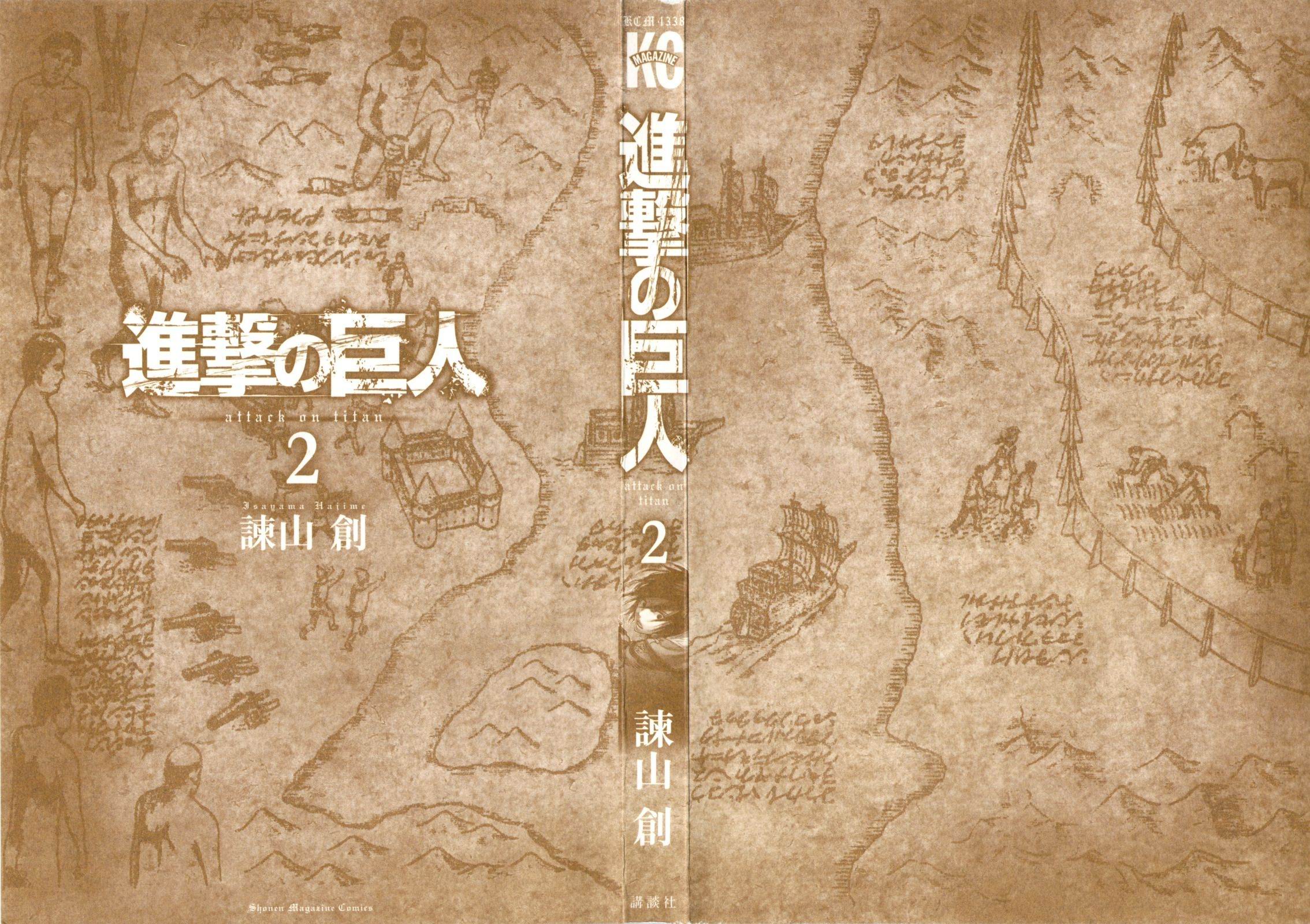


The important information obtained here is:
1. Humanity erupted into a world war, and most of humanity died because of the war.
2. Then the Titans appeared.
3. Some of the surviving humans began to flee.
4. Direction: out to sea. A new continent.
5. The three walls already existed before the fleeing humans arrived.
Before accepting this information, we have to ask one question: Is all of it reliable?
My answer is: not all of it. The stuff on this inside cover is actually part of the history textbook used by the people inside the walls today. The textbooks used in schools inside the walls appear repeatedly in the manga, and they have exactly this picture-book style of combining text and illustrations—
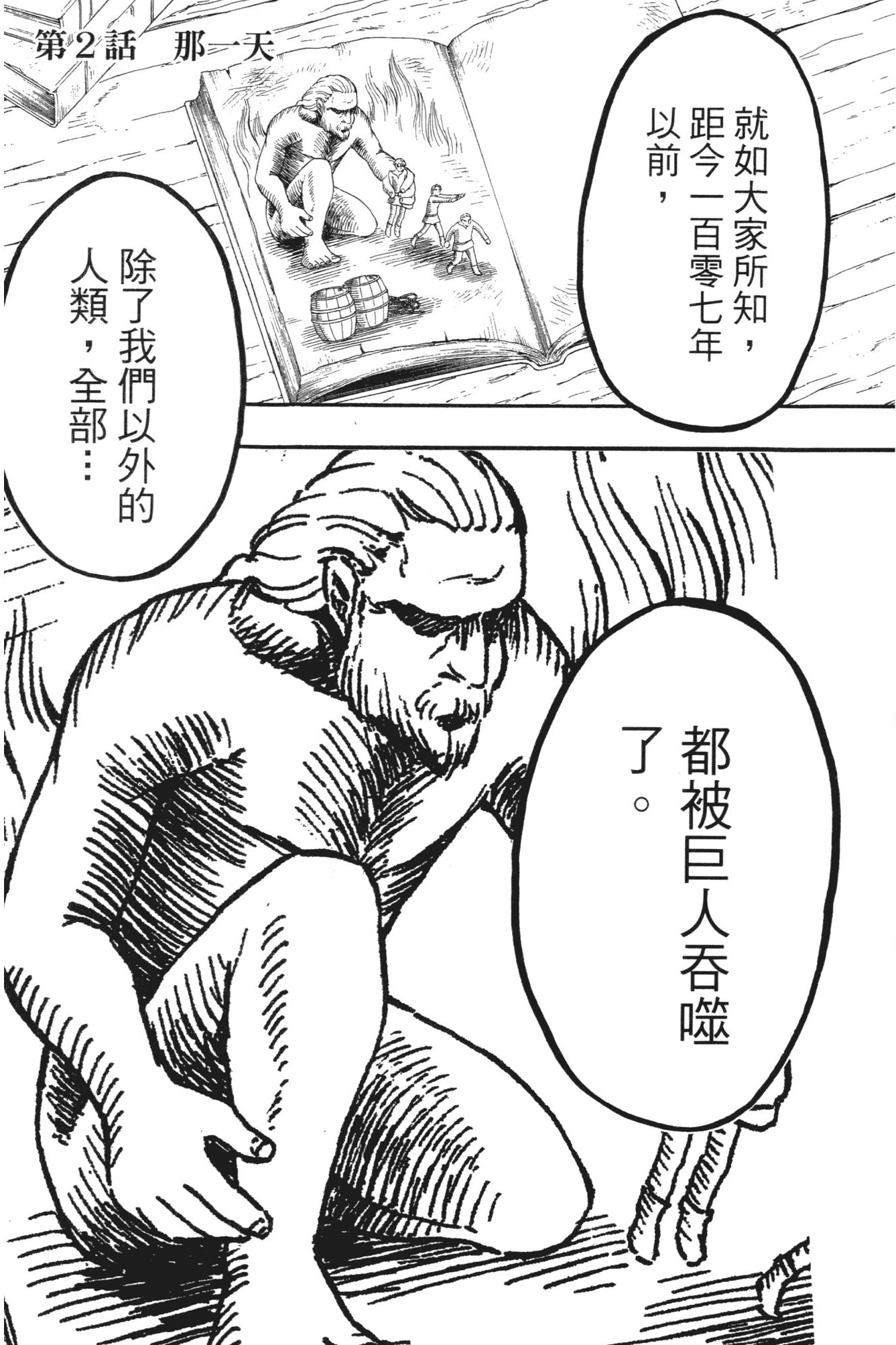
So the information presented on this mysterious inside cover is actually the history the First King wanted people to believe after altering the memories of the humans inside the walls. It isn’t necessarily all true history. So which of the five points above are reliable? I believe that, except for point 5, all of the first four are reliable. The reason is that only the true origin of the walls—the fact that they were made by the First King, a Titan inside the walls—was something the First King and the Reiss royal family desperately wanted to conceal, and therefore needed to alter. The other four points seem to have required no alteration.
So the walls are located on a continent overseas. In other words, a very large island!
Clue Two:
The forbidden book secretly hidden by Grandpa Armin—
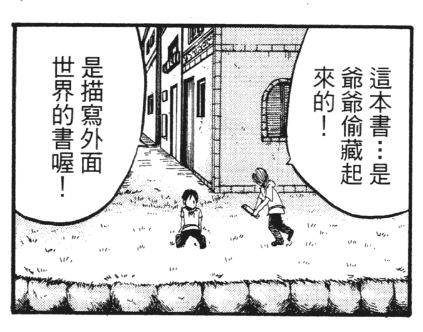
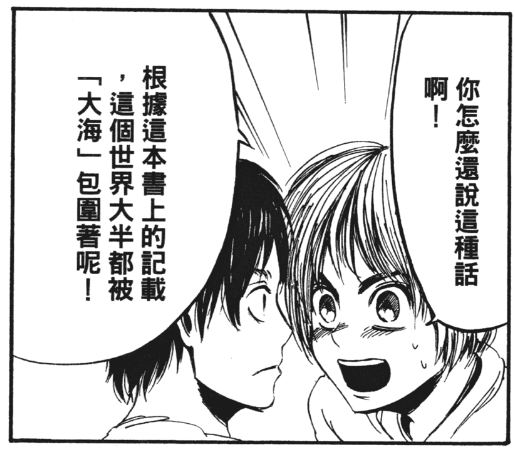


Many readers may misunderstand this and assume that the book Grandpa Armin hid was an ancient geography book handed down from before humanity entered the walls. But it isn’t! If it were, the information that could be gleaned from it should be a much grander and more complete description of the outside world—far more extensive than the material above.
And judging from the information revealed in the few illustrations above, the author of this book did not understand the outside world. He had no real knowledge of it; he merely made scattered records of what he saw and heard there. So this book should be nothing more than a travelogue written in the early period of wall civilization (at least a little earlier than Grandpa Armin), by someone like a future member of the Survey Corps who ventured outside the walls, happened to travel rather far, and recorded what he saw and heard.
He once reached the seaside but couldn’t see the edge of the coastline, so he inferred that most of this world was surrounded by the sea—and that fits the earlier “large island” hypothesis.
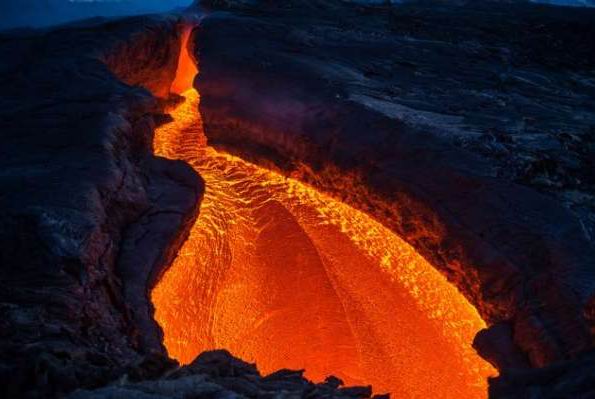
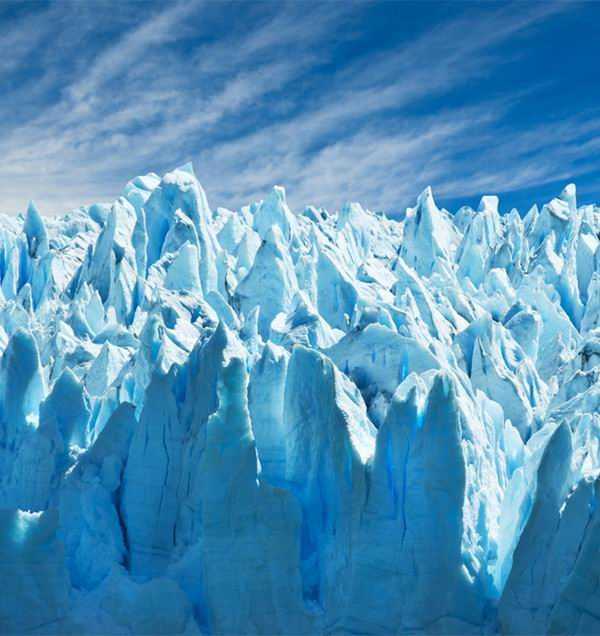
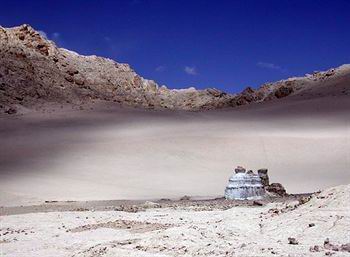
Then this author wandered into the interior of this large island and witnessed “water of flame,” “frozen earth,” and “snow of sand.” These are obviously unusual landforms or geographical phenomena, but since the author knew nothing about such landforms, he could only describe them in highly literary terms (without knowing what they were actually called).
So what exactly are “water of flame,” “frozen earth,” and “snow of sand”?
“Water of flame”: Some subtitle groups translated it as petroleum, which is clearly overinterpretation. According to the reading above, “water of flame” is something the travelogue’s author saw with his own eyes: something with actual flames burning, yet flowing like water. What else could it be? Magma, obviously!
“Frozen earth”: A glacier.
“Snow of sand”: The presence of sand suggests a desert or gobi landscape, but there is snow too. Strange—aren’t deserts supposed to be especially hot? Actually, no. There is a type of desert called a cold desert. Definition: a desert in the cold climates of the poles, high mountains, plateaus, and so on. Strong freeze-thaw weathering in cold deserts produces large amounts of rock debris. So “snow of sand” is actually a cold desert.
So the current theory is: this place is a large island, with magma (a volcano), glaciers, and a cold desert. The answer is practically shouting at us already. But I’ll still add a few more blows.
Clue Three:
The terrain where the walls are located was shown in the manga—

It is higher in the middle and lower toward the outside. This kind of terrain is called aplateau.
Wikipedia:
A plateau (also called tableland) is a relatively large, elevated area of flat terrain at a comparatively low altitude. The center of a plateau has a gentle slope, while its edges are steeper, rising above the low hills around it. Some people consider plateaus a type of highland. Generally speaking, a large flat area at relatively low altitude is called a plain, while a large flat area in mountainous terrain at a very high altitude is called a highland, such as the Tibetan Plateau. A plateau falls between the two, with an elevation ranging from one hundred to several hundred meters. Therefore, when plateau or tableland is translated into Chinese, attention must be paid to the elevation of the landform. Put simply, a plateau is a hill that has been leveled.
So the current theory becomes: a large island, with a volcano, glaciers, a cold desert, and a plateau.
Clue Four:
The writing on the cans at Utgard Castle:
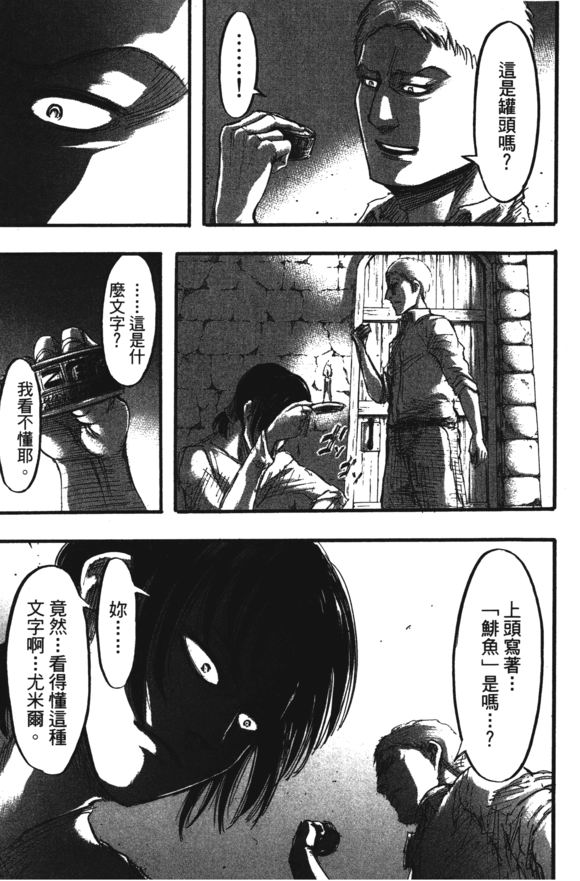
According to the analysis in the [Writing Legendary Post] ([Writing] A Complete Analysis of the Writing of the Attack on Titan World), only one writing system has actually appeared in Attack on Titan (though it has two variants, somewhat like horizontal and vertical Chinese writing). The reason the passage above caused so many misunderstandings is that the Chinese translation was wrong. Reiner did not say, “I can’t understand this writing.” He said, “I don’t know what this character means.” In other words, although he could sound out the word “herring,” he didn’t understand what a “herring” was. That is, he had never seen one and had no way of knowing what the thing was.
But Ymir knew!
In other words, Ymir originally lived somewhere where people could see and eat “herring.”
And according to the explainer in the [Writing Legendary Post] ([Writing] A Complete Analysis of the Writing of the Attack on Titan World), the Japanese word for “herring” refers to a narrower range than the Chinese word for herring, basically specifically Pacific herring, Clupea pallasii.

And this fish is distributed (according to the [Writing Legendary Post]) in:

—the eastern and western coasts of the Pacific, as well as the coasts of Northern Europe.
In other words, Ymir may originally have lived in one of these three places. But the east and west coasts of the Pacific can be ruled out. That’s because “Ymir” is precisely the name of the progenitor of the Frost Giants inNorse mythology. Isayama definitely didn’t pull that name out of thin air. Therefore, Ymir originally lived on the coast of Northern Europe. After wandering somewhere outside the walls for 60 years and turning back into a human, she finally had the chance to come inside the walls and live there in hiding for a while. This suggests that the large island where the walls are located is not far from the coast of Northern Europe.
So the current theory becomes: a large island, with a volcano, glaciers, a cold desert, and a plateau, not far from the coast of Northern Europe.
Clue Five:
Still based on the analysis in the [Text Masterpost], much as Reiner had never seen herring, the people inside the Walls had never seen apes. So when the Beast Titan appeared, everyone inside the Walls assumed it was some kind of animal, but had no name for it like “ape” or “monkey”—


But Reiner and the others undoubtedly knew what an ape was.
So the theory now becomes: a large island with volcanoes, glaciers, cold deserts, and plateaus, not far from the coast of Northern Europe—and there are no monkeys on the island.
All right, time to reveal the answer. On Earth, there is basically only one place that fits all those conditions—Iceland!

Geographically, Iceland belongs to the Northern European cultural sphere and is quite close to the coast of Northern Europe, which fits the clue about being near Northern Europe.
Iceland is known as the island of ice and fire. It has many volcanoes and is famous as the “fire island of the Arctic Circle,” with 200 to 300 volcanoes in total, including 40 to 50 active ones. That fits the volcano clue.

Iceland was not only the center of the Quaternary ice cap; modern glaciers are still found across its highlands. Most are shield-shaped ice-cap glaciers, along with a small number of cirque glaciers, and they cover 11.5% of the island. That fits the glacier clue.

Most of Iceland’s interior is covered by highland desert. But the reason it is a desert is not heat; it is that the land is constantly soaked by rain and snow, making it difficult for plants to survive. That fits the cold-desert clue.

As for the terrain, most of Iceland consists of plateaus, generally 400 to 800 meters high. That fits the plateau theory.
Before humans brought mammals to Iceland, the island had only one land mammal: the Arctic fox. No monkeys.

At this point, every clue lines up. The three Walls are located in Iceland.
So the beginning of the story should go something like this: a world war breaks out among humans, killing off a huge portion of the population; Titans appear and run rampant across Eurasia, Africa, and the Americas, wiping out even more of humanity; the First King leads some of the surviving humans to Iceland, which may not yet have been threatened by the Titans, and builds the Walls. From then on, they are cut off from the outside world.
Given that Reiner and the others attacked the Walls from the south, that there were already more mindless Titans in the south, and that the climate inside the Walls was not especially cold, the Walls should be located in southern Iceland, not far from the sea.
The mystery of the “location” is solved!
And, as a bonus, it gives us a small additional conclusion—
There are at least three human settlements still left. They are:
Settlement 1: somewhere in Iceland. Established by the First King. Method of defending against Titans: the Walls. These people are very much like House Stark, living beside the Great Wall—
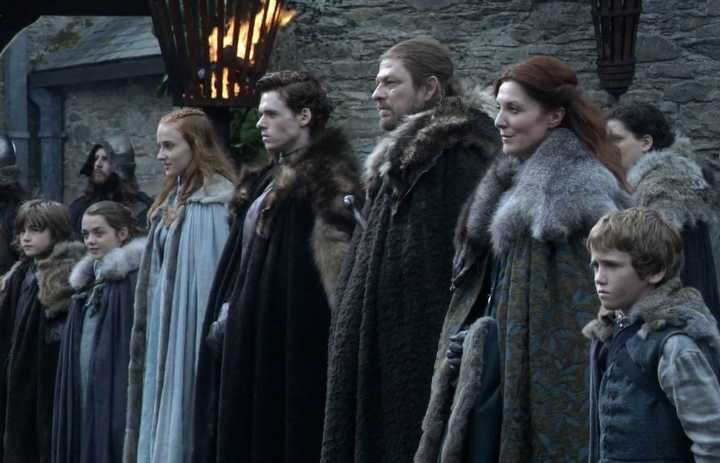
House words: “Winter is coming.”
(Don’t rush to hit me just yet. I’ll explain later why the people inside the Walls really are connected to the idea of “Winter is coming.”)
And the Survey Corps, where Eren serves, are very much like the Night’s Watch—
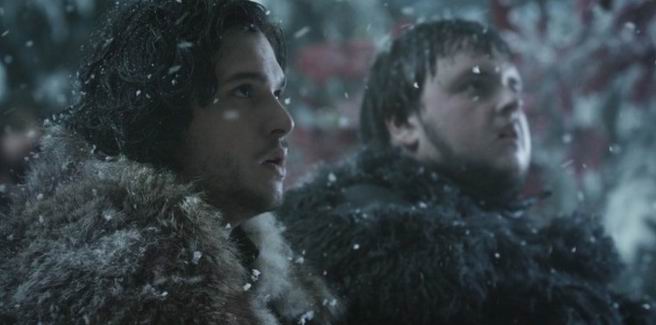

“Night gathers, and now my watch begins. It shall not end until my death.”
Settlement 2: the coast of Northern Europe. Established by Ymir’s ancestors. Method of defending against Titans: possibly living on ships (this is wild speculation). These people may have spent their entire lives at sea, staying aboard ships to escape Titan attacks and living on fish. So they are very much like House Greyjoy—
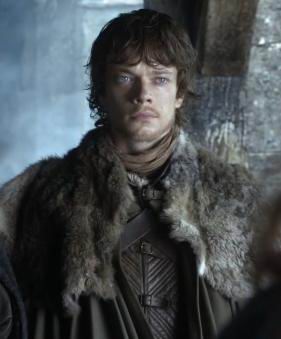
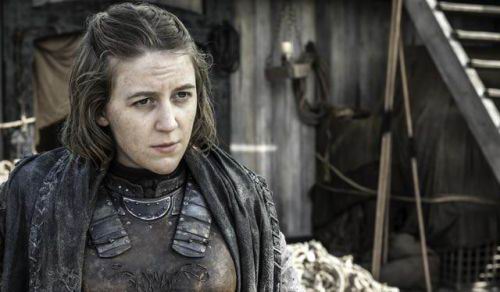
“What is dead may never die, but rises again harder and stronger.” —Huh? Isn’t that spell basically describing Ymir?
The first two settlements are relatively clear. The third requires a bit more deduction: the location of the “homeland” of Reiner and the others.
Reiner and the others have seen monkeys, so this place is not Iceland but the old continent, almost certainly mainland Europe. And they have never seen herring, so their homeland must be inland in mainland Europe.
So how did they defend themselves against Titans? It can’t just be the Walls again, can it? That was something only the First King’s ridiculously overpowered ability could create. My wild speculation is this: Europe is mountainous, and Titans are enormous. They are suited to running across plains, but may not be good climbers. So the “homeland” should be high in the rugged mountains of mainland Europe, using steep peaks to block the Titans. The “homeland” is in the high mountains of mainland Europe.
So—
Settlement 3: the mountainous inland regions of Europe. The location of the homeland. Method of defending against Titans: mountain passes. So they are very much like House Arryn of the Eyrie—
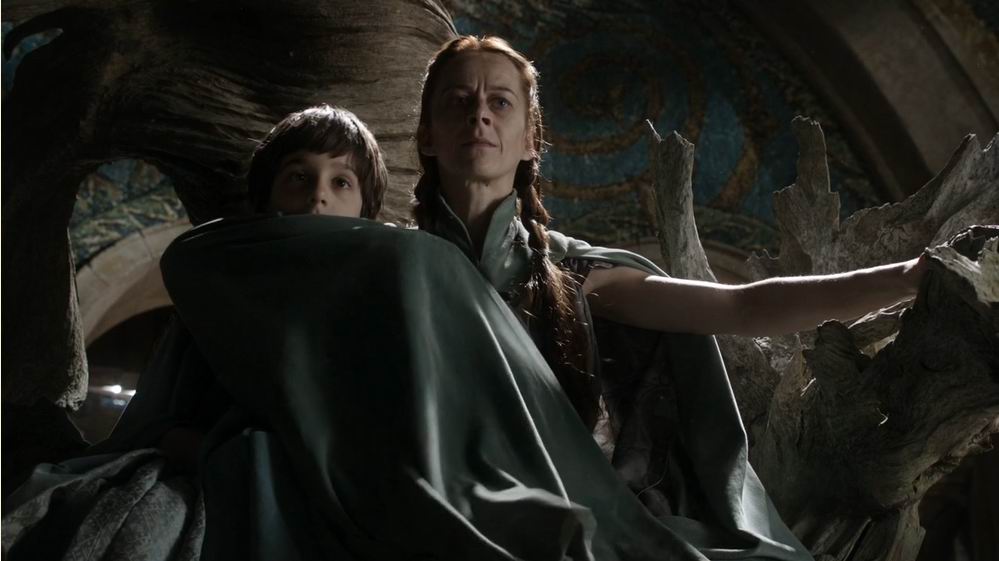
House words: “As High as Honor.”
Now you know why Reiner and the Beast Titan are both so good at climbing walls, right? They trained by climbing mountains back home.
(Please imagine the theme music from A Song of Ice and Fire here~)
The analysis of the “location” is complete.
II. Characters
The next question is naturally: where did the humans in these three settlements come from? In this section, I won’t finish analyzing the origins of all three groups, because that involves a great deal of plot analysis and has to wait for the “cause” section. Here, we’ll only examine Settlement 1—the origins of the people inside the Walls.
Let’s start with a conversation between Captain Levi’s uncle and mentor, the throat-cutter Kenny, and his grandfather—
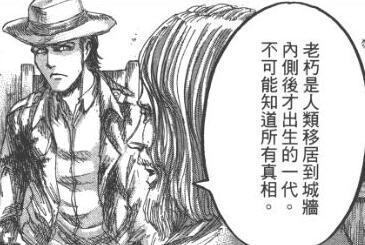
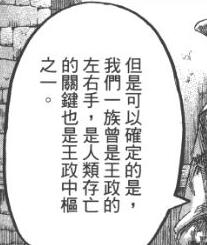
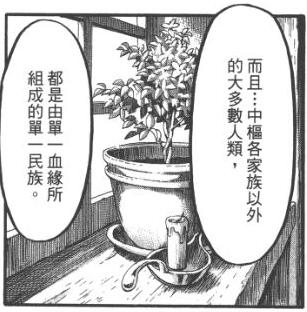
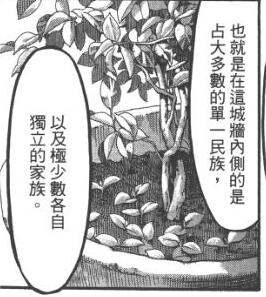
The information revealed by this conversation includes:
1. The overwhelming majority of the people inside the Walls belong to a single ethnic group.
2. With a few exceptions, such as the Ackermans, the people of the Orient, and the central nobles. They do not belong to that single ethnic group.
So what ethnic group is this single group that makes up the overwhelming majority of the people inside the Walls? By now, there is basically a consensus. You can tell from the characters’ names in the book.
Sasha Blouse Sasha Blaus
Connie Springer Connie Springer
Keith Shadis Keith Shadis
……
They are almost all German names.
So if everyone inside the Walls belongs to a single ethnic group, they should be the so-called Germanic people. And since the text emphasizes that this group shares some kind of bloodline, these people are not simply “people living in Germany” in the broad sense. They are the orthodox Germanic people descended from the Germanic tribes in the narrower sense. The Germanic tribes did absorb all kinds of genes throughout history, of course, but overall we can regard them as an ethnic group with close genetic ties.
(Are you starting to feel like something a little weird involving race is seeping into this?)
The people inside the Walls are descendants of devils
The people from the homeland feel intense hostility toward those inside the Walls.
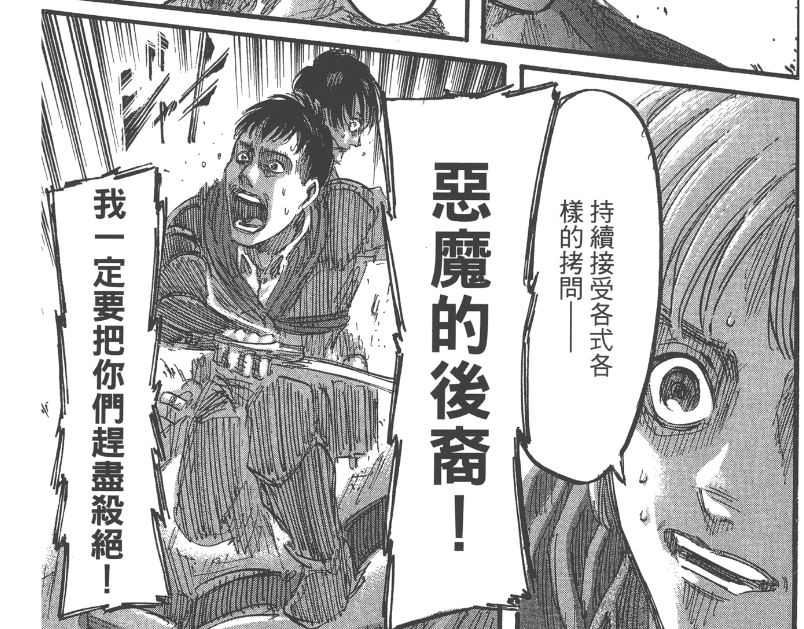
After Bertholdt Hoover was provoked into anger by Armin, he blurted out: descendants of devils.
If Hoover’s words are credible, then we should infer that although the people inside the Walls currently seem harmless, their ancestors committed an unspeakably grave crime. The ancestors of the people inside the Walls were devils. Here we seem to see the “reverse-the-positive” technique I mentioned earlier. From the very beginning, what most moved readers was the nameless resentment and fury of the people inside the Walls, represented by Eren—in other words, at the start of the story, justice seemed unquestionably to belong to those inside the Walls. But by the time we reach the scene above, we have reason to suspect that the truth may be exactly the opposite. For all we know, real justice actually belongs to the people outside the Walls.
This was later confirmed by Frieda Reiss, the older sister of Historia Reiss, who inherited the First King’s memories—
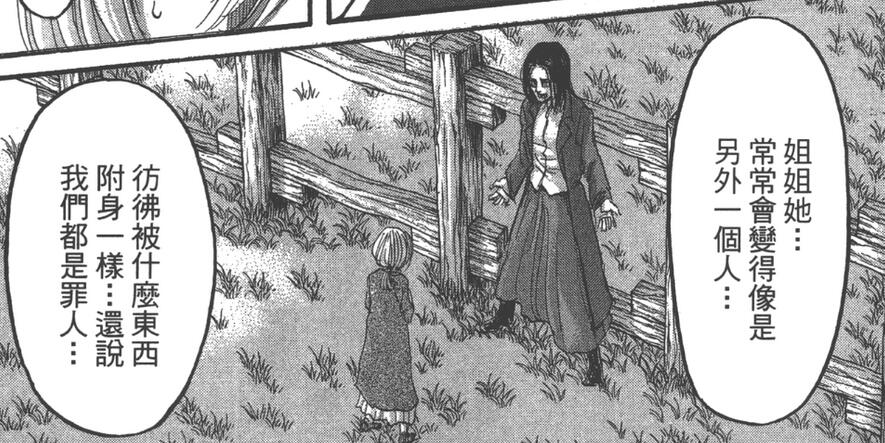
—Frieda said that everyone inside the Walls was a sinner, echoing Hoover’s “descendants of devils.”
Now let’s look at Annie’s memories:

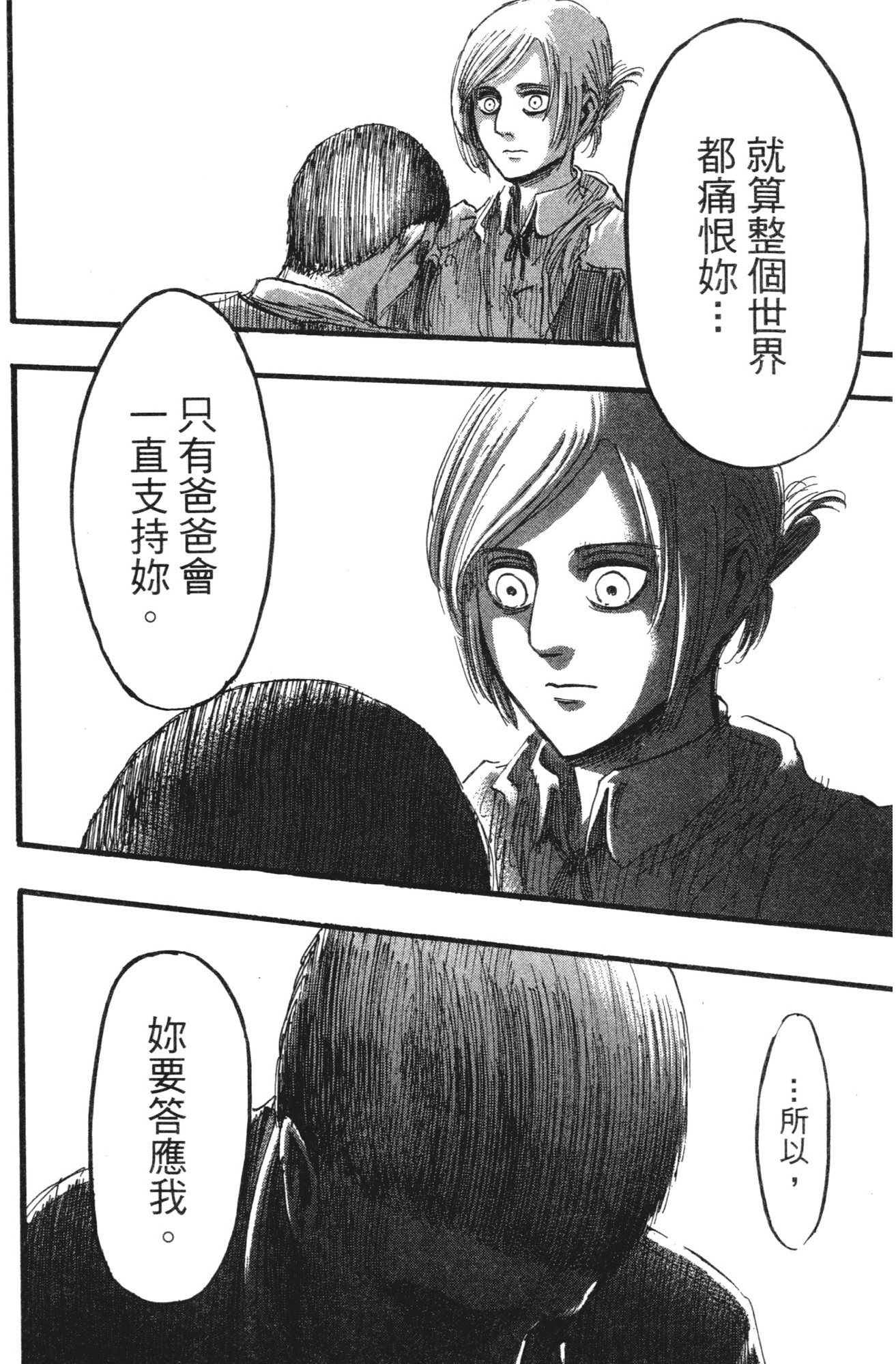
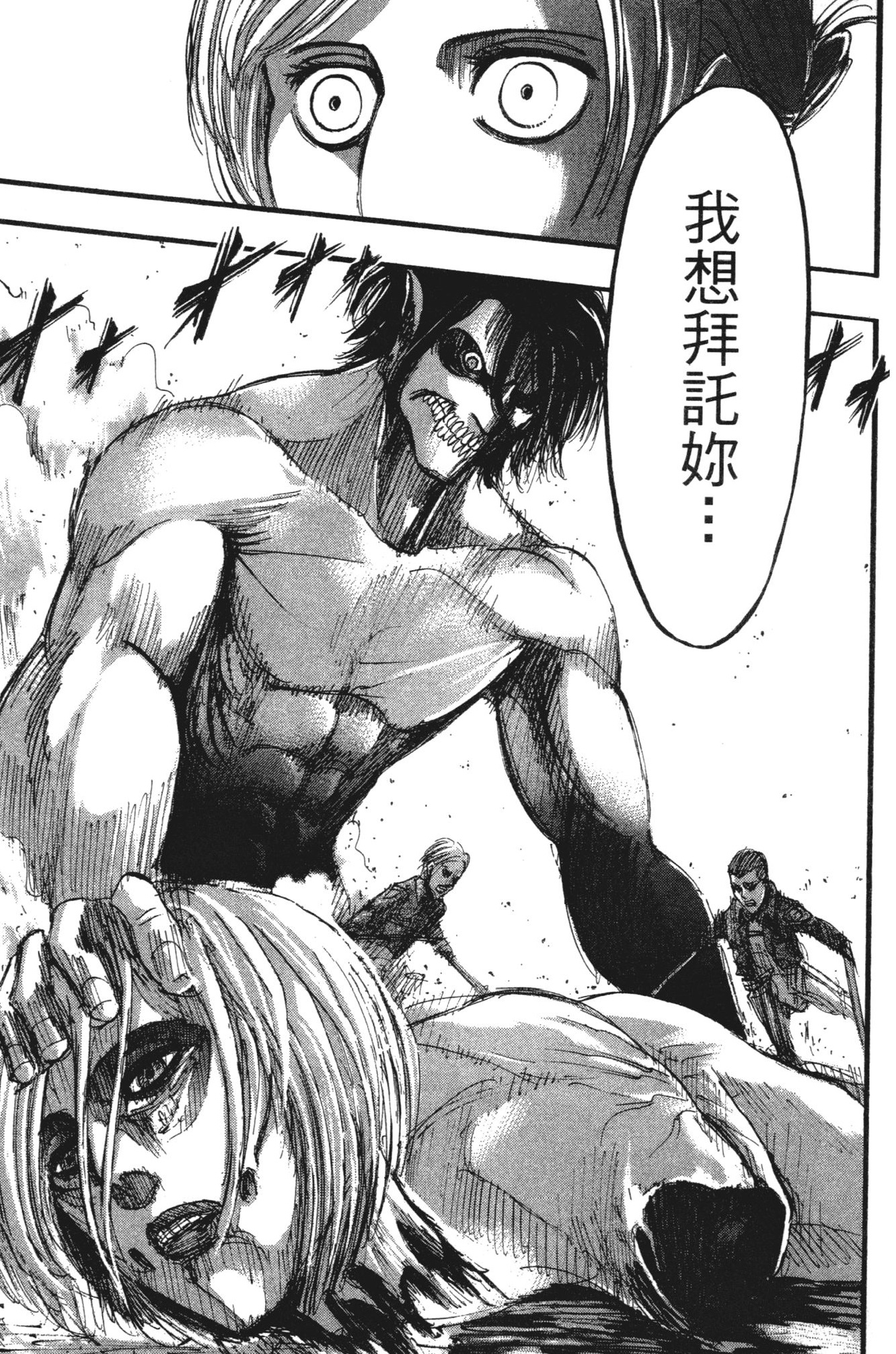
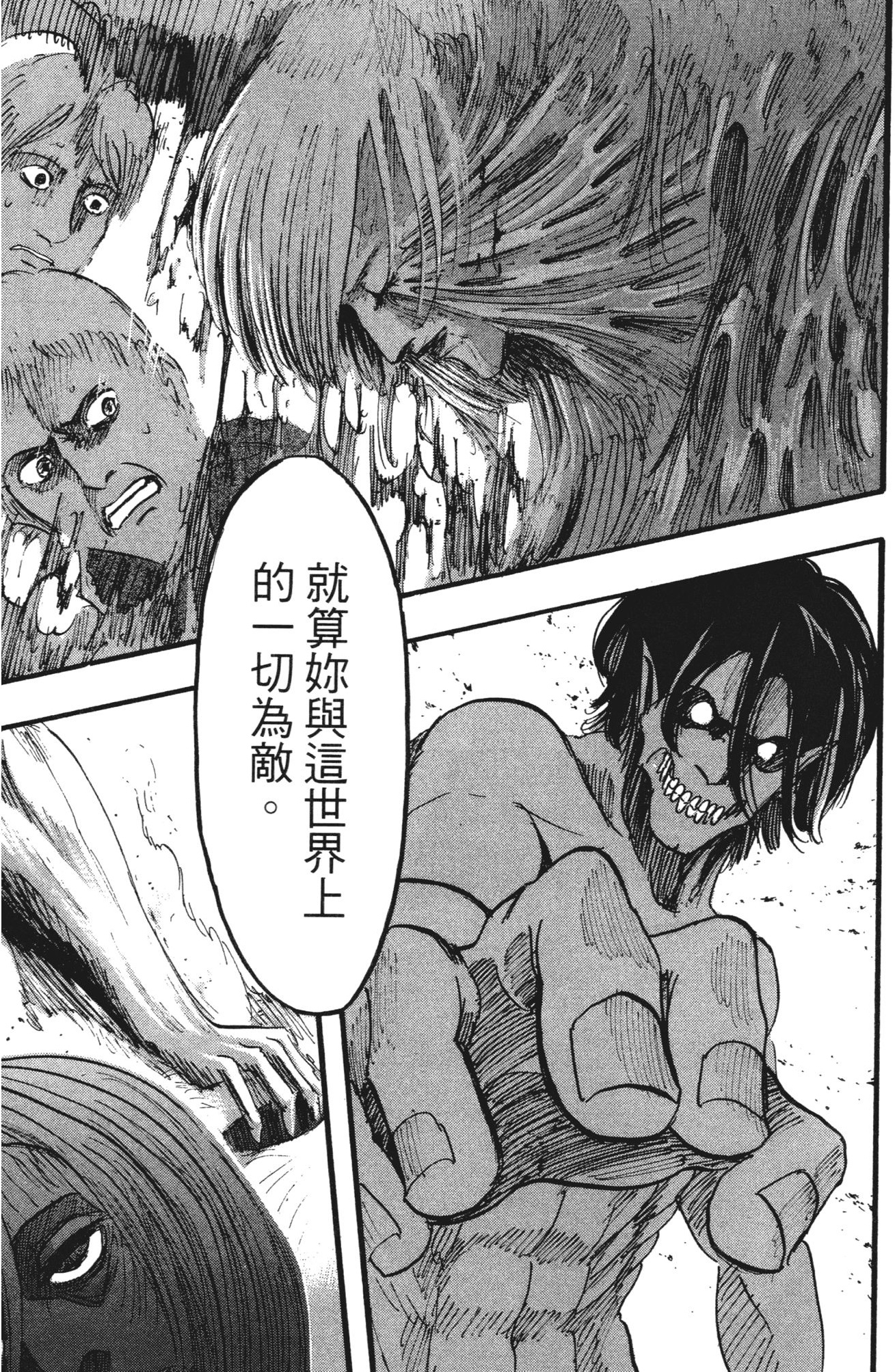

According to the [Retrospective Masterpost] ([Rereading and Analyzing the Plot of Attack on Titan Carefully]), we can see that the homeland group seems to possess an extremely powerful sense of justice and mission when it comes to wiping out the people inside the Walls. The conflict and struggle Reiner and the others feel is that the people inside the Walls are innocent in the present and have not personally committed any crimes. Attacking such innocent people is something their consciences cannot bear, creating a huge conflict with their sense of justice and mission—the belief that the people inside the Walls must be destroyed.
Why the people inside the Walls must all die
So why do they still have to kill the people inside the Walls?
The apparent reason seems to be what Hoover said: the people inside the Walls are descendants of devils, and their ancestors committed an unspeakably grave crime. The debts of the ancestors must be paid by their descendants.
But that reason is far too inadequate. The narrow logic of “the son must pay the father’s debt” is not enough to support the homeland group’s powerful sense of mission. So I believe the real reason is—
The descendants of the people inside the Walls will commit that same world-shattering crime again in the future! In other words, the people inside the Walls are not only descendants of devils; they are destined to become new devils themselves!!
That is the source of Annie’s father’s powerful sense of mission: yes, the people they are trying to slaughter really are innocent, but he knows that these innocent people will inevitably become devils in the future.
It is also the source of the homeland group’s equally powerful guilt: to prevent that hellish future, the blade must be brought down on the innocent in advance!

(This is actually a famous moral dilemma with many variations. For example: if you could take a time machine back to the end of the 19th century, would you strangle Hitler while he was still a harmless baby?)
What crime did the ancestors of the people inside the Walls commit?
So here is the question: what exactly was the crime committed by the ancestors of the people inside the Walls?
There have been all kinds of analyses online. For example, some people say that the homeland group were the original inhabitants inside the Walls, driven out by the ancestors of the current people inside the Walls. Their feud began with an ancestral forced eviction. It sounds plausible at first glance, and there is even some indirect evidence to support it. But I think a crime of that magnitude would seem too insignificant beside the homeland group’s powerful sense of mission and guilt—too petty. I believe the crime committed by the ancestors inside the Walls must have been an unforgivable, world-destroying atrocity. After thinking it over, I feel there is only one crime that fits—
It was the ancestors of the people inside the Walls who caused the Titans to run rampant and destroyed humanity!
This hellish world we live in was created entirely by the ancestors of the people inside the Walls!
And more importantly, the people inside the Walls will commit this crime again at some point in the future. When that day comes, the few humans left alive may once again have no chance of surviving. This is what Rod Reiss’s younger brother, Uri Reiss, the previous King inside the Walls, called “the twilight of humanity”—


Why will the people inside the Walls destroy humanity again in the future? My guess is that one day, they will be unable to stop themselves from collectively becoming mindless Titans! (I’ll analyze this point in detail in the “cause” section.)
To sum up, our basic conclusion is this: the overwhelming majority of the people inside the Walls are “pure-blooded” Germans. Their ancestors—some generation of Germans—created the Titans for some reason, bringing humanity close to extinction. Then one of those ancestors, the First King of the Reiss family, somehow obtained the power of the strongest Titan. But instead of using that power to destroy the mindless Titans and liberate humanity (the First King’s baffling motives will be analyzed in the “cause” section of Part Two), he led his surviving people to Iceland, established the Walls, altered their memories, and locked their technology at a pre-modern level (the reason will likewise be analyzed in Part Two), making them believe they were living in a low-tech era like this.
And now the next question arises: what era exactly was this “pre-modern,” low-tech era set by the First King?
III. Time
There are two kinds of “time” in the story of Attack on Titan that need analyzing. The first is the mystery of the story’s calendar, such as the year 845, when the hometown group first breached the Wall—

What the hell is this “year 845” supposed to mean?
As I mentioned earlier, the First King brainwashed the first generation of people inside the Walls, wiping out most of the civilization and memories from before the Walls were built. The civilization inside the Walls was fabricated by the First King and frozen at a certain level. According to the textbooks inside the Walls, the Walls were built a little over 100 years ago. In other words, even the officially sanctioned version from the royal family admits that civilization inside the Walls has existed for only a little over a century. So how could their era be more than eight hundred years old? What year did they start counting from? When was the first year of this era? Why didn’t they start counting from the construction of the Walls?
Is it the year 845 AD? Did the First King set civilization inside the Walls at a level equivalent to the eighth century AD? Surely not. The buildings, objects, and clothing inside the Walls are at least at the level of early modern Europe, and look more like Europe after the Renaissance. At least the sixteenth century. So this calendar isn’t the AD calendar either.
Then what the hell is this calendar?
The second kind of “time” we need to crack is the true temporal coordinates of the story. The civilization inside the Walls looks like fifteenth- or sixteenth-century Europe, but that is an illusion manufactured by the First King. Humanity’s actual technological level is far beyond that. As I mentioned earlier, all sorts of clues in the manga suggest that the story’s true setting is a point in time when technology may be no lower than that of the present-day world. So the story may even be set in the future.
So the second question about “time” is: when is Attack on Titan really set? We’ll analyze that in the “cause.” For now, let’s crack the first mystery—the calendar mystery.
The Calendar Mystery
We have to infer this from the First King’s psychology—


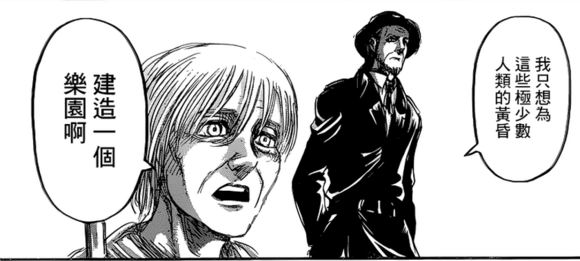
The First King’s greatest wish seems to have been to let his doomed subjects live carefree lives for a few generations. So he altered the memories of the first generation inside the Walls—the German generation that had committed the crime. Naturally, his aim was to make them forget their sin, and therefore fail to realize that their inevitable destruction was waiting for them in the not-too-distant future.
That way, apart from a small group of stubborn people who remained intensely curious about the world beyond the Walls—the Survey Corps—most of the amnesiac people inside the Walls and their descendants could stupidly enjoy the last little stretch of peaceful, comfortable days before dusk fell. The First King believed that, for humanity, which was doomed to perish, this was a form of happiness.
So, back to our question: when establishing the era inside the Walls, the First King obviously wouldn’t use the true calendar of the outside world. That real calendar would surely trigger the people inside the Walls to remember their true history. Then what should he use?
If he wanted these Germans inside the Walls to forget their sin, if he wanted them to live in a false age that felt good enough about itself, then why not set the first year of that false age in the year the glorious German nation was born? Although Germany as a nation-state was established only recently, long before Germany was born, the German people had stood in the world in another quasi-state form: the Holy Roman Empire!
The Holy Roman Empire Calendar
On February 2, 962 AD, Pope John XII crowned the German king Otto (Otto I), praising him as “the emperor of the Holy Roman Empire,” marking the beginning of the Holy Roman Empire. That was the year the German people began writing their own glorious history as an ethnic community under the name “Holy Roman Empire.” So, if you wanted to create a nostalgic wet dream for Germans, wouldn’t it be perfect to use this year as the first year of the era?

The calendar inside the Walls is actually the Holy Roman Empire calendar. The year 962 AD, the beginning of the Holy Roman Empire, was used as the first year of the calendar inside the Walls. So the year 845 when the hometown group first breached the Wall at the beginning of Attack on Titan corresponds chronologically to 962+845-1=1806, or the beginning of the nineteenth century AD.
In other words, the First King wanted the people inside the Walls to believe they were living in an era with a technological level roughly equivalent to Europe from the eighteenth to the early nineteenth century. He probably locked the Walls at this level because he thought it provided just enough productivity for people inside to live stable lives. (I’ll get into the specific reason in the next installment.)
Note that this does not mean that year 845 was really the year 1806 in the outside world. It means only that the First King wanted the people inside the Walls to believe they were living around the 17XX–18XX period.

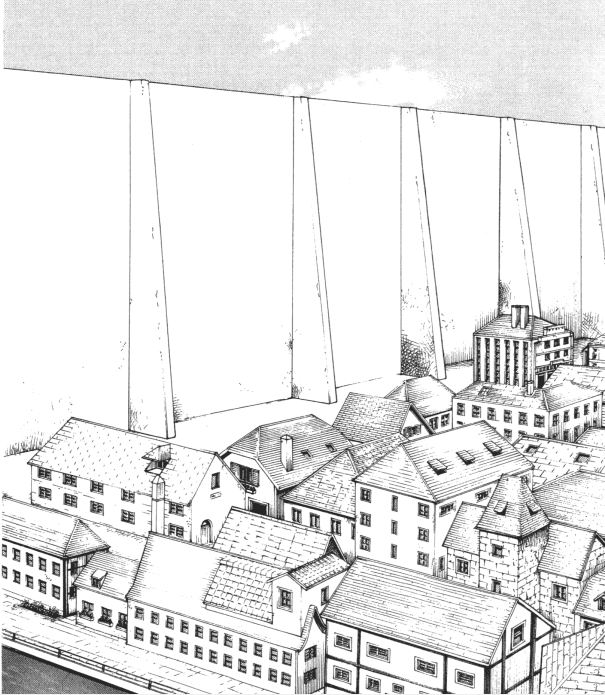
The first of the two images above is an eighteenth-century German oil painting, a glimpse of a market somewhere; the second is the Shiganshina District from the manga. Put them together and get a feel for it.
An Astonishing Coincidence: The Real-History Year 845
The idea above was originally something I came up with on a whim. But after having that brainwave, I casually looked up what happened in real-history year 845—in other words, in Germany in 1806 (which was Prussia at the time), and the result scared the hell out of me—
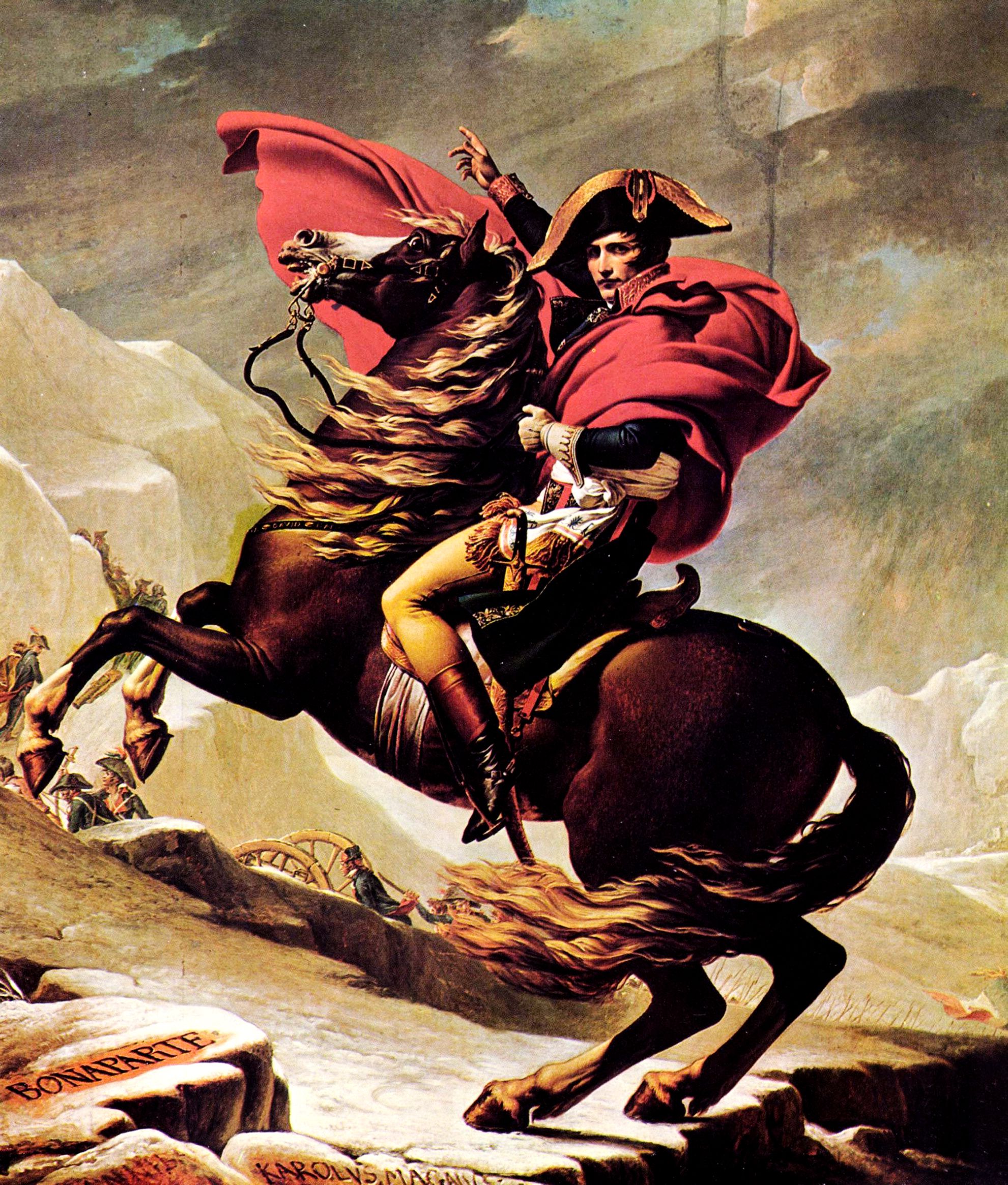
Prussia, a member of the coalition against France, was then fighting Europe’s military “giant,” Napoleon. And on October 27, 1806, Napoleon easily defeated the Prussian army and entered Berlin.
The Berlin Wall was breached!!
Did Berlin have walls back then? Of course it did!
They were called the Berlin Customs Wall—
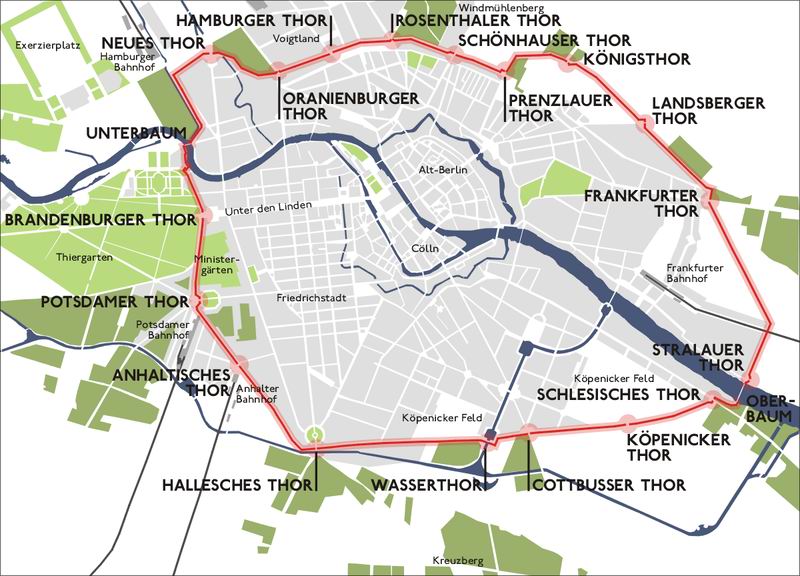
It was mainly used to control passage and collect taxes at the city gates. There were eighteen gates. The most famous was the Brandenbuger Gate on the left in the image above—today still Berlin’s landmark building, the Brandenburg Gate:
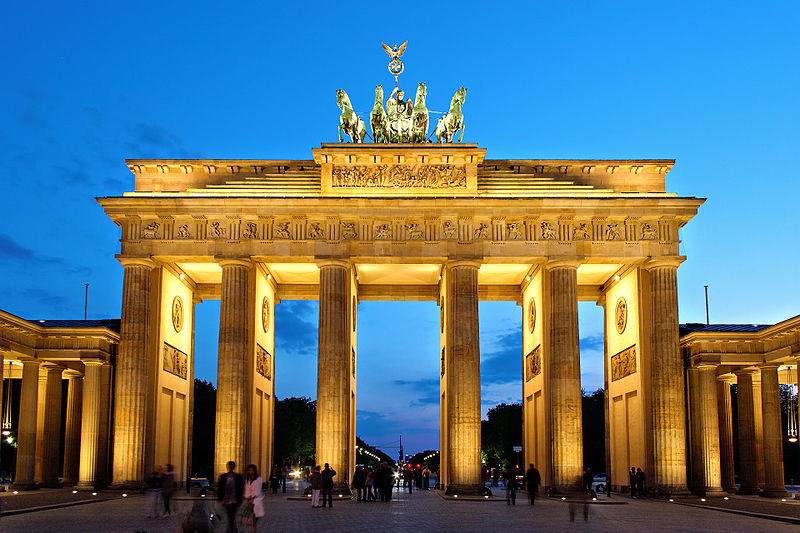
The image above shows the Brandenburg Gate today, rebuilt after World War II. Its most famous feature is the Goddess of Victory and her bronze chariot and horses above the gate—

But when Napoleon occupied Berlin in 1806, the original Brandenburg Gate did not have the Goddess of Victory on top. It had the Goddess of Peace, because the gate was originally built to commemorate peace.
On October 27, 1806, Napoleon swaggered into Berlin through the Brandenburg Gate, while the bronze chariot and the Goddess of Peace atop it were taken back to France by Napoleon as war trophies.
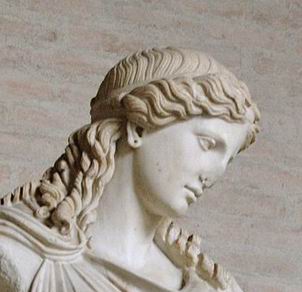
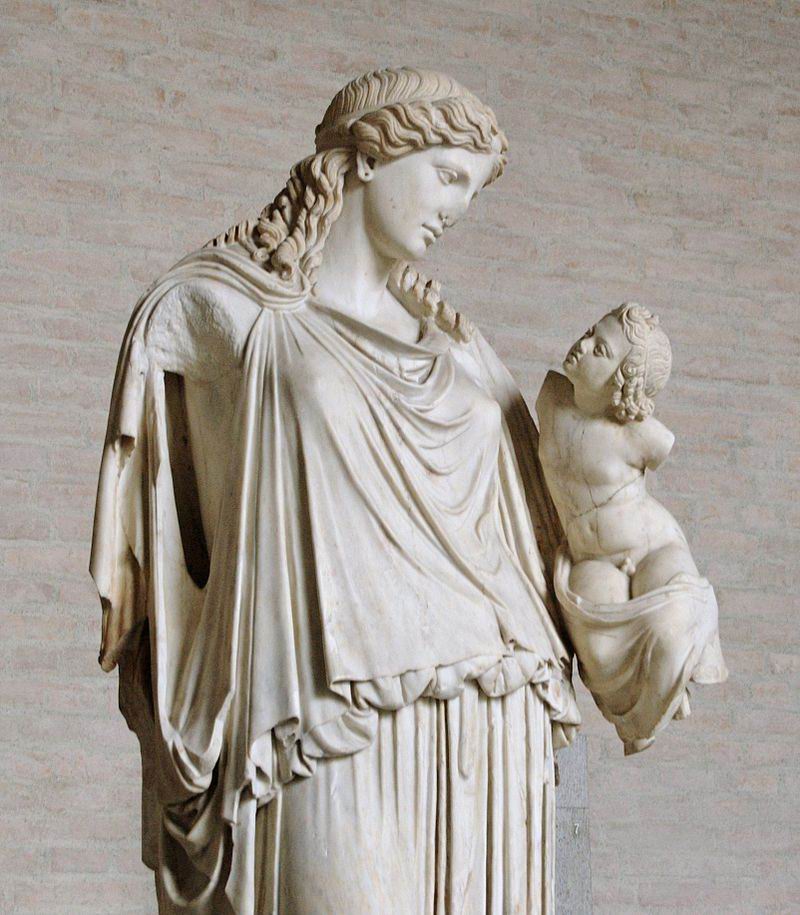
The Goddess of Peace Napoleon carried off when he breached the wall in 1806 was named Eirene (Eirene)—one of the three Horae in Greek mythology, representing peace. Her corresponding season is “autumn.”
This is a sculpture of Eirene, the Goddess of Peace—not the one on the gate, just for reference—
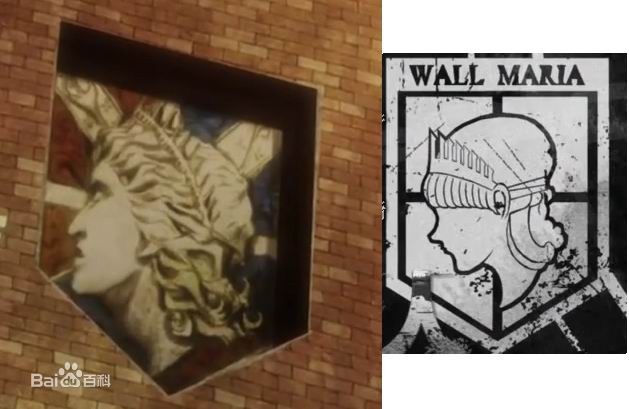
This is the emblem of the Goddess Maria on the Wall of Maria, smashed by the Armored Titan in Attack on Titan—
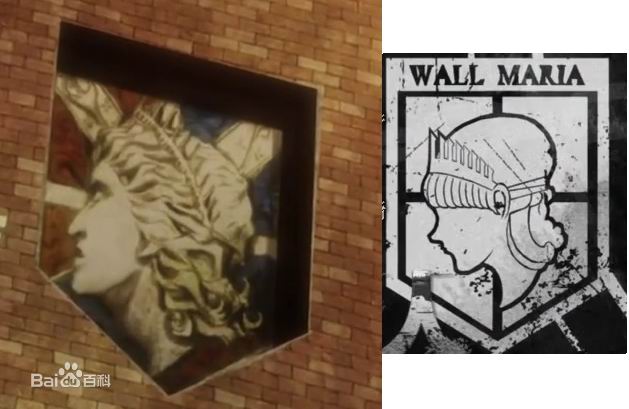
—even the hairstyle is the same!
At this point, I can almost completely confirm that one source of Hajime Isayama’s inspiration for the opening scene of Attack on Titan was definitely Napoleon’s 1806 breach of Berlin’s walls! Even details like the goddess on the gate were practically copied straight from history.
Isayama must have used this event as his starting point for constructing the details of the “Holy Roman Empire calendar” I mentioned earlier.
The calendar mystery: solved!
And, as a bonus, this also cracks the origins of the goddesses on the three Walls. If the model for Maria, the Goddess of Peace on the Wall of Maria, is Eirene, one of the three Horae, then the other two Walls must naturally correspond to the other two Horae.
(In Greek mythology, the three Horae each correspond to a season—spring, summer, and autumn. There’s no winter, because Greece doesn’t have winter, obviously.)
Outer layer: Wall of Maria
Goddess: Maria
Model: Eirene, Goddess of Peace
Season: Autumn
Symbolism: Keeping the Titans out and ensuring peaceful human life inside the Walls.
Middle layer: Wall of Rose
Goddess: Rose
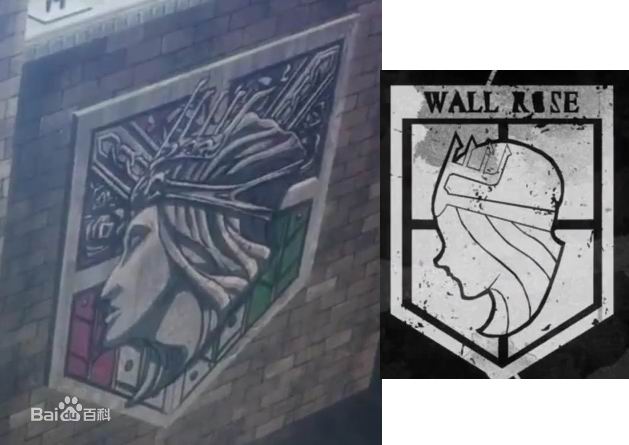
Model: Dike, Goddess of Justice
Season: Summer
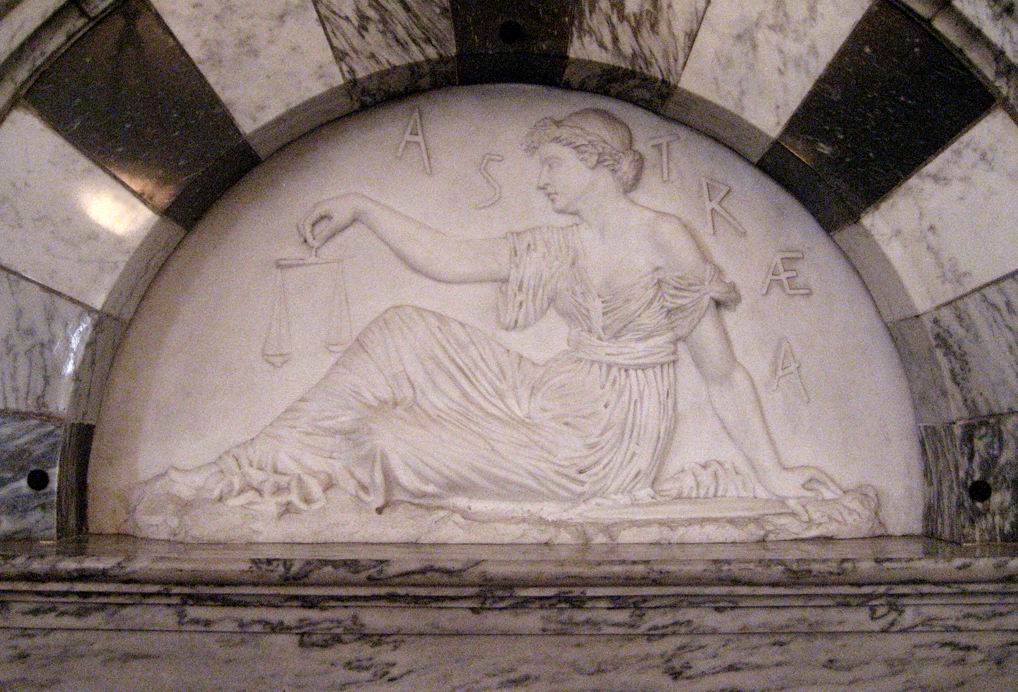
Symbolism: Moral justice, humanity’s sense of justice.
Inner layer: Wall of Sina
Goddess: Sina
Model: Eunomia, Goddess of Order
Season: Spring

Symbolism: Law and order, maintaining social stability; the royal family and the Military Police Brigade’s rule over the world inside the Walls.
From the inside out, they are the three seasonal goddesses of spring, summer, and autumn, each layer getting closer to the cold winter. And winter, naturally, is the world outside the Walls, ruled by the Titans.
If I say again that the theme of Attack on Titan is “Winter is coming,” you probably won’t hit me, right?
Aren’t the Titans just the White Walkers from A Song of Ice and Fire?
While we’re at it, we can also dream up the models for the three military branches—
Survey Corps = Teutonic Order
The story’s protagonists—the Survey Corps—are of course the Teutonic Order, predecessor to the German/Prussian military aristocracy, the pride of the German people, and one of the three great medieval military orders of Europe!
This is the emblem of the Teutonic Order:

Cut out the eagle in the middle and leave the wings, and you get the emblem of the Survey Corps:

Then the models for the other two branches are naturally the two remaining military orders.
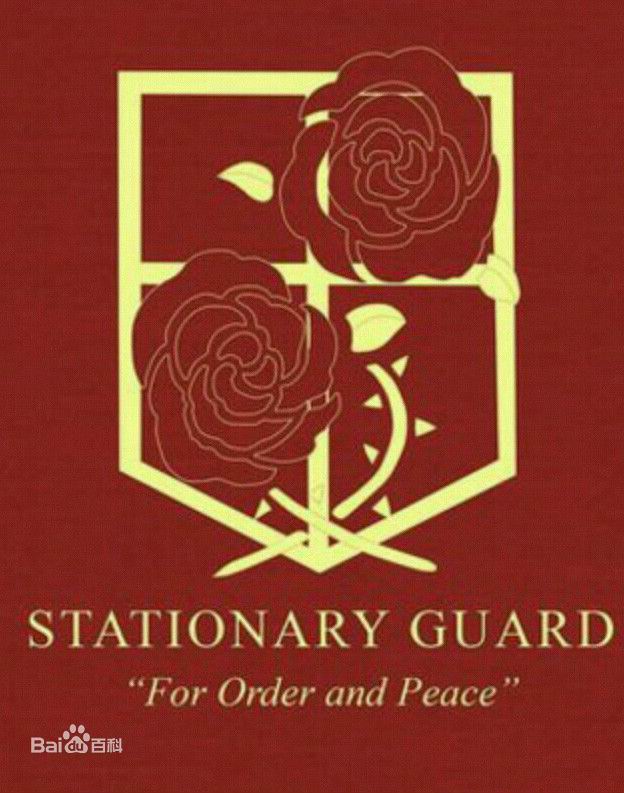
Garrison Regiment = Knights Hospitaller
The emblem of the Knights Hospitaller:

Doesn’t it look like four petals? Add a few more petals, and you get the emblem of the Garrison Regiment:
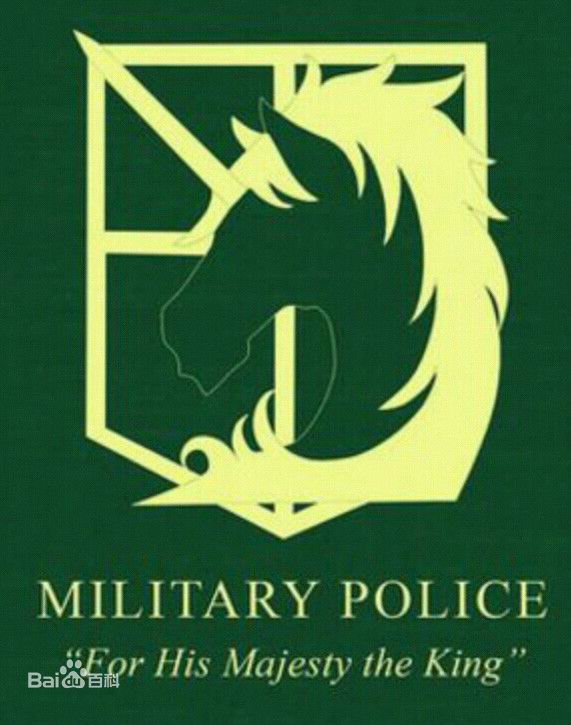
Military Police Brigade = Knights Templar
The emblem of the Knights Templar:
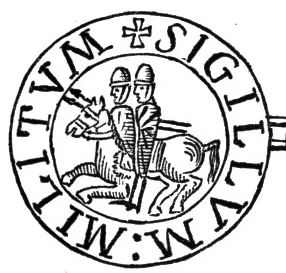
Cut out the horse’s head and the spear in front of it, and you get the emblem of the Military Police Brigade:
All right, that’s it for Part One. In Part Two, we’ll continue with the cause, the process, and the result.
Unreliable Preview—
In Part Two, I’ll crack the strangest mystery in Attack on Titan—Eren’s precognitive dream:


Version history
Originally published on Zhihu:
Leave a Reply