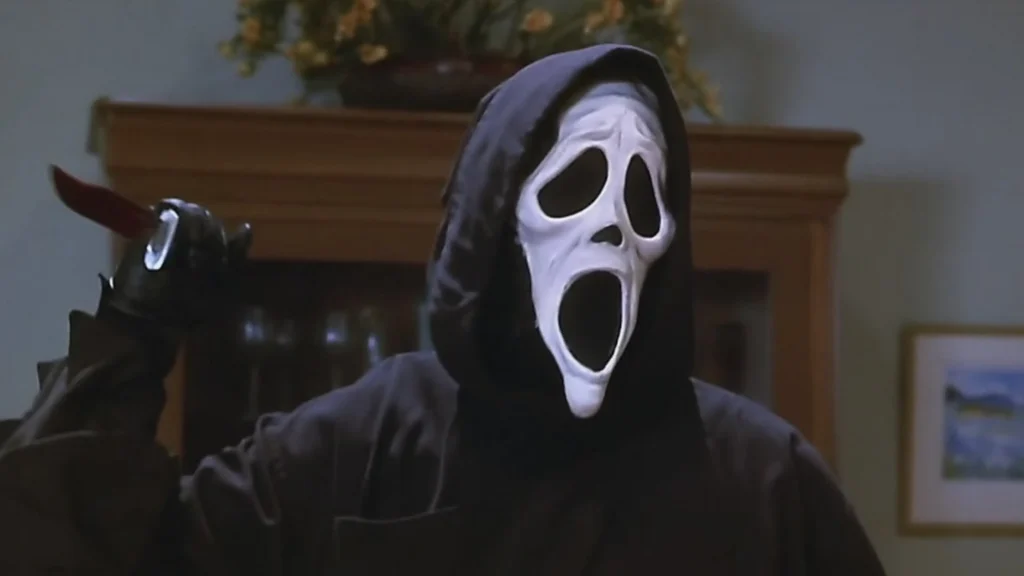
A highly anticipated horror film called A Quiet Place was recently released. I haven’t seen it yet, but while browsing online discussions about the movie, I suddenly thought of a question:
Why are horror movies so scary, yet (most of the time) you don’t get scared enough to run out of the theater?
You might answer: Because I know it’s fake.
But if you know it’s fake, why does it still scare you?
You might revise your answer like this: Because one part of my mind realizes it’s fake, while another part feels that it’s real.
The British poet Samuel Taylor Coleridge would have appreciated this revised answer. That is precisely what the concept of “suspension of disbelief,” which he proposed in 1817, describes. Suspension of disbelief means that when we immerse ourselves in fictional stories such as novels and plays, we are actually believing two inconsistent things at the same time: first, we acknowledge that we are sitting there reading a book or watching a play, and this part of our belief tells us that everything happening before us is fake; at the same time, we also believe—or, more precisely, “feel”—that what we are reading or watching seems to be really happening.
Suspension of disbelief explains why, when we encounter a good story, we can be utterly swept up in its plot, yet at the same time never actually take action because of what happens in it.
Neuroscientists can now explain, to a considerable extent, the brain activity involved when suspension of disbelief occurs. When people become immersed in a fictional story, one of the most active regions in the brain is the limbic system. Its activity is what makes us feel pleasure, anger, disgust, jealousy, and fear toward the story we are watching or reading; meanwhile, part of the prefrontal cortex is inhibited. This keeps us from trying to assess whether what we see and hear is real, and keeps us from developing an urge to move.
The limbic system, responsible for hot cognition, is boiling, while the prefrontal cortex, responsible for cool cognition, stays calm. That is the neural basis for believing something is real while knowing it is a convincing fake.
That is also why, although horror movies can be terrifying, they usually don’t actually scare people to death. On one side, your limbic system urges you to “run for your life,” while your prefrontal cortex tells you, “It’s fake”—which amounts to having a built-in barrage of comments in our brains while watching a movie.
As for why the brain evolved a function like suspension of disbelief, the answer shouldn’t be hard to find if you connect it with the lesson “Stories Are the Oldest Virtual Reality” from the New Knowledge Course. I won’t go into it again here.
References:
Ask the Brains Part 2: 62 Answers to Common Questions on the Mind “9.4 What Brain Activity Can Explain Suspension of Disbelief?”
Note
- This series of articles from the “Psychology New Knowledge Mini-Course” was written at the time to accompany related content from Zhichao Wei: Psychology New Knowledge Course. They were short popular-psychology essays and miscellanies published on the now-shut-down platform Fantuan; the original article link no longer exists.
Leave a Reply