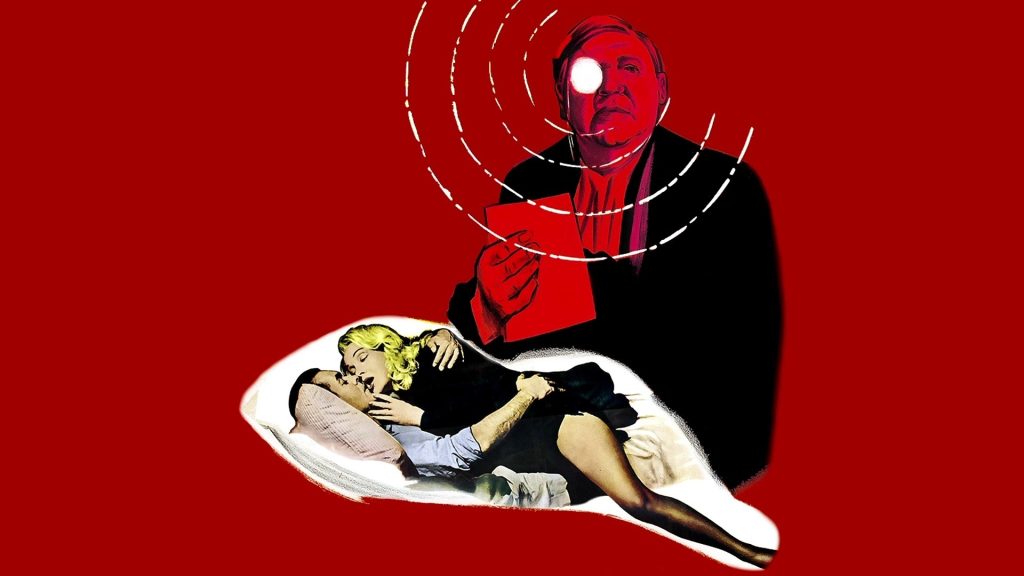
Zhihu question: How should the film Witness for the Prosecution be evaluated?
I think Witness for the Prosecution can be called a dual model of the mystery and melodrama genres.
Witness for the Prosecution was adapted from both the short story of the same name and the stage play by Agatha Christie, the queen of mystery fiction. The original story is utterly unremarkable among Christie’s many works, but the stage play of the same name is a classic production ranked alongside her The Mousetrap.
What makes this especially remarkable is that Agatha Christie, a master of mystery fiction, understood a fundamental point: performance and writing are two entirely different forms of artistic expression.
Readers of mystery fiction are often captivated by a murderer’s intricate, secretive methods and by a detective’s tightly interlocking logic. But audiences in a theater or before a screen are quite different. Most of their attention is naturally drawn to vivid, direct sound, light, and color, and few viewers can spare enough attention to keep up with overly complicated logical deductions.
So the more elaborate the design of the crime and the deductive process in a novel, the more dazzling it feels to read. Screen mysteries, by contrast, should do the opposite: keep things simple rather than complicated. The mystery itself needs to be simple enough—the cast of characters involved in the case cannot be too large, and the case cannot contain too many logical steps—while the solution should be so astonishing that it leaves you speechless. For a screenwriter, that is an enormous test.
It is an incredibly difficult balance to strike: the audience should be able to follow the story’s progress easily at every moment, yet still feel vaguely that “something isn’t quite right,” without being able to guess what that something is. Then, when the great reversal appears at the end, everything should suddenly click.
And in this regard, Christie naturally possessed a rare, almost unparalleled mastery. In Witness for the Prosecution, she used the simplest possible mystery to guide—or, really, misguide—the audience’s expectations with precision, while planting in their minds the seed that “there may be more to the truth than meets the eye.” Then she gave them a reversal far beyond their expectations at the end—not just one reversal, either. That is why Witness for the Prosecution can be called a model of the mystery genre.
Witness for the Prosecution was directed by Billy Wilder. Before making this film, he already had three Oscars to his name and had made such enduring classics as Double Indemnity, Sunset Boulevard, and The Seven Year Itch. In the years that followed, he continued to produce masterpieces including Some Like It Hot and The Apartment. You could say that Billy Wilder was at the peak of his career when he directed this film.
This director, one of the best storytellers around, poured his extraordinary storytelling skill into every detail of Witness for the Prosecution. Take the opening meeting between Sir Wilfrid and the defendant, Vole. Sir Wilfrid, a man hopelessly addicted to smoking, had hidden several cigars in his cane, only to have them confiscated by a nurse. Just as he was feeling utterly miserable, the lawyer Mayhew and Vole happened to arrive asking for help. Sir Wilfrid had initially decided not to take on criminal cases because his heart could not handle the excitement. But then he suddenly spotted two cigars in Mayhew’s pocket, and his eyes lit up. Using the case as an excuse, he pulled Mayhew into his office. He had hoped to sneak in a few puffs, but unfortunately neither of them had any matches, so he had no choice but to call Vole in from outside as well. Vole lit Sir Wilfrid’s cigar, finally satisfying his craving. Only then did Vole get the chance to tell the smoke-billowing Sir Wilfrid the full story of the case. This cigar-fueled encounter between Sir Wilfrid and the defendant is every bit as good as the huge reversal at the end, and the film is packed with touches like this.
In fact, it is precisely these superb details in the unfolding of the plot that create the film’s charm as a melodrama. So Witness for the Prosecution can also be called a first-rate model of the melodrama genre.
A good mystery story usually cannot survive spoilers: once you have seen it, its appeal drops sharply. A good melodrama, however, rewards repeated savoring. Witness for the Prosecution is one of those films. Before watching it for the first time, you should probably avoid searching online for a plot summary, lest you get spoiled. But after seeing it once, you will find that even if you set aside that unexpected ending, the film still contains far too many amusing and meaningful details to appreciate again and again. In this way, Agatha Christie and Billy Wilder, two masters perfectly matched to each other, left film history a dual model of the mystery and melodrama genres.
Collected
A revised version of this article was published in Popular Cinema:


Leave a Reply