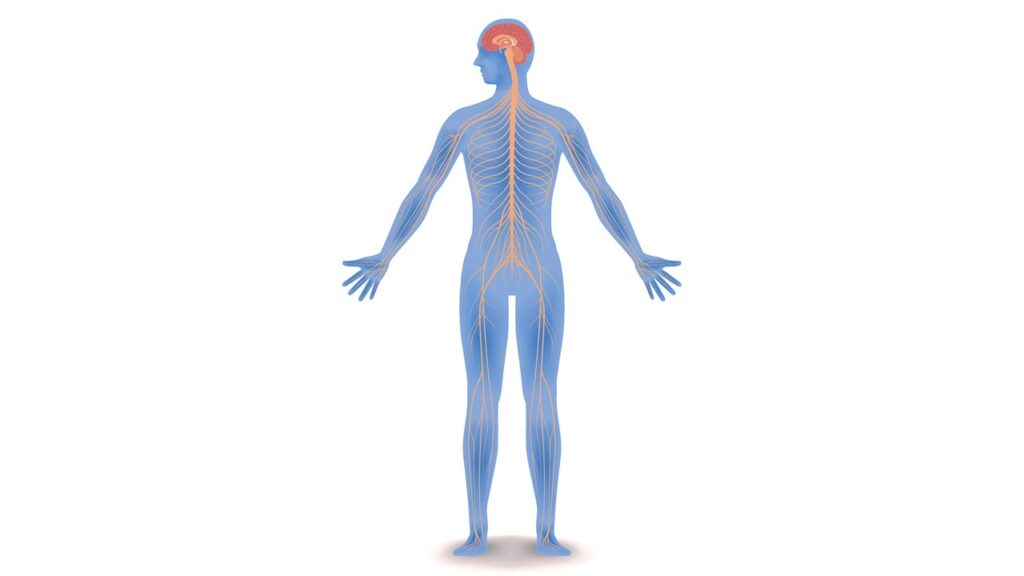
[Zhihu question] Which is the true subject: the human brain or the body?
What this question is really asking is: does human self-consciousness “reside” in the brain, or does it “reside” in other organs of the body?
Mainstream neuroscience and psychology will tell you without hesitation: the brain, of course. The brain and the mind are one; self-consciousness, like every other psychological process, is unquestionably a product of neural activity in the brain. But in recent years, several very interesting studies have found that self-consciousness is closely associated with the activity of certain visceral organs. Only when the brain picks up signals from these organs do we become more likely to have thoughts about “me.” Which means—
Self-consciousness resides in the brain, but also in our heart, lungs, and gut!
That conclusion is a little surprising—and quite thought-provoking.
Visceral Activity: The Basis of Self-Consciousness
An interesting phenomenon is that, both in China and elsewhere, many folk expressions connect a person’s self with their internal organs.
Heart to heart, heart answering heart, words from the lungs and heart, liver and bowels torn apart…
These expressions, which describe powerful feelings of self, are really all about the connection between the self and the body’s various organs.
English has expressions such as “follow your heart” (trust your heart) and “trust your gut” (trust your gut) to express the idea of believing your true inner feelings. These expressions, too, reveal a connection between the self and the viscera.
Is this just a coincidence?
Nope.
More than a century ago, the grand old master of psychology, William James, raised a question like this in his classic book The Principles of Psychology:
You, the person you were a minute ago, and the person you were a year ago may all have been in completely different places, with different emotions and thoughts; even your appearance may have changed quite a bit. Yet you still feel that you are you. You may differ from your past self, but you are unquestionably the same person. Why? What makes us feel that this “self” has continued from the past until now?
William James’s speculation in The Principles of Psychology was that we have this sense of a self that continues through time without breaking with the past because we are aware that “the same old body” has continued to accompany us.
In other words, certain signals sent continuously from the body to the brain make us feel, “I have always been me.”
Those signals cannot come solely from the body’s exterior, since appearance changes easily. They are more likely to come from activity inside the body.
The viscera may well be the source of these signals.
In fact, one striking feature of visceral organs is that they generally have relatively stable, predictable cycles. Heartbeats, breathing, and intestinal contractions repeat rhythmically. These rhythmic movement signals are transmitted to the brain around the clock—perhaps they form the “background noise” of all mental activity.
So visceral activity may well be the anchor of self-consciousness: visceral activity is the basis of self-consciousness.
For a long time, the idea above was only a hypothesis. But in recent years, a series of empirical studies have begun to support it—
Study 1: Self-Consciousness and Heart Activity
Mariana Babo-Rebelo and colleagues at the Cognitive Neuroscience Laboratory of Université Paris Sciences et Lettres examined the relationship between self-consciousness and heartbeat-evoked potentials (HEPs). A heartbeat-evoked potential is an electrical signal produced by the brain when the heart beats; it reflects the strength of the brain’s neural response to the heartbeat.
If heart activity affects self-consciousness, then a person’s chance of having “self-related thoughts” should vary with the strength of their heartbeat-evoked potentials.
In the experiment, the researchers asked participants to let their minds wander—doing nothing in particular and letting their thoughts fly wherever they wanted—while monitoring their heartbeat-evoked potentials. From time to time, a visual cue appeared on a screen in front of them. Whenever it appeared, participants had to report whether they had been thinking about themselves.
The results showed that when participants had active first-person thoughts, such as “I should go to the butcher’s and buy some meat,” heartbeat-evoked potentials in the ventral precuneus increased significantly. When participants had introspective thoughts, such as “I’m hungry,” heartbeat-evoked potentials in the ventromedial prefrontal cortex increased significantly.
These results show that heartbeats really are associated with self-consciousness.
Study 2: Self-Consciousness and Breathing
Besides heartbeats, activity in the lungs—breathing—may also be one of the anchors of self-consciousness.
Alessandro Monti’s team at the Laboratory of Social and Cognitive Neuroscience at the University of Rome conducted a very interesting study.
The researchers had participants put on virtual-reality (VR) headsets, which displayed a virtual body. When participants looked toward their own bodies, they saw not their real bodies but a dummy body generated with digital technology. At the same time, a sensor attached to each participant tracked their breathing and mapped it in real time onto the virtual body in the VR headset.
The researchers set up two conditions. In one, “synchronous,” the virtual body’s breathing rhythm matched the real body’s perfectly. In the other, “reversed,” the virtual body exhaled whenever the real body inhaled.
The result: only when the virtual body’s breathing rhythm was “synchronous” with the real body did participants report feeling that the virtual body was theirs—as if they themselves were controlling its movements.
This result suggests that breathing can actually help us feel that our body belongs to us, thereby strengthening self-consciousness.
(This result also happens to explain why meditation can greatly heighten people’s awareness of self-consciousness: most of the time, people enter a meditative state by focusing on their breathing.)
Study 3: Self-Consciousness and Gut Activity
Alessandro Monti’s team also used a smart pill—a swallowable capsule equipped with a miniature thermometer, pressure gauge, and pH sensor—to examine the relationship between self-consciousness and gut activity.
The method was similar to that of the previous study. Participants put on VR headsets and observed their virtual bodies. Meanwhile, the smart pill passed through their stomachs and intestines, continuously recording various biochemical indicators of gastric and intestinal activity.
The researchers found that whenever gastrointestinal activity became more active—for example, when pressure rose, temperature increased, or pH changed—participants felt more strongly that the virtual body belonged to them. This shows that self-consciousness is also associated with gut activity.
These studies provide preliminary evidence for the old idea that the self is closely connected with the viscera. They strongly suggest that our self-consciousness does not exist only in the brain; it is also deeply rooted in our bodily sensations.
I am my brain; I am my body.
References:
Alessandro Montii. A stable sense of self is rooted in the lungs, heart and gut. A stable sense of self is rooted in the lungs, heart and gut | Psyche Ideas
Self-consciousness and heart activity: Babo-Rebelo, M., Richter, C. G., & Tallon-Baudry, C. (2016). Neural responses to heartbeats in the default network encode the self in spontaneous thoughts.Journal of Neuroscience, 36(30), 7829-7840.
Self-consciousness and breathing: Monti, A., Porciello, G., Tieri, G., & Aglioti, S. M. (2020). The “embreathment” illusion highlights the role of breathing in corporeal awareness.Journal of Neurophysiology.
Self-consciousness and gut activity: Monti, A., Porciello, G., Panasiti, M. S., & Aglioti, S. M. (2021). Gut markers of bodily self-consciousness.bioRxiv.
Leave a Reply