
A hole generally has two meanings.
1. A suspense hole—creating suspense is “digging a hole,” while revealing the answer is “filling the hole.”
2. A serialization hole—common in long-running Japanese manga. Once a series has been serialized beyond a certain number of years, the author has effectively dug a huge hole for himself, and everything that follows becomes an effort to fill it.
This article discusses both kinds.
Within my limited reading experience, I’ve run into several masters who seem to take pleasure in digging holes. Here are a few quick thoughts—
Ni Kuang: I’ll Take It to the Grave
In Ni Kuang’s Wesley science-fiction series, the science-fiction element is actually nothing to write home about. The “suspense hole,” however, is dug in every book, and the digging is usually quite gripping. As for the quality of the filling, though, I really can’t recommend it.
One Wesley novel, Past Life, is about a brutally murdered man who is reincarnated as a baby while retaining the memories of his previous life. The reincarnated baby has someone deliver a letter threatening the people who killed him back then. Terrified, the enemies spend decades living in fear, shrinking from day to day—yet the reincarnated man’s supposed nemesis simply never comes knocking.
What happened? What was being concealed in the middle? Was the opponent in his new life plotting some terrifying scheme?!
When we finally reached the chapter where the hole was filled, Ni Kuang’s answer was: the baby later lost his memories of his previous life. So the reason he never came for revenge was simply that he forgot. What on earth? You spend the opening showing me a man straining with all his might to lift a barbell that looks like it weighs at least 200 jin, then tell me at the end that it was made of plastic?
Actually, this is one of the better-filled holes Ni Kuang ever dug. There was another novel whose title I’ve forgotten, but its casual approach to filling the hole left a deep impression. To preserve the suspense, the first 2/3 was told in Wesley’s first person. Just when Wesley was about to learn the solution, the novel suddenly switched to the third person and had another character tell the story, pointlessly adding 1/3 to the length.
Ni Kuang also made excellent use of an especially shameless hole-filling technique. In the Wesley novel New Weapon, one character knows the answer from the very beginning, but puts on an “I’ll take it to the grave” act and refuses to say a word to anyone who asks. Then, at the end, she suddenly spills the entire solution for no reason whatsoever. Worse, after hearing her confession, you can’t see why she ever refused to talk. Was keeping her mouth shut just a way to make the protagonists run around like idiots and pad it out into a novel? Ni Kuang’s methods of earning royalties truly rise to the level of performance art.
Gu Long: The Hole Is Flat When the Dirt Runs Out
Ni Kuang’s novels are fake mysteries dressed in science fiction; Gu Long’s are detective stories dressed in wuxia. Gu Long also liked digging and filling holes. The quality of the filling, however, was wildly erratic.
The first Gu Long novel I read as a child was The Eagle Flies in September from the Little Li Flying Dagger series. The entire opening was hole-digging. Then, in the penultimate chapter, the protagonist Ye Kai spent a whole chapter on an extended piece of reasoning to identify the BOSS and fill every hole in the novel. I had never read a detective novel at the time, and this left me thoroughly shaken. I have no idea what I’d think if I reread it today. In my memory, it was one of Gu Long’s better-filled holes.
In many suspense novels with a touch of mystery, the digging process involves mysterious characters behaving in bizarre ways. The stranger, more inexplicable, and less reasonable their behavior, the more gripping the digging becomes. The Legend of the Peach Blossom in the Chu Liuxiang series dug a hole made up of countless bizarre, uncanny, inexplicable actions. After readers had racked their brains and imaginations trying—and failing—to explain them rationally, Gu Long filled the hole near the end by telling us that all those actions were simply the rules of a cult: there was a cult, and it demanded that its followers act mysterious and scare people. How’s that for a perfectly seamless explanation?—It’s really the laziest hole-filling trick imaginable.
I once read an online suspense novel called Grief unto Death that used the same trick. A remarkably eerie detail kept appearing at the scenes of various bizarre deaths: a mysterious person in a black raincoat. This image earned plenty of attention from readers throughout the novel. Then, when it came time to fill the hole, the author explained the black raincoat as a strange funeral custom in a remote village. If holes can be filled this way, can’t every spectacularly bizarre detail be written at random? In the end, just explain it as some weird cult rule or local custom and everything is supposedly squared away.
Another Chu Liuxiang novel, The Legend of the Bat, contains a detail in which Chu Liuxiang scrapes some strange powder off a ship and keeps it as an important clue. Gu Long even pretends to be mysterious, asking, “What has he discovered now?” But when the time comes to fill the hole, Chu Liuxiang solves the case without using the powder at all. It never appears again before the book ends. That certainly saves effort: the dirt ran out before the hole did.
Agatha Christie: The Queen of Detection Is a Misunderstanding
Speaking of hole-digging, we can’t avoid detective fiction, where digging and filling holes are central features.
Agatha Christie, the “queen of hole-digging” in detective fiction, is respectfully called the “Queen of Detection” by Chinese mystery fans. But in English, her actual title is the “Queen of Crime.” It seems Chinese and English readers experience Christie somewhat differently. To English readers, the finest part of her novels is probably the design of the crime itself: who the murderer is, the murderer’s motive, and how the crime was carried out. Hence, the “Queen of Crime.” To Chinese readers, the most important part is the detection—how Poirot knew—hence, the “Queen of Detection.”
My personal feeling is that the reasoning in Christie’s novels is not rigorously logical at every step. Many key deductions are often based merely on the detective’s intuition. Her novels sometimes even violate the fair-play principle of detective fiction: every clue known to the detective must also be disclosed to the reader. Sometimes, when Poirot discovers a clue, Christie doesn’t clearly tell the reader about it, only adding it while filling the hole—for example, the clue about where an object was placed in The Murder of Roger Ackroyd.
So I think “Queen of Detection” is simply a misunderstanding. This isn’t to say Christie’s reasoning is poor; rather, “Queen of Crime” is the title that truly reflects her value. In her most famous novels—Murder on the Orient Express, Death on the Nile, And Then There Were None, and The Murder of Roger Ackroyd—what leaves the deepest impression: Poirot’s reasoning process, or the murderer’s motive and elaborate plan, both unexpected and perfectly plausible? What really draws us in: the process of discovering the truth about the crime, or the truth itself?
The Four Gods of Holes
If the writers above still dug and filled holes according to the rules, the following four turned the whole business into performance art—
1. Yoshiki Takaya: The Meteor Crater That Wiped Out the Dinosaurs
Most Japanese manga is produced like a small workshop, with one mangaka and a few assistants. So the painfully slow pace is easy to imagine. Long-running manga are serialized for years, sometimes decades, and eventually the serialization itself becomes a hole.
For example, Hirohiko Araki’s JoJo’s Bizarre Adventure began serialization in 1987 and had already reached its 23rd year, yet was still ongoing. Fortunately, the author is extremely diligent, maintaining a weekly update schedule for almost the entire 20-plus years. This twenty-year hole was apparently about to exceed 100 tankōbon volumes (this article’s first edition was written around 2009).
But even a hole-digging demon who has dug a meteor crater twenty years deep is lightweight compared with Yoshiki Takaya, the first god of holes in the Japanese manga world.
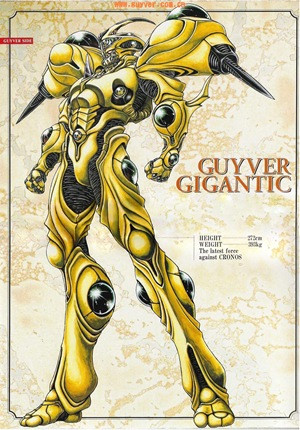
Takaya’s Bio-Booster Armor Guyver began serialization in ’85 and is still ongoing—a spectacular meteor crater a quarter-century deep! The length of time is not even the scariest part. What’s truly terrifying is that in 25 years, the series has completed only 26 volumes. Work another manga artist could finish in a week takes Takaya, on average, a month. Bio-Booster Armor Guyver currently runs one chapter a month in a monthly magazine, and hiatuses happen constantly. Whenever the great god isn’t in the mood, readers get ghosted for several months. If I remember correctly, one month he updated a pitiful 3 pages, leaving readers who had waited a month without receiving a hiatus notice laughing and crying at the same time. More devastatingly, this manga also uses multiple plotlines. At least 3-4 subplots are currently running in parallel, so when one subplot reaches a stopping point, readers may not see its continuation until the second or even third year.
Even more terrifyingly, this meteor crater is still expanding. Even after 25 years of serialization, Takaya has shown no intention whatsoever of filling the holes. Old mysteries remain unresolved, new suspense keeps appearing, and new faces continue making dramatic entrances. Judging from the current direction of the plot, we’ll need at least another 1/4 century before we see the ending.
The reason this terrifying hole hasn’t been abandoned by readers is entirely that, apart from its astonishingly slow update schedule, Bio-Booster Armor Guyver is an exceptionally good story. In fact, it is almost the best science-fiction story I’ve seen built around biotechnology. It pushes the possibilities of biotechnology nearly to an extreme. It then unfolds that extreme fantasy across a vast space-time setting: a grand cosmic stage in space and a history of biological evolution spanning hundreds of millions of years in time. So although Bio-Booster Armor Guyver is a meteor crater capable of wiping out the dinosaurs, it is also genuinely a gripping science-fiction epic.
I only hope I live to see the day this hole is filled.
2. Naoki Urasawa: Hole-Digging Is an Art
Readers painstakingly watch a hole being dug largely because they’re aiming for the final result—the filling. No matter how brilliantly the hole is dug, a poor filling will still earn the reader’s contempt. In fact, when the filling is equally awful, the more brilliant the digging, the more contempt it inspires—who asked you to put on such a mysterious act?
Clearly, brilliant hole-digging needs equally brilliant hole-filling to have any value. Generally speaking, digging cannot be separated from filling; a hole that cannot be filled is always looked down on. But this general rule may not apply to the great Naoki Urasawa.
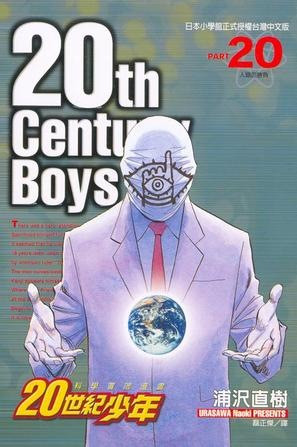
Naoki Urasawa’s two epic long-running series, Monster and 20th Century Boys, are universally regarded as masterpieces. Recently, the live-action film version of 20th Century Boys was released, letting many viewers who had never read the original manga discover this godlike figure of the Japanese manga world. Though plenty of people have already said this, I still have to stress it one more time: compared with the original, the live-action film is a steaming pile of crap!
Since Monster and 20th Century Boys are revered as masterpieces, you’d think they ought to be pretty much perfect. But in fact, they aren’t! As I see it, not only do both works share the same flaw, but in other mystery stories this flaw would be fatal. That flaw is the one I just mentioned: digging holes you can’t fill.
These two mystery masterpieces have somehow both committed the cardinal sin of the mystery genre!
How could works like these become masterpieces?
I think it’s because the process of digging holes in both works is simply too brilliant! So brilliant that it can stand on its own, independent of revealing the answer and filling the holes, and be appreciated as a separate component!
With Naoki Urasawa, digging a hole no longer has to rely on the result of filling it to prove its worth. It is brilliant in its own right; Urasawa turned digging holes into an art. In Monster, almost the entire book before the final two volumes consists of indirect and oblique portrayals of the boss, Johan. And Johan’s full-on appearance in the final two volumes is actually the biggest letdown in the whole book, because readers discover that the abilities he displays in that last volume aren’t enough to make his earlier deeds believable. That’s a hole that can’t be filled. (20th Century Boys does something very similar with its portrayal of Friend: when Friend finally appears in person later in the story, readers also realize that the abilities he displays don’t seem sufficient to have plunged the world into that kind of mess.)
In any other kind of mystery story, this would unquestionably be a cardinal sin. But with Urasawa, it doesn’t matter! Before that point, the book’s indirect and oblique portrayals of Johan are simply godlike. Through them, readers may even shudder at the mere thought of Johan. In Urasawa’s hands, Johan before his full appearance is a devilish god whose mind and methods for twisting people psychologically and luring them into evil are peerless: supremely warped yet utterly calm, cruel yet radiating a demonic charisma. If you happen to run into him, forget about getting away in one piece. This skill at indirect portrayal is probably unmatched in the entire manga world!
So I think the best way to appreciate Urasawa is simply to appreciate this pinnacle of the art of digging holes. Whether the holes get filled is beside the point.
Urasawa may be a god of indirect portrayal, but he isn’t good at portraying people head-on, and that has to be called a shame. Fortunately, one devoted fan used his own genius to make up for his idol’s shortcoming. That genius fan is the Taiwanese writer Giddens Ko. It’s not hard to see that the terrifying Night King Hydra in Ko’s Urban Horror Disease series was modeled on Johan from Monster. Urasawa loves writing evil, but may not truly understand it; Giddens Ko, meanwhile, is unquestionably the “god of evil” among Chinese-language writers. Urasawa’s weakness happens to be Ko’s greatest strength. When I finished the Urban Horror Disease series back then, my first thought was that at last someone had helped Urasawa bring out the real Johan and put him face-to-face with the reader.
In fact, Ko’s influence from Urasawa doesn’t stop there. For instance, some of Ulala’s personality in The Legendary Beast Tamer comes from Kenji, the male protagonist of 20th Century Boys. If you enjoy watching Urasawa dig holes, you might want to check out Giddens Ko.
3. Hideaki Anno: To Be Filled Today
What’s the easiest way to fill a hole? Cover the top with a sheet of plastic, put up a sign beside it reading: “Earth and rocks in transit; to be filled today.”
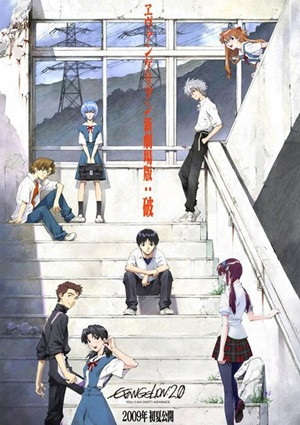
Even though you’ve practically done nothing, you make everyone believe that the earth needed to fill the hole has been ready for ages—they just haven’t been allowed to see it being poured in yet. All you have to do is put on a convincing performance of “the hole can be filled.” The more clues you leave behind, the more people will believe you can fill it, even if you may never have prepared to fill it at all. In my view, Hideaki Anno’s EVA is exactly this kind of work.
The cleverness of EVA lies in using countless tantalizing, evasive clues to make you feel that beneath its seemingly impossible-to-connect surface story lies an immense, intricate background and conspiracy—that the plot of EVA is merely an excerpt from this vast backdrop. In reality, Anno doesn’t need to prepare such a huge background story. He only needs to make all the clues suggesting its existence appear to point toward one. Dig the hole, make everyone believe you’ve already prepared the earth and rocks to fill it, and then send everyone racing to guess where those earth and rocks are.
When it comes to filling holes, Anno seems to have gone one step further than Urasawa. Urasawa at least filled his holes himself, whereas Anno merely announced “to be filled today,” and countless impatient fans hauled in earth and rocks to fill them for him.
4. Cao Xueqin: Digging Without Filling Is What Makes a God
Eileen Chang said that life has three great regrets: first, that begonias have no fragrance; second, that shad are full of bones; third, that Dream of the Red Chamber was never finished. Professor Liu Xinwu, however, said: “Dream of the Red Chamber was actually completed.”
The evidence that Dream of the Red Chamber was finished basically comes from a single source: someone calling himself Zhiyanzhai wrote many commentaries in an old edition of Dream of the Red Chamber. These comments contain not only stinging phrases such as “the chapters after chapter 80 have been lost by the borrower,” but also directly quote or reveal a great deal of material from after chapter 80.
Of course, even without Zhiyanzhai’s comments, we have ample reason to believe that even if Cao Xueqin did not complete the material after chapter 80, he at least had a comprehensive plan for it. The text of Dream of the Red Chamber contains far too many so-called “gray snakes in the grass”—echoes between earlier and later passages. The first 80 chapters already contain quite a few instances of earlier foreshadowing answered later, giving us reason to believe that more such echoes would appear after chapter 80. Zhiyanzhai’s comments are undoubtedly proof of this theory.
This is the view accepted by the overwhelming majority of people. What follows is purely a wild fantasy of mine:
What if Zhiyanzhai had never actually seen anything after chapter 80 of Dream of the Red Chamber, but was merely pulling off a piece of performance art?!
I once saw an interview with Leung Man-tao in which he said that, when he was young, he had staged a pretty cool piece of performance art: “I… made things that were performance art and conceptual art. I once even planned a fake exhibition. I held a press conference, introduced my exhibition to the media, and handed out press releases—but the exhibition didn’t exist at all.”
Later I read a “travelogue” by Giddens Ko about one of the smaller countries in Africa, full of amusing observations and adventures. Only at the end did Ko reveal the truth to his readers: he had never been to any of the places mentioned in the book. The trips recorded in the “travelogue” had never happened; it was actually a work of fiction.
Later still, I learned about a “collection of book reviews” written by Stanisław Lem called A Perfect Vacuum. In reality, the “books” reviewed in it did not exist at all.
This performance art—passing judgment on nonexistent exhibitions, films, and books—still looks remarkably avant-garde today. But I can’t help wondering: just because this kind of performance art is so cool, can we conclude that no one in the middle of the Qing dynasty, two hundred years ago, could have done it?
Could Zhiyanzhai also have been a performance artist who enjoyed passing judgment on nonexistent books?
Suppose I were a performance artist living in the middle of the Qing dynasty. If I happened to obtain an 80-chapter copy of Dream of the Red Chamber, learned about its author’s background, and discovered that the writing after chapter 80 no longer existed in the world, wouldn’t such an incomplete book be the perfect material for putting my artistic philosophy into practice?
I would use the first 80 chapters and my understanding of Cao Xueqin to write comments in the margins of the main text. My comments wouldn’t really be intended to review the book; they would be a way of unfolding my performance art. I would be commenting on “the nonexistent,” making people believe that the chapters after 80 had been completed. I would use every trick I had to fabricate clues and scatter them through my comments. The more closely these clues matched Cao Xueqin’s “gray snakes in the grass” in the first 80 chapters, the more authentic my comments would seem. Once they circulated, future generations of youngsters would naturally conclude that I had seen the chapters after 80. What incredibly cool performance art!
When reporters believe an exhibition really exists, and bookstore clerks put A Perfect Vacuum in the “literary criticism” section, Leung Man-tao and Lem are snickering in the shadows. At that moment, could Zhiyanzhai also be in heaven, clutching a copy of Liu Xinwu Reveals the Old Dream of the Red Chamber and laughing so hard he nearly falls over?
—Of course, the possibility that Zhiyanzhai was a performance artist is vanishingly small. This is just me letting my imagination run wild. But can you really say there isn’t even the slightest possibility?
Whether Cao Xueqin finished Dream of the Red Chamber or not, and whether Zhiyanzhai was a performance artist or not, the objective result is that together they dug a hole without precedent and never to be repeated.
Some say Dream of the Red Chamber exhaustively explores the character “infatuation.” But it would be better to use Cao Xueqin’s own words: Dream of the Red Chamber exhausts the two characters “lust of the imagination.” The huge hole it left behind also became the object of collective “lust of the imagination” for countless generations of Chinese people. The deeper and more bottomless an abyss, the stronger its dark, demonic power to pull people in. How many later men of letters have thrown themselves into it, burning up their cultural lives in an eternal fall.
Just as Lin Daiyu taught Xiangling to write poetry, the best poems don’t need to worry about rhyme, and the deepest holes don’t need to be filled. The countless readers of later generations have all become hole-fillers.
The greatest sound is barely heard,
The greatest image has no form,
The greatest vessel is never finished,
The greatest hole is never filled!
And so Cao Xueqin, who only dug and never filled, is the greatest hole god in all of heaven, earth, past, and present—the god of hole gods!
Version history
This article was written around 2009 and published on Mtime. The original has since been deleted.
Leave a Reply