
My once-a-year bootleg awards ceremony for my own amusement has somehow reached its fourth year. I watch fewer and fewer movies, yet the awards get livelier and livelier. This time I might as well do a year-end roundup of leftover thoughts: not limited to movies, but all the things I wanted to say and never did after reading books, watching movies, and watching TV over the past year—a little summary of the year gone by.
The awards cover only the movies, TV shows, and books I came across over the past year, old or new.
Annual “Beyond Redemption” Grand Prize
Winner: Ching Siu-tung (director of An Empress and the Warriors)

After Red Cliff, the IQ of every Chinese master director seems to have gone straight through the floor. Before John Woo threw himself wholeheartedly into the ranks of the brain-dead, what pained me most was still Ching Siu-tung’s downfall.
I regard Ching Siu-tung as a legend because he solved the great problem of the “multiple-opponent melee” in wuxia movies. With my shallow viewing experience, in the wuxia or kung-fu films before Ching Siu-tung, whenever a hero had to fight several opponents at once, the extra bad guys could only hop around stupidly in the background. Once the hero had taken out the one in front of him, they would take turns coming up to fight him.
Call me disgusting, but whenever I see a scene like that, I think of the “juice guy” taking turns coming up to the AV actress.
Ching Siu-tung’s romanticism solved this problem perfectly. Because feints outnumber real strikes, and the moves often involve spins, when the multiple-opponent side surrounds the hero and attacks simultaneously, the hero doesn’t have to meet their blows head-on, and it doesn’t look like there’s any obvious hole in the choreography. That’s why only Ching Siu-tung could create the classic one-against-three, sand-and-stones-flying melee in New Dragon Gate Inn.
But what wins through romanticism also loses through romanticism. Gorgeous feints and spins need the language of the camera to bring out their charm: either use frame-skipping to speed up the action, or rapid editing to hide the scene’s illogical gaps. Without the camera’s help, fancy moves become empty showmanship.
So only the Tsui Harks who understand Ching Siu-tung can bring out his greatest potential. Zhang Yimou’s camera doesn’t understand Ching Siu-tung; perhaps even Ching Siu-tung himself doesn’t understand Ching Siu-tung. And so we got An Empress and the Warriors—a movie that would still be crap even if you threw out all the stinking dog-shit dialogue and judged only the fight scenes.
A master of his generation, beyond redemption.
Annual “Burning with Desire” Grand Prize
Winner: Qiu Rubai (played by Sun Honglei)

My reaction to Mei Lanfang was much like everyone else’s: the first third had something going for it, then everything collapsed when Leon Lai appeared.
In that first third, one scene made the strongest impression on me: the first time Qiu Rubai watches Mei Lanfang perform, he gets parched, breathes fire through his nostrils, then goes home, gnawing furiously at an apple while taking off his tie. The subtext is clearly: “I need to calm down.” It was the sexiest scene I saw all year.
If Sun Honglei is burning with desire, Zhou Xun is a fire you simply can’t get to catch, no matter how hard you try. In the second half of the year, Zhou Xun somehow played the same kind of character twice in a row: in Painted Skin and All’s Well, Ends Well, her characters both come to grief trying to seduce men. They use demon magic, aphrodisiacs—everything—but the men just won’t bite.
Back to Mei Lanfang.
Choosing Leon Lai to play Mei Lanfang is genuinely baffling. Foreigners barely know him, he has little box-office pull in China, and he isn’t much of an actor. So why choose him to play the adult Mei Lanfang? Judging from the trailer, Chen Kaige actually shot quite a few stage scenes with the adult Mei Lanfang, but they were all cut from the final film. I suspect even Chen Kaige thought Leon Lai’s stage performance wasn’t fit to show. The few stage scenes left in the final cut all use stand-ins; they avoid close-ups, and even the shots from behind give off a guilty look.
A biography of a stage master with no stage performances—what is that supposed to be?!
Choosing Zhang Ziyi to play Meng Xiaodong was weird too, but understandable. After all, she’s the only one foreigners recognize.
Sometimes I feel Chinese cinema belongs to Zhang Yimou,
and to Chen Kaige,
(sometimes even Feng Xiaogang,)
but when all is said and done,
it all belongs to Zhang Ziyi.
Annual “Collateral Damage” Grand Prize
Winning incident: Edison Chen accidentally taking down Kaige

Edison Chen slept with Gillian Chung, and somehow Kaige was the one who got accidentally taken down.
In the movie, the young Mei Lanfang is afraid, but he isn’t cowardly. Artistic innovation takes nerve and guts; the adult Mei Lanfang, by contrast, radiates a kind of cowardice. Apart from being afraid, he seems unable to do anything.
The marriage must have been the key to this transformation. The original screenplay presumably portrayed it, with those scenes resting mainly on Gillian Chung. My guess is that if Gillian hadn’t gotten into trouble, Mei Lanfang would have been split fifty-fifty between the young and adult years, making the transition more natural and the adult section more coherent. After Edison Chen muddied the waters, it became one-third young and two-thirds adult. By that point, nobody knew what the movie was talking about anymore.
Annual “Brief Glimpse” Grand Prize
Winners: Ashes and Snow & Ibarado—The Time Chapter


One is a collection of moving photographs, the other a moving picture book. Technically, neither is really a movie. But they are breathtakingly beautiful—skip them and you’ll regret it to the end of your days!
Annual “Can’t Tear Myself Away” Grand Prize
Winners: Shanghai’s China: A Dancing Dream & Barcelona’s Vicky Cristina Barcelona
Forgive my worship of foreign things. After spending a year in the United States, I feel China no longer has even a single purely beautiful view. At almost every famous scenic spot in China, you can’t look out in any direction without seeing something else intruding. On a beautiful mountain, you’ll see a perfectly good cliff blasted open and turned into an ugly mountain road; inside an old, charming building, you’ll find an aggressively modern trash can. At West Lake, most angles include high-rises in the background; at Yellow Crane Tower, most angles include some random, ugly buildings crisscrossing the background. China may have lost “a full view of beauty,” leaving only “a full view of beauty and everything else.”

That’s why Vicky Cristina Barcelona moved me so much with the beauty of European cities. Chinese cities no longer have beauty like that.

China: A Dancing Dream moved me with the passion and hardship of urban young people, and with the beauty of steel and concrete. It’s the most beautiful Shanghai I’ve ever seen.
Annual “Turning a Blind Eye” Grand Prize
Winner: Vicky (Rebecca Hall in Vicky Cristina Barcelona)

Rebecca Hall and Scarlett Johansson faced off once in The Prestige; Rebecca Hall was driven mad and hanged herself. They faced off again in Vicky Cristina Barcelona, and this time Rebecca Hall had it worse. As the de facto female lead, she didn’t even make it onto the poster. At least the title is Vicky Cristina Barcelona, with Vicky ahead of Cristina. How could she be ignored to this extent?
Annual “Crispy Outside, Raw Inside” Grand Prize
Winner: Abe no Seimei’s Noh dance in Onmyoji 2

I’m late to the party. If Guo Jingming’s Assassin Master 15 hadn’t been about to bring Abe no Seimei onstage, I still wouldn’t have watched Onmyoji.
The scene in Onmyoji 2 where Abe no Seimei performs a Noh dance dressed like a flower-crowned girl really struck me like a thunderbolt:
After watching that dance, I realized that Sister Furong’s been famous all these years, but at best she counts as a bootleg version of Abe no Seimei!
Annual “Courage Deserves Credit“ Grand Prize
Winner: Liu Xiliang (translator of Isabel Allende’s The House of the Spirits)

Liu Xiliang is one of the heads of some official organization in China’s translation world. He once translated Quotations from Chairman Mao Tse-tung into Spanish, too, so he’s a heavyweight translator by any measure. But after reading his translation of The House of the Spirits, I felt that if I translated a book into this state, I’d absolutely have to use a pen name. To translate something this badly and still dare to write an afterword—that takes courage.
The afterword also makes it clear where the problems lie. First, Uncle Liu’s command of Chinese is poor (the prose of the afterword itself is awful).
Liu reveals in the afterword that he only began reading Chinese writers’ novels to cram his Chinese after he started working as a translator. By then he was already a somewhat older adult—isn’t that a little late?
Second, only a few years before he was about to translate this great work of magical realism, he hadn’t even heard the term “magical realism”! At the time he probably knew almost nothing about Latin American culture or history either. There’s an old woman in the book who can commune with spirits and has supernatural powers; astrology, tarot cards, and everything else show up too. I suspect that before translating this book, Liu had never heard of any of these decadent bourgeois-liberalization superstitions. In short, aside from his knowledge of Spanish, Liu Xiliang seems to have had a weak foundation in literature and culture. The result is alienated from Latin American culture on the one hand (you can clearly feel that he translated it without knowing what the author was describing), and poor Chinese on the other—he doesn’t speak like a human being from beginning to end.
A few random examples:
1. “In the capital, Granny was sleeping in bed when the earthquake hit.” He translated the capital as “the imperial city.”
2. “Jaime held his temper and punched him several times.” I checked the context: the original meaning was actually “he couldn’t hold his temper.” The translation reverses it.
3. “She made a strange face.” Go figure out what that means yourself.
4. “They shuffled along the street.” Note: not simply “walked,” but the two characters for “staggering” separately. Why suddenly switch to classical Chinese?
I suspect Liu saw a Spanish phrase he didn’t quite understand, looked up a corresponding Chinese phrase in a dictionary, and so ended up using Beijing slang one moment and classical Chinese the next.
At the very end of the afterword, Liu says his translation’s magic lies “between intention and accident.” At the time I really wanted to tear the book apart.
I have no doubt about Liu’s enthusiasm, but enthusiasm isn’t the same as ability. Besides, his enthusiasm is for translation, not for literature.
As for The House of the Spirits itself, gold will always shine. Although almost the entire book was ravaged by a translation that doesn’t speak like a human being, the brutality of the ending suddenly elevates the whole thing. For that brutal ending, I finally decided not to tear the book apart.
Annual “An Eyesore” Grand Prize
Winner: Can Xue’s Dark Night

This year’s reading disaster was Can Xue’s collection of novellas, Dark Night.
Can Xue is probably the strangest writer in China today. There’s a saying that artists are all crazy. If ordinary people and madmen are the two extremes, most artists probably sit somewhere in the middle. Can Xue seems to sit between artist and madwoman, looking more like a madwoman than the average artist.
Can Xue’s novels are all about death, nightmares, and the apocalypse. Their plots are basically a series of very dark, disordered dreams. Other writers invent a world and write about what happens in it; Can Xue may invent a world and then write about the dreams that happen inside that invented world.
In theory, death, nightmares, and the apocalypse are exactly the themes a gloomy person like me adores. Yet Can Xue’s work never manages to move me. At first I thought her work was simply too chaotic; later I realized that she writes the anxiety inside death, nightmares, and the apocalypse. I don’t like that restless agitation. What I like is dying quietly in the middle of a nightmare or the apocalypse.
Annual “Rare and Precious” Grand Prize
Winner: Yi Zhongtian’s The End of Empire
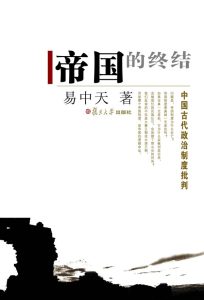
With Lecture Room now in the phase where the tree falls and the monkeys scatter, saying something nice about it seems a little like asking to be mocked. There was plenty on Lecture Room driven by official ideology—for example, Yu Dan dragging Confucius and Zhuangzi in to promote a harmonious society. I really didn’t like that.
Yi Zhongtian is so hot right now that people feel embarrassed to admit they like him. I actually think Yi Zhongtian is putting a lot of thought into what he does, and that in itself is rare and commendable. On Lecture Room, he shows the most accessible—and the most “harmless” to ideology—side of himself. This material neither pokes at the sensitive nerves of the country’s ideology nor fails to attract a large audience. Afterward, at least a small portion of those viewers will go on to read the works of his that really have some weight. And if just a small portion of those readers are inspired, or even enlightened, by those works, then Professor Yi will have earned immeasurable merit.
Given the constraints of the country, the ideas in works that might genuinely enlighten Chinese readers—The Birth of the American Constitution and Our Reflections (Meiguo Xianfa de Dansheng he Women de Fansi), The Empire’s Melancholy (Diguo de Chouchang), and The End of the Empire (Diguo de Zhongjie)—can hardly appear directly on television. So he draws attention with his “harmless” side, then gets readers to love the rest of him by association. In the circumstances, that is a pretty good roundabout strategy for saving the country. What could be wrong with having a few more scholars like that?
Reading The End of the Empire, I didn’t get quite the thunderbolt-of-enlightenment feeling of some more classic works of history, but it is still a remarkably incisive analysis and a thorough summation of China’s ancient political system.
I have a soft spot for Yi Zhongtian.
The real Yi Zhongtian is actually not quite so much Lecture Room Yi Zhongtian.
Annual “Mutual Destruction” Grand Prize
Winners: Jin Yong & Bu Feiyan

Bu Feiyan’s war of words with Jin Yong seems to have happened in 06; in 08, I finally read one of her books. Before reading her work, I was on Bu Feiyan’s side. Afterward, I thought that for martial arts fiction at this level to dream of overthrowing Jin Yong was simply delusional.
But Jin Yong’s performance was hardly something to write home about either. Given Jin Yong’s status in the martial-arts world, having some junior pop up every so often to challenge him ought to be routine. They are not even in the same weight class. If he had been big-hearted, he could have encouraged the younger writer with a few words; if he really didn’t like the work, he could simply have said so.
But how did Jin Yong respond?—
“The name Bu Feiyan isn’t a good one. I suggest she change it. In the Tang dynasty, there was a singing-girl named Bu Feiyan; in my The Smiling, Proud Wanderer, there is a Qu Feiyan. Her life was unhappy, and she lived only into her teens. Still, talent has nothing to do with changing one’s name.”
The younger writer merely ran her mouth and challenged your work. Did you really have to turn it into a personal attack, hinting that she was a prostitute?
Actually, if you read the prefaces and afterwords to the revised editions of Jin Yong’s collected works, you can see that he had been unhappy for years about “little sisters” writing martial-arts fiction. This time, Bu Feiyan simply gave him an excuse to let it all explode.
In the afterword to the revised edition of Heaven Sword and Dragon Sabre, Jin Yong wrote:
“Zhou Zhiruo said to Zhang Wuji: ‘Just marry her and have some babies. After ten or eight years, you will think only of me in your heart and won’t be able to bear to leave me.’ Little brothers and little sisters don’t understand this kind of feeling. So I don’t advocate fourteen- or fifteen-year-old little sisters writing novels.”
The afterword is dated 2003. Although it was written before the war of words, it leaves the impression that Jin Yong, just to get this out of his system, went so far as to burn Bu Feiyan into his own masterpiece.
In this particular showdown, Bu Feiyan was utterly defeated on ability. But, to put it politely, Jin Yong did not win on character.
Annual “Echoes That Linger” Grand Prize
Soundtrack Album:
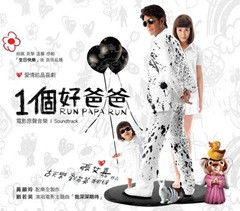
Huang Yunling 2008 – One Good Dad (OST)
While watching One Good Dad, I started sobbing uncontrollably when the track “Dark Zone” came on.

Moby 2007 – Southland Tales (OST)
Moby’s masterpiece. Southland Tales feels less like a film by Richard Kelly than a Moby music video.
Best New Non-Soundtrack Album:
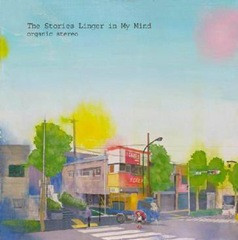
organic stereo 2008 – The Stories Linger in My Mind

Yasushi Yoshida 2008 – Little Grace

Ólafur Arnalds 2008 – Variations Of Static
Best Older Non-Soundtrack Album:
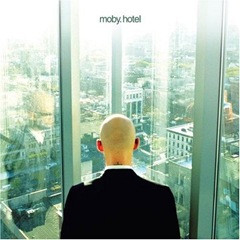
Moby 2005 – Hotel CD 2
A lot of the music in Southland Tales comes from this album; the tracks that didn’t make it onto the OST can be filled in here too.
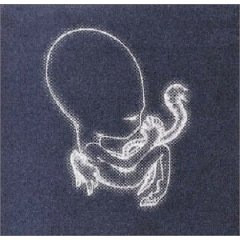
Sigur Rós 1999 – Agaetis Byrjun
If only we’d met sooner.
Annual “Neglecting One’s Proper Job” Grand Prize
Winner: Crosstalk Wazi Professor Ai, May I Ask Who Killed Robert?

Taiwanese crosstalk theater always tries to express more than crosstalk alone, from Lai Sheng-chuan to Crosstalk Wazi. Sometimes it works; sometimes it feels a little forced. This time, Crosstalk Wazi simply stopped doing crosstalk and put on a proper stage play, and in the process created a high point. I used to feel that Crosstalk Wazi’s work and performances were just a little short of the crosstalk plays by Performance Workshop. After this one, I have to look at them with new respect.
Annual “Haunting” Grand Prize
Winner: Howard McGillin (the Phantom in the New York Broadway production of The Phantom of the Opera)
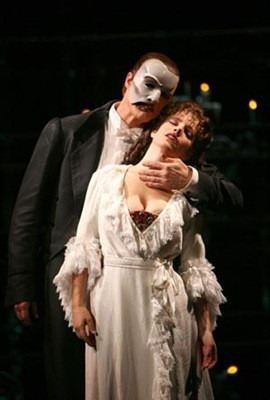
The best performance I saw this year was Howard McGillin’s Phantom in the New York Broadway production of The Phantom of the Opera.
I used to look down on musicals, thinking that the same idea could be conveyed in a play or a film with one line, or even one expression, while a musical needed a whole long stretch of singing. In terms of how much plot you can pack into a unit of time, musicals obviously cannot compete with films or plays. After seeing Broadway’s The Phantom of the Opera, I realized that although Webber’s music is undeniably magnificent, it was Howard McGillin’s haunting performance that directly changed my mind about musicals.
Annual “Bone-Deep Disturbance” Grand Prize
Winners: The Box of Goblins TV anime & Masters of Horror season one, episode Imprint

British mysteries always make me feel I’m not smart enough; Japanese mysteries always make me feel I’m not twisted enough. The much-hyped The Box of Goblins actually contains very little deduction. Its grand design is certainly gripping, but it is the extreme distortion of human nature that truly leaves you staring in amazement. The final episode in particular gave me goose bumps from beginning to end.
Something else that makes your scalp crawl is Takashi Miike’s Imprint. Miike makes every other master who took part in filming Masters of Horror look completely outclassed.
The Imprint episode of Masters of Horror is less horror than a bone-deep distortion—from visual distortion and psychological distortion all the way to sexual distortion. It goes all the way on every front.
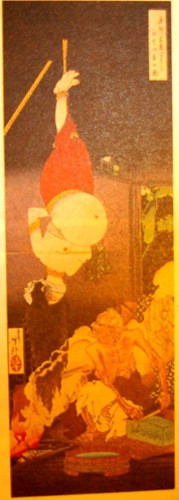
The sight of a geisha being hung upside down, tortured with needles stuck all over her, is somehow sensuous even in the midst of the horror.

The combination of S/M and horror also has a long history in Japan. In Meiya Mao’s Legendary Japan (Chuanshuo Riben), there is a story about an ogress who killed pregnant women. It includes an illustration, and once you see it, you’ll understand:
Annual “Adding Unnecessary Flourishes” Grand Prize
Winner: Feng Xiaogang’s If You Are the One
If You Are the One really ought to have been a tragedy dotted with a few humorous lines. The story may originally have been meant to end when Shu Qi jumped into the sea, but to suit the New Year season, they forced on a cheerful, celebratory ending. What a pity.
Annual “Epic Sweep” Grand Prize
Winner: The Man from Earth

An indoor play, a single setting, no special effects—just dialogue—and somehow it became a science-fiction film. It has profound philosophical ideas, and some passages even achieve an epic sweep. The famous Chinese directors who are hell-bent on making epics, casually blowing a few hundred million and ending up with comedies, should take a good look at how this film tells a story. An epic is not something you pile money into.
Annual “Scorched Earth” Grand Prize
Winners: Red Cliff & Three Kingdoms: Resurrection of the Dragon
It seems that very few people have put Red Cliff and Three Kingdoms: Resurrection of the Dragon side by side for comparison, even though both are Three Kingdoms films released in 08. Maybe everyone feels that Three Kingdoms: Resurrection of the Dragon is in a different league from Red Cliff—especially after the mainland version was cut and altered by the gdzj, making it even less substantial—or maybe the huge difference in style is more obvious than the similarity in subject, leaving nothing to compare.
Actually, when it comes to the Three Kingdoms subject, both films do break new ground, and they share one point of entry: the “justice” of the Three Kingdoms wars.
What people watch the Three Kingdoms for is “with a laugh and a wave of the hand, ships and oars are reduced to ashes.” The heroes create romantic legends “with a laugh and a wave of the hand”; the people of the world are reduced to ashes. Yet people who listen to and read these stories have always fantasized themselves into the laughing person. In reality, if you had truly lived in the Three Kingdoms, you would all have been burned-up cannon fodder.
The Three Kingdoms world has everything except justice. Even Liu Bei, the model leader who never stops talking about benevolence and morality, is described as “Lord Liu Bei, who became emperor after setting out to save the emperor.” He represents legitimacy, not justice. Verbal insistence on justice cannot conceal the brutality of war, which leaves human lives devastated.

Western audiences would not accept this kind of Three Kingdoms war. So John Woo very much wanted to remake the Three Kingdoms story as a battle between good and evil.
What do you do when there is no justice? John Woo chose to invent it.
There is nothing wrong with that in itself. Cao Cao is the bad guy, Liu Bei the good guy—nothing too hard to swallow. It is simply a more extreme retelling on top of Romance of the Three Kingdoms. Orcs and hobbits are familiar to audiences in both East and West, and people accept them.
The problem is that John Woo never follows the idea through consistently.
After Red Cliff was released, quite a few viewers criticized it for not matching the historical facts, or for similar reasons, but John Woo always seemed able to offer a rebuttal. You say it feels awkward for Zhang Fei to know calligraphy, and John Woo says he researched it and Zhang Fei really could write beautifully; you say a certain scene is embarrassingly ridiculous, and John Woo says that scene was intended as a joke.
Indeed, after hearing John Woo rebut these points, it seems that if you pick the film’s individual bits apart one by one, none of them is really a problem. But what matters most in a film is not whether it obeys some external logic; it is whether it is self-consistent. The story has to make sense within its own framework. Whether it matches history, Romance of the Three Kingdoms, Records of the Three Kingdoms, or any novel or historical text is completely beside the point. Forget Zhang Fei being a master calligrapher—even if you said Zhang Fei was a woman, I would accept it as long as you could make it hold together. In Time and Tide, Zhuge Liang and Lü Meng dance together, and nobody thought it was awkward.
The real problem with Red Cliff is that it never settles on a consistent tone. Nearly every scene, whether it builds tension or flirtatious ambiguity, is damaged without exception by the scene that follows—
One moment, the enemy is at the gates and everything is imminent; the next, they are taking their sweet time helping a horse give birth and flirting over a qin. So which is it—imminent or leisurely?
It starts out going for gritty realism, showing the blood and cruelty of warfare with cold weapons, then suddenly ends by having Guan Yu and Zhang Fei kill people and strike poses in an extravagantly romantic style. Is this supposed to be realistic or romantic?
Red Cliff is full of this kind of self-slapping contradiction.
The same problem appears in its treatment of the justice of war. The opening strains to show Liu Bei’s side loving the people like its own children, yet by the turtle-shell battle at the end, Guan Yu, Zhang Fei, and the rest are throwing themselves into gleeful slaughter. John Woo’s intended display of justice ends up as a carnival of slaughter carried out under the banner of justice.
John Woo’s earlier films did contain justice—the justice of the jianghu. Loyalty played out on the jianghu stage is justice, because you are the person moving the pieces and also a piece yourself. You play with yourself and answer only to yourself (at most, a few underlings get dragged in). Loyalty played out on the stage of the whole world has no justice in it, because you are the person moving the pieces while ordinary people become your pieces. Brotherhood cannot carry that responsibility.
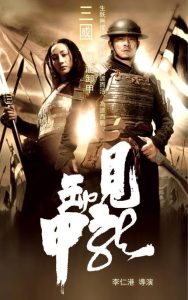
On the question of justice in the Three Kingdoms wars, John Woo chose invention, while Daniel Lee chose reflection. In Three Kingdoms: Resurrection of the Dragon, there is no just war in the world—just as the film’s zoetrope suggests: “No matter how far or how fast you travel, in the end you will turn back around just like it.” War leaves a field of dry bones and changes nothing. Zhao Yun “killed his way through a great circle” for peace under heaven, but did peace under heaven actually arrive?
In Three Kingdoms: Resurrection of the Dragon, Zhao Yun finally realizes that he is nothing more than a pitiful chess piece. Rather than wear himself out and get countless people killed without changing a thing, he might as well have never done any of it in the first place. The tragic part is that without being tempered in countless bloody battles, he could never have grasped the truth that one general’s success is built on the bones of ten thousand soldiers. “How can there be defeat without victory?” Did the audience understand this awkward line?
In Red Cliff: Part II, Zhou Yu suddenly says, for no apparent reason, “We have all lost in front of the people of the world.” In fact, the only person entitled to say that is Zhao Yun from Three Kingdoms: Resurrection of the Dragon.
We can disagree with the conclusion Li Rengang reached in his reflection, and we can even sneer at this somewhat clichéd bit of soul-searching, but I can’t help respecting the act of reflection itself.
I especially like Zhuge Liang’s character in Three Kingdoms: Resurrection of the Dragon. At first, Zhuge Liang is a “spectator” watching the game of chess that is the world. Everyone else is frantically stirring things up, while in Zhuge Liang’s eyes, they are either players or chess pieces; only he is merely a spectator. When he occasionally offers a few pointers to the players, he does so with an air of carefree detachment that borders on self-conceit. Yet even someone as shrewd as Zhuge Liang cannot help gradually changing from a spectator into a player—and by the end, he can no longer tell whether he is a player or a chess piece.
After giving Zhao Yun his final order, Zhuge Liang watches him walk away. In his eyes there is both the regret of losing a chess piece with extraordinary fighting power and the sorrow of being a chess piece himself. With just a handful of lines and a few looks, Pu Cunxin makes the character so vivid that all I can do is bow to his skill.
Quite a few of the books and movies I saw this year discussed and reflected on “justice.” The biggest hit was The Dark Knight, while the most fatalistic was Giddens Ko’s The Killer: Crime by Day and Night. Its two stories, “Ninety-Nine” and “The Cat-Fetus Man,” can each stand alone, but their real brilliance only emerges when read together. “Ninety-Nine” is about justice taken to the extreme; “The Cat-Fetus Man” is about evil taken to the extreme. It turns out that Heaven can tolerate neither extreme evil nor extreme justice. The two mirror each other from afar, and their fates had already been determined somewhere beyond our sight.
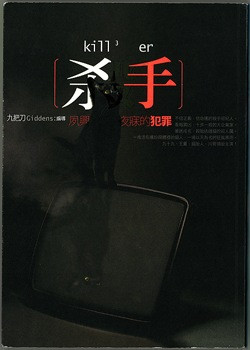
Annual “Can’t Help Myself” Award
Winner: Ip Man
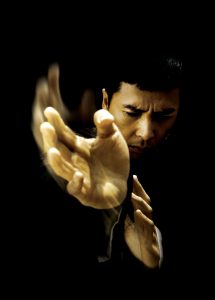
Justice comes under suspicion, and the hero steps down from his pedestal.
Ip Man promotes heroism and patriotism. Really, that was the result of the cuts and revisions by the gdzj, and an unintended consequence for the creative team.
Compared with heroes like Huo Yuanjia, Chen Zhen, and Wong Fei-hung—heroes of impeccable revolutionary pedigree and lofty political consciousness—Ip Man is a gray hero. A string of lofty lines about the greater good of the nation after his rampage cannot change the fact that it began with a friend’s brutal death, not a national crisis.
Ip Man is not a hero who throws himself into worldly affairs. Even when he finally erupts after being “unable to endure any longer,” he is still “enduring in silence.” In the scene where he beats the Japanese soldiers senseless, if it were Wong Fei-hung, Huo Yuanjia, or Chen Zhen, he would certainly say, “All of you, come at me together.” Ip Man merely says, “I challenge ten of you.” That’s the difference between “fuck your mother” and “fuck your mother” said in a more decorous register.
Li Zhao, played by Lin Jiadong, was originally the character with greater real-world significance. If Ip Man is a gray hero, then Li Zhao is a colorful traitor. In real life, there are few absolutely patriotic people, and few absolutely traitorous ones.
In the uncut version, Li Zhao is beaten to death by ag mobs. In fact, this is the director and screenwriter throwing a bucket of cold water at ncagzy. More often than not, ag is simply a lofty excuse for mobs to vent their violence. ag is a get-out-of-death-free card for violence.
Ip Man was originally a story about a gray hero and a colorful traitor. It became a mainstream propaganda film only after the gdzj’s cuts and revisions and ag viewers’ wishful thinking.
But whatever the case, in an age when “the world is without heroes and philosophers have grown feeble” (in Li Ling’s words), I am still glad to see someone take off Zhao Yun’s armor and write a biography of Ip Man.
Annual “Outright Deranged” Award
(500 words deleted here)
Written at the End of the Year
2008 was an extreme year. It’s just that, by the end, the meaning of those originally extreme events had become less than clear. Darkness and light were finally kneaded into one muddled, ambiguous glow, making it impossible to see what things had originally looked like. So the death of Big Sister Ai Iijima is a perfect annotation to 2008. Whether it was the beautiful body of youth or the rotting, stinking corpse, both were merely dinner-table talk for people who had eaten and drunk their fill, accompanied by lecherous smiles. The two extreme images, before and after death, were somehow indistinguishable to many people. Just as whether it was the more than 80,000 lives lost in the great earthquake or the more than 50 gold medals won at the grand celebration, in the end they could only prove that we were speeding along a broad and smooth road toward a bright future.

2008,88。
Version History
The first version was written in early 2009. Many passages were deleted in this revision. I am astonished at how much latitude people had in what they could say back then.
Leave a Reply