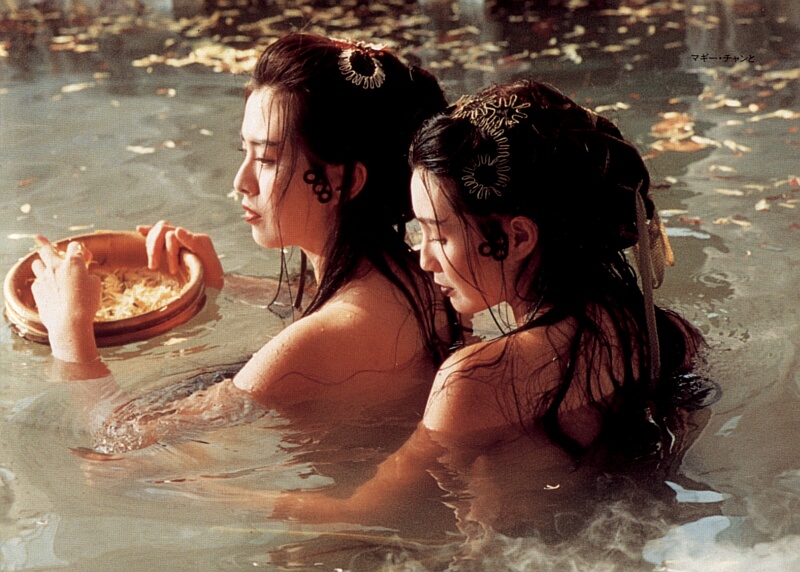
Part One: The Love in Green Snake
It all started with Painted Skin (this essay was written at the end of 2008). The posters for Painted Skin were stunning, so I looked up the name of its art director and discovered, to my surprise, that it was Lei Chuxiong, the art director of Green Snake. I have always thought Green Snake had the most magnificently ornate visuals in the history of Chinese-language cinema, so I was looking forward to Painted Skin. The result, of course, was a huge disappointment. Its visuals were not remotely comparable to Green Snake; instead, they clearly inherited the sterile polish of Hero, House of Flying Daggers, and The Banquet: somehow the main street of a Han-dynasty frontier city was cleaner than my bedroom. After being sickened by this almost office-building-scented ancient city, I missed the richly inked Jiangnan water towns in Green Snake even more, and watched it again.
Like many male film fans my age, I suspect Tsui Hark will forever be my favorite director. Growing up, I was slow on the uptake, read almost no books outside school (something I still deeply regret), and did not watch much television either. But I watched Tsui Hark’s films over and over: I rewatched A Chinese Ghost Story and Swordsman II every year, without fail. I have lost count of how many times I’ve seen Green Snake, but this time I realized I hadn’t understood it before.
What kind of feeling was Tsui Hark trying to express with Green Snake? The common reading is that it is a love triangle—or rather, a polygon. Bai Suzhen loves Xu Xian; Xiaoqing plays the other woman; Xu Xian tries to have it both ways; Xiaoqing seduces Xu Xian and then seduces Fahai. As for Fahai, he is a powerful, lustful, desperately prideful… lecherous monk. Is it really that complicated?
Perhaps there is a little of all that, but none of it is what Tsui Hark is chiefly trying to say—or, put another way, some of these relationships are merely appearances.
Tsui Hark is trying to say only one thing: Xiaoqing’s same-sex love for Bai Suzhen. Everything else is incidental.
I was late to the party. Quite a few readers had already made similar observations. Here I have added some video clips, hoping to make this wild theory a little more persuasive. (The Green Snake frequently rebroadcast on CCTV6 is the sanitized version: it has fewer shots than the complete cut, and some dialogue was altered. The following clips are taken from the Korean DVD.)
First, let’s watch these two clips:
Bai Suzhen: “Xiaoqing, you're still by my side?”
Xiaoqing: “Yes, Sister! I always have been, and always will be.”
…
Bai Suzhen: “Fahai is distracted and there is a tear in his kasaya. Hurry and save your husband, or all our previous work will be wasted.”
Xiaoqing: “I will. You always say humans have feelings. Do demons have none? Have you ever thought that the five hundred years we've spent together also count as feelings? Have you ever thought of me as you would a human being?”
—I don’t know how everyone else reads this scene, but for me, rewatching it overturned my old understanding of Green Snake. Let’s start from the beginning:
When Bai Suzhen and Xiaoqing first arrive in the human world, Bai Suzhen is a mature woman, while Xiaoqing is really a naïve, preadolescent girl. Bai Suzhen heads straight for the men; Xiaoqing’s desire is still hazy. So is her sexual orientation.
Look at this shot. If the blind Taoist hadn’t interrupted them, what would have happened between Xiaoqing and the Indian dancer? —
Later, when Xiaoqing and Xu Xian meet face-to-face for the first time, most of her flirting with him is probably just a little girl’s teasing. Many men will recognize the experience of being needled by a half-grown girl.

Under Bai Suzhen’s influence—her love of men and all her talk about it—Xiaoqing hopes to understand desire through a man. She seduces Xu Xian, and keeps saying she wants to spend time with Fahai. But, as she herself says to Xu Xian: “Explain it to me. Demonstrate what love is, what the seven emotions and six desires are, okay?” Is this a woman’s seduction of a man, or a preadolescent girl’s primal curiosity about sex?
There is curiosity, but also confusion. Xiaoqing says: “Sister, you said humans are guided by feelings, so I learned feelings—but I don’t feel a thing.”
Xiaoqing’s seduction of Xu Xian is strikingly similar to Gwei Lun-mei’s motive for kissing the gym teacher in Blue Gate Crossing. Gwei Lun-mei says, “I thought I’d like boys after kissing one, but I still didn’t.” From there, she rather helplessly accepts her own orientation.
Xiaoqing’s awakening and self-acceptance come later, but the confusion is the same.
The conflict between the two snakes intensifies during the Dragon Boat Festival, when Bai Suzhen tells Xiaoqing to leave. Xiaoqing complains, “You’re afraid I’ll get in the way of the two of you, aren’t you?” This is not the jealousy of the other woman; it is plainly the loneliness of a little girl abandoned by her companion. If she were the other woman, she would complain to Xu Xian.
When Bai Suzhen goes to steal the lingzhi, Xiaoqing says, “You’ll be badly hurt. Pick another man.” Is that something the other woman would say?
Bai Suzhen insists on leaving. Xiaoqing says to the unconscious Xu Xian, “Sister is too fast. I’m afraid I won’t catch up.” The line works two ways: Xiaoqing fears Bai Suzhen is becoming more and more human, while she mistakenly believes she will never understand human desire. What she fears is being left farther and farther behind by Bai Suzhen. Lovers often feel this way: when the other person’s knowledge or experience races ahead while you remain stuck in place, even if the relationship is temporarily fine, you cannot help fearing abandonment.
After catching up with Bai Suzhen, Xiaoqing says, “Sister, the two of us came together. I don’t want to return to the Purple Bamboo Grove alone.”
After Xiaoqing is captured, she tries to seduce Fahai. When he rebuffs her, she says, “Sister always treats honest men this way. Honest men love it.” Clearly, she is not spontaneously seducing Fahai; she is still unconsciously imitating her sister.
Fahai attempts to use Xiaoqing’s cultivation to defeat his own lust. There is a montage here, so let’s watch it:
—Was Xiaoqing thinking of Xu Xian in the other bed, or of Bai Suzhen? If Xiaoqing’s feelings for Bai Suzhen were previously just a little girl’s attachment to her sister, then from this point onward the desire inside that attachment begins to awaken.
Fahai tries to use Xiaoqing to extinguish his desire, but Xiaoqing instead becomes dimly aware of something. She tells Fahai, “Too bad neither you nor I has a mortal’s feelings.” In fact, Xiaoqing simply has not realized that her feelings do not point toward men. The girl her sister keeps accusing of having no self-control ends up beating Fahai at the contest of “self-control.” What Xiaoqing does not know is that if she does not like men, she has no need for self-control in the first place. She tells Fahai, “I was afraid you hadn’t lost control, so I lost control first.” In the end, she cannot lose control at all.
Next, Xiaoqing—thrilled beyond words after beating “Fahai” at “self-control”—is once again neglected by Bai Suzhen. In a fit of anger, she finally sleeps with Xu Xian. Yet in the middle of this atmosphere of carnal desire, the first image that flashes through her mind is not her first “man,” Fahai, but her first “woman”—the Indian dancer:
Their “affair” is discovered, and Xiaoqing and Bai Suzhen finally turn on each other. After being defeated, Xiaoqing uses “human” sweet talk to coax Bai Suzhen. Only when Bai says their relationship has run its course does Xiaoqing realize how serious things are. Bai Suzhen cries. Xiaoqing says, “You won’t. Whatever you have, I have too,” but cannot cry herself. Bai Suzhen says being human is hard. Xiaoqing says, “When I was a snake, you said being human was good. Now that I’m human, you say being a snake is good. Were you lying to me?” Furious, she leaves: “Then I’ll go back to the Purple Bamboo Grove. I won’t bother you anymore.” —At this point, how much of this conflict is really about Xu Xian for Xiaoqing?
In the next scene, Fahai comes to the door. Xu Xian tells the sisters to flee. At first glance, this is a classic confrontation between a man, his wife, and the other woman. But what does Xiaoqing say? “Exactly. I’m so bad at being human. You and Sister should go back.” She is still resentful that Bai Suzhen abandoned her; Xu Xian has nothing to do with it.
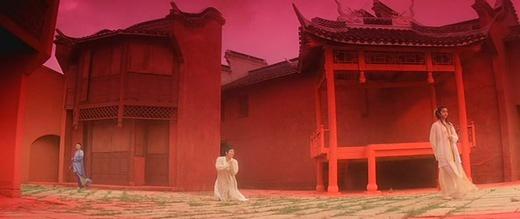
Then comes the flooding of Jinshan, followed by the white snake giving birth. The film reaches the scene from the video at the beginning of this essay: Bai Suzhen strokes Xiaoqing’s ear, and only then does Xiaoqing finally understand her feelings for Bai Suzhen.
Xiaoqing’s love for Bai Suzhen moves from haziness to confusion, is tested by the two men Fahai and Xu Xian, gradually becomes clear, and finally reaches full awakening and self-acceptance in that scene.
If this reading is correct, then Li Bihua, the author of the original Green Snake, turned Xiaoqing into the other woman, while Tsui Hark turned her into a lesbian.
I missed this layer before and thought the film was inferior to the original. Now that I understand it, I think Tsui Hark is far more ruthless than Li Bihua.
Part Two: Tsui Hark’s Love, Lust, Life and Death
“The Love in Green Snake” borrows its title from Eileen Chang’s Love in a Fallen City, while “Tsui Hark’s Love, Lust, Life and Death” borrows from Foucault: His Life, His Times, His Thought. I bring the two of them up because I often feel that the people who truly see through this world are those whom “normal people” dismiss as having “abnormal” sexual orientations: Foucault was into sadomasochism, and Eileen Chang had incestuous—or at least intensely father-fixated—tendencies. There are plenty of other examples.
So what about Tsui Hark?
Love, lust, life and death: for now, let’s leave life and death aside and talk about love and lust—Tsui Hark’s view of desire. After watching Green Snake this time, I was not satisfied. Is the lesbian relationship between the two women in Green Snake an accidental exception in Tsui Hark’s work, or a model that can help us analyze his view of desire?
It is said that most works of art result from the sublimation of dark, perverse energy that their creators cannot express consciously. So a person’s paintings and writing can reflect, more or less, some hidden complex within them. Film is probably the same—especially for a creative director like Tsui Hark, who likes to write and direct his own films. His work should reveal even more of his secret inner complexes.
For example, his terrible films seem to reveal a few things.
Tsui Hark is a genius of a creator. There is only a fine line between genius and madness, and when inspiration erupts, if reason does not pull it back a little, it is easy to lose control and go completely off the rails. So whenever Tsui Hark makes a few good films, he is bound to go off the rails once and make a terrible film far below his usual standard. But precisely because he loses control, those films may reveal complexes that were originally hidden deep inside him.
This may be overgeneralizing from a few examples, but I think whenever Tsui Hark loses control, he likes to make monsters. Not traditional Chinese demons, but the kind of monsters you see in Ultraman. After A Chinese Ghost Story came the wildly uncontrolled second film in the trilogy, A Chinese Ghost Story II, whose little boss was a monster. The boss in The Legend of Zu was a giant monster. After the lion-fighting Once Upon a Time in China III came Once Upon a Time in China IV, with its “monster lions,” which were also transformed from monsters. And that is without even mentioning Black Mask 2: City of Masks and Thirteen Ghosts, where monsters run rampant.
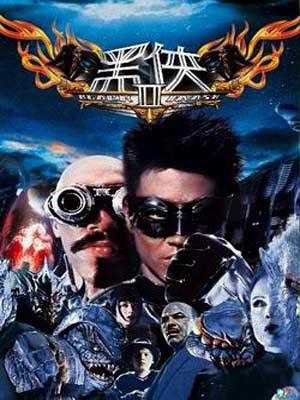
So we might say Tsui Hark has a “monster complex.” I wonder whether, as a child, he was seriously bewitched by the same idiotic Japanese superhero-versus-monster shows as we were—or as children are today—shows like Space Ironmen Kyodain or Ultraman. The difference is that we so-called “normal people” have now turned around to sneer at Space Ironmen Kyodain and Ultraman, while Tsui Hark is probably still fantasizing that he is Ksei or Ultraman. So the counterpart to the “monster complex” is an “Ultraman complex.” That lets us understand Tsui Hark’s “superhero movie,” The Storm Riders. Dongfang Bubai and Gu Changfeng no longer duel with martial arts, but with “M87 Ray, Z Ray, Ultra Spray, Ultra Cold Air, and Ultra Magic Light,” because they are really just two Ultramen!
Zhou Xun once said, “Deep down, Director Tsui is still a child. He especially loves being weird.” That probably counts as some confirmation of my guess. I believe many things in Tsui Hark’s inner life remain fixed in his childhood to this day—and not just one isolated psychological facet, but many sides of him, including his view of desire.
Is Tsui Hark still a little boy when it comes to love or desire?
If bad movies can be used to sum up Tsui Hark’s “monster complex,” then the women in his films can also tell us something about his view of desire.
What do the women in Tsui Hark’s films have in common?
Sally Yeh: even when she was young, 20 years ago, she already made people feel she was a big sister. In Shanghai Shanghai, she showed a little thigh: lots of flesh, but absolutely not fleshy. That thigh—well… all I can say is, a prepubescent boy would feel very safe sitting on it. This is the maternal or big-sister type.
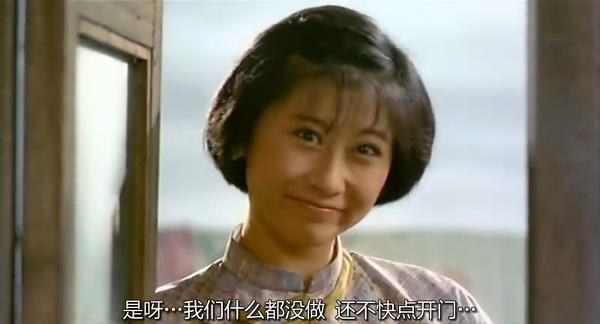
Brigitte Lin, the dream woman who once drove men across Hong Kong and Taiwan wild, never played a normal woman in Tsui Hark’s hands again. Playing a man in disguise was the best-case scenario; her most famous role was the yin-yang person in Swordsman II. As for Michelle Reis, she counts as a jade maiden elsewhere, but with Tsui Hark she is always neither man nor woman. Even a great beauty like Anita Yuen is not spared, let alone Karen Mok and these others whose sexual markers were never especially obvious in the first place (fans of those two, please don’t beat me up). This is the sexless type.
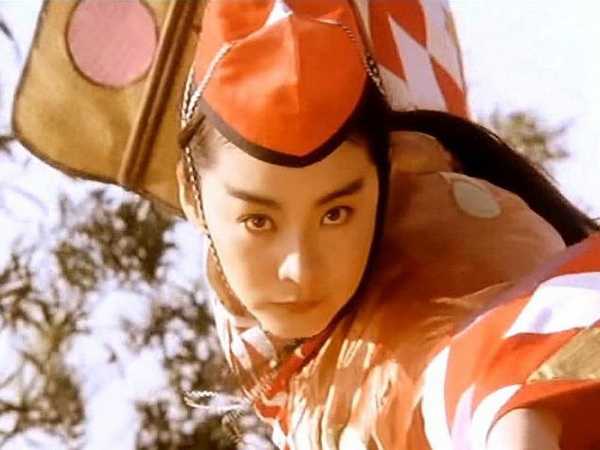
Joey Wong could play Pan Jinlian for other directors, but with Tsui Hark she is beautiful in a transparent way, beautiful enough to make you forget the existence of the body. The roles she plays may be ghosts or demons, but in truth she is an unattainable goddess. This is the goddess type.
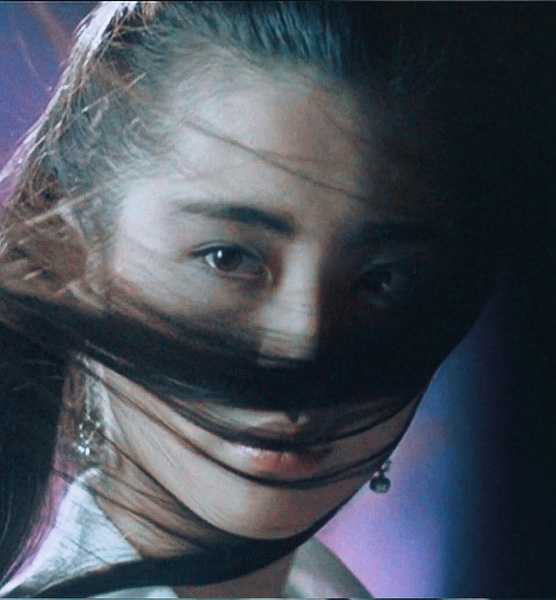
Rosamund Kwan has plenty of womanly allure in Tsui Hark’s films: she can be dignified and generous, graceful and virtuous, gentle and playful. Ah, the perfect woman. But none of that matters. What matters is that she plays an elder relative -_-! The big boy who finally gets the beauty is someone she calls “Auntie.”
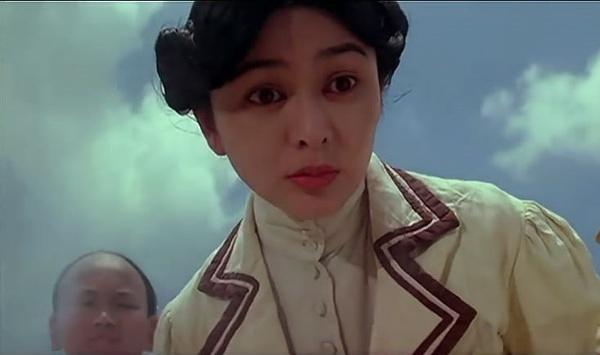
I think the actresses who worked frequently with Tsui Hark were either beautiful like goddesses, beautiful like ghosts, overly maternal, or simply not very sexually marked.
In a word, the women in Tsui Hark’s films may be beautiful, but they rarely inspire lust or even sexual associations. Their beauty is mostly desexualized beauty, Platonic beauty. Or, to put it another way, it is the beauty of big sisters and young aunties as seen through the eyes of a prepubescent boy. Female beauty through a prepubescent boy’s eyes.
In Tsui Hark’s world, when women really do display sexual elements, they are either carried off by other women or carried off by big boys with hearts as innocent as little nephews or kid brothers. Failing that, Tsui Hark piles heavy shackles onto their sex appeal, keeping it as far as possible from pure physical lust. Take Ye Fanghua in Black Mask: the scene where Huang Qiusheng hangs her up for S/M is still pretty steamy, but before long she turns into a cold-blooded killing machine. Or Zhang Yuqi in All About Women: sexy, yes, but also a feminist BOSS (and besides, I don’t think Zhang Yuqi is all that sexy either; still, with those broad shoulders and sturdy build, she would feel wonderfully safe to a prepubescent boy as an older-sister type).
Everyone says Tsui Hark has a “chaotic-world complex.” But who created this “chaotic world”? I think Tsui Hark actually observes the world with a prepubescent boy’s heart frozen in childhood, and sees grown men turning it into a filthy, hopeless mess. On the other side are the aunties and big sisters, pure or noble or kind, radiating the light of humanity and motherhood, warming the prepubescent boy’s heart.
In the eyes of the prepubescent Tsui Hark, grown men cannot be trusted. Those magnificent women should ideally be sexless and should never marry those lousy men. If they must have somewhere to belong, then if they cannot stay with the prepubescent boy forever, they might as well stay with their sisters. In short, they are either carried off by sisters, carried off by the prepubescent boy, or left single; worldly adult men have no chance. That is why, in New Dragon Gate Inn, the mature man Zhou Huai’an is “without feeling or loyalty,” while the one who ends up accompanying the older-sister type Jin Xiangyu forever is the “kid brother,” Diao Buyu, the meat-loving Tartar.
And in Green Snake, Maggie Cheung’s destination, like Joey Wong’s in The Storm Rises Again (Fengyun zai qi), is “sisterhood.” Seen this way, lesbian relationships in Tsui Hark’s films are not really an exotic aberration, but a prepubescent boy’s beautiful fantasy. It is a lot like the psychology of fujoshi watching BL fan fiction.
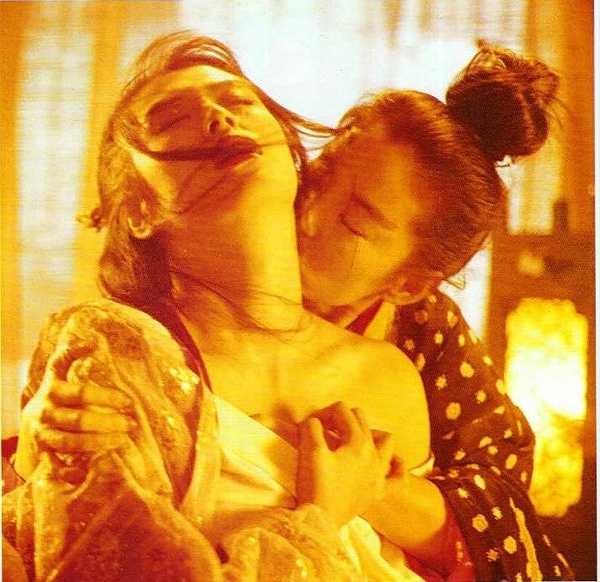
Tsui Hark is really Jia Baoyu with a mother-complex, and cinema is his Grand View Garden. He has always looked up at women through the eyes of a prepubescent boy. The relationships between men and women he puts on screen—lesbian love or “incest”—are really nothing more than a little boy’s innocent fantasy of beautiful women.
This is Tsui Hark-style pure love.
And that is Tsui Hark’s view of desire.
In front of women, Tsui Hark is neither a great hero nor a scholar. Beneath the Old Monster’s eccentric exterior is, in fact, the heart of a prepubescent boy.
Now you know why Tsui Hark had to say “All About Women,” right? Women are anything but bad.
Included
“Part Two: Tsui Hark's Life-and-Death Love and Desire” was revised and included in The 24-Frame Psychology Code; “Part One” was abandoned because of its explicitness.

Leave a Reply