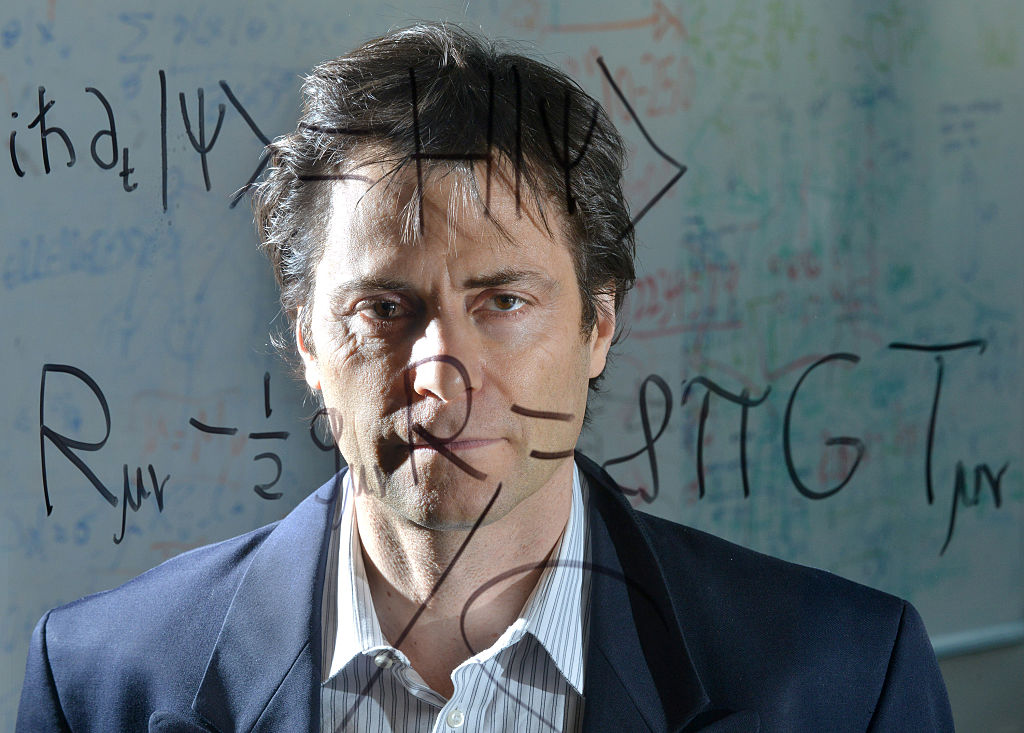
In the concluding section of The Fall of Hyperion, the great physicist Fred Adams comes down from the clouds and, for a moment, worries about this “small question” of humanity’s future—which later grew into his most recent book, Life 3.0.
There’s a passage in the conclusion that I find especially interesting.
Fred Adams continued:
“Among the people I know, if they believe life has meaning, they usually wake up happy and full of anticipation for the new day.”
“What’s astonishing is that, based on where their happiness and meaning come from, these people split into two utterly different camps. In other words, there seem to be two answers to the question of meaning, and each answer has a group of people who find it very useful. I call these two answers ‘top down’ and ‘bottom up.’”
“In the ‘top-down’ approach, fulfillment comes from the top—from the big picture. Even if life here and now may not be going according to plan, because it is part of something larger and more meaningful, it too acquires meaning. Many religions convey this message: within the family, an institution, or society, an individual can feel that they are part of something larger and more meaningful, and thereby transcend individualism.”
“In the ‘bottom-up’ approach, fulfillment comes from the tiny details of this moment and this place. If we can seize the present, finding the satisfaction we need in the beauty of a little roadside flower, in helping a friend, or in the face of a newborn baby, then we can feel grateful simply to be alive—even when the big picture contains plenty of unpleasant elements, such as the dying Sun eventually vaporizing Earth and our universe ultimately being destroyed.”
Fred Adams continued:
“For me personally, the ‘bottom-up’ approach provides more existential purpose and meaning, while the ‘top-down’ approach I’m going to defend feels like an unexpected bonus. … I think it’s an extraordinary thing that a pile of particles can produce self-awareness. And for this pile of particles—called Fred Adams—to be lucky enough to have food, shelter, and leisure time to marvel at the universe around us leaves me unable to put my gratitude into words.”
After reading this passage from Fred Adams, I reflected on myself. I feel that I’m someone whose sense of meaning in life relies more on the ‘top-down’ approach. In the new-knowledge course I gave a few days ago, I said that my spiritual home is, to a large extent, housed in films, literature, and scientific knowledge—in these apparently useless things. That’s really what this is about. The little bits of ordinary happiness in daily life can make me happy, but what truly absorbs me are those transcendent things beyond the everyday world.
What about you? Are you someone whose sense of meaning in life is supported more by the ‘bottom-up’ approach or the ‘top-down’ approach?
p.s.:
Fred Adams’s The Fall of Hyperion is a mind-shaking work of genius. I strongly recommend giving it a read. While reading it, I repeatedly experienced a sense of “lifting off”; I was often afraid that my spirit had left my body and ascended to another level.
Note
- This article in the ‘Psychology New Knowledge Course’ series was written to accompany the Wei Zhichao: Psychology New Knowledge Course. It was a short popular-science essay published on the now-closed platform Food Circle; the original link is no longer available.
Leave a Reply