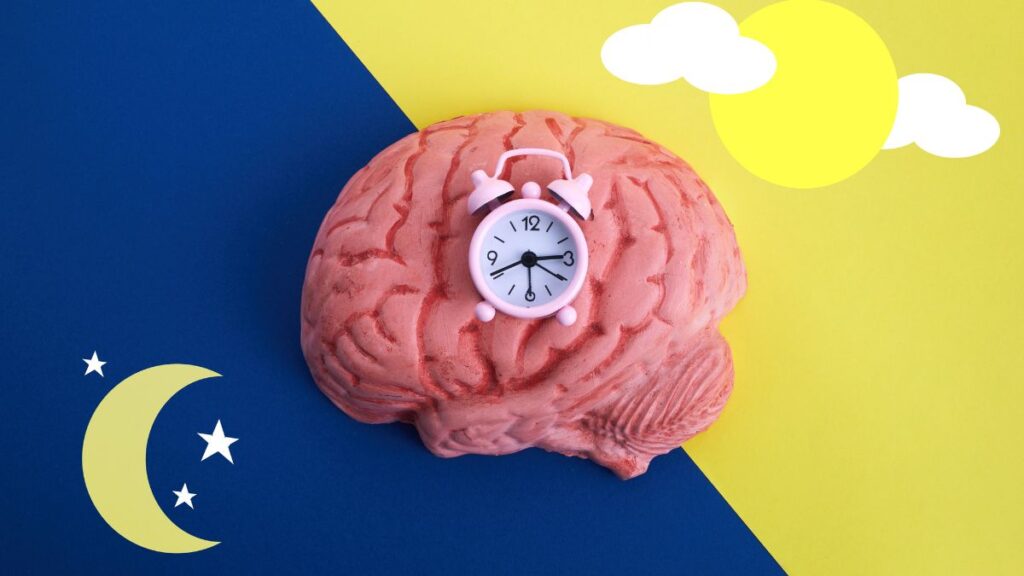
We know that the human body contains several ‘biological clocks.’ They regulate changes in certain bodily functions according to set time cycles.
The biological clock located in the hypothalamus follows a 24-hour rhythm, releasing different hormones during the day and night to regulate our states of wakefulness and sleep.
The human body also seems to have a biological clock with an ‘annual rhythm,’ using seasonal changes to help us adapt to the rhythms of sowing, harvest, and preparing for winter.
The body seems to have a ‘monthly rhythm’ too—the menstrual cycle is one example.
So, does the human body contain a biological clock whose rhythm is ‘one week’ long?
In Me, Myself and My Brain, neuroscientist Dick Swaab lists some evidence that seems to suggest the human body has a ‘weekly rhythm’ too.
The book says: ‘A weekly rhythm is indeed reflected in the concentrations of substances in our blood and urine. Blood pressure, myocardial infarction, cerebral infarction, suicide cases, and births also show rhythmic fluctuations from week to week.’
But we need to be especially careful here: are these rhythms ultimately the work of biological clocks, at the biological level, or are they caused by the weekly rhythms of our social activities? People’s moods may generally look especially miserable from Monday to Thursday and perk up from Friday through Sunday—but that may simply be because people don’t want to go to work.
Still, there is some evidence that certain ‘weekly rhythms’ in the human body are biological mechanisms.
Support for the view that ‘a biological weekly rhythm really does exist’ comes from a researcher who spent 15 years measuring hormone levels in his own urine. Over a period of three years, these hormones displayed regular rhythms with a one-week cycle, even though they did not line up with the working week. This free-running rhythm suggests that there really is an internal biological clock with a cycle of roughly one week.
So why would the human body have a biological clock that changes on a one-week cycle?
Dick Swaab speculates: ‘…The greater possibility is that our weekly rhythms are related to a transitional period in evolution, when organisms in the ocean moved onto land and searched for food on the beaches. The weekly changes in the tides—caused by the interaction of the moon and the sun—would have had a major impact on the foraging behavior of those living along the coastline.’
Some rhythms in the human body seem to come from adapting to important rhythms produced by Earth’s movements. You could call that a wonderfully subtle case of ‘the unity between heaven and humanity.’
Note:
The interval between spring tide and neap tide is exactly 7 days. For information about tides, see www.wikiwand.com/zh-sg/%E6…
Explanation
- These articles in the ‘New Findings in Psychology’ series were short popular-science miscellanies written at the time to accompany Zhichao Wei: New Findings in Psychology. They were published on the now-closed platform Fantüan, and the original link no longer exists.
Leave a Reply