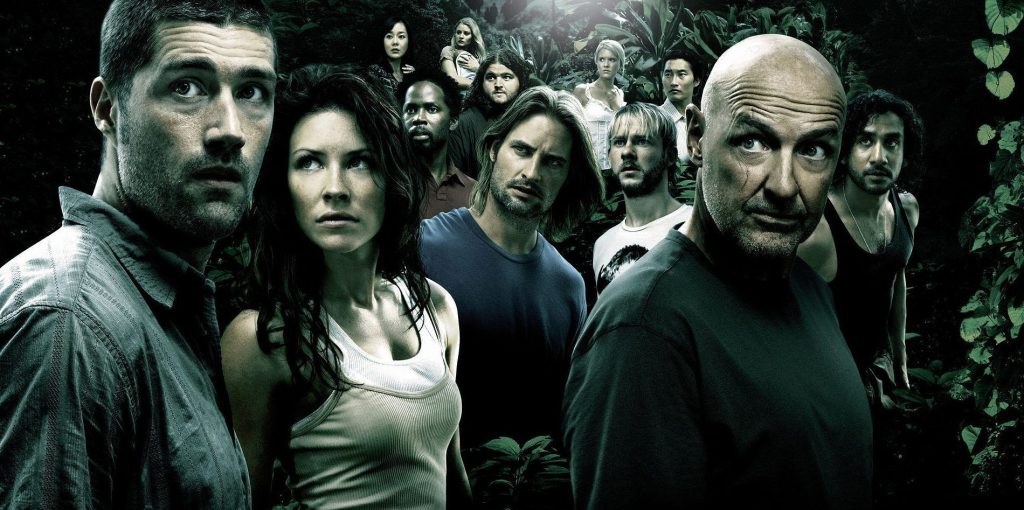
[This article was written years ago, after the entire run of LOST had ended. Major spoilers ahead—if you haven't finished the series, enter at your own risk!]
Just like that, it has been more than a month since the entire LOST series ended. Over the past month, I’ve been busy with all sorts of graduation-related odds and ends. Now I’ve temporarily said goodbye to campus, and honestly, it’s just like Desmond’s catchphrase: I suddenly switched into another life.
What Does a ‘Solution to the Mystery’ Mean?
LOST’s finale must have produced some seriously polarized reactions. Some people were moved and said this was, as befits the greatest television drama of all time, a worthy ending. More people were furious, saying that in the end, a lot of the mysteries were simply left hanging and LOST turned out to be the greatest con job on Earth. Never mind whether most of LOST’s mysteries really went unanswered; I think that even if the ending fell short of our hopes, it still can’t erase the thrills and emotion the brilliant journey gave us.
As for the solution to the mystery: what does that actually mean? For me, what’s important is that every premise in the show, and every character’s action, must have a logical motivation, with causes and consequences. If the motivation makes sense, the plot can make sense to a large extent. Questions like ‘what is it?’ and ‘where did it come from?’ can be quietly left as background (like that rogue masterpiece, EVA, which explains absolutely nothing), or they only need to be interpreted far enough to explain the characters’ motivations. The risky choice made by the writers of LOST was to leave too many ‘what is it?’ questions unanswered, then, after hurriedly answering the broad strokes of ‘why,’ leap straight to the level of ultimate human concern for the ending. That was bound to cause a great deal of frustration.
What follows is my attempt to tell the whole story of LOST through one consistent logic and a reasonably clear thread. If I can pull it off, then LOST can’t exactly be accused of having a terrible ending; it simply ended on a level different from the one everyone was hoping for.
Since the people writing the show were so evasive, let this spectator steal the spotlight and talk big for a while.
Here is how I understand the origin, progression, and outcome of the LOST story. Some ideas inevitably repeat things from my earlier posts, so please forgive me. Some are my own interpretations, though most can be inferred from clues scattered throughout the plot. Still, please just treat the whole thing as a story.
The Island’s First Ruler
The story takes place on the island. To talk about how it began, the first thing we need to figure out is: who was the island’s original owner?
I’ve done plenty of analyses and predictions before, and they often looked very logical, but most of them ended in glorious disaster. Whatever I predicted, the writers seemed determined not to write. What surprised me, though, was that the Atlantis theory proposed in The Book of Esoteric Teachings somehow still seems to hold up (and thank goodness the writers didn’t answer this question ⊙﹏⊙). Even at the end, the writers never said where the island came from, but in fact, after The Book of Esoteric Teachings was completed, more of the plot came along to support the Atlantis theory. For example, the place where Richard, the ageless guy with the eyeliner, lived—Tenerife—is supposedly the only remaining part of Atlantis, once its highest mountain. Richard entered the island’s vicinity not long after boarding the Black Rock, because the island hadn’t moved yet and was still in its original location, somewhere in the Atlantic—exactly where Atlantis was supposed to be. And in The Book of Esoteric Teachings, I predicted that the Temple would be pyramid-shaped. When it finally showed its true face in the last season, it really was a pyramid—specifically, a North American-style pyramid. In a place packed with Egyptian cultural symbols, why would the central building have the style of an ancient North American civilization? That fits perfectly with the Atlantis joke I made earlier: the ancient civilizations of North America and Egypt both originated in Atlantis. Looks like the writers really did use those Atlantis legends to design the island’s primordial civilization.
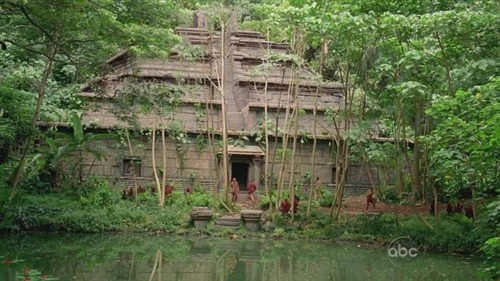
So I still believe that a major part of the inspiration for the writers’ island story came from those hard-to-separate-from-fiction Atlantis legends floating around out there.
All right, for now let’s assume that the island wasn’t originally an island at all, but a piece of mainland in the Atlantic, home to a super-ancient civilization: Atlantis. This civilization was the predecessor of the later Egyptian civilization and the ancient civilizations of North America. So the island’s earliest owners were these Atlanteans.
The Island’s Heart: The Source of Life
According to those chaotic Atlantis legends, Atlantean civilization developed around an extremely mysterious energy source. In the legends, it is called the ‘magnetic lodestone’ or the ‘divine crystal.’ This thing was not only the source of the Atlanteans’ power and wisdom; it may actually have been the source of all life and intelligence. Through it, the Atlanteans could communicate with spirits, extend life, heal, control the weather, and even store knowledge (see The Book of Esoteric Teachings).
In LOST, this is the something hidden beneath the glowing ‘heart of the island.’ LOST never specifically tells us what this core actually is. But the functions it can perform are almost exactly the same as those attributed to the divine crystal in the Atlantis legends.
In LOST, Jacob and the Man in Black’s Crazy Mom said that the light shining from beneath the island’s heart was the most beautiful light in the world. It was ‘life, death, rebirth’; ‘the Source, the heart of this island.’ At first hearing, that sounds a little odd. Why would a place this ‘beautiful’ also be connected with ‘death’? The reason is that the writers were heavily influenced by Eastern traditional and esoteric cultures (the show contains many religious and mythological images from non-Christian civilizations, especially Eastern ones). In these traditions, life, death, and rebirth are all parts of life. So we can broadly regard the light emitted by the thing beneath the island’s heart as the Source of Life. According to LOST’s plot, it is also the source of all life in the world. Or, taking it one step further, it is the place where the rules of life are written. Anyone who possessed the power of this ‘Source of Life’ could control not only the birth of life (presumably, women on the island began dying in childbirth after the Swan station accident disrupted the Source of Life’s power), and the end of life (Jacob granting Richard immortality), but even the course of life itself (Jacob’s ability to influence destiny, and Desmond’s ability to see Charlie’s fate after the electromagnetic storm).
Water and Light
The Source of Life also needs one other thing to make it glow: water. In the finale, we saw that the island’s heart had to have water flowing into it to keep its light stable, and its magnetic field only worked when water was present. When the Man in Black tried to build the wheel in ancient times, he also said he was making a device to channel ‘water and light.’ Clearly, he knew that the Source of Life’s power needed water in order to function. The writers set it up this way because water and light are the two most important elements for life to exist. From this premise, we can also reason backward and conclude that the island’s heart is the Source of Life (though apparently its functions go far beyond that). As for what it really is, or who made it—God? Aliens? Nuwa? Take your pick. ‘What is it?’ is an endless question, and not every such question is meaningful.
Since it is the Source of Life, Crazy Mom’s claim that ‘everyone who is alive carries a little of this light’ makes perfect sense. Her other claim—that ‘everyone will want more’—also makes perfect sense. Who wouldn’t want to live a few more days, or understand a little more of life’s mysteries?
Crazy Mom also said, ‘If the light here goes out, the light everywhere else will go out.’ That makes sense too. Although the writers never directly told us what would happen if the Source were extinguished permanently, we can imagine that the order of life would collapse (for example, the whole world might become like the island, unable to produce new life), or that life might simply disappear altogether, and so on.
Light is easily linked with life, and brightness is just as easily linked with the ‘spirit’ or ‘goodness’ in the soul. Life, light, and goodness are concepts that share the same origin. So we can also explain what the light is from another angle: it is the source of the ‘spirit’ or ‘goodness’ that exists inside every person. The light is not only the source of life; the life produced by that source may also be good, or in other words, alive with spirit. The more light a person has inside, the more spirit they have, and the closer they are to perfect goodness. The Source of Life is also the source of goodness.
The Gods of Atlantis
Back to Atlantis. After generations of living alongside the Source of Life, the Atlanteans acquired more and more knowledge about life. Some of their priests may even have learned how to borrow the Source’s power—to extend life, communicate with the dead, and even manipulate destiny. They were the ancestors of the later guardians, such as Jacob.
The place where the Source of Life was located was undoubtedly Atlantis’s holy ground. Around the Source, the Atlanteans created many personified myths, legends, and religions. They created the fertility goddess Taweret, who represented the Source’s power to create life; that is where the statue of Taweret came from. The Taweret statue was made in a primitive age long before Crazy Mom’s era. We can infer this from something that happened when Sawyer and the others were jumping through time: they arrived at the future site of the Orchid station, which at that time was still a well. This was obviously one of the wells built by the Man in Black, and quite possibly the very well where Crazy Mom knocked him unconscious. Sawyer and the others lowered Locke down the well with a rope, but then time suddenly jumped again, taking them to an era when there was neither a well nor the ruins of a well. They turned around and saw the statue of Taweret. This shows that the statue already existed before the Man in Black dug the well. (There is still a problem with this theory, which I’ll explain later.)
They also created the god Anubis, god of the dead, who represented the Source of Life’s power to end life and rule over the world after death.
They also built the Temple near the Source of Life (the Temple had another purpose besides worship, which I’ll explain later).
Black Smoke
Whether the Atlanteans suddenly came up with the idea of human sacrifice one day, or some poor soul simply lost his footing, the fact is that one day an Atlantean fell into the Source of Life. Besides emitting light, the Source had a lethal magnetic field for self-protection (which makes me suspect this thing was built by aliens). Just when everyone thought the man was finished, he somehow came flying back out as a cloud of black smoke!
This unlucky fellow was the first Black Smoke. The reason I infer that the later Man in Black was not the first Black Smoke is that Crazy Mom already knew what happened when someone fell into the Source of Life before the Man in Black became Black Smoke. Clearly, she knew about Black Smoke—either her predecessor told her, or she may once have lived alongside Black Smoke herself.
Back to the past. Unlike the later Man in Black, that generation’s unlucky Black Smoke was a good guy (I’ll explain why later).
So this guy was hit by the electromagnetic field, splitting body and soul apart: his body was flung somewhere else, while his soul merged with some of the powers of the Source of Life. We know that Black Smoke makes a very noticeable electromagnetic sound when it moves, almost identical to the sound made when the magnetic field in the island’s heart kicks in. Black Smoke can glow, too (as seen in the photographs), and that effect is also very similar to what happened just before the light of the Source of Life went out after Desmond pulled the cork. This is because Black Smoke’s abilities were originally part of the Source of Life’s powers. As I said earlier, we can understand the Source of Life as the source that grants a soul. The most important ability Black Smoke “borrowed” from the Source of Life was the ability to read souls. By reading a person’s soul, it can judge whether that person is “good” or “evil.”
The Atlanteans then combined Black Smoke with the religious myths they had already created about Anubis, the god who judged whether souls were “good” or “evil” after death. That’s why, in the lower level of the Temple, we see Anubis summoning Black Smoke. In the Atlanteans’ eyes, Anubis used Black Smoke’s power to judge the dead. If Black Smoke had been a complete villain from the beginning, the island’s primitive people wouldn’t have carved it on the wall alongside a god. At first, Black Smoke must have been used by the Atlanteans—or at least lived alongside them peacefully.
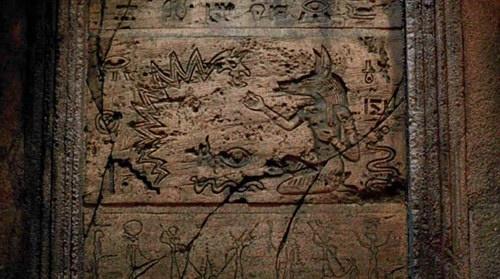
From then on, Black Smoke also became a tool of Atlantean justice. The Atlanteans set aside a corner of the Temple as a holy site for worshipping Black Smoke (the location shown in the picture above, and the place where Ben would later stand trial). People judged guilty were brought before Black Smoke to face its judgment, just as Mr. Eko and Ben later were (I’ll get to the exact reasons for their trials later).
Perhaps Black Smoke eventually became not only a demigod worshipped by the Atlanteans, but also part of Atlantis’s permanent establishment. Whenever one generation of Black Smoke was “laid off” for one reason or another, they would throw another person into the Source of Life and produce the next generation. Black Smoke’s job was chief justice and chief security officer of Atlantis, all rolled into one.
The Birth of Evil
According to those jumbled Atlantean legends, the Atlanteans were originally pure and lived in perfect harmony with the Source of Life. There wasn’t much evil in the world; it was a golden age. Later, a bunch of spoiled brats appeared among the Atlanteans—the same kind of “son of evil” I mentioned in The Upanishads. These excessively greedy people wanted to develop more of the Source of Life’s power.
What these people, who clearly didn’t know their place, failed to understand was that if there is a supreme good and light in the world, there must also be a supreme evil and darkness; good and evil are born together. In fact, the existence of supreme good is often precisely what keeps supreme evil in check. The Source of Life was both the fountainhead of life and a seal, suppressing the most evil and darkest forces in the world. Beneath the source of good, in fact, lay the sealed source of evil (don’t ask me where this “ultimate good” and “ultimate evil” came from—that’s a question for philosophers).
The spoiled brats of Atlantis accidentally damaged the seal on the Source of Life, and the light went out. The fire of evil spread, and the sealed evil flooded into the human world. From that point on, humanity was no longer pure: Adam and Eve, who had never eaten the forbidden fruit, became the kind of “human” whose souls contained both light and darkness.
Originally, Black Smoke and the priests had enough power to keep things under control. Unfortunately, their power came from the Source of Life, so once the Source of Life went out, they lost their power too. The first Black Smoke may even have died a glorious martyr’s death (I’m making this guess to set up the later, evil Black Smoke).
This severe damage to the Source of Life also triggered Atlantis’s earthquake (who knows what the Source of Life was made of, or how it managed to have so many bizarre abilities). Most of Atlantis sank beneath the sea. Before the land disappeared, large numbers of Atlanteans escaped by ship: some went to Africa and created ancient Egyptian civilization, while others went to the Americas and created the Maya and other American civilizations.
Meanwhile, the priests gathered around the Source of Life were desperately trying to save the situation. Perhaps among them was a genius, like the later Man in Black, who understood how the Source of Life worked (maybe he was the first Jacob). He created a device to rebuild the seal and reseal the source of evil before evil completely swallowed the world’s goodness, restarting the light of life. Later, after some decorative additions, this device became the stone cork, stone channel, and waterway beneath the island’s heart that we see today. (The cork is carved with Egyptian hieroglyphs, so we can infer that this device, like the statue of Taweret and the Temple, was made by the original Atlanteans.)
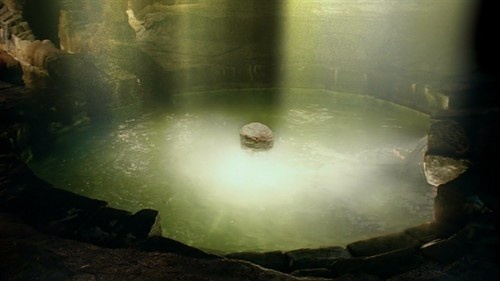
By this point, most of the Atlantean continent had sunk beneath the sea. The land remaining around the Source of Life consisted of only two small pieces: the future main island and Hydra Island. To prevent another threat from those spoiled brats, the first Jacob, who understood the power of the Source of Life, created a protective mechanism around it. Using the Source of Life’s power, he sealed off the entire island, turning it into an island isolated in space and time. That way, even if the brats scattered across other continents later became capable of fighting their way back, they would never be able to find the island again.
Although the source of evil had been sealed again, the human world could never return to its original golden age. Too much evil had already eaten into the human soul. The golden age was gone for good, and humanity entered the era we know so well: a world where good and evil coexist, with evil often vastly outweighing good.
Black Smoke, Forbidden to Leave the Island
Once everything on the island had been arranged, the first Jacob thought it was time to choose a new assistant for Black Smoke. So he picked someone from among the people who had stayed on the island and threw him into the Source of Life.
What happened next was completely unexpected.
The Source of Life was no longer what it had been. After the damage, any disturbance weakened its sealing power, allowing the evil it contained to pour out. So this unfortunate successor not only absorbed the Source of Life’s power, but also the power released by the source of evil. By the time he turned into Black Smoke, he was no longer the chief justice and chief security officer of old. It was the “embodiment of evil” that Commander Sanada would later describe.
By the time the first Jacob realized this, it was too late. Black Smoke also possessed the Source of Life’s power, so destroying it was extremely difficult. To protect the Source of Life, the first Jacob had no choice but to create another protective mechanism around its space: he hid the Source of Life, making it possible for only him to enter that space.
The first Jacob realized that if Black Smoke ever left the island, it would amount to continuing the release of the source of evil. The evil inside it would spread through the human world until it swallowed all human goodness, with disastrous consequences. I think this is why every generation of Black Smoke has been unable to leave the island.
Take the Man in Black in the series. Yes, he’s a bad guy, but he’s not a psychological case. If he left the island, would he really launch a massacre of the entire human race? The show gives us no hint of that. So I think the reason he can’t leave has nothing to do with his own actions. It’s because he is a “source of infection.” The moment he left, everyone in the world would turn into Zombies like Sayid and Claire.
The show contains plenty of clues pointing to this. For instance, when it describes the consequences of the Man in Black leaving the island, it consistently uses some rather strange wording instead of simply saying that everyone would die if he got out (that only became the explanation later, when the story was in more of a hurry). For example, Widmore tells Jin that if Black Smoke leaves, everyone you love will “cease to be”—which sounds a lot like a description of Sayid and Claire’s condition. Perhaps on the island, because the Source of Life keeps Black Smoke’s power in check, its infectiousness is relatively weak and it can infect only certain people near death. (Sayid was infected after being suffocated, when he had technically died but not quite; Claire was infected when the mercenaries’ rocket launcher left her half-dead.) Although the infected are “resurrected,” the goodness in their souls is gradually devoured by evil, and they eventually become zombies. Once outside the Source of Life’s sphere of influence, however, Black Smoke’s infectious power becomes much stronger, turning the living world into a land of zombies.
I suspect Black Smoke can’t leave the island not because it intends to do something to humanity, but because it is an uncontrollable source of infection. There are other reasons, too. For example, Jacob compares the island to a cork whose purpose is to keep evil from “spreading.”
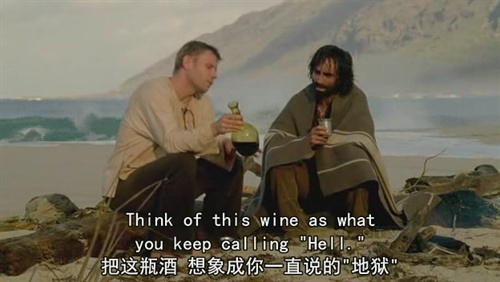
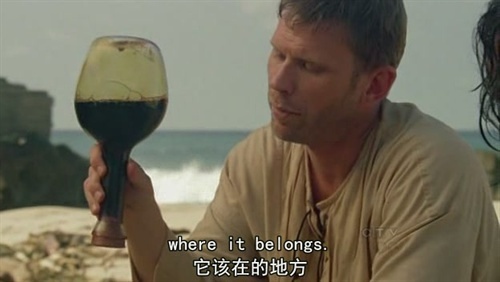
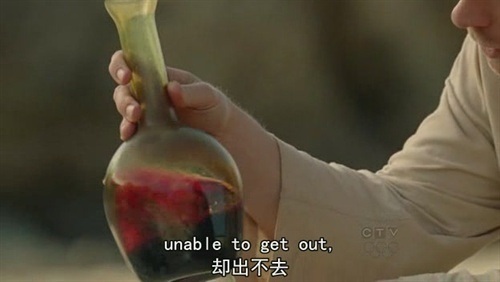
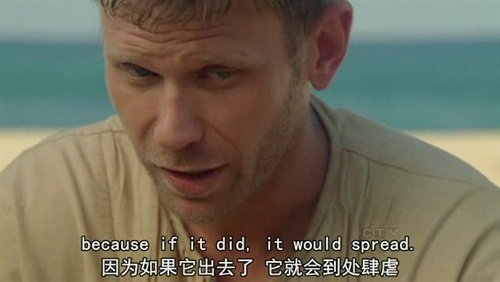
Another reason is that episode at the end of Season 5, when Jacob and the Man in Black first appear. After Jacob brings the Black Rock to the island, the Man in Black says, “they come, they fight, they destroy, they corrupt,” and “always ends the same.” But Jacob argues that he’s wrong, and that he will prove it. Later, Jacob also tells Richard, who has just arrived on the island, that the Man in Black believes all humans are evil, while Jacob wants to prove him wrong. Jacob does indeed bring people to the island again and again. Besides choosing candidates, was he doing all this simply to prove the Man in Black wrong? And what would proving that humanity contains goodness actually accomplish? Was this really nothing more than two immortals sulking at each other?
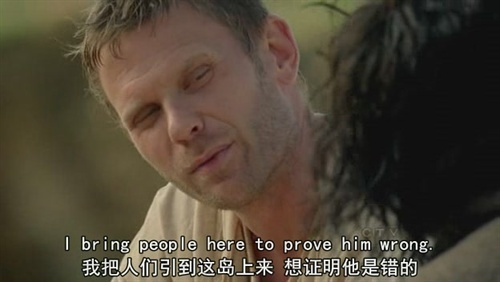
Actually, no. The real point of their “sulking” was that Jacob believed there was something good in human nature, so this virus couldn’t be allowed to spread and wipe out that goodness. The Man in Black, on the other hand, believed humans were evil to begin with; whether they were infected by the virus or not made no difference. So he saw no problem with leaving the island. Humans were already evil—just infected to varying degrees. That is where Jacob and the Man in Black disagreed. It is also the real reason Jacob kept bringing people to the island to prove that human nature was good. He wanted the Man in Black to see that humans possessed goodness and give up his plan to leave the island.
The Man in Black may not have been unaware of the consequences of leaving the island; he may simply have thought those consequences were no big deal. The time Jacob brought the wine bottle to see him, the Man in Black said to Jacob, “Just let me leave.” Judging from his expression and tone, you can hear the unspoken message behind it: “What’s the big deal if I leave?“
You could say that almost the entire later story of LOST is built on the fact that Black Smoke cannot leave the island. That’s why I’m spending a few extra words analyzing it here. Before the Man in Black became Black Smoke, Crazy Mom prevented him from leaving purely out of a selfish, twisted kind of love. After Crazy Mom died, the Man in Black actually lost any sufficient reason he might have had for being unable to leave. Yet Jacob still refused to let the Man in Black, now transformed into Black Smoke, leave the island. There must therefore have been some compelling reason he absolutely had to stop it. The reason I’ve proposed above is that compelling reason. LOST’s story works only if this reason holds up.
The Succession of the Seal
Anyway, back to the past. Once the first Jacob understood the danger of Black Smoke leaving the island, he used the Source of Life’s power to establish a barrier on the island that could keep Black Smoke trapped there. The “seal” of this barrier was his own life. Only his death could make the barrier’s power disappear, allowing Black Smoke to leave the island. From that point on, the island became a cork keeping the embodiment of evil from escaping.
This was the first clash between light and darkness.
The first Jacob realized that although he could use the power of the Source to extend his life, life always had to end someday. To protect the island, he needed a way to pass his power on. So he created the candidate system, handing the Guardian’s job to a successor chosen from among them before stepping down.
The first Jacob also thought of a last-resort insurance policy, in case something went wrong with the Guardian’s job in the future. He remembered the death of the previous Black Smoke. Once the light went out, Black Smoke’s power would temporarily disappear, making it the best time to defeat him. But because the light going out had other terrifying consequences, this was a last resort that could only be used when absolutely necessary.
There was another problem: the device originally built to restore the Source’s power had been made irreversible. To shut it down, someone had to enter the electromagnetic field—and entering the field meant either dying or becoming the next Black Smoke. So every Jacob, besides looking for candidates, also searched for extraordinary people who could withstand the electromagnetic field, to serve as an ultimate weapon. (This is why fate would later draw Desmond to the island too.)
And so the Guardians passed the role down from generation to generation. Presumably, at some point, something similar to what happened in the finale happened on the island, and the first evil Black Smoke was taken out. The island entered an age with a Guardian but no Black Smoke. But Black Smoke remained a taboo, guarded against by every successive Guardian. That’s why Crazy Mom later warned Jacob never to go down into the Source—if he did, it would be worse than death. Clearly, Crazy Mom knew about Black Smoke. For all we know, she may even have been the one who ended the previous generation of Black Smoke.
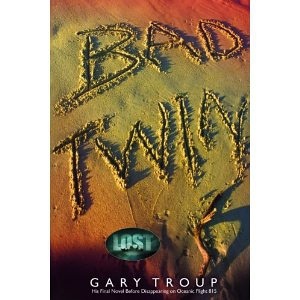
Crazy Mom and Bad Twin
The role of guarding the Source eventually passed to Crazy Mom’s generation. By then, the island was desolate, with not a soul left except her, guarding the Source alone. Crazy Mom probably wasn’t born on the island. Like the later 815ers, she had been “brought” there. She told Claudia, Jacob’s birth mother, that she too had come to the island because of an “accident,” and she didn’t seem to be lying. She had probably been noticed by the previous Jacob and brought to the island as a candidate.
Crazy Mom started choosing candidates very early on, using the same method of “bringing” people she liked to the island. But the results left her deeply disappointed: “they come, they fight, they destroy, they corrupt.” She never found a suitable candidate. So Crazy Mom decided on another approach: if adults were all evil, why not start the revolution with the children and raise her successor from scratch? She decided to summon a pregnant woman to the island, so the baby she gave birth to could become the future successor. Poor Claudia was how she got caught in the trap.
The year was 23 BC, during the heyday of the Roman Empire, when even once-mighty Egypt had been reduced to a Roman province. The Roman ship carrying Claudia was summoned by Crazy Mom and ran aground on the island. Claudia and Crazy Mom “met.”
Crazy Mom’s “third eye” saw only that Claudia was pregnant; it never occurred to her that Claudia was carrying twins. We can tell from Crazy Mom’s startled expression when Claudia, after giving birth to Jacob, said, “There’s another one.” So from the moment he was born, Little Black was an unplanned variable, an unexpected “bad twin.”
After being blessed with twins, Crazy Mom killed Claudia as planned.
The Boy in Black
The two babies soon grew into the Boy in White and the Boy in Black. Even in paradise, this strange family of Crazy Mom and her two sons was doomed to fall into one of the most ordinary family conflicts in human history: favoring the younger child. Loving the younger child is human nature; and this younger son had grown into a handsome, bright-eyed, clever little heartthrob. By comparison, the elder son had nothing but brute strength, while both his looks and abilities were utterly ordinary. No wonder the younger one received every ounce of affection.
Little Black was practically a gift from heaven to Crazy Mom. Her perfect plan was to let Jacob inherit the throne once the time was right, then step down from her great responsibility and enjoy a carefree life with her younger son.
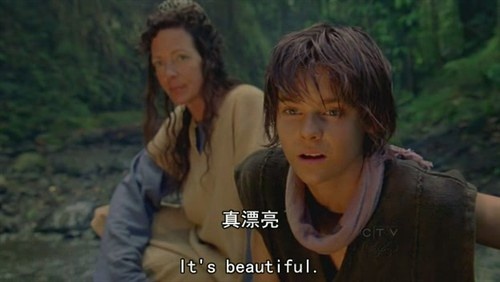
Of course, Crazy Mom’s mental state was seriously problematic. Maybe it was years of living alone, combined with seeing the treachery and hardship of those outsiders she repeatedly brought to the island. She developed a severe prejudice against—and even fear of—the outside world. Crazy Mom suffered from severe agoraphobia, and her “agora” was the entire outside world.
Since Crazy Mom wanted to keep Little Black beside her forever, she did everything she could to stop him from learning that the outside world existed. But like Truman in The Truman Show, the more he was deceived, the stronger the backlash would be when the truth finally came out. Crazy Mom never realized this.
The truth began to surface.
Little Black and Little White encountered the people who had come on the same ship as Claudia and had already lived on the island for more than a decade. To conceal the truth and distract them, Crazy Mom took Little Black and Little White to the island’s heart ahead of time, showed them the Source, and explained their future fates. To prevent Little White and Little Black from slaughtering each other like those outsiders later would, she used the Guardian’s divine power to place a seal on them that made it impossible for them to kill each other. This was why Little Black and Little White later had to fight through indirect means.
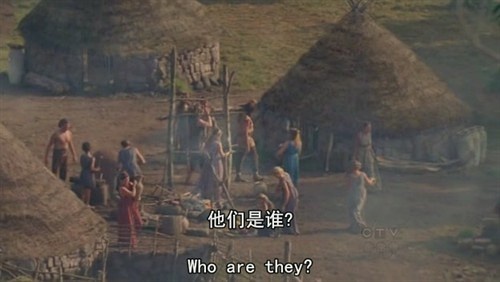
The truth can never stay hidden forever. Like the later Hugo, Little Black had a certain spiritual gift, and he finally met the soul of his birth mother, Claudia. Claudia took him to see their people and told him the truth about the outside world. Little Black was furious. He later did everything he could to get out into the outside world, for exactly the same psychological reason that Truman did everything he could to reach the Fiji he imagined as a holy land. It wasn’t that the outside world was especially wonderful; they knew nothing about it. They simply wanted out—just wanted out. Over thousands of years, that idea accumulated into a terrifying obsession. What happened after getting out didn’t matter. What mattered was getting out.
The Boy in White
Little Black ran away from home and joined his people. The one who stayed with Crazy Mom was the perpetually unloved Little White, Jacob. Jacob grew up in his brother’s shadow. He was inferior to his brother in intelligence, appearance, and talent; most importantly, their mother always favored his brother. By all rights, he should have hated her. So why was he the one who remained loyal to her in the end? Actually, that makes perfect sense. The more spoiled a child is, the more rebellious he becomes; meanwhile, children deprived of maternal love and recognition often value that love more and long more desperately for recognition. That’s why Jacob, in the end, was the true heir. When Jacob later inherited the throne, Crazy Mom told him, “It was always you.” I don’t think she was lying. Jacob had always been destined to become the successor.
The Succession
Decades passed. Because the island was isolated in space and time, Little Black still couldn’t find a way off. He thought of the Source, which his mother had taken him to see as a child. Because of the seal, Little Black couldn’t find the Source on his own. But using his intelligence and extraordinary talent, he found other areas of the island containing electromagnetic pockets connected to the Source. These pockets could also produce some of the same powers as the Source. They began digging wells at these pockets and experimenting with a wheel-driven mechanism. Little Black actually figured out how to use the Source to control space and time. Once the mechanism was complete, turning the wheel would transport him off the island. Just as the experiment was nearing completion, Crazy Mom paid a visit, destroyed one of the pockets under construction, and slaughtered Little Black’s people.
Crazy Mom knew the Man in Black would return for revenge and that her time was up. Out of some need for atonement, she decided to accept her fate calmly. So she passed the role to Jacob. Jacob became the new Guardian of the Source. Here I have to criticize LOST for depicting the handover of the Guardian role in an extremely, extremely lazy way. In LOST’s setup, the succession ceremony only needs to transfer the Guardian’s “identity”; transferring “knowledge” is completely unnecessary. According to those legends about the Atlantean electromagnetic stones, if the Source really is an electromagnetic stone, it can store knowledge too. In other words, even if the new Guardian takes office without the faintest idea what’s going on, he can still eventually do his duty, because the knowledge can be extracted from the Source bit by bit later. For fuck’s sake, this does make sense—but it’s also such a lazy piece of world-building!
And so Jacob, knowing absolutely nothing, took over in the dark.
Matricide
The next day, Crazy Mom deliberately sent Jacob away and waited for Little Black to come for revenge. Little Black did exactly that. As Crazy Mom lay dying, Little Black asked her, “Why wouldn’t you let me leave?” Crazy Mom said, “Because I love you.”
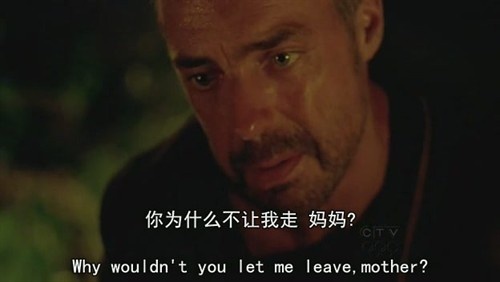
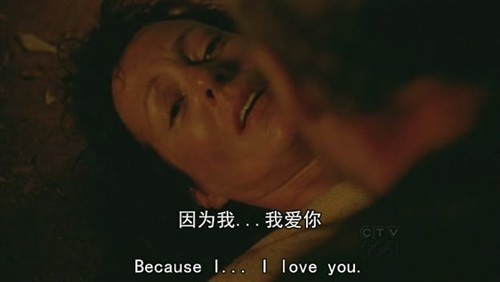
I fell apart when I watched this scene. Crazy Mom was immortal, and by this point she looked about the same age as the Man in Black. Add the fact that they weren’t related by blood, plus their later identities as Adam and Eve, and that “I love you” sounds more awkward every time I hear it. The whole of LOST is about rebelling against one’s father; it turns out the story began with “mother love”—a son loving his mother and a mother loving her son, two sides of the same coin.
The classic ancient mythic motif—kill the father and marry the mother. There, now LOST is complete.
Maybe I’m just evil for making this connection. But later, when Jacob buried the Man in Black’s body (he wasn’t actually dead yet; his soul had become Black Smoke) alongside Crazy Mom’s corpse, the scene was filmed exactly like the burial of a pair of star-crossed lovers:
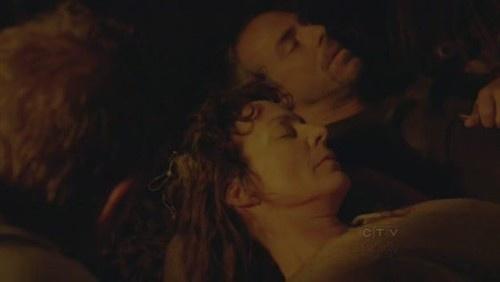
Besides, even if you interpret their relationship as mother-and-son love, it was still insanely possessive. Crazy Mom’s love was built on her extreme distrust and fear of the outside world, as well as her selfish desire to possess her son.
In the end, the origin of LOST was really just this tragic family mess.
Back to the story. After Jacob saw his brother kill their mother, he was furious and unleashed the one ability in which he surpassed Little Black—street fighting. He beat Little Black senseless with a flurry of wild haymakers, then threw the poor kid into the Source. Little Black’s soul merged with the Source’s power and the power of the source of evil suppressed by the Source, transforming him into the next Black Smoke and the embodiment of evil. Little Black was bound by the seal that kept Black Smoke from leaving the island; unless Jacob died, he could never get off the island. Worse, because of the seal Crazy Mom had placed forbidding the brothers from killing each other (so many seals ⊙﹏⊙), Black Smoke couldn’t kill Jacob directly either.
And so began the war between black and white that would continue for two thousand years.
哈哈,第一次看你的这篇解析还是十几年前。
这么多年过去了,那个年代公共台那么多的神剧应该很少会有人关注了
豪斯,格蕾,邪恶力量
现在公共台还在出产电视剧吗,太久没关注完全不了解了。
现在全都是流媒体,量倒是不少,但是精品真的少之又少