[This is a post-finale retrospective on LOST. Spoilers ahead!]
Strange story.
Two weeks ago, a foul smell occasionally drifted from a corner of the dorm living room piled high with junk. At first I paid no attention, assuming that the rainy, damp weather had simply made some of the cardboard boxes moldy. Then one day I saw a fuzzy green mass in the corner. On closer inspection, it turned out to be a parrot that had been dead for days and was already full of maggots. I panicked, threw out the body, and disinfected the place with every chemical I could find: toilet cleaner, hand soap, insecticide, you name it.
I couldn’t for the life of me figure out how that parrot had died in a corner so far from the doors and windows. Even if it had flapped in there with its dying breath, there was almost always someone in the dorm—how could nobody have heard a sound? Had it aimed straight for that corner, crashed in, and died on the spot? Only after I had calmed down did I realize that I had been rewatching season one of LOST those days, watching an enraged Walt summon a bird to its death. I thought: I must have Walt’s powers.

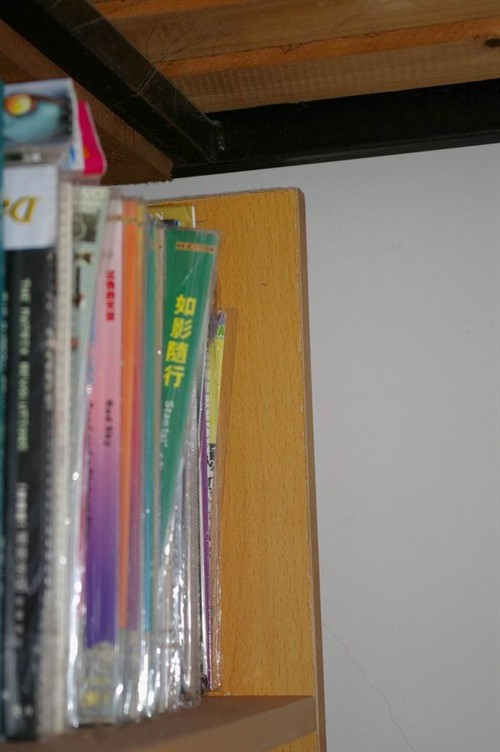
Another thing happened the day before the finale aired. I suddenly noticed a DVD on the bookshelf that wasn’t lined up properly. It had been sticking out like an eyesore for a long time (and is still sticking out there now), so I have no idea why I only noticed it that day. It felt as if someone were deliberately trying to remind me of something, making me stare at it on the eve of the finale, like the protagonists in The Shadow Box staring at themselves in the mirror. The DVD was Lai Sheng-chuan’s Like Shadows Following. If you happened to have seen Like Shadows Following and then watched the LOST finale, you should be getting goosebumps by this point.
I’d heard that actors can get so deep into a role that they lose their minds, but I never imagined that getting too absorbed in a show could also bring on a haunting. For more than five years, I had been thoroughly possessed by LOST.
With Jack closing his eyes, the writers of LOST completed their merit and entered nirvana, but we fans haven’t. It is as if everything in this life has been settled, yet we have fallen into the fog of the flash-sideways world, unable to find release. Whether we can reach nirvana in the end is up to us.
The LOST finale completely demolished me. I never imagined that, after several disappointing episodes, it could end so perfectly! I was overwhelmed. What kind of ending had I imagined? One that neatly explained all the mysteries, plus a tear-jerking separation by death?—If LOST had really ended that way, would I have been satisfied?
But I never expected the ending to rise to the level of an ultimate concern. That finale title, “THE END,” which initially sounded almost like a joke, really is the final destination where you, me, and every person in the worlds of the living, the dead, and the not-yet-born all arrive by different paths. One day, everyone will reach it!
I am probably the most death-phobic person in the world. Friends who have read some posts on my blog probably know how obsessed I am with ultimate questions. Who am “I”? What is the meaning of life? Where do we go after death? To most people, these are the sort of questions you ask only when you’ve eaten too much and have nothing better to do. But after I eat too much and have nothing better to do, I can’t help mulling them over. I don’t go looking for these questions; they come looking for me and refuse to leave. I often wake up terrified in the middle of the night, thinking that everything I have experienced will eventually vanish without a trace. There are too many things I don’t want to lose. I cling to external things, cling to myself, and can’t break free.
I had imagined that LOST would end with mysteries solved and emotions heightened. I had my goosebumps and tears ready for her. But I never imagined that it would end precisely on the question that had haunted me like a nightmare all along—and that the answer it gave would be so beautiful and profound.
A lot of LOST fans must be furious about this ending. So many crucial mysteries remained unsolved, and the show suddenly turned into a ghost story. Whether those mysteries really went unanswered is a topic for next time. For now, let’s talk about this ghost-story ending.
Life Is No Dream
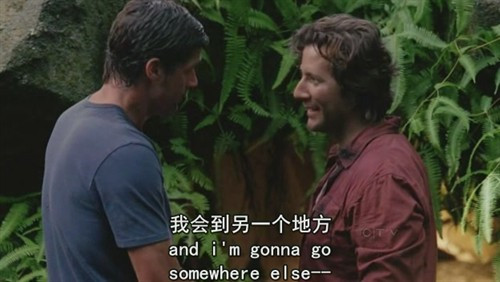
After Desmond was knocked unconscious by Widmore’s electromagnetic field in episode 11, his soul drifted into the flash-sideways world. He witnessed his life in another world but didn’t understand the truth of it. When he woke up, he thought he had another life waiting for him, so nothing that happened in this life—happy or tragic—seemed important anymore. In the finale, he told Jack that nothing they did here mattered, that he had seen another life where everyone was happy, and that Jack was there too. He would go there, and he would find a way to take Jack with him. This life seemed like a nightmare that had lasted a hundred years, choking him in his sleep; one day, he would wake up, and the sky would open wide.
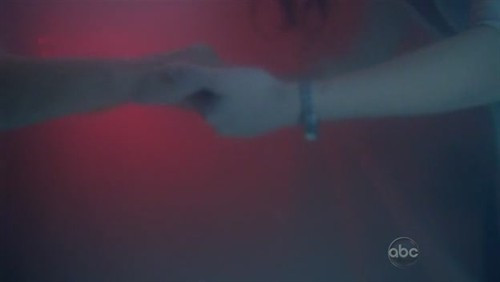
People often say that life is a dream: one day we wake from a nightmare, turn around, and make up for it with a beautiful dream. None of life’s joys and sorrows matter; the beautiful dream will always arrive. In episode 14, just after Sun and Jin’s hands parted, the scene cut to Jin in the flash-sideways world bringing flowers to Sun in the hospital.
But if everything could start over, what meaning would anything have? Milan Kundera wrote: if everything could happen again, everything would lose its weight. This is the unbearable lightness of being.
The weight of life lies in the fact that it happens only once. Spilled water cannot be gathered up—what happened, happened!
There is no afterlife in which we get to do it all over again. Christian told Jack: everyone dies. The journey of life happens only once, and that one time is real.
Jack once hoped to erase his life’s journey in one stroke with the nuclear bomb: if I had never met you, I wouldn’t have to lose you. But if everyone really forgot everything that happened on the island, if those encounters and farewells that should have been etched into their bones simply vanished, that would be the greatest tragedy of all!
Forgetting is sadder than death.
Many years ago, I read Jin Yong’s The Return of the Condor Heroes, and one passage made a deep impression on me:
Xiaolongnü gazed blankly for a while, then suddenly asked, “Do you think that after people die they really go to the underworld? Is there really a King of Hell?” Yang Guo said, “I hope so. Even if the underworld has mountains of knives, cauldrons of oil, and every kind of torture, at least there would be something good about it. Otherwise, lost in the vast unknown, the two of us could never meet again.” Xiaolongnü said, “Yes, I hope there really is an underworld. I hear there is a Granny Meng on the road to the Yellow Springs who makes you drink a bowl of soup, after which you forget everything from your life in the world of the living. That soup—I won't drink it. Guo'er, I want to remember your kindness forever and ever.”
I have always felt that the most lamentable thing in the world is not separation by life and death, but when the people and things that once mattered most are right beside you yet become as strange as strangers. Any past that is not remembered loses all meaning in an instant, no matter how earth-shaking it once was.
The value of life’s journey lies not only in its happening once; only what is remembered is real! It really happened, and we must remember that it happened!
I had long known that the flash-sideways world would interact with the original world. That’s why I had kept racking my brain, trying to build a connection between them. What good is a wonderful flash-sideways world if nothing in the original world is remembered? That would be the most tragic ending of all!
Christian told Jack: you are real, and everything you experienced is real. Jack told Desmond: there are no shortcuts, and no avoiding it; everything that happened here has meaning.
People often say that life is a dream, but life is no dream. So whatever you have experienced in this life, don’t forget it!
Rebirth in Another World
What happens after remembering?
After death, the protagonists of LOST all happened to forget many things from their lives. There had been too many regrets, and it seemed better to dwell on the sweet than to relive the bitter. So they sank into a shared dream of their own making.
What is the flash-sideways world? It is the continuation of reincarnation after death. Reincarnation after death might last an instant or a thousand years. It is the past, the present, and the future all at once. In fact, there is no “time” here. This is the final stretch of the journey toward nirvana for the dead. The unresolved attachments in people’s hearts, together with the “connections” they had in life, build this reincarnation.
Everyone in this reincarnation still carries an attachment they cannot see through. This after-death reincarnation is a projection of each person’s attachment. People often say, “What you think about by day appears in your dreams at night.” The same is true here: what people thought and worried about in life becomes the dream after death. Whether the flash-sideways world is heaven or hell depends on a single thought in the mind of the person reincarnating. Just like Jacob in Jacob’s Ladder: one thought makes hell, another makes heaven. Some escape their nightmares in the flash-sideways world; some make different choices; more try to make up for regrets from life. Everyone reincarnates with their attachment until one day they truly see through it.
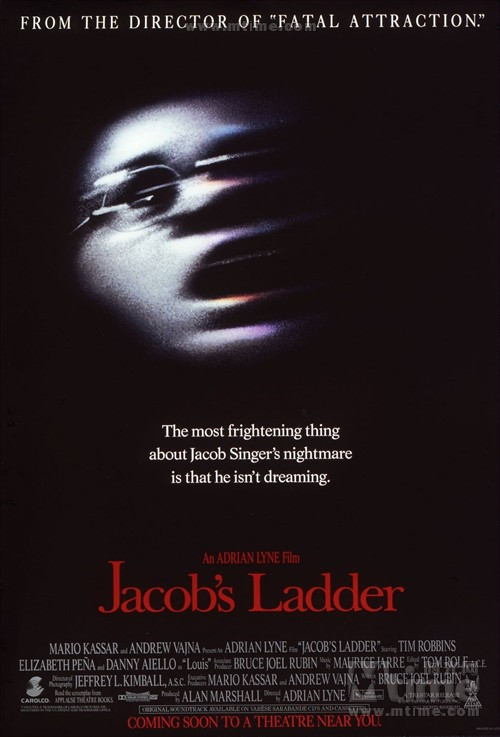
As long as an attachment remains unbroken in the heart, reincarnation continues. “Forgetting” is itself a kind of attachment.
We don’t know how long this dream lasted or how many cycles of reincarnation there had been. We only know this was certainly not the first cycle.
When Desmond turned the key in the Swan station, his soul left his body and wandered into one of the flash-sideways cycles, where he met Eloise, who had no idea how many times she had already reincarnated there. Eloise’s unbroken attachment was her guilt toward her son in life. It was so strong that even knowing this was a dream after death, she would rather remain in it than wake up. So whenever Desmond made a dangerous move to destroy the dream, she did everything she could to stop him. What she feared most was Desmond fully awakening, then waking Dan from the dream and leaving her behind. Eloise still did not want to step out of the cycle; she would rather stay forever with her son in a dream she knew was not real.
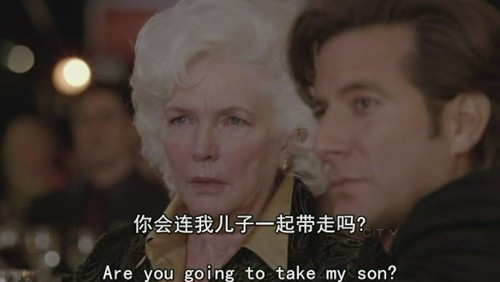

As in The Fountain, where a scientist, unable to let go of his attachment to resurrecting his dead wife, becomes trapped in eternal solitude, unable to find release. Ben is the same. Even after he has “remembered,” he still cannot let go of his love for his daughter, and would rather sleep a little longer in the dream.
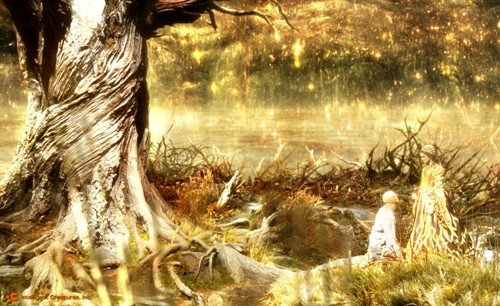
So “remembering” is not the endpoint either. After remembering, you have to let go. “Remembering” is still a kind of attachment.
Forgetting is merely avoidance. But “remembering” still means remaining inside the fog. To truly break the attachment, you must remember and then let go. A Buddhist verse says: “From love arise worry; from love arise fear. For one who is free from love, there is neither worry nor fear.” It is not telling you to become heartless. It is telling you to love, and then let go. The hard part is not forgetting or walking away, but letting go of what you remember and love.
The Destination
Among the viewers who disliked the finale, a large number will surely say: see, this is another case of the West using popular culture to spread Christianity. In the end, it turns out everyone went to see God.
As for the religious consciousness in LOST, Buddhism and other forms of Eastern mysticism are actually much more evident than Christianity. I had always wanted to sort out LOST’s spiritual sources—where the creators drew their nourishment and inspiration before creating the show. Unfortunately, my abilities fall short; I have only fragments of evidence and conclusions. But one thing is certain: several of LOST’s writers were deeply influenced by the various currents of thought in America’s 1960s hippie movement.
LOST is full of traces of the 1960s: Huxley’s island, Skinner’s box, mysterious Eastern mysticism, the resurrected Richard Alpert, and the Dharma Initiative, modeled on the utopian miniature societies of Skinner and Huxley. LOST turned the hippies’ dreams and nightmares into reality on the screen.
In a way, the hippies of those days were a lot like me: an idle person with a full belly and nothing better to do, spending all day pondering the meaning of life and where the soul ends up, trying every possible way to find an answer. So they searched inward, dropping LSD and listening to rock as they drifted through wonderlands; and they searched outward, imagining that far-off, mysterious cultures might help solve their confusion. Zen retreats and Tibetan Buddhism consequently took root in the West, and later blossomed and bore fruit. The real-life Richard Alpert was a perfect footnote to the age: first he helped invent LSD, then wandered through Tibet and India in search of enlightened masters, and somehow came back transformed into a “spiritual teacher.” He had forcibly changed from a man of science into a man of faith.
What makes you so sure that golden light was the holy light of God? The Buddha’s light is golden too. I’m not saying that Buddhism is the guiding philosophy behind LOST. I’m saying that if you see Christianity as LOST’s only spiritual source, that’s far too narrow.
Behind LOST’s sprawling cultural backdrop lies a feeling that all paths ultimately lead to one.
If we talk about cause and effect, does that automatically make it Buddhism? Christianity talks about cause and effect too; it just doesn’t use those words. If we talk about salvation, does that automatically make it Christianity? Buddhism talks about salvation too; it just doesn’t use that word either. I love a scene in The Matrix where a program that doesn’t want to be deleted tells Neo that he loves his daughter. Neo says, You’re just a program (how would you know what love is?). The program replies: love is just a word. A lot of things are connected; people are simply using different words for them.
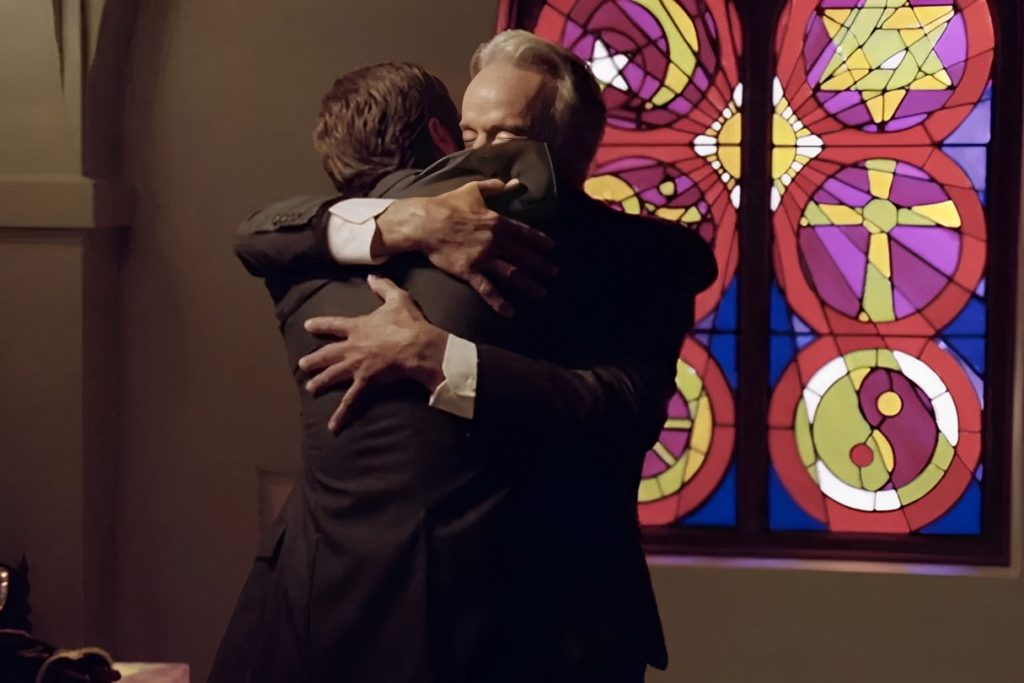
Don’t assume the church that appears in LOST’s finale is merely a Catholic church. Catholics would probably faint with rage at all the pagan decorations inside it:
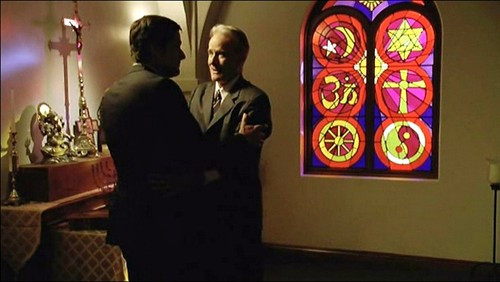
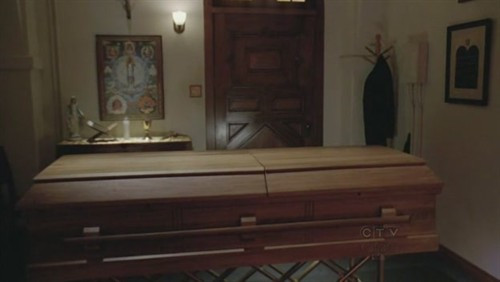
This church reflects that feeling that all paths ultimately lead to one. When it comes to the most ultimate questions, people may use different words, but what they truly point to may all converge in the end, despite taking different routes.
At the end of Lai Sheng-chuan’s stage play As If Following a Shadow (Ru Ying Sui Xing), Zhenzhen finally remembers everything, says goodbye to everyone she loves, lets go of it all, and heads toward that “misty, immeasurable” place. How closely that scene resembles Christian walking into the holy light:
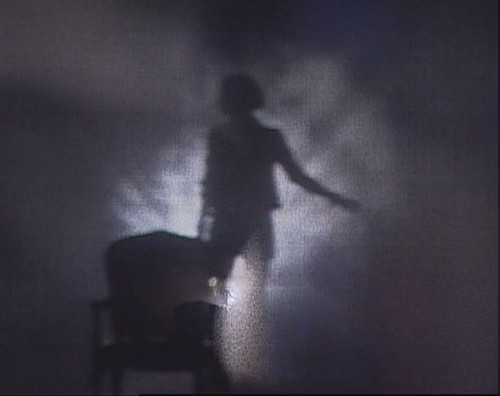

Where did they end up in the end? What is the final destination of a human life?
Some say it is “nothingness.” Some say it is “nirvana.” Christian says, Let’s go find out together.
No one can truly tell you the answer. But on the journey toward nirvana, “remembering” is not the destination. Before nirvana, please “let go.”
Jacob said: “It only ends once. Anything that happens before that is just progress.”
Grandpa Mu Xin said: “Every life I’ve ever seen was merely passing through; none of them needed to be completed.”
Before the end comes, everything is just a process.
Every single moment in that process,
cherish it well,
then let it go.
May all living beings in this world one day attain liberation.


Leave a Reply