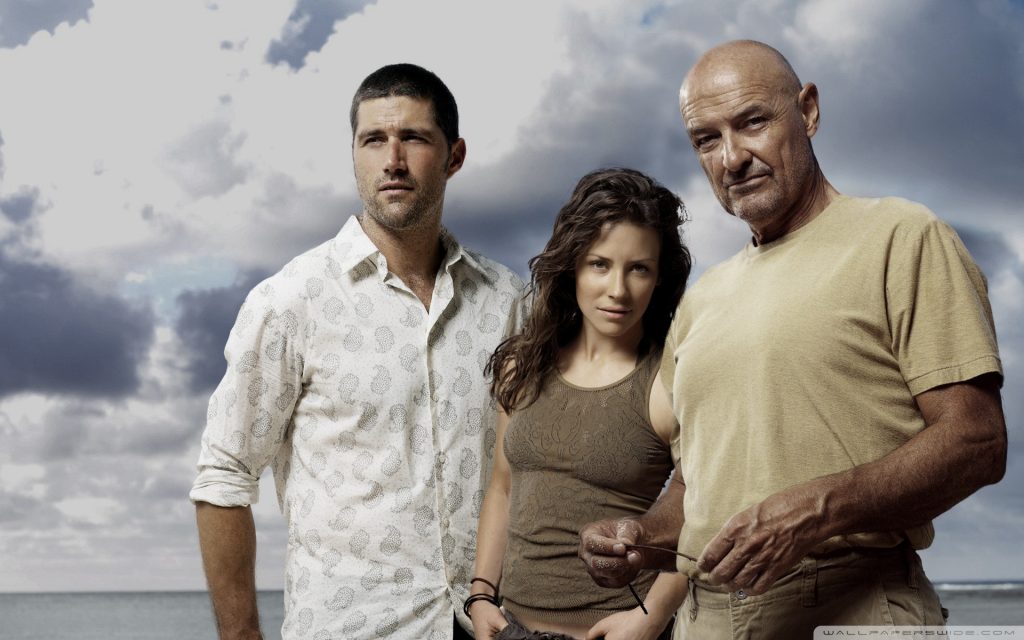
This is a retrospective and a series of speculations following the end of LOST Season 6, Episode 15. Major spoilers ahead—if you haven't watched through Season 6, Episode 15, proceed at your own risk!
After watching LOST S06E15, the episode about the history of the Man in Black and Jacob’s feud, I wasn’t exactly satisfied. There are only four episodes left after this one, and I didn’t expect the writers to still be holding back. At this point, I no longer believe LOST’s writers can calmly bring the story to a close. Still, this episode gave me plenty to think about, so I pulled out some of the check points from the discussion thread in our group (【Discussion & Download & Ratings】LOSTS6EP15 “Across The Sea”) and made them into a separate post, while taking the opportunity to analyze a few questions raised by this episode.
S06E15 Key Points
cp 1: The language question
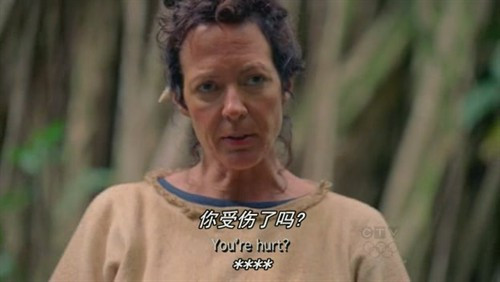
At the beginning, Mother and Claudia are both speaking Latin. Latin should be the native language of Mother and Claudia.
Later, in the shot below, as Claudia drinks water, a strange piece of background music comes in. After it ends, everyone suddenly starts speaking standard American English:
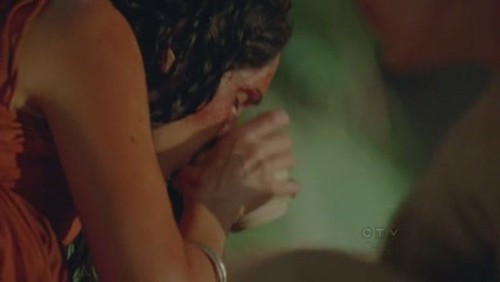
When Mother and Claudia suddenly start speaking English, did they really suddenly switch to English, or is this simply a cinematic device?
I think it’s really just a cinematic device.
There was a movie called The 13th Warrior that used a similar device. A man who originally spoke English ends up among a group of people speaking another language. At first he can’t understand a word they say; then there’s a scene where he seriously studies the way they speak. After a montage, everyone suddenly starts speaking English. What it really means is that he has learned their language.
I think the same device is being used here. To accommodate American viewers, they obviously can’t have the characters speaking Latin for an entire episode, so this device lets everyone on the show open their mouths and speak standard American English.
cp 2: Why Claudia came to the Island
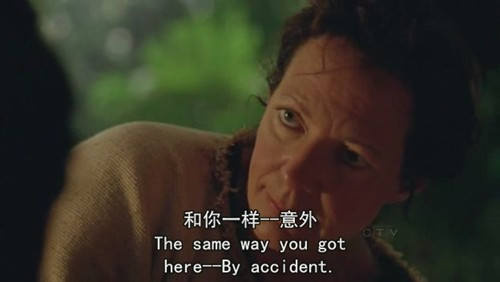
Mother’s identity at this point is essentially that of the later Jacob, so she is already looking for her own candidates, just as Jacob does later. Claudia was therefore summoned by Mother. The difference from the later Flight 815 is that Mother doesn’t want Claudia herself; she wants the children she is carrying. None of the other people on the ship are candidates, because when Claudia tries to find the others from the ship, Mother does everything she can to stop her.
Why would Claudia think of recruiting a child as a candidate? Because she has completely lost faith in adults. We can infer that she had brought many adults to the Island before, only for the results to be one disaster after another. So Mother sums it up:
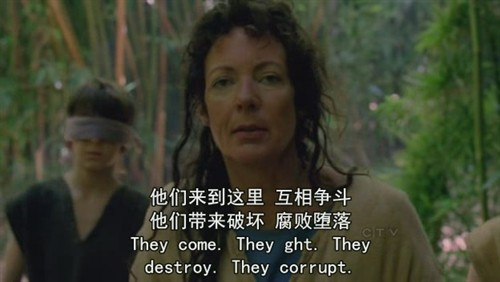
This is why Mother brings a pregnant woman to the Island: if the revolution is to begin with the children, then, having lost faith in adults, Mother decides to start from scratch and raise her own candidates.
cp 3:bad twin
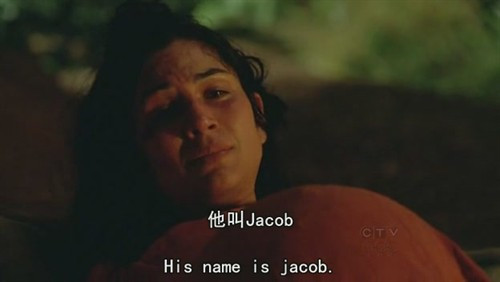
The childbirth scene looks so much like Star Wars: Episode III – Revenge of the Sith. Anakin’s wife also announces the babies’ names immediately after giving birth, and she also has twins. The difference is that Anakin’s wife already had both names picked out, while the poor Man in Black doesn’t even have a name:
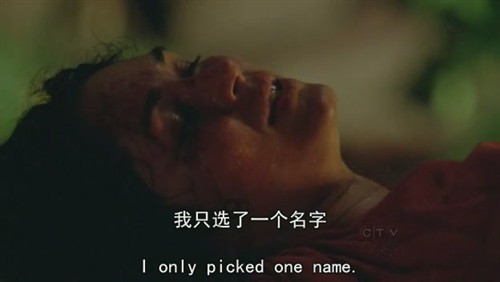
Even Mother is extremely surprised by the birth of the second child:

My guess is that Mother’s plan was simply to bring a pregnant woman over to give birth to one child and raise her from infancy. She just didn’t expect two to arrive at once.
The cloth they’re wrapped in right after birth is one black and one white:
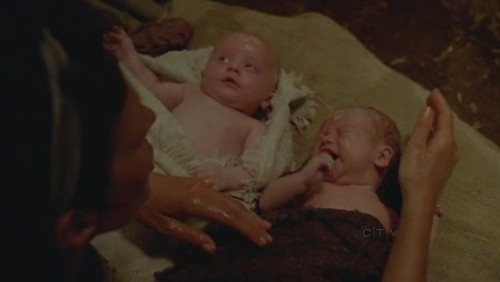
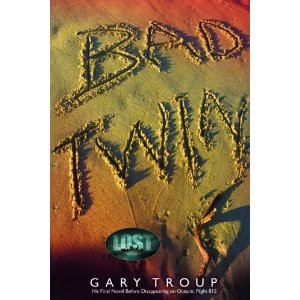
A long, long time ago—probably before Season 2—LOST had a viral marketing campaign claiming that the passenger who was sucked into the engine and killed when Flight 815 crashed was a writer who had written a book called Bad Twin. Looking at it now, this “bad twin” was clearly a reference to the Man in Black.
cp 4: Adoptive parents
Mother’s plan is to bring a pregnant woman over, take the child away, and raise it as a candidate herself. That’s why she kills Claudia.
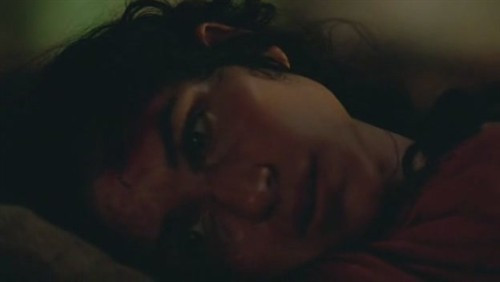
Lostpedia summarizes it this way: so far, every pregnant woman who has given birth on the Island has had the same outcome—the child is taken away and raised by someone else.
Claire gives birth to Aaron, who is raised by Kate.
Claudia gives birth to Jacob and the Man in Black, who are raised by Mother.
Rousseau gives birth to Alex, who is raised by Ben.
CP 5: The chessboard
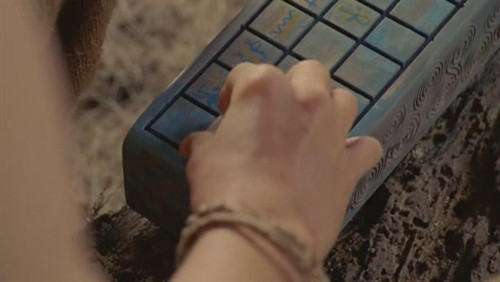
The chessboard the Man in Black “finds” has Egyptian hieroglyphs on it, suggesting that it is an Egyptian artifact. Mother says she put it there for the Man in Black to find, but that may not be true, since she doesn’t want him to know that any other world exists beyond the Island. Still, Mother very likely is Egyptian. I’ll analyze that later.
cp 6:
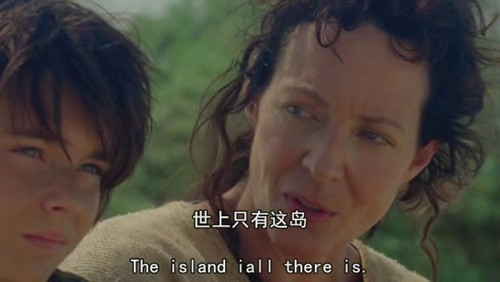
This episode makes it incredibly easy to think of The Truman Show! The greater the deception, the more violent the backlash when the truth finally comes out. The Man in Black’s desperate attempts to reach the world outside and Truman’s desperate attempts to get to Fiji come from the same psychological impulse. It’s not that the outside world is necessarily wonderful—he knows absolutely nothing about it. He simply wants to get out. He wants out, full stop.
cp7: The successor
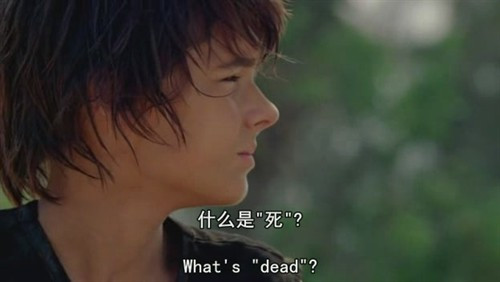

Jacob was right when he said later that Mother had actually decided very early on to pass her position on to the Man in Black.
cp 8:
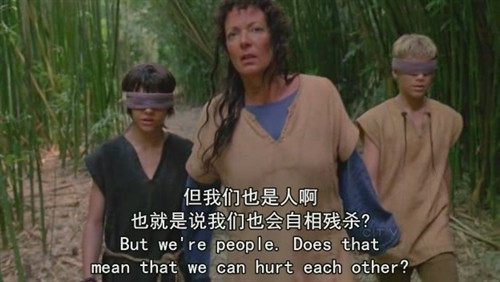
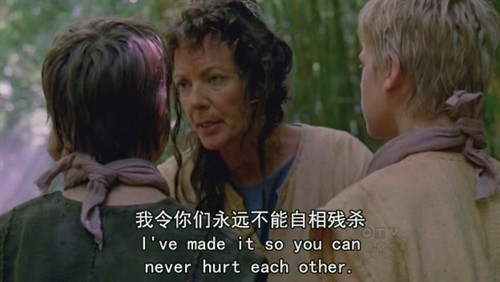
Don’t forget that Mother at this point is basically the later Jacob—a god-level figure with supernatural powers. She places a seal on the brothers so they cannot kill each other, and that seal carries over to Jacob’s candidates, meaning that the Man in Black later cannot personally kill Jacob’s candidates either.
cp 9: The heart of the Island
There is a spring here:
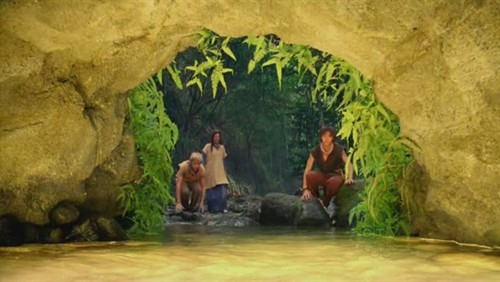
The spring flows out into a stream, which can be turned into a lake with a little work.
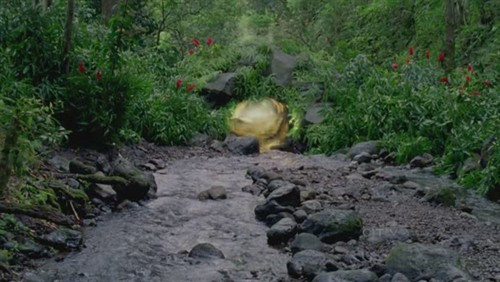
There is also plenty of bamboo nearby.

Where else have we later seen these three things together?
That’s right—the Temple!
This is the original site of the Temple.
In other words, the Temple was built sometime after the events of this episode. More analysis later.
cp 10: The Light

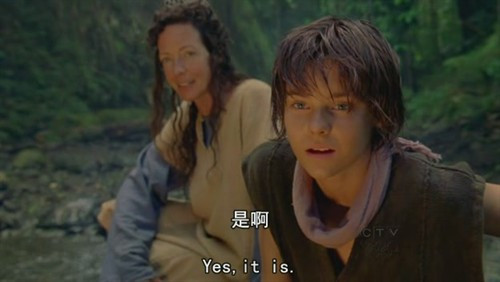


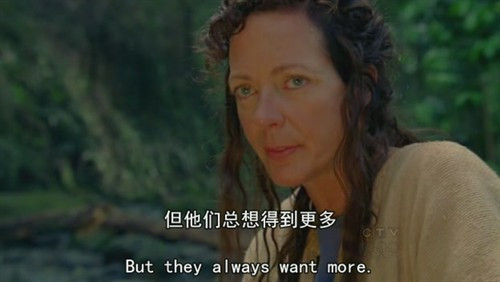
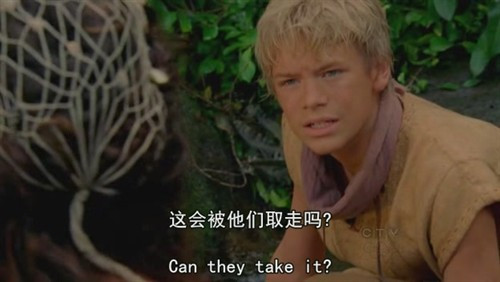
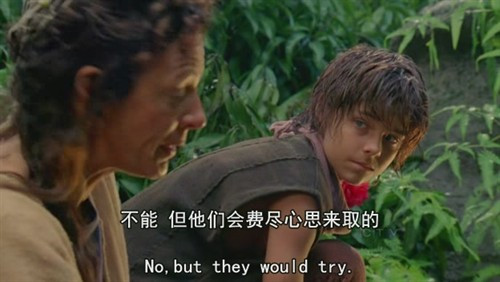

What exactly is the Light? What is it the source of? Everyone has it inside them, but what is it that everyone wants more of? Joy? Happiness?
If the Light were gone, would the light inside people’s hearts go out too? And then what? Would everyone turn into zombies like Sayid?
Later in this episode, the Man in Black is pushed into the spring and the Light grows dim. It seems as if the Man in Black merges with the Light. Does that mean the Smoke Monster later becomes this Light? If he leaves the Island, will the Light go out? Would the Light everywhere in the world go out with it, turning the whole world into zombies? Is this the real reason Jacob can’t let the Smoke Monster leave the Island?
Before this episode, I could never figure out why Locke—the first person to see the Smoke Monster face-to-face—later told Jack that he had seen the most beautiful side of the Island. Now I get it: he saw the Light.
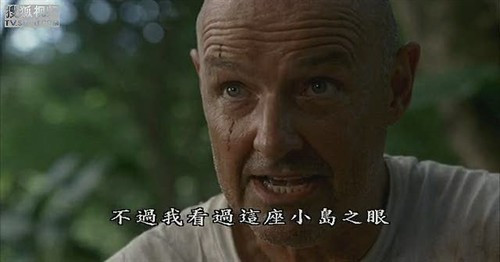


Now look again at what Mother says about the Light in this episode:
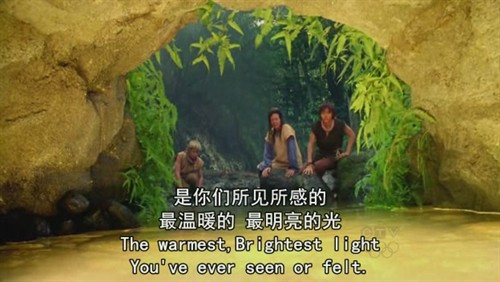
The two are almost identical!
CP11: The era

What era did Jacob and the Man in Black grow up in, in the outside world? It should be the era of the Roman Empire.
This image suggests that the people who arrived with Claudia were probably from the Roman Imperial era.
Claudia’s native language was Latin too.
There are also many other clues in the show connecting it to Egypt. Egypt seems to have become a Roman province around 30 BCE.
Putting these clues together, the story in this episode probably takes place around the first century CE.
cp12:

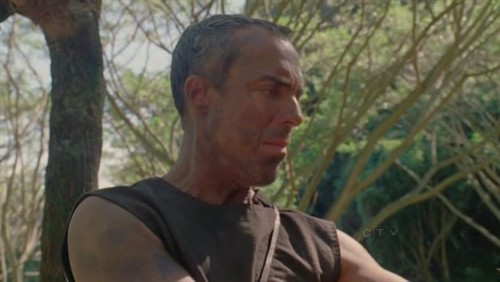
Every adorable little boy eventually grows into an unfortunate-looking man. That’s fate for you.
cp13:the end

This line points to the finale. The title of the final episode is “the end,” and one layer of meaning probably refers to the end the Man in Black talks about.
cp14: The Saint’s Garment That Never Rots
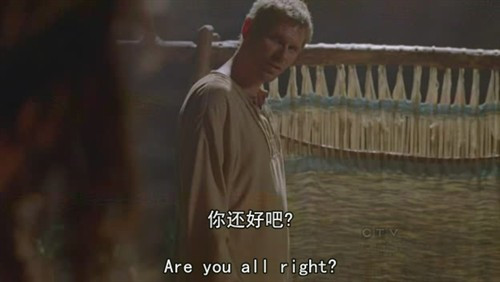
If the earlier dating speculation is correct, then by the time Jacob waits for Richard on the beach in 8XX, Jacob’s clothes have already been worn for nearly two thousand years—and are still perfectly intact.
A garment woven by the gods really is good quality. Jacob’s mother should have been renamed “Silk Weaver.”
This might explain why, although mother and son had clearly been dead for more than a thousand years, Jack later says, when he discovers their bodies, that judging by the degree of decay in their clothes, they should have been dead for only a few decades.
Of course, this explanation is pretty ridiculous.


cp15:

Why mention water? Why does the Light always appear together with water?
cp16:

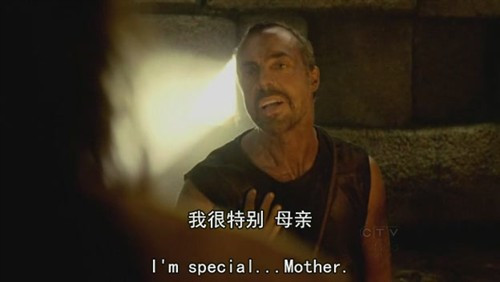
I would really like to know too, but they simply don’t like to explain themselves.
cp17:


Birth, death, rebirth—these all seem to be concepts Buddhism pays attention to… Could the thing glowing below be a giant golden Buddha?
The rebirth idea may explain why the spring later manages to revive Ben. Perhaps the spring here has been illuminated by the Light for so long that it has absorbed a little divine magic.
cp18:


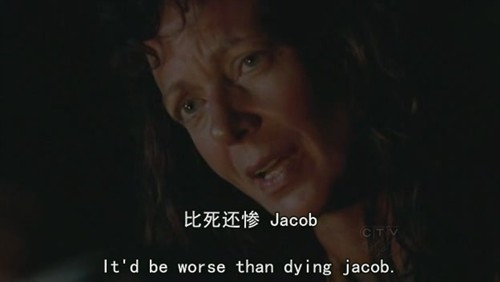
How did Mother know what would happen after going down inside? Could there have been more than one Smoke Monster over the years?
cp19:


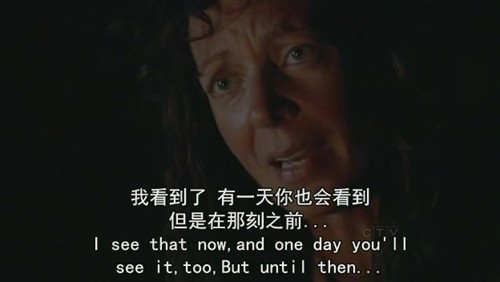

Does this passage imply that one of the successors Jacob later chooses appears to be the people’s obvious favorite, while the real chosen one is someone else? Could Jacob’s successor ultimately not be Jack at all?
cp20:
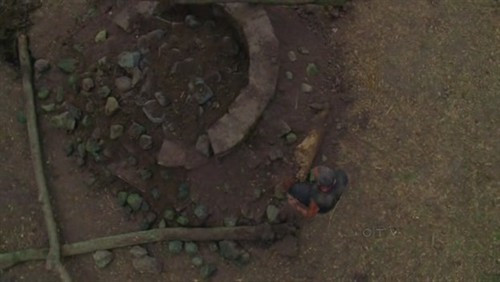
The well was destroyed. When was it rebuilt? And who installed the wheel later on?
cp21: Farewell


Look at Mother’s expression. She actually knows she’s going to die. This line is really her farewell to Jacob.
cp22: Adam and Eve
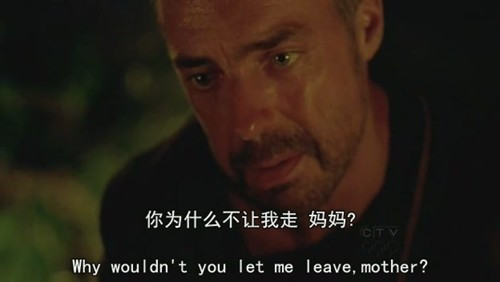

Because Mother is immortal, by this point she looks almost the same age as the Man in Black. Add in the fact that they are not related by blood, along with their later identities as Adam and Eve, and the line “I love you” sounds awkward no matter how you hear it. The Man in Black killing his mother seems to carry, somewhere in his unconscious, a hint of love turning into hatred.
The whole of LOST is engaged in a struggle against the father. At the very end, it finally turns into a love affair with the mother. Kill the father and marry the mother—in that sense, LOST has reached completion.
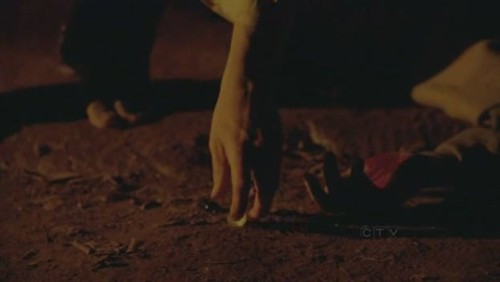
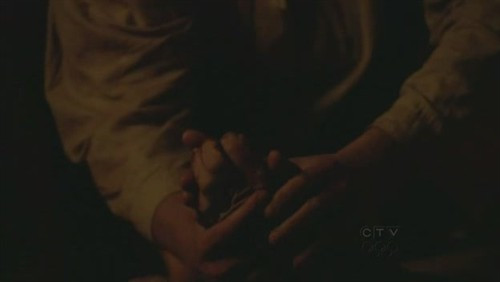
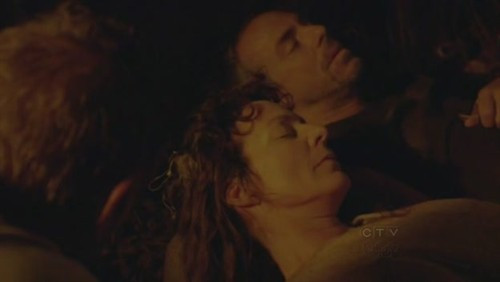
Those final groups of shots in this episode are really all depicting the relationship between a pair of lovers.
So the origin of LOST turns out to be this twisted love affair!
cp23:
Kate used to be so fresh-faced!

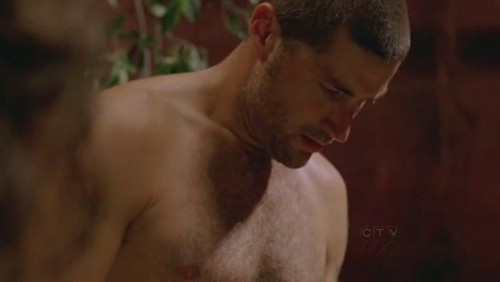
Jack used to be so full of youthful energy:
Locke wasn’t always quite so covered in wrinkles.
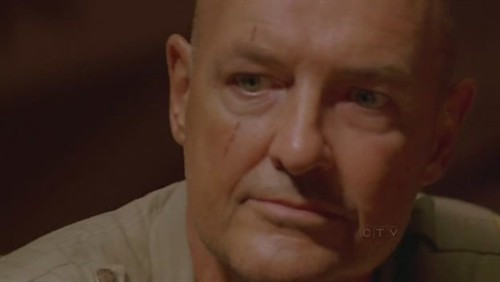
Time really is a thief.
The Temple
If my analysis above is correct, and the place where the Light that gave birth to the Smoke Monster was located is the site where the Temple was built, then the Temple must have been built after the events of this episode.
Judging from the Island’s location, which I analyzed in an earlier post, and the era Mother lived in, she probably came from a circum-Mediterranean civilization older than the Roman Empire. Combined with the Egyptian chessboard in this episode, we can speculate that Mother was ancient Egyptian. Jacob’s cultural knowledge later on mainly came from her.
We have no way of knowing what happened on the Island during the long thousand-plus years between the events of this episode and Richard’s arrival. But many things were probably accomplished during that period: installing the wheel, building the Temple, and constructing the statue, for example.
I speculate that Jacob may have started summoning many people to the Island not long after the events of this episode, and may even have established a religion, much like the later TO. I analyzed in an earlier post that the Smoke Monster was indeed controlled by Jacob to some extent—for example, it could later be summoned by Ben as Jacob’s subordinate. This religion may therefore actually have been built around two gods: Jacob played the good cop, the Man in Black the bad cop, and together they ruled through both favor and fear. These earliest worshippers built the Temple and the statue, and given Jacob’s educational background and tastes, the architecture they built was Egyptian in style. Another possibility, of course, is that the worshippers recruited to the Island were Egyptians to begin with, so it was only natural for them to treat Jacob and the Smoke Monster as Egyptian gods.
In the lower level of the Temple—the place where Ben submits to the Smoke Monster’s judgment—there is a stone relief depicting Anubis summoning the Smoke Monster. If my speculation is correct, then the “Church of Jacob” actually treated Jacob as Anubis, and the Smoke Monster was also part of what they worshipped.
The Smoke Monster was not always an enemy of Jacob’s followers.
For the TO, the Smoke Monster is not entirely an enemy. First, while Jacob is still alive, Ben, acting as one of the TO, can summon the Smoke Monster, showing that under certain conditions it can serve as a weapon for Jacob’s side. Second, when a member of the TO commits a serious offense, they have to submit to the Smoke Monster’s judgment. This is clearly one of the TO’s “house rules.” That is why Ben, who had originally left the Island, insists on coming back to face the Smoke Monster’s judgment. In the TO’s creed, the Smoke Monster is fundamentally the thing responsible for judging them. Otherwise, it’s hard to explain the bizarre plot point of Ben voluntarily coming back for judgment.
Before the Smoke Monster and Jacob formally fell out, they may have had a fairly long period of “cooperation.”
The statue
There is a plot point in this episode that seems puzzling on the surface. Jacob grew up in his brother’s shadow: he was inferior to his brother in intelligence, looks, and talent, and most importantly, their mother always favored his brother. By all rights, he should have hated his mother. So why was he the one who remained loyal to her in the end? Actually, that is precisely what makes perfect sense. The more a child is spoiled, the more rebellious he tends to become; meanwhile, a child deprived of maternal love and recognition will value maternal love all the more and long for recognition all the more. That’s why Jacob, in the end, was the true heir (I have Li Chaolang to thank for helping me see this). So it stands to reason that after the story of this episode ended, Jacob would continue to cherish the memory of his mother. That’s why the statue he lived beneath wasn’t a male god, but the mother goddess Taweret!

I could never figure out why Jacob lived beneath a statue of a mother goddess. It wasn’t until I watched this episode that I understood: when Jacob originally built the statue, it wasn’t so his followers could worship him, but so he could cherish the memory of his mother. That is the statue’s true meaning.
LOST’s storytelling is highly avant-garde, but its core is actually quite ancient: fate, love, and killing the father to marry the mother.
It is a mystery series, a science-fiction series, and even a fantasy series, but in reality it is an ancient Greek tragedy wearing a postmodern mask. Everything returns to the oldest themes of all. The mystery and the puzzle-solving are only one-off thrills; what deserves to be savored again and again, and what remains fresh over time, are these ancient questions. Moving from flashy tricks back to the greatest art appearing effortless—perhaps that is the most fitting way for LOST to say goodbye.
May this legendary series have a beginning and an ending worthy of each other!

Leave a Reply