[This is a retrospective and speculation piece written after the end of Season 6, Episode 10 of LOST. Major spoilers ahead; if you haven't watched through Season 6, Episode 10, please proceed with caution!]
Just like that, LOST’s final season is already half over. With only 6 episodes left before the last 2-hour series finale, it really has reached The Beginning of the End by now—although the writers named the very first episode of Season 4 “The Beginning of the End.”
I sometimes think back to when I first started watching this show years ago. To borrow Jack’s words to Sun in S06EP10, it was “like a hundred years ago.” Six years isn’t all that long, but looking back, it already feels like another lifetime. Those six years happen to be the same six years in which I went from a complete layman to finishing my PhD. When I look back later, this may well turn out to have been one of the most important stretches of my life. I’m very glad those six years coincided with the whole journey of what may be the greatest television series in history, from birth to conclusion. I’m sure this period will look especially beautiful in retrospect.
Well, LOST hasn’t ended yet, but I can already say that it is the greatest television series in history, without the “one of.” So what if the final answers turn out to be terrible? What made LOST is not really the mystery, but the feeling. Once the answers are revealed, the mystery will be gone, while that feeling can keep moving us for a long time. Years from now, when we think back on this show, we won’t be hung up on what the Smoke actually was. We’ll sigh again over the characters’ fates, and be moved again by their struggle.
As for the feeling of LOST, I’ll definitely give it a proper lament once the show finally settles into its ending. But since the real “the end” hasn’t arrived yet, I’ll first put these melodramatic emotions away for a while, keep my eyes on the “mystery,” and do one more round of analysis and prediction. This should be my last “prediction,” after all. In a few more episodes, there won’t be anything left to predict.
Since Season 6 began, I’ve made quite a few analyses and predictions, and almost all of them have ended in disaster. After the sneak peek of Jack talking with Aunt Rose on 815 in the first episode came out, I guessed that the nuclear blast had changed the future but left the memories of certain key characters intact. The writers immediately turned that guess into a disaster with the flash-sideways.
Next I analyzed that the Smoke wasn’t quite the same thing as the Man in Black, and then Flocke immediately admitted that he was the Smoke. Disaster! To be fair, though, in Richard’s centric episode, the Man in Black told Richard that Jacob was controlling him and that he had no choice. I think we can believe that, even though the attack on the crew of the Black Rock was probably carried out by the Man in Black of his own accord. That doesn’t mean he could or couldn’t act on his own free will in other situations. In fact, back in Season 4 we learned that while Jacob was alive, Ben, as Jacob’s subordinate, could summon the Smoke. That indirectly confirms what the Man in Black told Richard: when Jacob wanted to control the Smoke, he really could. It also suggests that when the Smoke acted in the past, sometimes it may have been acting on its own will, and sometimes as Jacob’s puppet. So my claim that “the Smoke isn’t quite the same thing as the Man in Black” may not have been a complete disaster after all.
Then I guessed what the flash-sideways, or FS, was all about, and even proposed my “Double-Island Stratagem” theory, predicting that the island’s current external interface was the flash-sideways world. What happened next was that Widmore came from outside the island—and he wasn’t the flash-sideways world’s Widmore, but the original one. Thus the Double-Island Stratagem theory went completely bankrupt. A magnificent disaster.
I also speculated that perhaps the Man in Black wasn’t the true final Big Boss, but merely a traitor from within, and that what Jacob really had to deal with was some terrifying force outside the island. Then Widmore arrived from outside the island and seemed to be here to help Jacob’s side. So: more disaster.
The only thing that was even slightly on target was my guess that LOST contained an implicit conflict between divine power and science. We can now see a little sign of that in the Widmore-versus-Flocke phase: one side really is supernatural weirdness, while the other is high technology. That at least gives me a little comfort. Otherwise, Season 6 would have been far too disastrous for me.
Still, in the spirit of losing repeatedly and fighting repeatedly, I’ll analyze and predict a few more things.
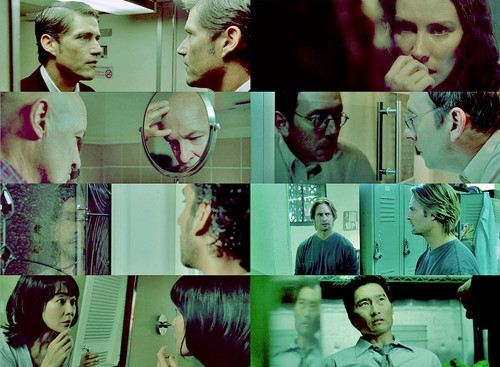
The Beginning of the End
When Season 5 ended, I also wrote a very long analysis. In it, I argued that Jacob and the Man in Black’s conversation on the beach contained an implicit “endpoint,” for example, when Jacob said:
It only “ends” once.
everything “before that”……
And when the Man in Black said:
In one of “these days”, I’ll find a loop.
The wording of this conversation is extremely strange. Take that line from the Man in Black: why didn’t he simply say “one day,” but “one day in these days”? Clearly, Jacob and the Man in Black both knew that some “endpoint” was approaching, and that they each had things to accomplish before it arrived.
There’s also the phrase mentioned earlier. After Season 3 ended, the LOST production team kept hyping “The Beginning of the End,” and it was still being used in a trailer for Season 6. If they built the phrase up to that extent, obviously “the end” can’t simply mean the end of the series. This end must have something to do with the plot itself. My original guess was that this end referred to the end of the world. One way to express “the end of the world” in English is the end of the days. I thought LOST would ultimately be connected to the apocalypse. “The Beginning of the End” was really the beginning of the apocalypse.
Given the grand design LOST has laid out so far, it is entirely possible for the final answer to expand all the way to the end of the world. But after the “candidate” thread became clear in the first few episodes of Season 6, I briefly thought I had made the meaning of “end” too complicated. Looking at the “candidate” thread, I figured the end simply meant the end of Jacob’s term of office or life. The clues this season suggest that Jacob’s “position” has a time limit. Jacob and the Man in Black should both know about that limit. Once it expires, Jacob’s powers seem to stop working, and the Man in Black will no longer be restricted. The solution, then, is for Jacob to pass the “position” to a successor before his term ends, so the seal on the Man in Black will continue to hold. That is why Jacob has spent all these years looking for a suitable successor. Since there is a time limit, the search can’t go on forever, so the number of people who could become successors within that limited time is also limited. That may be why only a few candidates remain, with no further expansion of the search.
Jacob wants to find a successor before his term ends. The Man in Black’s goal should be to kill Jacob before Jacob’s successor takes office. That would create a window between Jacob’s death and the successor’s inauguration during which the Man in Black’s seal would be temporarily lifted, allowing him to use that time to figure out how to leave the island.
Whether Jacob could foresee his own murder is hard to say. Judging from what Miles said, Jacob thought Ben would stop before Ben struck the fatal blow, so it seems he miscalculated. Yet judging from how calm he was after death, he also didn’t seem particularly bothered by dying, as if everything were still part of his plan. How far ahead he had actually calculated remains to be seen in the episodes to come.
I’ve gone off topic. Back to the end. Because the candidate business was so conspicuous, I briefly decided that the end meant the end of Jacob’s term. But starting with EP09, things seemed not to be that simple after all. One of the most important pieces of information revealed in EP09 was Jacob’s own description of the island’s function.
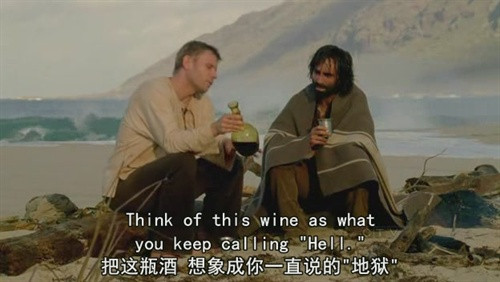
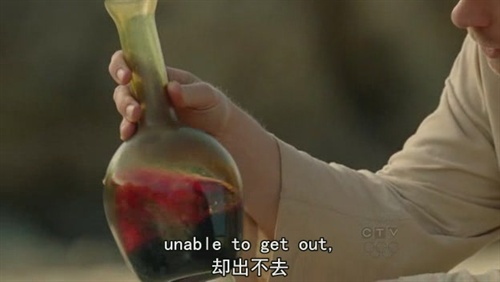
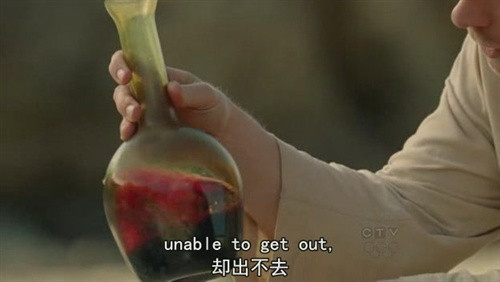
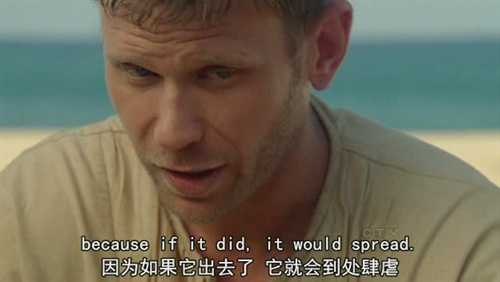
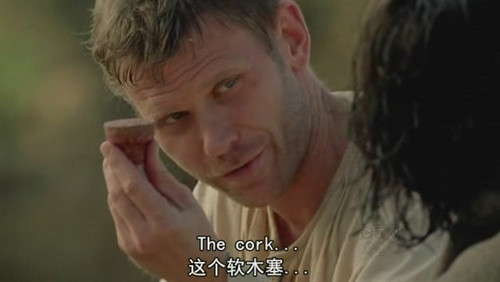
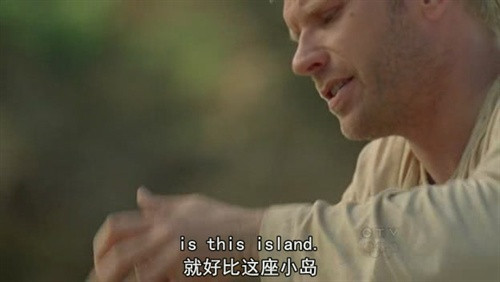
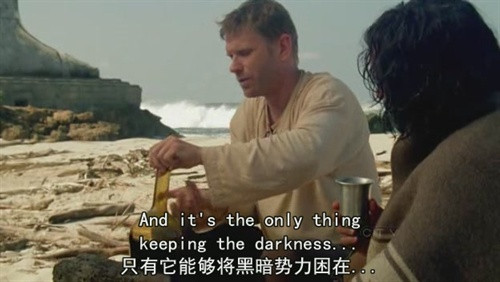
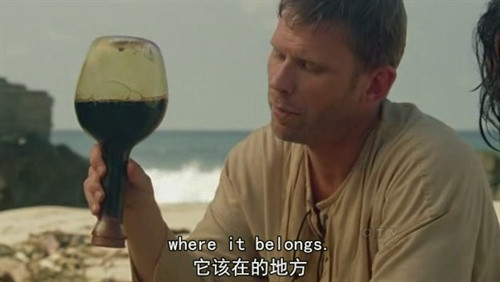
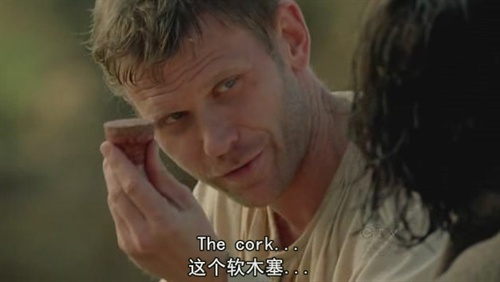
It seems that the island isn’t “hell,” as the Man in Black said, but it may be the “gate of hell”—a closed gate keeping demons and monsters from wreaking havoc in the human world. And Jacob is the gatekeeper of hell.
Jacob said there were some extremely evil things on the island. Once these things—hell, malevolence, evil, darkness—got out, they would spread, and the island was the seal keeping them contained. Jacob seemed to mean that this thing was enormously destructive and contagious: once it left the island, the human world would be finished.
So what exactly is this evil thing on the island that Jacob was talking about—hell, malevolence, evil, darkness?
I imagine most people would say it obviously refers to the Man in Black. Isn’t keeping the Man in Black from leaving the island exactly what Jacob is doing?
But I don’t think so.
For all we’ve seen of the Man in Black so far, he is ruthless, yes—but does he look like someone who wants to attack the entire world? Turn into Smoke and kill everyone on Earth?
People who casually talk about destroying the world are psychopaths, but I don’t think the Man in Black is one. He may be evil, but he isn’t completely deranged. I don’t see him as the kind of lunatic who would leave the island and launch a massacre against humanity. I believe his urgency to leave the island really is connected to what happened to his mother.
Now look at what Widmore says in EP10:
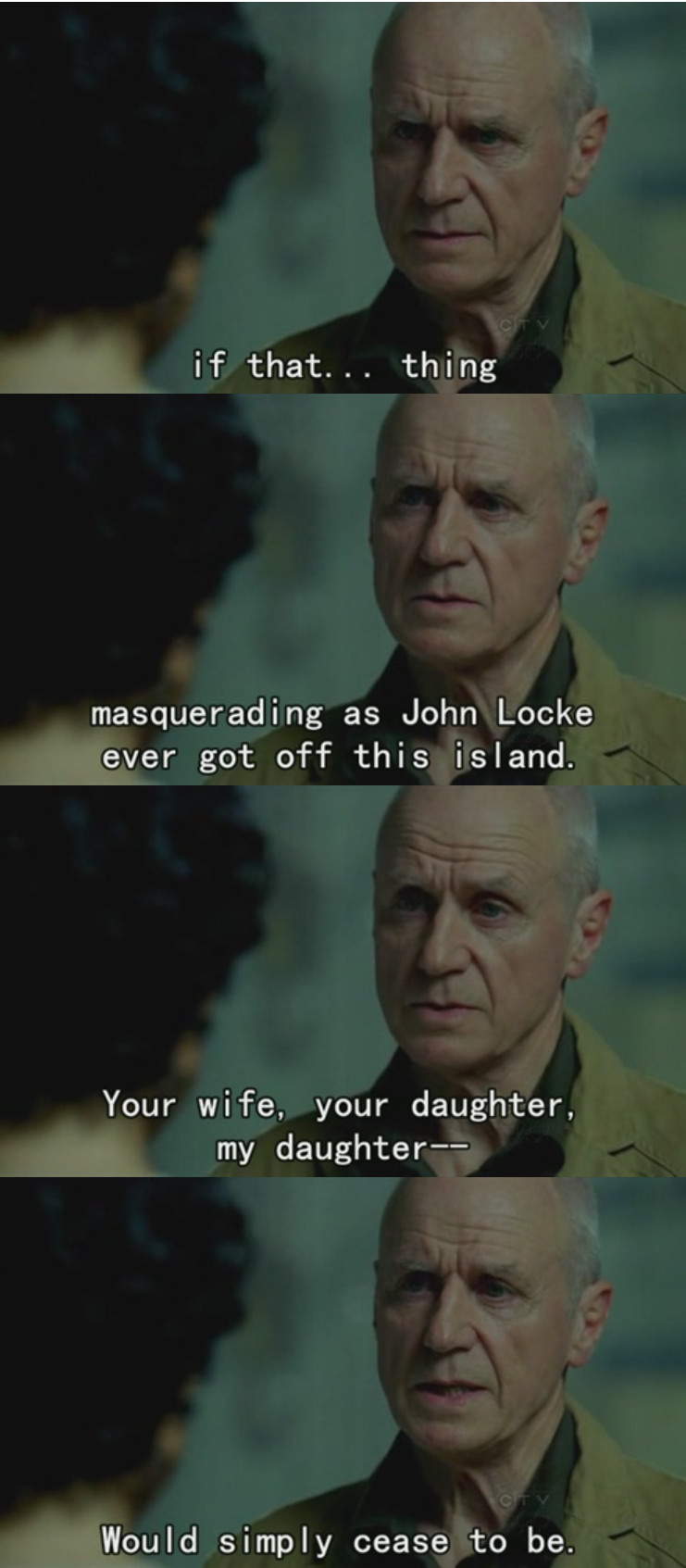
Widmore said that once the Man in Black left the island, their wives, children, and everyone they loved would “no longer be them.” We know that LOST’s writers hide little blades in their dialogue, especially in important lines; their word choices are never accidental. Why didn’t Widmore say “they’ll die,” but “they’ll no longer be them”?
Could Widmore mean that if the Man in Black left the island, something would change in their minds? That their souls would change, so they would no longer be themselves?
So my speculation is actually this:
If the Man in Black leaves the island, what truly brings disaster to the world isn’t the Man in Black himself, but some side effect of his leaving. That side effect is that very, very many people in the world would become “soulless.” And what makes people “soulless” is the “virus” on the island—the virus that infected Sayid and Claire!
Jacob isn’t trying to keep the Man in Black from leaving because the Man in Black himself, although he may be bad, can’t do anything terribly bad on his own even if he gets out. He seems to have his own reasons for wanting to leave. But if he leaves, he’ll take the island’s “virus” with him. Let’s temporarily call it the “Satan virus.” Its function is to devour the light inside people’s hearts and let their dark side take control. Claire and Sayid are currently in precisely that state.
The evil thing on the island that Jacob described—hell, malevolence, evil, darkness—is this bizarre virus that can wipe out the good in people. What Widmore means is that once the virus spreads into the human world, the people they love may become walking corpses, “no longer themselves.”
The island’s function, then, is to keep this soul-stealing Satan virus confined to the island and stop it from spreading into the human world.
My guess is that, for some reason, the Man in Black’s departure would undo the island’s “cork” function. Once he left, the human world would be filled with millions upon millions of Claires and Sayids. Perhaps not even the entire human race would be spared.
Let’s continue with Jacob’s words:
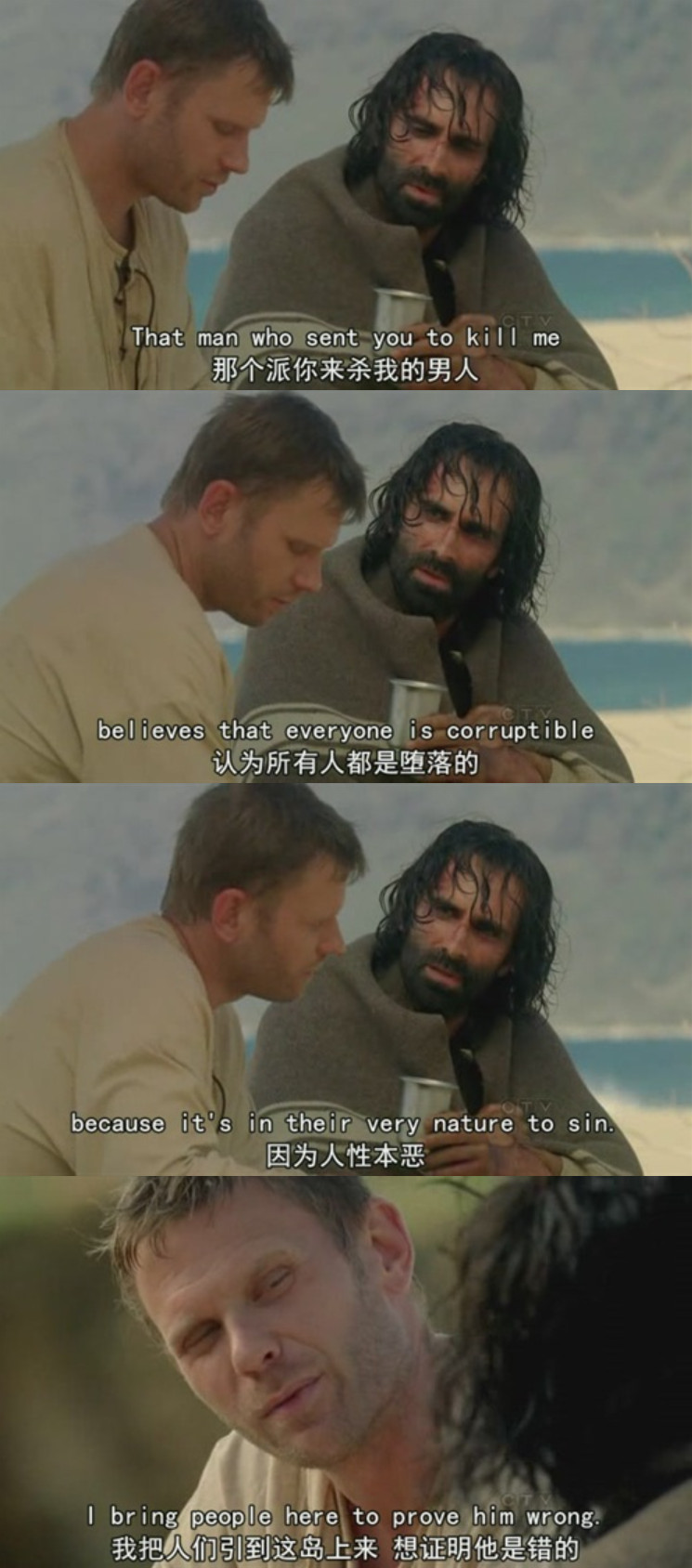
Jacob believed that although most human beings were beyond saving, there was still something good in human nature, so the virus couldn’t be allowed to spread and harm humanity. The Man in Black believed that human beings were evil to begin with, and that being infected or not made no difference. So he thought there was no problem with his leaving: humanity was already evil, already infected.
That is the real disagreement between Jacob and the Man in Black. It is also why Jacob kept bringing people to the island, again and again, to prove to the Man in Black that human nature is basically good! He wanted the Man in Black to see that there was goodness in humanity, so he absolutely couldn’t be allowed to leave the island. (If Jacob really brought all those people to the island, getting so many of them killed, merely to prove that humanity had some goodness in it, then he had far too much time on his hands—and was really asking to be punched.)
If the Man in Black is a madman hell-bent on wiping out the world, why would Jacob keep bringing people over to prove to him that humans can be good? What good would that do? It’s like telling a wolf, ‘Sheep feel pain, so don’t eat it.’ Would that work? The reason Jacob wants to prove this to the Man in Black is precisely that the Man in Black can, in fact, be persuaded. His relationship with the human world isn’t that of a wolf and a sheep. As for the harm he might cause after leaving the island, the Man in Black simply doesn’t care; he isn’t actively trying to hurt humanity. Jacob hopes that by showing him human goodness, he can make the Man in Black realize why he must not be allowed to leave.
And now the end I mentioned earlier is once again tied to humanity’s end. If the Man in Black leaves the island and causes a virus to spread, then humanity’s end really will have arrived. ‘The Beginning of the End’ seems to mean the beginning of the apocalypse once again.
The Ultimate Weapon
EP10 is titled ‘the package.’ Jin asks Widmore how to stop the Man in Black. Widmore replies, ‘It’s time you saw the package.’ He doesn’t answer directly, but the point is that the key to stopping the Man in Black is the package. And this package turns out to be LOST’s number-one badass, Desmond!
Why should Des become the ultimate human weapon against the Man in Black?!
I think it’s because Des has a special sensitivity that nobody else possesses to this island’s magnetic field and the spacetime effects it produces.
When spacetime was jumping around so frequently last season, Faraday went to the Swan station to find Des. He said something very strange: ‘You are the only person who can help us because Desmond, the rules, the rules don’t apply to you. You’re special.’ He said that the ‘rules’ didn’t apply to Des alone—that Des was special. He was obviously talking about some rules connected with spacetime. Des is the one and only exception not bound by those rules!
And we also know that the island’s spacetime properties should be determined by its magnetic field. The wheel located in the magnetic pocket can change the island’s position in spacetime; the side effects of passing through the magnetic field when leaving the island can send a person’s thoughts through spacetime; and so on. Des himself had a miraculous time-travel experience after being caught at the center of the Swan station’s electromagnetic storm, and later he could even see the rules governing the universe and predict Charlie’s death.
So Des’s special sensitivity is really a special sensitivity to the magnetic field.
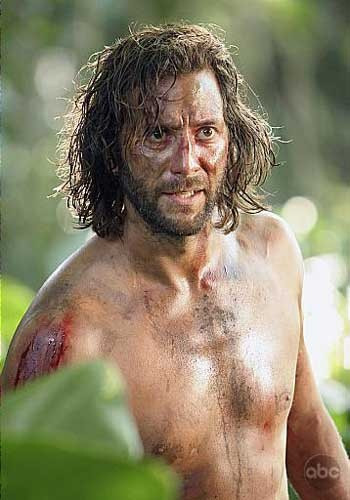
In this episode, Widmore’s subordinate Zoe captures Jin because, in the 1970s, Jin was responsible for making the Dharma Initiative’s grid map. The grid map marked the locations of the island’s magnetic pockets.
At the very least, we currently know of two especially powerful magnetic pockets on the island: the wheel at the Orchid station and the area beneath the Swan station. There may be other magnetic pockets, and Jin may be able to identify their locations.
I think the reason Widmore is so interested in this now is that the island’s magnetic field can destroy or stop the Man in Black. I think the island’s ‘cork’ function works through its magnetic field, and Widmore now needs to use it either to destroy the Man in Black or at least trap him.
The reason Des has been captured by Widmore now is, we can be fairly certain, that Widmore wants to use Des’s special ability to manipulate or affect the magnetic field, and thereby deal with the Man in Black.
The showdown between Widmore and the Man in Black really is a showdown between science and divine power.
Charles Widmore
At this point, Widmore seems to be the person who knows the most secrets apart from Jacob and the Man in Black. So what exactly is he?
He used to be the leader of the Others. His successor, Ben, had never met Jacob, but I don’t think that was some shared destiny of their leaders. Widmore’s relationship with Jacob may have been far closer than Ben’s. So although Widmore was later expelled for breaking the rules, he may well have continued working for Jacob, receiving direct instructions from him off-island just as Ilana did. That would explain why he has returned to the island this time. He had always struggled to find the island’s location, yet suddenly came back at this crucial moment. Perhaps, before Jacob died, he passed the island’s location and related instructions to Widmore, ordering him to return. Widmore had always been fighting Ben alone, not trying to harm the island or Jacob. After Locke left the island through the wheel last season, Widmore took him in and helped him, telling Locke that a war was coming and that if he wasn’t on the island when it happened, the wrong side would win. It seems Widmore was trying to help Jacob’s new leader return to the island and take charge. Unfortunately, the Man in Black’s trap worked, and Locke became Flocke. Clearly, Widmore had been helping Jacob all along. Now that the Temple has fallen, Widmore is practically the only remaining force on Jacob’s side capable of standing up to the Man in Black. So Widmore must be Jacob’s most powerful hidden move—or perhaps his very existence was a contingency plan Jacob set up in case something happened to him.
Widmore is an ambitious man, but he’s also a formidable general.

The Relationship Between the Dharma Initiative and Jacob’s Activation Plan
More bizarre than Widmore’s identity is the identity of the Dharma Initiative’s activation plan. What was the Dharma Initiative originally created for?
At this point in the story, we suddenly realize that everything Widmore—or Jacob’s side—is using against the Man in Black—the locations of the magnetic pockets, the sonic fence—is all part of the Dharma Initiative’s legacy! Why did an organization that seemed to be Jacob’s enemy develop things that ultimately became resources for helping Jacob?
Don’t forget that the Dharma Initiative spent those decades on the island locked in conflict with Jacob’s Others, and in the end they were massacred by the Others.
And yet there are subtler connections and mysteries linking the Dharma Initiative, Jacob, and the island.
Mystery 1: Why did the Dharma Initiative study the island?
First we have to answer how the Dharma Initiative found the island. They must have known the island existed before they could decide to look for it. The Dharma Initiative’s founder, Alvar Hanso, was a descendant of the captain of the Black Rock, so perhaps he learned of the island through family lore. But the captain of the Black Rock had clearly died when he reached the island, and everyone aboard the Black Rock except Richard had perished. So how did knowledge of the island reach Hanso’s descendants? Another possibility is that the Dharma Initiative learned about the island from the U.S. military. We know the military reached the island in the 1950s. They may have discovered some of its unusual properties, such as the magnetic field, and accumulated research data. They were later driven off the island and could never find it again, but their research fell into Alvar Hanso’s hands.
Using this material, Alvar Hanso established the Dharma Initiative’s first off-island station, the Lamppost station—the one beneath Ms. Hawking’s church. Ms. Hawking said in the Lamppost episode that the station was built on a magnetic pocket like the ones on the island. Using the data on the island’s magnetic properties discovered by the U.S. military—the station’s walls displayed classified photographs of the island taken by the military in 1954—the Dharma Initiative finally worked out how to lock onto the island’s location. That’s how they later found the island and landed there. So was the fact that the Dharma Initiative’s leader was a descendant of the Black Rock’s captain merely a coincidence?
The question is, why did Alvar Hanso want to find the island? What was he really trying to accomplish by studying all its strange properties? LOST has never truly explained this. In the famous Alvar Hanso video from the LOST experience interactive game after Season 2, Hanso himself said that he founded the Dharma Initiative to save the world from the apocalypse (the apocalypse again). But as I recall, the writers later said that LOST experience was relatively independent and unrelated to the official series, and it turned out that many of the answers revealed in LOST experience contradicted the series. So we probably can’t count the purpose of the Dharma Initiative revealed by LOST experience as canon.
I also don’t believe Alvar Hanso was simply supporting some noble scientific cause—discovering a strange island and embracing the spirit of scientific inquiry to understand it. I think Hanso must have had a very practical reason. He must have known the island was important, and that understanding its properties could serve a very real purpose. So who told him the island was important? Who asked him to figure out its properties? I think the only possibility is that it was Jacob, the island’s master! Jacob probably thought, ‘That young fellow Richard from the last Black Rock did a pretty good job. This time I’ll recruit another Black Rock man,’ and approached the captain’s descendant, told him some of the island’s secrets, and asked him to establish the Dharma Initiative to study its properties. As for why Jacob did this, let’s keep going through the mysteries below before analyzing it.
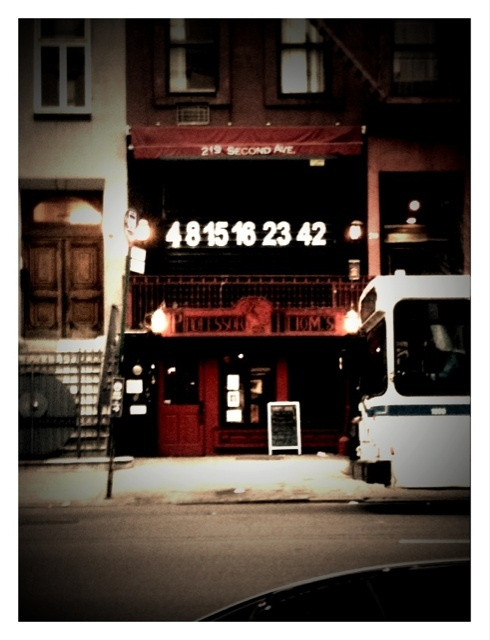
Mystery 2: Jacob’s cabin was actually built by the Dharma Initiative.
In the S04E10 episode Cabin Fever, Locke dreams of Horace, the Dharma Initiative’s former island leader, chopping down trees. Horace says he is doing it to build a cabin for himself, his wife, and his son. But we know this is the little cabin Jacob later lived in. Why would Jacob live in a little cabin built by the Dharma Initiative? If he wanted to live somewhere in the jungle, why didn’t he have Richard and the others build one for him?
Was Jacob’s relationship with the Dharma Initiative as irreconcilably hostile as that of his own people, the Others? It’s very possible that it wasn’t anything like that at all.
Mystery 3: Jacob’s name appears in the Room 23 video.
In the Room 23 video once used to brainwash Carl, the line ‘God loves you as he loved Jacob’ flashes by. But this video was clearly made by the Dharma Initiative, because at the end we see one of its founding scientists conducting an experiment—the same scientist who appeared in the Swan station video. This proves that the video wasn’t made later by Ben and the others after taking over the Dharma facilities; it was a Dharma production. In the latest S06E10, Zoe also confirms that the Dharma Initiative used the video to transmit subliminal messages. So why would a Dharma video contain the Others’ catchphrase, ‘God loves you as he loved Jacob’? Weren’t the Dharma Initiative and the Others supposed to be sworn enemies?
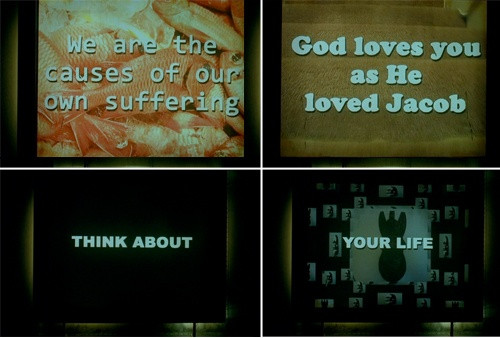
Mystery 4: Why could the Dharma Initiative come and go freely?
Jacob possesses the terrifying ability to manipulate fate. He wanted the Black Rock to come to the island, and it came; he wanted Flight 815 to come to the island, and it crashed. Conversely, if he didn’t want someone to come to the island, that would be easy enough to arrange. So why did the Dharma Initiative not only discover the island but also continue coming and going freely for decades? Could this actually have been permitted by Jacob?
Putting these four mysteries together, my conclusion is that the Dharma Initiative was on Jacob’s side all along! It’s just that, in keeping with Jacob’s habit of hiding his cards, the Dharma Initiative’s operatives didn’t know whom they were working for or why—just as Richard served Jacob for more than a hundred years without knowing what he was supposed to do. They may not even have heard of Jacob at all, although each member may have been brainwashed into believing that Jacob was favored by God. Very possibly, only the Dharma Initiative’s leader, Alvar Hanso, knew that its true purpose was to serve Jacob. Jacob created the Dharma Initiative so that human technology could be used to study certain properties of the island and develop technological methods of controlling the Man in Black. The Dharma Initiative’s research was extremely dangerous for the island; it’s hard to imagine it happening without Jacob’s tacit approval.
So the Dharma Initiative was one of Jacob’s major backup plans. If his divine power couldn’t control the Man in Black, he would still have technology developed by the Dharma Initiative to stand in for that power and fight him. And that’s exactly what we see now: Widmore, Jacob’s chief operative, can hold his own against the Man in Black precisely because he is using the Dharma Initiative’s legacy.
To deal with the Man in Black, Jacob has never put all his eggs in one basket. He prepared multiple contingencies long ago, and each one could serve to constrain the Man in Black. The first was TO, whose role may have been to guard some traditional divine power capable of suppressing the Man in Black (the Temple, for example). The second was the Dharma Initiative’s activation plan, whose role was to use modern technology to develop weapons against the Man in Black. The third was his personal guard outside the island, people like Ilana and Widmore, who could become surprise reinforcements at crucial moments. All of this was meant to ensure the smooth execution of the final move: the formal succession of the successor among the candidates. Once the successor formally took over, Jacob’s mission would finally be complete, and the successor could worry about everything that came after. But Jacob kept his cards close to his chest. He never told any one faction under him the whole plan. So every faction was actually serving Jacob without knowing what the others were doing—and some were even enemies.
For TO, the Dharma Initiative was trespassing, and a major threat to the island, so they should have wiped it out immediately. Strangely, though, they allowed the Dharma Initiative to remain on the island for decades, doing nothing more than honoring the truce. This was probably because Jacob had forbidden Richard and the others from acting. Later, when TO carried out the massacre of the Dharma Initiative, it was probably because Jacob’s ban had been lifted. Jacob presumably felt that the Dharma Initiative’s research was nearly complete and that they had found a way to fight the Man in Black; further progress was of little use, or might genuinely threaten the island’s safety. So he tacitly allowed Richard and the others to carry out the purge.
What had always puzzled me was why, after the island branch of the Dharma Initiative was purged, the Dharma Initiative outside the island and the man behind it, Alvar Hanso, never retaliated. They let TO’s people come and go in the Dharma Initiative’s submarines, and even let TO take over their off-island asset, the Lamppost station. Had the Dharma Initiative outside the island been purged too? Now it seems that, if my guess is right, the Dharma Initiative outside the island didn’t stay inactive because it had been wiped out; Jacob had ordered Alvar Hanso not to strike back! Jacob could remain utterly indifferent to some of his people being massacred, but he would not allow their conflict to escalate to the point of interfering with his plan.
If this guess of mine is right, Jacob is downright terrifying! In LOST, every character and every faction except the Man in Black is a piece Jacob put on the board to deal with him. This is a vast and sinister game of chess, and every piece caught up in it can see only the tiny patch of space around itself. In reality, they know nothing about their own fate, and are completely like puppets on strings, tugged this way and that by Jacob.
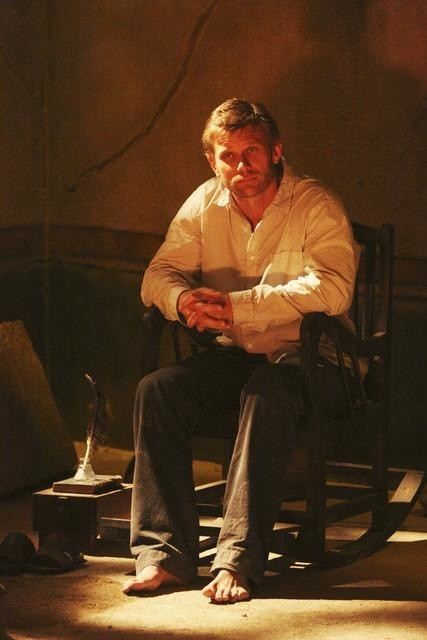
If this guess is correct, I am really looking forward to LOST’s ending being the pieces’ counterattack. Who, exactly, can lead these poor pieces out of the maze Jacob has laid for them? Jack? Or Locke, who has already become part of the Man in Black?
I hope humanity’s free will can finally rise up and fight back, overturning Jacob’s chess game. I hope LOST ends with a victory for human dignity.
Wait and see.
Leave a Reply