
[This article was written many years ago, after the entire LOST story had wrapped up. Major spoilers ahead—if you haven't finished the series, proceed with caution!]
If the official account doesn’t release any more fresh plot developments, I suppose this will be the last article I write about LOST. I’ve never had much staying power: I always want to finish everything in one heroic push. Anything with a deadline gets done the day before the deadline; anything without one gets harder and harder to start the longer I put it off.
I dreamed up this plot analysis half a year ago, intending to post the whole thing in one breath. I never imagined that six months would pass and I’d only have reached the beginning of the story. I became the hole I was trying to fill. So this article really did turn into a “seventh season”—with a hiatus in the middle.
After I started working in the second half of 2010, I was absurdly busy. Sometimes I barely had time to sleep. I occasionally took a little detour to chat about other films, and before I knew it I could hardly find one or two full days of rest in which to finish this long, brain-draining piece. Now I’ve finally made up my mind to fill both the hole I dug for myself and the hole called LOST.
Back to the point.
Last time, I said that, under the tug of Jacob’s destiny-driven plan, the candidates chosen along that chain of fate finally gathered again on 815. With the crash of 815, the Island entered the most breathtaking stretch of its history. This is where LOST begins, but in truth it is the climax and epilogue of a thousand-year war between two demigods.
What I’m interested in is this: in the final showdown, what exactly were the Others, the Man in Black, Jacob, and the candidates each up to? LOST is, of course, told from the perspective of the candidates—the 815 survivors—so that perspective isn’t hard to understand. If you have questions, just check the timeline on Lostpedia or the individual character pages, and you can sort out the behavior and clues of most of the 815 survivors. The harder question is what the Others, the Man in Black, and Jacob were cooking up during the hundred-plus days after 815 crashed on the Island (not counting the stretch after they left the Island).
The Others: Ben Takes the Throne, Whether Anyone Likes It or Not
Let’s start with the Others. As I’ve argued before, the Dharma Initiative and the Others were both forces serving Jacob, but they didn’t know about each other. After their initial direct conflict, the Others reached a truce with Dharma at Jacob’s instruction. It’s hard to imagine the Others willingly letting these outsiders turn the Island into a smoky mess without Jacob’s say-so. Later, in the 1990s, again with Jacob’s approval, the Others purged Dharma, which had either lost its usefulness or become too dangerous.
During the purge, the person working undercover with the Others was Ben, whom Richard had long since recruited as a spy. Ben came to the Island with his father as a child. Young Ben, like Locke, was actually a “gifted one.” Richard noticed him because he could see his mother’s ghost, and from then on Richard put Ben on the list of candidates for leadership. But later, Ben was shot by the time-traveling Sayid. After Richard carried him to the Temple’s spring and saved his life, Ben lost part of his memory—and his gift disappeared with it.
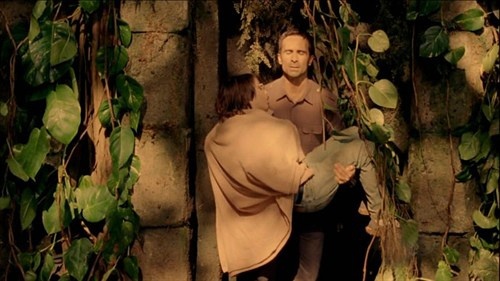
This was the starting point of Ben’s tragedy. He had originally possessed both the ambition to lead and the gift to do so. After this incident, he retained the ambition and the schemes, but never again the gift of a leader.
In the purgatory-like world after death, Ben told Locke, “You have a gift. I don’t.” In fact, Ben had simply forgotten that he himself had once been gifted, just like Locke.
The people who led the purge were not only Richard, the old mentor, but also Charles Widmore, the leader at the time. Once Ben had completed his spy mission and officially joined the Others, he seized on Widmore’s violation of the Island’s rules—leaving to see his daughter—to drive him off the Island, then made himself leader of the Others. Behind it all, Jacob remained the same as ever: unless things developed to the point of threatening the ultimate objective, he let them run. “Non-interference” was Jacob’s consistent method with humanity. Only as the handover drew near did he interfere more. I’ll come back to that later.
So for a leader like Ben, who had usurped power outside the plan, Jacob did not use force to remove him. He simply treated him with indifference. For years after becoming leader, Ben never got the chance to meet Jacob; Jacob continued to direct Ben and the Others indirectly through Richard. In fact, after Dharma was wiped out, the Others didn’t have all that much left to do. At this stage of the plan, the candidates who would later come to the Island mattered far more than the Others.
In Jacob’s plan, even the exiled Widmore was more useful than the Others on the Island. As I analyzed earlier, Dharma was a tool Jacob used to harness human technology to give himself a helping hand. Destroying Dharma did not mean discarding its research; those research results were precisely what Jacob wanted to put to good use. That was where Widmore came in. Under Jacob’s instructions, the exiled Widmore took possession of large amounts of Dharma’s technology, property, and resources: the Lamp Post station, for example (though it later went to Widmore’s wife, Hawking), Dharma’s protective-wall technology (which Widmore later brought back to the Island), and Dharma’s oil paintings (the paintings in Widmore’s office), among other things.
Widmore thus replaced Dharma, becoming the surprise weapon in Jacob’s plan to forge an advantage from human technology. Later, when the Island fell into crisis, it was Widmore who returned with that surprise attack, according to Jacob’s prior arrangements. Unfortunately, he didn’t accomplish much. The whole technology-to-help-Jacob plan was only a side branch of Jacob’s larger plan. In reality, the Dharma Initiative and Widmore’s later plan to pass Jacob’s position on accomplished very little. They became one spectacularly bad move. But that’s a story for later.

Back to Ben. Since Ben had pressed his hot face against Jacob’s cold backside, he could only get high on his own supply—and he really did put on quite a show. After becoming leader, Ben decided that a major problem was the fact that, after the magnetic catastrophe of the 1970s, women on the Island could no longer give birth. The Others’ future and the succession of leadership had therefore become problems. As I said earlier, the Others cultivated leaders by imitating the way Jacob’s crazy mother chose candidates: revolution starts with the babies. But now there were no babies on the Island. What was a revolution to do with no one to inherit it? Ben threw himself into finding out why pregnant women on the Island died.
Richard was very unhappy about this. He thought there were more important things to do (though in reality there really wasn’t anything more important), but he had no choice. Under the Others’ system, with Jacob refusing to appear, everything was up to the leader. Whether Ben was so stubborn because of some emotional fixation—perhaps for his first love, or so Alex could live a normal life on the Island someday—we simply don’t know.
Giving Ben the benefit of our own small-minded suspicions, he actually trusted no child who hadn’t been raised by him from scratch. In Ben’s eyes, the next leader either had to be his own child or someone he had personally raised from infancy. Everyone else was unreliable. Whatever the reason, the Island had to be capable of producing babies first. Although the Others could come and go, their movements were heavily restricted. So Ben sent Richard off the Island to recruit experts like Juliet, luring, deceiving, and coercing them into coming to study the deaths of pregnant women. Naturally, they found nothing, because the women on the Island could not give birth. As I argued earlier, the problem may have been the disruption of the energy of the source of life after the Island’s 1970s magnetic catastrophe, rather than anything wrong with the pregnant women themselves. Juliet’s research was doomed from the start.
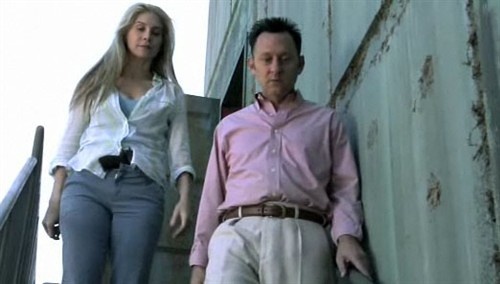
The year was 2004. One day, Ben happened to discover a tumor growing on his spine. The Island’s life-source energy normally kept people from getting sick and helped them recover quickly from injury and illness. Yet this “protective talisman” had failed on Ben. Ben may have realized quickly that Jacob was sending him a message: “You can retire now.” Ben had already been abandoned by the master of the Island. Jacob’s non-interference policy began to shift slightly at this point. Jacob seemed a little worried that Ben might interfere with his succession plan, so he removed Ben’s protective talisman.
Jacob’s move looked gentle, but it was extremely clever. It was gentle because it was a warning, not an act of force. Jacob did not give Ben some incurable disease; he gave him exactly the disease Jack could cure. Rather than eliminate or drive Ben away, he warned Ben and let Ben realize for himself that the Island had abandoned him. Ben should have taken the hint and left the stage voluntarily. But Ben’s later behavior clearly did not please Jacob. In particular, a few days later, when Ben discovered that one of the 815 survivors was a spinal neurosurgeon, he became even more convinced that, above the Island’s master, there was an even more powerful god of destiny who had not abandoned him. He did not know that this was merely Jacob’s “mercy”—Jacob had chosen not to finish him off. So Ben stubbornly chose to remain at center stage.
The move was clever because Ben’s “abandonment” was not only a performance for Ben himself. More importantly, it was a message for the rest of the Others: “This leader is no longer up to the job. It’s time to find a new one.” A few days later, 815 crashed; a few days after that, Ethan brought back news of John Locke’s miraculous recovery. I imagine that when Richard heard that John Locke was among the 815 survivors—and that Locke had a miraculous connection with the Island—he may have immediately guessed that Locke’s arrival was the Boss’s will, and that Locke was the perfect replacement for the Ben the Boss had now abandoned. Once the news spread among the Others, the whole group was energized. Ben’s position became precarious. This was the greatest crisis since Ben became leader. Although Locke himself had no idea what was happening, from the moment 815 hit the ground, Locke was already the enemy Ben had to eliminate at all costs.
One quick aside: later, someone else on the Island suddenly fell ill—Jack’s appendicitis. That too was a warning. Jacob was warning Jack not to leave the Island. Again, Jacob’s warning was gentle: he still wasn’t willing to interfere too much with Jack’s will, so he didn’t use some truly serious illness to force Jack to stay.
Back to Ben. He now faced two major crises: save himself and eliminate his greatest enemy. He could deal with the first one openly, because kidnapping a doctor to operate on him was hardly indefensible. His followers might have doubted his position, but for the moment he still had authority. The second had to remain completely secret. Locke’s miracle was circulating among the Others, and killing Locke at this particular moment would enrage everyone and leave Ben unable to escape suspicion. It had to be an assassination.
If it could be made to look like an “accident,” so much the better.
Ben decided to solve both crises at once.
His plan to lure Jack out was as follows:
By monitoring Jack and the others’ activities in the Swan from the Pearl station, he discovered that Michael was the weak link. So Ben worked through Michael. When it was Michael’s turn on watch, Ben used the Pearl computer to impersonate Walt and contact him. Michael took the bait quickly, knocked Locke unconscious, stole some weapons, and set off alone into the jungle to find Walt. He was captured soon afterward.
The original plan was to use Walt as leverage, get Michael to lure Jack and the others in, and then persuade Jack to operate on Ben. But while Michael was taking the bait, Ben’s plan for resolving the second crisis—killing Locke—was also set in motion. He deliberately fell into Rousseau’s trap, claimed to be Henry Gale, and after being passed around a bit, ended up locked inside the Swan.
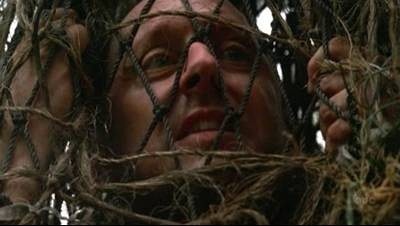
This was an extremely dangerous plan: if anything went wrong at any point, Ben would be risking his own life. But with terminal cancer and the threat of losing his grip on power hanging over him, he had little choice but to take the risk. Fortunately, the plan went smoothly, and Ben was locked up in the Swan station.
To the uninformed Others, Ben being captured by the 815 survivors was entirely an accident caused by the previous plan. So after capturing Michael, they not only demanded that he lure Jack and the others into a trap, but also ordered him to find a way to rescue Ben.
Ben waited in the Swan station for an opportunity. Thanks to years of surveillance of Kelvin, Desmond, and the others below the Swan station after the purge, he knew the station far better than Locke and the others did. At last, his chance came. One day, when Locke was the only person on duty in the Swan station, Ben managed to trigger Radzinsky’s mechanism. Locke was crushed and unable to move. But this still wasn’t the right time to kill Locke. For one thing, Ben wouldn’t have been able to explain the deed to his followers; for another, he was inside the Swan station and couldn’t be sure he could escape safely.
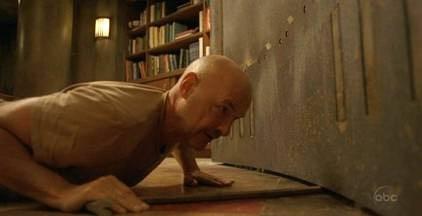
Ben’s real killing move came later—as the time to enter the numbers approached, he crawled through the ventilation shaft to the computer room and pressed the button. Once Radzinsky’s mechanism was disabled, Ben told Locke that he hadn’t pressed the button at all, and that the button was simply a joke!
This was a carefully calculated lie. Ben had obviously pressed it; he knew exactly what would happen if he didn’t. His real aim was to shake Locke’s faith, leading Locke later to stop Mr. Eko from continuing to press the button—and the ultimate result of all this was the Swan station imploding!
I think most viewers had forgotten by the end of Season 2 that although the Swan station’s implosion looked like an accidental disaster caused by Locke’s shaken faith, it was actually orchestrated entirely by Ben—a carefully planned “accident.” If Locke had really died in the implosion, Ben would by then have escaped back to his own territory, keeping himself safe while leaving no evidence that he had killed anyone. Perhaps most viewers never realized that Season 2 was hiding an attempted murder plot like this.
Ben’s plan to kill Locke ultimately failed because Desmond stepped in. It also brought a side effect to the island: at the instant of the electromagnetic storm, the island’s location was detected from the outside by Widmore and the others, leading to the threat posed later by Widmore’s mercenaries.
Ben’s earlier plan, however, had basically succeeded. The tricked-into-coming Jack cured Ben under all of Ben’s threats and inducements—and Ben was back on his feet again.
Alongside Ben’s plans to save himself and eliminate his enemies, the Others were carrying out other plans at the same time. First among them was still the leadership-development program of “starting the revolution with the children.” As I analyzed earlier, apart from the exception of Locke, the Others had always cultivated and selected their leaders from among children. So the children among the 815 survivors immediately became the Others’ targets for abduction. The children from the tail section were the first victims, followed by Walt.
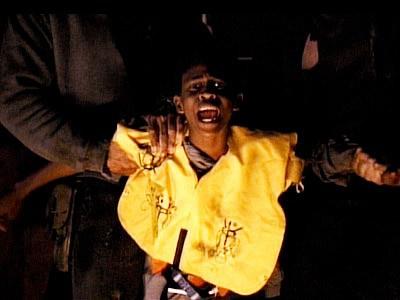
Let me add a little more about the Others’ criteria for choosing leaders. From all the clues, the children the Others selected had to possess talent. By “talent,” I mean two things: 1. a special sensitivity to certain aspects of the island; 2. supernatural abilities. The Others were especially interested in talented children of this kind. For example, as soon as Richard learned that Ben could see his mother’s ghost as a child, he began paying special attention to Ben. Likewise, when he learned that Locke had been born prematurely yet possessed an unusually strong will to live, he looked extremely interested. Their interest in Walt followed the same logic: once their observations and intelligence-gathering revealed Walt’s supernatural ability, they became intensely interested in him.
“Talent” or “ability” was what the Others valued most when selecting leaders. Under normal circumstances, the Others’ leaders should all have been extraordinary people like Locke and Walt—people with special abilities or a powerful sensitivity to the island. In Mikhail’s words, they were “perfect people without flaws.” In Richard’s words, they were people who could perform miracles.
If the leaders were all people of this kind, then among those recruited after attracting the Others’ attention, there must also have been a certain proportion of extraordinary people. Were there? Indeed there were. For example, there was Mikhail, who was remarkably difficult to kill, and Harper Stanhope, Goodwin’s wife, who could teleport just like Walt. If you remember, Ben once sent Goodwin’s wife, Harper Stanhope, to deliver a message to Juliet—and she used an ability much like Walt’s teleportation.

The black woman among the Others once told Michael, “We learned a lot from Walt.” So it is also possible that the Others studied Walt and figured out the secret of teleportation, then cultivated teleporters like Harper. Or we might infer that Harper had originally been a psychic with extraordinary abilities, one of the candidates for leadership, but was later eliminated. Since she already had the talent for supernatural abilities, after the Others studied Walt, she was able to learn Walt’s teleportation technique. From this, we might even infer that Widmore was also a psychic with supernatural abilities; we simply never learned what those abilities were.
The irony here is that Ben, the Others’ current leader, wasn’t talented at all. Ben’s strength was his ability to make up for his lack of talent with astonishing schemes, relying on sheer strategic brilliance to become the Others’ leader.
Although Ben wasn’t talented, the system of discovering and cultivating future leaders according to talent remained intact. The Others continued to cultivate and study talented children among the 815 survivors. That was why Walt was abducted and studied.
Another task of the Others was abducting pregnant women for research. From the very beginning, for instance, Ethan made abducting Claire his top priority. As I said earlier, we can’t infer whether Ben had some personal hang-up that made him so fixated on researching pregnant women. But after the health crisis and the Locke crisis emerged, research on pregnant women was no longer merely a practical problem; it had become a political one.

As we saw at the end of Season 3, even in the face of Widmore’s threat, Ben—after recovering from surgery—still insisted on making the abduction of pregnant women a top priority for the Others. This led to the 815 survivors ambushing them in the beach battle, with heavy casualties.
This is where things get a little suspicious. Even if Ben had previously been especially fixated on researching pregnant women because of some personal hang-up, with Widmore and the others threatening him, that research clearly shouldn’t have been a top priority. But once you’ve read books like The Whole Story of XXXX by tang de gang, which depict a dictator’s inner life, it’s easy to understand. For a dictator, getting a sensible policy implemented doesn’t prove much. The more nonsensical the policy that gets implemented, the more it proves how firmly the dictator holds power. So by the later years of Ben’s rule, snatching pregnant women had far more significance as a way to “establish authority” than it had practical significance. From this angle, it isn’t hard to understand why Ben was so stubborn about it.
Happening at the same time as the abductions of pregnant women was Locke finally making direct contact with the Others. In fact, the Others had begun preparing for Locke’s arrival long ago. For example, they had already sent someone off the island to abduct Locke’s father, Anthony Cooper, and bring him to the island. The process and outcome were so bizarre that Anthony Cooper thought he had already arrived in the afterlife. Ben could only swallow his anger and put up with it all.
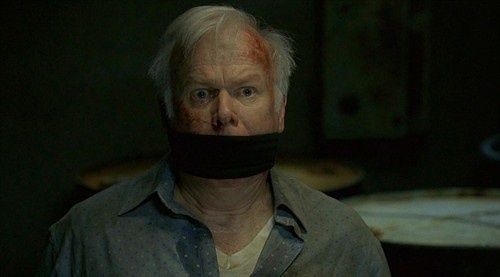
The reason the Others abducted Anthony Cooper was still connected to their rules for choosing leaders. For children who became leadership candidates while still young, the Others seemed to set no real threshold for joining. But for the exceptional candidates who only emerged as adults, they imposed an almost cruel barrier: these adult leadership candidates had to prove their loyalty to the organization by killing a close relative! I haven’t studied anthropology or sociology, so I don’t know whether rituals like this have actually existed in certain human groups. But my feeling is that the writers may have borrowed it from the initiation rites of some primitive religion or secret society.
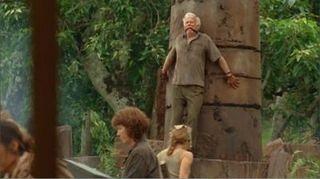
When Ben joined the Others, he too went through this ritual ordeal. During the purge, he personally killed his father, thereby passing the ritual and formally joining the Others. Now Locke faced the same test. Since Ben had failed to kill Locke in his earlier murder plot, he had to settle for the next best thing: using the ritual to block Locke’s admission. And Locke indeed couldn’t bring himself to kill his own father. Fortunately, following Richard’s hint, Locke killed by proxy, using Sawyer to kill Anthony Cooper, successfully passing the ritual and joining the Others.
After Locke joined the Others, he suggested going to see Jacob, and Ben couldn’t effectively stop him. So Ben had no choice but to take Locke to the cabin to pay homage to Jacob. Various clues in the series suggest that the cabin really had once been one of Jacob’s residences, or at least that the Others believed Jacob still lived there at the time. Only Richard knew that Jacob had another residence—the base of the statue. But Ben didn’t know that the cabin had already been occupied by the Man in Black. He must have gone to the cabin uneasily, because he wasn’t sure whether Jacob, who had always avoided him, would really be there waiting. Deep down, he probably wasn’t hoping that Jacob would be there at all. As for the rituals and taboos involved in seeing Jacob, such as not using modern equipment, he had probably heard about them from Richard. Ben knew that whole set of rituals and taboos by heart, since he had been waiting for this day of meeting Jacob for so long.
To Ben’s surprise, there really was a mysterious person in the cabin whom he couldn’t see, and that person spoke only to Locke. The mysterious person said to Locke, “Help me.” After this sudden event, Ben’s desire to kill Locke grew even stronger, because to Ben it clearly confirmed Jacob’s earlier “warning”: Jacob had abandoned him and chosen Locke as the Others’ new leader. What Ben didn’t know was that the person in the cabin was already the Man in Black, and his “favor” toward Locke was one part of the Man in Black’s plan to “find a loophole.”
The next day, Ben took Locke to see the Dharma Initiative’s purge pit and shot him. Just like the protagonists in every movie and TV show, as long as he wasn’t blown to pieces, the heroic lead was bound to come back to life on the spot. And sure enough, Locke later came back with a full health bar.

The outbreak of the Locke crisis was accompanied by the Widmore crisis. As I mentioned earlier, Ben’s plan to murder Locke—whether or not it succeeded—had one side effect: it briefly exposed the island’s location, which Widmore intercepted.
As I argued earlier, although Widmore was exiled, he was in fact still secretly acting under Jacob’s orders and had taken control of a large portion of the Dharma Initiative’s resources. But under Jacob’s policy of “noninterference,” Widmore had considerable freedom, just like Ben on the island. In fact, Ben and Widmore were free to make their own decisions in many respects, and Jacob didn’t interfere. Their actions were constrained only by a few very limited and basic “commandments”—the “rules” (see my earlier analysis of the smoke monster’s judgment function). So although the conflict between Widmore and Ben was extremely intense, Jacob consistently allowed it to continue. Widmore had never been content to play a supporting role on someone else’s stage. He hated Ben and didn’t trust him to be capable of leading the Others, so he was constantly trying to return to the island and reclaim power.
The Dharma Initiative’s legacy that Widmore received naturally included the Lamp Post station, which could calculate the “window” for entering the island. Since the Lamp Post station was later shown to be capable of helping the Oceanic Six return to the island, why didn’t Widmore use it earlier to get back, instead of having to wait for the Swan station’s implosion to pinpoint the island’s location? After all, although the Lamp Post station was managed by Ms. Hawking, who had divorced Widmore, their relationship didn’t seem so bad that Ms. Hawking would necessarily oppose him at every turn.
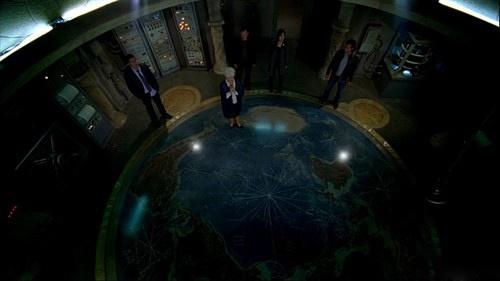
I suspect the reason is that the Lamp Post Station can only identify a “window” into the Island (as Hawking herself put it)—that is, an “opportunity” formed by a combination of spacetime coordinates, rather than an actual geographical location. And entering this window does not guarantee that you will reach the Island. So when the Oceanic Six later tried to return through the “window” indicated by the Lamp Post Station, they had to recreate the conditions surrounding the crash of Flight 815 as closely as possible. Only then could they improve their chances of getting back. In other words, entering the Island through the Lamp Post Station’s “window” is basically like winning the lottery. For people like the Oceanic Six, who had already entered the Island in a similar way, the odds of getting in again were pretty good. But for the ordinary people working for Widmore, they might walk back and forth through the window dozens of times and still never get in. So Widmore could only waste year after year until the side effects of the Swan Station implosion finally allowed him to pinpoint the Island’s location. In fact, Widmore had been using the Lamp Post Station’s window to search for the Island all along. That was why he funded all kinds of round-the-world flights and sailing races, casting a net across different locations and hoping to bump into a “window.” And it turns out he really did succeed a few times: once with Henry Gale’s hot-air balloon, and another time with Desmond, who was sailing around the world on a yacht. Unfortunately, neither case gave Widmore any useful feedback.

During this process, Widmore’s daughter Penny knew a little about both the Island’s secrets and her father’s identity—possibly quite a lot, in fact. Or perhaps it was only after Desmond disappeared during the sailing race that Penny began probing her father about its real purpose. She discovered the secrets of the Island and her father, and concluded that Desmond probably had not died at all, but had ended up on the Island. So after Desmond vanished at sea, Penny used the information she had gathered and mobilized her own resources to set up a magnetic-field monitoring station in the Arctic, hoping that one day sheer luck would lead her to the Island’s location through an abnormal magnetic reading. (This method of sitting around and waiting for the Island to reveal itself was probably something she had also learned from her old man.)
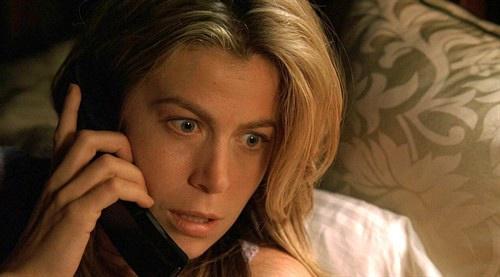
That is why, after the Swan Station imploded, both Penny and Widmore detected the Island’s location. Before Penny had time to organize a rescue force, Widmore had already assembled a small team and a group of mercenaries, whose aim was to dismantle Ben’s power, and reached the Island first. To win the trust of the people on the Island—especially since Desmond might prove useful—Widmore stole a photo of Penny and Desmond from his daughter and gave it to Naomi, so that Naomi could use it to deceive Desmond and gain the trust of the relevant people on the Island if necessary.
Something went wrong when Naomi entered the Island, but even more unexpectedly, Desmond found her in time. The reason was that Desmond had by then become a miraculous prophet. I already analyzed the truth behind Desmond’s “predictions,” so I won’t repeat it here. But it is worth noting that this introduced another hidden murder in LOST: Desmond “killed” Charlie.
Charlie’s death was of course not directly caused by Desmond, but Desmond made use of it. Charlie knew he would have to sacrifice himself, yet still decided to sneak into the Looking Glass Station because Desmond promised him that he had seen Claire and her baby board the helicopter at the end. Charlie only made up his mind after hearing this. But as we know, Claire never got on that helicopter!
Desmond’s promise was a complete lie. In reality, Desmond had only seen himself reunited with Penny; he had not seen Claire’s future at all. One obvious piece of evidence is that all of Desmond’s important predictions before this had come with images, whereas this crucial prediction—the one that directly led to Charlie’s death—never showed him a single image of Claire. So when Desmond promised Charlie that he had seen Claire escape, his tone was extremely hesitant. And when he finally witnessed Charlie’s death, the expression on his face showed not only grief, but even more guilt.
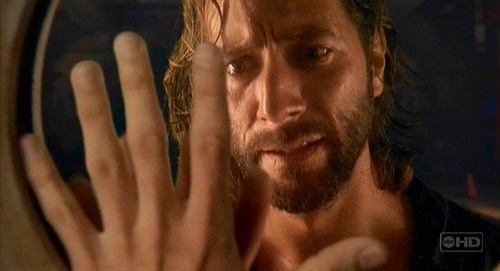
Back to Ben. Widmore’s small team and mercenaries ultimately made it to the Island without a hitch, largely dismantled Ben’s power, and killed his daughter. Meanwhile, Locke, who had seemed certain to die, came back to life at full strength and already looked like the Others’ new leader. To make matters even more humiliating, the Flight 815 survivors—who had once been completely at Ben’s mercy—also managed to fight back and foil his plan to abduct pregnant women. Ben was beaten on all three fronts at once and suddenly fell into the lowest point of his life.
What happened to him afterward became part of the Man in Black’s vast “find a loophole” scheme.
Man in Black: Smuggling Plans Through, Killing by Proxy
The Man in Black’s ultimate goal was very simple: kill Jacob, kill the candidates, break the seal, and leave the Island.
Without complete confidence that he could kill Jacob, the Man in Black started with the candidates. Ideally, he would kill them all, cut off Jacob’s options, and be done with it. But that was impossible: the candidates were protected by the seal, so he could not kill them directly, while opportunities to have someone else do the killing were few and far between. Even so, one candidate killed was one candidate less. Every time he eliminated one, Jacob had one fewer choice when it came time to choose his successor.
In Season 6, the Man in Black used a bomb and a submarine to create a trap that made the candidates “kill themselves,” successfully eliminating several of them. But this was far from the first time he had targeted the candidates.
This brings us to several other hidden murders, such as the deaths of the siblings Boone and Shannon. Their surname was carved onto the dial in the lighthouse, so they had originally been candidates too. Unfortunately, they became some of the earliest candidates to be killed by the Man in Black through someone else’s hand.

Boone’s fall from the cliff was entirely orchestrated by the Man in Black. First, let’s look at why Boone climbed up there: Locke’s legs suddenly went numb. In Locke’s own words, he had no idea why the Island had taken back what it had given him. From the day Flight 815 crashed, both Locke and Rose, who were suffering from serious illnesses, had received the Island’s blessing and recovered as if by miracle. Now the Man in Black temporarily took that blessing away from Locke in order to set Boone up for the kill. Through a dream, he guided Locke to search for Yemi’s plane and hinted that Boone would die. Locke took the bait, and on the way both his legs “coincidentally” went completely numb. Naturally, then, the person who climbed the cliff was Boone. Once Boone had been thrown down and seriously injured, Locke’s legs recovered at an extremely “convenient” moment. Poor Locke never once thought about the connection between his bizarre temporary paralysis and Boone’s death.
The next candidate killed by proxy was Shannon. Before her death, Shannon was disturbed by Walt, who had come back through time. There are several possible explanations for the Walt Shannon saw.
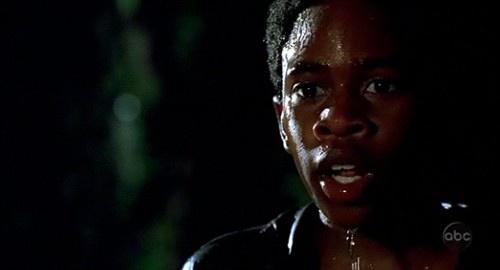
The first possibility: Walt was at that moment being held by the Others for experiments. The Walt who had traveled through time was certainly not completely free, but was in some kind of experimental state, appearing briefly before disappearing again. His appearance in front of Shannon may have been nothing more than a misunderstanding. Walt may simply have subconsciously appeared near Vincent because of his emotional bond with the dog, and Vincent happened to be in Shannon’s care at the time.
The second possibility: Shannon was simply hallucinating. Not long before this, Claire found the message bottle that had originally been on Walt and the others’ raft and told Shannon and Sun about it. So Shannon had a vague sense that Walt had fallen into the water and died. The image of Walt dripping wet was actually the Island’s energy affecting Shannon and giving physical form to her inner demons. What she saw was not the real Walt at all. “Giving inner demons physical form” can also explain several other moments in the show, such as the boar Sawyer saw, apparently possessed by the man he had accidentally killed, and the horse Kate saw—the one she had previously run over.
Whichever explanation we choose, the Man in Black lured Shannon to her death in two ways: he used Shannon’s hallucination to track her into the jungle, while also manipulating the ghosts’ whisper to keep Anna-Lucia and the others on edge. We know he could manipulate the whisper because the Island’s ghosts clearly had some connection to him. When Michael died, for example, the whisper came first, followed immediately by Christian’s appearance.
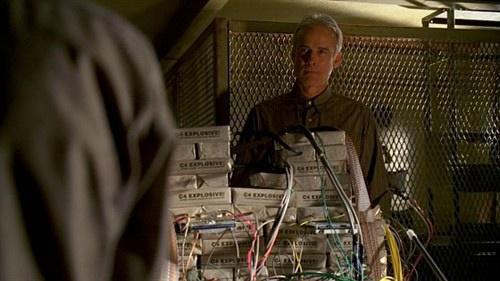
Shannon saw Walt again. Walt then disappeared in the direction of Anna-Lucia. At that same moment, Anna-Lucia, not far away, heard the whisper once more. She snapped, and mistakenly shot Shannon, who had suddenly appeared while chasing Walt. This was very clearly a process of luring someone into a fatal trap.
The next person the Man in Black took out was Mr. Eko. The Man in Black could not directly kill a candidate as long as that person remained a candidate. But once a candidate was “struck from the list,” he could do the killing himself. That was how he killed Eko. The Man in Black could take the form of people who had died off the Island but whose bodies had arrived on it, so he could transform into Eko’s brother Yemi. In Yemi’s form, he used Yemi’s voice to lure Eko into saying that he had “killed without repenting.” Once Eko said those words, he violated Jacob’s rules, just as Juliet and Ben later did, and lost his status as a candidate. That was why, the moment Eko said it, Yemi transformed into black smoke and killed him.
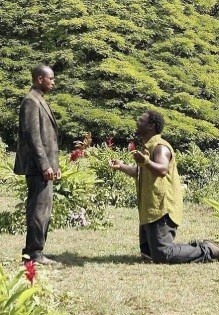
Those are a few examples of the Man in Black killing candidates. What follows was the more difficult—and truly meaningful—plan: killing Jacob.
In the stunning finale of Season 5, the Man in Black told Jacob, “One day, sooner or later, I’m going to find a loophole.” Later, after transforming into Locke, he successfully infiltrated Jacob’s home. Jacob calmly said, “Looks like you found your loophole.” The Man in Black smugly replied, “I did.” When Season 5 ended, everyone was speculating about what exactly the loophole was. We all hoped the writers would give us a clear answer in Season 6. But the Season 6 storyline diverged dramatically from viewers’ expectations, and on the surface, the writers never explained what the loophole actually was. Still, if we analyze it carefully, we can piece together the framework of the Man in Black’s “find a loophole” plan from the entire second half of LOST.
Let me start with one of my conclusions: if Jacob’s core ability as a godlike figure was manipulating fate, then what was the core ability of the Man in Black, another godlike figure?
As I argued earlier, the Man in Black and Jacob both obtained their abilities from the Island’s Heart of the Island, making them two sides of the same coin. The Man in Black’s abilities should therefore overlap with Jacob’s in some way. Jacob’s powers were highly fantastical, while the Man in Black’s—shape-shifting and the like—were much more “physical.” If Jacob’s core ability was manipulating fate, earning him the title “Lord of Fate,” then what about the Man in Black?
I believe the Man in Black’s core ability was manipulating time. He was the “Time Lord”! (Doctor Who fans, please don’t hit me.)
Fate is simply the path a person leaves behind in time. Fate and time are two sides of the same coin: the former is mysterious, while the latter is the physical foundation that carries it. Only by manipulating time could the Man in Black find a loophole in the vast web of fate Jacob had woven and bring the whole thing crashing down. What force in the world could stand against a godlike being who could manipulate fate? After thinking it over, the only force that could rival the “Lord of Fate” was the “Time Lord.”
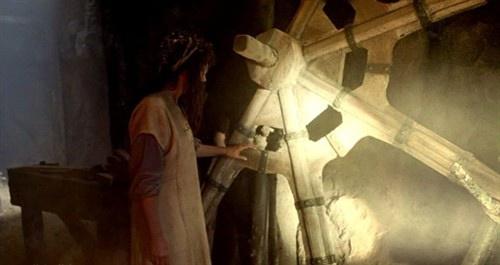
In fact, even before he became the black smoke, the Man in Black had an astonishing grasp of the Island’s spacetime properties. Using that understanding, he created the wheel system, which could manipulate the power of the Heart of the Island to twist spacetime and send people off the Island. After becoming the black smoke, he gained even more powerful control over spacetime. Only this could disrupt Jacob’s control over the candidates’ fates and create an opportunity to bypass the seal and kill Jacob.
Killing Jacob, just like killing a Candidate, requires killing by proxy. So the first essential element of the plan was someone with a motive to kill Jacob. That person was found very quickly—Ben! Ben had always resented Jacob for ignoring him, and after Jacob abandoned him, that resentment turned into hatred. It reached its peak after his daughter’s death. Ben didn’t realize it himself at the time, but with a little prompting, the anger over losing his daughter could easily be redirected at Jacob.
Ben was in. The first element was in place.
The second element in killing Jacob was an opportunity to get close to him. Jacob was no longer a loner like he had been years ago, when Richard could simply charge in and kill him. His followers had now formed a half-military, half-religious organization, with Jacob hiding behind it. Almost no one could approach him easily. So Ben alone wasn’t enough; the Man in Black also had to create an opportunity for Ben to get close to Jacob. And he found the answer to that problem too—John Locke!
Within days of Locke arriving on the Island, he encountered the Smoke (the Man in Black). At the time, the Man in Black scanned Locke’s memories, just as he later did to Eko, and instantly learned everything about Locke’s past. The Smoke emitted a white light during the scan, and to Locke, the whole scene looked exactly like a vision of holy light.

When the scan was over, the Smoke’s judgment was spot-on—Locke would very likely become the next leader of the Others. The second essential element had practically delivered itself. All the Man in Black had to do next was replace Locke, then lead Ben to Jacob as the leader.
The difficult part was figuring out how to replace Locke.
The Man in Black could transform into other people, but the conditions were brutally restrictive: the person had to have died off the Island, while their body had to be on the Island! So far, the Man in Black could transform into only two people—Christian and Yemi, both of whom died off the Island and had their bodies brought there.

So the Man in Black’s problem became: how to get Locke off the Island, have him killed off the Island, and then get Locke’s body back to the Island!
The Man in Black couldn’t leave the Island, and Locke had to die off it, so killing by proxy wasn’t reliable. The highest form of killing is killing the will to live, and the best method was to create the right circumstances so that Locke would kill himself off the Island!
To make someone resolve to commit suicide, several conditions are needed. First, drive him into a desperate situation. Second, make him believe that suicide is the only way out. Without both, he couldn’t develop the motive or the courage to do it. So the Man in Black’s job was to make Locke satisfy both conditions.
To achieve the first, he needed to use his astonishing ability to manipulate time. For the second, things were actually simple—impersonate Jacob, because Locke would definitely listen to anything Jacob said.
When Ben took Locke to the cabin to see Jacob, the Man in Black, who had been watching from the shadows, slipped inside and said to Locke, “Help me.” On one hand, this made Locke more convinced that he was the chosen one selected by the Island; on the other, it deepened Ben’s hatred of Jacob.
The arrival of Widmore’s army created the perfect opportunity to put Locke in a desperate situation. To save the Island from Widmore’s threat, Locke went to the cabin again to seek “Jacob’s” help. This time, the Man in Black appeared openly in Christian’s form. He denied being Jacob, but claimed to speak on Jacob’s behalf. He told Locke that the way to save the Island was to move it.
Moving the Island with the wheel really could save it, but that wasn’t why the Man in Black gave Locke those instructions. His real purpose was to use the wheel to send Locke off the Island!
But that still wasn’t enough. The Man in Black also had to create a crisis that would leave Locke desperate. That crisis was the later time-jumping episode.
The Man in Black knew Locke didn’t understand the details of moving the Island, but deliberately withheld that information, leaving the mechanics to Ben. He calculated that Ben was being defeated on all three fronts and had every reason to leave the center of the storm—plus a motive to leave the Island and take revenge on Widmore. So Ben was bound to be the one who turned the wheel. Ben leaving the Island first had another advantage: the Man in Black had calculated that, once off the Island, Ben would still have a motive to kill Locke. That gave Locke’s death double insurance.
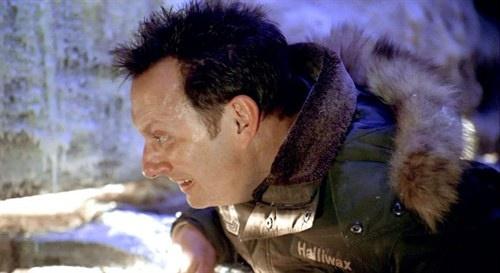
The Man in Black had tampered with the wheel long beforehand. When Ben turned it, Ben was transported off the Island and the Island moved, but the wheel jammed, causing the time-jumping episode. Except for the Island’s original inhabitants, everyone else on the Island began jumping repeatedly through time. When Locke jumped to a point three years later, Richard suddenly appeared, treated his injury, and told him that the only way to save the Island was to bring back everyone who had left it—and to bring them back, Locke had to die.
Those words from Richard were taught to him by the Man in Black, who by then had taken Locke’s form. Strictly speaking, on the timeline this happened in the future, after Locke had been successfully killed. But within the logic of the Man in Black’s plan, it happened early on, while Locke was still being lured into the trap. I said in an earlier post that any movie involving time travel ends up with a timeline that’s basically an unreadable mess. For that discussion, see my post on The Chronicles of Narnia; I won’t go into it here.
Let’s consider the logic rather than strict physical time. Logically, once the jumping began, the Man in Black first passed those words to Locke through Richard, making him believe that saving the Island required bringing back all the Candidates who had left. That was a complete lie. The truth was that once Locke later turned the jammed wheel and left the Island, the Islanders’ time-jumping stopped, and the so-called “crisis” was already resolved. The reason the Man in Black told Locke to bring back the Candidates was that, after killing Jacob, he intended to wipe out the remaining Candidates as well.
The claim that Locke had to die in order to bring the Candidates back was an even bigger lie. Locke did have to die, but not to summon the Candidates back—to give the Man in Black the chance to replace him.
Richard’s message alone wasn’t enough. The belief that “Locke must die” had to be confirmed and reinforced one more time. So when Locke finally fell to the bottom of a well from some unknown era, the Man in Black appeared again! Note that although we don’t know when this was, it definitely wasn’t the present day—there was no ice. So the Man in Black’s showing up at such a precise moment can only mean one of two things: either he had been secretly jumping through time alongside them all along, or he could, to some extent, transcend time and appear at any point he chose. In any case, the Man in Black, appearing “by coincidence” at exactly that time and place, once again told Locke that he should bring everyone back to the Island. And when Locke mentioned that Richard had said he would die, the Man in Black replied, “Then I guess that’s what they call sacrifice.”
Locke then turned the wheel and left the Island. Later, just as the Man in Black had planned, he died. Even if Ben hadn’t strangled him, he would have died by suicide.
The next problem was that someone had to make sure all the Candidates, along with Locke’s body, were brought back to the Island. If Locke’s body remained off the Island, the whole plan above would be meaningless. The Candidates who had left also had to return, so the Man in Black could wipe them all out.
So the Man in Black needed a leading figure with both the ability to inspire people and a sense of responsibility—someone who, after everything above had happened, would gather the Candidates and bring Locke’s body back.
Ben had a motive to bring the Candidates and Locke’s body back. More than anyone, he wanted to return to the Island and regain power. But he had absolutely no influence over the other Candidates; putting Ben forward would only backfire. The Man in Black therefore needed a dependable, leader-like figure to help him complete this mission.
That person had actually been chosen from the day Flight 815 crashed. After the crash, the Man in Black quickly realized that Jack, Christian’s son—the man whose appearance he had borrowed—was the ideal candidate.
A few days after the crash, the survivors of Flight 815 were desperate for water. The Man in Black appeared to Jack in Christian’s form. Jack followed the image of his father to a partly open cave with water, found his father’s coffin, and discovered that it was empty. Never mind how likely it was for a pile of plane debris and luggage to fall into a partly open cave like that. In Season Six, the Man in Black said that he had taken the form of Jack’s father in order to lead Jack to the water, but his purpose obviously wasn’t that simple.
I think the more important reason the Man in Black took Christian’s form and led Jack there was to make Jack see his father’s empty coffin. The body had been taken away and hidden by the Man in Black himself. The point was to make Jack vaguely feel that his father wasn’t dead.

Jack was in exactly the right state for this. After failing to save anyone on the beach, he had begun blaming himself and wondering whether he was really cut out to be the leader. Christian’s death had also resulted from a decision Jack made, so Jack not only blamed himself for his father’s death—he felt it proved his father’s judgment from childhood right: “You’re not a hero.” Jack had stubbornly fought that judgment, only to cause his father’s death in the process. It became his greatest mistake. At that moment, Jack was in the worst mental crisis of his life, brought on by his father’s death. The best way to pull him out of that crisis and restore his belief that he could lead was to erase his sense of guilt—to make him think his father had never died at all. When Jack saw the coffin was empty, he became unbelievably angry and smashed it to pieces. Most people would have been shocked or frightened in that situation, so why was Jack so angry? Because beyond his surprise, what mattered more was the thought: “You bastard. You actually faked your death just to prove I’m not a hero? Screw you!” As unbelievable as it was that his father might still be alive, deep down Jack had basically begun to believe, vaguely, that his father wasn’t quite dead yet.
After smashing the coffin, Jack found himself again and resumed his role as leader. He returned to the beach and gave the speech that would later be repeatedly revisited and quoted: “If we can’t live together, we’re going to die alone.”
His greatest burden had been removed by that bizarre empty coffin: choosing to be a hero hadn’t killed his father, and he really was cut out to lead. Or perhaps, at a deeper psychological level, it was an act of defiance after anger: “You’re trying to prove I’m not a leader? Fine. I’ll lead just to spite you!”
Whatever the psychology, the result of the empty coffin was that Jack temporarily regained his confidence as a leader.
And with that, all the Man in Black needed was for one of the Candidates who later left the Island to carry a deep sense of responsibility as a leader. The second element of his plan was now complete—Locke’s body was bound to return to the Island.

By this point, Locke and Jack were both in the game, and the second element was complete—Locke would leave the Island, die off it, and then be brought back by Jack.
Once Jack brought Locke back to the Island, the Man in Black successfully took Locke’s form and became the Others’ new leader. With that identity, he could force Richard to take him to Jacob. On the way, the Man in Black first appeared to Ben in his Smoke form, forgave Ben’s sins, and then ordered him to obey Locke. Shocked, Ben naturally followed “Locke’s” every command. Then, appearing as Locke, the Man in Black stirred up Ben’s hatred of Jacob once again.

By this point, every element needed to kill Jacob was in place!
As Ben brought the knife down, the thousand-year-old monster Jacob breathed his last.
The so-called loophole was not some simple gap that could be explained in a sentence or two. It was an opening created by all the elements above locking together, one link after another.
The Man in Black said to Jacob, “You can’t imagine what I’ve done to get here.”—if my chain of reasoning above is sound, then he really wasn’t exaggerating.
Jacob: Rule by Doing Nothing, Win with One Strike
Finally, let’s talk about Jacob.
What had Jacob been doing during all those days after Flight 815 crashed?
He had, basically, well, um, pretty much, done, nothing!
Jacob had already completed his arrangements for the succession plan—that is, choosing the Candidates and manipulating their fates—before Flight 815 ever crashed. After that, all he really had to do was wait for the few people he valued most to decide to accept their fate. As for the Candidates’ transformations, Jacob mainly followed a policy of noninterference and let them develop on their own. Most of the time, Jacob simply ruled by doing nothing.
Jacob directly intervened at only a handful of points. Ben’s illness and Jack’s illness, for example. But as I analyzed earlier, in both cases the warning mattered far more than the actual effect. Jacob wasn’t particularly concerned with the outcome, because even if his intervention failed, it was nowhere near enough to derail his succession plan.
Having Ilana bring Sayid back counts as one of Jacob’s more obvious interventions. Since the final succession was difficult to predict, Jacob’s goal of calling all the Candidates back happened to coincide with the Man in Black’s. In this matter, Jacob and the Man in Black indirectly cooperated once.
Even when it came to the Man in Black’s plan to find a loophole, Jacob seemed to know exactly what was happening and simply let it go. This may have been his noninterference principle at work, or it may have come from some unconscious guilt toward the Man in Black. After all, the Man in Black’s current predicament was something Jacob himself had created. Unconsciously, Jacob felt both jealousy and remorse toward him. I’ll analyze that further below.
Back to the Candidates. Did Jacob treat all the Candidates equally, without distinction? Clearly not. Jacob had his preferred successors in mind, and perhaps they had been decided very early on: Jack and Hurley. The fact that Jack and Hurley later became new Jacobs was no accident; it was what Jacob had wanted all along.
Before the Man in Black attacked the Temple, Jacob lured only Hurley and Jack out of the Temple, leaving the other Candidates behind. Later, he told Hurley, “I couldn’t risk not bringing you here. I wanted to get you and Jack as far away from the Temple as possible.” Clearly, among the remaining Candidates, Jacob cared most about those two. As it turned out, this “intervention”—a violation of his noninterference policy—was Jacob’s winning move.
Why Jack first? That has to do with Jacob’s principles for choosing a successor. In fact, this principle was one of Jacob’s own deepest hang-ups. What was the greatest shadow hanging over Jacob? Throughout his childhood, there was always a younger brother whose talent far surpassed his own, and who was therefore valued far more than Jacob himself.
Jacob’s childhood was overshadowed by his brother’s “talent.” In terms of talent, Jacob could never compete with the Man in Black. This was the hang-up that made Jacob feel most inferior.
And yet, in the end, Jacob—the one with “responsibility”—rather than the Man in Black—the one with “talent”—became the master of the Island. Whether consciously or unconsciously, from that point on, “talent” was placed beneath “responsibility.”
People with “talent” are fit only to be the chief among my followers. Only people with “responsibility” can inherit my throne.
This was Jacob’s unconscious revenge against the Man in Black.
The most talented Locke may never have been Jacob’s first-choice successor. Perhaps Jacob had always believed that the position best suited to Locke was the one beneath the future successor. Besides his own secret, undisclosed successor list, Jacob also had another list that he gave to The Others. It contained talented people, including Candidates who might become the leader of The Others. When Danny, one of The Others who was killed by Juliet, was hunting Kate and the others, he said, “Jack isn’t even on Jacob’s list.” What he didn’t know was that this was a different list altogether.
Jack had no special talent, but he had responsibility. Jacob knew that once the time was right, Jack was the person most likely to become an Island leader willing to sacrifice himself for the Island.
Why Hurley next?
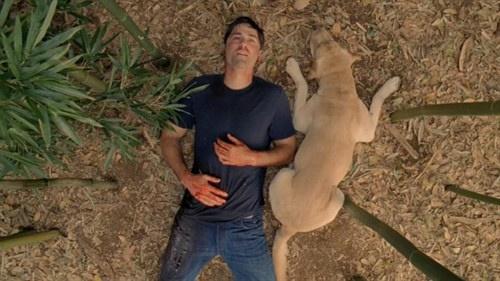
Because Jacob had long since anticipated that Jack’s succession would not go smoothly. Jack took over after Jacob’s death, at the Island’s most vulnerable moment. The outcome of Jack’s battle with the Man in Black was impossible to predict, so in Jacob’s plan, perhaps Jack was always meant to be a sacrificial successor, someone used to go down with the Man in Black. After Jack used his own life to carry the Island through the crisis, a true Island leader would formally take over. That person was Hurley.
Hurley had Jack’s sense of responsibility—he was the most determined of the Oceanic Six to return to the Island—and greater talent than Locke, such as talking to the dead and seeing the cabin. But unlike Locke, he wasn’t blindly credulous. In fact, Hurley was the Island’s ideal choice.
Perhaps choosing both Jack and Hurley as successors reflected the contradiction deep inside Jacob. Choosing Jack instead of Locke came from his unconscious jealousy of the Man in Black’s talent, while choosing Hurley in the end represented an unconscious reconciliation with the Man in Black. Ultimately, someone who combined the strengths of both brothers—talent and responsibility—became the Island’s new master.
I suppose that even an Island master who exists like a god can’t avoid entering the purgatory of the afterlife in the end. If Jacob and the Man in Black met there, they probably ought to shake hands and make peace.
The End
Before Charlie died, he wrote down several things he was proudest of in his life. He called them his Greatest Hits. Whether or not you’re satisfied with this long-winded analysis of LOST, as far as I’m concerned, these are undoubtedly my Greatest Hits from all these years.
That’s where I’ll leave it. The affairs of the past can rest for now. It’s time to let that golden light pour down and for us to “keep moving forward.”
See you in another life!
The End.
Leave a Reply