There was a piece of news recently: on Mother’s Day, Tsinghua University Vegetarian Association put up a series of posters around campus with the theme “She’s a Mom Too,” and it sparked a lot of controversy.
The pro-vegetarian side of the controversy was basically promoting this message: the animals we eat are fathers and mothers too. Put yourself in their place – we should feel empathy and compassion for them. So, dear meat-eaters, perhaps you should give up meat and go vegetarian.
The opposing side focused its fire on the overgeneralization of this empathy (with, of course, a fair amount of teasing): You say cows are mothers to baby cows, and chickens are mothers to baby chickens. Fair enough – but as it happens, the roundworm in your stomach is also a mother to baby roundworms, and the mosquito sucking your blood is also a mother to baby mosquitoes. When it comes to these mothers, are you going to kill them or not?
This controversy does a pretty good job of revealing the contradictions and confusion in our moral views about animals.
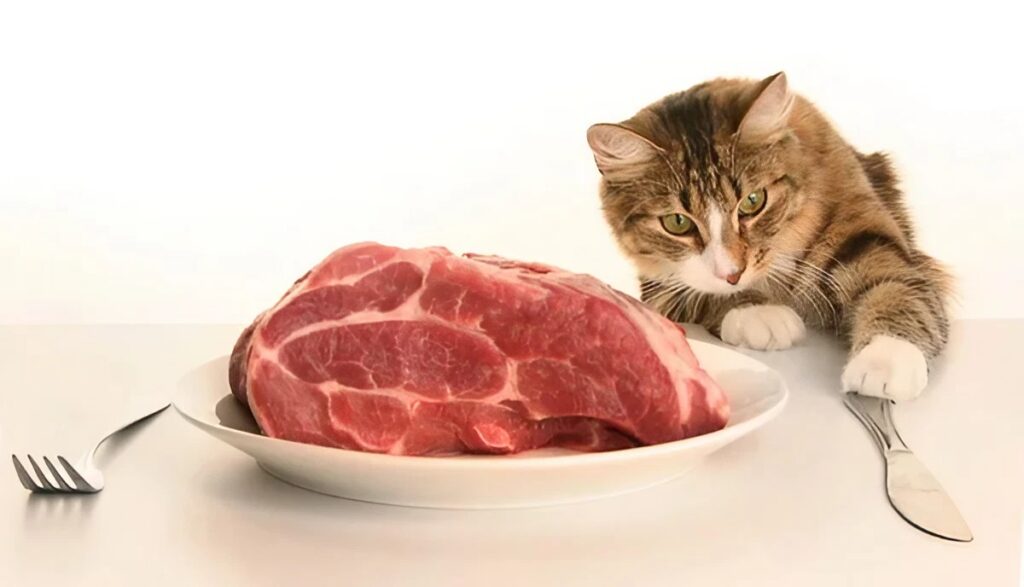
Humanity’s moral attitude toward animals is, honestly, a tangled mess, full of strange self-contradictions. What exactly are animals to us? Sometimes they’re companions, sometimes tools, and sometimes food. Why do we treat dogs as our most loyal companions and get a peak experience from petting cats, yet also feel perfectly at ease wolfing down a plate of steak?
Psychologist Hal Herzog offers some interesting thoughts on this in his book Some We Love, Some We Hate, Some We Eat: Why It’s So Hard to Think Straight About Animals. (The discussion below also draws on Steven Pinker’s account in The Better Angels of Our Nature.)
The first major source of this confusion is, of course, the contradiction between caring about animal rights and craving meat. On the one hand, you feel sorry for animals raised to be eaten. On the other hand, are you really going to give up poached chicken, charcoal-grilled pig’s feet, beef strips with green peppers, fish with pickled cabbage, and thirteen-spice crayfish just because they’re pitiful? For the overwhelming majority of people, giving up all that is simply impossible, okay? The pleasure of eating meat – and of all the social activities that come with it – undoubtedly crushes that tiny twinge of guilt about killing animals.
The confusion also comes from another, deeper contradiction: many of our interactions with animals are zero-sum games.
“Animals eat our houses and crops, and sometimes even our children. They can make us itch and bleed. They carry bacteria and viruses that are harmful or even fatal to humans. They kill one another, including animals on the brink of extinction that we hope to preserve. Without animals in experiments, medicine would remain stuck at its current level, and billions of living and unborn people would suffer illness, pain, and death for the sake of rats.” (From Pinker’s The Better Angels of Our Nature.)
Extreme animal-rights activists will denounce this view. They’ll say: All life is equal – why should animals have to die for the benefit of humanity? But how many people can they really persuade to sincerely embrace this “great equality”?
Actually, we don’t even need to invoke lofty principles. We only have to think about our everyday diet: at this stage, cheap, high-quality protein comes almost unavoidably from animal products. If we stop eating animals, we immediately take a financial hit. That is a zero-sum game whose pain ordinary people will feel right away.
Pinker also mentions another quandary in The Better Angels of Our Nature:
“Humans are rational and moral agents, but at the same time biological organisms that are part of a cruel nature. … Why don’t I feel much sadness when I see a ferocious brown bear hunting an elk? Why don’t I feel a moral urgency to hurry up and prepare some elk-flavored pastries made entirely from soybeans, then lure the brown bear away from the elk? Should we arrange for carnivorous species to gradually go extinct, or use genetic engineering to turn them into herbivores? … If the natural carnivory of other species can be accepted, why can’t the natural carnivory of humans be accepted?” – This, clearly, is another deep contradiction.
In the end, because these contradictions and confusion exist, the road toward improving animal rights is bound to be more tortuous than the road toward improving human rights. There is, however, one trend that currently seems fairly certain: more and more people are trying to reduce the suffering of the animals we eat. Putting that into practice may be the most concrete direction for the animal-protection movement at this stage.
References:
1. Hal Herzog (2012). Some We Love, Some We Hate, Some We Eat: Why It’s So Hard to Think Straight About Animals: The Moral Dilemmas Between Humans and Animals.
2. Steven Pinker (2015). The Better Angels of Our Nature. CITIC Press.
3. How should we view the “She’s a Mom Too” posters released by Tsinghua University’s student Vegetarian Association on Mother’s Day? www.zhihu.com/question/…
p.s.:
Pinker’s quandary is actually the reason I don’t much like the values of Zootopia.
Notes
- This short-essay series, “New Findings in Psychology,” was written to accompany the related content of Zhichao Wei: New Findings in Psychology. It was published on the now-closed platform Fantuan. The original link no longer exists.
Leave a Reply