A fair amount of the memory people carry around is made up of false elements, constructed deliberately or otherwise. For most psychologically healthy people, this construction tends to work in the direction of boosting self-esteem.
For example, most people can recall more positive personal events than negative ones. Without realizing it, we also revise some details of our memories to support a positive self-image—and that, of course, is a memory distortion that benefits mental health.
But in people with persistent anxiety (also called trait anxiety), this ability to distort memories seems to go awry. They instead selectively recall more negative personal events, undermining their confidence and making their anxiety worse.
From this perspective, it is natural to wonder: if we could implant more positive memories about themselves in the minds of people with anxiety, could that improve their anxiety symptoms?
A brand-new study explored whether this idea might work. The Research Digest website reported on the study (see References).
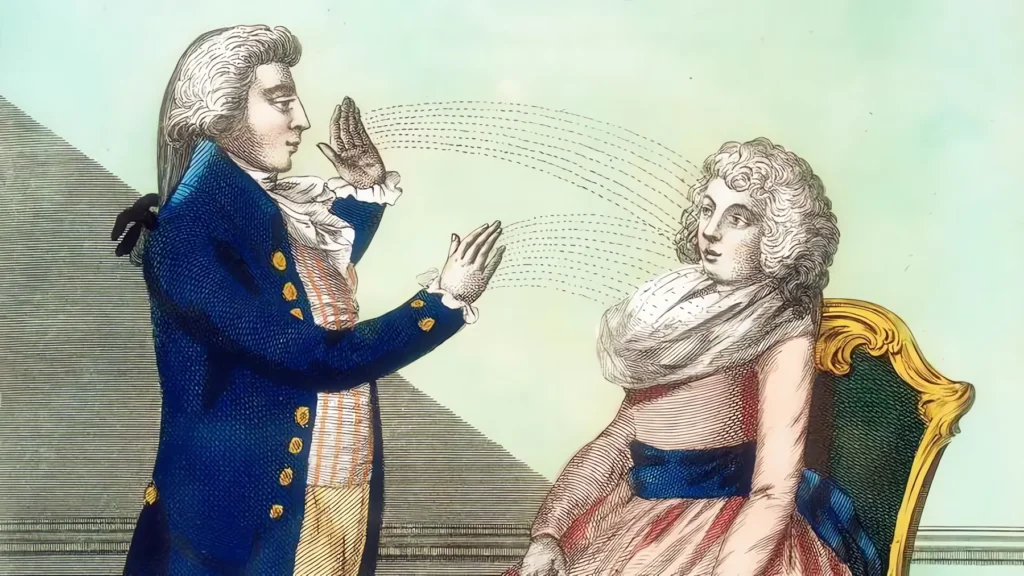
So how do you implant positive false memories? The researchers thought of a method that, in our field of psychology, is basically the ultimate black technology—hypnosis.
The participants were first assessed for their anxiety levels. They were then asked to recall three negative autobiographical memories (memories of their own experiences).
Next, the researchers set up four experimental conditions.
Group 1—no hypnosis, with memory modification: guided by the researchers, participants tried to reconstruct these negative autobiographical memories as more positive memories—in other words, positive false memories were implanted while they were fully awake. Once a week, one memory event at a time.
Group 2—hypnosis, with memory modification: participants did the same thing as the previous group, except that they reconstructed positive false memories while hypnotized.
Group 3—hypnosis, without memory modification: participants listened to relaxing nature sounds while hypnotized.
Group 4—no hypnosis, without memory modification (the control group): participants listened to nature sounds while awake, with no hypnosis and no attempt to modify their memories.
All participants had their anxiety levels assessed again a few days after the intervention and four months later.
The results:
Groups 1 (memory modification while awake) and 4 (the control group) showed no change in anxiety levels.
Group 3 (hypnosis alone, without memory modification) showed lower anxiety in the test conducted a few days after the intervention. But four months later, their anxiety had rebounded to a level even higher than at the start.
Only Group 2, whose memories were modified while they were hypnotized, showed a significant decrease in anxiety—and the improvement lasted: four months later, their anxiety levels were still low. Based on interview feedback, they also subjectively felt that their self-esteem had risen.
Follow-up interviews also found that most participants in Group 1 (memory modification while awake) could tell their real memories apart from the positive false memories they had constructed. Participants in Group 2 (memory modification under hypnosis), however, had difficulty telling whether their constructed memories were real or false.
The findings suggest that using implanted positive false memories to improve anxiety may indeed be possible. Of course, this was only a preliminary study, so its conclusions have fairly serious limitations. For example, the participants’ anxiety levels did not reach the clinical threshold for a diagnosis of an anxiety disorder. Whether these findings can be generalized to people who truly have an anxiety disorder remains unknown.
References:
1.Nourkova, V. V., & Vasilenko, D. A. (2017). On the advantage of autobiographical memory pliability: implantation of positive self-defining memories reduces trait anxiety. Memory, 1-13.
2.Christian Jarrett. Reducing trait anxiety by implanting false positive memories.
Note
- The articles in this “Psychology New Knowledge Mini-Course” series were short popular-science pieces and informal essays written at the time to accompany the Zhichao Wei: Psychology New Knowledge Course project. They were published on the now-shuttered Fantu platform, and the original link no longer exists.
Leave a Reply