If you had to make a blind guess about whether a movie character was a good guy or a bad guy, how would you do it?
Just check whether they have a skin disease. No skin disease? Good guy. Skin disease? Bad guy. If you guess that way, you’ll basically never be wrong.
In 2003, the American Film Institute (AFI) selected the 100 greatest screen characters in movie history: 50 heroes and 50 villains. Many classic characters we know well made the list. The heroes included James Bond, Superman, and Ellen Ripley, the heroine of Alien; the villains included Norman Bates, the psychotic killer in Psycho, Nurse Ratched from One Flew Over the Cuckoo’s Nest, and the Alien from Alien, among others.
More than a decade after the list was published, several medical researchers at the University of Texas suddenly became interested in it for reasons known only to themselves. They solemnly analyzed the skin conditions of all the characters on the list, and found that the villains were significantly more likely to have skin diseases than the heroes.
Most of the heroes on the list had smooth skin and healthy complexions, while the villains’ skin conditions were, well, hard to look at. Take the Evil Queen, Snow White’s wicked stepmother: she clearly has swelling and hyperpigmentation around her eyes, as well as hypertrophic rosacea,
long warts growing on the tip of her nose, malocclusion, and a whole pile of other dermatological conditions. Or take Darth Vader: once he removes his mask, the face he reveals is practically a dermatology teaching specimen with every facial skin disease in the book.
But among the various skin diseases listed in that paper, the one that interested me most was hair loss. (Hair loss also counts as a skin disease in the broad sense, so the paper discussed these classic characters’ baldness too.)
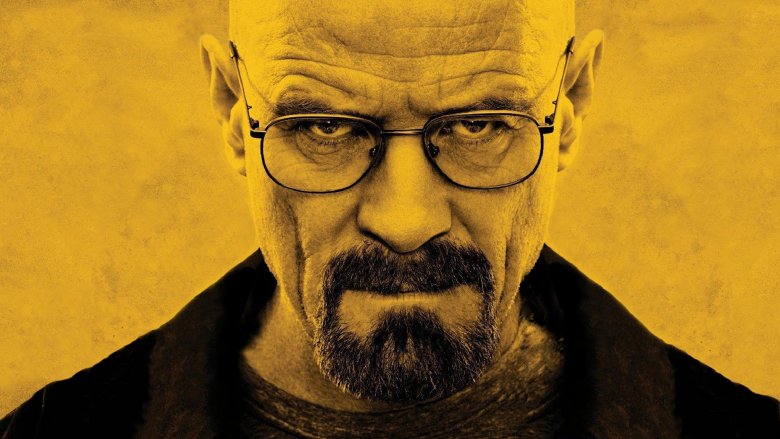
Nine out of ten bald men are villains
In AFI’s list, every one of the top ten heroes had a full head of hair—from Atticus Finch in To Kill a Mockingbird, to Indiana Jones in Raiders of the Lost Ark, to Lawrence of Arabia. The hair density on all their heads was quite impressive.
But among the top ten villains, three were bald: Dr. Hannibal Lecter, who enjoys eating human brains, in The Silence of the Lambs; the greedy capitalist Mr. Potter in It’s a Wonderful Life (both of these men are balding); and Darth Vader in Star Wars: The Empire Strikes Back (this one is completely bald).
Outside the list, a little reflection also reveals that the bald characters who make the biggest impression in movies and TV are mostly villains. In The Incredible Hulk, the Hulk has a magnificent head of hair, while his opponent, the Abomination, is a bald monster. In Batman v Superman: Dawn of Justice, the three hair-bearing heroes—Batman, Superman, and Wonder Woman—team up to beat up the hairless Doomsday. Then they even shave the bald head of the villain who originally had hair: Lex Luthor.
Actually, the tradition of bad guys having their heads shine can be called truly ancient—it goes all the way back to the silent-film era. The moment movies were born, the phenomenon was already there. Take the silent film Nosferatu, which blazed the trail for vampire movies in 1921: Count Nosferatu himself was an ugly bald guy. (The various gorgeous male vampires on screen today have really let this proud tradition down spectacularly.)
Vampires may have gotten prettier, but the tradition of bad guys having shiny bald heads has continued uninterrupted from that time to this day.
From Voldemort in Harry Potter to Thanos in The Avengers, from the devilish instructor Fletcher in Whiplash to Zhang Dongsheng in The Bad Kids, movies and TV are full of them. You could say that nine out of ten bald men are villains.
I think the reason directors and screenwriters so often arrange things this way is that they have discovered how well the “nine out of ten bald men are villains” stereotype matches certain audience expectations. In other words, most viewers may already buy into the impression that bald men look more sinister.
So here’s the question: why do bald characters look more evil?
That paper by the medical researchers didn’t analyze this point. My guess is that people’s acceptance of the “nine out of ten bald men are villains” idea probably comes from two reasons, one old and one new.
The ancient reason behind “nine out of ten bald men are villains”: old men aren’t likable
The first reason is simple and direct: “bald” equals “old man.” And old men are the most natural villains in movies.
In real life, middle-aged and older men are the most likely to go bald. Baldness can practically be seen as the symbol and calling card of the old man, and the bald villains on screen are, of course, all male characters. The overwhelming majority of commercial movies are aimed at young people, and the positive characters in their stories are mostly young people too. Young people fighting older people who hold power and sit above everyone else is one of the oldest themes in human society, so naturally it is also one of the most unquestioned forms of good-versus-evil conflict in movie stories.
So, my guess is that bald villains fit young viewers’ rebellious feelings toward old men rather well. That is probably the first reason behind the “nine out of ten bald men are villains” stereotype.
Conversely, if an older character is a good guy, then to make that character likable, directors and screenwriters would do well to give the old man a little more hair.
Lots of movies have what you might call a “mentor” character: a wise old man who helps the protagonist grow. Almost without exception, mentors have thick white hair. Gandalf in The Lord of the Rings, Obi-Wan in Star Wars, and Dumbledore in Harry Potter all have this look. Can you imagine Dumbledore going bald?
Actually, you can imagine it. Isn’t that just Professor X in X-Men?
Professor X is one of the rare bald mentors in movies. But interestingly, many of the stories in X-Men happen precisely because he wasn’t good enough at being a mentor. General Stryker’s son in X2 and the Dark Phoenix in X-Men: The Last Stand, for example, are both the professor’s wayward students. Professor X could be said to have been a spectacular failure as a mentor.
Apparently, a mentor’s professional competence may be directly proportional to the amount of hair on his head.
The newer reason behind “nine out of ten bald men are villains”: the myth of excess male hormones
People may also accept the “nine out of ten bald men are villains” idea for a somewhat newer reason. It is connected to a widely circulated scientific myth: that a receding hairline is caused by an excess of male hormones.
Hair loss in middle-aged and older men is indeed related to a type of male hormone. Dihydrotestosterone (DHT), a metabolite of the male hormone testosterone, can stop hair follicles from growing, and this is the main reason middle-aged and older men develop receding hairlines. If we don’t look too closely at the details, it is easy to reason backward from this conclusion: a receding hairline must be caused by excessive testosterone secretion. People also vaguely know that men with excess male hormones have two characteristics: one, they are very horny; two, they are highly aggressive.
Old men aren’t easy to like in the first place. Add on those terrible associations attached to “excess male hormones,” and you get an “aggressive old pervert.” Isn’t that exactly the image of an evil villain? A bald old pervert probably makes you think of the same person it makes me think of: Mr. Elvis Tsui in certain indescribable movies.
But in fact, the idea that “a receding hairline is caused by excess male hormones” is entirely a popular misinterpretation. Men with receding hairlines don’t actually have higher testosterone levels than other men; they simply have more receptors for dihydrotestosterone. In plain English, they go bald simply because their hair follicles are more sensitive to DHT. Bald men just happen to have a body that is sensitive to DHT. Their baldness has no direct connection to their sexual preferences or personality.
So bald men are actually victims of the mistaken impression that “baldness equals strong sex drive and aggression.” This mistaken impression may also be the second reason behind the “nine out of ten bald men are villains” pattern on screen.
I’m bald, and I’ve gotten stronger
Still, some movie characters are immune to this mistaken impression. In action movies, which already emphasize male aggression and foreground masculine hormones, a bald male lead becomes much easier to accept. On the contrary, bald action stars may even exploit this mistaken impression, using baldness to strengthen their image as powerful, formidable men.
That is probably why bald men are so common among action stars. Jason Statham, Dwayne Johnson, Vin Diesel, Bruce Willis—more than half of the toughest fighters on screen are bald.
Teacher Saitama’s line, “I’m bald, and I’ve gotten stronger,” is truly a profound truth.
Let’s leave the subject of “nine out of ten bald men are villains” here for now. I’ve put the scientific information and references mentioned above in the text description below the video, so anyone who wants to learn more can look them up. I’m Zhichao Wei, dedicated to using psychology to hitchhike across the entire world. See you next time.
References
-
AFI’s 100 Years…100 Heroes & Villains
See the Wikipedia entry “AFI’s 100 Years…100 Heroes & Villains.”
Interestingly, one character appeared on both the heroes’ and villains’ lists: the T-800 Terminator played by Arnold Schwarzenegger. (Strictly speaking, the evil T-800 in The Terminator and the good T-800 in Terminator 2 are two different characters.)
-
The study on “villains being more likely to have skin diseases”
Croley, J. A., Reese, V., & Wagner, R. F. (2017). Dermatologic features of classic movie villains: The face of evil. Jama Dermatology, 153(6), 559-564.
-
Receding hairlines
For more scientific details and historical gossip about male hair loss, see the section “Receding Hairlines” in Yue Yuan’s Life Trivia: Walking Through the Maze of the Human Body.
Leave a Reply