
Let's see how the folk dream-control gurus play around.
This is the final installment of the lucid-dreaming series. I’ll be talking about the dream-control experience compiled by lucid-dreaming enthusiasts out there in the wild.
Most of the material comes from Dream Controller, published by Central Compilation & Translation Press in 2015. Its author is known as Dream-Chasing Ant, supposedly China’s number-one lucid dreamer, and is quite famous on various dream-control forums.

Let me make this clear first: we emphatically do not recommend this book.
The book is merely a collection of practical summaries from lucid-dreaming enthusiasts, and it lacks scientific rigor.
Judging from the prose, and putting it bluntly, the author has a rather shaky grasp of science. For instance, the book occasionally mentions prophets and parapsychology gurus from around the world. Here, they all show up as lucid-dreaming masters, when in reality they are little more than charlatans whose claims have been debunked countless times in even halfway reliable sources.
I believe the dream-control techniques the author describes certainly work for him. But how broadly applicable they are is another question entirely.
So just take what follows as a story. If you don’t treat it as science, it might even give you a glimpse into a whole new world.
All right, let’s get into the more interesting parts of the book.
According to the framework proposed in the book, a complete lucid dream has four stages: recognizing the dream, testing the dream, controlling the dream, and stabilizing the dream.
1. Recognizing the Dream
The first stage—recognizing the dream—is becoming aware, while dreaming, of the thought, “Am I dreaming?” This was the focus of our last episode. Dream Controller goes into many details we didn’t cover last time.
The book divides dream-recognition methods into two broad categories: recognizing the dream from within the dream and lucid entering.
Recognizing the Dream from Within the Dream
This is the method we discussed last time: notice something strange in the dream, then suddenly think, “Am I dreaming?”
The book calls these strange clues dream-recognition triggers. Once the trigger is pulled, the bullet leaves the barrel—and you’re sent into the world of lucid dreaming.
The “holding your pee” example from last time is one kind of trigger. Besides such a delightfully gross trigger, there are plenty of other possible scenes. Sometimes it doesn’t even have to be a specific scene.
For example, a nightmare itself can be a trigger. When you’re dreaming that someone is chasing you with murderous intent, or a monster has you cornered, fear can build to a point where the brain activates a self-protection mechanism. Usually, that means you wake up terrified. But every now and then, you suddenly realize:
Holy crap, am I really this unlucky?
I’m such a nice person. Why would any bad guy want to kill me?
Wait, could this be a dream?
…Huh? It really is a dream.
I once had a lucid dream that went exactly this way. A monster chased me onto the rooftop of my building. Just when I was cornered, I suddenly realized, “I’m in a dream. Jumping off a roof in a dream should be fine,” so I jumped off and got away.

If nightmares can be triggers, naturally pleasant dreams can be triggers too. Say you dream you’ve become Wang Sicong and are having the time of your life, counting money while thinking:
How did I get this much money? Oh, wait—could this be a dream?…
You see, if something wonderful happens in a dream—so wonderful that even you can’t believe it—it may become a trigger.
Finding a trigger in a dream and thereby recognizing the dream: that’s recognizing the dream from within the dream.
By comparison, the next method, “lucid entering,” sounds even stranger.
Lucid Entering
Lucid entering means that as you fall asleep, you let your awareness gradually blur into sleep while simultaneously keeping yourself conscious to some degree. This may let you slide directly from wakefulness into a lucid dream.
If you want to enter a lucid dream this way, it’s best to try before going back to sleep for a morning nap. If you try it at bedtime, even if you succeed, you’ll have forgotten it by morning.
Lucid entering requires training with certain techniques, such as the “out-of-body” method.
Out-of-body experiences are the illusion that your soul has left your body.

According to Dream Controller, quite a few dream-control experts are also out-of-body-experience gurus. They are very good at using this illusion to enter lucid dreams.
They guide themselves into the illusion of leaving their bodies while hovering between sleep and wakefulness. The basic procedure goes something like this:
When you’re sleepy, lie in bed and relax your whole body. Then imagine, in your mind, your soul climbing out of your body.
One such visualization is called the astral rope. In short, imagine a rope hanging down from the distant starry sky, and climb it upward. Focus on the feeling of climbing: the weight of your body, the strength in your arms, and the feel of the rope in your hands.
After climbing for a while, you look back: “Huh? Why is my body still down there?”
Congratulations. It worked.
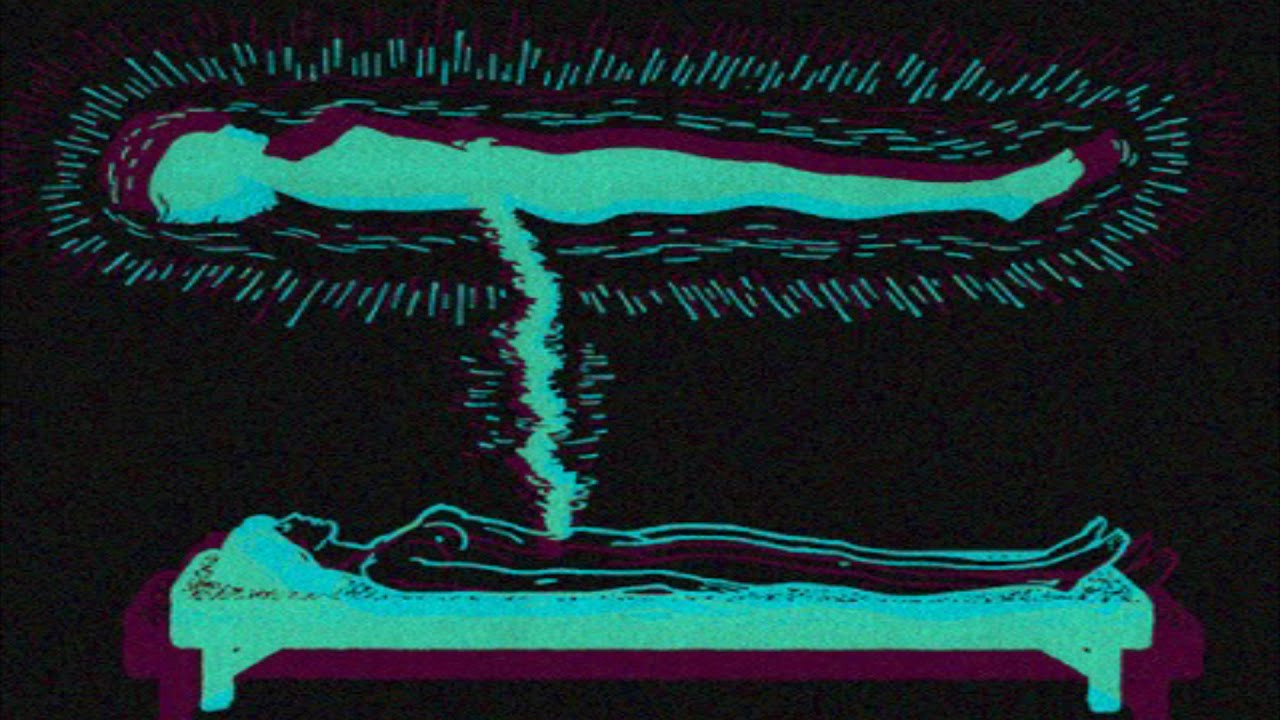
Of course, no one’s soul actually leaves their body. “Out-of-body” is simply a powerful illusion, not reality. And once it appears, you’re already in a lucid dream.
That’s all for the first stage, recognizing the dream.
Sometimes, merely thinking “Am I dreaming?” isn’t enough to confirm that you are. That’s when the second stage, “testing the dream,” comes in.
2. Testing the Dream
We covered a few dream tests last time, such as bending your fingers backward and banging your head against a wall. Dream Controller mentions several others.
For example, bite your finger. The book says that in a dream, your fingers have no bones; biting one is like biting modeling clay, and your upper and lower teeth may even seem to meet.
Or pinch your nose. If you can still breathe while pinching it shut, you’re definitely dreaming.
Once you’ve confirmed that you’re dreaming, it’s finally time to play!
We’re reaching the climax: the third stage—“controlling the dream.”
3. Controlling the Dream
Now you can finally take action to control and change your dream.
According to Dream Controller, people’s dream-control abilities range from heaven to earth. From martial-arts cannon fodder to grandmasters, dream controllers can be divided into these levels:
Dream Fanatic
The lowest level is called the “Dream Fanatic.” Their ability can be summed up in one word: “play.”
A Dream Fanatic’s superpower is mainly playing around in dreams: flying, walking through walls, eating every delicacy under the sun. They can also summon anyone they want to see. Many dream controllers can simply reach a hand behind their backs and pull out the person they’re hoping to meet.
Dream Artisan
The second level is the “Dream Artisan.” Their ability can be summed up in one word: “transform.”
They can transform the dreamscape.
For instance, a Dream Artisan may master the manhole-cover method: imagine a manhole cover on the ground, crawl through it, and emerge on the other side. The entire dreamscape is transformed, and you arrive in another world in an instant.
Some especially powerful Dream Artisans can imagine their entire field of vision as a touchscreen, then swipe it casually. The whole dream changes completely, like switching a wallpaper.

Dream Hero
The third level is called the “Dream Hero.”
At this level, dream controllers can make “thought become reality” and conjure all kinds of scenes from scratch.
The dream architect in Inception seems to be about this level: casually flipping cities, constructing impossible buildings, and so on.

Dream Sovereign
Above that, at the very top, is the “Dream Sovereign.”
The book is basically vague about what Dream Sovereigns can do. I suspect the author didn’t know how to hype them up any further. Anyway, all you need to know is that they are extremely, extremely powerful.
In short, for a weakling like me, who has lived for several decades and had only a handful of lucid dreams, getting to have one or two lucid dreams in a year is already a treat. If I can reach Dream Fanatic level and play around a little, I’m completely satisfied.
Once you’ve entered a lucid dream and started playing, one desire becomes especially urgent: extending the lucid dream for as long as possible. That’s the fourth and final stage—stabilizing the dream.
4. Stabilizing the Dream
The book introduces two “dream-extension techniques.”
The first is called tactile extension. It’s simple: touch more things in the dream. The book says that these sensations in your hands can, to some extent, help keep you in the dream.
The second technique is called the Liu Bei extension method, which also increases tactile sensation. The name comes from the old story that Liu Bei’s hands hung down to his knees.
The method goes like this:
First squat down and step on both hands, then stand up. You’ll see your hands stretch longer and longer until, when you’re standing straight, they can still press against the ground.
That way, when you walk in the dream, you’re still upright, but all four limbs are on the ground—somewhat like a gorilla walking.
The sensation of the ground under your hands then helps stabilize the dream.
When you picture it, it’s honestly a little horrifying.

And with that, we’ve covered the whole lucid-dream process, from recognizing and testing the dream to controlling and extending it.
Let me stress one last time: this episode is based on the personal experiences of lucid-dreaming enthusiasts, and its scientific validity is not guaranteed.
I hope you enjoyed it.
See you next time.
Leave a Reply