Science fiction may be furthest from reality, yet closest to the truth.
Today, let’s continue talking about The Feast of the Masters: The Best Science Fiction of the Twentieth Century.
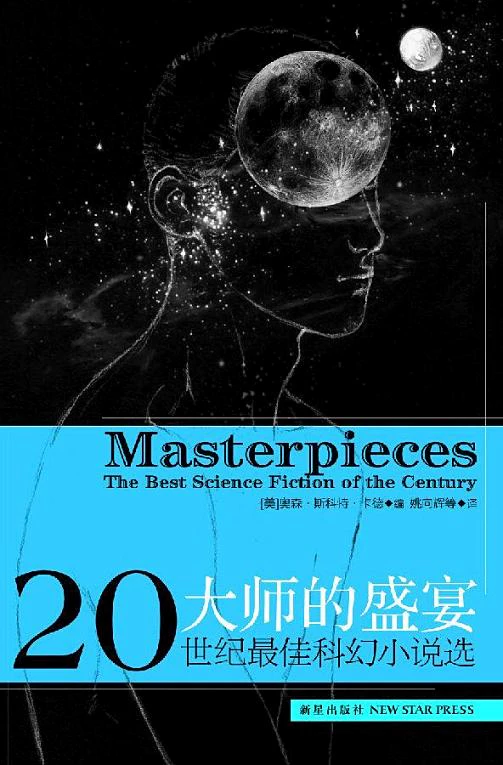
This collection of stories gave me two surprises:
The first was finding, among the twenty-odd stories selected for this book, the original sources and inspirations for a whole stack of excellent science-fiction films.
The second was that it let me fully appreciate the magic of science fiction’s surreal premises. A few works in the book achieve the remarkable feat of using one simple premise to go straight to the soul—and hit you right in the heart.
Let’s first see which science-fiction films have their prototypes in this book.
Avatar
First up is Avatar, a film everyone on Earth has seen.

Did you know Avatar also has an original source novel?
That’s right. From beginning to end, the film never has a single caption saying it was adapted from anything. In the screenwriting credits, only the director, James Cameron, gets his name.
I figure a god-tier director like that was just too proud to admit he’d borrowed ideas from all over the place.
The core idea of Avatar’s story was actually copied:
The protagonist’s soul leaves his body and attaches itself to another one. Before long, he becomes confused, feeling that the body being controlled is his real self.
Call Me Joe
This idea was basically lifted from Poul Anderson’s Call Me Joe, the first story collected in The Feast of the Masters.

Here’s the premise:
Humanity tries to develop Jupiter, but the environment is far too hostile for direct survival. So they develop technology like Avatar, creating an artificial species that can adapt to Jupiter’s environment and be controlled by the human mind.
The protagonist falls into confusion because he is constantly controlling one of these artificial organisms, gradually losing track of which body is really him.
Sounds an awful lot like Avatar, doesn’t it?
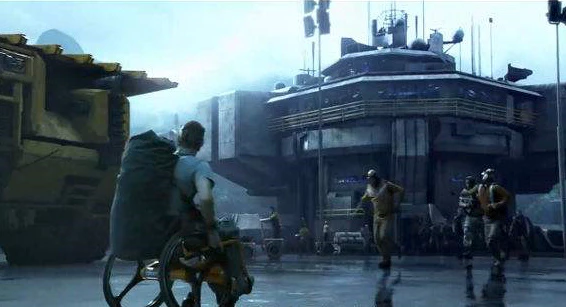
The most shameless part is that the protagonist in the book, like Avatar’s male lead, is paralyzed in the lower body and uses a wheelchair—this is practically a pixel-for-pixel copy.
Predestination
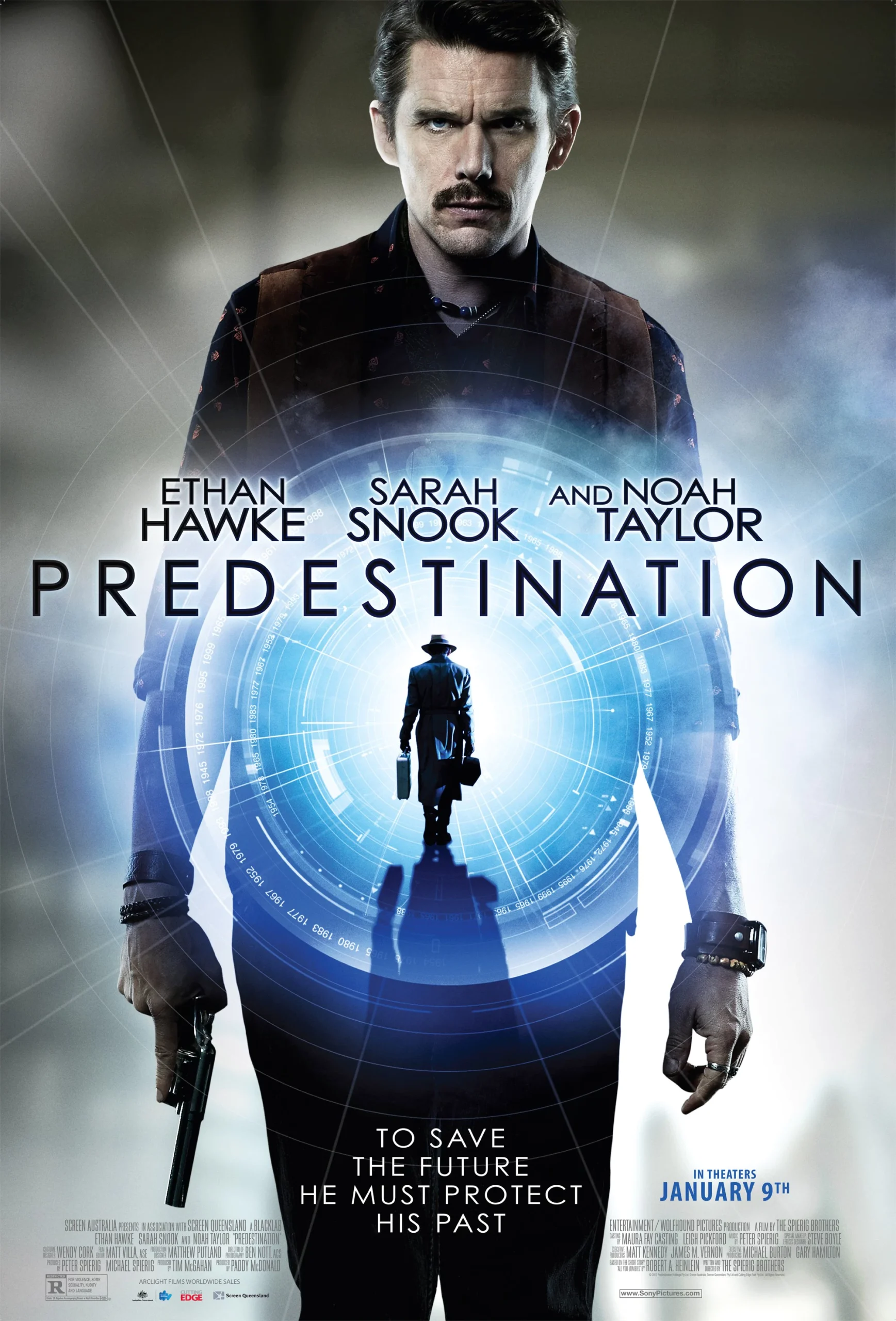
Now for the second example: a relatively obscure science-fiction film called Predestination. When it came out in 2015, though, it drew quite a bit of attention in China.
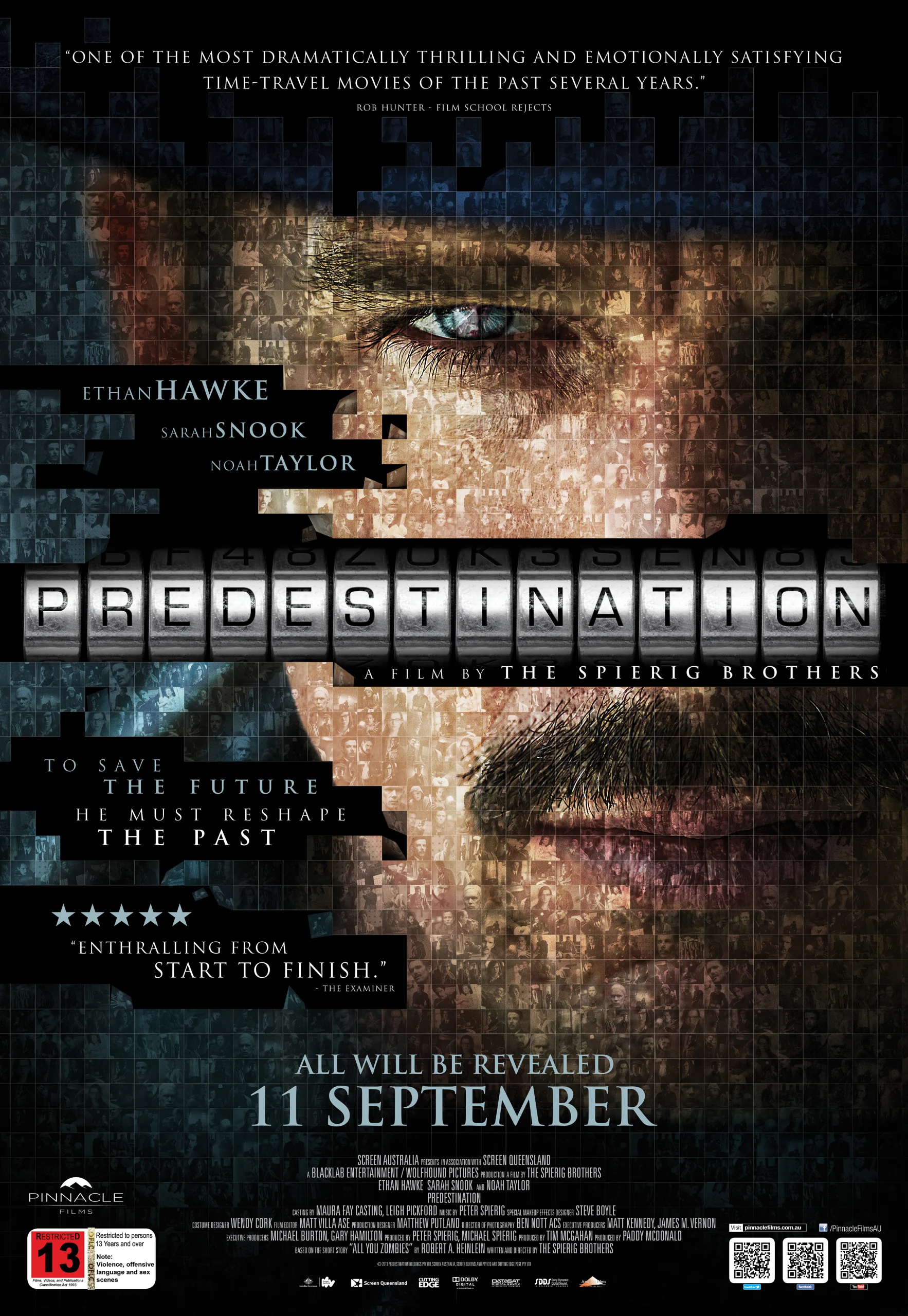
It tells an extraordinarily strange time-travel story:
An intersex agent travels back in time, falls in love with his past self after she has become a woman, and has a child. When that child grows up, he becomes the agent himself.
Isn’t that a wonderfully weird loop of destiny?
All You Zombies
The film is adapted from All You Zombies by Robert A. Heinlein, one of the three giants of science fiction’s Golden Age.
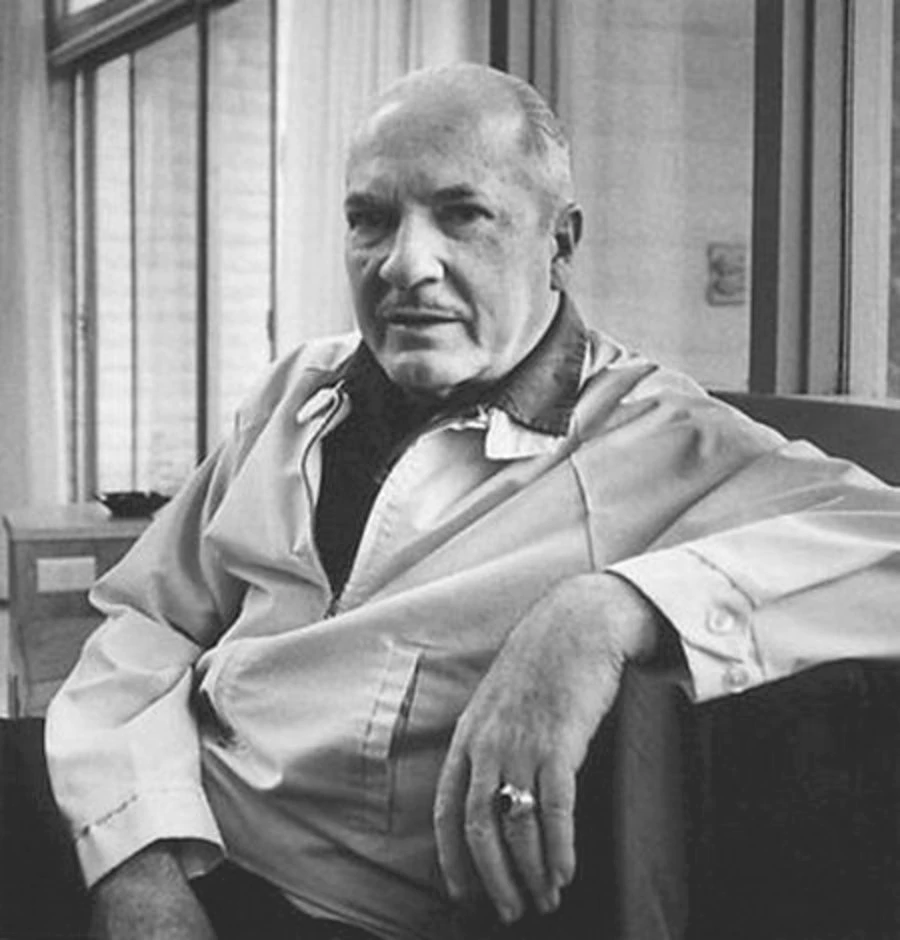
This story is included in The Feast of the Masters. I think the original is vastly superior to the film.
The Grandmother Paradox
So what makes the original better than the film?
Because a film has to consider its running time and give the story enough texture, it has no choice but to add a lot of detail. But once a time-travel story has too many details, some things become impossible to explain without contradictions.
For example, suppose you travel back to yesterday—
Normally, you remember that when you got up and put on your slippers, you put on the left one first and then the right. But this time, you insist on putting on the right one first.
So has history already been rewritten? And does this version of you, who came from the original history, still exist?

‘Destiny’ and ‘a sense of destiny’
To solve this paradox, many time-travel stories introduce a premise: the past is governed by destiny, and you can’t change it.
But once you turn that premise into a film, it becomes awfully hard to make it hold together.
There are just too many details, and they don’t stand up to much scrutiny—what if I insist on putting on the right slipper first? Does that count as breaking destiny?
But novels are different. All You Zombies is extremely short, and the author’s touch is extraordinarily restrained. Outside the central idea of ‘falling in love with yourself and giving birth to yourself,’ almost everything is left blank.
You can’t know the causes and consequences of the story. All you feel is the sense of helplessness spreading through every thought from the protagonist’s point of view.
And helplessness is a sense of destiny.
The story never needs to mention the word ‘destiny’ at all, yet it makes you believe destiny cannot be defied. That’s a feeling visual storytelling has a hard time conveying.
The masters who were decades ahead of their time
Besides the two examples above, The Feast of the Masters also led me to the original sources and inspirations for Will Smith’s I, Robot, Justin Timberlake’s In Time, and one science-fiction film I’m especially fond of, Dark City. I won’t go into detail here.
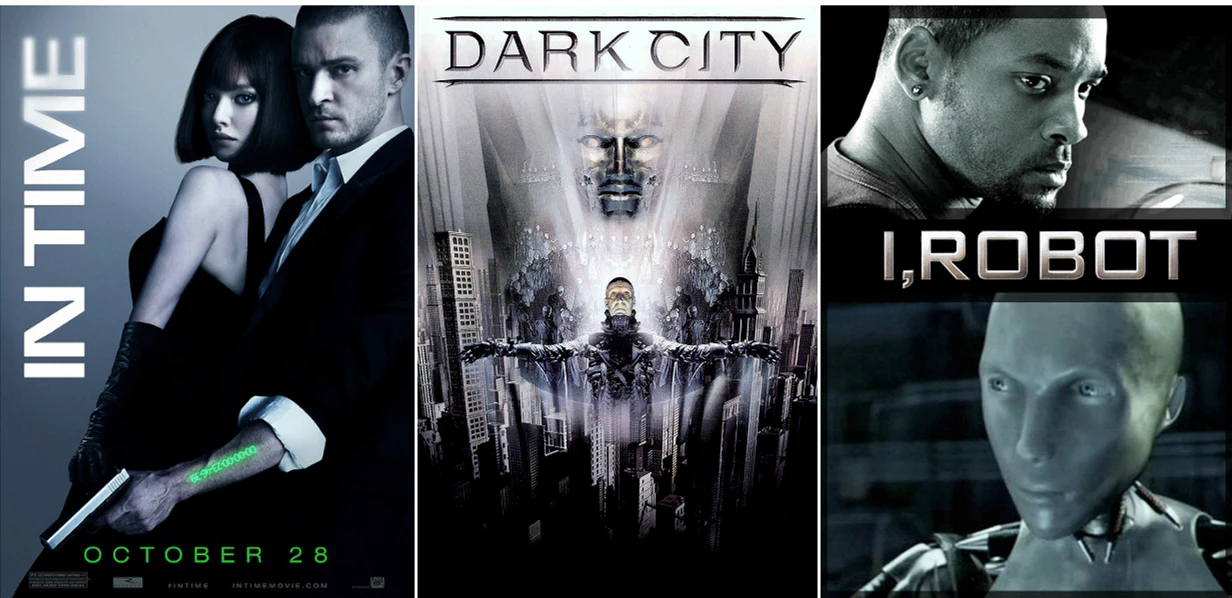
In this book, you’ll see that quite a few science-fiction film ideas that made a deep impression over the past ten or twenty years had already been played with brilliantly by these science-fiction masters several decades ago.
The beauty of a premise
Now for the second surprise: some of the works in this book showed me what makes the ‘beauty of a premise’ in science fiction so powerful.
A lot of people look down on science fiction. They say, isn’t all this stuff you call science fiction just one wild premise pulled out of thin air, one big leap of imagination—and nothing more?
They criticize many science-fiction novels for having nothing but a premise, while the characters are completely flat. One hallmark of serious literature, they say, is rich, three-dimensional characterisation. If the characters aren’t well written, naturally the book doesn’t belong on the main stage.
I couldn’t disagree more.
Reality as background noise
What’s wrong with having just one ‘premise’ anyway?
Science fiction comes with a built-in property: it can naturally be very far from reality.
What’s the advantage of that?
When you want to explore a theme, putting it in the real world means running into too many conventions and established rules. A lot of the time, they become obstacles.
Reality turns into background noise, keeping your theme from appearing in a sufficiently pure form.
But in science fiction, you can build a whole new world around the theme itself.
There, everything irrelevant from the real world is discarded. Only the theme itself stands out; everything serves it.
A theme presented in its purest, most authentic form can often have the kind of shock associated with Zen Buddhism: ‘pointing directly to the human heart, seeing one’s nature and becoming Buddha.’
The Ones Who Walk Away from Omelas
The Ones Who Walk Away from Omelas, included in The Feast of the Masters, gave me exactly that shock.
Its author was Ursula K. Le Guin, the woman writer who crossed so many different fields of writing.

You could say this story has no beginning, no ending, and no characters—a textbook case of ‘just one premise.’
At the beginning of the story, Le Guin first sketches a city called Omelas.
It is a perfect utopia, filled with festivals and celebrations. Everyone is immersed in joy, and the whole city is as beautiful as a fairy tale.
But immediately afterward, the author turns the tables. She tells us that beneath this city there is a basement where a child is locked up, sitting in his own filth, sores covering his buttocks and thighs.
People often come to beat him, but they never speak to him. At first he begs for help; later, he can’t even speak.
What is going on? Do the happy people in the city know this child exists?
They do.
The book continues like this:
Everyone understands one thing: their happiness, the splendour of their city, the warmth of their friendships, the health of their children, the wisdom of their scholars, the skill of their craftspeople, even their good harvests and pleasant weather—all of it depends on the child’s hateful, miserable condition.
Once the children of Omelas reach the age of understanding, they are told about it. That is why most of the people who come to see the child are young, though adults sometimes come too, or return to see him again.
No matter how thoroughly the young people have been prepared, they are still shocked and sickened when they see him.
They feel disgust, even though they believe they outgrew that feeling long ago. They feel distress, anger, and helplessness, even though the reason is right before their eyes.
They want to do something for the child, but they cannot:
If the child were rescued from that grim, dreadful place and brought into the sunlight, if his body were washed and he were given food and drink until he was full, that would certainly be a good thing.
But if that happened, all of Omelas’s prosperity, beauty, and joy would wither away in an instant and turn to dust.
That is the exchange.
Trading all of Omelas’s virtue and grace for one small act of kindness, trading the happiness of millions for the happiness of one person—that would be no different from opening the door and inviting thieves in.
By now you surely understand what this story wants to put before us: that famous moral dilemma:
If you had to kill one person to save ten, would you kill them or not?
If you think one human life is priceless, then let’s raise the price: kill one person and save a thousand—would you kill them or not?
What if killing one person could save ten thousand?
If the happiness of a group has to be built on the suffering of a few, what will those enjoying the happiness have to face within themselves?
If you put a theme like this in a real-world setting, there are plenty of ways to present it. For example, you could write about a pampered young person from the First World encountering the Third World being exploited by people like him.
But I think that approach would be far less direct and pure than the seemingly absurd, motiveless premise in The Ones Who Walk Away from Omelas.
That is where the magic of surreal premises in science fiction lies: with one simple premise, they can often point straight to the human heart.
They may be furthest from reality, yet closest to the truth.
Words by|Zhichao Wei
Text and image editor|Wang Xiaowei
Books and assorted gossip mentioned in the article:
1. The best show of 2016
For a time-travel masterpiece rich in detail without making you feel it clashes with ‘destiny,’ my top pick is the best show of 2016 in my book: Dirk Gently’s Holistic Detective Agency.
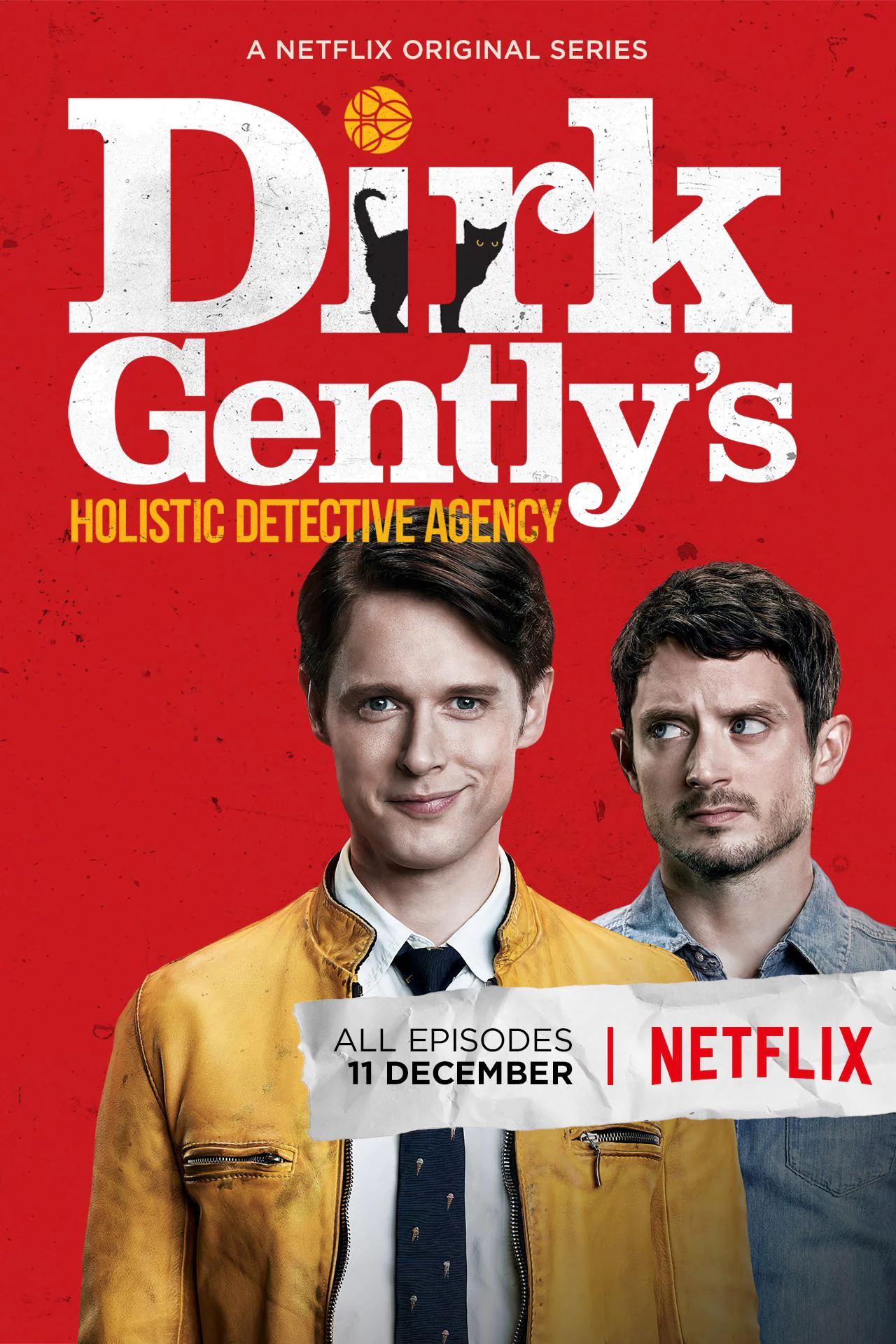
(Actually, I didn’t watch many shows at all last year.)
2. Fictionalisation
You might say that the ‘premise’ I’m talking about in the article is just ‘fictionalisation,’ right?
I think ‘fictionalisation’ has two layers of meaning:
‘Fictional’: another reality beyond the real one;
‘-isation’: simple, direct, and pure.
This article is naturally concerned with the latter.
Leave a Reply