
Let’s talk about science fiction related to psychology.
Today we’re talking about science fiction related to psychology. I work in psychology and love science fiction, so I thought I’d recommend some psychological sci-fi. I hope you enjoy it.
In the broad sense, every literary work can be connected to psychology, because literature is about human nature. Wherever there are people, there’s psychology. Take Jin Yong’s wuxia novels: which one doesn’t vividly portray human nature?
In the narrow sense, there aren’t so many. My definition is that a story’s central premise must be a psychological principle—one it revolves around, climaxes with, or uses as its backdrop.
Among Jin Yong’s wuxia novels, I think only Ode to Gallantry qualifies. Why is Shi Potian the only one who can solve the secret of the poem “Ode to Gallantry” on the stone wall and master its peerless martial arts?
Why do the far more accomplished school leaders meditate on it for decades and get nowhere? Isn’t this a vivid demonstration of a law of human innovation?
Psychologists studying creative thinking discovered long ago that many major innovations and discoveries in human history were made by outsiders.
People inside an industry unconsciously get bound by its accumulated rules, habits, and fixed mindsets. Some traditions are good, but others are dross that restrict experts’ vision and thinking.
Outsiders aren’t influenced by those things. With no historical baggage, they can easily spot what experts inside the field miss.
This happens constantly in the history of science. The person who proposed that an asteroid caused the dinosaurs’ extinction was a nuclear physicist, not a paleontologist.
Paleontologists were rigidly convinced that climate change or early mammals competing for food had done it. The nuclear physicist had none of those blinders and solved the puzzle with nuclear physics and astronomy.
The martial-arts masters in Ode to Gallantry were a hundred times more qualified than Shi Potian at reading poetry. Yet this illiterate outsider saw beyond the words and found the secret in the strokes. Classic outsider innovation.
When a novel’s climax is a full demonstration of a psychological principle, as in Ode to Gallantry, it’s a classic psychological novel.
So, by that standard, here are several psychological sci-fi novels that made a deep impression on me.
First, two short stories by Chinese-American science-fiction writer Ken Liu.
Everyone knows the sci-fi world’s Big Liu, Cixin Liu. But it also has a Little Liu: Ken Liu.

Little Liu is much less famous, but I’ve always considered Ken Liu one of the finest living science-fiction writers. He grew up in China and is now an American citizen. He writes and translates.
Ken Liu translated the English editions of Cixin Liu’s The Three-Body Problem and Death’s End. He accepted several prizes for Big Liu. Cixin Liu’s success in the English-speaking world owes him a lot.
Ken Liu writes short fiction in English, after traditional Western literary training, and his prose is excellent. My first recommendation is “The Single-Bit Error,” a religious-psychology story.
Psychologists and neuroscientists studying religion have found much evidence that religious experience is simply an illusion produced by the brain under particular conditions.
For instance, church-organ sound waves can make us physically shiver, a sensation we may interpret as mysterious religious experience.
“The Single-Bit Error” begins with that scientific conclusion, yet ends by recovering religion’s meaning for human beings and elevating it poetically.
Science pushes us far away, but literature brings us back. After “The Single-Bit Error,” you’ll feel this strongly.
My second Ken Liu recommendation is “The Algorithm of Love,” which uses AI to reflect on our psychological and philosophical dilemma: free will may be an illusion.
AI may evolve to respond indistinguishably from humans within our lifetime. But behind it are only algorithms, a deep-learning neural network, and mathematical formulas.
So aren’t we also just a pile of algorithms inside our brains?
At bottom, are we simply advanced machines? We’ve seen this in Ghost in the Shell and The Matrix Reloaded/The Matrix Revolutions. But “The Algorithm of Love” combines these thoughts with a cold, oppressive atmosphere. A few pages left me freezing.
Freezing is my highest praise for sci-fi—it’s a compliment. That scalp-prickling feeling is exactly what I chase.
Next is another Chinese-American master, Ted Chiang. His best-known story, “Story of Your Life,” was adapted by Denis Villeneuve into Arrival last year.
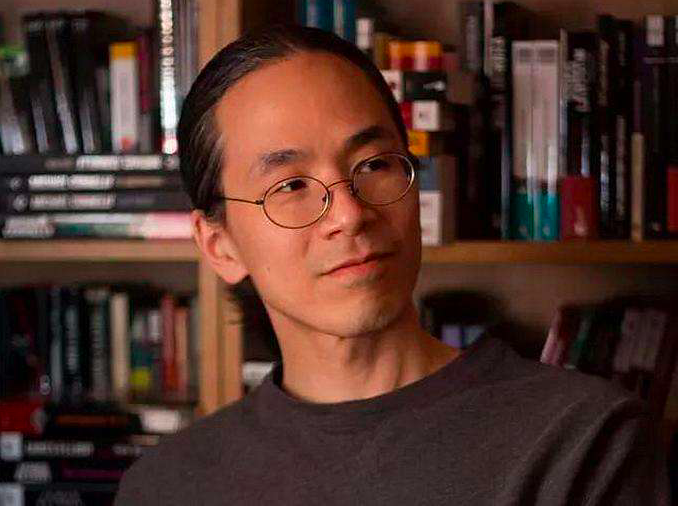
Ted Chiang’s work often has strong psychological implications. “Story of Your Life” centers on a psycholinguistic principle: language reshapes thought, so English and Mandarin speakers’ brains are structured differently.
He develops that foundation into an even wilder premise.
If a language could express past, present, and future simultaneously—if it transcended time—then its users’ brains would transcend time too. Arrival is excellent, but “Story of Your Life” deserves a particularly strong recommendation.
Ted Chiang has two other short stories with an even stronger psychological flavor.
One is “Understand,” about upgraded human intelligence. The film Limitless and its TV adaptation, about a smart drug, were heavily inspired by it.
Ordinary sci-fi about superintelligence just imagines faster reactions and effortless arithmetic.
But after an accident boosts the protagonist’s intelligence in “Understand,” his first act is to invent a language! I was stunned—because language is thought’s key tool, and existing language becomes intelligence’s bottleneck.
A superintelligence would naturally invent a new language first. Only a super-language can unleash super-intelligence. This is just one of many astonishing details.
Ted Chiang’s other psychological sci-fi story is “The Beauty.” Online discussions often ask whether looks are productivity, whether attractive people get advantages, and whether celebrities should have plastic surgery.
“The Beauty” runs with that discussion: someone invents an aesthetic interference visor that blocks your ability to judge faces as beautiful or ugly.
You can recognize a face but can’t judge its beauty. Told as parody news interviews, the story reveals every psychology of how people view beauty.

That wraps up Ted Chiang. Now let’s talk about Isaac Asimov.

Science fiction can’t avoid this towering figure. Asimov was a STEM guy who wrote popular science and hard sci-fi, yet respected the humanities and social sciences.
In his famous Foundation series, psychohistorians predict galactic human society and secretly control its course.
His other famous series, Robot, features Susan Calvin, a robot psychologist. How much did Asimov love psychologists?
He also wrote “The Institute for the Mentally Retarded,” practically a love letter to liberal-arts students, crediting the humanities with nearly all human creativity. It’s only a few pages, so I won’t spoil it. The details are dated, but the core idea is brilliant.
Everything so far has been short fiction. If you’re interested, you can finish it in a few scraps of bedtime reading.
Finally, I enthusiastically recommend Canadian science-fiction writer Peter Watts’s masterpiece Blindsight. I devoted a full Ximalaya Book Club episode to it; here’s the short version.
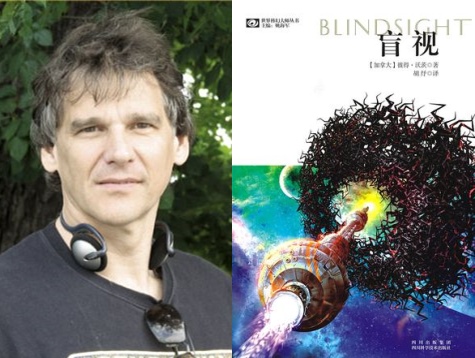
Blindsight is a rare full-length hard-science-fiction novel built around a psychological premise.
What’s more, the author isn’t exploring some minor side issue in the novel. His ambition is enormous: he’s aiming straight at the shared “Holy Grail” of psychological science and the philosophy of mind—the ultimate question: Why are we conscious? Why do all of us humans have subjective experiences? Why does each of us feel that there’s an “I” watching and experiencing the world? And what use is this self-awareness, this subjective experience, anyway?
I’ve been fascinated by the problem of consciousness since I was a kid, so I was absolutely stunned when I read Blindsight. I never imagined that this ultimate metaphysical question could be presented in a science-fiction novel in such a thought-provoking way.
If you’re interested in the novel, you can listen to my take on it through Ximalaya Book Club. If you want to pick up the book and read it yourself, though, here’s a little warning. Its writing style is actually pretty unfriendly to the average reader.
For one thing, Peter Watts won’t waste a single line explaining the dense psychological, biological, and physical terminology. He thinks you ought to know it already—you don’t? Then look it up yourself.
For another, he won’t spend an extra word explaining the novel’s incredibly complex world-building. He writes as if he were writing a realist novel, treating his readers as though they already lived in his fictional world.
So when I was reading Blindsight, I could constantly feel the waves of prickly, tech-guy sci-fi-author attitude coming straight at me.
Imagine Sheldon from The Big Bang Theory writing a science-fiction novel. What would it be like? I’d say it would probably be something like Blindsight.
But just as we love Sheldon, once you tolerate its prickly attitude, you’re bound to fall in love with it.
Text | Zhichao Wei
Editor | Wang Xiaowei
This episode’s host | Zhichao Wei
P.S. Hee-hee, let me shamelessly slip in a hard sell: my paid program Zhichao Wei: In-Depth Guides to Psychology’s Cutting-Edge Books (later renamed Zhichao Wei: New Findings in Psychology)—giving you an early taste, at least a year ahead of China, of the latest major books from the world’s leading psychologists; opening up a whole new world for you—is now over two months old. It’s received countless rave reviews, and it’s the only new-book deep-dive program anywhere built around psychology that’s both rigorous and fun. If you’re always hungry for something new and different, what are you waiting for? Come listen!
Leave a Reply