
This episode is also on Bilibili too.
Today I want to introduce a short science-fiction story I’m very fond of, 《The Jar》. It has heart, and it’s also a little bit wicked. I think it’s well worth recommending.
《The Jar》—the original title is Pots. Translating it as Bottles or Jars would both work. The simplified-Chinese edition was included in 《The Grand Feast: The Best Science Fiction of the Twentieth Century》, a very famous anthology packed with masterpieces. The author of 《The Jar》 is the American science-fiction writer Carolyn J. Cherryh, a two-time Hugo Award winner, born in 1942 and now, well, a very old lady.
For ease of understanding, I’m going to scramble the story’s narrative structure and retell it to you in my own words.
On a planet somewhere in the Milky Way lived an intelligent species. For convenience, let’s call them the big-headed people.
At the beginning of the story, the big-headed people were fighting a world war, and their entire civilization was at risk of being wiped out.
Right at this critical moment, one of the big-headed people’s astronomers happened to intercept a probe made by another alien civilization in space near their planet. After examining it, they made a startling discovery: the probe had been drifting through space for 850万 years.
The probe had of course stopped working long ago; it had simply, by an incredible coincidence, drifted to the big-headed people. But inside it was a metal plate that had remained perfectly preserved.
The metal plate showed two naked aliens, apparently of two different sexes. It was an “alien nude drawing.”
One of the aliens in the drawing had one hand raised, as if saying hello to a human being.
Below the two naked aliens was also a diagram showing the features of the star system where the civilization that launched the probe lived.
After studying it, the big-headed people believed that the ancient alien civilization that launched the metal plate was trying to say something like this:
Greetings, stranger. We come from this planet—and this star system—shown in the picture below.
We revere knowledge and civilization. Whoever you are, stranger reading this message, we are not afraid of you.
You can clearly feel a romantic, uplifting spirit of pacifism coming from this metal plate. Those two naked aliens on it look so blissfully goofy that even 850万 years later, you can still feel the optimistic energy they wanted to pass on.
But this slightly naive and romantic object was enough to profoundly inspire the big-headed civilization, which was mired in crisis.
The metal plate was like an epiphany—and also a smack upside the head. It woke the big-headed civilization from its war fever and made them suddenly realize that war was not their only destiny. The longing for peace and the optimistic, uplifting spirit conveyed by the plate had not disappeared from their hearts.
So the big-headed people abandoned the war, came through this enormous crisis, found peace, and saw their civilization flourish again.
And the alien civilization that had launched the metal plate became, in the eyes of the big-headed people, a myth—a legend.
Later, as the big-headed civilization spread through the universe, the metal plate bearing the two naked aliens gradually became a totem of the Milky Way.
Many years later, after enduring untold hardship, the big-headed people finally found the planet where the civilization that had launched the probe was located.
The big-headed government sent a team of interstellar archaeologists to land on that planet and investigate. The archaeologists discovered that the planet had become a wasteland. The “metal-plate civilization” had been destroyed not long after it launched the metal plate 850万 years ago.
Apart from the remains of some gigantic buildings and large dams, the archaeologists found only one especially strange human-made object on that desolate planet: some bottles dug out of the ground—the “jars” in the story’s title.
The big-headed archaeologists put it this way:
We found lots of bottles like these. Mass-produced, industrially manufactured.
Not just on this continent: the same bottles have been unearthed at every archaeological site across the planet, distributed in the uppermost layers of the strata. The designs are identical. They were made shortly before the great cataclysm.
We use objects like these to trace and analyze possible global alliances and global trade.
Right up to the end of the story, the author never says what these bottles actually are.
After several million years, seas have dried up and fields have turned to mulberry groves; most of what that civilization once created has sunk into oblivion. Only these jars can still be found by the big-headed people, scattered across every continent on the planet.
What are they?
I’ll reveal the answer at the very end. Maybe you’ve already guessed it.
First, let’s talk about how this “metal-plate civilization” was destroyed.
The big-headed archaeologists discovered enormous craters everywhere on the planet. After studying them, they concluded that the craters were traces left by nuclear-weapon explosions, and that the civilization on this planet had clearly been destroyed by mutual slaughter in a nuclear war.
But when the big-headed government learned of this conclusion, it ordered the archaeologists to keep quiet and forbade them from making the news public. It even planned to kill them to silence them.
The political leadership believed that the public must not discover that the great civilization supporting their faith had destroyed itself.
The gods weren’t anything special after all—in fact, they had managed to wipe themselves out—and if the truth got out, it would deliver a devastating blow to the big-headed people’s spirit.
But the archaeologists didn’t see it that way. They rose up in resistance, defeated the political officials trying to suppress the news, and ultimately set the truth free.
The archaeologists believed that although the “metal-plate civilization” may have had an ugly side—they abandoned their own faith and destroyed themselves through war—the beautiful things in them, namely the optimistic, uplifting spirit and pursuit of peace conveyed by the metal plate, inspired later civilizations like the big-headed people. That spirit then spread among the stars and inspired still more civilizations. Their achievement was not diminished in the slightest by their self-destruction. If anything, their destruction made the value of the metal plate shine even more brightly.
By this point, the truth behind the story is practically shouting to be heard.
That ancient civilization that destroyed itself was, of course, human civilization. And that abandoned planet was Earth.
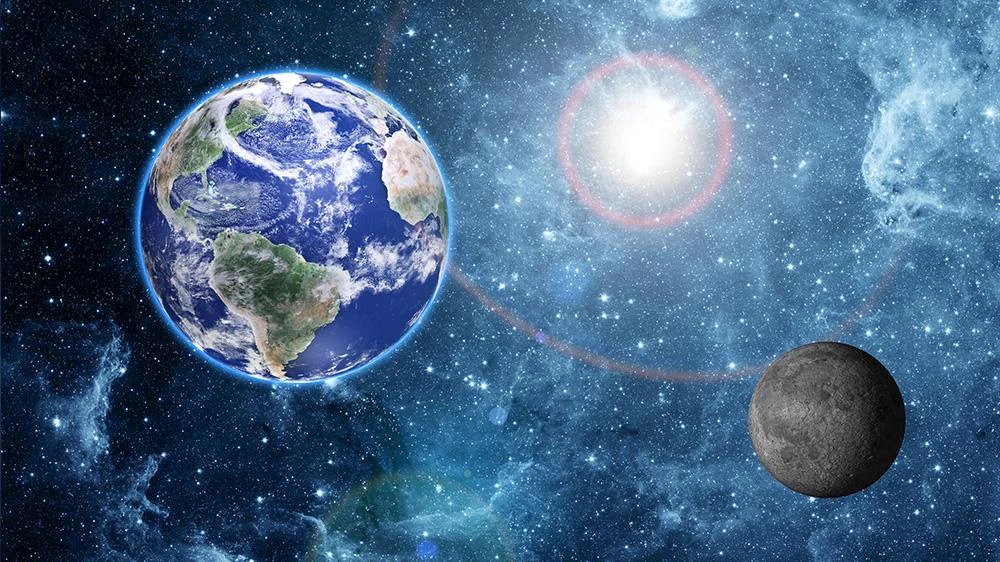
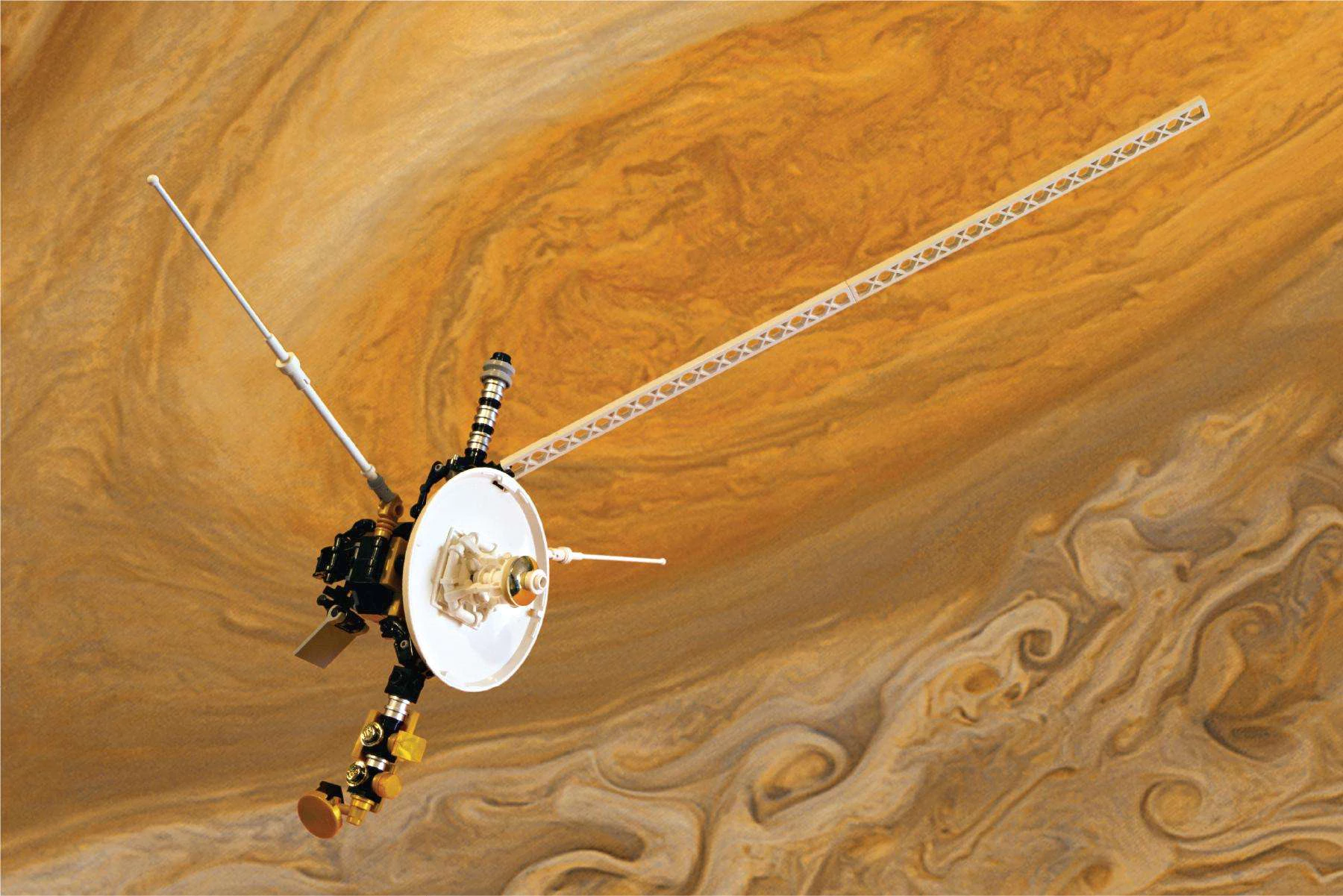
And the probe intercepted 850万 years later was one of the Pioneer 10 and Pioneer 11 space probes launched by NASA in 1972 and 1973.
Both carried a gold-plated aluminum plate showing what we humans look like: one man and one woman. The man has one hand raised in greeting to extraterrestrials, with a diagram of the solar system below them.
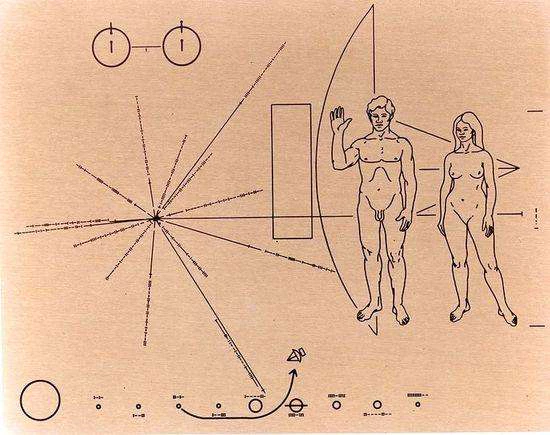
The person who designed this plate and persuaded NASA to put it aboard the Pioneer probes was none other than the famous astronomer and science communicator Carl Sagan.
The big-headed people hadn’t misunderstood. This metal plate really did carry the finest part of humanity: a naively romantic scientific optimism and a spirit of pacifism.
Through this metal plate, Carl Sagan represented humanity and hollered cheerfully into a dark-forest-like universe:
Hello, we’re humans from Earth. This is our home. Welcome to contact us.
In the story 《The Jar》, humanity’s foolish side eventually destroyed itself. But humanity’s uplifting, optimistic, reverence for science and peace survived—and inspired more who came after.
This image moved me deeply.
So, finally, let’s look at the relic of human civilization—the bottles. What exactly were they?
According to the big-headed archaeologists, the bottles had several features:
1. They were mass-produced industrially;
2. They were found all over the world during the period shortly before human civilization was destroyed, so they were probably an extremely popular commercial product;
3. The book also mentions a detail I haven’t brought up yet: they were “long, ribbed bottles.” In other words, the bottles were somewhat slender, with sharply defined vertical ridges running down them.
What else could they be?
They could only be Coca-Cola’s most classic glass bottle!
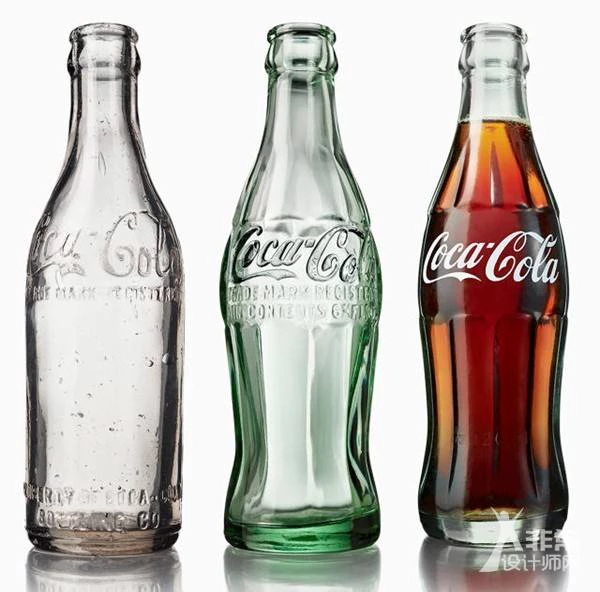
Times always end. Only coke lives forever.
All right, that’s where we’ll leave 《The Jar》. Coca-Cola really ought to pay me an advertising fee for this episode. But it hasn’t.
Leave a Reply