A common misunderstanding of Darwin’s theory of evolution is that it maximizes the “interests of the species.”
Although many individuals in a species may be ruthlessly eliminated because they fail to adapt to their environment, “survival of the fittest” suggests that the individuals best adapted to the environment survive and spread their genes throughout the population. Seen this way, some individuals may be mercilessly weeded out, but in the end the species as a whole becomes “stronger.” But this is actually a misconception.
In fact, evolution does not necessarily optimize the interests of individuals, nor does it necessarily optimize the interests of the species.
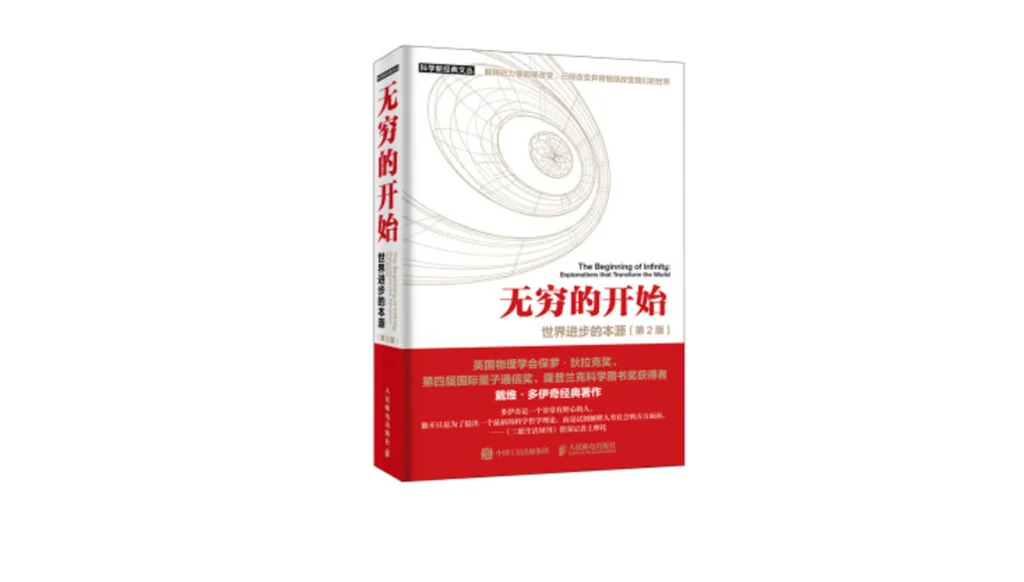
The following case is taken from David Deutsch’s The Beginning of Infinity:
Imagine an island where, if the birds of a certain species built their nests at a particular time—say, in early April—their total population would reach its maximum. (In other words, from the species’ point of view, nesting in April is the most “fit” option.)
Now imagine that this balance is disrupted by a mutation in one bird’s body. The gene causes that bird to build its nest slightly earlier—say, at the end of March.
That bird would then be sure to secure the best nesting site on the island—which, in terms of the survival of its offspring, is an advantage that could easily outweigh all the minor disadvantages of nesting early.
As a result, the next generation would contain more birds that nested in March, and all of them would also be able to find excellent nesting sites.
If the relative advantage of having the best nesting sites were large enough, the birds that nested in April might even become extinct.
Thus, the gene with the best adaptation— the one that maximizes the interests of the species, the April-nesting gene—is actually unstable. Evolutionary pressure would make this gene less adapted to that function. In the sense that it reduces the number of individuals in the population (because the birds no longer nest at the optimal time), this change harms the species.
“So a perfectly adapted species might, in this way, evolve into a species that is less ‘flourishing’ by every measure.”
What, then, have these birds’ evolutionary changes actually achieved?
What evolution is optimizing in this process is not the functional adaptation of a genetic variant to its environment, but its relative ability to “spread through the population.”
Evolution is never “survival of the fittest”; it is “survival of the most fertile.”
Note
- This article in the “New Psychology Insights” series was a short popular-science essay and miscellany written at the time to accompany content related to Zhichao Wei: New Psychology Insights Course. It was published on the now-closed platform Fatuan, and the original link no longer exists.
Leave a Reply