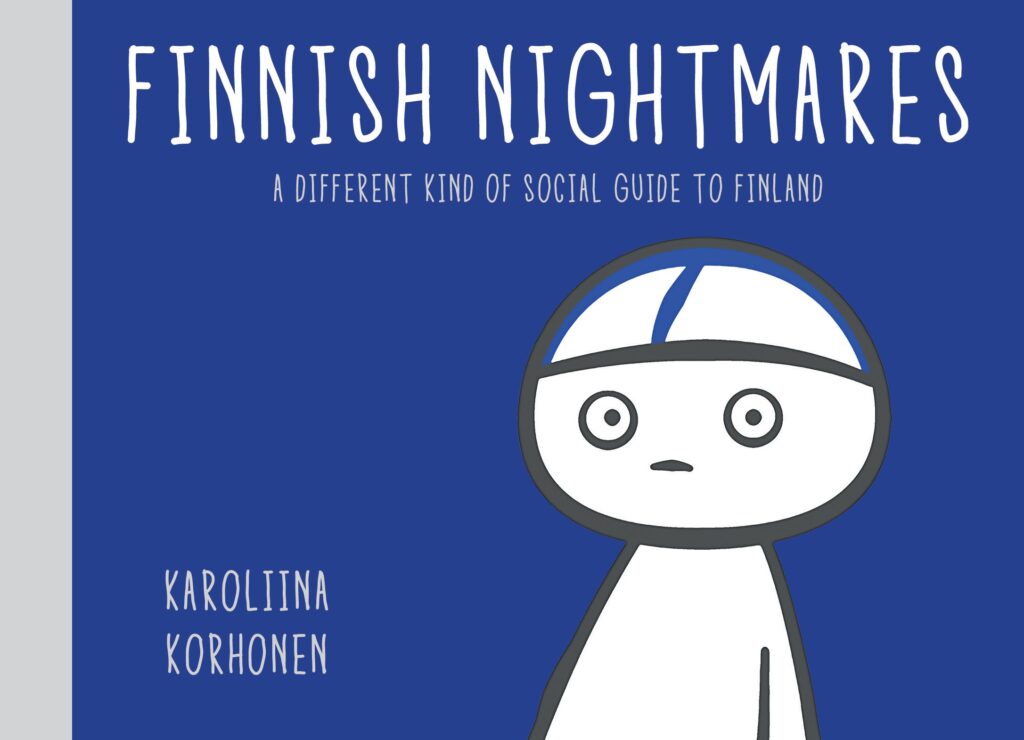
Finns suddenly became a hit on domestic social media recently (try searching for “mental Finns” or “psycho-Finns”). Actually, not long ago, Finns also had a moment in foreign media, because in the 2018 World Happiness Report released by the United Nations this year, Finland came out on top. Finland was once again—yet again—named the happiest country in the world.
But Finns have something to say: We’re not buying it. Once again, we’ve been “made happy.” Finnish media outlets and experts rushed to publish articles arguing, in all sorts of creative ways, that we Finns aren’t actually that happy.
Frank Martela, a psychology researcher at Finland’s Aalto University, published an article in the July 2018 issue of Scientific American: Psychology titled “Finland Is the Happiest Country in the World, but Finns Aren’t Very Happy About It,” analyzing why Finns don’t feel particularly happy.
Martela explains that there are roughly 4 ways to measure happiness, and the results can differ dramatically depending on the method.
1. The first measure of happiness: Is life good?
How does the World Happiness Report, which just named Finland the happiest country, measure happiness? The survey asked people in 156 countries to “evaluate their lives today on a scale from 0 to 10, where the worst possible life is 0 and the best possible life is 10.”
This is a very common measure of general life satisfaction. Social factors such as GDP, the availability of social services, political freedom, and trust in the government and in other people can explain a large part of a country’s average life satisfaction. And among these indicators, the Nordic countries—Finland, Sweden, Norway, Denmark, and Iceland—score highest. So it’s hardly surprising that whenever life satisfaction is measured this way, these countries consistently land in the top ten.
2. The second measure of happiness: Are people enjoying themselves?
But if we use another way to measure happiness—for example, by observing how often people experience positive emotions, and measuring happiness by the frequency and intensity of those emotions—the results look very different. The happiest countries in the world become Latin American countries such as Paraguay, Guatemala, and Costa Rica. Finland, of course, doesn’t come anywhere near the top. Finns are emotionally cold as hell.
3. The third measure of happiness: Are people depressed?
If we also take the “prevalence of depression” into account when measuring happiness, things get even more complicated. The country with the highest per-capita rate of depression in the world is the United States. And among Western countries, Finland is right behind the US, ranking second. From this angle, Finland could be called one of the most miserable countries in the West.
Martela says Finland may be good at maintaining a high average level of life satisfaction on the one hand, while on the other hand, people at risk of depression may not receive enough social support to cope with low mood. He says this may be why Finland has the highest number of heavy metal bands per capita (Finns are cold and reserved in everyday life, so they have to roar it out when they sing).
4. The fourth measure of happiness: Does life have meaning?
Other scholars argue that happiness should include a sense of meaning—in other words, whether a person feels that their life is meaningful. When meaning is measured, Finland also ranks near the bottom. Martela believes that religious faith may play a role here: Wealthier countries tend to be less religious on average, which may be why people in developed countries report less meaning in their lives.
***
After all this analysis, the conclusion is actually quite simple: happiness is complicated. The same person, or the same country, may be way ahead on one dimension of happiness while falling far behind on another.
Martela concludes:
“If happiness means the widespread presence of positive emotions, then Finland is not the happiest country. If happiness means being free from depression, Finland is not the happiest country either. But if you think happiness is a calm satisfaction with one’s living conditions, then Finland and the other Nordic countries may be the best places for you to live.”
p.s.:
In the 2018 World Happiness Report, China ranked 79th, up 4 places from the previous year.
References:
Frank Martela. Finland Is the Happiest Country in the World, and Finns Aren’t Happy about It.
Note
- This article in the “New Psychology Insights” series was a short popular-psychology essay/commentary written at the time to accompany related content in Zhichao Wei: New Psychology Insights. It was published on the now-shuttered platform Fanfan, and the original link no longer exists.
Leave a Reply